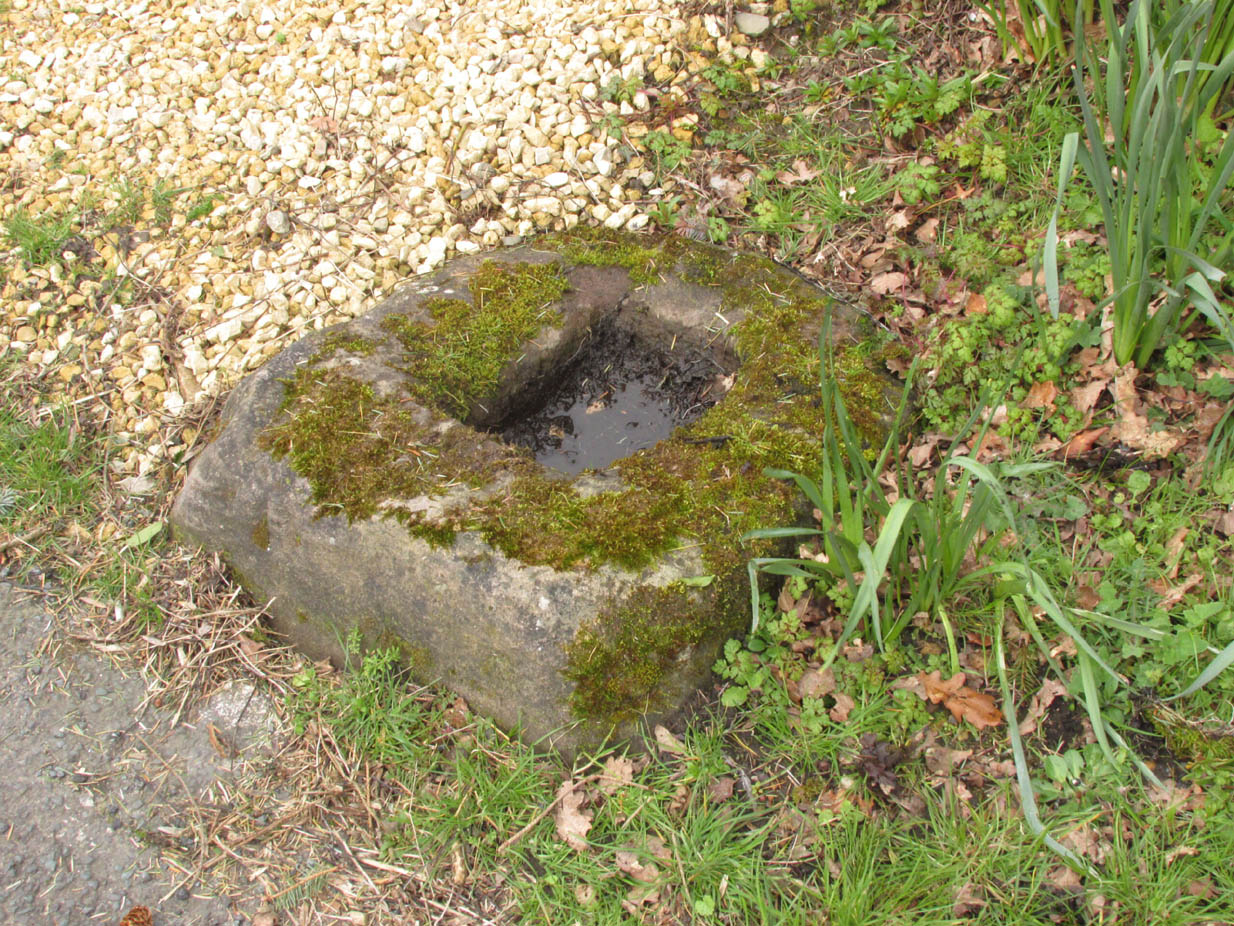
Hangie’s Stone, Cargill, Perthshire

Standing Stone: OS Grid Reference – NO 15751 35578 

Also Known as:

  1. Gallowshade
  2. Canmore ID 28479

Getting Here

Turn right off the A93 at Cargill onto the side road by Keepers  Cottage and up the hill to Gladsfield Wood at the top on your right. Park up at the top side of the Wood and walk straight along the narrow track for around 450 yards and what may be the remains of the stone will be seen between a pair of mature trees.

Archaeology & History

In 1862 the stone was described in the Ordnance Survey Name Book for Perthshire:

‘And about 150 yards from the same object [Hangie’s Well], in a north-westerly direction, there is a small Standing Stone, having the appearance of the ancient monumental standing stones.’

It seems the stone had been removed by the time Fred Coles (1909) came to see it nearly fifty years later.  He told us:

“On the day of my visit the mist was so abnormally dense and confusing that it was with considerable difficulty the wood itself was identified; and as its interior is an utter wilderness of trees, shrubs, brambles, broom, wild roses and tall grass, besides being a pheasantry, it is just possible that the monolith searched for evaded my zeal.  I think not, however, because, hearing a hedger at work on the Newbigging side of the wood, I made for him; and after plying him with various questions, could get no statement to the effect that he had, though living so near, ever seen any conspicuously tall Stone in the wood.

“On retracing my steps, I searched a fresh portion of the wood, and noticed one biggish block of whinstone lying on the grass in a slight hollow of the ground. It was somewhat cubical, about 2 feet 6 inches square, and fractured.  This may he a portion of the former monolith, possibly; and with this dubious result I had to be content.”

In 1967 the archaeologist O.G.S. Crawford described “a sharp-edged boulder standing near the spot marked on the map,” but was not certain if it was the stone.  It had no markings on it.
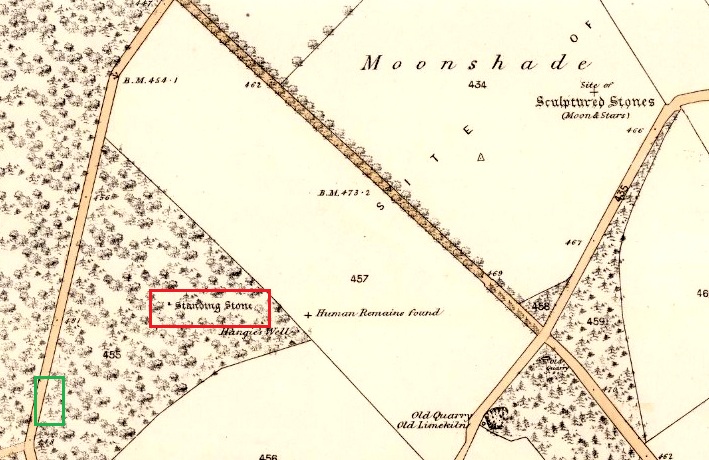
25 in OS map of 1866 showing original position of stone outlined red and position of possible remains of stone in green

Moving on to 2020, and I found the same impenetrable jungle that Coles described more than a century earlier.  When a site has been destroyed I can normally take a photograph of where it once was, but not in this case.  I continued westward over difficult and potentially ankle snapping terrain that had recently been replanted with conifer saplings, until I got out of the planting area to a line of mature trees next to the track through the wood.

One large elongated stone presented itself that had clearly lain there for many years judging from the moss growth, a short distance away at NO 15641 35478.  Could this be the top part of the standing stone, dragged from its original position some 500 feet to the north-east?  It is of grey whinstone, heavily veined at the base, with white quartz and tapering to a pointed tip.  It has a squarish base measuring approximately 3 feet across by at least 2 feet deep and is some 7 feet in length.  It doesn’t look to be natural, so is it a likely candidate for our missing stone?  Felled by a man with a hammer and chisel and dragged by a heavy horse to the edge of the field as part of the ‘improvements’, so beloved of nineteenth century landowners…

We can’t prove it is the remains of Hangie’s Stone which may, after all, still lie buried in the boscage…

The possible remains of Hangie’s Stone

The stone in its original position was next to the Roman road from Camelon via Stirling and Muthill to Kirriemuir near to the junction of a road to Inchtuthill Roman Fort, so may have once been a way marker, although it is not of Roman origin.

References:

  1. Coles, Fred R., “Stone Circles Surveyed in Perthshire (South-east District),” in Proceedings of the Society of Antiquaries Scotland, volume 43, 1909.
  2. Margary, Ivan D, Roman Roads in Britain, John Baker: London 1973.
  3. Ordnance Survey Name Book
  4. Sedgley, Jeffrey P., The Roman Milestones of Britain, BAR Reports No. 18: Oxford 1975.

© Paul T Hornby 2021
High Cross, Aberford, West Yorkshire

Cross (destroyed):  OS Grid Reference – SE 433 390

Archaeology & History

Mentioned only in passing in the Becca and Aberford Enclosure Act of 1825, all remains of this site have gone.  It was subsequently referred to by Edmund Bogg (1904) in his journey through Elmet as previously standing where the Roman road veered off to the northeast from the “new road”, as it was then.  Bogg’s brief description told that from Nut Hill,

“A little distance south, where the old and new roads part, formerly stood a cross; Highcross Cottage keeps its memory green.”

References:

  1. Bogg, Edmund, The Old Kingdom of Elmet, James Miles: Leeds 1904.

© Paul BennettThe Northern Antiquarian 

Clach na Sgoltadh, Bridge of Balgie, Perthshire

Legendary Rock:  OS Grid Reference – NN 61080 46501

Also Known as:

  1. Fionn’s Stone
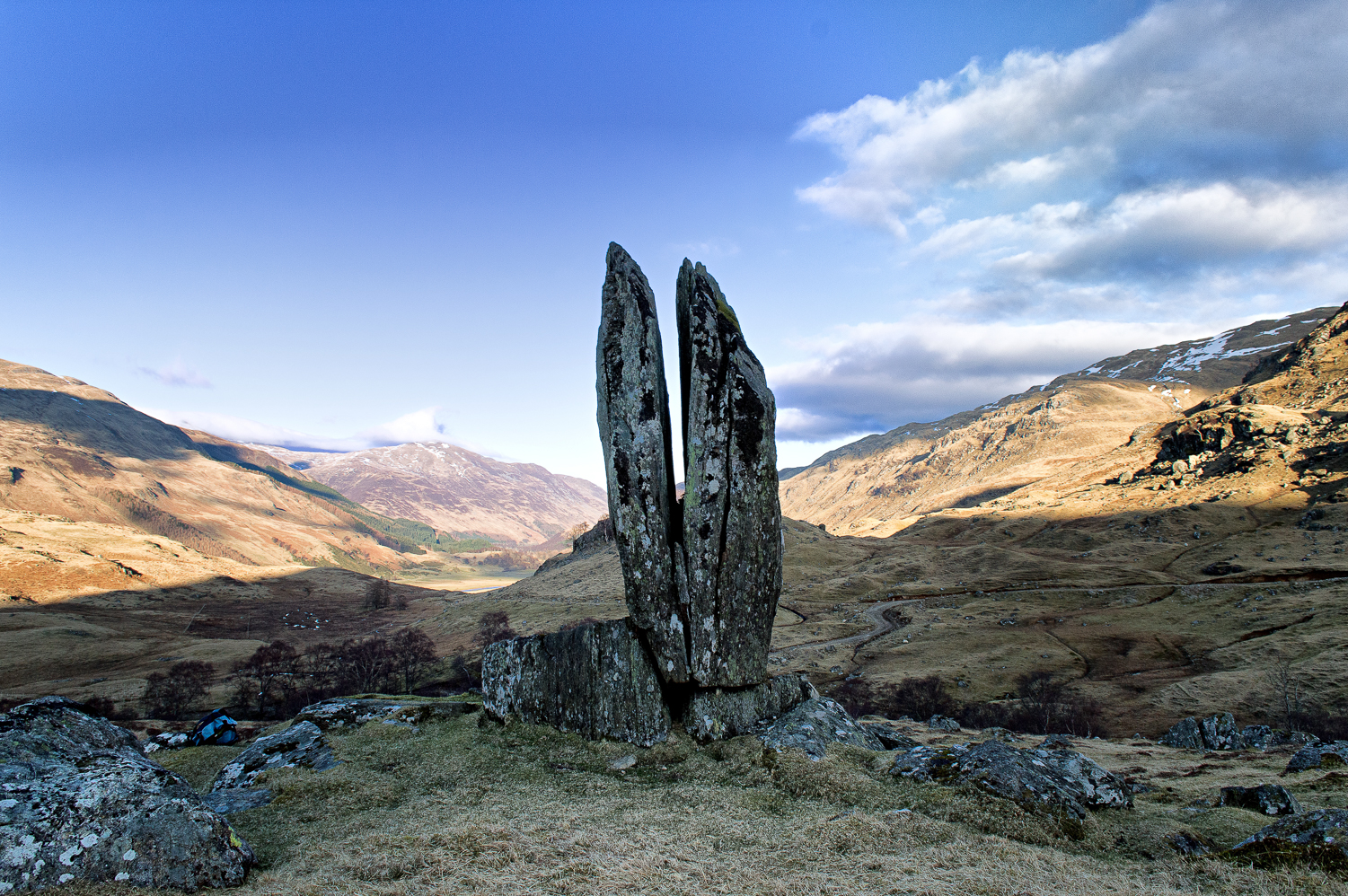
  2. Praying Hands of Mary 

Getting Here

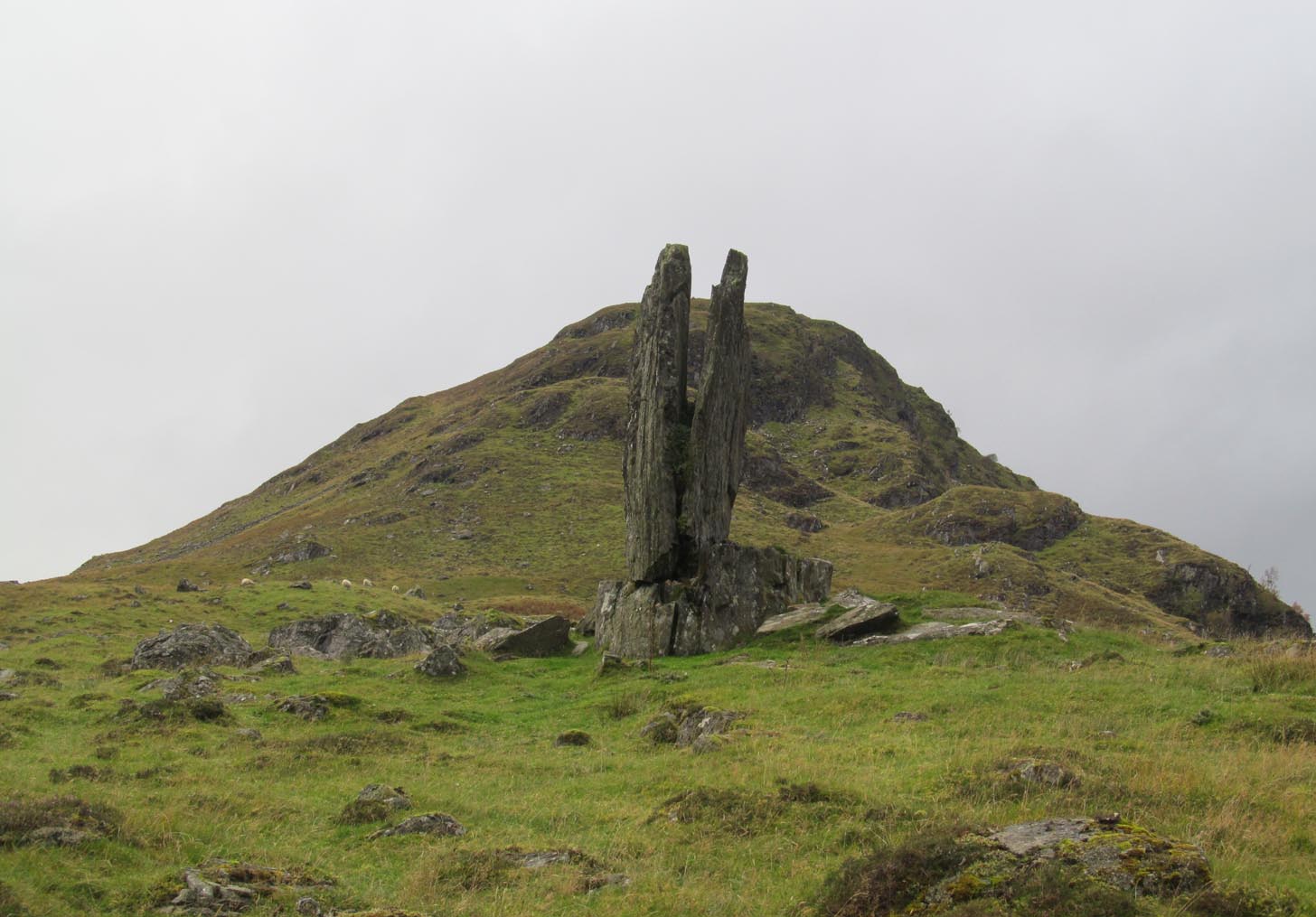
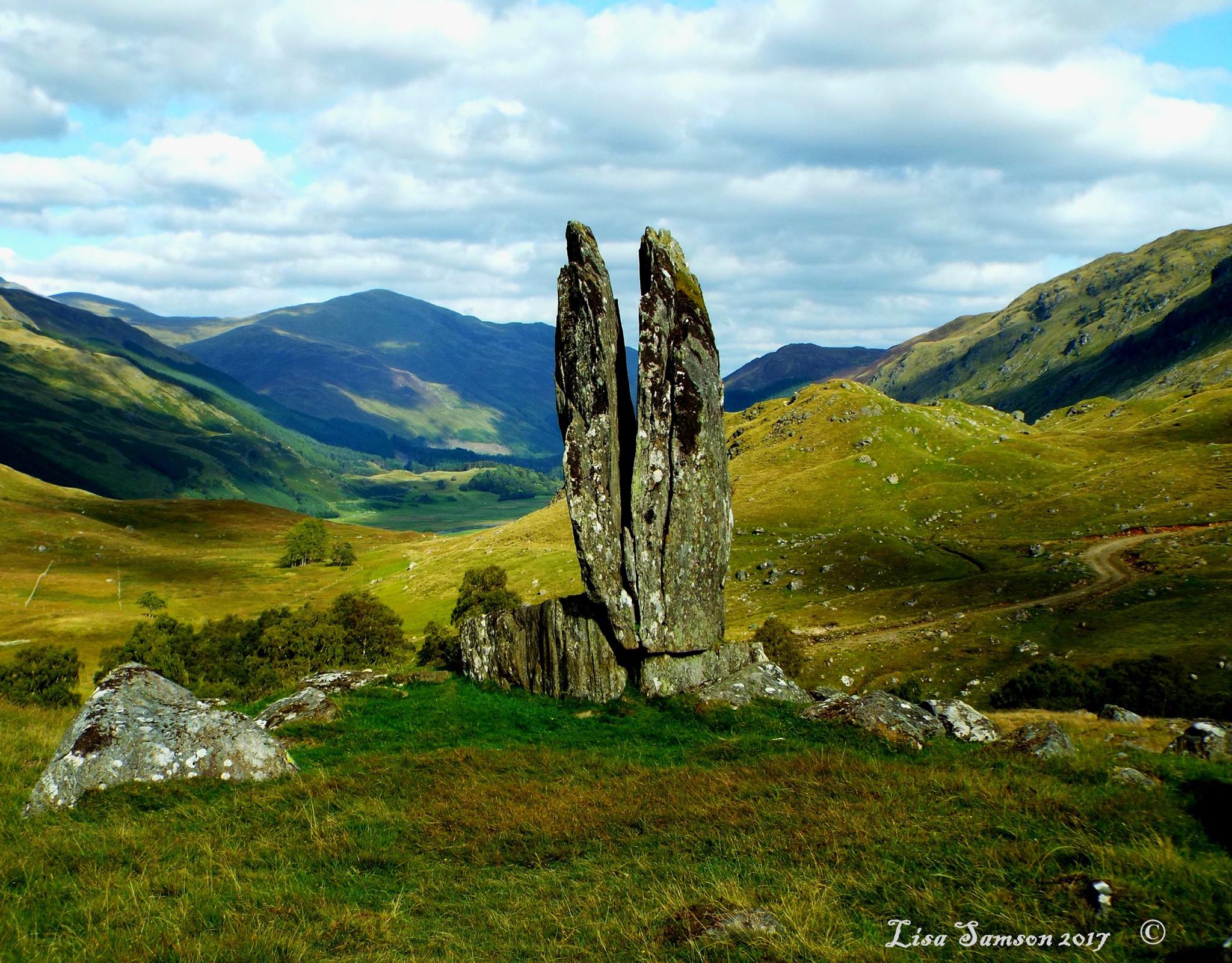
Clach na Sgoltadh, Glen Lyon (photo – Lisa Samson)

From Fortingall take the road into the legendary Glen Lyon.  About 8 miles along, a short distance past the Adamnan’s Cross standing stone, you reach the tiny hamlet of Camusvrachan.  On your left is a singular dirt-track, past some cottages.  Go along here and over the river bridge until you reach the junction on the other side.  From here, turn right and a half-mile on when you reach the farm and manor-house on your right, park up.  From here you’ll see a track going uphill.  Walk straight up and after a half-mile or so, keep your eyes peeled to your right.  You cannot fail to see this impressive giant on the slopes above you!

Archaeology & History

This is a truly mighty monolith! — a beauty no less!  Standing upon a rocky ridge nearly halfway along the glen, the landscape it looks across is, without doubt, some of the finest in the British Isles.  To our ancestors who, until just two hundred years ago peopled this and nearby glens in great numbers, this great stone would have been well known and had old myths told of it.  Today we have only bare fragments.

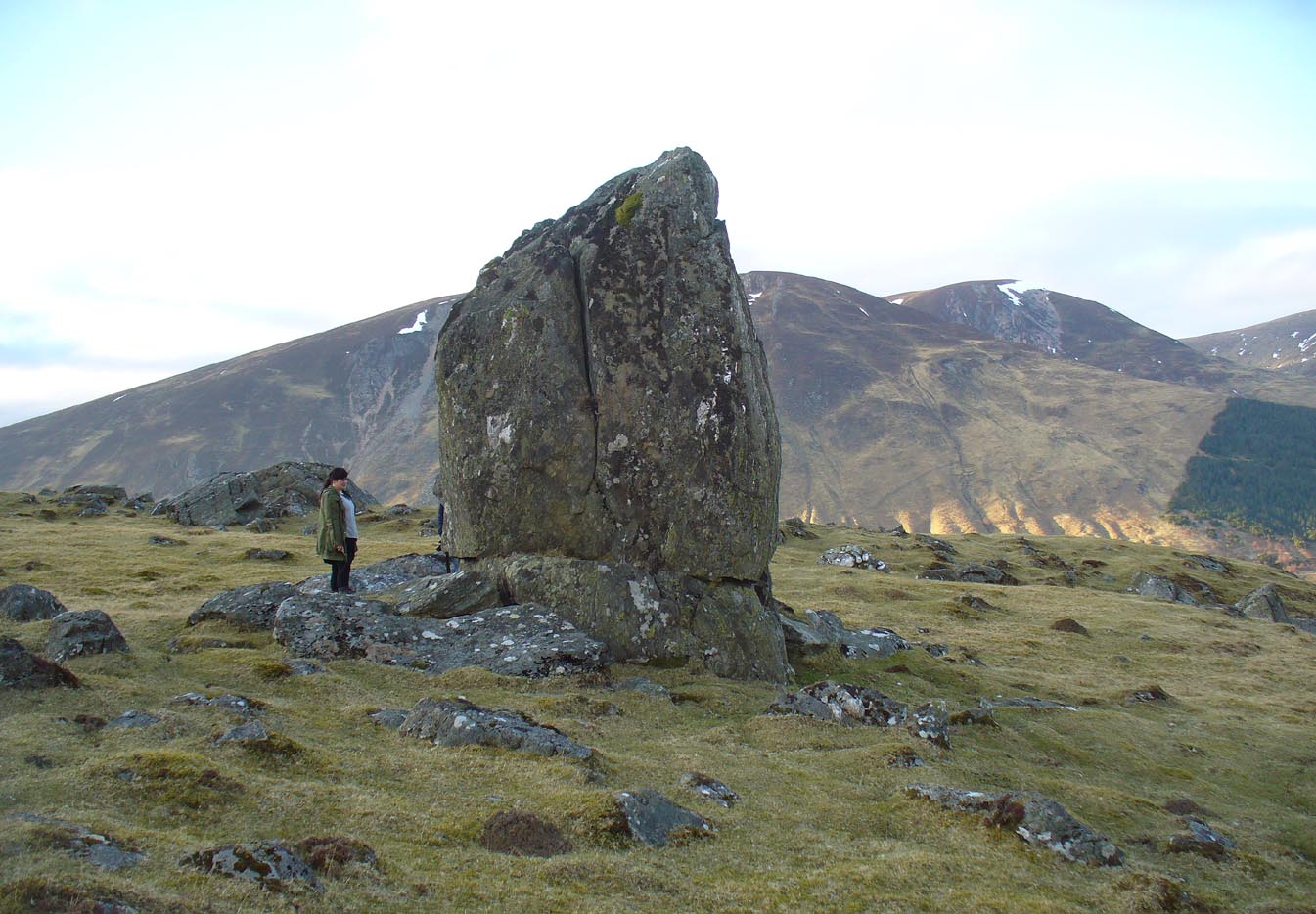
Clach na Sgoltadh (photo by James Elkington)

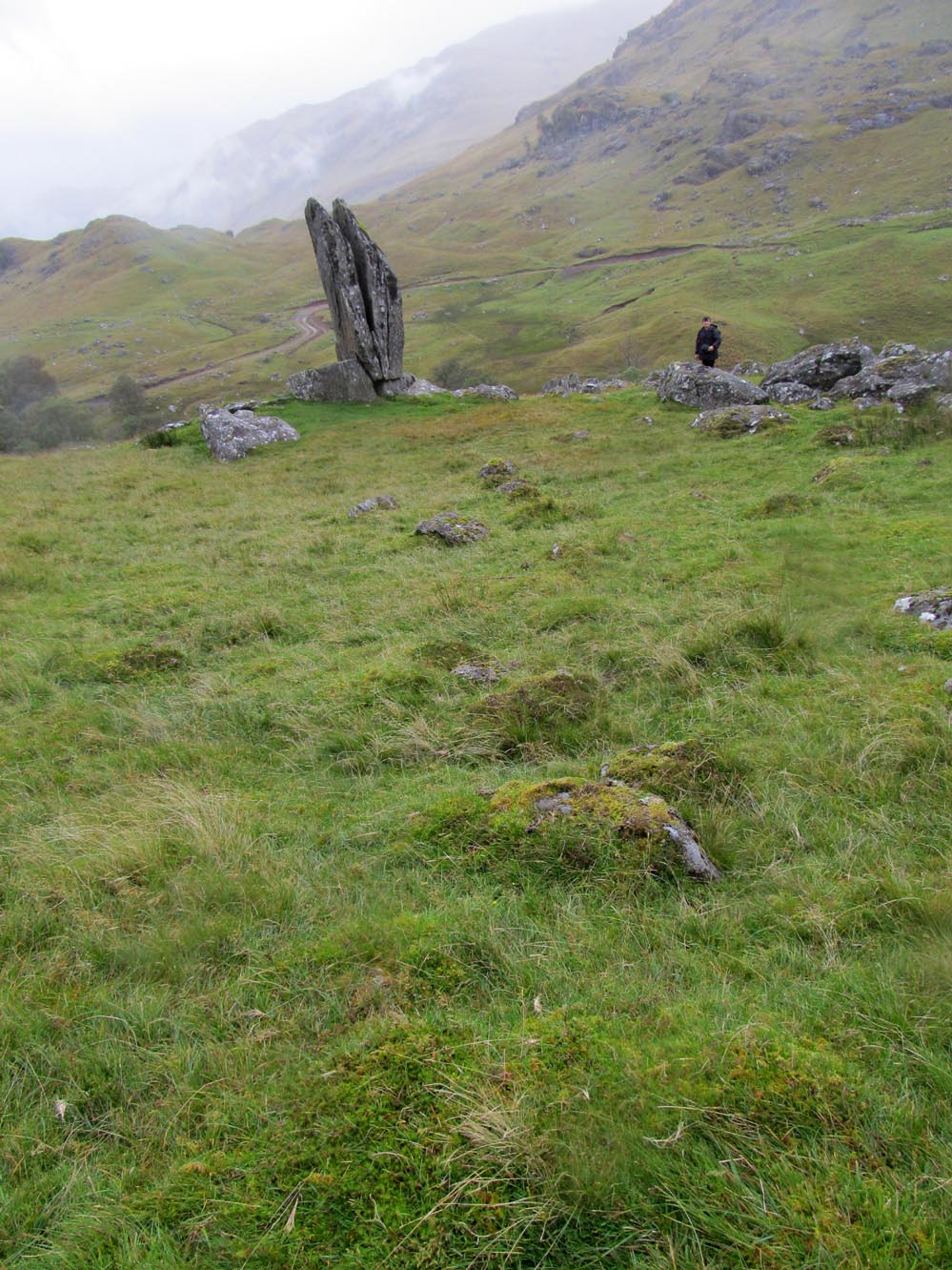
To give an ‘archaeological survey’ of any kind to this site would seem somewhat of an anathema, as it is generally deemed to be little other than one of Nature’s incredible creations.  We’ll come to that in a minute.  But what is quite certain is that a line of very old and very low-lying walling runs from up the slope and almost straight down to Clach na Sgoltadh.  You can see it pretty clearly in the photograph below.  The walling stops at the giant stone and continues no further downhill from the other side of the giant upright.

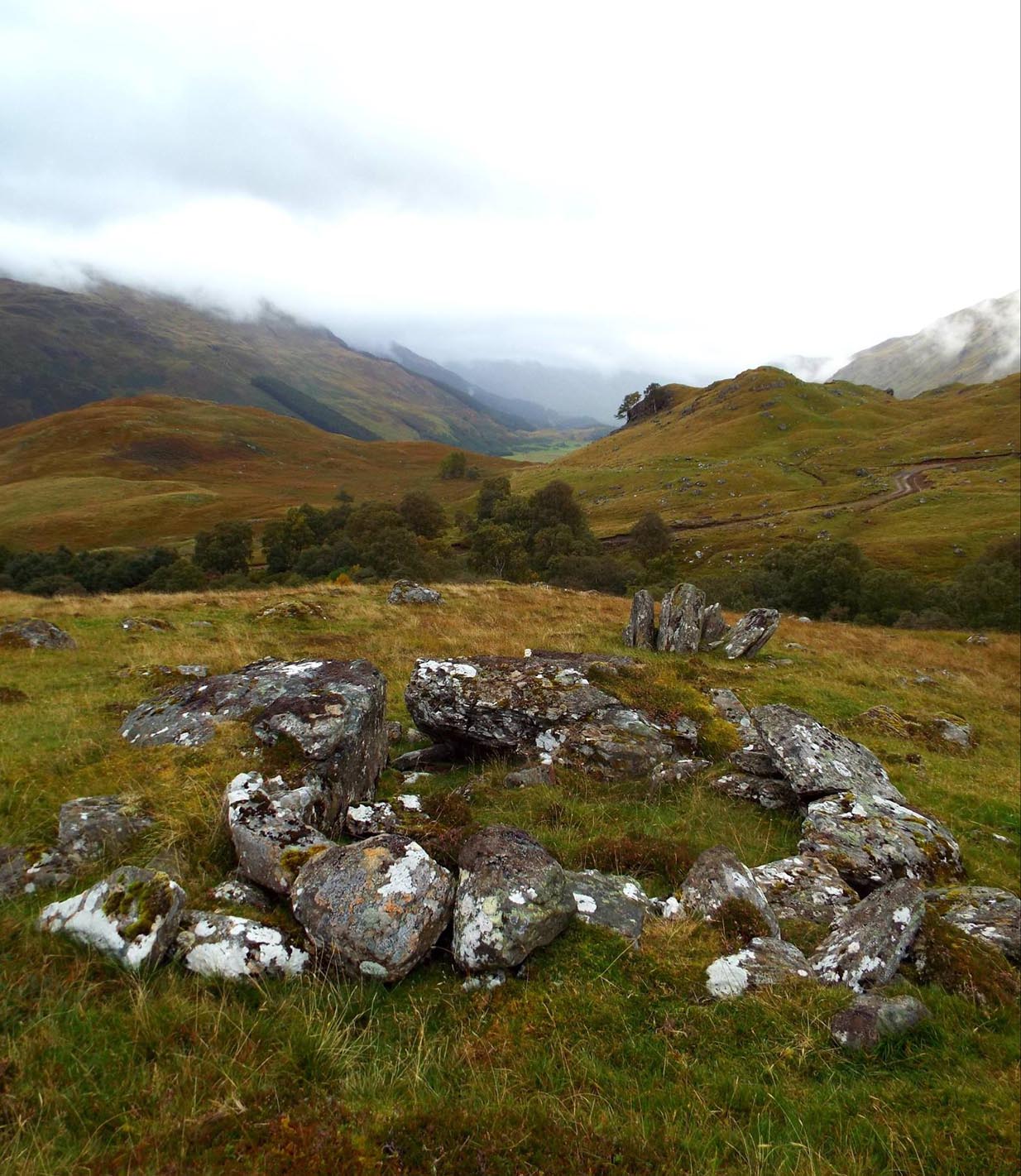
Walk diagonally down the slope about 30 yards south-east from the stone and you’ll find a small but distinctly man-made ring of stones, low to the ground, with an entrance on its northeastern side.  It’s somewhat of a puzzle as it’s too small for a hut circle (I laid down in it in various ways and found you’d have to lie foetal all night if you were to use it as  your own little abode), and it equally too small as an animal pen – unless it was for just one animal, which is most unlikely.  The small circular construction wouldn’t seem to be prehistoric, but it would be good to know what it is.

So, we do have some very slight archaeological association with the site, albeit minimal, with the very ancient walling that leads to the stone being the most intriguing.

Small stone ‘hut’
Low line of walling

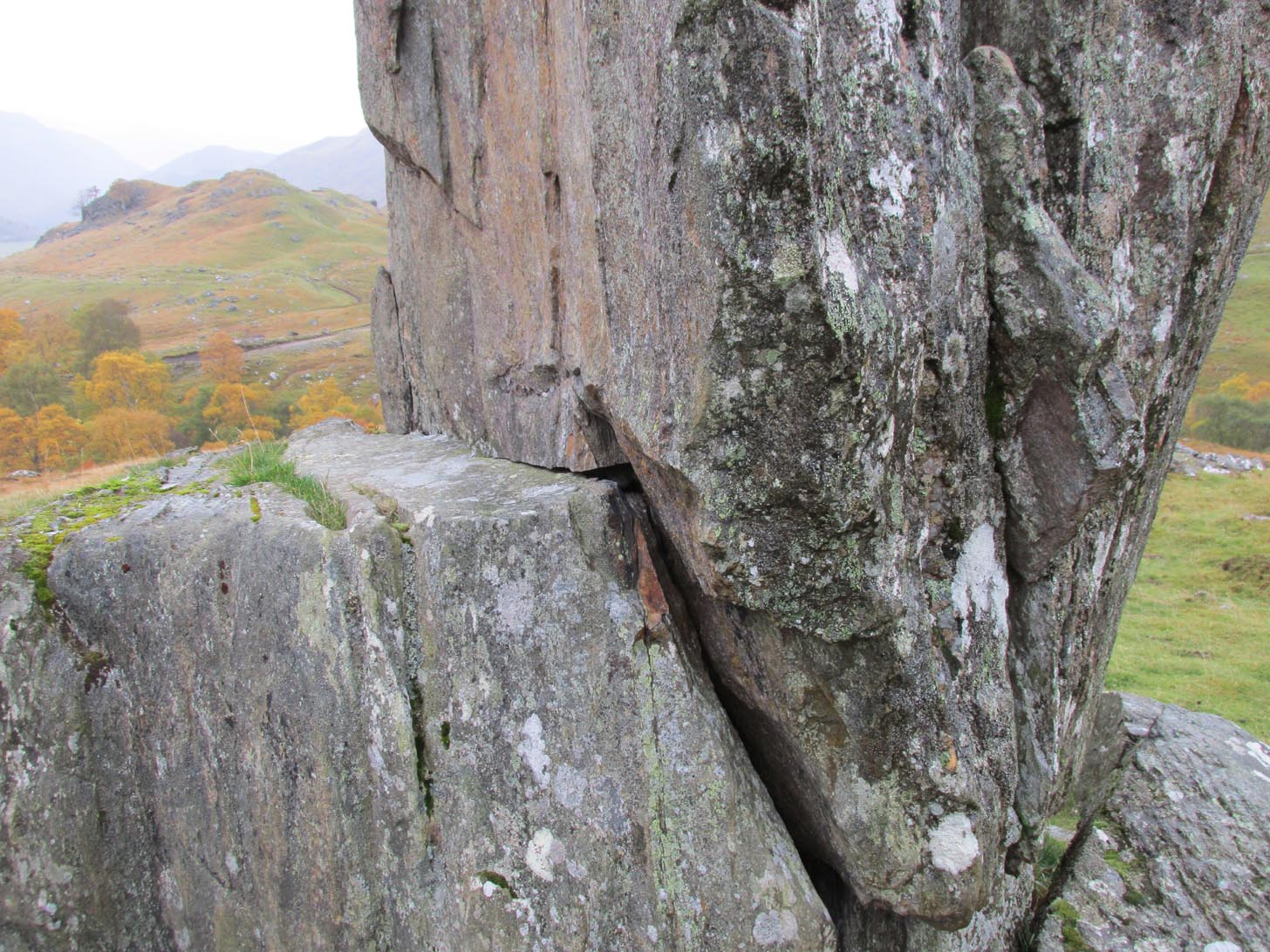
The stone is generally attributed to be a geological creation.  I certainly cannot say, as I have no expertise in the subject.  However, in the opinion of just about everyone with whom I’ve visited this stone, I seem to be the only one who doesn’t think it’s man-made.  A number of people have each insisted to me that it’s been stood upright by humans due to the quite distinct ‘squaring’ of the upright stone, particularly at the north-facing base.  —and been seemingly bemused at my own lack of conviction.  It does look as if it could have been cut and squared just as they all say but, let me repeat, I’m no expert at geology, and so all I can say is that I simply don’t know one way or the other. (useless prick that I am!)

“Perhaps a stone mason might know?” someone suggested—which seemed to be a good idea.  Certainly a stone mason would surely be able to tell if it had been cut and dressed at the base, where it fits into the large earthfast rock….

Cue Chris Swales: a reputable stone mason from near Skipton, North Yorkshire.  Chris and his friends took a week long whistle-stop tour in and around the Loch Tay region and thought they’d visit Glen Lyon.  I heard about this and so asked him if he’d have the time to visit this stone giant and, if possible, let us know his opinion: is is a natural obelisk, or does it look to have been erected by humans?  I told him my opinion and that of the geologists who give it an entirely natural provenance.

It was a few weeks later when he got back in touch and I asked him if he’d been up to Clach na Sgoltadh.

“I did,” he said. “it’s bloody impressive Paul.  And what a gorgeous landscape too.  I’d love to go there again.”

“Aye, it is Chris. And what did you think of the giant stone then?  In your opinion is it man-made or natural?”

“Well I don’t know for certain Paul,” he said, “but in my opinion I’m 95% sure that it’s man-made.”  He said it plain as day, just like a typical daan-to-Earth Yorkshireman.  Chris isn’t into any the energy ley-line stuff, so his words carry more weight than those who wanna spice-up a site by projecting their own beliefs onto a place.  As a result, I was somewhat taken aback by his words.

“What—are you sure Chris?!” I asked.

Cut & dressed stone?

“Like I said – I’m not 100% sure Paul.  I can’t really say it 100% – but I’m 95% certain that people cut and dressed the base of that stone and put it there.  If it’s natural, then I’d like to know how they think that’s the case.  I’m willing to be shown otherwise, but in my opinion, on the whole, it’s man-made.  People stuck that stone there!”

It would be great to get another stone mason’s opinion about this site; and it would definitely be good to read a geological viewpoint, but I’m not aware of any papers regarding this stone. (does anyone know of any?)  For my part:  I can only reiterate that I’m ‘unsure’ whether or not this is man-made.  I’m simply not qualified to give an objective opinion.

The curious thing is:  if this is Nature’s handiwork, then it would have been held in greater reverence to our ancestors than if it had been erected by people.  Impressive creations of Nature were always deemed to be inhabited by genius loci of truly archaic potency.  And in these deep impressive mountains, where the names of nature spirits still abound, this—without doubt!—would have been a place of considerable awe and sanctity.  May it remain as such…

Folklore

Looking to the west immediately uphill and behind Clach na Sgoltadh is the rising rounded hill of Creag nan Eildeag.  Legend has it that the great Celtic hero Fionn stood atop of this crag and fired one of his arrows at the stone, splitting it in half and leaving the stone as we see it today.

In a small cleft in the stone, quartz deposits can be seen along with an effigy of the Virgin Mary.  However, the title of the Praying Hands of Mary is a modern attribution and has no historical or mythic veracity.

References:

  1. Stewart, Alexander, A Highland Parish; or, The History of Fortingall, Alex MacLaren: Glasgow 1928.

Links:

  1. Clach na Sgoltadh on The Megalithic Portal

Acknowledgements:   Huge thanks to James Elkington and Lisa Samson for use of their photos.

© Paul BennettThe Northern Antiquarian


Clach Mhallaichte, Cromarty, Ross & Cromarty

Legendary Rock:  OS Grid Reference – NH 7949 6746

Also Known as:

  1. Clach Mallach
  2. Clach na Mallachd
  3. Clackmalloch Rock
  4. Stone of Cursing

Archaeology & History

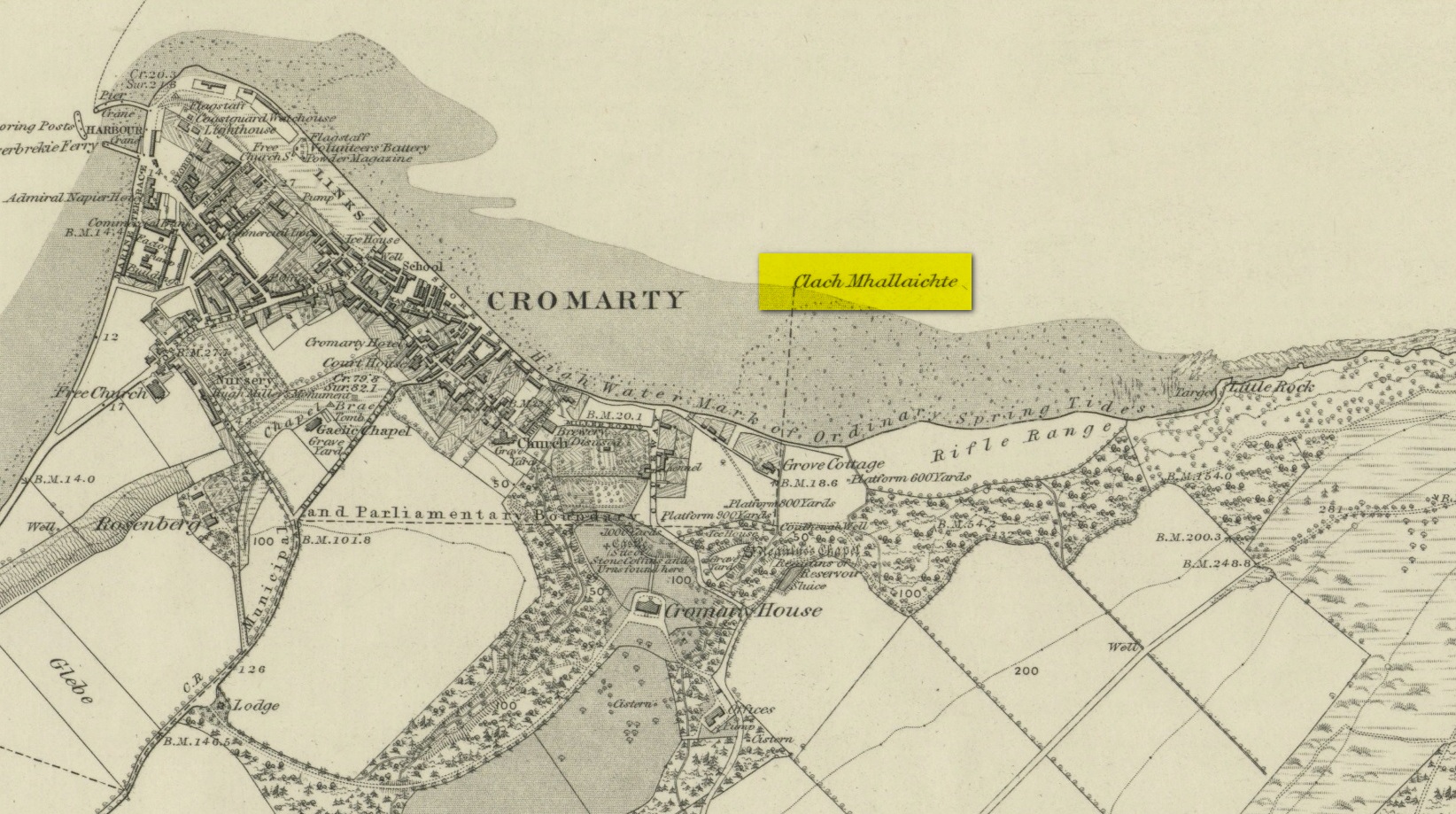
Stone shown on 1880 map

This large boulder found off the Cromarty coast, was highlighted on the 1880 OS-map of the region.  It is one of the ancient boundary stones of the township.

Folklore

We know from the vast array on the folklore of stones that many were imbued with magickal abilities, some of which were witnesses to vows and others to make curses from.  This large boulder off the coast of Cromarty was, according to Donald MacKenzie (1935), a place where the latter used to be done.  He told us:

“At Cromarty there is a big boulder known as the Clach na Mallachd (‘Stone of Cursing’).  Curses were delivered when an individual stood or knelt bare-kneed upon it.”

In an earlier account by the Ordnance Survey lads in one of their Name Books, they gave the following tale that had been narrated to them:

“A large stone Situate at the Low Water, and forming one of the boundary Stones of the burgh, the reason of its having this name is, that a young lad while Sitting on it was overwhelmed by the advancing tide and drowned, his mother when told of it, cursed the stone, hence the name Clach Mallach (Accursed Stone)”

References:

  1. MacKenzie, Donald A., Scottish Folk-lore and Folk Life, Blackie: Glasgow 1935.

© Paul BennettThe Northern Antiquarian


Kendal Maypole, Kendal, Westmorland

Maypole (destroyed):  OS Grid reference – SD 5161 9212

Archaeology & History

Long since gone, it’s existence was recorded by, amongst others, the Kendal historian Cornelius Nicholson. (1861)  He described it in relation to one of the town crosses, that was removed due to it being “an obstruction in the street.”  The maypole too, he said,

“was another incumbrance, but indispensable, according to the custom of our forefathers.  It stood in Kirkland, opposite the house of the late Thomas Reveley, Esq., and was suffered to remain till within eighty years ago.  In the time of our good Queen Katherine, who may fairly be supposed to have partaken of the amusements, countenanced by her royal consort, the original festivity of maying and morris-dancing would be here celebrated, by the annual ceremony of “maying” when, immediately after sunrise, on the 1st of May, processions, entering the town at various inlets, streamed through the streets, with music of horns and flutes; boys with their May-gads (willow-wands twined with cowslips), and girls with their “brats” full of flowers — young and old alike joining in merry laughter, and song, and the customary chorus, “We have brought the summer home.”  When the above-named ceremonies became less fashionable, the May Pole was made the rendezvous of all the milkmaids in the neighbourhood, who came and paraded round it on Easter Mondays.  On other occasions of rejoicing, afterwards, such for instance, as terminating an apprenticeship, and the like, it became customary for young men to go and dance around it.”

The author then told that this annual village ceremony was still being performed at the beginning of the 19th century, “in the assemblage of young people in the Vicar’s Fields, on Easter Tuesday.  After spending the afternoon there, they returned in procession through the streets, threading grandy needles.”

References:

  1. Nicholson, Cornelius, The Annals of Kendal, Whitaker & Co.: London 1861.

© Paul BennettThe Northern Antiquarian

Byrnand Hall Cross, Knaresborough, North Yorkshire

Wayside Cross (Destroyed): OS Grid Reference – SE 3519 5694

Also Known as:

  1. Pastscape ID 53278
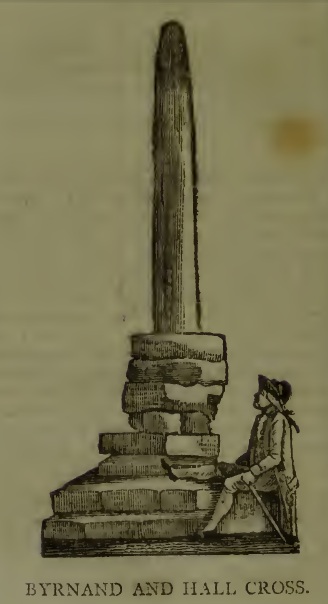
1790 sketch

Archaeology & History

This long lost Cross could once be seen close to the Tudor era Byrnand Hall, which stood on the north side of the High Street.  The Hall was demolished around 1780, and replaced by the present building, which is now a political club. The Cross was taken down around the same time, so we’re very fortunate to have a contemporary sketch.

Harry Speight (1906), the Great Yorkshire antiquarian, described the Cross when he was writing of the ‘big houses’ of Knaresborough, saying:

“Another notable old mansion was Byrnand Hall, which stood at the top of the High Street facing Gracious Street, and was rebuilt about a century ago. It was the property and seat for many generations of one of the leading families of Knaresborough, named Byrnand, one of its members being recorder of York in 1573. Opposite the house stood a very ancient stone cross, consisting of a plain upright column, without date or inscription, supported by several rudely-formed stones placed on three tiers or steps. It appears that one Richard Byrnand paid a fine and was permitted to enclose a cross standing on a piece of waste land then lately belonging to Robert Nessfield. The cross may be conjectured to have been either a memorial or boundary-stone. In those days ” it was not enough,” says the old antiquary, Hearne, ” to have the figure of the cross both on and in churches, chapels, and oratories, but it was put also in church-yards, and in every house, nay, many towns and villages were built in shape of it, and it was very common to fix it in the very streets and highways.

“This ancient relic, the site of which is now marked by a brass cross sunk in the causeway, was in after times called the Byrnand Hall Cross, from its proximity to the house of the same name.  It stands on the road equidistant between York and Leeds, being eighteen miles from either place.”

At the end of the eighteenth century, E. Hargrove wrote:

“The (Byrnand) family mansion was situated at the end of the High-street, leading towards York.  Near it formerly stood an ancient Cross, which being placed on the outside of the Rampart, and opposite to the entrance into the borough, seems to have been similar in situation, and probably may have been used for the same purpose, as that mentioned by Mr. Pennant, in his History of London, which stood without the city, opposite to Chester Inn; and here, according to the simplicity of the age, in the year 1294, and at other times, the magistrates sat to administer justice.  Byrnand-Hall hath been lately rebuilt, by Mr. William Manby, who took down the remains of the old Cross, and left a cruciform stone in the pavement, which will mark the place to future times.”

Abbot J.I. Cummins, writing in the 1920s about the Catholic history of Knaresborough, told:

“Of the Byrnand Cross beyond the old town ditch the site is now marked in York Place by a brass cross let into the pavement for Christians to trample on.”

The Cross occupied an important position in the Knaresborough of old, at one of the highest points of the town by the junction of the modern High Street and Gracious Street, this latter being the road down the hill to the riverside and the troglodytic shrines of St Robert of Knaresborough and Our Lady.

Assuming the eighteenth century drawing is an accurate representation of the Cross, it does give the impression of considerable antiquity, and looks to have been 15-16 feet (4.75m.) high.  From its appearance it looks like either a prehistoric monolith or an Anglo-Saxon ‘stapol‘ or column, and if it was the latter, it may have been erected to replace an earlier heathen wooden column or sacred tree following the replacement of the old beliefs by Christianity.  If so, there may be no reason to deny Hargrove’s speculation that Byrnand Hall Cross once had a similar juridical function to the Chester Inn Cross in London.

References:

  1. Bintley, Michael D.J., Trees in the Religions of Early Medieval England, Woodbridge, Suffolk, Boydell Press 2015.
  2. Cummins, J.I., “Knaresborough,” in The Ampleforth Journal, Vol XXIV, No II, Spring 1929.
  3. Hargrove, E., The History of the Castle, Town and Forest of Knaresborough, 5th Edition, Knaresborough 1790.
  4. Speight, H., Nidderdale, from Nun Monkton to Whernside, London, Elliot Stock, 1906.

© Paul T. Hornby, 2020

(Note – Knaresborough was at the time in the historic County of the West Riding of Yorkshire)


River Avon Stone, Bulford, Wiltshire

Standing Stone (lost):  OS Grid Reference – SU 161 432

Archaeology & History

In William Stukeley’s Stonehenge, he described a number of monoliths outlying Salisbury Plain that also possessed a prehistoric pedigree.  Most of them have been recorded, but this one seems to have been forgotten about — perhaps by virtue of it having fallen into the River Avon!  Edgar Barclay (1895) described it in his fine survey, saying:

“In the bend of the river below the village, is a large submerged stone; only during drought is any portion of it visible above water; it can, however, in ordinary times, be dimly seen from the bank, which is of chalk, here very steep and overgrown.  The country people assert that a metal ring, “turning always,” is let into its upper end.  Legend relates that when the Devil brought the rocks of Stonehenge from Ireland, tied together with withes, this stone escaped from the bundle and fell into the river.  Its position forbids the belief that it got fixed in the bed of the stream when its passage to Stonehenge was being attempted, for it lies immediately beneath the crest of a very steep bank, and at its most inaccessible point; as the stream sweeps against this, the water must always have been deep at this spot, the open valley would everywhere offer more favourable points for such an operation, especially would this be the case before the Avon was dyked.  A boundary stone would have been placed on the brow of the hill; if the stone be a grey-wether, as report says, and as is probable, it may originally have stood on the bank, and “once upon a time”, a ring having been fixed in it, it may have been dragged into the stream to moor a ferry-boat.  It lies closely midway between the stone on Bulford Down and that in Durrington fields.”

One wonders if any local people might know more about this…

References:

  1. Barclay, Edgar, Stonehenge and its Earth-works, D. Nutt: London 1895.

© Paul BennettThe Northern Antiquarian

St James’ Cross, Barton-upon-Humber, Lincolnshire

Cross (destroyed):  OS Grid reference – TA 0424 2064

Archaeology & History

This long lost wayside cross was described in various local records from 1621 upwards.  In the definitive place-name survey of this area, Kenneth Cameron (1991) told us that this was,

“A medieval cross dedicated to St James, situated at the point where the Thornton and Burnham roads meet… Mr R. Newton comments, “said to have replaced a wayside shrine.  The foundations of the shrine were exposed when the Home Guard dug a defensive trench there at the beginning of the last war.  Foundations destroyed by a bomb.””

References:

  1. Cameron, Kenneth, The Place-Names of Lincolnshire – volume 2, EPNS: Nottingham 1991.

© Paul BennettThe Northern Antiquarian

Dawe’s Cross, Cambridge, Cambridgeshire

Cross (destroyed):  OS Grid Reference – TL 455 578

Archaeology & History

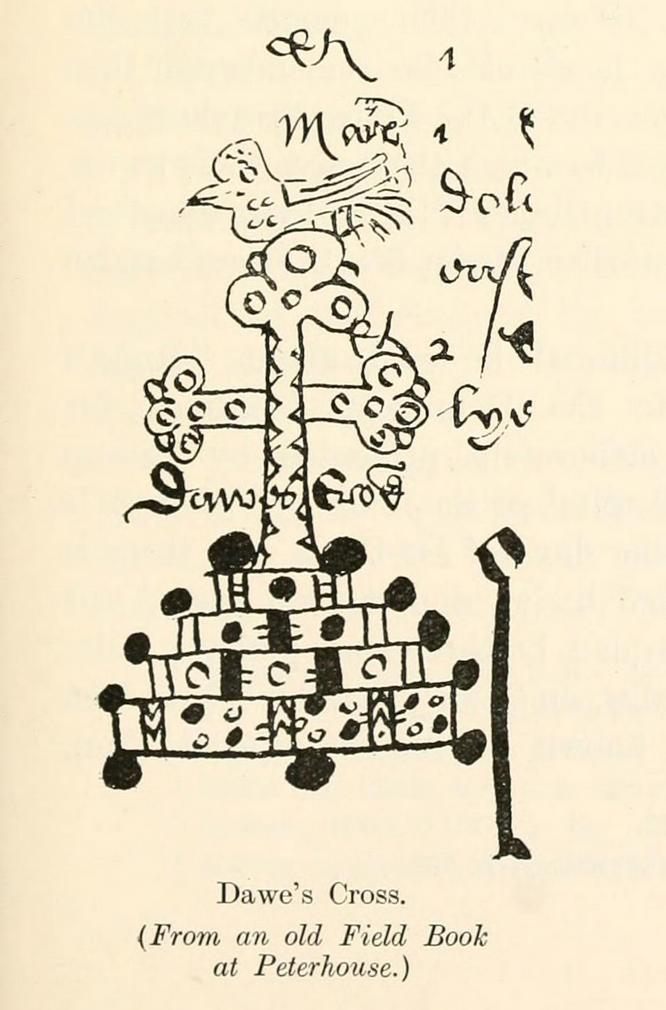
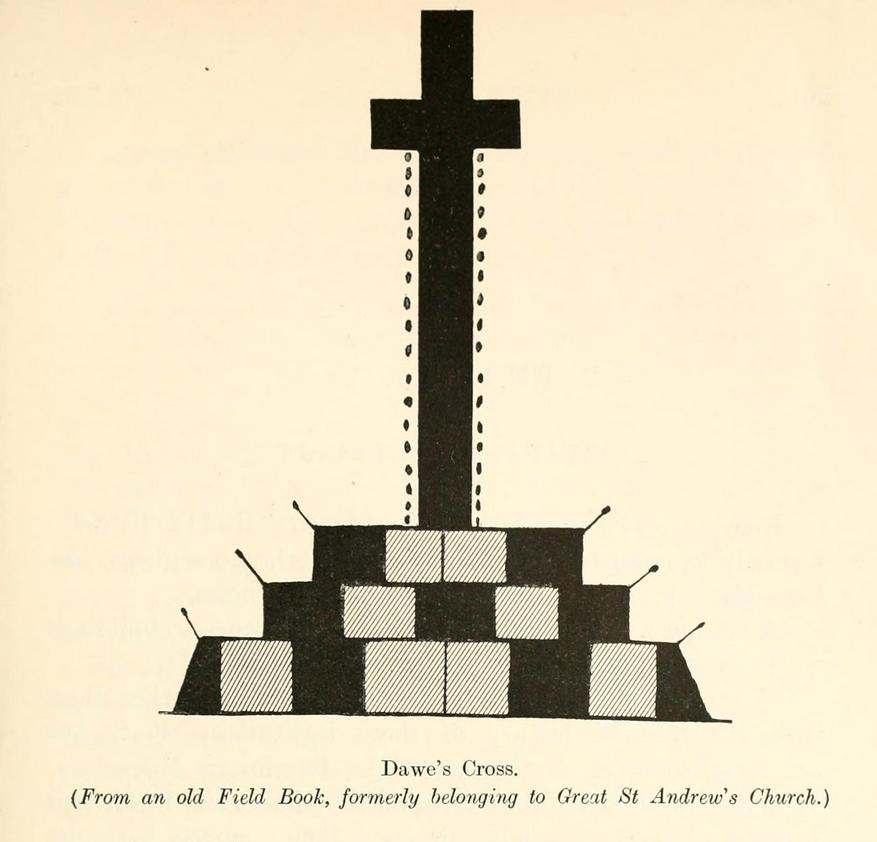
This is one of several medieval stone crosses in Cambridge that were destroyed several centuries ago.  This particular one was erected on a three-stepped stone base at the old crossroads where, today, the modern A1307 of Regent Street meets the A603 Lensfield Road.  It was described in an old Field Book of 1575 as standing being beside an old poplar tree, long gone.  Mr H.P. Stokes (1915) gave us a short account of the site, telling:

“In describing the lane called “Deepway” between the London Road and the Hadstock Way and known as “King’s Lane” from the latter road to Hinton Way, mention was made of a Cross (called Dawe’s Cross) which stood at what is now known as Hyde Park Corner.  Dawe’s Cross is often mentioned in ancient deeds, and in an old Field Book, which formerly belonged to the vestry of the Church of St Andrew the Great, there was a most interesting representation of it.  This is here reproduced…from a copy in the celebrated Bowtell MSS.”

The cross stood along one of Alfred Watkins’ (1932) “archaic tracks”, or leys, in this area—although he wasn’t aware of its existence.

References:

  1. Stokes, H.P., Outside the Barnwell Gate, Cambridge Antiquarian Society 1915.
  2. Watkins, Alfred, Archaic Tracks round Cambridge, Simpkin Marshall: London 1932.

© Paul BennettThe Northern Antiquarian

Bradshaw Cross, Long Lane, Nether Wyresdale, Lancashire.

Wayside cross: OS Reference – SD 52474 51414

Also Known as :

  1. Historic England Grade II Listed Building No. 1163927 

Getting Here

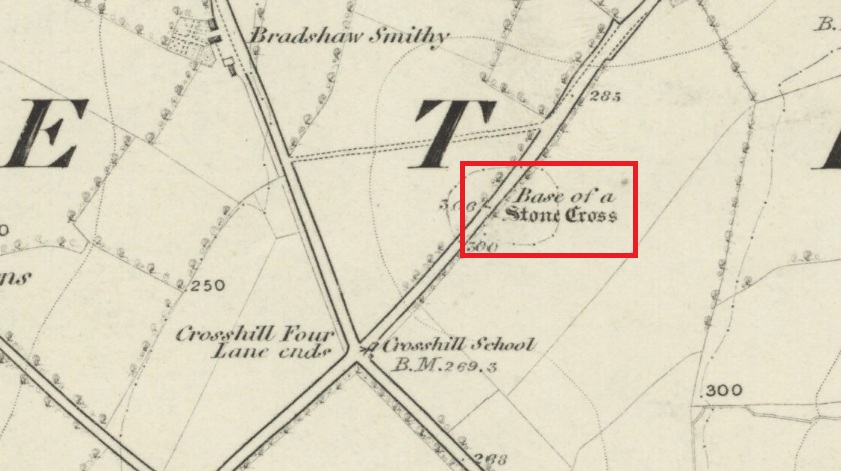
Cross shown on 1846 map

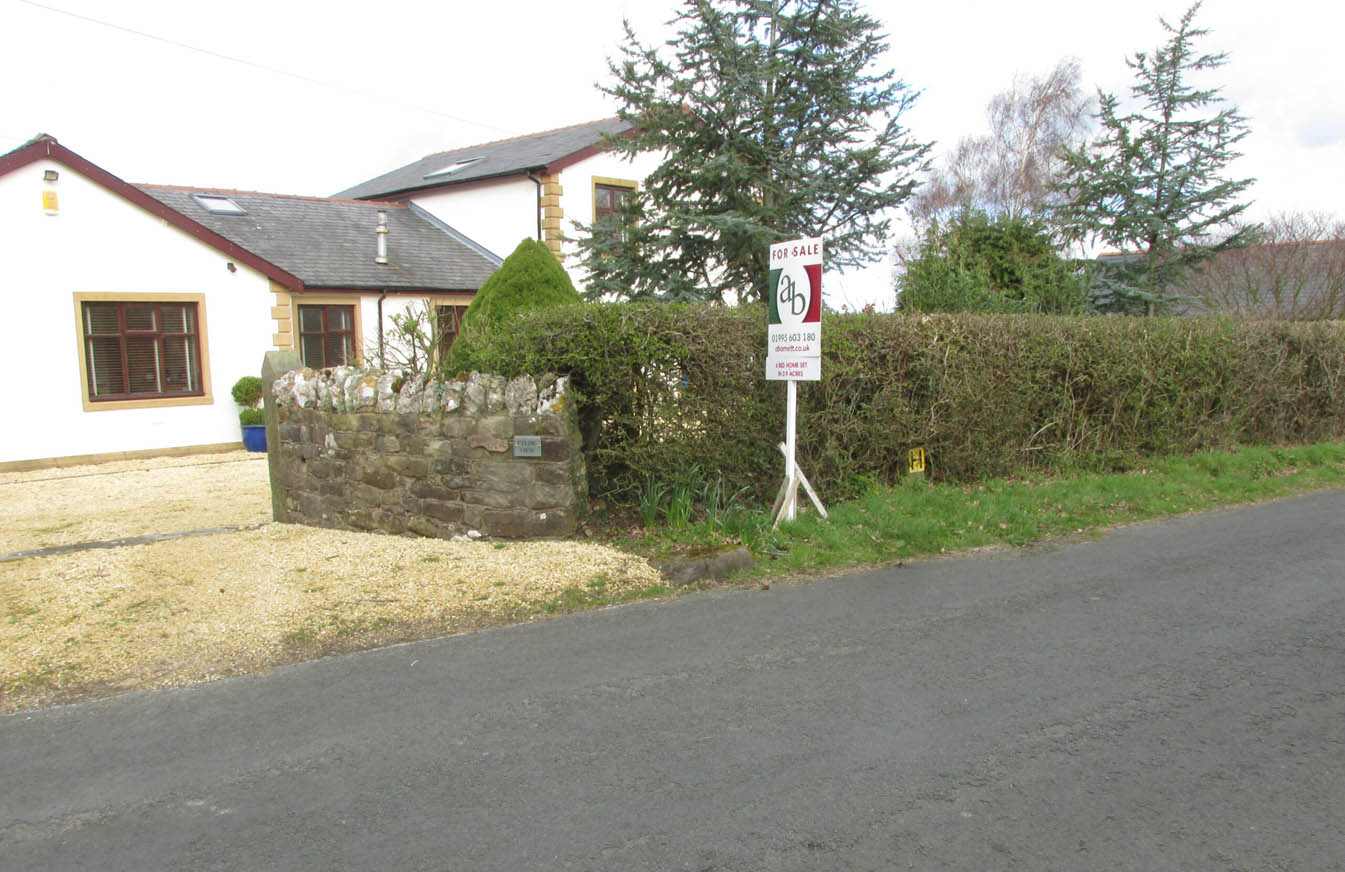
Follow Long Lane northwards from Scorton, over the crossroads at Crosshill Four Lane Ends, and the cross base will be found at the road edge immediately to the right of the driveway of ‘Sandalwood’ on the left hand side of the road.

Archaeology & History

Described in the Historic Buildings listing citation as:

“Cross base, probably mediaeval. A sandstone boulder, roughly rectangular, with rectangular socket.”

Cross base at the roadside
‘A sandstone boulder, roughly rectangular’

The base of one of the numerous mediaeval wayside crosses that once adorned this part of Lancashire. So what happened to the cross? It’s possible that it was wilfully destroyed in the early nineteenth century as we have a likely culprit in the person of the Reverend Richard ‘Cross Smasher’ Wilkinson (c.1791 – 1823), Curate of Whitechapel, who took it upon himself to destroy the symbol of his religion wheresoever he could find it.

Immediately to the north west of the Cross is Cross Hill.  The cross itself was probably a waymarker on the road over Harrisend Fell from Oakenclough, and Bradshaw may be the name of the locality, there being a Bradshaw Bridge just outside Street to the north west, while the 1846 6-inch OS map records a ‘Bradshaw Smithy’ on the same road.

Note: More has been recorded about Wilkinson in the profile of Stump Cross, near Goosnargh.

Reference:

  1. Taylor, Henry, The Ancient Crosses and Holy Wells of Lancashire, Sherratt and Hughes, Manchester, 1906

© Paul T Hornby, The Northern Antiquarian, 2020