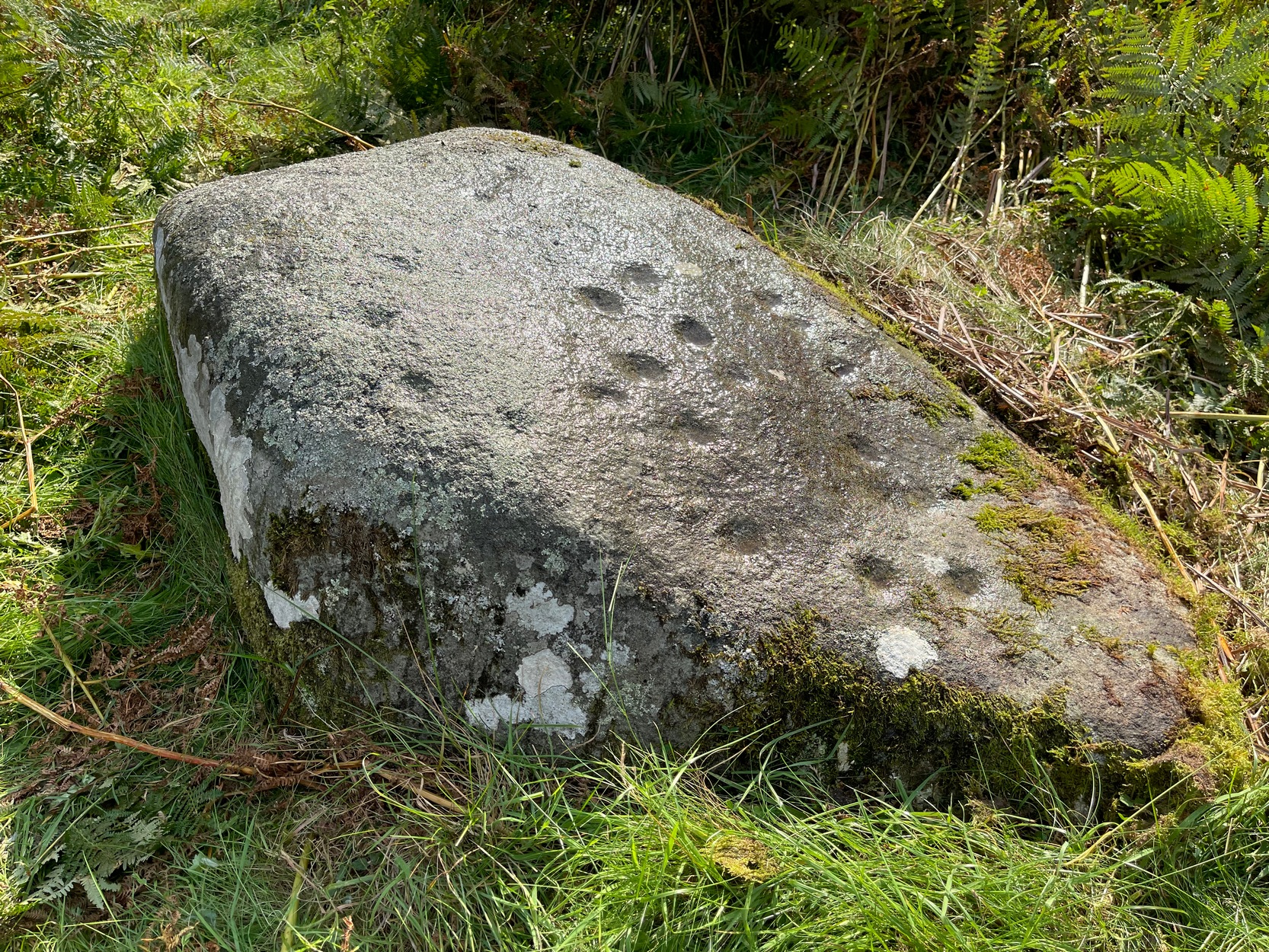
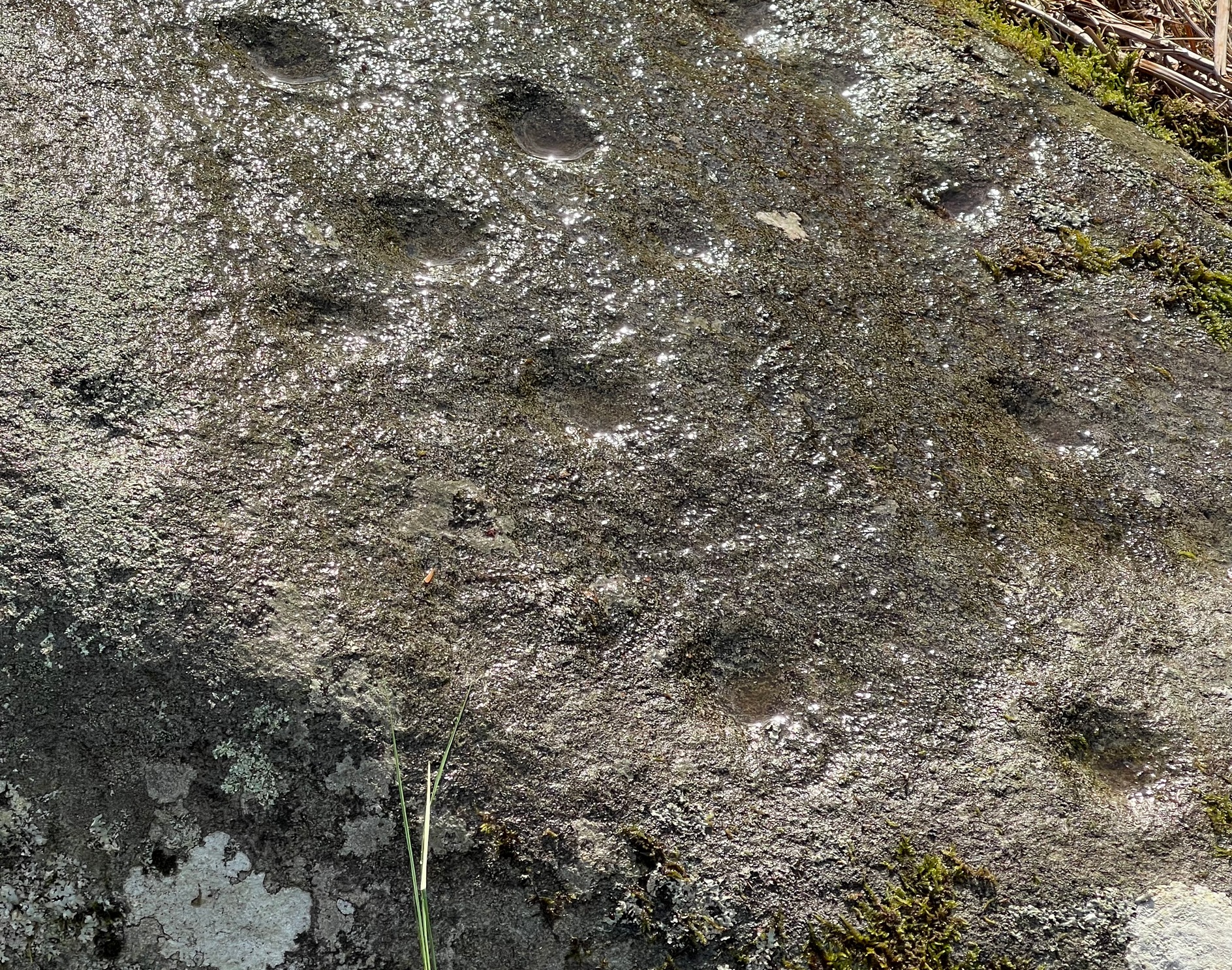
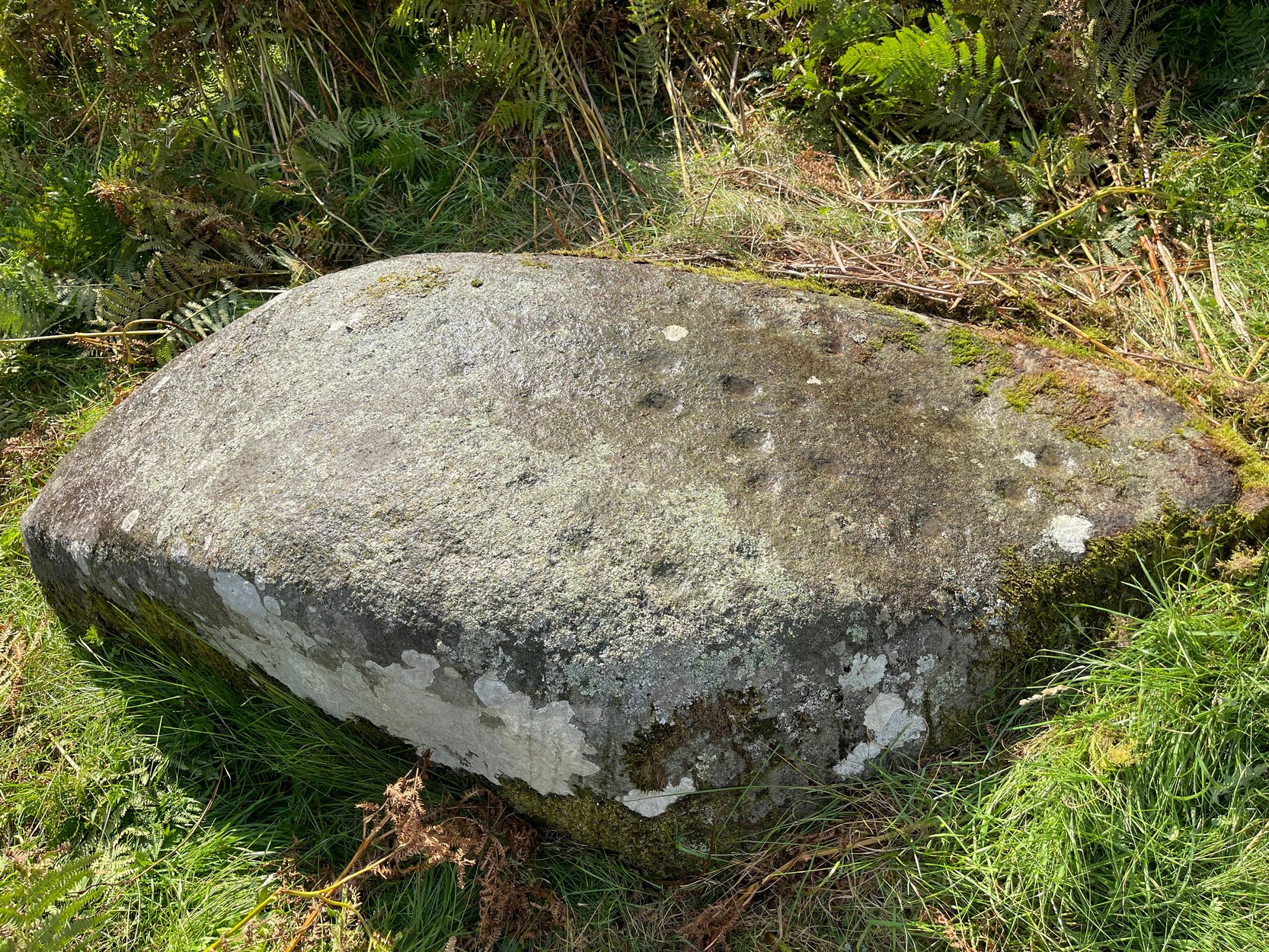
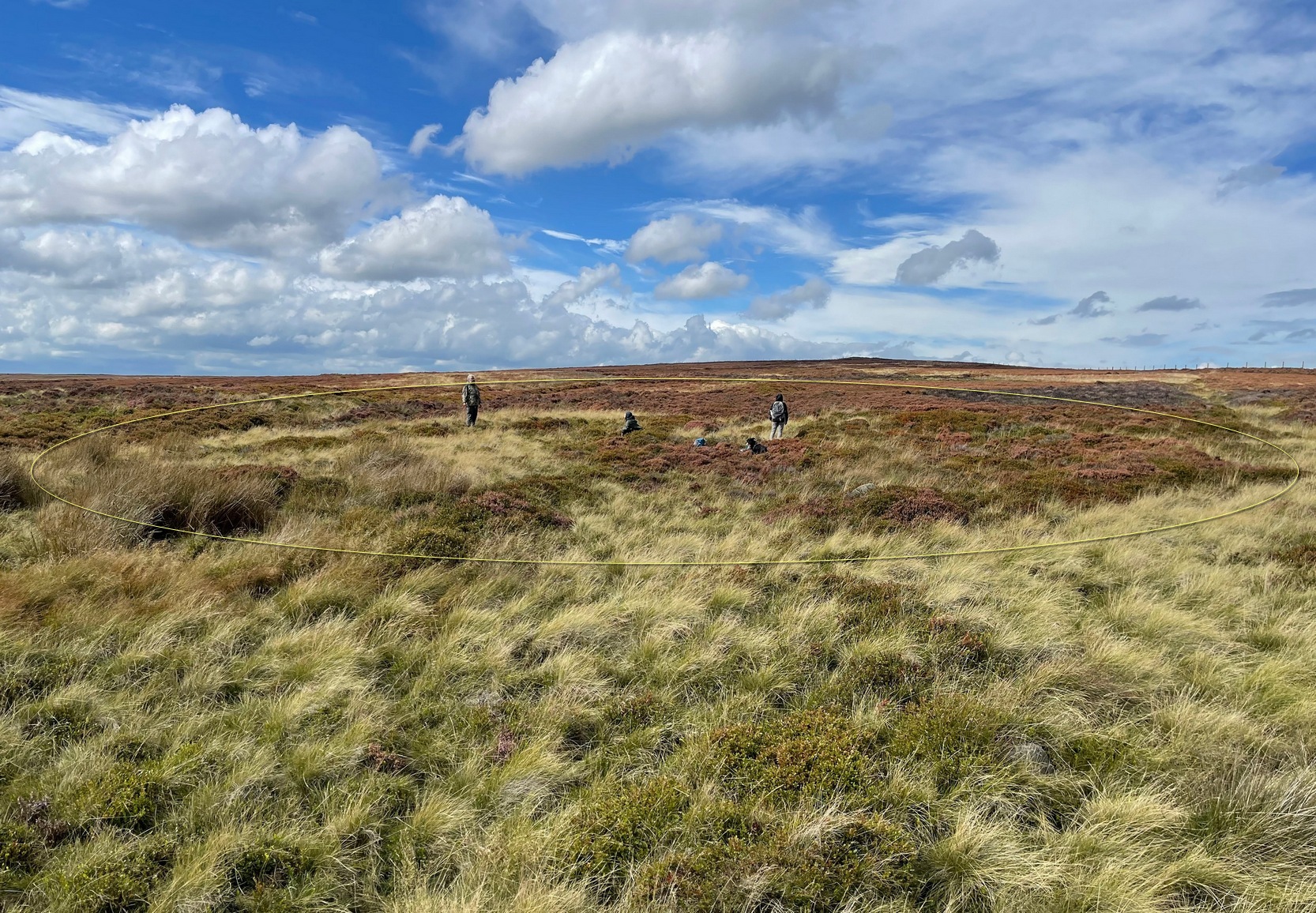
Pitcorthie, Dunfermline, Fife

Standing Stone:  OS Grid Reference – NT 11389 86318

Also Known as:

  1. Easter Pitcorthie

Getting Here

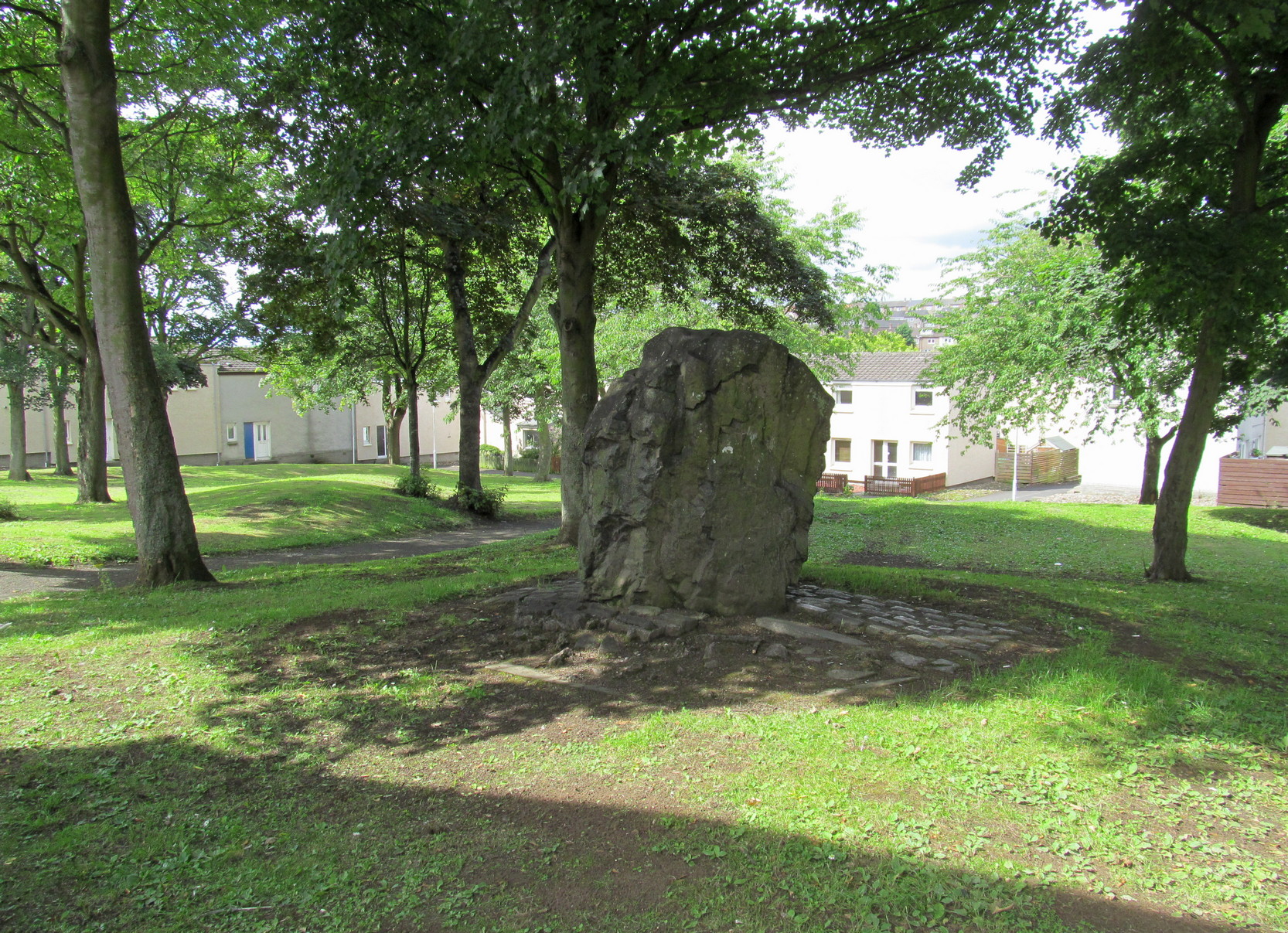
Pitcorthie standing stone

If you’re coming south out of Dunfermline, or north towards Dunfermline, make sure you go along the A823 Queensferry Road.  About a mile short of the town centre you need to turn east along the B916 Aberdour Road.  Nearly 1 mile along here, shortly past the Tesco supermarket, turn left along Tweeddale Drive.  About 50 yards down here, turn left again along Walls Place.  About 120 yards along you’ll find a small ginnel/path that runs between two rows of flats on the council estate.  Walk down here for a short distance and the stone will magically appear on your right.

Archaeology & History

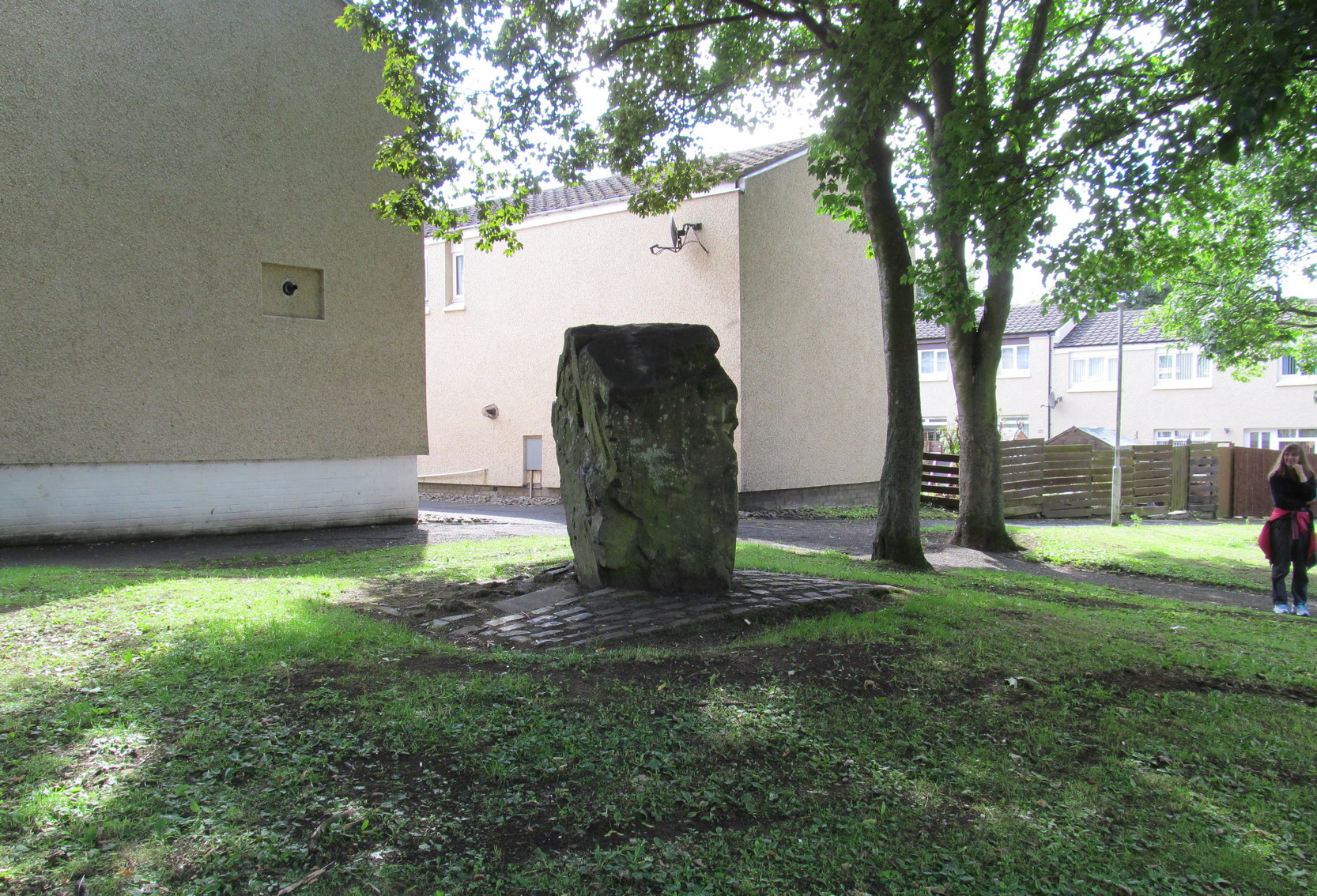
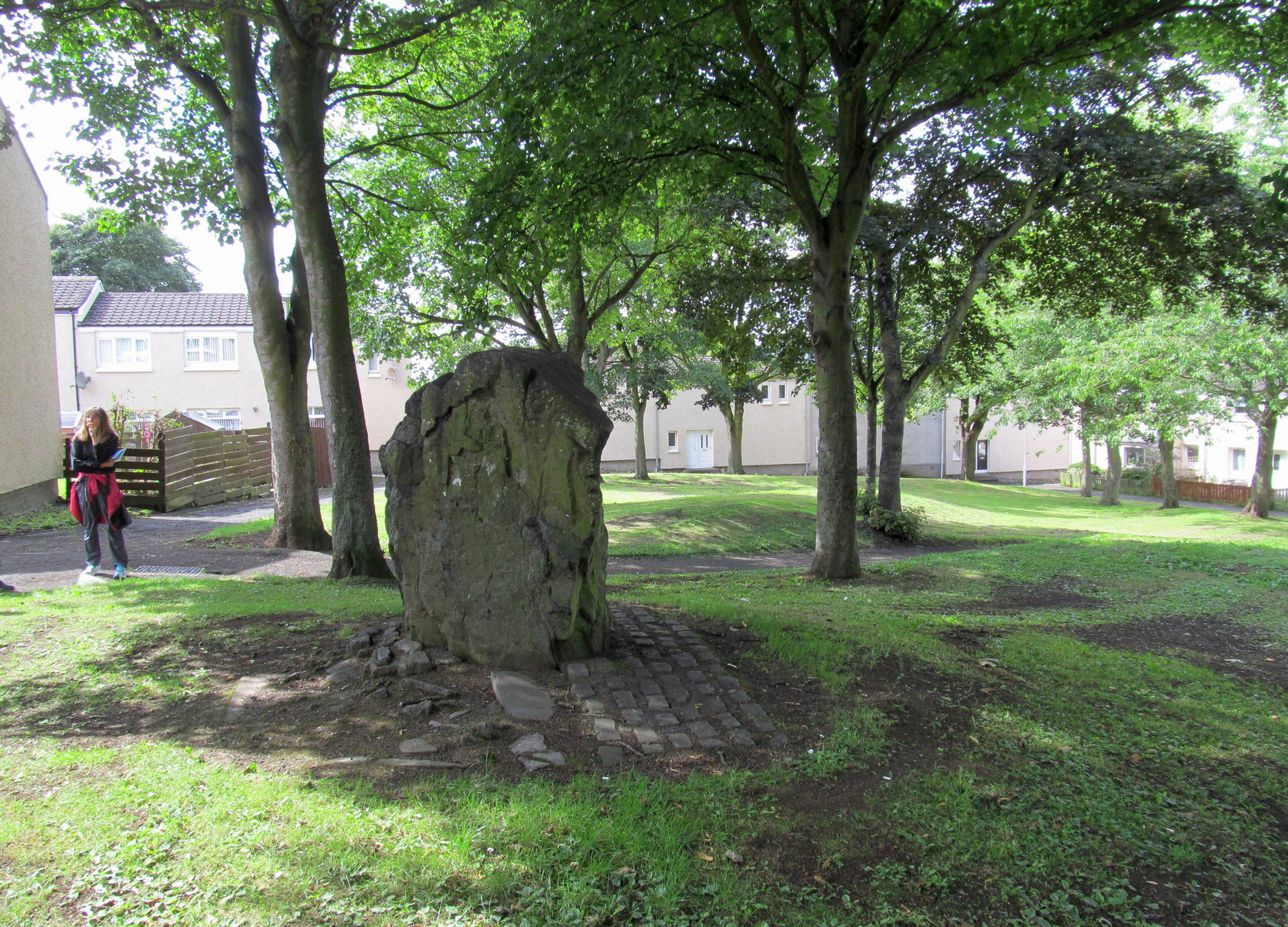
This is a bit of an odd one!  Early accounts of the monolith are scarce and, on my first visit here, I was somewhat sceptical of its prehistoric provenance.  To be honest, I still am.  The erosion levels on the stone give the impression that it’s a much more recent erection (calm down… 😉 ), almost as if it was only quarried a century or two ago.  Anyhow, that aside.  It’s a nice bulky standing stone, nearly six feet tall and erected where the rising land levels out in the middle of the modern housing estate.  It was included in the Royal Commission (1933) survey, who said of it:

Pitcorthie, looking SW
Pitcorthie, looking West

“About 200 yards north of the farm of Easter Pitcorthie, in a field adjoining the north side of the roadway from Dunfermline to Burntisland, stands a roughly rectangular block of sandstone, which presents the appearance of having been subjected to fire or heat.  It is set with its main axis due north and south on the crest of slightly rising ground… There are some indications that it has been packed at the base, but what appears to be packing may be no more than a collection of loose stones which have accumulated round it during the years in which the surrounding area has been cultivated. It rises to a height of 5 feet 10 inches above the ground level, but shows no traces of any sculpturings.  At 3 feet from the ground its girth if 11 feet 10 inches.”

It would be good if there were other prehistoric remains close by that could erode my slight scepticism about its age, but I think the nearest other Bronze Age monument is the cairn more than half-a-mile to the south-east.

References:

  1. Royal Commission on the Ancient & Historical Monuments, Scotland, Inventory of Monuments and Constructions in the Counties of Fife, Kinross and Clackmannan, HMSO: Edinburgh 1933.
  2. Swarbrick, Olaf, A Gazetteer of Prehistoric Standing Stones in Great Britain, BAR: Oxford 2012.

© Paul BennettThe Northern Antiquarian
Clach Mhor, Aberfeldy, Perthshire

Cup-Marked Stone (destroyed):  OS Grid Reference – NN 8575 4901

Also Known as:

  1. Clachmore

Archaeology & History

The Clach Mhor, or the Big Stone, is all but forgotten as an antiquarian relic in Aberfeldy.  It’s history is somewhat piecemeal.  First described in Hugh MacMillan (1884)’s essay on local cup-and-ring stones, he told that:

“A short distance above the village of Aberfeldy, where General Wade’s old road emerges from the houses, a huge stone, called the Clach Mhor, lies on the left-hand side in a slanting position half  erect, as if supported by the garden wall of which it forms a part. …In all likelihood it originally stood erect, and formed one of a group of similar stones, its companions having been broken up in the formation of the road. …On the upper face there are some small cup-markings, not quite so well formed as usual, owing to the hardness of the material… The fact that they occur on only one side of the stone, and are scattered indiscriminately all over its surface, are sufficient to convince any one who is skilled in the subject that they are genuine specimens of prehistoric sculpture.”

Nearly thirty years after this initial description, MacMillan (1901) found that it had previously been a part of The Tullich stone circle, and following its destruction the Clach Mhor was moved and used as “part of a garden wall on the old military road passing along its base.”

More than fifty years later, the Aberfeldy historian N.D. Mackay (1954) told that up to 1910 the Clach Mhor was a conspicuous object, standing “as it were overlooking and to some extent overhanging the roadway down near the Square.” However, it

“was blasted and broken up in 1910 in the course of road widening operations, but a considable part of it was built into, and still forms the lower corner of, the garden boundary wall, nearest The Square, of the house which bears its name, ‘Clachmhor’.  Its present position is slightly east of the site it occupied when I first knew it and, unless Wade’s men did actually move it, the site it occupied for centuries.”

Mackay also mentioned what he called the “indentations” on the stone which MacMillam deemed as cup-marks, but he pointed out that one Rev. John MacLean “believed they were made by the levers, jacks, etc, of (General) Wade’s men” when they cut the road into Aberfeldy in the 18th century, whilst

“A third solution was given by the son of a one-time local strong man called Big Robert, “What a strong man my father was,” he said, “he lifted that stone. Don’t you see the marks of his fingers on it?””

It’s not known what became of the Clach Mhor and whether it remains hiding in some walling, or whether it has met its demise….

References:

  1. Mackay, N.D., Aberfeldy Past and Present, Town Council: Aberfeldy 1954.
  2. MacMillan, Hugh, “Notice of Cup-Marked Stones near Aberfeldy”, in Proceedings Society of Antiquaries Scotland, volume 18, 1884.
  3. MacMillan, Hugh, The Highland Tay, Virtue: London 1901.

© Paul BennettThe Northern Antiquarian
Tormain Hill (8), Ratho, Midlothian

Cup-Marked Stone:  OS Grid Reference – NT 12907 69667

Also Known as:

  1. Tormain ‘H’ (Allen 1882)

Archaeology & History

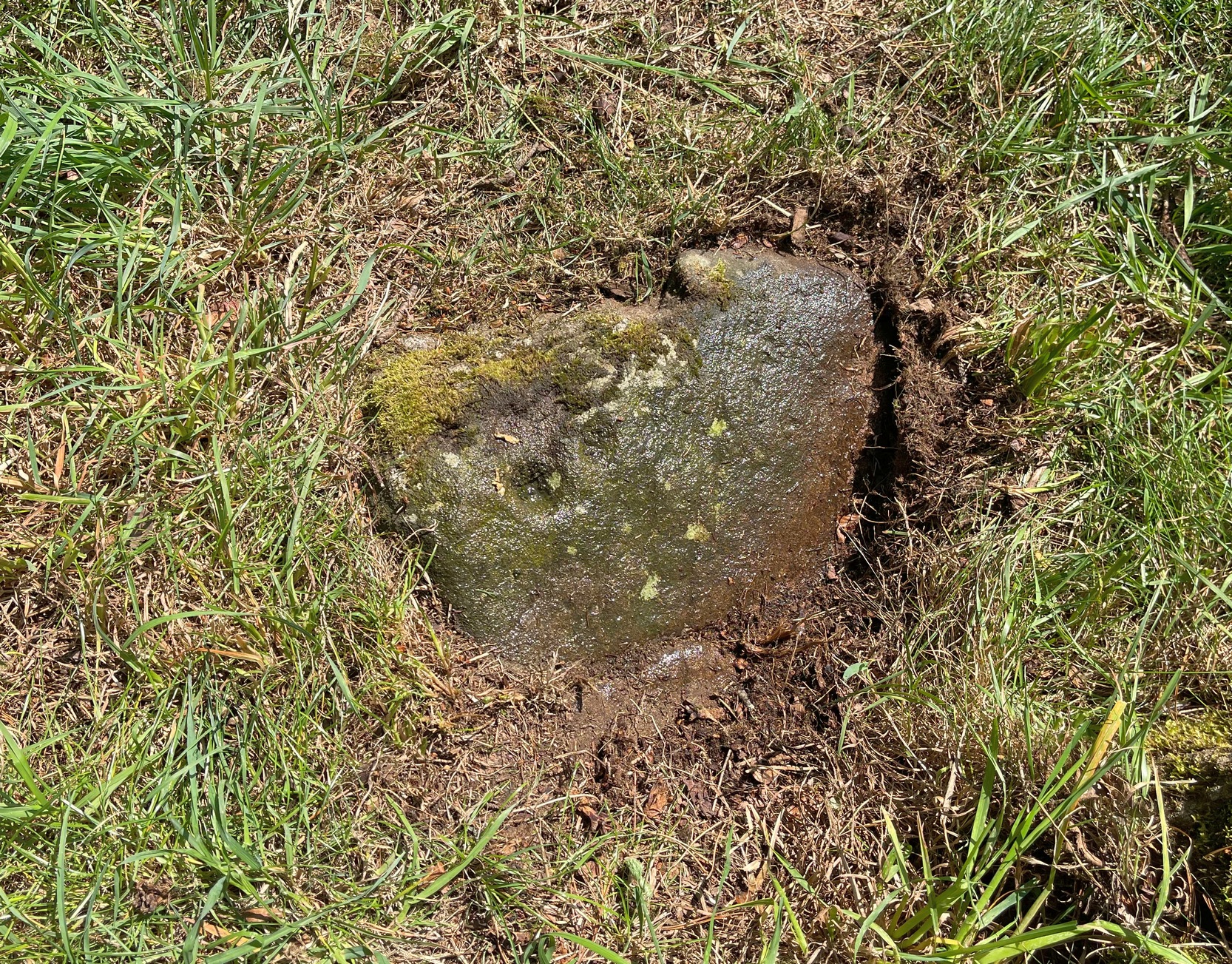
Dodgy cups of Tormain-8

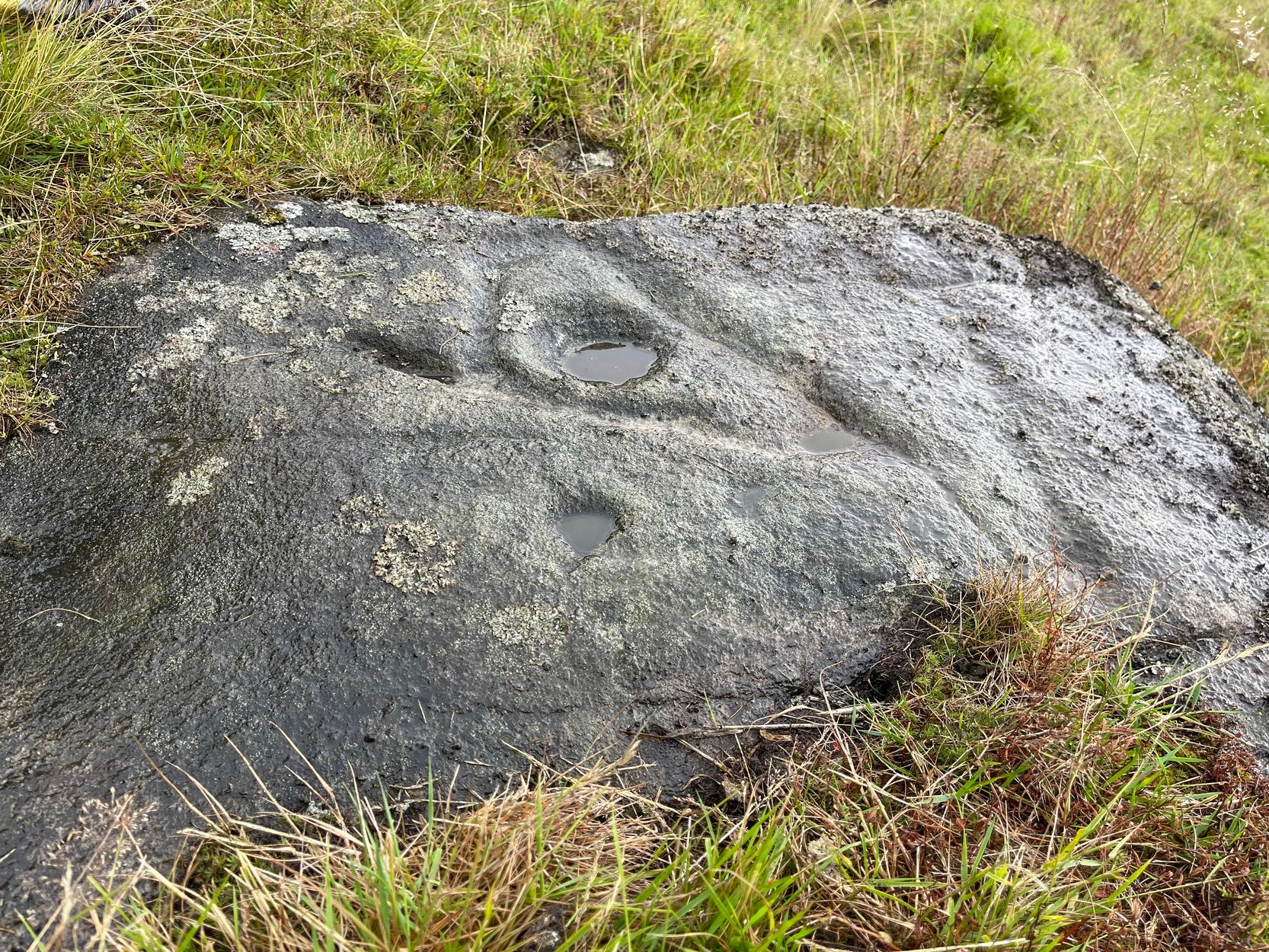
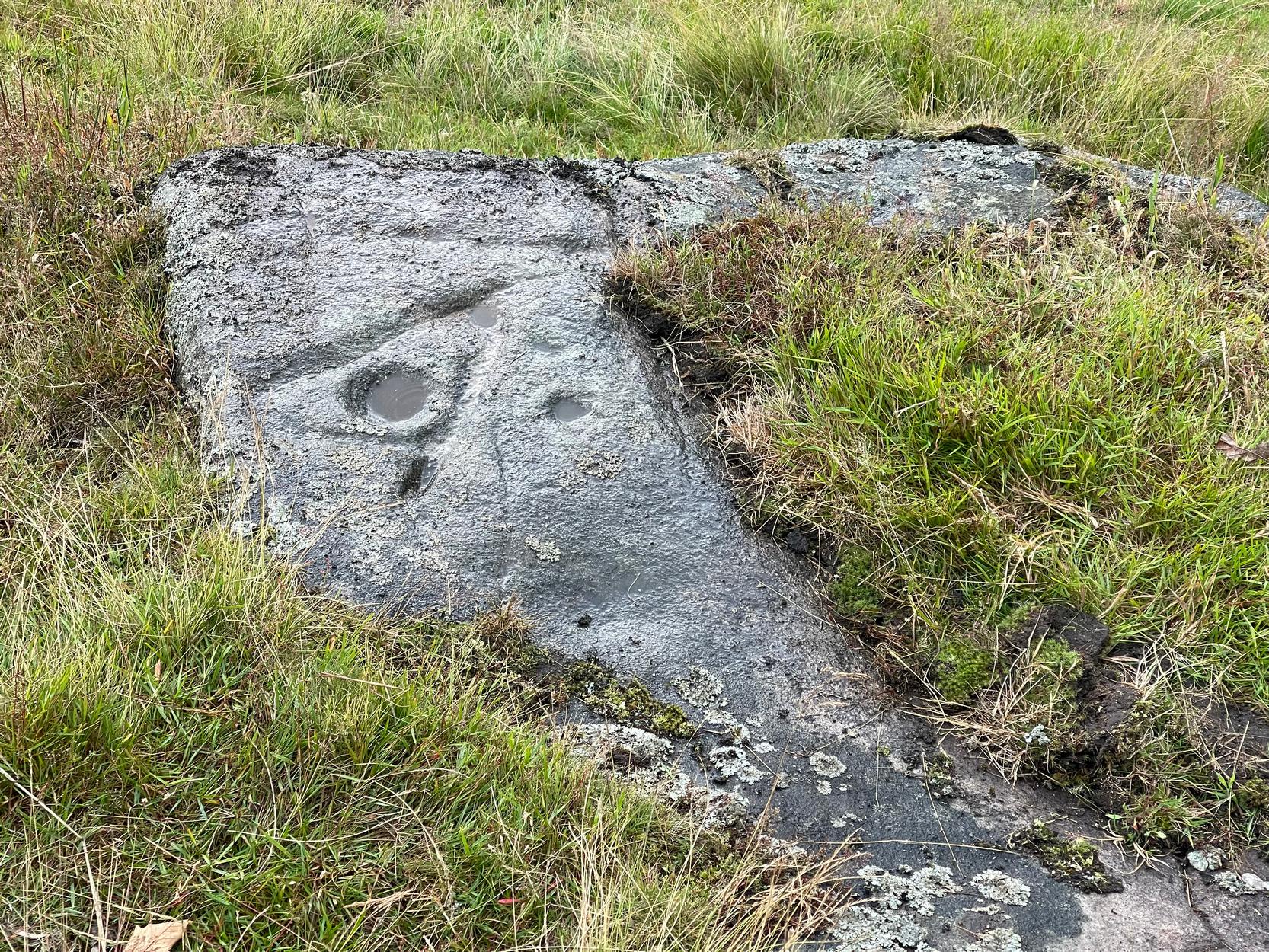
Found barely 12 inches east of the Tormain (7) carving, this ‘cup-marked stone’ is another somewhat dubious design in the Tormain cluster, but which I’m adding here for the sake of completeness.  It’s designated as authentic by the Scottish Rock Art Project—but I’m not convinced.  Consisting of just two cup-marks, Romilly Allen (1882) was the first to notice them and described them respectively as, “one 1 inch in diameter and the other 1½ inch across.”  The smaller of the two, I’m pretty sure, is geophysical in nature.


References:

  1. Allen, J. Romilly, “Notes on some Undescribed Stones with Cup Markings in Scotland,” in Proceedings of the Society of Antiquaries Scotland, volume 16, 1882.

© Paul BennettThe Northern Antiquarian
Glen Ogle, Lochearnhead, Perthshire

Cup-and-Ring Stone:  OS Grid Reference – NN 58727 24527

Getting Here

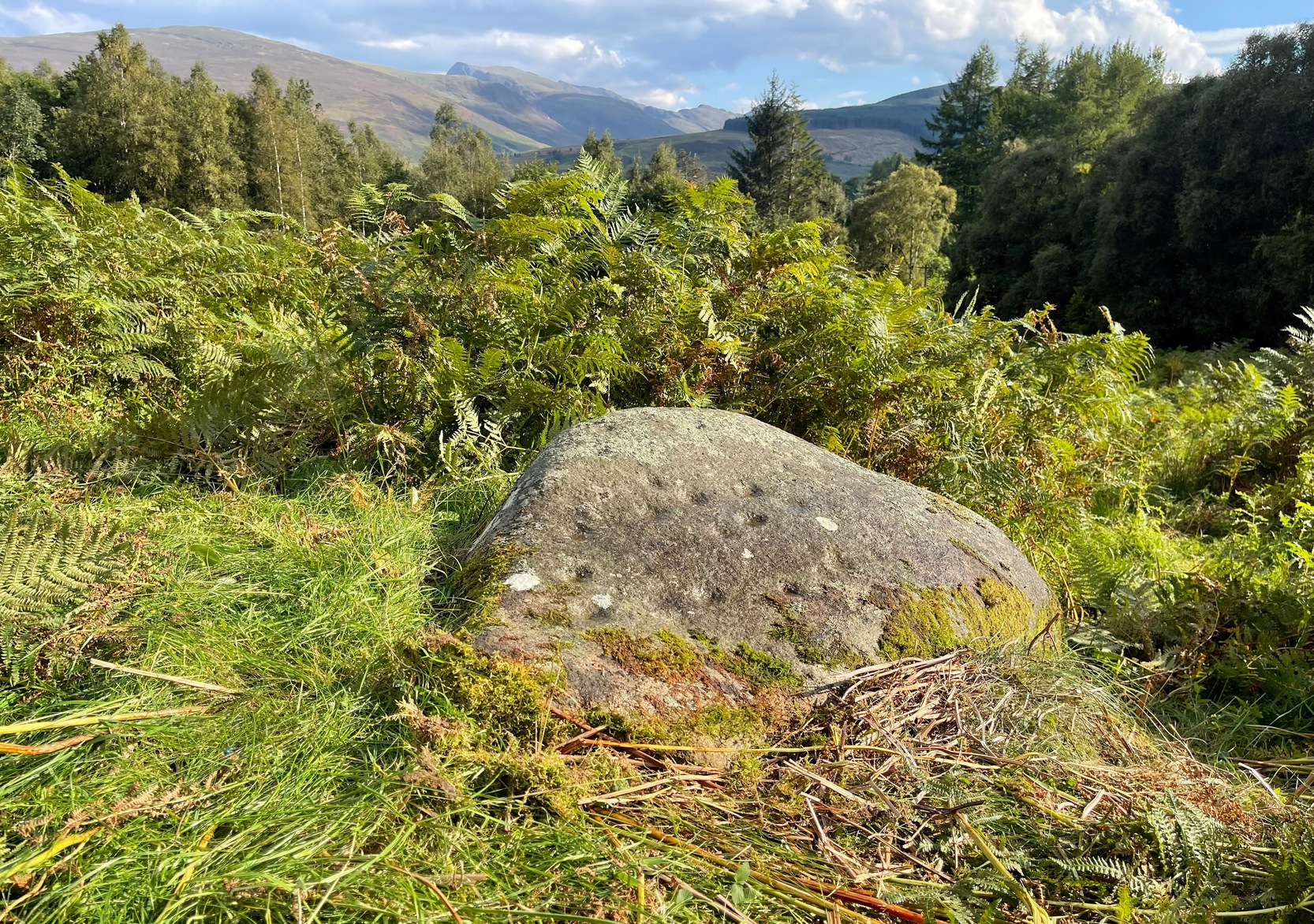
Glen Ogle (1) carving

In Lochearnhead village start walking up the Glen Ogle road and, just past the last house on the right, a dirt-track bends down to an old building.  Just before the building, keep your eyes peeled for the small footpath that runs down to the river.  Walk along here and cross the river-bridge, then bear diagonally to your left and walk up the singular footpath.  It snakes through the trees for a few hundred yards then opens out into a field.  About 75 yards along the path in the field the land levels out.  From here, walk through the grasses to your right about 20 yards.  Zigzag about – you’ll find it.

Archaeology & History

Main cluster + v.faint ring

The setting of this carving is, like many of Perthshire’s petroglyphs, quite beautiful.  It was made when the ‘artist’ carving the stone was crouched or sat on the ground, gazing at the southern landscape and heights around Ben Vorlich, whose mythic nature may have been part of the design.

Comprising of a cluster of typical cup-marks, there are two, perhaps three very faint rings in the design, which seems to have been described for the first time in George Currie’s (2012) typically short minimalist way.  He told that in the field,

“50m E of the Ogle Burn is a boulder 2.1 x 0.9 x 0.5m, which bears 21 cup marks, 2 of which have single rings.”

Cup and faint ring
Faint cups on the crown

Much of the original design is difficult to see in full unless the lighting is good.  We spent several hours here and counted 25 cup-marks and found rings around three of them—but these proved difficult to photograph and some more visits are needed to capture them.  “Officially” at least, there are no other carvings close to this one.  But that’s obviously not going to be the case.  Well worth checking out when you’re in the area.

References:

  1. Currie, George, “Stirling: Balquhidder, Glen Ogle – Cup-and ring-marked rock”, in Discovery & Excavation Scotland, volume 13 (New Series), 2012.

© Paul BennettThe Northern Antiquarian
The Tullich, Aberfeldy, Perthshire

Stone Circle (destroyed):  OS Grid Reference – NN 857 489

Archaeology & History

In an early essay on the rock art around Aberfeldy, Hugh MacMillan (1884) remarked on what he thought was a tumulus on the southern slope above the town and where a large old petroglyph once lived.  Subsequently (MacMillan 1901), in his beautiful artistic foray through upper Tayside, he revised his earlier remarks telling that:

“On the side of a high, tree-covered hillock, rising up abruptly behind the central part of Aberfeldy, called the Tullich, there was once a Druidical circle, one of the huge stones of which, called the Clachmore, forms part of a garden wall on the old military road passing along its base.”

The circle was mentioned in Mackay’s (1954) excellent work, albeit in the past tense, and he could add no more to it other than his memory of the whereabouts of the Clach Mhor (as it was more accurately known), on which were numerous cup-markings. (Note: the grid-reference to this site is an approximation)

Folklore

In bygone times the people of Aberfeldy observed the celebration of Samhain, the old pre-christian New Year’s Day—a.k.a. Hallowe’en—on November 11th.  Interestingly for us, “bonfires were numerous and there was always a great blaze on the Tullich,” said Dr John Kennedy. (1901)  Considering the small area of The Tullich, it would be unusual if such festivities did not have some relationship with the stone circle.  Samhain relates primarily to the passing over of the dead in the cycle of the year: the spirits of the ancestors moving through the worlds.  If this circle had such a relationship with the bonfires, it may have been a ring cairn and not a free-standing stone circle.

References:

  1. Kennedy, John, Old Highland Days, Religious Tract Society 1901.
  2. Mackay, N.D., Aberfeldy Past and Present, Town Council: Aberfeldy 1954.
  3. MacMillan, Hugh, “Notice of Cup-Marked Stones near Aberfeldy”, in Proceedings Society of Antiquaries Scotland, volume 18, 1884.
  4. MacMillan, Hugh, The Highland Tay, Virtue: London 1901.

© Paul BennettThe Northern Antiquarian

Craven Hall Hill (2), Hawksworth Moor, West Yorkshire

Ring Cairn:  OS Grid Reference – SE 14442 44281

Getting Here

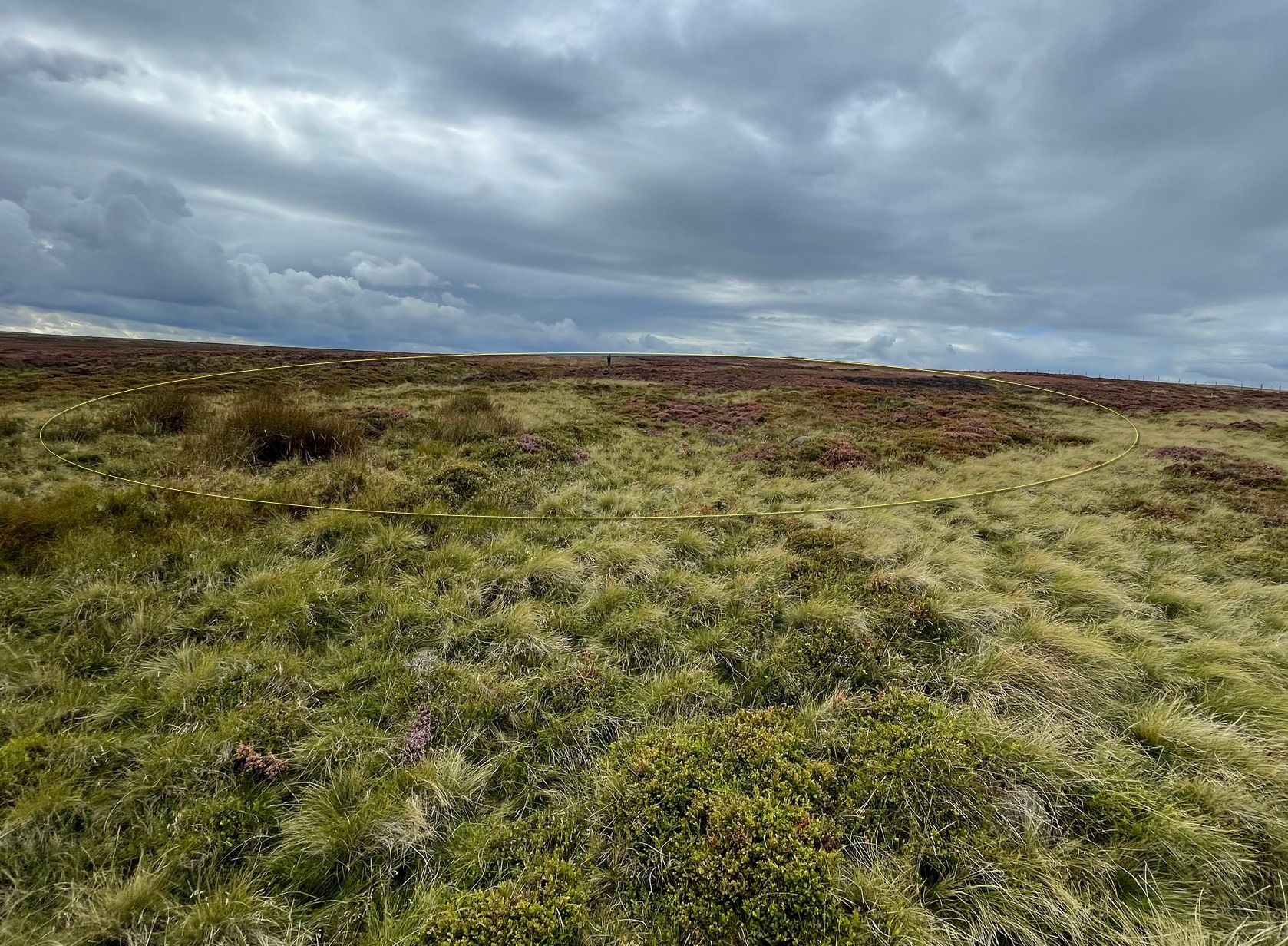
Craven Hall ring cairn

Your best starting point is from the Great Skirtful of Stones giant cairn.  From here follow the fencing that runs down the slope to your left (south-east) for roughly 160 yards (148m) – past the Great Skirtful Ring – until you reach the gate.  Go through it and keep walking down the same fence-line for 300 yards then walk south onto the moorland proper (there are no paths here).  You’ll pass over several undulations in the heather (some of these are the edges of ancient trackways) and 55-60 yards south from the fencing you’ll walk over and into this overgrown prehistoric ring.  It’s very difficult to see when the vegetation is deep, so persevere!

Archaeology & History

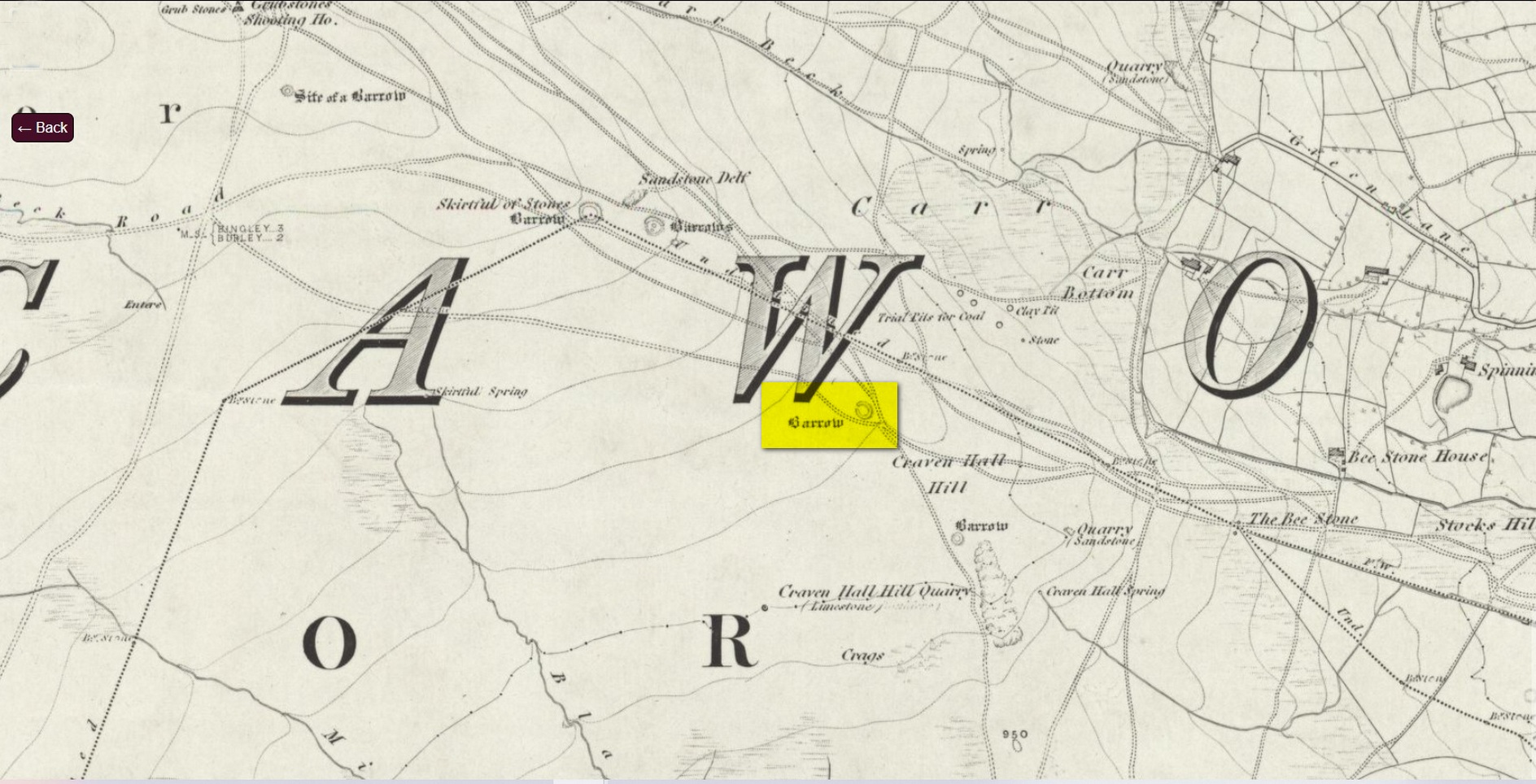
Site shown on 1851 map

This is an interesting site.  Marked on the 1851 Ordnance Survey map as a “barrow” (right), it is shown with trackways on either side of it to the north and south, and with an opening or entrance on its northwestern side.  Yet since that date, very little archaeological attention has been given to it and the site remains unexcavated, despite its location being repeated on all subsequent maps since then.  The designation of the site as a barrow or burial site, without being excavated, was educated guesswork at the time as the place seems to be what we today define as a ring cairn.  And whilst this seems likely, there are some oddities here.

Measuring roughly 25 yards (SE – NW) by 21 yards (NE – SW), this overgrown oval ‘ring’ is a similar architectural structure to the more famous Roms Law circle more than half-a-mile northwest of here—but bigger!  And, unlilke Roms Law, this overgrown circle seems to have been untouched for many centuries.  The oval surrounding ‘ring’ itself is composed of thousands of small packing stones between, seemingly, a number of much larger upright stones, reaching a maximum height of more than three feet high at the northernmost edge.  The ‘ring’ ostensibly looks like a wide surrounding wall which measures two yards across all round the structure.

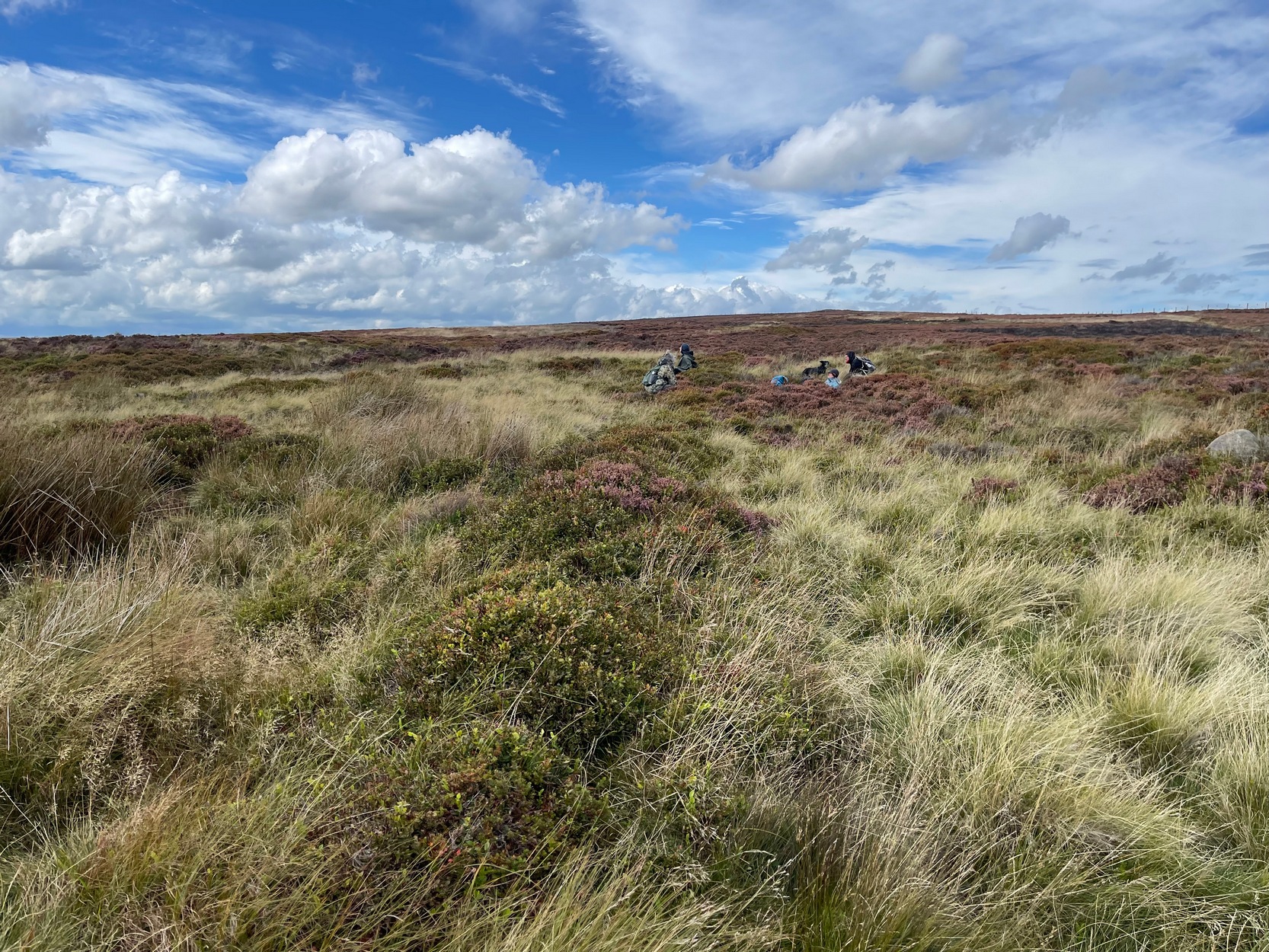
Track running into the ring
Raised line into the ring

Internally, there seems little evidence of a burial — although our recent visits here, as the photos indicate, took place when the moorland vegetation was deep and covered almost the entire site.  The outline of the site is obviously visible, even in deep heather, but the smaller details remain hidden.  But in addition to the main ring, another very distinct ingredient here is the existence of an extended length of man-made parallel walling, probably a trackway, that runs into the circle from the southeast all the way through the circle and out the other side and then continuing northwest heading roughly towards the Great Skirtful giant cairn on the horizon 500 yards to the northwest.

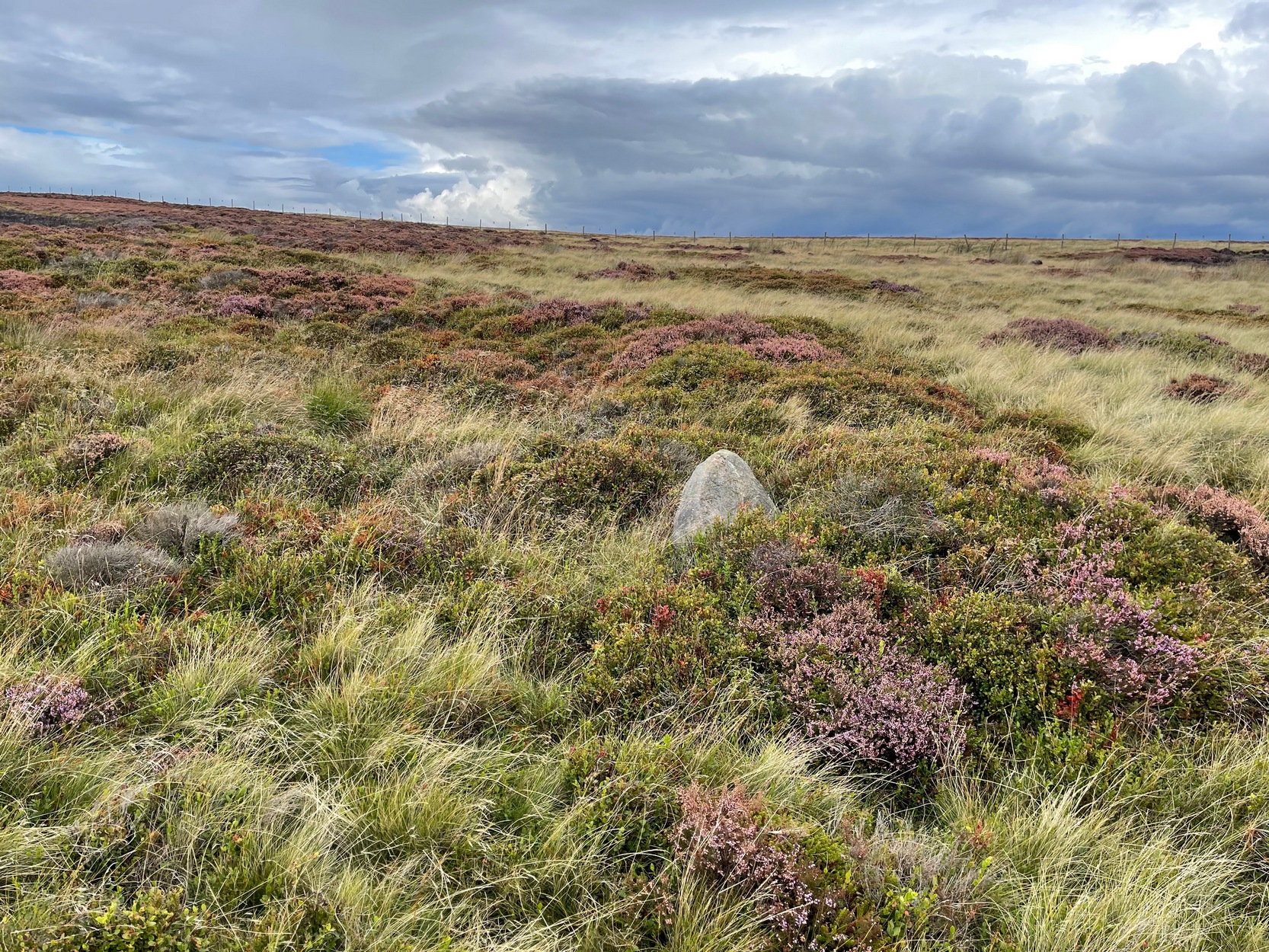
Stone at NE arc of walling

Due to the landscape being so overgrown, it’s difficult to ascertain where this ‘trackway’ begins and ends.  Added to this, we find that there are additional ‘trackways’ that run roughly parallel to the one that runs through the circle—and these ‘trackways’ are very old indeed, some of them likely have their origins way back in prehistory.  The one that runs through the middle of this ring cairn may be a ceremonial pathway along which, perhaps, our ancestors carried their dead.  If we follow it out from here and keep walking along the track 300 yards to the southeast, we eventually run right to the edge of the Craven Hall (3) circle.  Parallel to this is another ancient trackway that runs northwest to the edge of the Roms Law circle.  It seems very much as if we have ceremonial trackways linking sites to each other: ancestral pathways, so to speak.

Have a gander at this when you’re next in the area.  There are many other sites nearby that are off the archaeological radar.  In recent years, a number of northern antiquarians wandering over this landscape are finding more and more ancient remains: walling, circles, cairns, trackways.  It’s a superb arena—but sadly, most of it is hidden beneath deep moorland vegetation.

References:

  1. Faull, M.L. & Moorhouse, S.A. (eds.), West Yorkshire: An Archaeological Guide to AD 1500 – volume 1, WYMCC: Wakefield 1981.

Acknowledgements:  Huge thanks for use of the Ordnance Survey map in this site profile, reproduced with the kind permission of the National Library of Scotland

© Paul BennettThe Northern Antiquarian

Jenny Lane, Baildon, West Yorkshire

Cup-Marked Stone (removed):  OS Grid Reference – SE 1579 3995

Archaeology & History

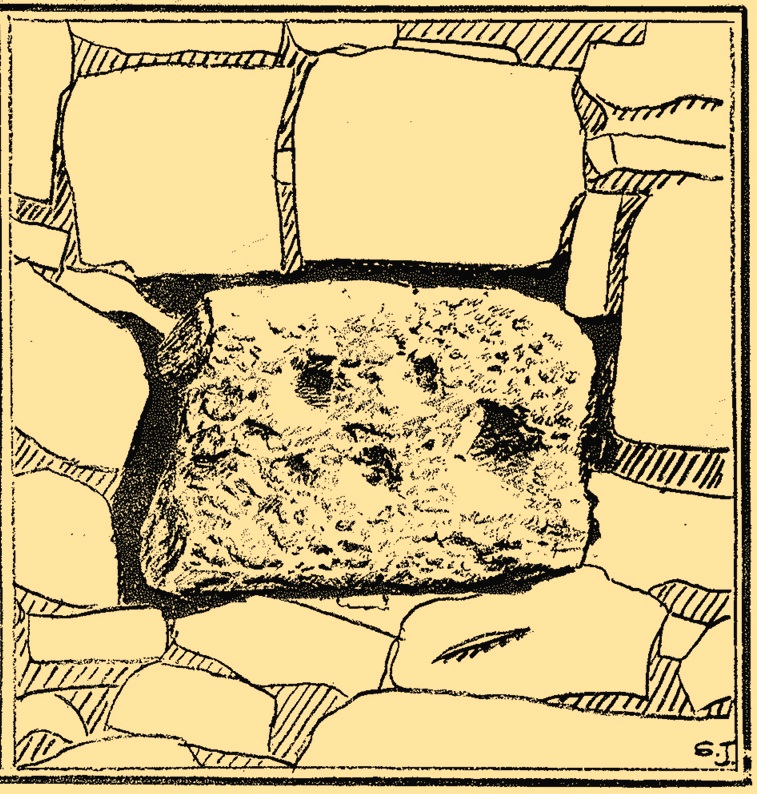
Jenny Lane carving

A small, seemingly broken cup-marked stone that may have once been part of a prehistoric tomb, found itself being included in an old wall at some time in the not-too-distant past: in the south-facing wall of the cricket ground at the top end of town.  No one seemed to know it was there until it was noticed in the 1950s by a local man who brought it to the attention of Sidney Jackson (1958), editor of the local Bradford archaeology mag at the time.  Jackson visited the site and thankfully did a sketch of what it looked like, before it was removed at a later date.  He wrote:

“The small rectangular stone bearing four cup-shaped hollows…is another of Mr George Pritchard’s finds.  It forms part of the high wall which bounds the Baildon Cricket Club’s ground in Jenny Lane… Its appearance suggests that it is part of a Bronze age cup-marked rock which was split to make building stones.”

Following its removal more than twenty years ago, it ended up in the hands of a dude from Cononley called Gerald Wright.  I’m not sure whether it still lives over there or has subsequently found a new abode.  Does anyone know what’s become of it…?

Folklore

Although there’s nothing specific to this carving, the place where it was found, on Jenny Lane, was where a phantom black dog used to be seen in bygone years.  It was renowned as the harbinger od death.

References:

  1. Jackson, Sidney, “Cup-Marked Stone in Jenny Lane, Baildon,” in Cartwright Hall Archaeology Group Bulletin, volume 3, part 10, 1958.

© Paul BennettThe Northern Antiquarian

Shipley Glen (136), Baildon, West Yorkshire

Cup-and-Ring Stone:  OS Grid Reference – SE 13266 38928

Also Known as:

  1. Carving BM14 (Hedges)
  2. Carving no.136 (Boughey & Vickerman)

Getting Here

Faint carving no.136

Once you’ve got yourself to the start of Shipley Glen, from the Old Glen House pub, from the car-park outside walk up the road for 60 yards (if you reach the next small car-parking spot, you’ve gone too far) then step off-road into the vegetation on your left and you’ll see the large flat fractured section of earthfast rock.  Get low down and seek out the cup-mark first!

Archaeology & History

This is a very faded and quite basic design and unless you get decent low sunlight, it can be very difficult to discern.  On my most recent visit here, conditions weren’t too good, as the photos here indicate.

The main feature is a single cup-mark surrounded by a very wide ‘square’ ring (if y’ get mi drift).  It was first mentioned and illustrated in John Hedges (1986) survey, who described it simply:

“Striated, pitted bedrock with crack down centre, in grass and amongst other rocks and bedrock. Carving, centre and W end: enclosure type angular grooves and two cups.”

John Hedges 1986 sketch
Cup & surrounding lines

One of the two cups is presently beneath some shallow vegetation (easily removed if anyone’s passing), but the main feature of the large enclosing square and its central cup is presently exposed and can be seen when your eyes eventually adjust.  Interestingly, Hedges shows the existence of a faint ring around the central cup inside of the larger square enclosure.  If someone is able to capture a photo of this, please add it on our Facebook page. 🙂

I must point out that somewhere, not too far from this carving, was once found a very similar design known as the Brackenhall Green carving that possessed the same curious squared-ring feature that we find on this stone.

References:

  1. Boughey, Keith & Vickerman, E.A., Prehistoric Rock Art of the West Riding, WYAS: Wakefield 2003.
  2. Hedges, John (ed.), The Carved Rocks on Rombalds Moor, WYMCC: Wakefield 1986.

© Paul BennettThe Northern Antiquarian

Brackenhall Green, Baildon, West Yorkshire

Cup-and-Ring Stone (destroyed):  OS Grid Reference – SE 133 389

Archaeology & History

The lost carving of Brackenhall, in 1888

I first came across a description of this lovely-looking cup-and-ring carving during some research I was doing in the archives at Bradford Central Library in the 1980s—and decided there and then that I had to find it!  It was described and illustrated for the first time by William Glossop (1888) when he made a short survey of some of the prehistoric sites on Baildon Hill and Shipley Glen.  He told that it was one amidst “a cluster of rocks on Bracken Hall Green”—but was seemingly destroyed not too long after he wrote about it.  There was some discussion in the late-1980s that it may have been a petroglyph that was cataloged by John Hedges as carving ‘BM14’ (at SE 13272 38924), due to it possessing a similar ‘artistic’ element (or motif, as some like to call it) and which is also along the Brackenhall plateau by the roadside about 160 yards below the entrance to the Brackenhall centre—but it turned out not to be the case.

A few years after Mr Glossop uncovered this carving, a short note by J.H. Turner (1894) described two cup-marked stones, “both now destroyed” that could be seen in the same area just as you entered “the plateau where the Easter fair is now held”.  And his description closely fitted Glossop’s sketch.  Turner wrote:

“The cups were three inches in diameter, and one inch deep, in an oblong 18 by 12 inches, with line 6 feet long towards the east.  The second oblong, same size, had also an eastern pointer and one cup in the centre. These have both disappeared since June, 1889; I fear by wanton mischief.”

This would seem to be the same carving illustrated by Glossop, although it’s still difficult to say with any accuracy where it was located.  The great historian W.Paley Baildon (1913) thought it may have been the same carving which Harry Speight (aka Johnnie Gray) described at the Glen Gate—and it does sound similar, but until we are able to ascertain (i) where Glen Gate was; and (ii) whether it coincided with the location of “where the Easter fair” was held, we must err on the side of caution.  Tis an intriguing mystery… (Note: the grid-reference given for this site profile is an educated guesstimate!)

References:

  1. Baildon, W. Paley, Baildon and the Baildons – volume 1, Adelphi: London 1913.
  2. Glossop, William, ‘Ancient British Remains on Baildon Moor,’ in Bradford Antiquary, no.1, 1888.
  3. Gray, Johnnie, Through Airedale from Goole to Malham, Walker & Laycock: Leeds 1891.
  4. Turner, J. Horsfall, ‘Cup Marks, Shipley Glen,’ in Yorkshire County Magazine – volume 4, J.E. Watmough: Idel 1894.

© Paul BennettThe Northern Antiquarian

Netherlargie, Kilmartin, Argyll

Standing Stone:  OS Grid Reference – NR 8279 9773

Also Known as:

  1. Kilmartin ‘S6’ (Thom)

Getting Here

Netherlargie Stone

Along the A816 road, just less than a mile south of Kilmartin, take the right-turn on the B8025 Tayvallich road.  Barely 50 yards along here, park up on the left-side of the road.  Cross the road and walk along the well-marked footpath to the mighty megalithic Kilmartin ‘X’.  The path continues to Temple Wood but you’ll see, in the field to your right, this single standing stone. (you’ll see the mighty Netherlargie South cairn in the field beyond)

Archaeology & History

Stone on the 1874 OS-map

First illustrated on the 1874 Ordnance Survey map, this solitary stone (though it may once have had companions) stands some 200 yards south-east of the Temple Wood circle and 355 feet north-west of the northernmost stone in the Kilmartin ‘X’ megalithic complex.  When Alexander Thom surveyed this area, despite finding astronomical alignments at the many standing stones nearby, nothing seemed apparent with this solitary stone.  Its function remains hidden for the time being, although everyone assumes it had some relationship with the giant tombs close by.  It makes sense.

Looking W to Temple Wood
Looking to the southwest

Despite being referenced in a number of prehistoric surveys, archaeological circles say very little about it.  When the Royal Commission (1988) visited here they told how it was leaning to the south-east.  It fell over a few years later but was thankfully resurrected.  When the archaeologists fondled around the base of where it had stood, apart from a few packing stones at one side of the monolith, nothing was found.

References:

  1. Butter, Rachel, Kilmartin – Scotland’s Richest Prehistoric Landscape, HT: Kilmartin 1999.
  2. Campbell, Marion & Sandeman, M.L.S., “Mid-Argyll: A Field Survey of the Historic and Prehistoric Monuments”, in Proceedings of the Society of Antiquaries, Scotland, volume 95, 1964.
  3. Pearson, Jane, Kilmartin – The Stones of History, Famedram: Alexandria 1975.
  4. Ritchie, Graham, The Archaeology of Argyll, Edinburgh University Press 1997.
  5. Royal Commission on the Ancient & Historical Monuments of Scotland, Argyll – Volume 6: Mid-Argyll and Cowal, HMSO: Edinburgh 1988.
  6. Ruggles, Clive, “The Stone Alignments of Argyll and Mull,” in Records in Stone (ed. C.L.N. Ruggles), Cambridge University Press 1988.
  7. Thom, Alexander, Megalithic Lunar Observatories, Oxford University Press 1971.

Acknowledgements:  Huge thanks for use of the Ordnance Survey map in this site profile, reproduced with the kind permission of the National Library of Scotland

© Paul BennettThe Northern Antiquarian