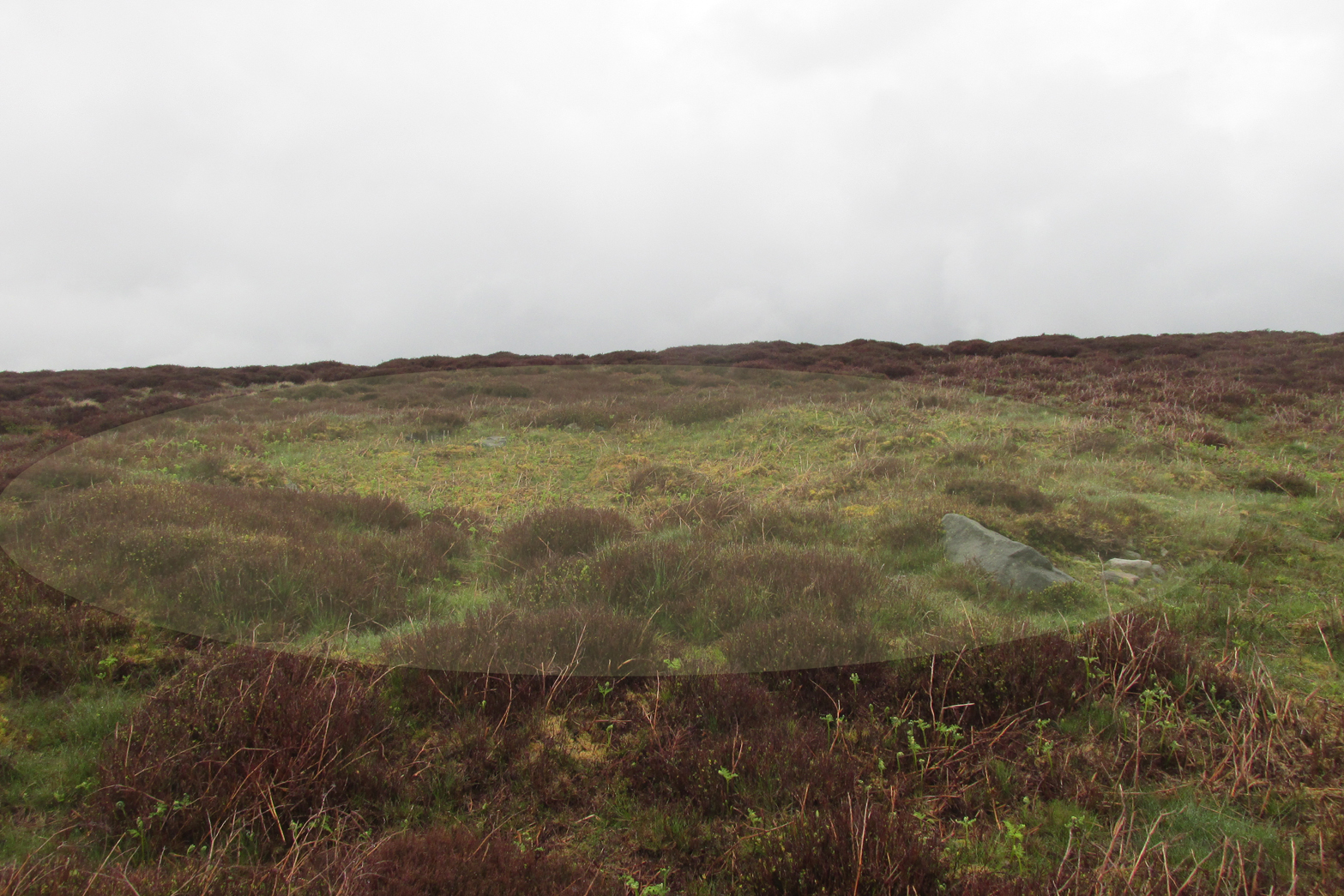
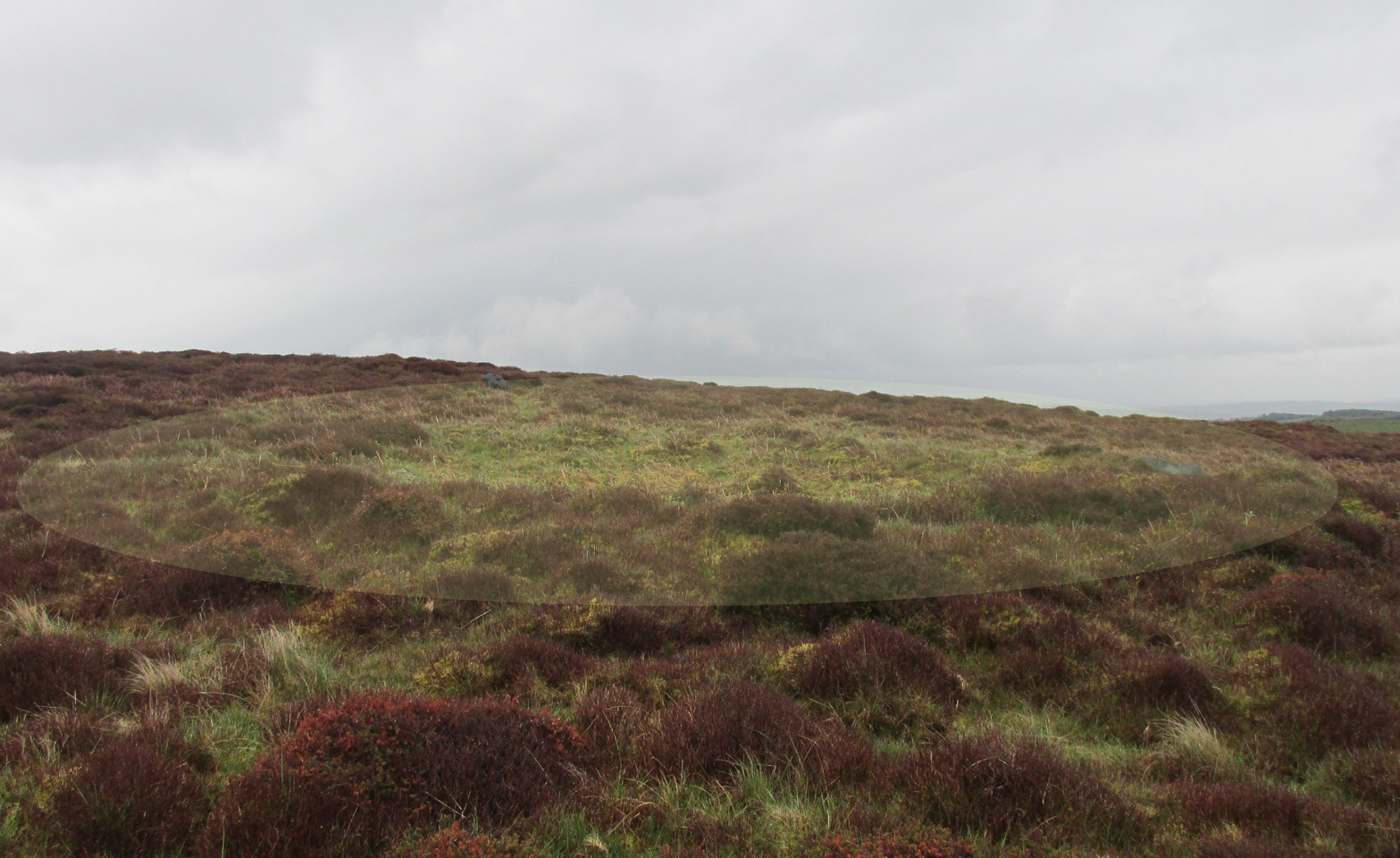
Druim na Cille, Comrie, Perthshire

Cup-Marked Stone:  OS Grid Reference – NN 73838 24299

Getting Here
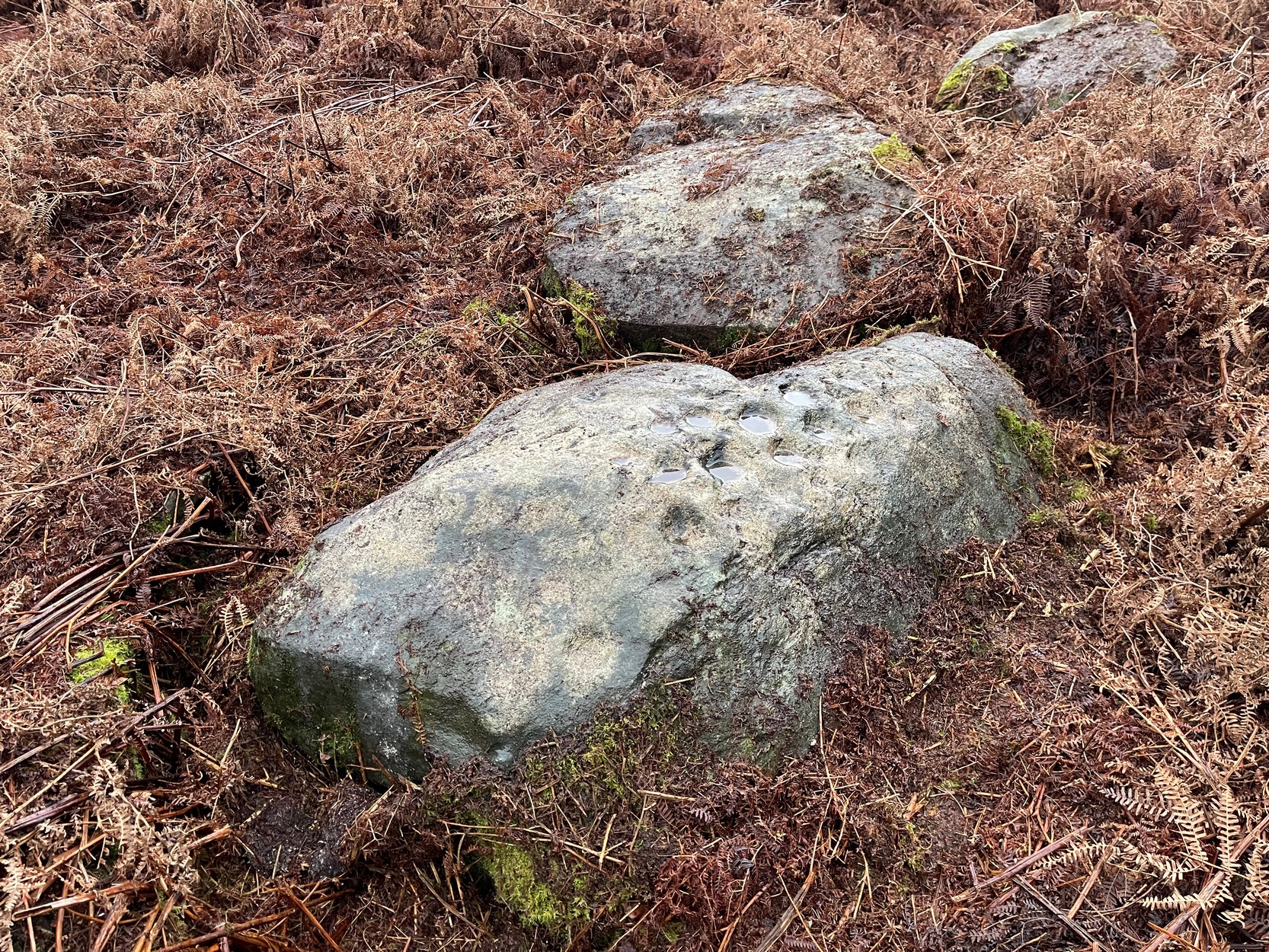
Cupmarks at Druim na Kill

Along the A85 road between Comrie and St Fillans, just over a mile out of Comrie, on the right-hand side (north) of the road is the small farm-track into the fields where the ruined stone circle of Tullybannocher lives.  Walk up this track (known as Maam Road), past the stones, and keep going uphill for more than a mile (literally 1 mile up, another track turns sheer right, but ignore it) where the track eventually levels-out; keep walking for another 600 yards, slightly downhill, until you reach a distinct fork in the track where you need to veer right, uphill, and keep walking up the track for ⅔-mile (1km) where you’ll eventually see a cottage ahead of you.  150 yards before this, to your left, down the slight slope and just as it begins to slope back up again on the other side, there’s some olde walling with a coupla big stones in it.  It’s there!

Archaeology & History

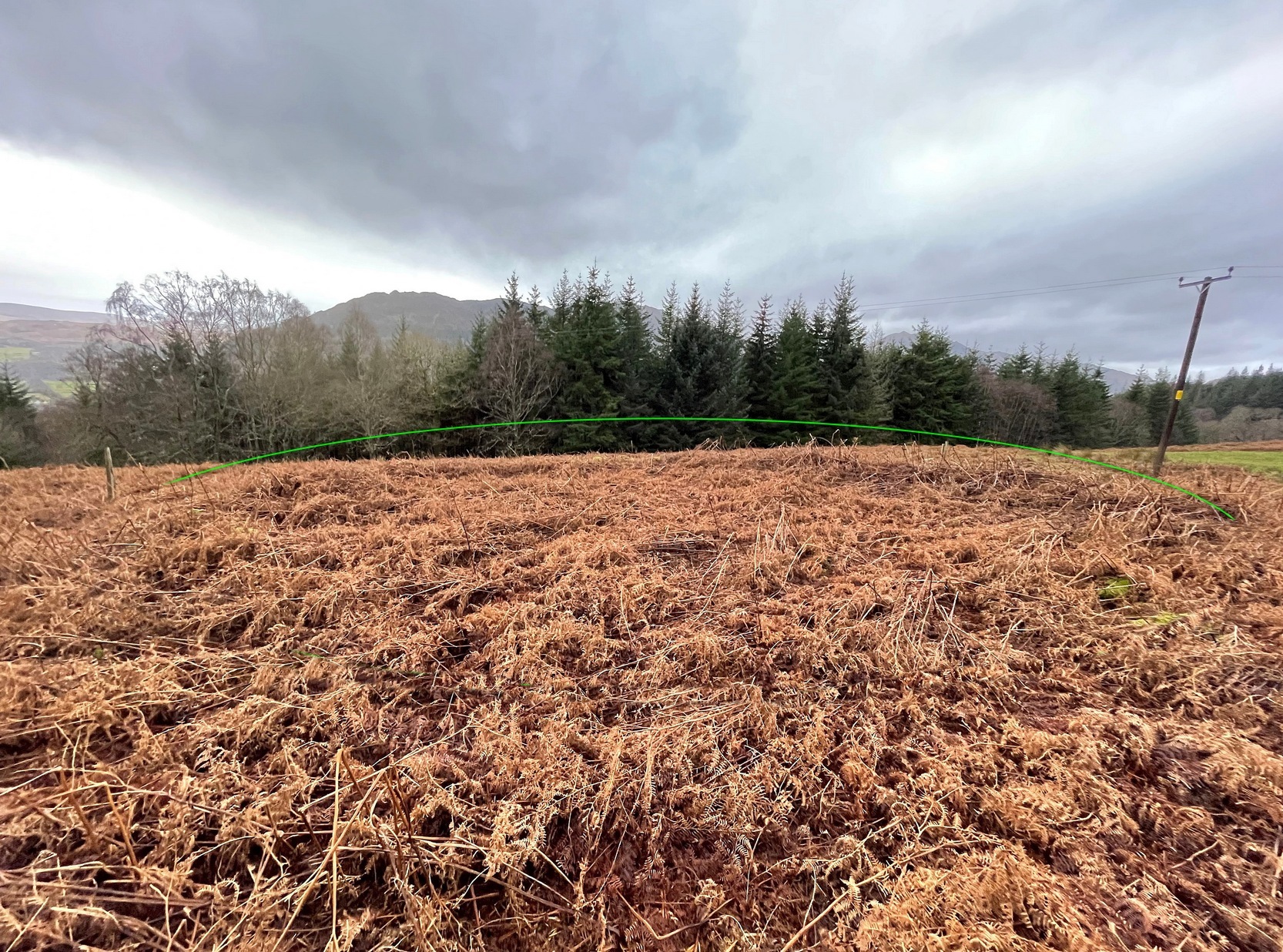
When James MacIntosh (1888) first visited this carving in the 19th century—which is close to the curious cairn of Druim na Cille just 75 yards to the west—he described there being a group of seven large stones forming, what he thought, might have been a large enclosure.  I think he was right.  Several of these stones can still be seen: each of them along some ancient walling that swerves in an arc to the east. One of these stones has a number of cup-marks on it.
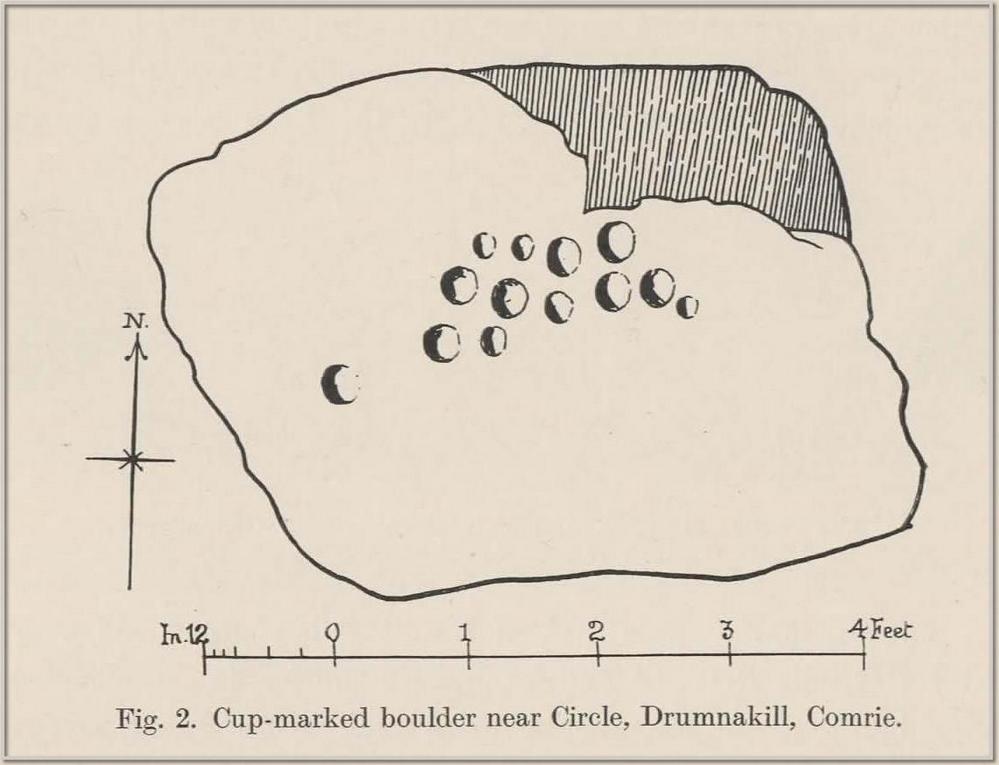
Fred Coles’ 1991 sketch
The carving, from the track

The design isn’t too impressive when compared to others in this neck o’ the woods, but they’re very distinct.  We visited the place on a truly dark grey day: conditions that don’t usually allow for good visibility regarding cup-marks; but thankfully the cups along this stone are quite deep and hard to miss.  Running along one section of the stone are what Gow called, “eleven beautifully formed cups, varying from 2¼ to 4 inches in diameter and from half an inch to an inch in depth.”  When Fred Coles (1911) came here he counted thirteen cup-marks.  There may be fourteen.

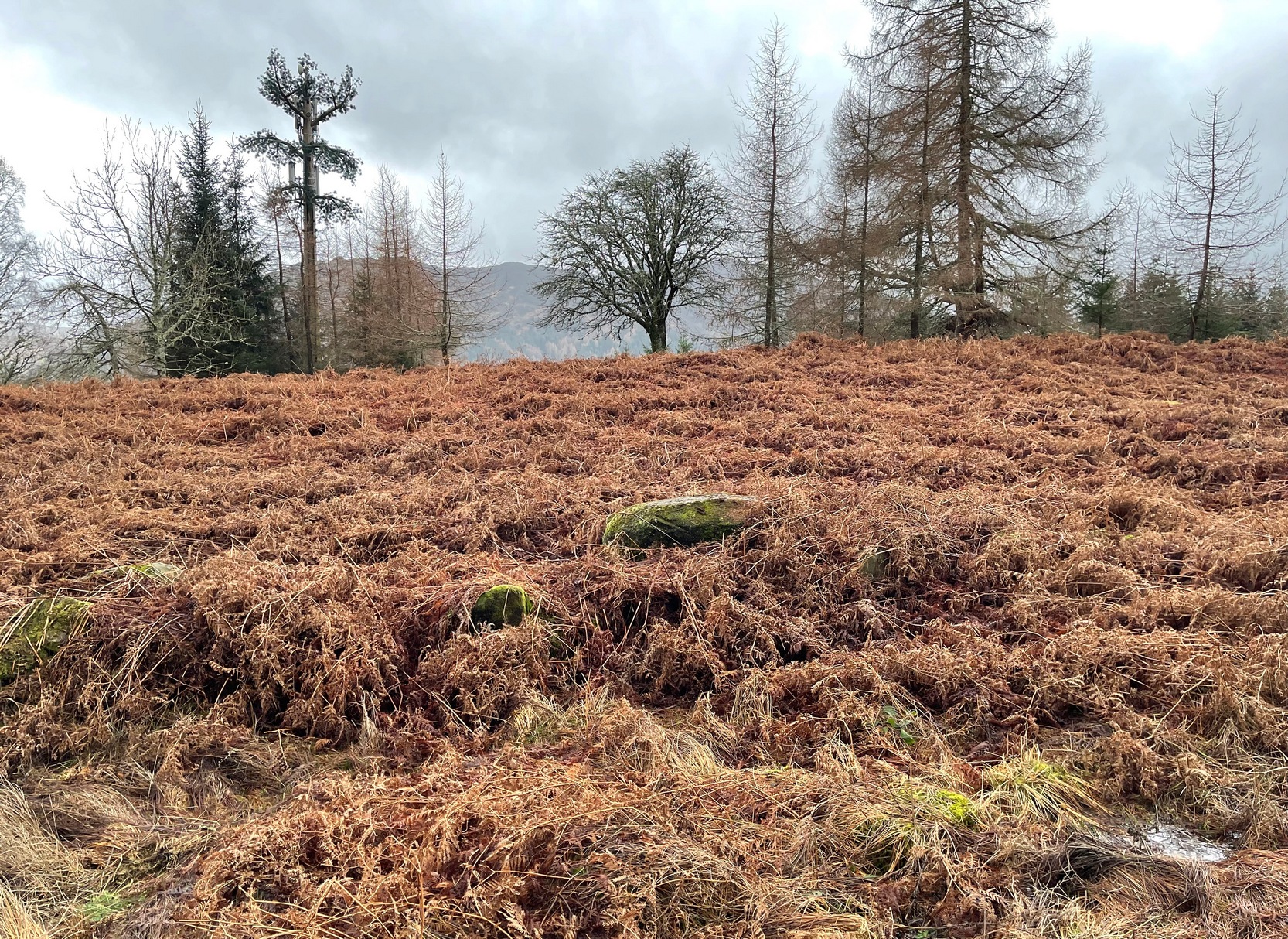
The stone does possess some more recent groove marks made by a metal instrument, possibly a tractor or perhaps when local workmen stuck up a microwave tower close by.  Thankfully it hasn’t directly affected the cups on the stone.  Check it out when you visit the nearby ring cairn.

References:

  1. Coles, Fred, “Report on Stone Circles Surveyed in Perthshire, Principally Strathearn,” in Proceedings of the Society of Antiquaries, Scotland, volume 45, 1911.
  2. Gow, James M., “Notes near St Fillans: Cup-Marked Stones, Old Burying Ground at Kindrochet and Drumnakill”,  Proceedings of the Society of Antiquaries of Scotland, volume 22, 1888.

© Paul BennettThe Northern Antiquarian

Druim na Cille, Comrie, Perthshire

Cairn:  OS Grid Reference – NN 73759 24293

Also Known as:

  1. Drum-na-Kil
  2. Drumnakill

Getting Here

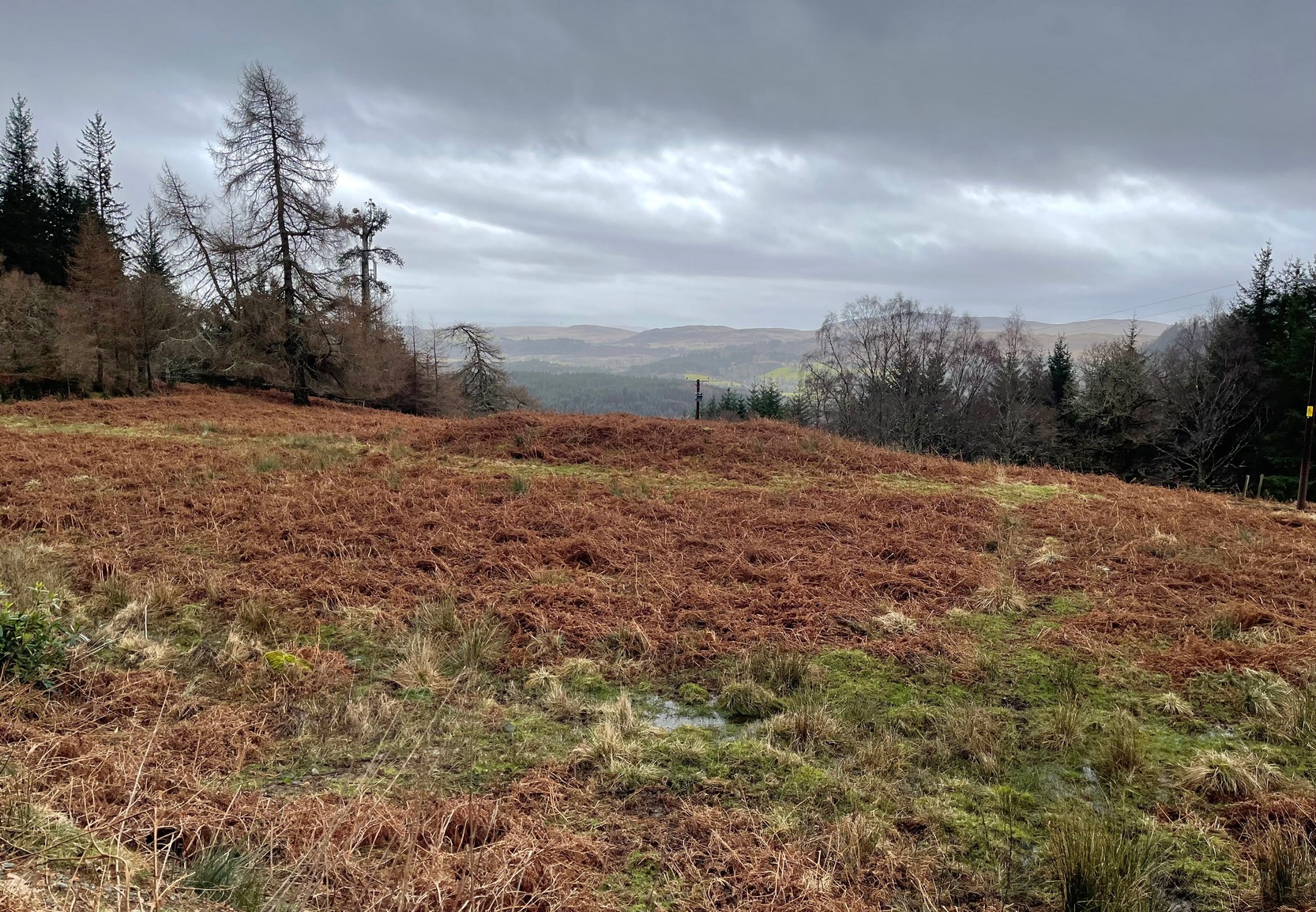
The Drum na Cille mound

Along the A85 road between Comrie and St Fillans, just over a mile out of Comrie, on the right-hand side (north) of the road is the small farm-track into the fields where the ruined stone circle of Tullybannocher lives.  Walk up this track (known as Maam Road), past the stones, and keep going uphill for more than a mile (literally 1 mile up, another track turns sheer right, but ignore it) where the track eventually levels-out; keep walking for another 600 yards, slightly downhill, until you reach a distinct fork in the track where you need to veer right, uphill, and keep walking up the track for ⅔-mile (1km) where you’ll see a cottage ahead of you.  About 50 yards before the house, down the slope on your left, a large rounded mass covered in bracken is the site you’re after.

Archaeology & History

This is an odd site, in more ways than one.  In the 18th and 19th century, local people told that it was “a very ancient churchyard, so old, indeed, that the grave-stones among the rank grass are scarcely discernible.” (Carment 1882)  This lore was reinforced by the fact that, as James Gow (1888) put it,

“within living memory that a burial took place here, and the tradition is that people came to bury the “wee unchristened bairns” from long distances, such as Loch Tayside, Glendochart,  Balquhidder, and Strathyre.”

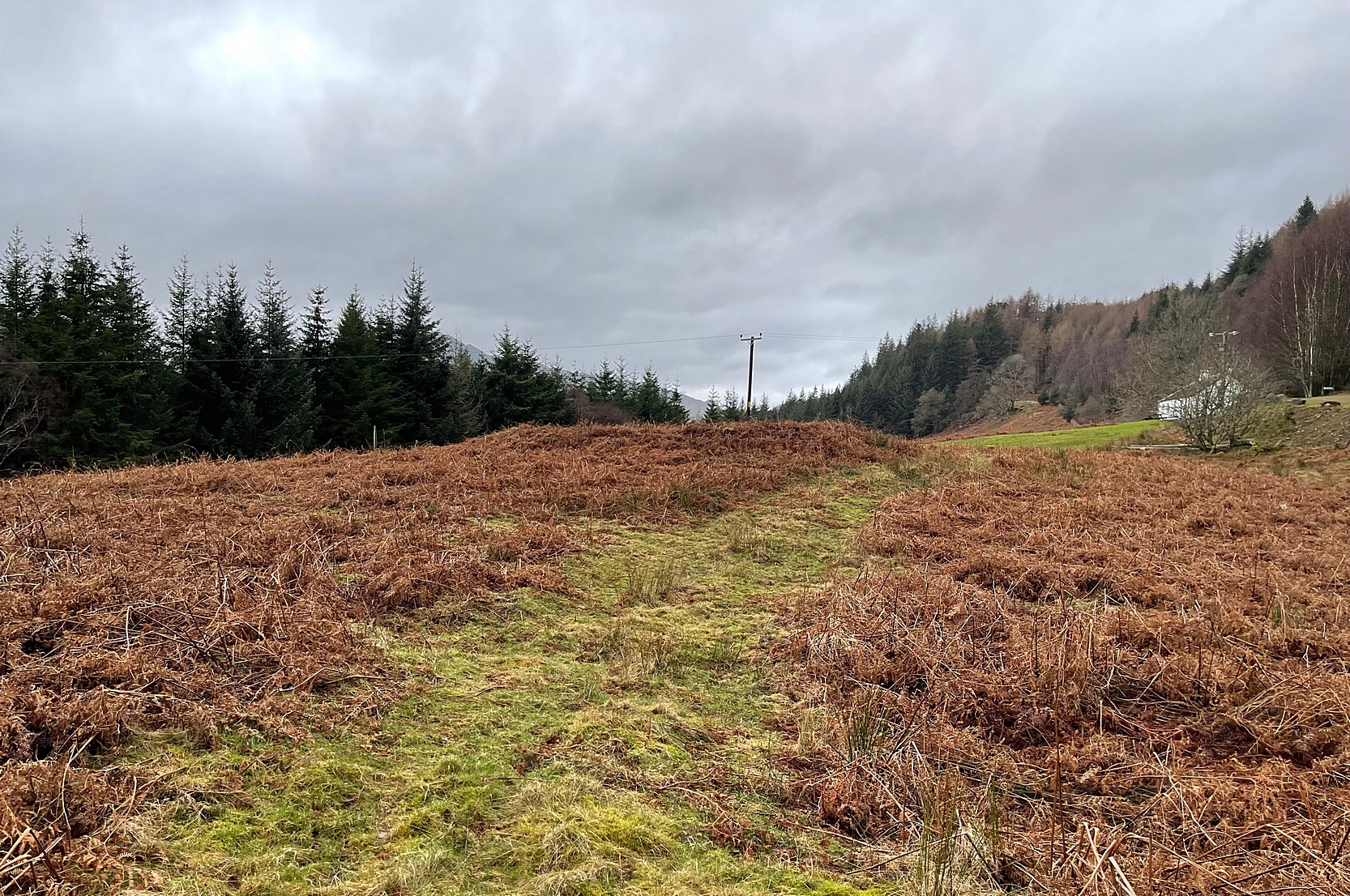
Looking W, at the circle
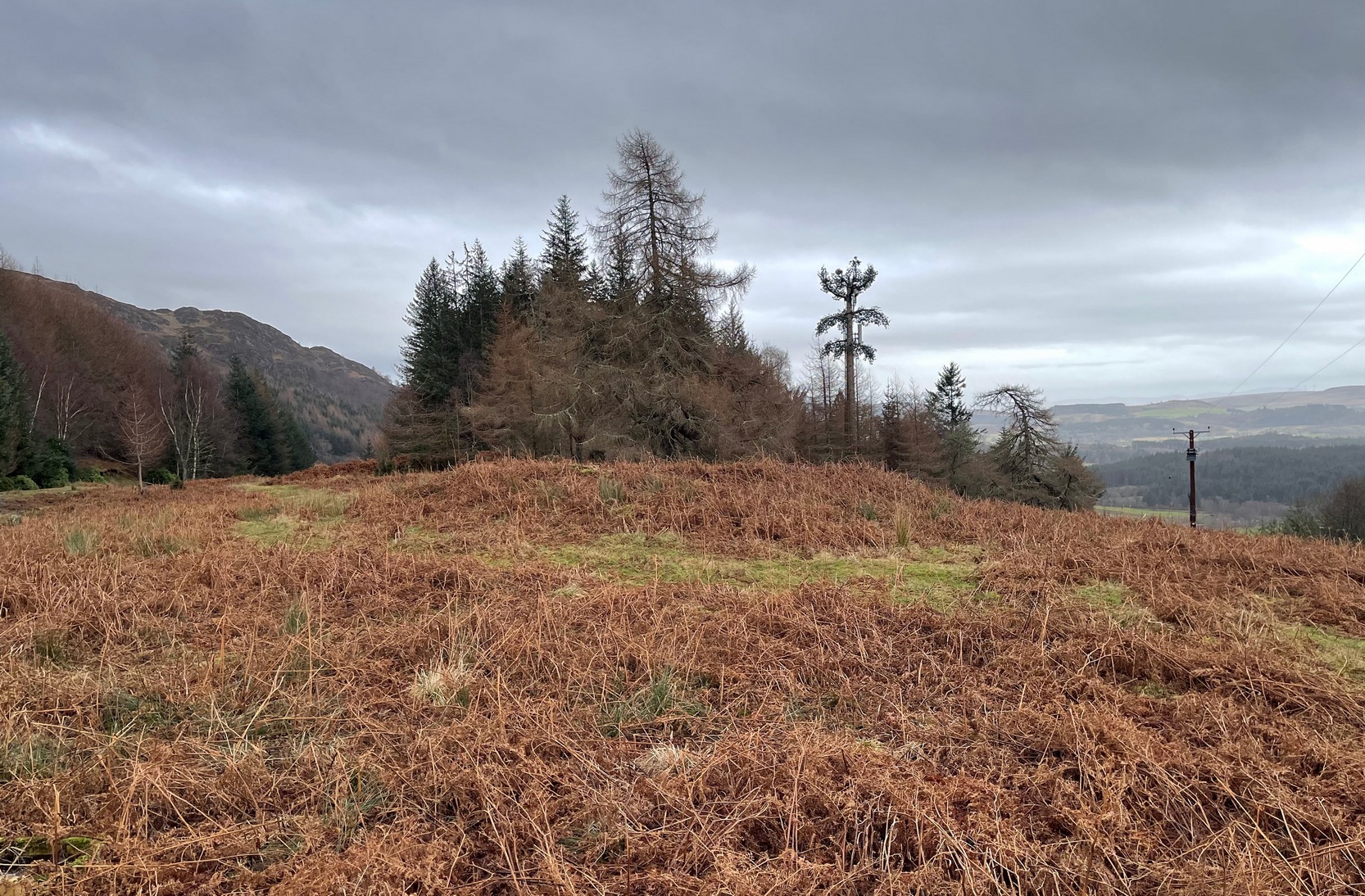
The old mound, looking SE

That’s a lot of effort and a considerable distance for some people to travel!  But the age and nature of this site is curious.  It very name, Drum-na-kill derives from either “ridge of the burial ground” or the “hill of the chapel” (and variants thereof)—yet there are no records of any such early church or religious cell here.  That doesn’t mean, of course, that there never was one.  A wandering Culdee priest may have set up camp here more than a thousand years ago after doing his service with the fading druids of Dull, less than 20 miles to the north.  Such things, never written down, will obviously have happened in these mountains and cannot be discounted merely due to a lack of scripts. But we simply don’t know.  When Mr Gow described the place—as “a raised enclosure 25 to 30 feet in diameter, with, a turf-covered wall or rampart 3 or 4 feet high surrounding it”—he emphasized that “in former times (it) was used as a burying ground for unbaptised infants.” (large numbers of Highlanders weren’t in the slightest bit interested in the ways of the Church)  So how far back in time did this tradition go…?

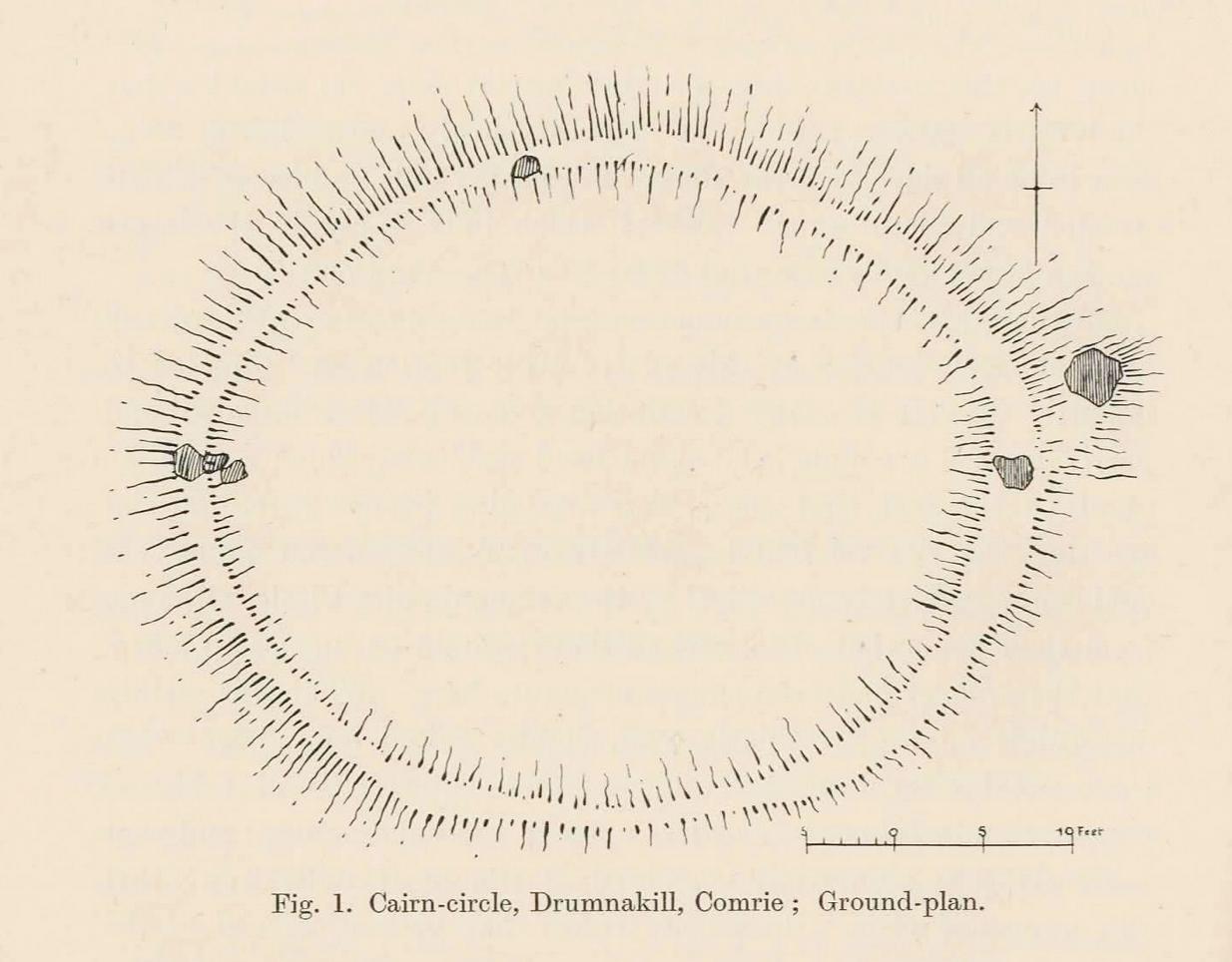
Well, Gow thought the place to be an early christian site.  But when Fred Coles came here more than thirty years later, during his massive survey of the Perthshire stone circles, he deemed it to be a much earlier construction.  A “cairn circle” no less—which would give it a more Bronze Age footprint.  And this definition has stuck.  Coles (1911) told that,

Coles’ 1911 diagram
Raised ‘walling’ highlighted

“This Cairn-circle is about seventy yards east of the shepherd’s cottage, and it slightly resembles others already noticed in Perthshire.  It measures from crest to crest of its circular ridge 44 feet 3 inches east and west by 37 feet 10 inches north and south.  Several large blocks of stone lie exposed on the crest, and many others can be felt as one walks along it.  The ridge is completely  oval-circular, having no break or passage-way, and encloses a flattish, rather uneven space measuring about 34 feet in diameter.  The height above the outside ground at the best-preserved portions is fully 4 feet.”

More than a century later, its not changed much—although if you were to believe the updated Trove website, “the cairn has been destroyed in the process of land improvement.”  Which is untrue.  As the albeit darkened photos here show (we visited it on a truly dark grey day), the raised cairn, despite being covered in a mass of deep bracken, is clearly in a condition similar to what Coles described.  It looks like a typical example of this type of monument, of considerable size, with reasonably well-defined edges and comprising the usual scattered mass of stones in and around it.  The large boulders that Coles described don’t seem to be in evidence, but these were apparently shifted a few decades back and added to the enclosure walling to the east.  To honest, only the untrained eye would miss the place!  Check it out when you’re looking at the cup-marked stone, less than a hundred yards to the east…

References:

  1. Carment, Samuel, Scenes and Legends of Comrie, James P. Mathew: Dundee 1882.
  2. Coles, Fred, “Report on Stone Circles Surveyed in Perthshire, Principally Strathearn,” in Proceedings of the Society of Antiquaries, Scotland, volume 45, 1911.
  3. Gow, James M., “Notes near St Fillans: Cup-Marked Stones, Old Burying Ground at Kindrochet and Drumnakill”,  Proceedings of the Society of Antiquaries of Scotland, volume 22, 1888.
  4. MacPherson, John, “At the Head of Strathearn”, in Chronicles of Strathearn (ed. W.B. MacDougal), David Philips: Crieff 1896.

© Paul BennettThe Northern Antiquarian

Craven Hall Hill (2), Hawksworth Moor, West Yorkshire

Ring Cairn:  OS Grid Reference – SE 14442 44281

Getting Here

Craven Hall ring cairn

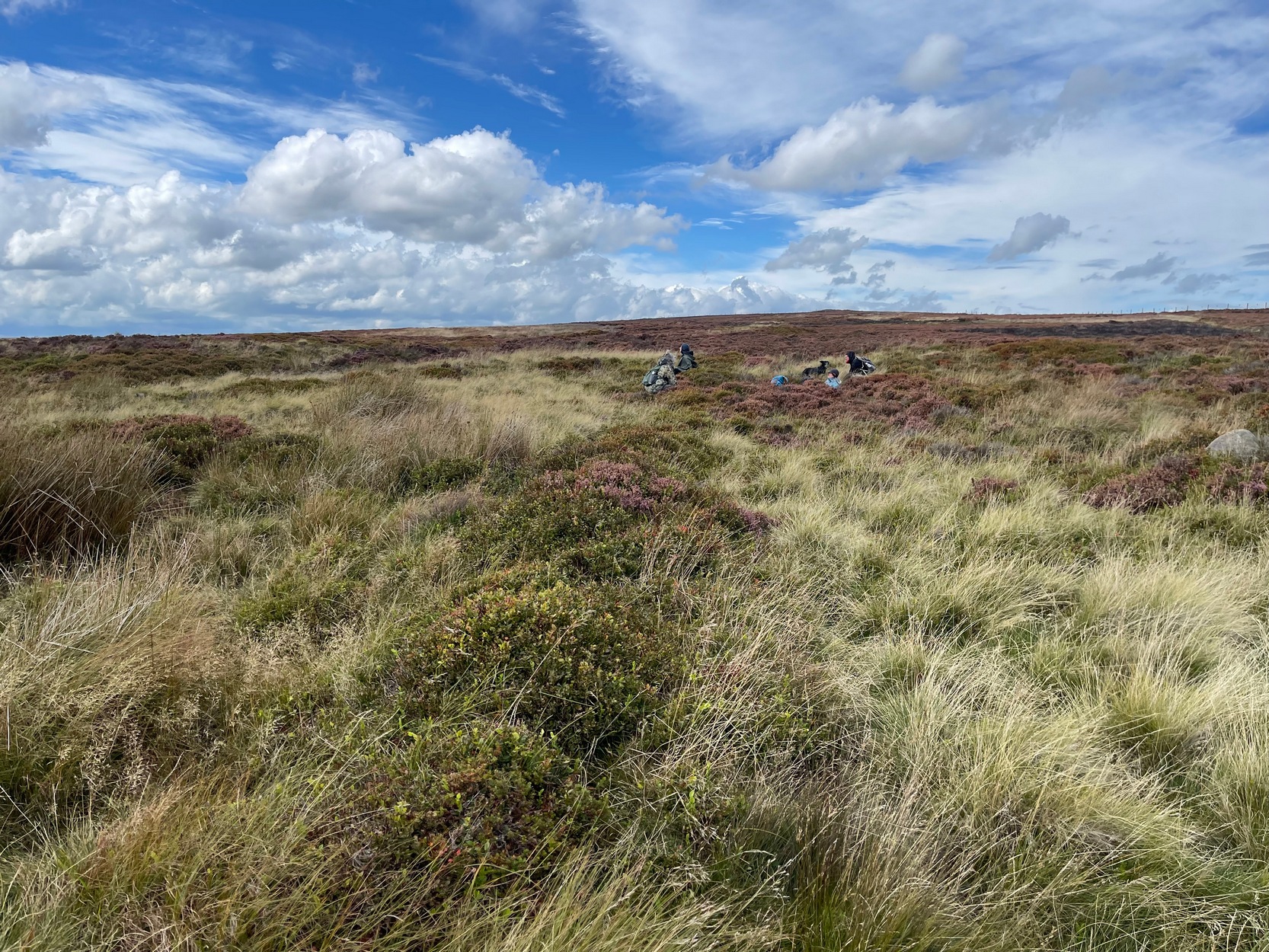
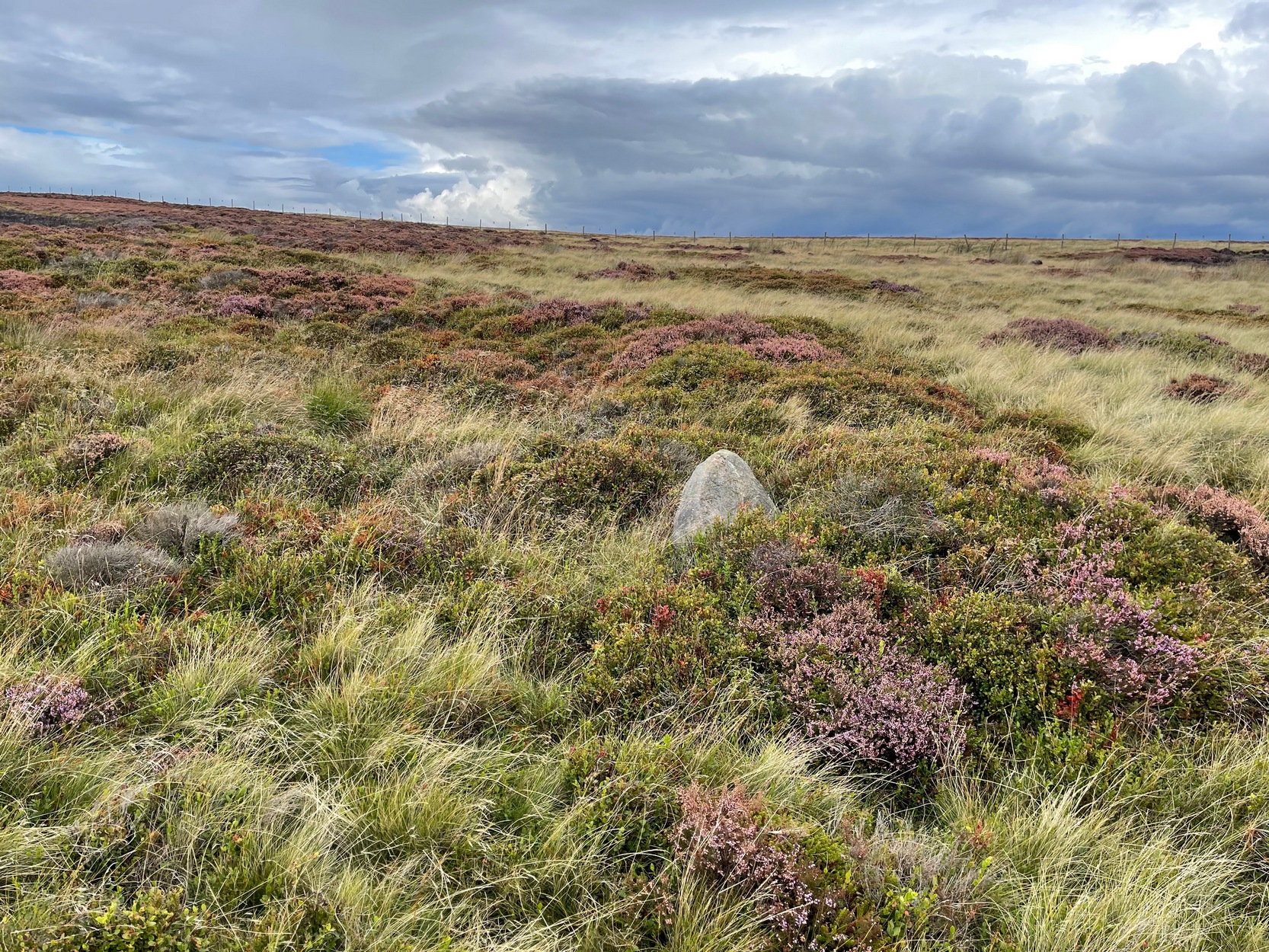
Your best starting point is from the Great Skirtful of Stones giant cairn.  From here follow the fencing that runs down the slope to your left (south-east) for roughly 160 yards (148m) – past the Great Skirtful Ring – until you reach the gate.  Go through it and keep walking down the same fence-line for 300 yards then walk south onto the moorland proper (there are no paths here).  You’ll pass over several undulations in the heather (some of these are the edges of ancient trackways) and 55-60 yards south from the fencing you’ll walk over and into this overgrown prehistoric ring.  It’s very difficult to see when the vegetation is deep, so persevere!

Archaeology & History

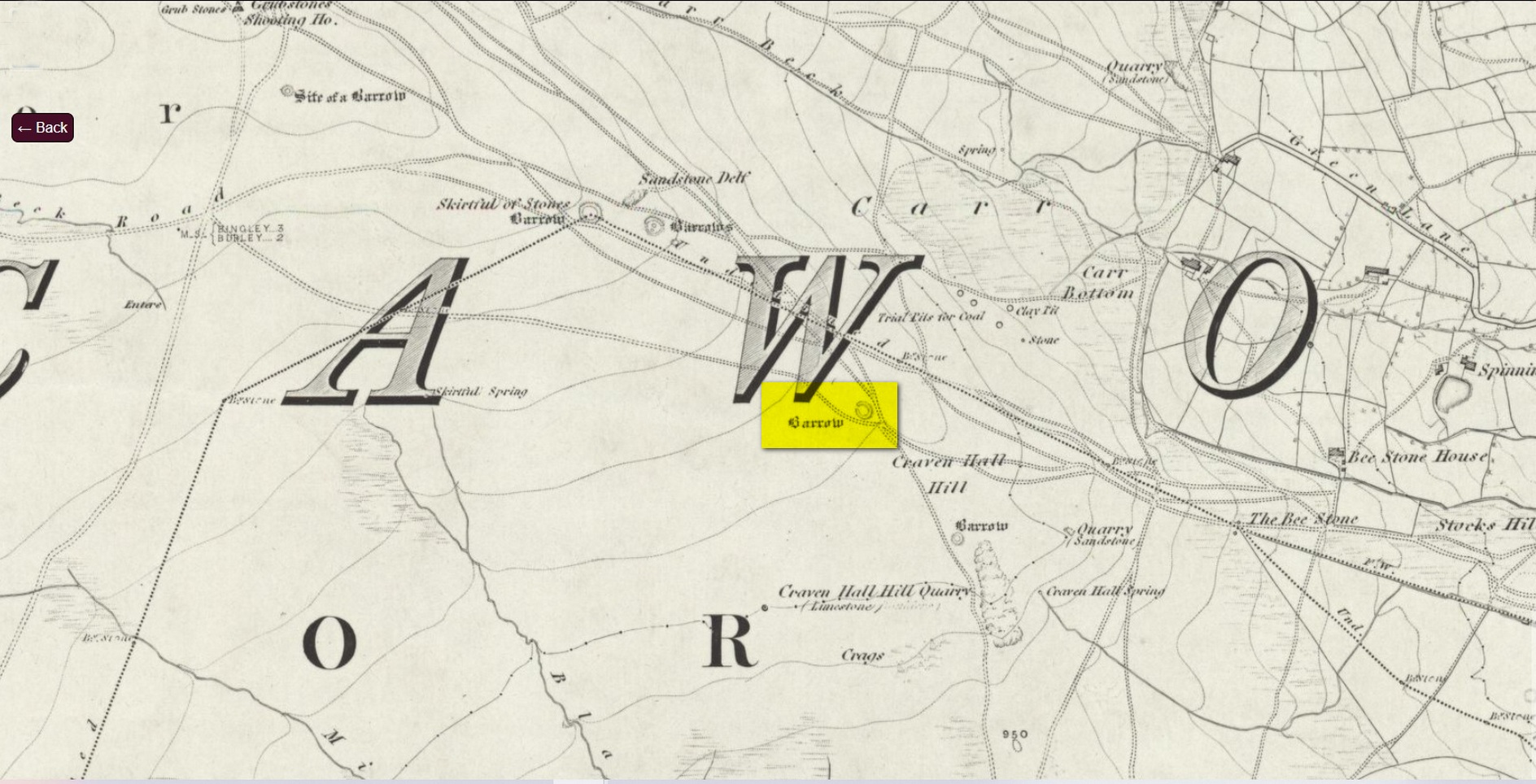
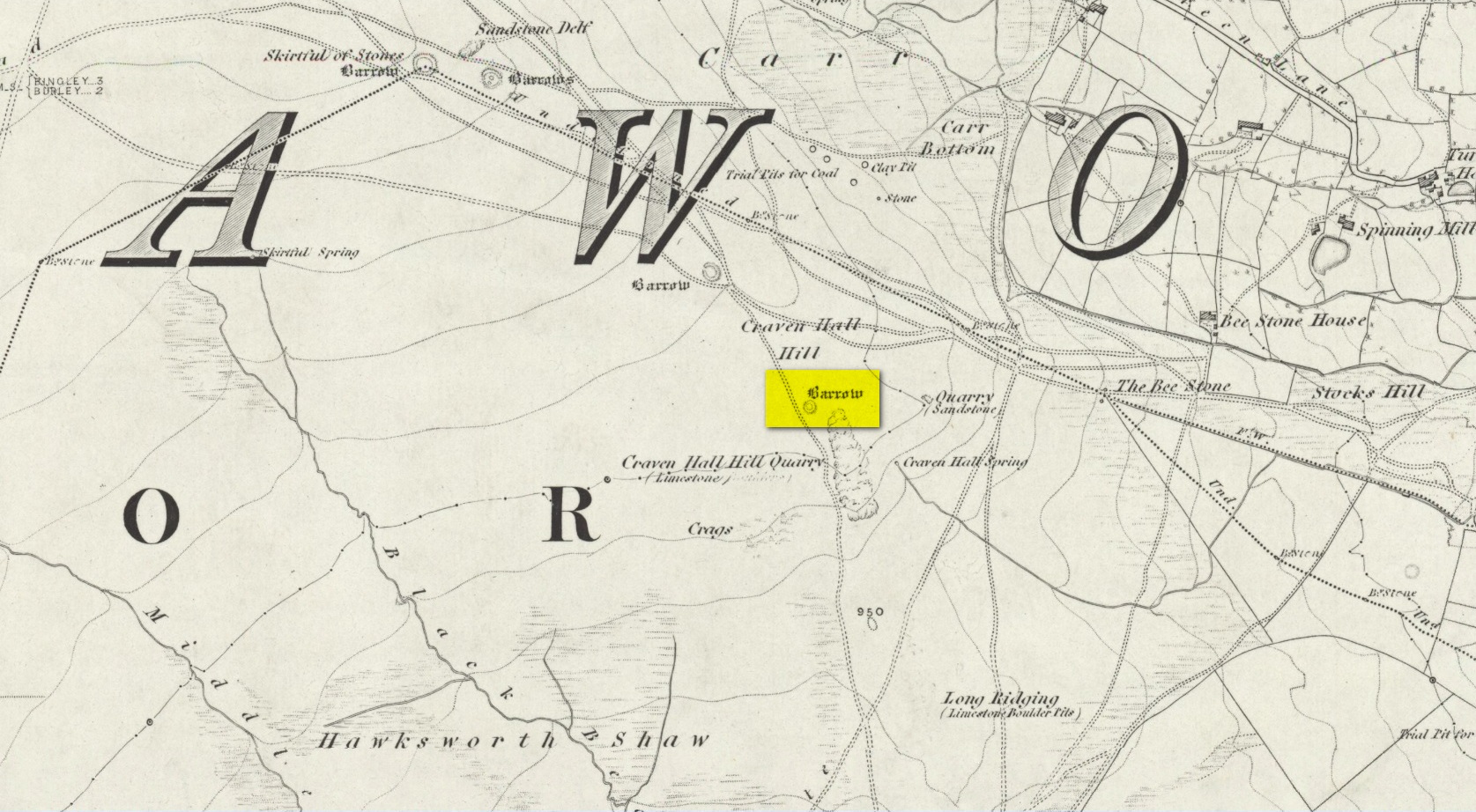
Site shown on 1851 map

This is an interesting site.  Marked on the 1851 Ordnance Survey map as a “barrow” (right), it is shown with trackways on either side of it to the north and south, and with an opening or entrance on its northwestern side.  Yet since that date, very little archaeological attention has been given to it and the site remains unexcavated, despite its location being repeated on all subsequent maps since then.  The designation of the site as a barrow or burial site, without being excavated, was educated guesswork at the time as the place seems to be what we today define as a ring cairn.  And whilst this seems likely, there are some oddities here.

Measuring roughly 25 yards (SE – NW) by 21 yards (NE – SW), this overgrown oval ‘ring’ is a similar architectural structure to the more famous Roms Law circle more than half-a-mile northwest of here—but bigger!  And, unlilke Roms Law, this overgrown circle seems to have been untouched for many centuries.  The oval surrounding ‘ring’ itself is composed of thousands of small packing stones between, seemingly, a number of much larger upright stones, reaching a maximum height of more than three feet high at the northernmost edge.  The ‘ring’ ostensibly looks like a wide surrounding wall which measures two yards across all round the structure.

Track running into the ring
Raised line into the ring

Internally, there seems little evidence of a burial — although our recent visits here, as the photos indicate, took place when the moorland vegetation was deep and covered almost the entire site.  The outline of the site is obviously visible, even in deep heather, but the smaller details remain hidden.  But in addition to the main ring, another very distinct ingredient here is the existence of an extended length of man-made parallel walling, probably a trackway, that runs into the circle from the southeast all the way through the circle and out the other side and then continuing northwest heading roughly towards the Great Skirtful giant cairn on the horizon 500 yards to the northwest.

Stone at NE arc of walling

Due to the landscape being so overgrown, it’s difficult to ascertain where this ‘trackway’ begins and ends.  Added to this, we find that there are additional ‘trackways’ that run roughly parallel to the one that runs through the circle—and these ‘trackways’ are very old indeed, some of them likely have their origins way back in prehistory.  The one that runs through the middle of this ring cairn may be a ceremonial pathway along which, perhaps, our ancestors carried their dead.  If we follow it out from here and keep walking along the track 300 yards to the southeast, we eventually run right to the edge of the Craven Hall (3) circle.  Parallel to this is another ancient trackway that runs northwest to the edge of the Roms Law circle.  It seems very much as if we have ceremonial trackways linking sites to each other: ancestral pathways, so to speak.

Have a gander at this when you’re next in the area.  There are many other sites nearby that are off the archaeological radar.  In recent years, a number of northern antiquarians wandering over this landscape are finding more and more ancient remains: walling, circles, cairns, trackways.  It’s a superb arena—but sadly, most of it is hidden beneath deep moorland vegetation.

References:

  1. Faull, M.L. & Moorhouse, S.A. (eds.), West Yorkshire: An Archaeological Guide to AD 1500 – volume 1, WYMCC: Wakefield 1981.

Acknowledgements:  Huge thanks for use of the Ordnance Survey map in this site profile, reproduced with the kind permission of the National Library of Scotland

© Paul BennettThe Northern Antiquarian

Craven Hall Hill (3), Hawksworth Moor, West Yorkshire

Ring Cairn:  OS Grid Reference – SE 14574 44098

Getting Here

Site shown on 1851 map

Unless the heather’s been burnt back, this takes a bitta finding.  Direction-wise, the easiest is from the moorland road above Menston.  Go up Moor Lane and then turn right along Hillings Lane. 350 yards on is a dirt-track on your right marked as Public Footpath.  Walk up here for two-thirds of a mile—going past where the track goes left to the Shooting Range—to where the track splits.  Bear left and after 250 yards you reach a fence on your left where the moorland proper begins.  Follow this fence SW for 300 yards until it does a right angle turn.  Just before this, you’ll see a large worn overgrown trackway or path running north into the moorland.  Walk up here for nearly 100 yards and look around.  Best o’ luck!

Archaeology & History

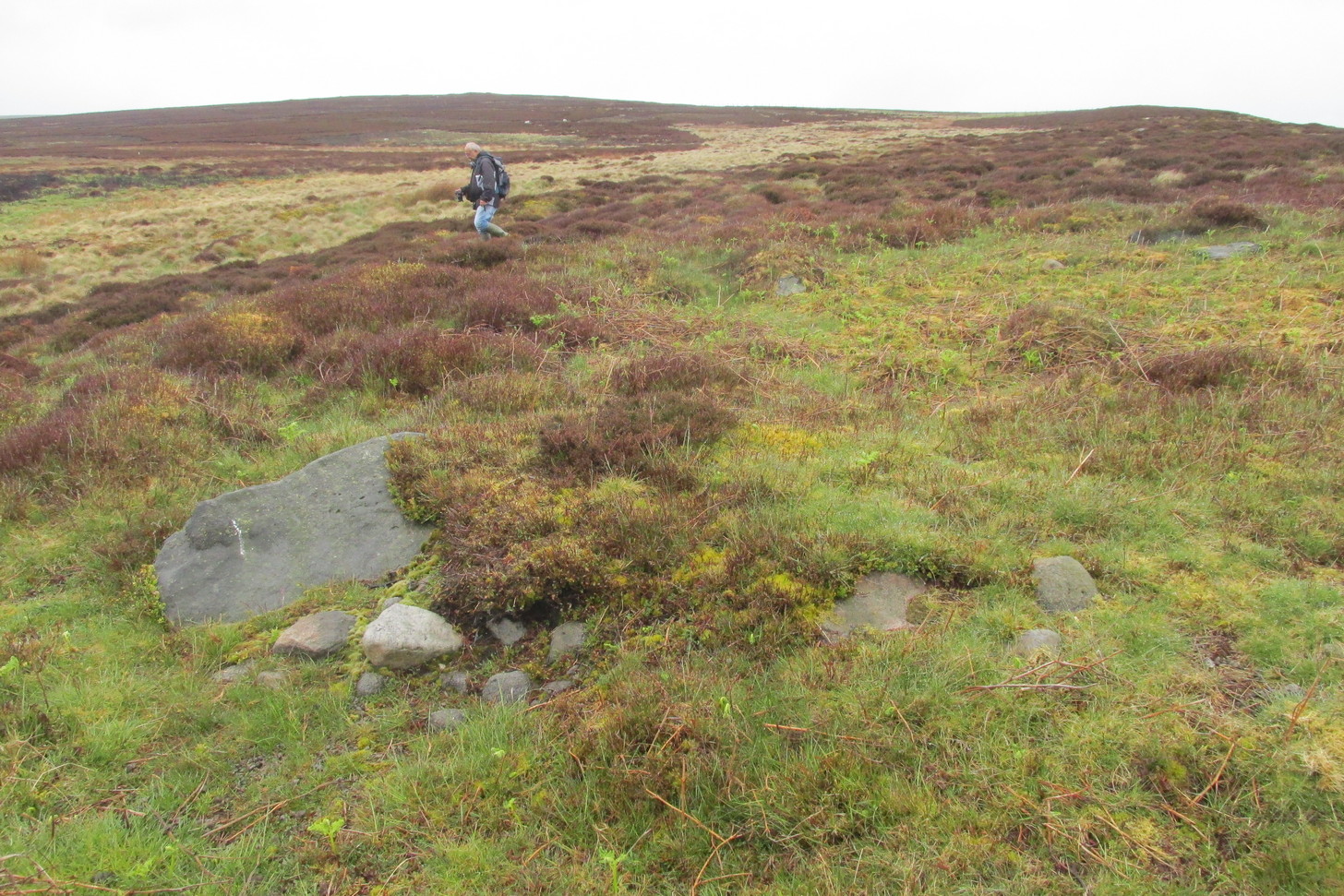
Western arc of earth & stone

Shown on the 1851 OS-map adjacent to the long prehistoric trackway that runs past Roms Law, the Great Skirtful and other prehistoric sites, the antiquarian wanderings of Forrest & Grainge (1868) came past here and, although didn’t mention the Craven Hall cairns directly, they did write of “a group of barrows” hereabouts, and this may have been one of them.  James Wardell (1869)  gave an even more fleeting skip, only mentioning “pit dwellings” hereby.  A little closer to certainty was the literary attention Collyer & Turner’s (1885) pen gave, where they described, “near the adjoining old trackway, which runs from East to West, will be seen a small barrow”—but this could be either of the Craven Hill sites.  And the usually brilliant Harry Speight (1900) gave the place only more brevity….

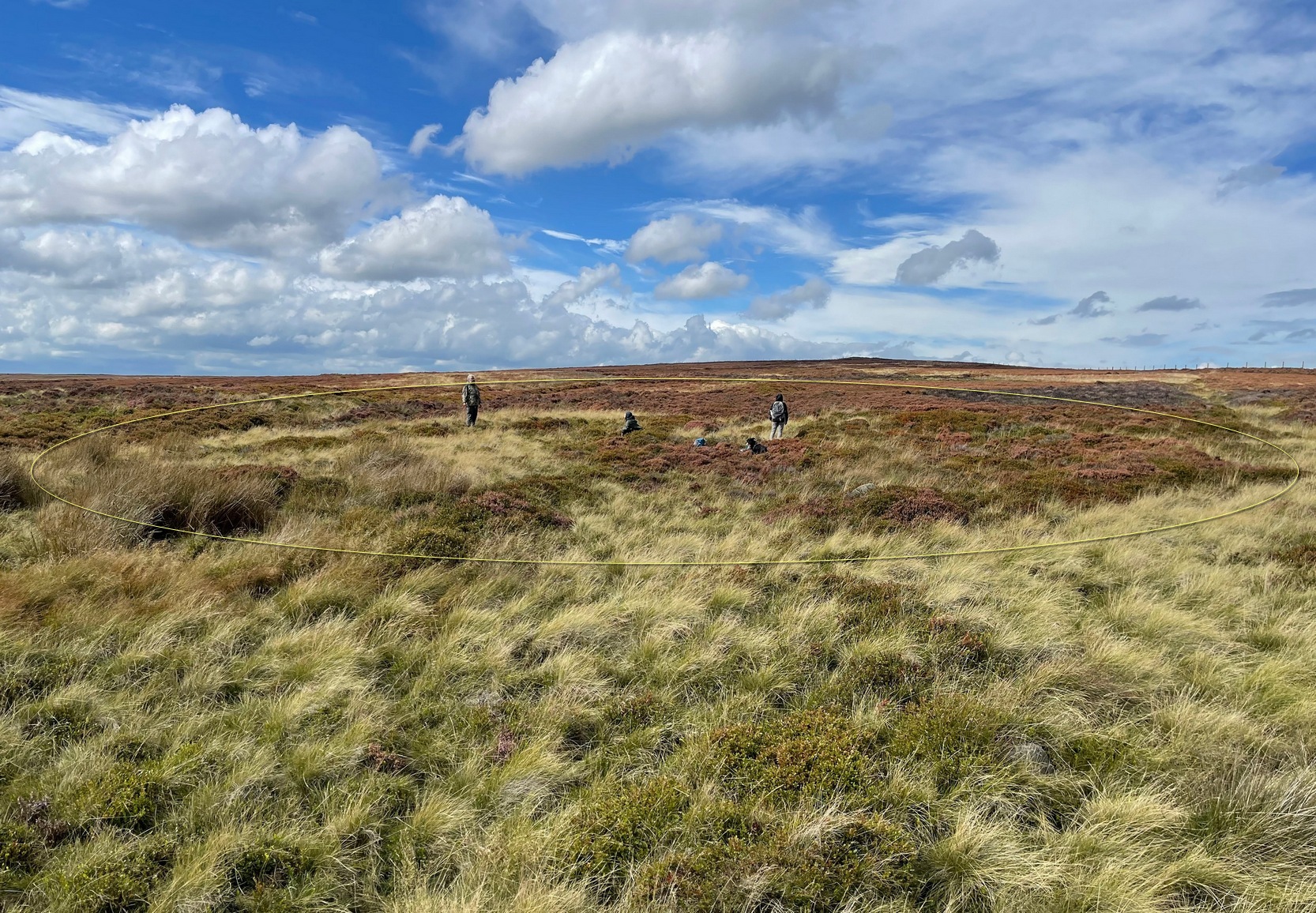
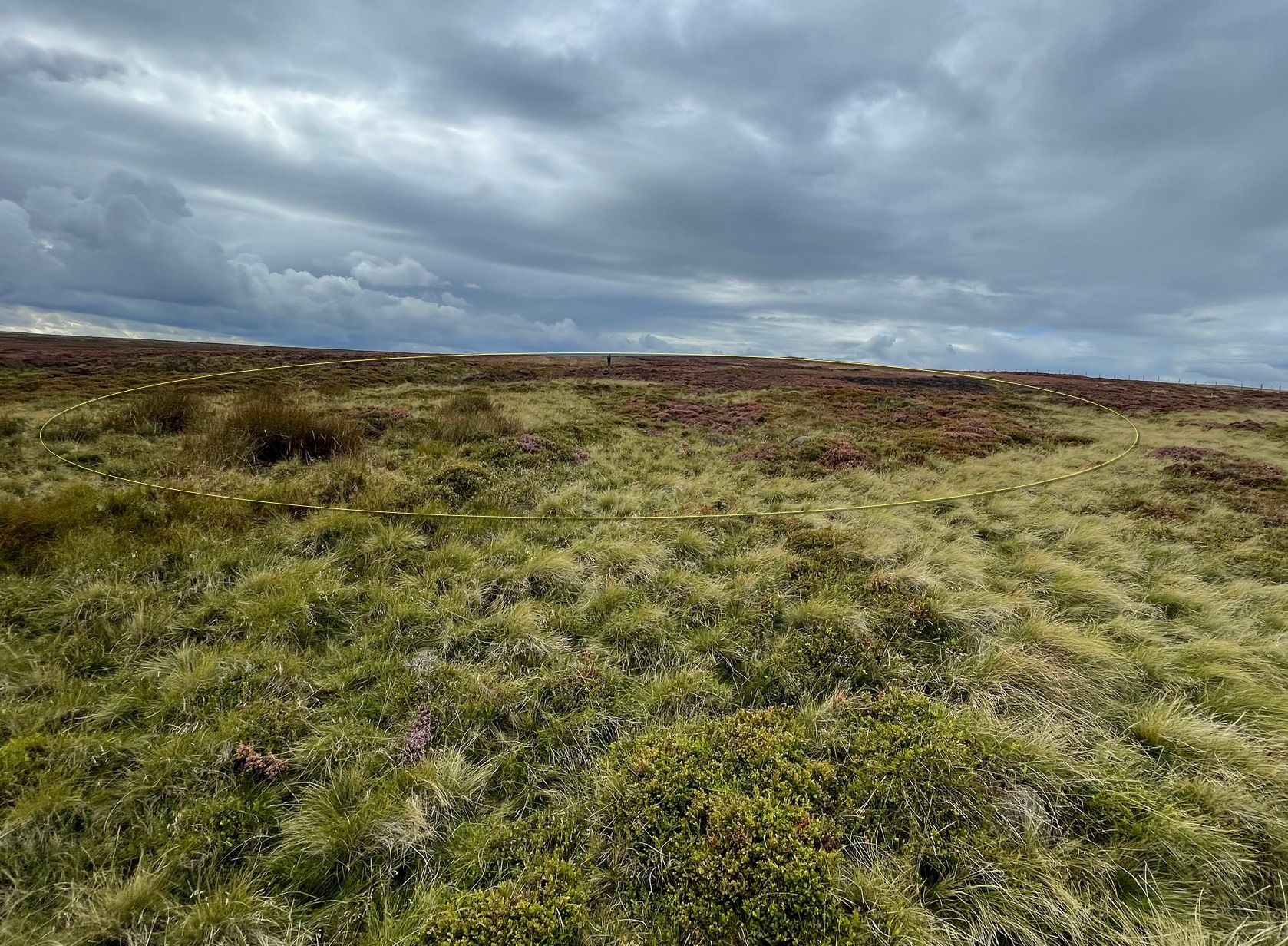
Structurally similar to Roms Law nearly ¾-mile northwest of here, this little-known and much denuded prehistoric tomb has seen better days.  It is barely visible even when the heather’s low—and when we visited recently, the heather was indeed low but, as the photos here indicate, it’s troublesome to see.  It’s better, of course, with the naked eye.

Highlighted ring cairn, looking NE
Highlighted ring cairn, looking SE

It’s the most easterly cairn in the large Bronze Age necropolis (burial ground) on Hawksworth Moor.  Measuring some 12 yards across and roughly circular in form, the ring is comprised mainly of many small stones compacted with peat, creating a raised embankment barely two feet high above the heath and about a yard across on average.  A number of larger stones can be seen when you walk around the ring, but they don’t appear to have any uniformity in layout such as found at the more traditional stone circles.  However, only an excavation will tell us if there was ever any deliberate positioning of these larger stones.  It would also tell us if there was ever a burial or cremation here, but the interior of the ring has been dug out, seemingly a century or two ago…

References:

  1. Collyer, Robert & Turner, J.H., Ilkley: Ancient and Modern, William Walker: Otley 1885.
  2. Faull, M.L. & Moorhouse, S.A. (eds.), West Yorkshire: An Archaeological Guide to AD 1500 – volume 1, WYMCC: Wakefield 1981.
  3. Forrest, C. & Grainge, William, A Ramble on Rumbald’s Moor, among the Rocks, Idols and Altars of the Ancient Druids in the Spring of 1869, H. Kelly: Wakefield 1868.
  4. Speight, Harry, Upper Wharfedale, Elliott Stock: London 1900.
  5. Wardell, James, Historical Notes of Ilkley, Rombald’s Moor, Baildon Common, and other Matters of the British and Roman Periods, Joseph Dodgson: Leeds 1869.

© Paul BennettThe Northern Antiquarian