Allt a’ Choire Chireinich (06), Ben Lawers, Kenmore, Perthshire

Cup-Marked Stone:  OS Grid Reference – NN 65309 39553

Getting Here

Allt a’ Choire Chireinich 6

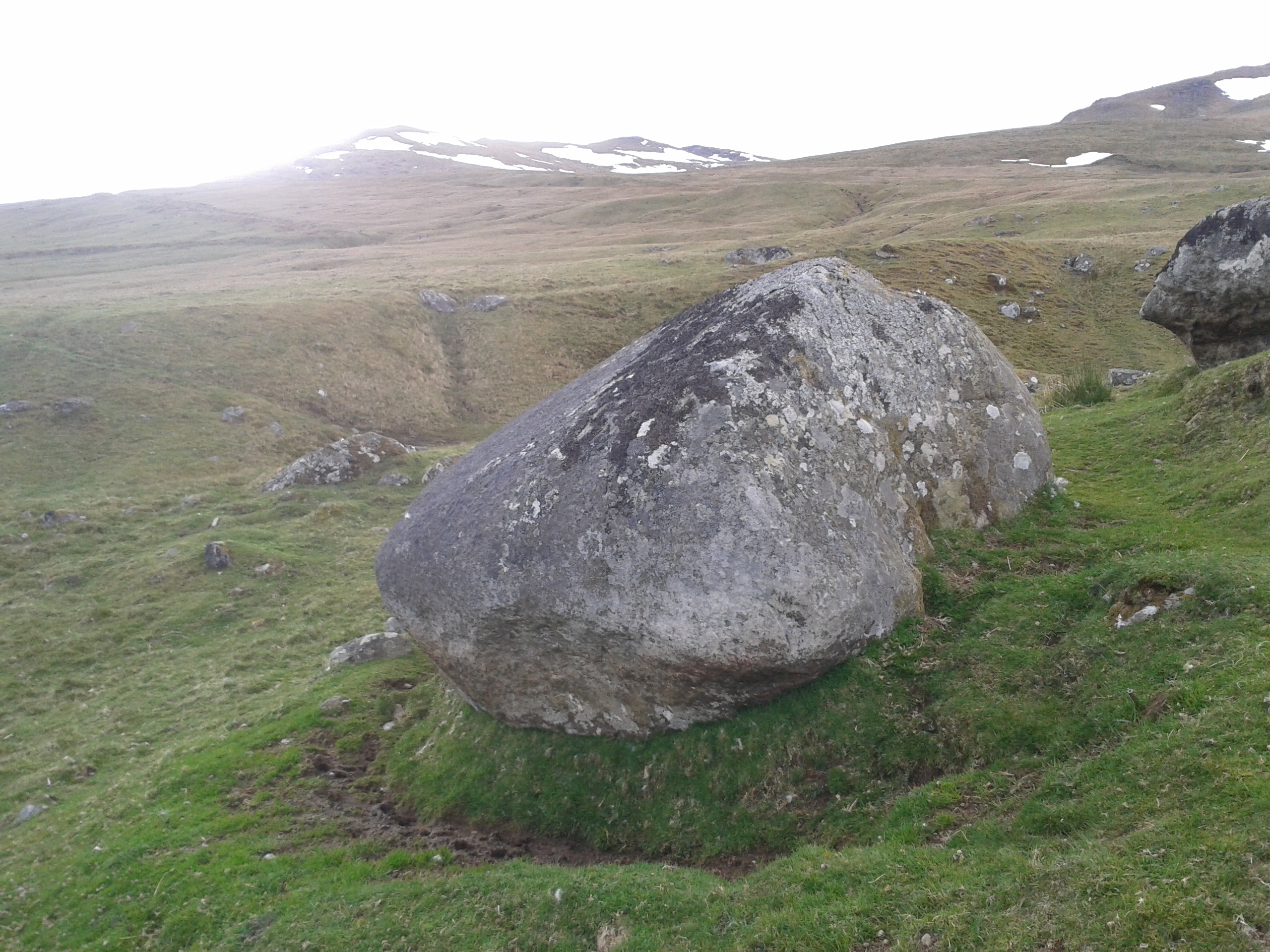
Follow the directions to reach the faint but impressive Allt a’ Choire Chireinich (04) petroglyph.  Standing here, you’ll notice the large boulder that looks as if it’s fallen down the slope immediately to your left.  You can’t really miss it.

Archaeology & History

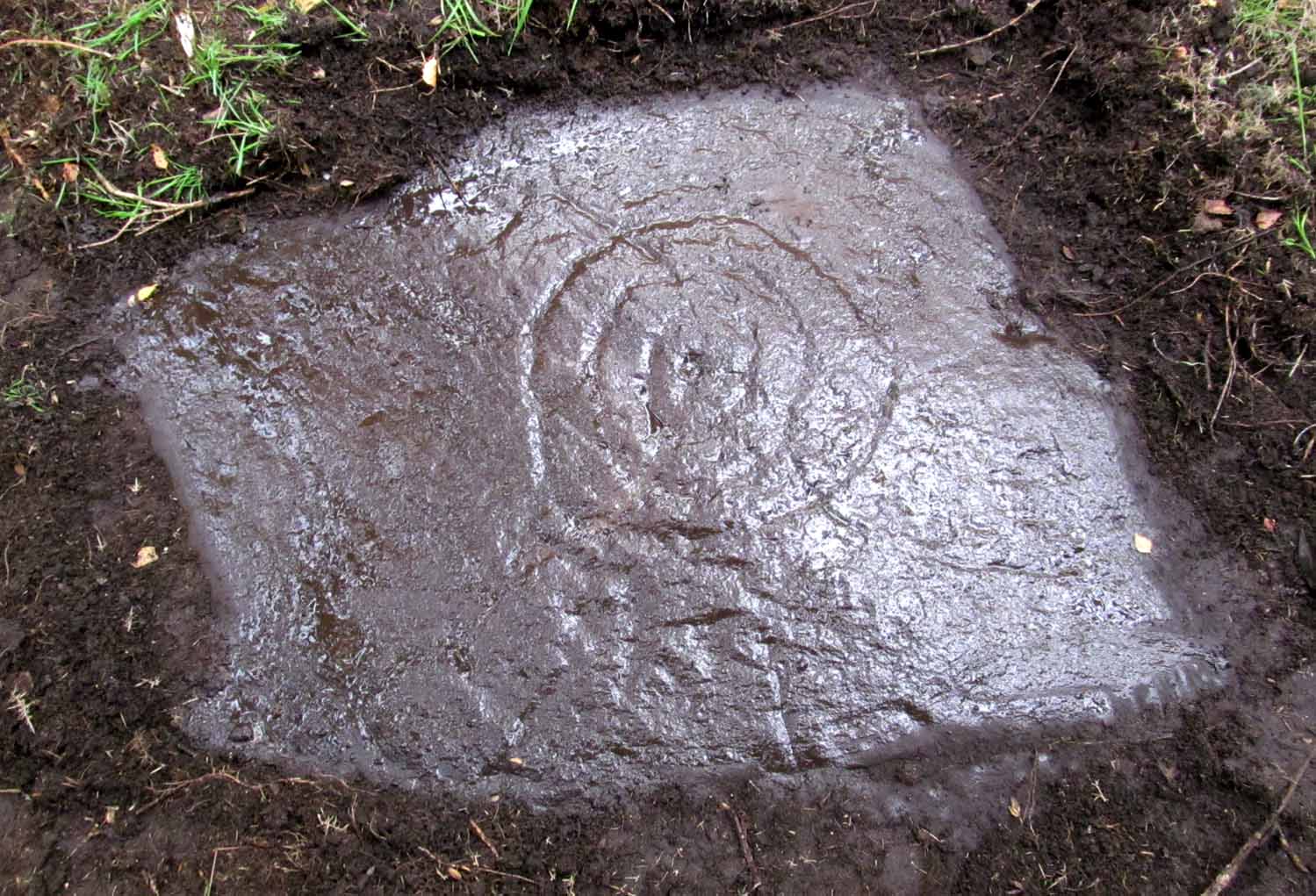
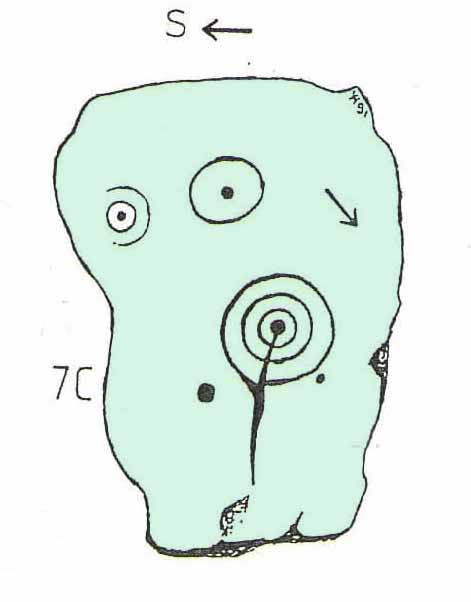
Beneath the gorgeous excess of ancient lichens you can make out at least three cup-marks on the south-facing sloping rock-face in the top-half of the boulder.  There may be some other faint cups on here, but due to the lichens they are very difficult to see, so I’m erring on the side of caution regarding their veracity.  This is another one of those carvings likely to be interest only to the most ardent petroglyphic nuts amongst you.

© Paul BennettThe Northern Antiquarian
Allt a’ Choire Chireinich (05), Ben Lawers, Kenmore, Perthshire

Cup- Marked Stone:  OS Grid Reference – NN 65305 39555

Getting Here

Allt a’ Choire Chireinich 5

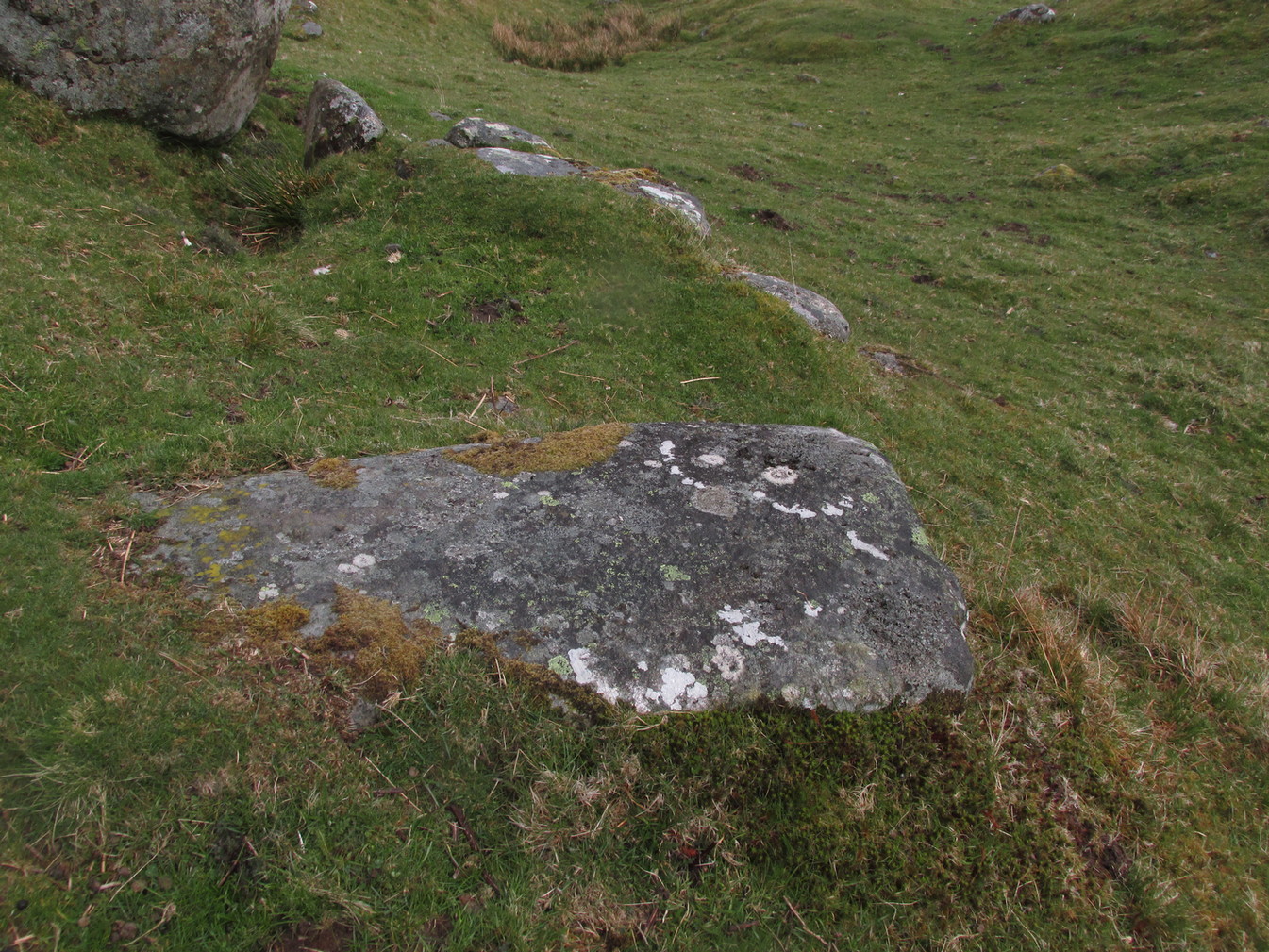
Follow the directions to reach the faint but impressive Allt a’ Choire Chireinich (04) petroglyph.  Standing here, look straight down at the dried-up burn barely ten feet below you, where you’ll see a small sloping rock.  That’s it!

Archaeology & History

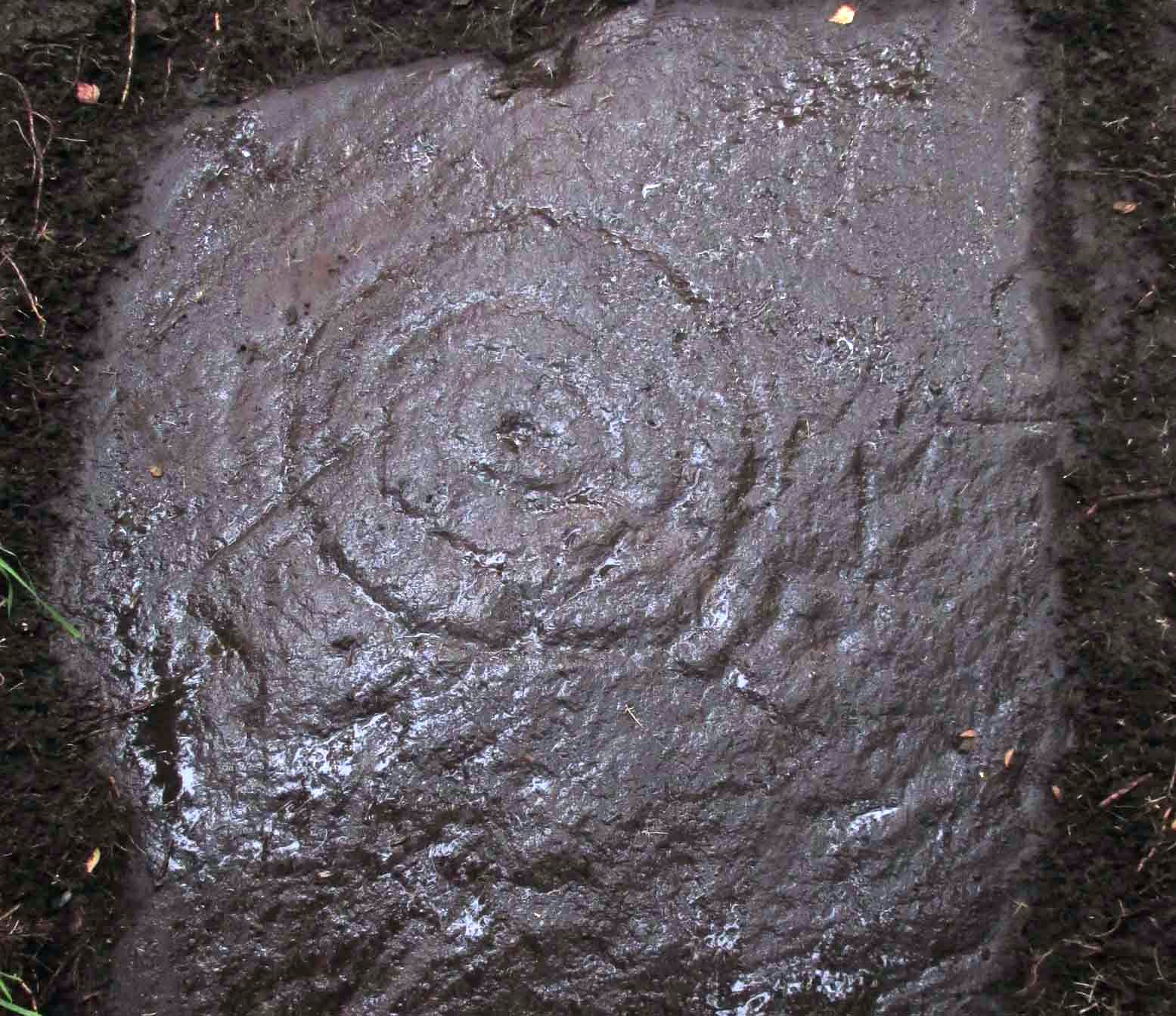
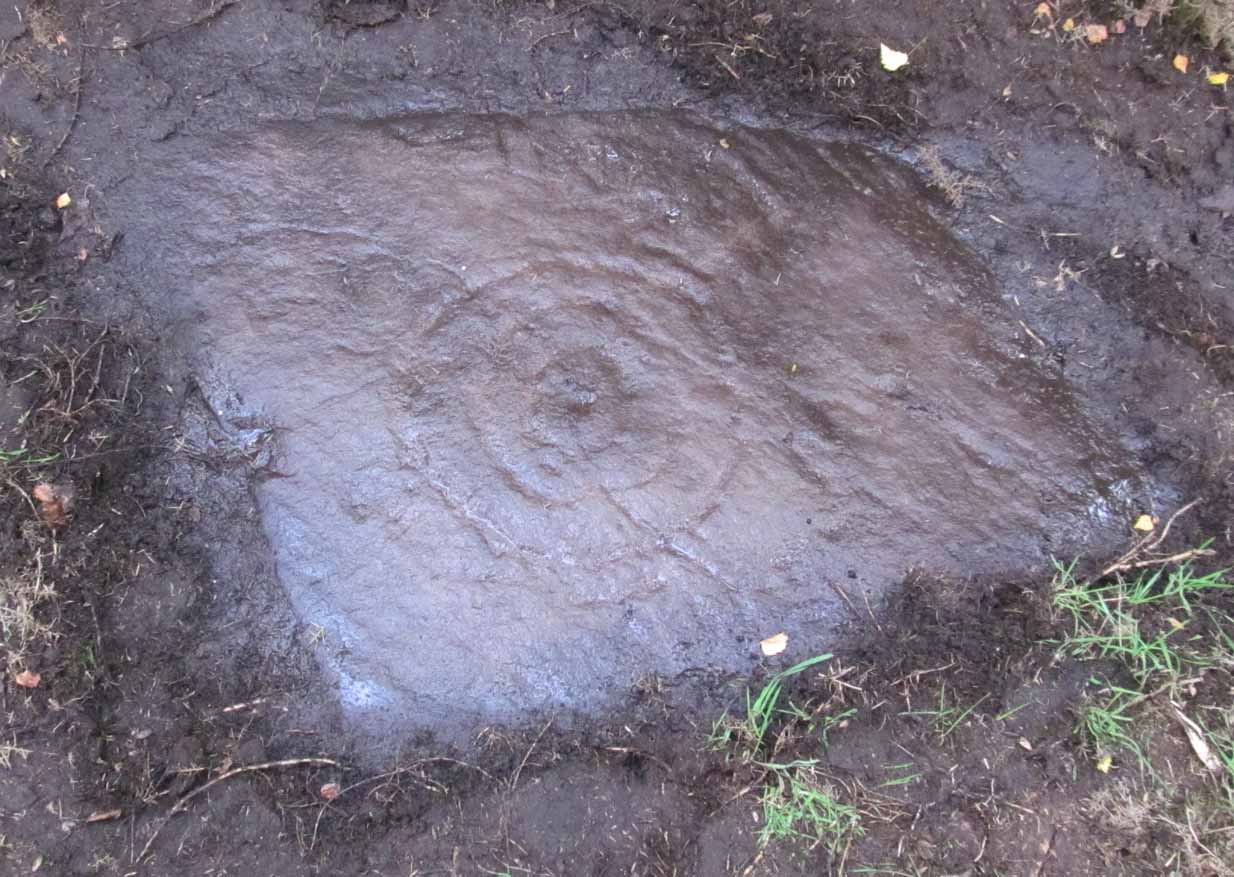
Nothing much to see here apart from a single shallow cup-marking.  Most likely of interest only to the most ardent petroglyphic explorer, but worth looking at when you’re visiting the more impressive carvings nearby.

© Paul BennettThe Northern Antiquarian

St. Patrick’s Well, Ballinvalley Upper, County Wicklow

Holy Well (destroyed):  OS Grid Reference – T 2481 8173 

Archaeology & History

Highlighted on the 1838 OS-map, Grogan and Kilfeather (1997) report that there are  “no visible remains” to be seen of this holy well.  The cult of St Patrick is still celebrated in Ireland every year on 17 March.

References:

  1. Grogan, Eion & Kilfeather, Annaba, Archaeological Inventory of County Wicklow, Stationery Office: Dublin 1997.
  2. Lynch, Geraldine, “The Holy Wells of County Wicklow,” in Wicklow History and Society (edited by K. Hannigan & W. Noland), Dublin 1994.

© Paul BennettThe Northern Antiquarian 

Petrifying Well, Grosmont, North Yorkshire

Sacred Well:  OS Grid Reference – NZ 82844 06665

Archaeology & History

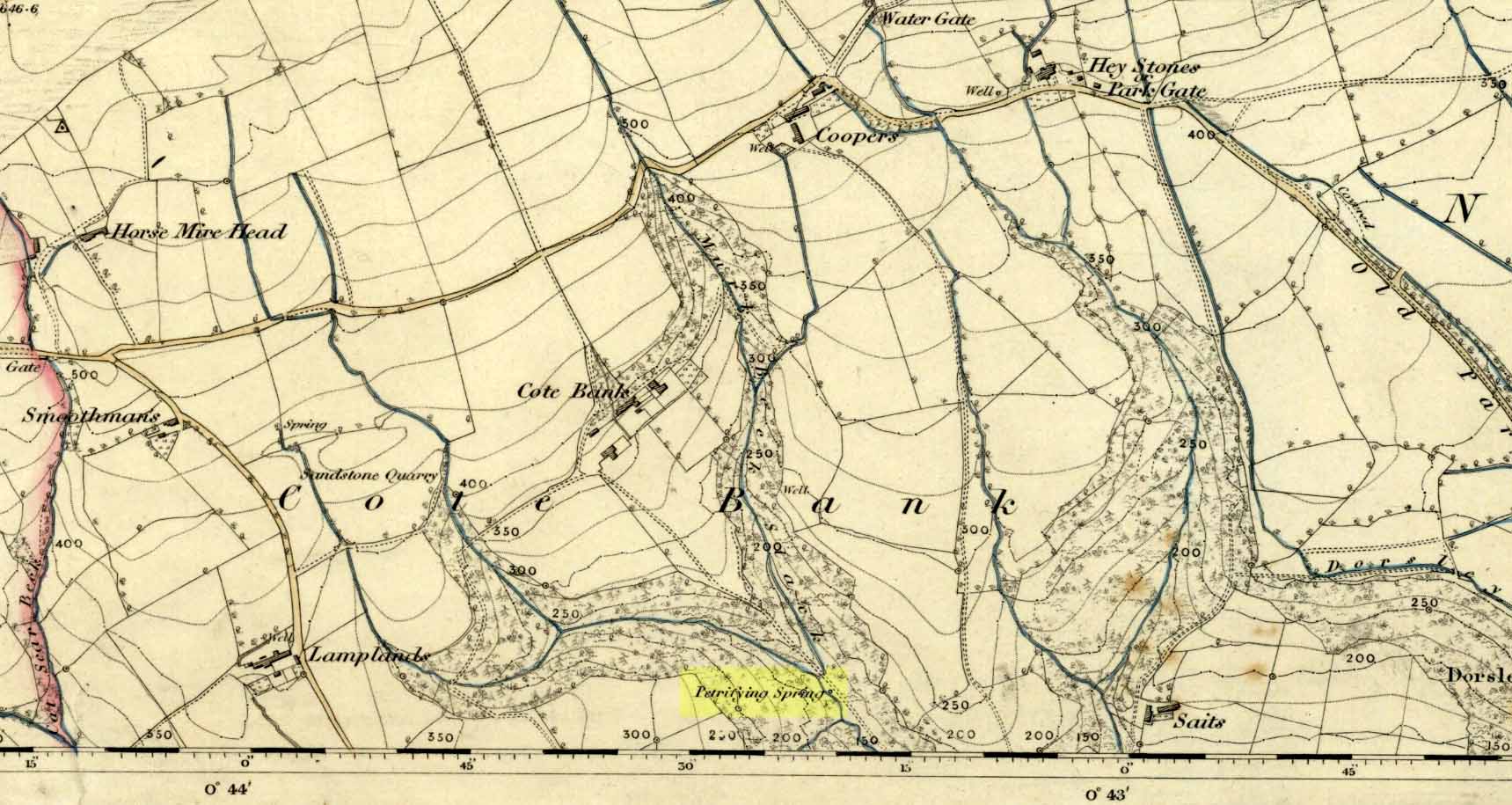
Petrifying Well on 1853 map

Petrifying wells are found across the British Isles and would be deemed as being medicinal, or curative at the very least.  In Jeremy Harte’s (2008) massive study, he infers that some of them will have been regarded as sacred or ‘holy’. This makes sense.  The water’s ability to calcify objects (turn them to stone) would be seen as a very strange effect indeed!  Yet despite this Eskdale example being shown on the first OS-map in 1853, its history seems to have been forgotten.  Back then, you could find it on the east side of the Murl Slack Beck, nearly a mile north of Grosmont village.  I highlight the site in the hope that someone may be able to unearth something about its past and/or its present condition.

References:

  1. Harte, Jeremy, English Holy Wells – volume 1, Heart of Albion Press: Marlborough 2008.

© Paul BennettThe Northern Antiquarian


Table Stone, Ilkley Moor, West Yorkshire

Cup-and-Ring Stone:  OS Grid Reference – SE 12233 46342

Also Known as:

  1. Carving no.114 (Hedges)
  2. Carving no.267 (Boughey & Vickerman)

Getting Here

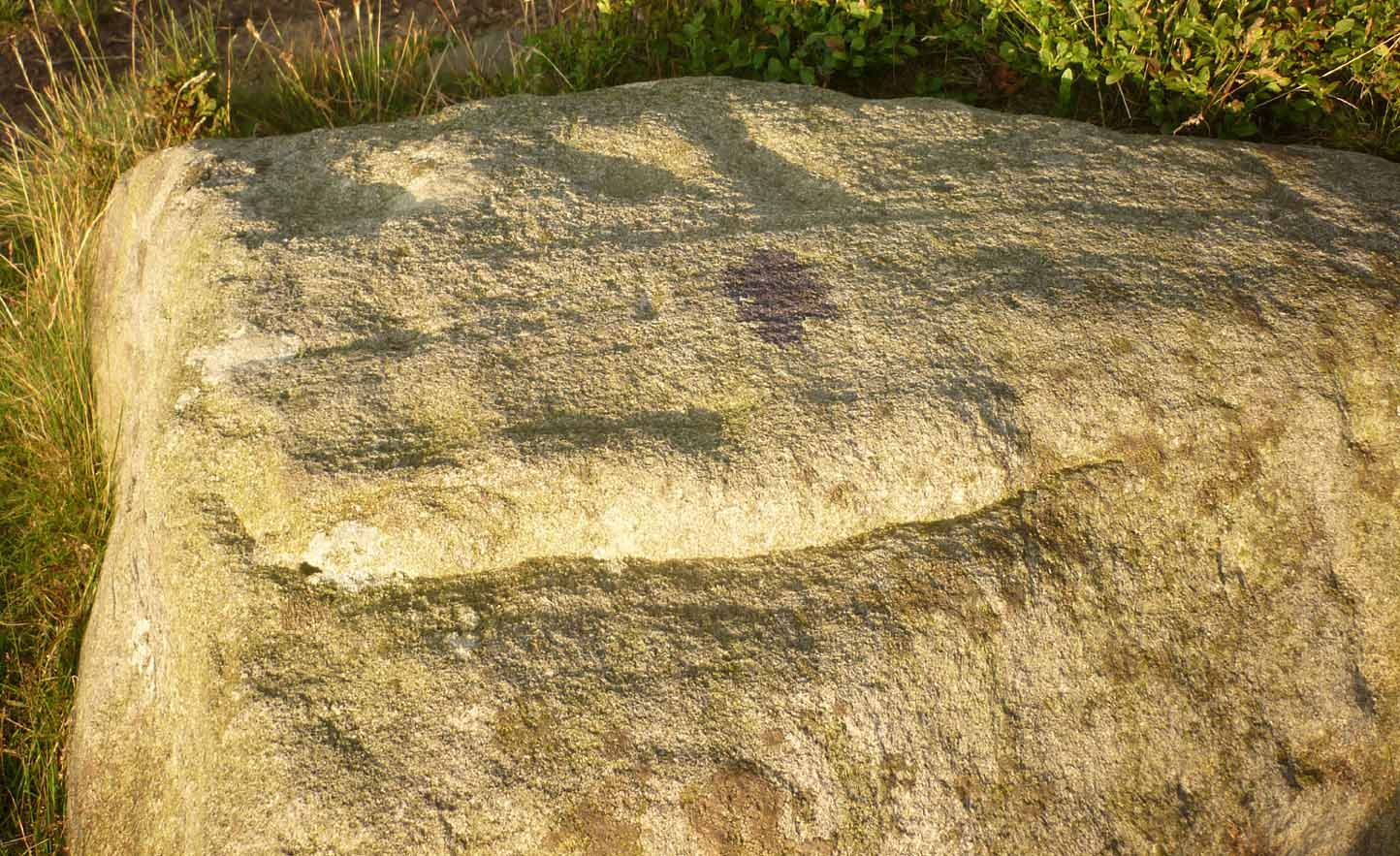
Table Stone carving (photo by Jonathan Warrenberg)

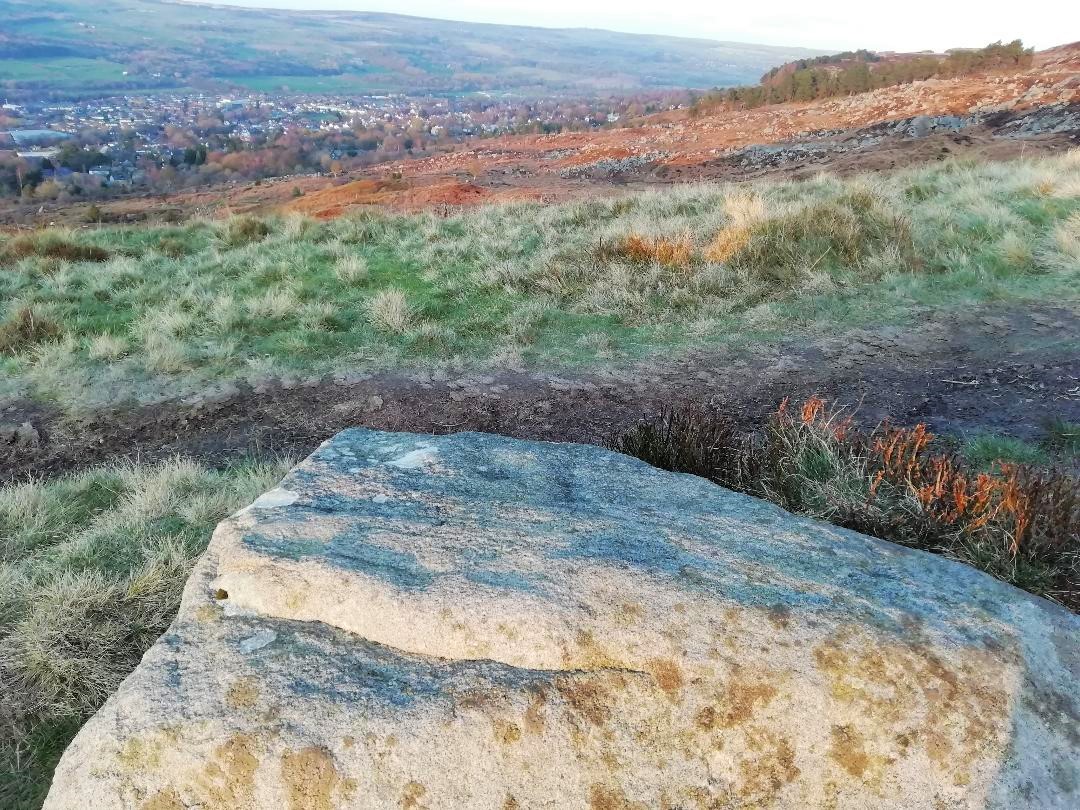
From Ilkley walk up to the White Wells and follow the footpath behind it up to the cliffs, up the stone steps and onto the moor itself.  Once you’ve climbed the steps, walk uphill onto the moor for 100 yards, then turn right up a small path for another 80 yards until you reach the large Coronation Cairn with its faint cup-and-ring stone.  From here there are two paths heading west: take the higher of the two for just 30 yards where a small group of rocks are by the path-side on your right.  The curiously-shaped ‘upright’ one is the stone in question.  You’ll see it.

Archaeology & History

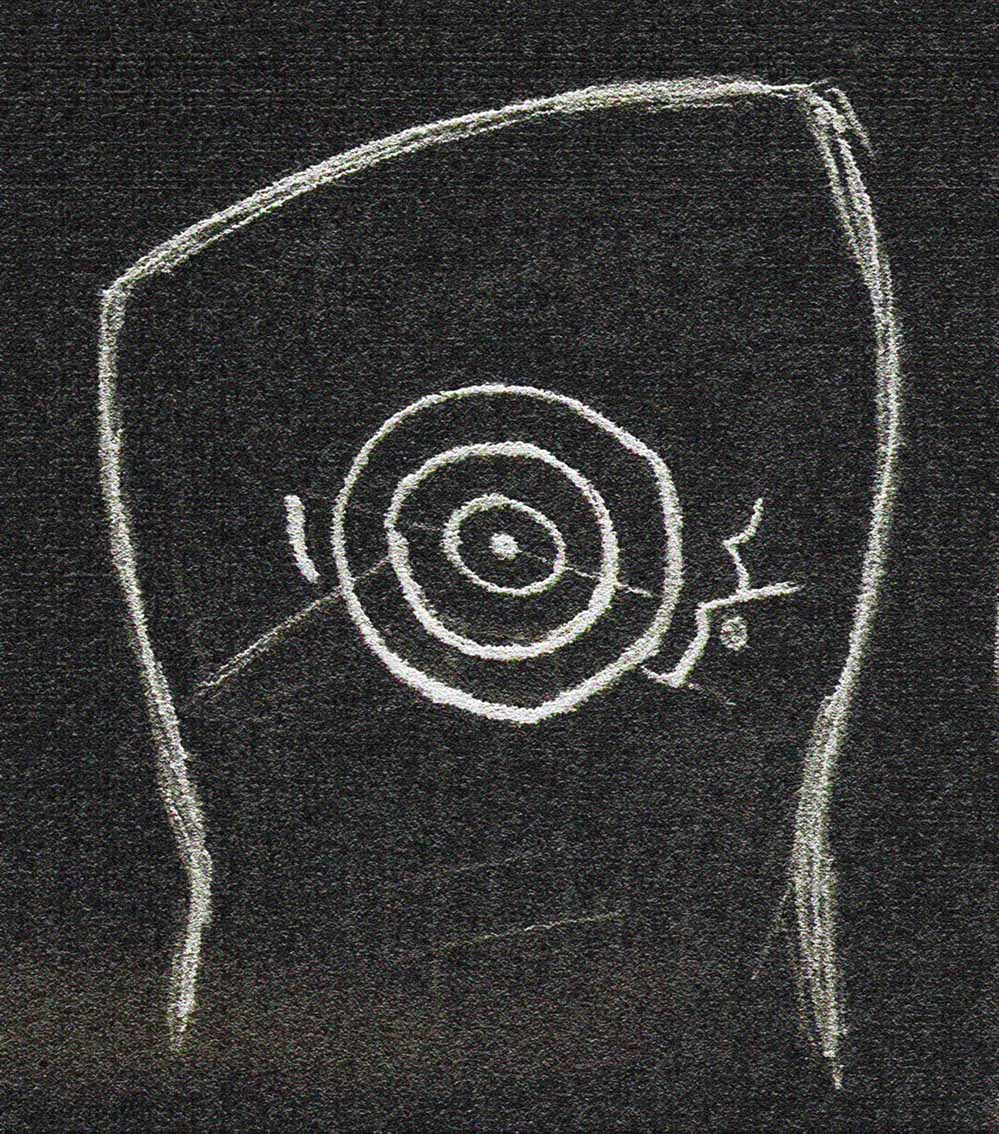
Found high up on top of an oddly-shaped stone, somewhat like an anvil or small table (hence the name, courtesy of Jonathan Warrenberg), is carved a slightly worn, incomplete cup-and-double-ring.  This aspect of the design is the one that stands out the most; but you’ll also see a cup-and-half-ring there too.

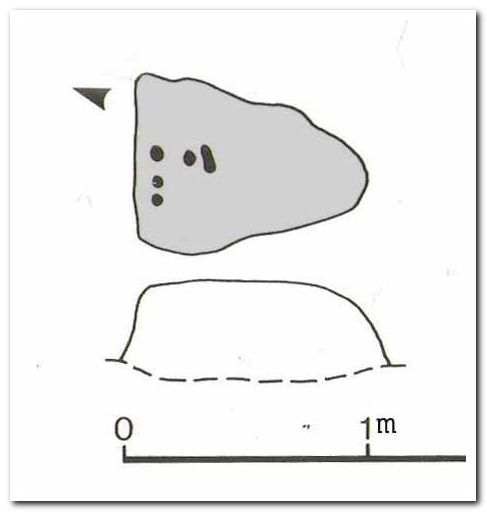
The carving seems to have been described for the first time in John Hedges (1986) survey (though I may be wrong), who described an additional feature to the design, saying:

“Small grit rock in possible cairn material, cut all round as if one pedestal, top surface triangular, sloping slightly SW to NE, overlooking Wharfe Valley, in grass and crowberry.  Large cup with two vestigial rings, second large cup with vestigial ring.  Possible third ring of corner edge (hewn off).  Recent carving of initials spoils original carving.”

John Hedges 1986 sketch
Looking from above (photo – Jonathan Warrenberg)

His description of the stone being “in possible cairn material” doesn’t seem true – although a number of petroglyphs are associated with cairns of varying sizes.  Several other carvings can be found close to this one.

In Boughey & Vickerman’s (2003) later survey, they copy Mr Hedges earlier description, but with less detail.

The view from this stone is quite impressive.  Even with the minor tree cover that would have existed when this carving was done, you’d still have clear views up and down the winding wooded valley that was carved by the River Wharfe.  The moors to the north at Denton and Middleton with their own petroglyphic abundance could be chanted at with ease from here when the winds sleep.  Tis a good spot to sit… if you’re lucky enough to get some silence…

References:

  1. Boughey, Keith & Vickerman, E.A., Prehistoric Rock Art of the West Riding, WYAS: Wakefield 2003.
  2. Hedges, John (ed.), The Carved Rocks on Rombalds Moor, WYMCC: Wakefield 1986.

LinksThe Table Stone carving on The Megalithic Portal

Acknowledgments:  Huge thanks to Jonathan Warrenberg for the use of his photos in this site profile – and also due credit for giving the stone its modern title. 🙂

© Paul BennettThe Northern Antiquarian


Castleton (5f), Airth, Stirlingshire

Cup-Marked Stone:  OS Grid Reference – NS 85584 88087

Archaeology & History

As with other carvings in this locale, the name of the stone is based on a survey done by Maarten van Hoek. (1996)  It’s a pretty simplistic design within the impressive Castleton complex, found at the southeastern end of the gorse-covered rocky ridge, about 70-80 yards west of the farmhouse.  It was uncovered on a visit here by Nina Harris, Paul Hornby, Frank Mercer and Lisa Samson on Sunday 19 November, 2018.

The cup-marked stone
Large cup & arc of 3

Unlike the others in the Castleton complex, this carving is probably of interest only to the hardcore petroglyph hunters.  The design consists of at least ten cup-marks on the uncovered section of the rock, one of which appears to have a broken circle with two ‘entrances’ either side of it, so to speak.  The most notable element in the design is close to the edge, where an arc of three cups almost corners a larger cup right at the edge.   There may be more carved elements to be found on the westerly side of the stone, which was covered in deep vegetation when we came here.

References:

  1. van Hoek, Martin A.M., “Prehistoric Rock Art around Castleton Farm, Airth, Central Scotland,” in Forth Naturalist & Historian, volume 19, 1996.

© Paul BennettThe Northern Antiquarian


Tobar Bhride, Keppoch, Kilmonivaig, Inverness-shire

Sacred Well (lost):  OS Grid Reference – NN 27 81

Also Known as:

  1. St Bride’s Well

Archaeology & History

This long lost ‘holy well of St Brigit’ (Tobar Bhride) has been mentioned—purely in literary repetition—by such folklore giants as F.M. MacNeill and others, but none of them give any additional information about it than that first mentioned by Alexander Stewart’s (1890) in his fascinating article on magical stones.  Indeed, knowledge of this well’s very existence was only preserved thanks to a ritual incantation that was recited to imbue and maintain healing properties of one such magickal stone, known as the Charm Stone of Keppoch.  It

“was an oval of rock crystal, about the size of a small egg, fixed in a bird’s claw of silver, and with a silver chain attached, by which it was suspended when about to be dipped.”

It was dipped in water taken from the sacred well of St Brigit, somewhere not far from Keppoch.  The incantation made over the stone was in Gaelic, obviously, but the english translation is:

“Let me dip thee in the water,
Thou yellow, beautiful gem of Power!
In water of purest wave,
Which (saint) Bridget didn’t permit to be contaminated.
In the name of the Apostles twelve,
In the name of Mary, virgin of virtues,
And in the name of the high trinity
And all the shining angels,
A blessing on the gem,
A blessing on the water, and
A healing of bodily ailments to each suffering creature.”

On the east side of the river, just a few hundred yards away, could once be found the Fuaran na Ban-Tighearna, or the Well of Her Ladyship.  In this sense, the term ‘ladyship’ refers to the “wife of a baronet or knight.” (Dwelly 1918)  The idea that it may refer to Bride in Her guise as a ‘lady’ is linguistically improbable here (though not impossible).  Also, if this fuaran did have a geomythic relationship with Bride, we would expect to find a Cailleach in the nearby landscape, which we don’t.

Folklore

An interesting piece of folklore that may relate to this well is described by the great Scottish landscape wanderer, Seton Gordon. (1948)  Although he makes no mention of a Bride’s Well, there is the tale of a missing bride up Glen Roy, of which Keppoch sits below.  “It was in earlier times,” he wrote,

“that the Maid of Keppoch was taken by the fairies in Glen Roy.  She was an Irish girl, little more than a child, and had become the wife of MacDonell of Keppoch.  But the wedding rejoicings were scarcely over when the bride, wandering into the oak woods which still clothe the lower slopes of Glen Roy, disappeared mysteriously.  It was believed that, like the Rev Robert Kirk…she had been spirited away by the fairies.  If indeed she was abducted by the Little People they held her closely, for from that day to this no trace has been found of the fair Maid of Keppoch.”

St Bride of course was Irish, like the Maid of Keppoch.  And just a mile up Glen Roy from Keppoch House we find the Sron Dubh and Sithean, or Ridge of the Dark Fairy Folk.  There are several burns (streams) running either side and below this fairy haunt, but I can find none with Bride’s name.  Someone, somewhere, must know where it is…

References:

  1. Gordon, Seton, Highways and Byways in the Central Highlands, MacMillan: London 1948.
  2. Dwelly, Edward, The Illustrated Gaelic English Dictionary – volume 1, Fleet Hants 1918.
  3. Stewart, Alexander, “Notice of a Highland Charm-Stone,” in Proceedings Society Antiquaries, Scotland, volume 24, 1890.

© Paul BennettThe Northern Antiquarian


Holy Well, Somersby, Lincolnshire

Holy Well:  OS Grid Reference – TF 3417 7303

Also Known as:

  1. Halliwell

Archaeology & History

Holy Well on 1887 map

Curiously missing from Thompson’s (1999) Lincolnshire survey, this old watering place can apparently still be found in the appropriately named Holywell Wood, just north of this lovely little hamlet.  Shown on the 1887 OS-map of the area, it’s first literary reference seems to be in George Weir’s (1820) early survey of Horncastle district where he gives it a brief mention, saying:

“In a woody dell in this parish is a spring, gently bursting from the rock, called Holy-well, but the name of the saint to whom it was dedicated is not preserved.”

…Like oh so many others.  But its ‘holiness’ may devive from other more archaic origins, in the spirit of the woods from whence the waters emerge.  Certainly that’s what the poet laureate Alfred Lord Tennyson would have had us believe.  He grew up in Somersby village and this old well was one of his places of inspiration.  When the local writer H.D. Rawnsley (1900) described Tennyson’s affection for this site, he told us that,

“Alfred peopled that Holywell Wood with forms of fairies, and made the whole surrounding circle of the hills, a theatre for enchantment and chivalry.”

J.C. Walters 1890 sketch

Nature can certainly do that to anyone who wanders Her body with open reverence.

Although the place is now quite overgrown, it wasn’t always this way.  There used to be a well-trodden path with a gateway at the entrance that took you into the woods and up to the well.  Above the gateway there used to be a Latin inscription that read, Intus aquae dulces, vivoque sedilia saxo, Et paulum silvae superest. His utere mecum. (meaning something akin to, “At these sweet waters, by this living seat of stone and small forest remains, Make use of me.”)

When J.C. Walters wrote about it, he told that a “local student” gave him the following particulars:

“A series of steps led down into the well, a post was fixed in front of it, and a cross-bar extended thence to the rock.  On the cross-bar was a ring with a rope attached, so that the bather might safely descend into the well and enjoy the healing virtues of the stream which rushed from the rock.  Geologists say that the wold villages are so closely placed on account of the superior quality of the water which springs up wherever the Spilsby sandstone meets the Kimmeridge clay.  Susan Epton (Mrs. Thompson), Miss Emily Tennyson’s maid, tells me that she can remember the time when visitors came in scores to “take the waters.””

Some of this was later echoed in Rawnsley’s (1900) biographical account of Tennyson.  He talked with a local sexton about the folklore of the area who told him of his memories:

“Halliwell wasn’t growed up then; there was a bath-house with steps down to the watter, and fwoaks in carriages came from far and near to drink it.  Wonderful watter! it was nobbut a bit sen, that our owd nebbur was liggin’ adying and he axed for a cup o’ watter from the Holy Well, and they sent and fetched it, and he took it and went off upon his feet.  Why, i’ my time theer was a school-house down in Halliwell Wood, and a skittle halley close by the well, but all them things is changed now, excep the snowdrops, and they coomes oop reg’lar, a sight on ’em i’ Halliwell.”

References:

  1. Harte, Jeremy, English Holy Wells – volume 2, Heart of Albion Press: Wymeswold 2008.
  2. Howitt, William, Homes and Haunts of the Most Eminent British Poets – volume 2, Richard Bentley: London 1849.
  3. Rawnsley, H.D., Memories of the Tennysons, James MacLehose: Glasgow 1900.
  4. Thompson, Ian, Lincolnshire Springs and Wells, Bluestone: Scunthorpe 1999.
  5. Walter, J. Conway, Records of Woodhall Spa and Neighbourhood, W.K. Morton: Horncastle 1899.
  6. Walters, John Cuming, In Tennyson Land, George Redway: London 1890.
  7. Weir, George, Historical and Descriptive Sketches of the Town and Soke of Horncastle, Sherwood, Neely & Jones 1820.

© Paul BennettThe Northern Antiquarian


Pen Howe (2), Sleights Moor, Sleights, North Yorkshire

Tumulus:  OS Grid Reference – NZ 8566 0369

Archaeology & History

The low rise of Pen Howe-2

Prehistoric companion to the more pronounced Pen Howe (1) Bronze Age cairn just 20 yards to the west, this overgrown tumulus is hardly noticeable when the heather’s deep and is probably only of interest to dedicated antiquarians and geomancers.  Its position in the landscape, whilst not as prominent as its companion and the nearby Breckon Howe, would still have been important to its builders and the relative proximity of the two tombs may imply a continuity of tribal companionship in the Land of the Dead.  But hey! – that’s just a silly idea of mine! 🙂

Rising barely three feet above ground level, this is slightly smaller than Pen Howe (1), being just 13 yards across; and there is no indication that it has ever been dug into.

References:

  1. Elgee, Frank, Early Man in Northeast Yorkshire, Frank Bellows: Gloucester 1930.

Acknowledgements:  Big huge thanks to my Lindsay Mitchell for getting us up to see this old tomb (which is nearly as old as Linzi 🙂).

© Paul BennettThe Northern Antiquarian


Pen Howe (1), Sleights Moor, Sleights, North Yorkshire

Tumulus:  OS Grid Reference – NZ 85638 03722

Getting Here

Pen Howe from the north

Along the A169 road between Sleights and Pickering, some two miles south of Sleights turn right as if you’re going to the tombs of Flat Howe and the Bride Stones, but just park up 80 yards along by the cattle grid.  From here, a fence runs southeast and the mound is on the near skyline, just over 100 yards away.  Just walk through the heather to reach it.

Archaeology & History

Shown on the first OS map of the area in 1853, this somewhat overgrown prehistoric tomb is one of two in close attendance to each other (see Pen Howe 2); and is some 435 yards (398m) away from the more prominent Breckon Howe tomb to the southwest.  Like others on Sleights Moor, no real archaeological attention has been paid here, with Frank Elgee (1930) only giving it the slightest mention in passing.

Pen Howe on 1853 map
Pen Howe, looking SE

Smaller than its nearby companions of Flat and Breckon Howe, the overgrown cairn raises about four feet above ground level and about 20 yards across.  Probably Bronze Age in origin, it has a slightly concave top that gives the impression that someone at sometime in the not-too-distant past has had a bittova dig here to see if there’s owt inside.  But we have no record of such a thing.

surmounted by a relatively recent boundary stone, sits at the highest point on the moors in these parts.  Despite this (as with others on these moors), very little has been written about the place and it has received only minimal attention in archaeology tomes.  Even the renowned pen of Frank Elgee (1912; 1930) gave it only passing mention.  Perhaps it aint a bad thing to be honest.

References:

  1. Elgee, Frank, Early Man in Northeast Yorkshire, Frank Bellows: Gloucester 1930.

Acknowledgements:  Big huge thanks to my Lindsay Mitchell for getting us up to see this old tomb and its companion.  (which is nearly as old as Linzi 🙂 )

© Paul BennettThe Northern Antiquarian