St. Columba’s Stone, Derry, Co. Derry

Bullaun:  OS Grid Reference – C 4312 1662

Also Known as:

  1. St. Columb’s Stone

Archaeology & History

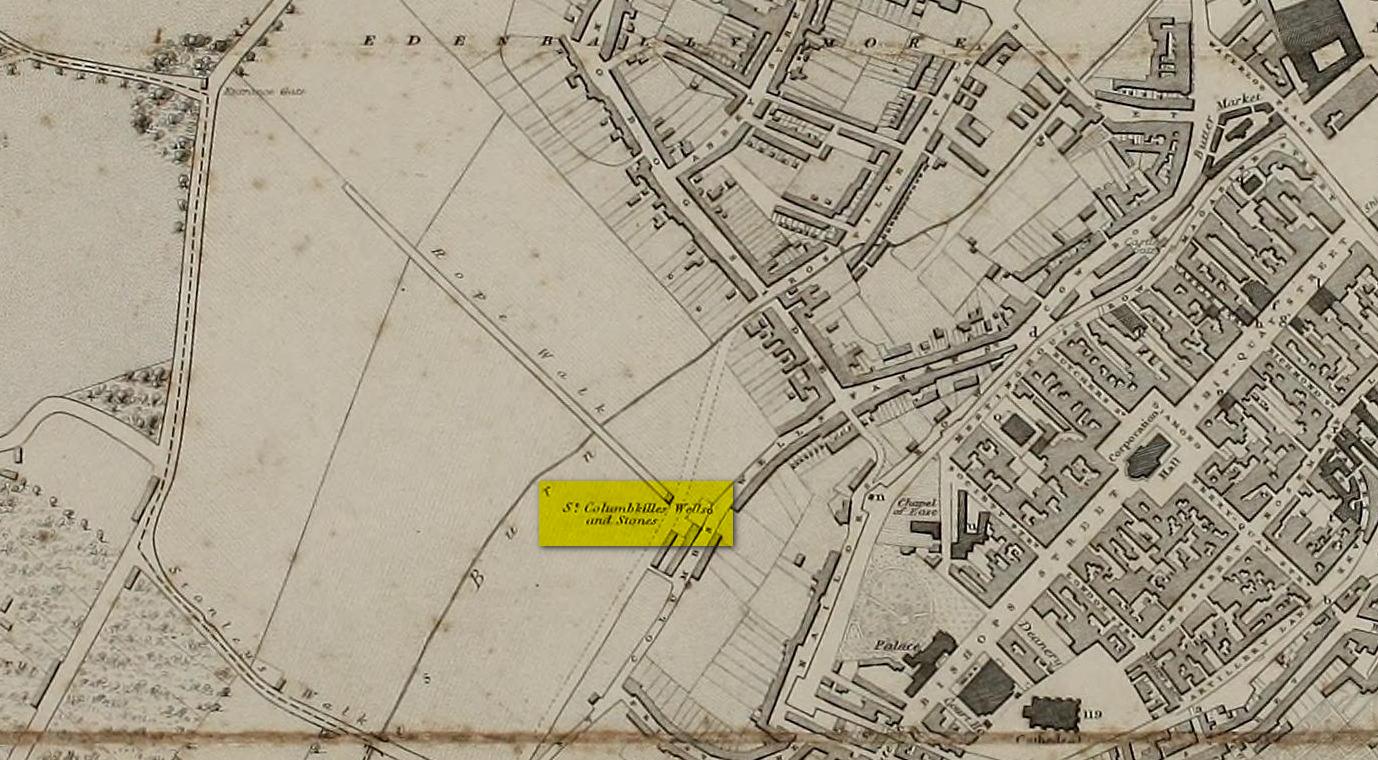
Site on Colby’s 1837 map

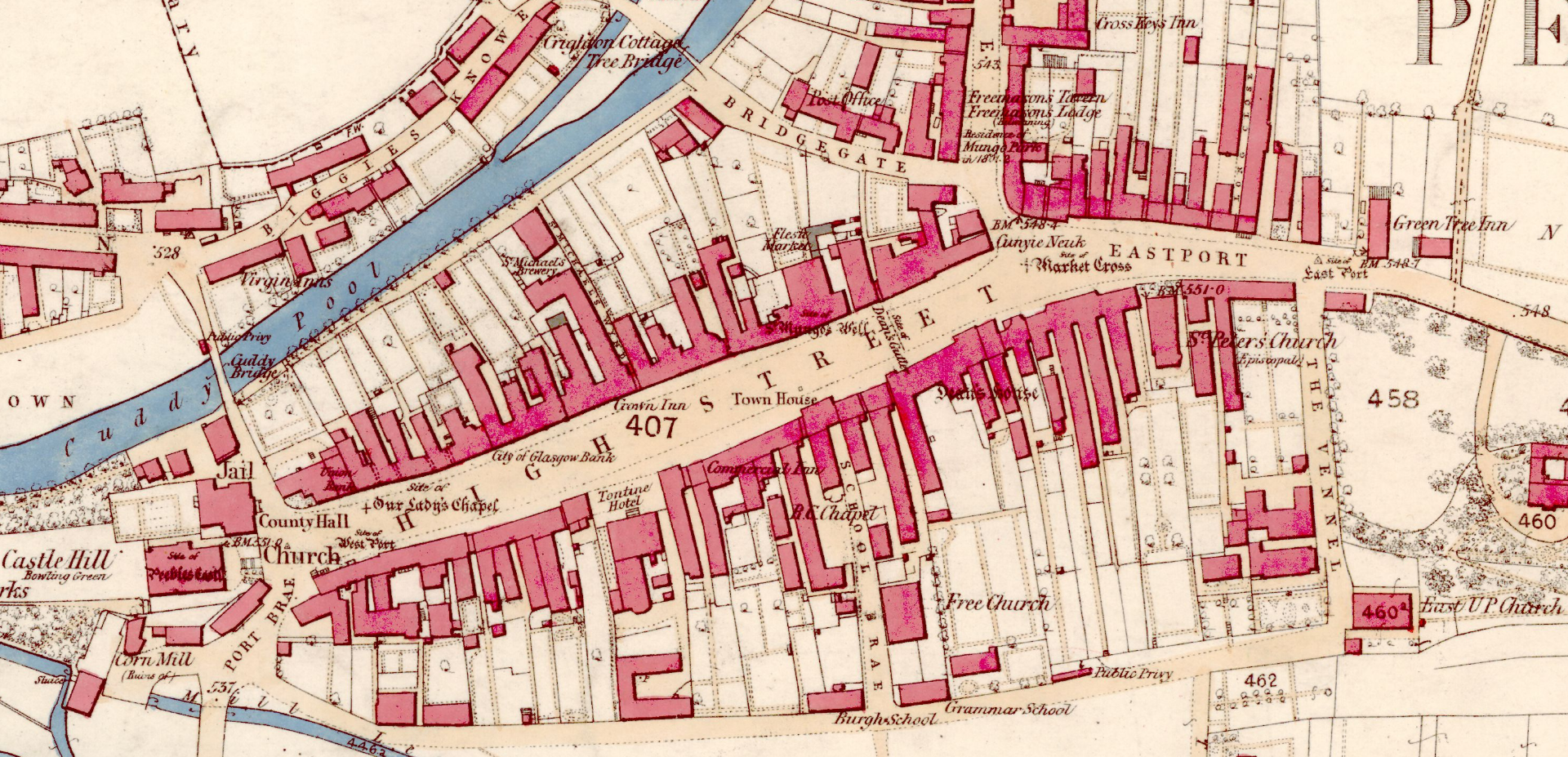
Not to be confused with the other St. Columba’s Stone at Shantallow, 1¾ miles to the north of here, this legendary rock was found in very close association—barely ten yards away—with one of St. Columba’s holy wells (in fact there were three holy wells hereby, but the others were dedicated to saints Adamnan and Martin).  The two sites were inextricably related to each other, both in terms of their proximity and, more importantly, in terms of the symbiotic traditions the two of them had.  And despite the relationship they had under the guise of one “St. Columba”, it’s pretty obvious that this was a thoroughly unchristian place to begin with.

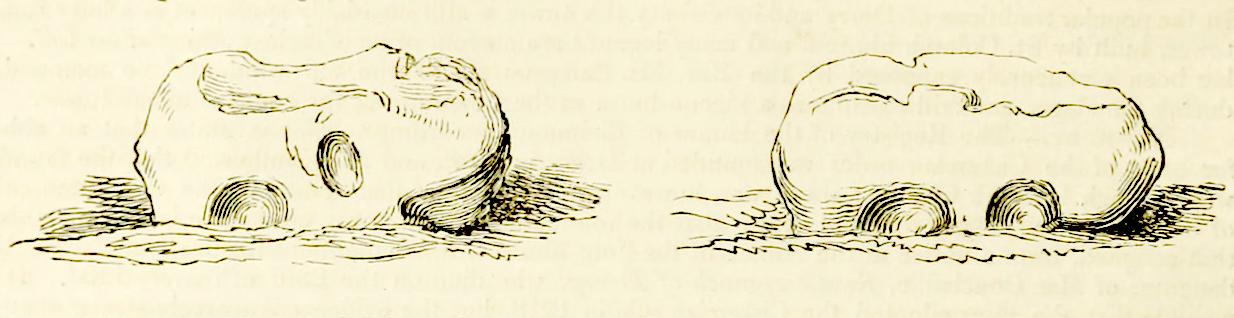
St Columba’s Stone in 1837

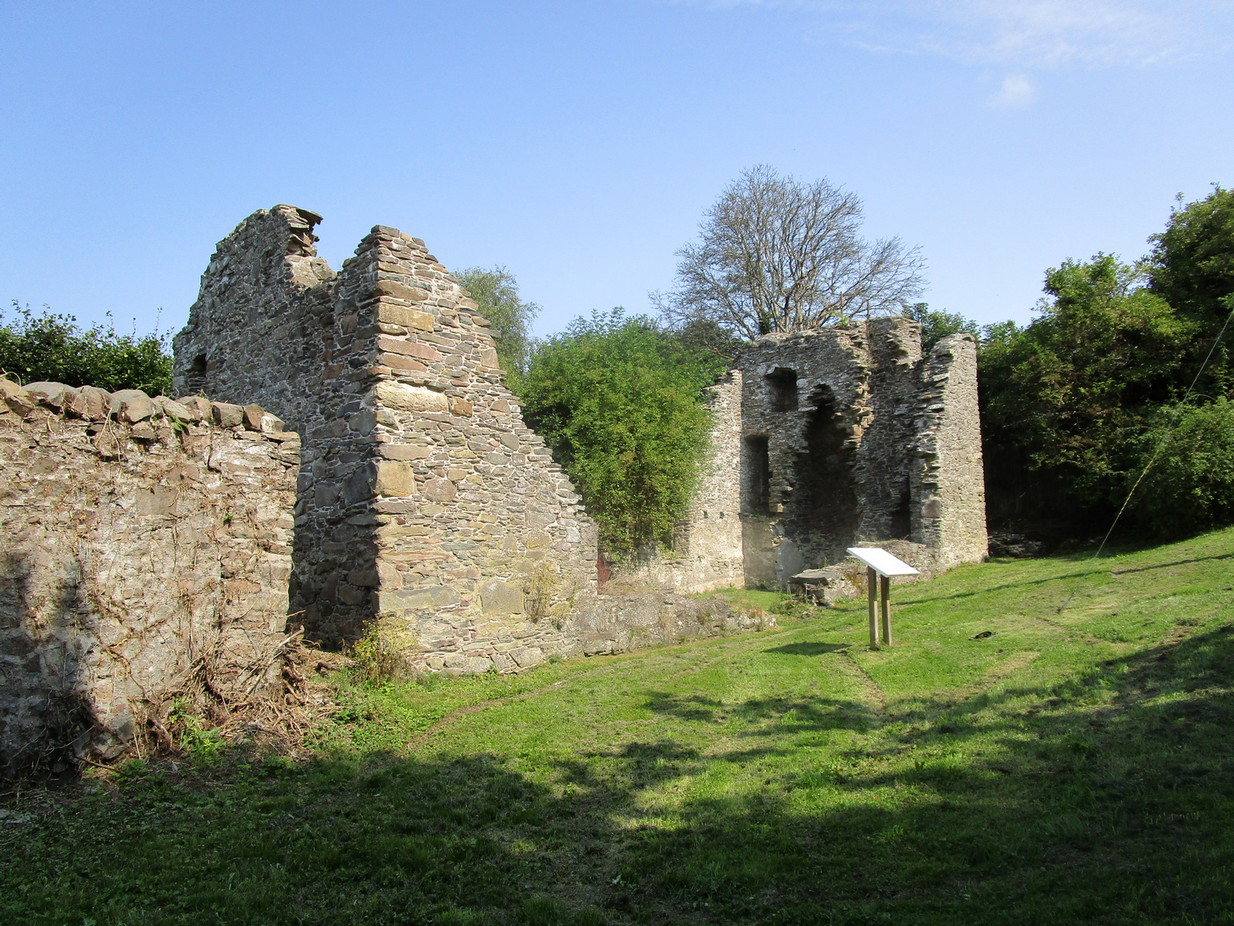
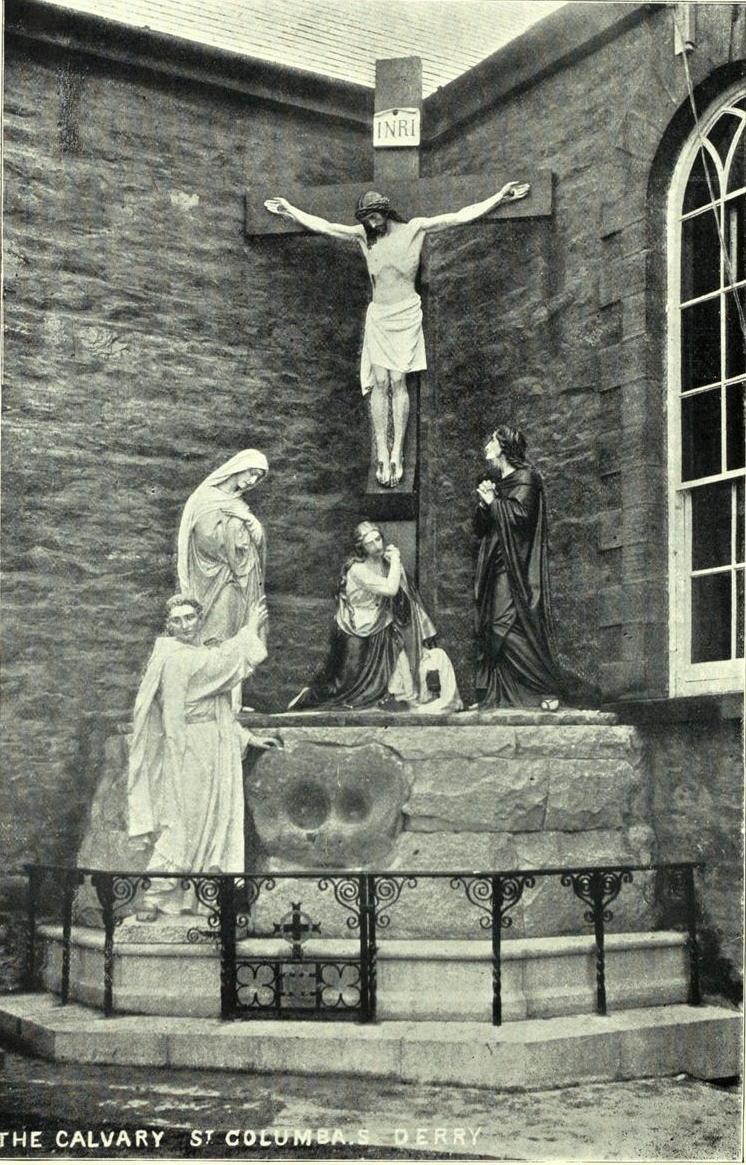
As with many bullauns, it’s a relatively small stone with two deep hollows on either side.  We don’t know for certain when the stone was placed here, but tradition tells us it was sanctified at this spot in the 6th century; and so it remained until June 9, 1897 when, deemed as being an “obstruction” on the roadway, it was uprooted and moved some 300 yards south where, a year later, it was incorporated into the base of a cross outside the Long Tower Church of St Columba, where it remains to this day (at grid-reference C 4303 1635).

The stone was still in situ when Thomas Colby (1837) and his mates were doing their work for the Irish Ordnance Survey, at a period when many an Irish antiquity was still frequented by local folks for ceremonies, both personal and social.  Colby wrote:

The stone set beneath the cross

“In the centre of St. Columb’s Lane, adjacent to the Wells, there is a remarkable stone, called St. Columb’s Stone, which is popularly regarded with a still higher veneration by the aboriginal Irish of the district.  It is of an irregular form, about three feet long, and ten inches wide: the height above ground is one foot and a half, and it has two oval hollows on each side, artificially formed.  Many foolish legends are current among the peasantry respecting the origin of these hollows, which, it is supposed, are the impressions made by the saint’s knees when he leaped from the nail of the city.  It may, however, be worth observing, that stones of this description are found in the vicinity of most of the Irish churches, and usually bear the name of the founder, or patron saint: they are always held sacred, and the rain-water, deposited in their hollows, is believed to possess a miraculous power in curing various diseases.”

William Doherty (1899) told how parts of the bullaun holes had been made “by pious pilgrims trying to remove chips as relics”, who then wore them as amulets for curative properties and good fortune; then later, “it was utilized as a Holy Water Font, to prevent further mutilation.”

References:

  1. Colby, Thomas, Ordnance Survey of the County of Londonderry, HMG: Dublin 1837.
  2. Doherty, William, Derry Columbkille, Brown & Nolan: Dublin 1899.

© Paul BennettThe Northern Antiquarian 

St. Columba’s Stone, Shantallow, Derry, Co. Derry

Petroglyph:  OS Grid Reference – C 4386 1934

Also Known as:

  1. Chieftain’s Installation Stone
  2. Inauguration Stone
  3. St Columb’s Footprints
  4. St Columb’s Stone

Archaeology & History

St Columb’s feet carving

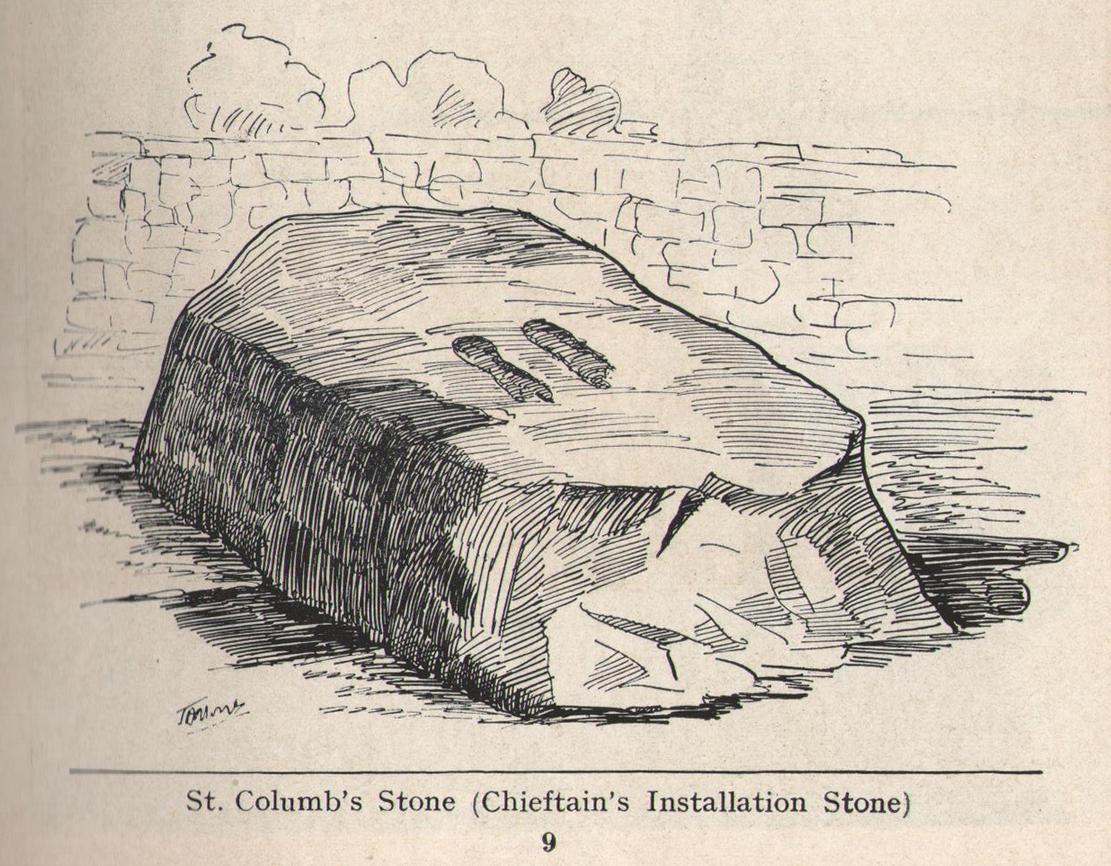
To be found in the grounds of Belmont House School, just 1¾ miles (2.8km) north of Derry’s other Columba’s Stone, this is one of the many petroglyphic “footprints” that folklore ascribes to Ireland’s saint Columb/Columba/Columbkille (and other variants).  Said to have originally been carved at the great fortress of Grianan of Aileach, 4½ miles (7.2km) to the west, this great block of stone—roughly 6 feet square on top—has the distinct sculpturings of two feet, each about 10 inches long, etched into its sloping surface.  Archaeologically speaking, there’s little more to say about the stone; but its traditions are another thing altogether and are of considerably greater importance…

Folklore

Like the carved footprint on top of Dunadd in Argyll with its association of tribal initiations, the traditions relating to this footprint follows the same path, so to speak.  It was H.P. Swan (1938) who gave us a good summary of the olde lore here, telling that,

“It is almost absolutely certain that it was brought from the Grianan of Aileach after its destruction, probably by an O’Doherty for his own installation.  If so, the task of removal was no joke, for the stone weighs some seven tons.  It was the “crowning stone” of the Kinel-Owen, or, in other words, the stone upon which the chieftains of the great O’Neill clan were inaugurated.  They reigned in Aileach for many centuries.

“At his installation, as supreme head of the clan, the newly-chosen chief was placed upon this stone, his bare feet in the footmarks; a peeled willow wand was put into his hand, as an emblem of the pure and gentle sway he should exercise over his tribe; an oath was administered to him by the chief ecclesiastic in the neighbourhood, that he should preserve inviolable the ancient custom of his country, and deliver the succession peaceably to his tanist (successor); after which, descending from the stone, he turned himself thrice backwards and thrice forwards, to signify that he was ready to meet all foes, from whatever quarter they might come; and was then, with wild acclamations, hailed as their chief by his assembled clan.

“At the time of Ireland’s conversion to christianity by St Patrick, that holy man visited the Grianan (about AD 443), where this stone had been so used for centuries before; Owen was then King; he was converted from Paganism to the new faith and baptised by Patrick; at the same time, the saint consecrated this stone, and blessed it as the crowning-stone of the Kinel-Owen for ever.  Time, however, has proved his blessing futile, as may be read in the account of the Grianan, which was deserted by the Kinel-Owen after its destruction by the O’Briens in 1101.”

The ritual described here cannot be taken lightly, nor seen as a presentation of fiction, for its ingredients are found echoed in kingship rites in many cultures.

References:

  1. Swan, Harry Percival, The Book of Inishowen, William Doherty: Buncrana 1938.

© Paul BennettThe Northern Antiquarian


St Columbkille’s Footprints, Drumcavany, Co. Donegal

Bullaun Stone:  Grid Reference – C 093 154

Also Known as:

  1. St. Columb’s Stone
Photo thanks to Catherine of We Love Donegal

Archaeology & History

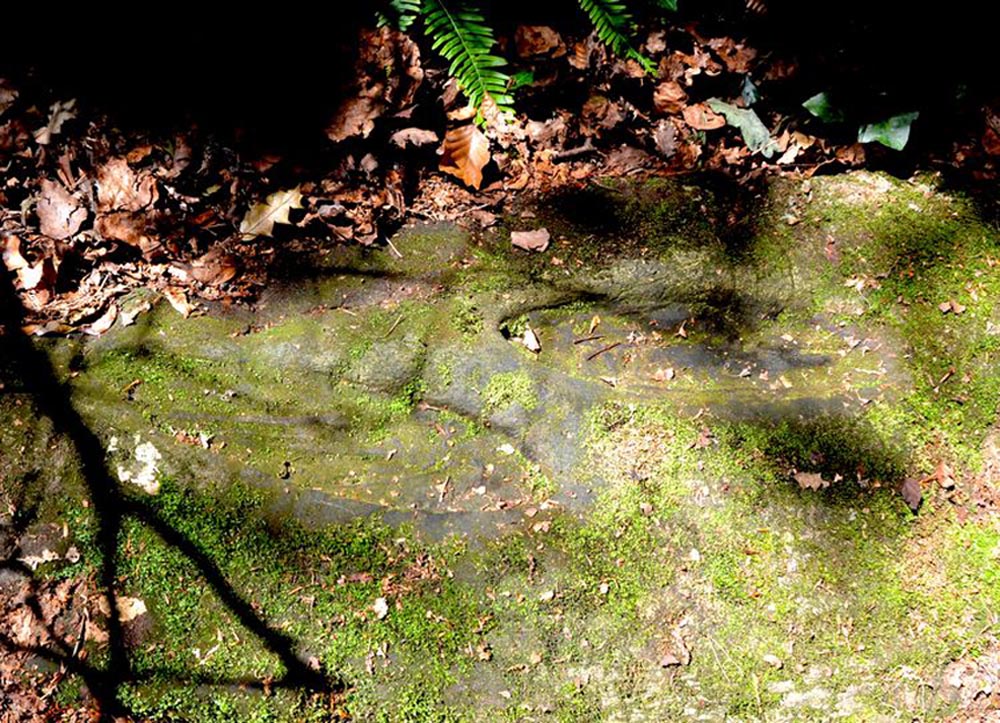
St Columbkille’s place in Irish history was considerable and, said Maghtochair (1867), he was said to have “founded more than one hundred churches and religious houses.”  His feet, also, have been carved or burned into a number of rocks scattering the Irish landscape.  Not to be confused with his ‘feet’ that are carved near Londonderry, the ones here have been classed in the archaeological inventories as a bullaun and, wrote Brian Lacy (1983) in the Donegal Archaeological Survey, can be found on,

“A 2m long ledge of rock outcrop containing two depressions, c.0.33m in diameter x ).1m deep.  They are known locally as St. Columbkille’s footprints.”

As can be seen in the above photo, the ‘footprints’ seem to have been artificially outlined at some time long ago, to make them more notable.

References:

  1. Lacy, Brian, Archaeological Survey of County Donegal, Donegal County Council 1983. p.307
  2. Maghtochair, Inishowen – Its History, Traditions and Antiquity, Journal Office: Londonderry 1867.
  3. Sconce, James, “Cup-Marked Stones,” in Transactions of the Edinburgh Field Naturalists, volume 5, 1907.
  4. Swan, Harry Percival, The Book of Inishowen, William Doherty: Buncrana 1938.

AcknowledgementsBig thanks to Catherine, of the We Love Donegal website.

© Paul BennettThe Northern Antiquarian 

College Well, Brechin, Angus

Sacred Well:  OS Grid Reference – NO 5945 6006

Archaeology & History

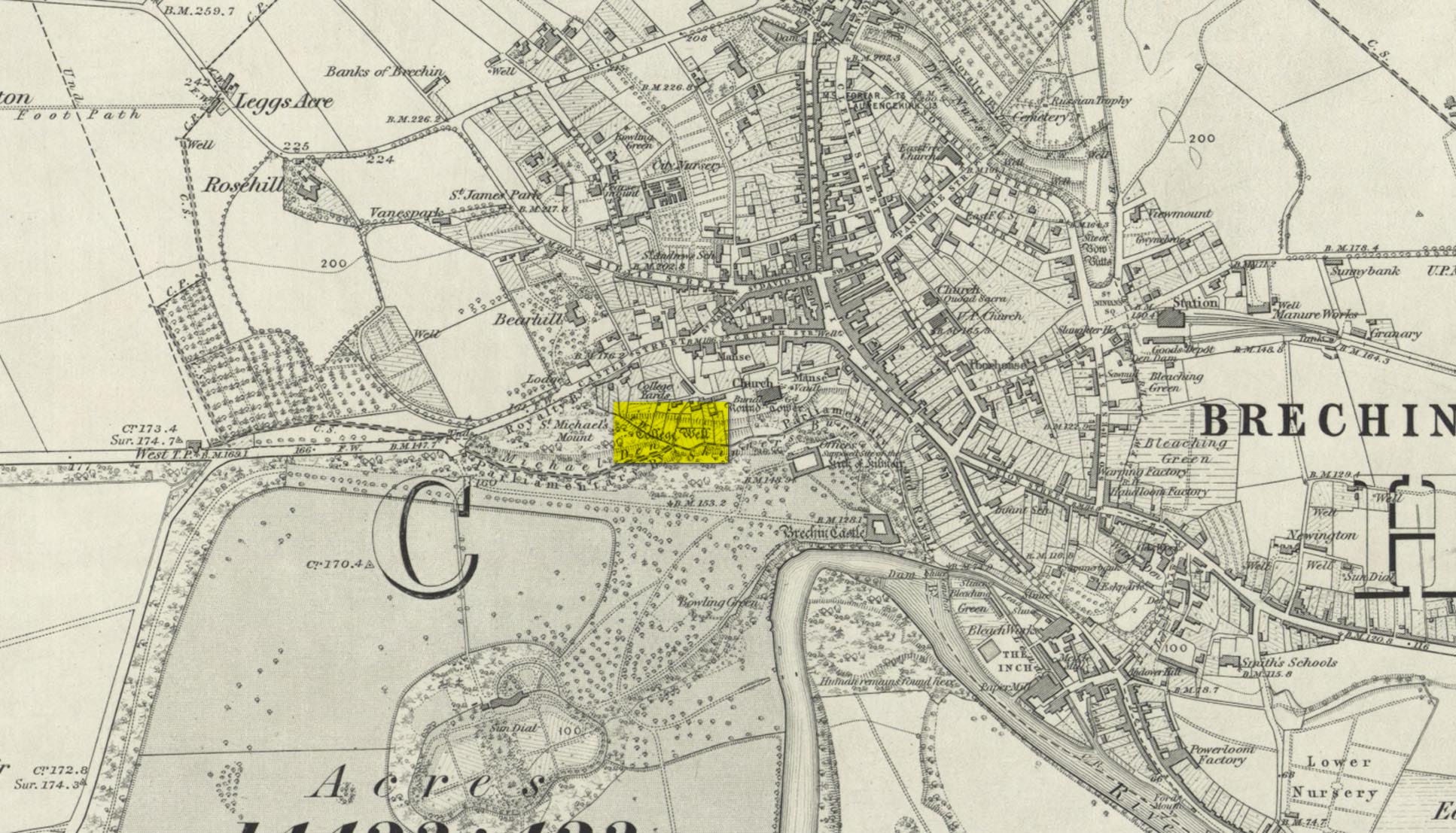
College Well on 1865 map

Highlighted on the 1865 OS-map, this lost water source was located between the Brechin cathedral/round tower and the curiously-named St. Michael’s Mount, whose history seems to be lost.  It would seem to be the well which Ruth & Frank Morris (1981) name as the ‘Ancient Well’ in their survey.

Folklore

The reason behind this site being classified as a sacred (or holy) well is based on the tradition that the Culdees had a religious convent here in the 12th century and, according to David Black (1839),

“This convent is believed to have stood a little to the west of the present parish church, in the gardens now belonging to the kirk-session, still called “the College Yards.”  A small well of delightfully pure water in these gardens receives the name of the College Well, and is reported, by tradition, to have been the well of the Culdee convent.”

On the issue of St. Michael, students of folklore will know that, in the christian cult, he was an early dragon-slayer.  His annual commemoration day is September 29.  One of his shamanistic functions “relates to the very old tradition of Michael as the receiver of the souls of the dead.” (Attwater 1965)

References:

  1. Black, David D., The History of Brechin, Alexander Black: Brechin 1839.
  2. Gibson, Colin, Folklore of Tayside, Dundee Museum c.1968.
  3. Morris, Ruth & Frank, Scottish Healing Wells, Alethea: Sandy 1982.

© Paul BennettThe Northern Antiquarian

Acknowledgements:  Huge thanks for use of the 1st edition OS-map in this site profile, Reproduced with the kind permission of the National Library of Scotland

Dragon Well, Eccleshill, Bradford, West Yorkshire

Sacred Well (destroyed):  OS Grid Reference – SE 17567 35473

Also Known as:

  1. Pendragon Well

Archaeology & History

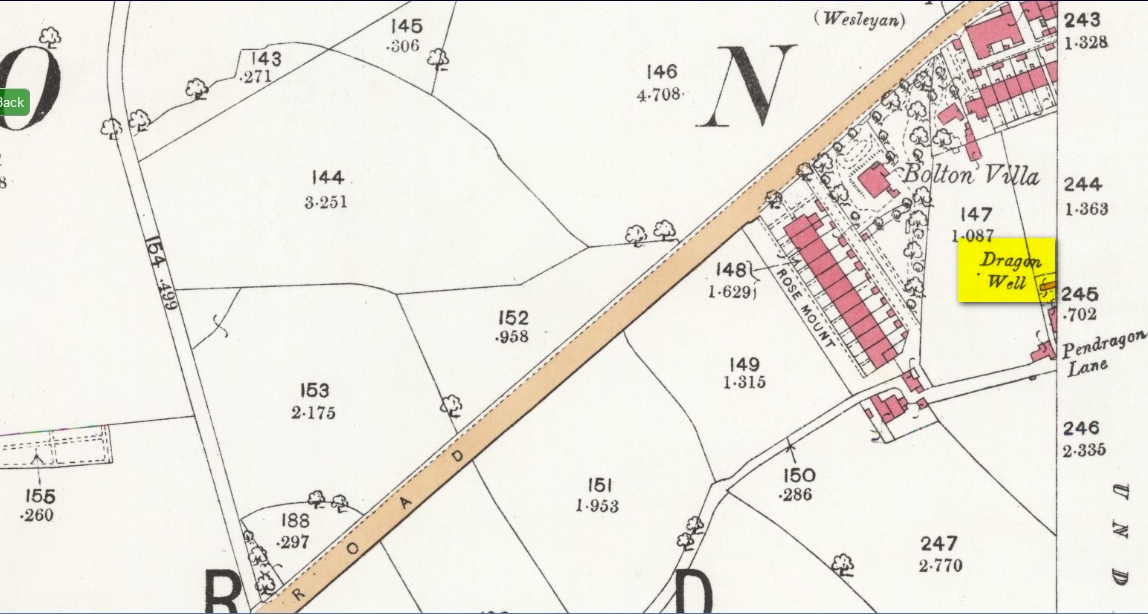
Site on the 1893 map

A most curious place:  this ‘Well of the Dragon’ as it was first called (on the 1852 OS-map) and subsequently the ‘Pendragon Well’ (on the 1922 map) just off Pendragon Lane, seems to have been forgotten in both folklore and history.  I grew up round here and no legends of dragons were known, either in my life, nor that of the old folks I knew; nor any pub of that name that might account for it.

Equally unexplained is the name of the adjacent ‘Pendragon Lane’, which has been known as that for some 175 years.  We have no Arthurian myths anywhere in West Yorkshire that remains in folk memory—and certainly nothing hereby that accounts for it.

As for possible landscape associations (i.e., serpentine geological features), nothing in the vicinity has any bearing on the name.  Indeed, the only thing of any potential relevance was the former existence of a healing rock known as the Wart Stone, some 100 yards to the east at Bolton Junction.  Such stones are usually possessed of naturally-worn ‘bowls’ of some sort on top of the rock—akin to large cup-markings—into which water collected that was used to rid the sufferer of warts or similar skin afflictions.  But such an association seems very unlikely.

The only thing we can say of this Dragon Well is that probably, in times gone by, a folktale or legend existed of a dragon in the neighbourhood that had some association with the waters here.  Dragons are invariably related to early animistic creation myths, and this site may have been all that remained of such a forgotten tale.  The nearest other place in West Yorkshire with dragon associations is six miles northwest of here on the south-side of Ilkley Moor.  In Britain there are a number of other Dragon Wells, the closest of which is in South Yorkshire.

© Paul BennettThe Northern Antiquarian

St Peter’s Well (1), Leeds, West Yorkshire

Holy Well (destroyed):  OS Grid Reference – SE 2894 3382

Archaeology & History

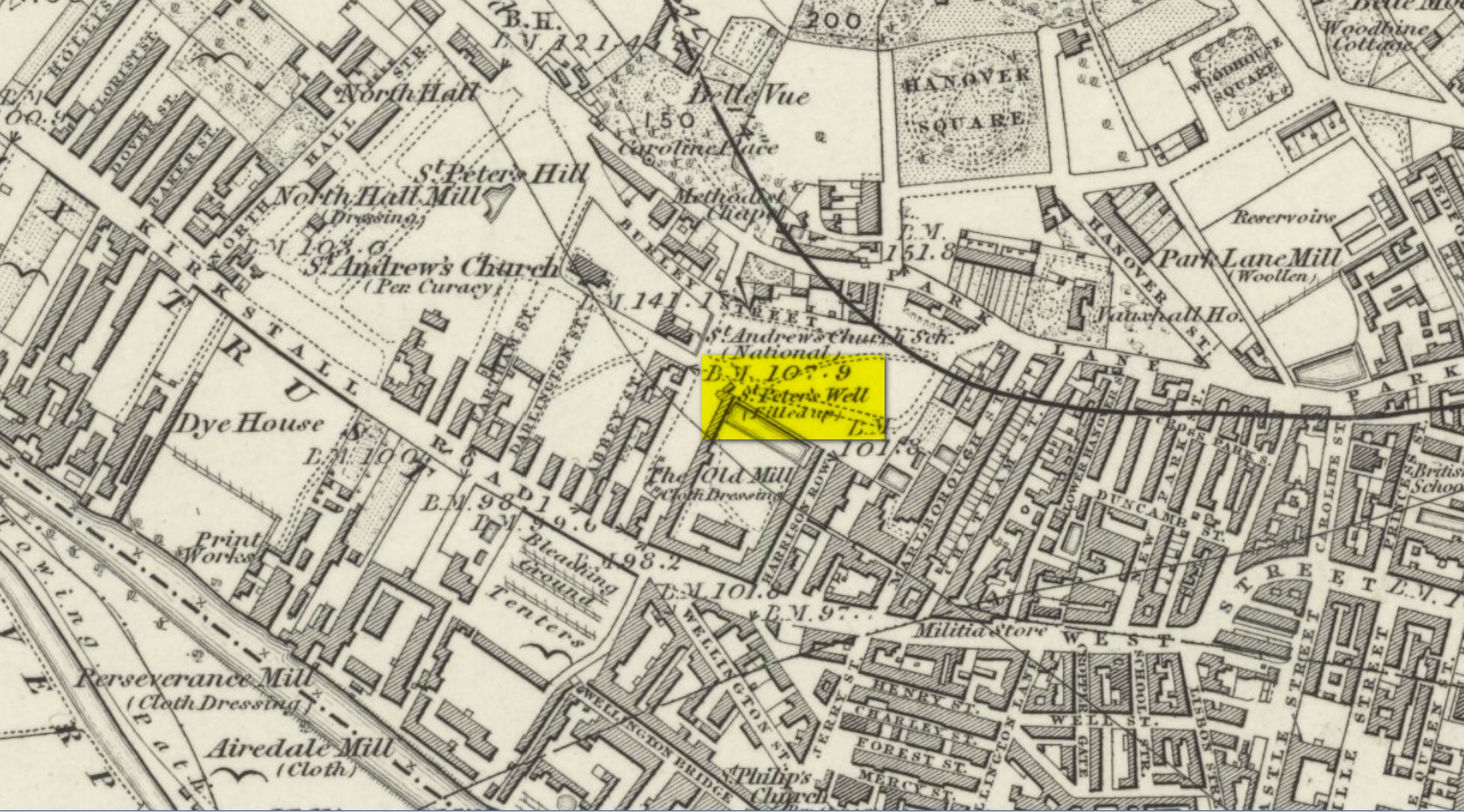
St Peters Well on 1852 map

Not to be confused with the other St. Peter’s Well that once existed in the city centre, this site was shown on an 1815 map of Leeds (which I’ve not been able to get mi hands on!), known as the Waterloo Map.  But when the Ordnance Survey lads visited the place in 1846, it had been covered over.  Immediately west of here, the saint’s name was also given to a nearby hill, whose folklore seems has been forgotten.

Although Ralph Thoresby mentioned it in passing, Edward Parsons (1834) gave us a brief description of its qualities, telling us that,

“Near North Hall is the celebrated spring called St. Peter’s Well ; the waters are so intensely cold that they have long been considered very efficacious in rheumatic disorders.”

Bonser (1979) reiterated this in his survey, also telling that, like its nearby namesake, its waters were “intensely cold and beneficial for rheumatism, rickets, etc.”  An old bathing-house that was “annexed to the Well” may have been used specifically to treat such ailments, but we cannot say for sure.

Interestingly, Andrea Smith (1982) told that 400 metres away a well was sunk in 1838 and a quantity of petrified hazelnuts were recovered from a broken red jar which had a female head painted on it.  Such a deposit is not too unusual, as a number of sacred wells in bygone days were blessed with nuts and signified the deity Callirius, known by the Romans as Silvanus, the God of the Hazel Wood – though we have no direct tradition here linking St. Peter’s Well with this ritual deposit.

St. Peter’s festival date was June 29.

References:

  1. Bonser, K.J., “Spas, Wells and Springs of Leeds,” in The Thoresby Miscellany – volume 54, Leeds 1979.
  2. Hope, Robert Charles, Legendary Lore of the Holy Wells of England, Elliott Stock: London 1893.
  3. Parsons, Edward, The Civil, Ecclesiastical, Literary, Commercial and Miscellaneous History of Leeds, Halifax, Huddersfield, Bradford, Wakefield, Dewsbury, Otley – volume 1, Frederick Hobson: Leeds 1834.
  4. Smith, Andrea, ‘Holy Wells Around Leeds, Bradford & Pontefract,’ in Wakefield Historical Journal 9, 1982.
  5. Thoresby, Ralph, Ducatus Leodiensis, Maurice Atkins: London 1715.

© Paul BennettThe Northern Antiquarian

Gerchew Well, Balfron, Stirlingshire

Healing Well (lost):  OS Rid Reference – NS 579 884

Archaeology & History

One-and-a-half miles east of Balfron, this curiously-named well could once be seen – and indeed may still be there.  Mentioned just once in D.S. Buchanan’s (1903) Guide as a well-known place, I’ve been unable to locate it and can find no other accounts of the place. He wrote:

“A little beyond Dailfoil there is a road to the right, down which, about 200 yards, there is a stile over the fence, only a few feet from the famous Gerchew Well, on the banks of the Endrick.  Here the visitor can repose for a time under the shade of the trees, and quench his thirst in its pure, cool, and bubbling waters.”

His directions seem to indicate it as being just off the small road that runs to the ruins of Easter Gerchew, but there is nothing of note hereby.  A half-mile away was Wester Gerchew house, which seems contrary to his directions —and there’s nothing in evidence there either.  And so I enter it here in the hope that someone might be able to relocate this healing well. (the grid reference is an approximation based on Buchanan’s description)

References:

  1. Buchanan, D.S., Buchanan’s Popular Illustrated Guide to Strathendrick, Aberfoyle and District, J. & C. Buchanan: Balfron 1903.

© Paul BennettThe Northern Antiquarian

St. Pancras’ Well, Scampton, Lincolnshire

Holy Well (destroyed):  OS Grid reference – SK 9542 7853

Archaeology & History

Site shown on 1886 map

Mentioned in Thompson’s (1999) survey but without comment, it was, curiously, Skyring Walters’ (1928) that drew my attention to this site.  He added it to his list of St Pancras sites, telling how even in his day, it had fallen into memory.  Indeed, it had already gone when the Ordnance Survey lads came here in 1885.  Thankfully we were left with an albeit piecemeal account of the place by Cayley Illingworth (1810) before its destruction. It was an iron-bearing well that existed some fifty yards from an ancient Roman villa and was probably the water supply for the Romans who lived here.  He told us:

“The circumstance…of the chalybeate spring within a few yards from the entrance of the villa, and still called Saint Pancras Well…favours the conclusion of a chapel having been erected on its site.  (This) is supported by the strong evidence of a discovery, upon record, that a chapel dedicated to Saint Pancras did actually exist on this spot, so early as the beginning of the twelfth century; about which period Richard Fitz-Robert of Scampton gave to the monastery of Kirksted three selions of land in that lordship, two of which are described in the gift as lying in the south field, on the south side of the chapel of Saint Pancras.”

He further told that at the bottom of the well an oak floor had been laid, which had been dug up “several years ago.”

St Pancras’s festival date is April 3.

References:

  1. Cameron, Kenneth & Insley, John, The Place-Names of Lincolnshire – volume 7, English Place-Name Society: Nottingham 2010.
  2. Harte, Jeremy, English Holy Wells: A Sourcebook – volume 2, Heart of Albion Press: Loughborough 2008.
  3. Illingworth, Cayley, A Topographical Account of the Parish of Scampton in the County of Lincoln, T. Cadel & W. Davies: London 1810.
  4. Thompson, Ian, Lincolnshire Springs and Well, Bluestone: Scunthorpe 1999.
  5. Walters, R.C. S., The Ancient Wells, Springs and Holy Wells of Gloucestershire, St Stephens Press: Bristol 1928.

© Paul BennettThe Northern Antiquarian

Clach an Tuirc, Fearnan, Perthshire

Cup-Marked Stone:  OS Grid Reference – NN 72183 44970

Also known as:

  1. Boar Stone

Getting Here

Clach an Tuirc on 1862 map

Pretty easy to find unless the vegetation takes over!  From Fearnan take the road to Fortingall.  Just as you’re going out of Fearnan, in the walling by the very last house on the right-hand side of the road is this large earthfast boulder. Y’ can’t miss it!

Archaeology & History

I first visited the Clach an Tuirc – or the Boar’s Stone – in 1981 when I stayed at Fearnan for a few weeks and, after clambering on top, looked down on the several simple cupmarks.  Forty years later, I returned with a camera!

First highlighted on the 1862 OS-map, Fred Coles (1910) made a brief note of the petroglyph in one of his megalithic surveys, but only noticed a single cup, saying:

“Near Cromraor, close to the cottage at Clash na Tuirc, stands the large boulder bearing that name, the Boar Stone. Its highest point is about six feet above the road, and bears one very distinct cup-mark.”

But there are several cup-markings on top of the stone, just as William Gillies (1938) described.

Folklore

Not far from here tradition tells of a legendary figure who is known today only as the Lady of Lawers (whom tradition asserts to have been a member of the Stewart family, from Appin, Argyll – they of the daemonic Red Book of Appin).  She made various prophecies, one of which said “that when Clach an Tuirc, the Boar’s Stone at Fearnan, would topple over, a strange heir would come to Balloch.” Though as the stone still aint toppled, we’re still waiting… (let’s just hope this doesn’t augur more of those selfish tories into our mountains who bring with them their mantras of “gerrof mah land”)

References:

  1. Coles, Fred, “Report on Stone Circles Surveyed in Perthshire (Aberfeldy District),” in Proceedings Society Antiquaries, Scotland, volume 44, 1910.
  2. Gillies, William A., In Famed Breadalbane, Munro Press: Perth 1938.
  3. MacMillan, Hugh, ‘Notice of Two Boulders having Rain-Filled Cavities on the Shores of Loch Tay, Formerly Associated with the Cure of Disease,’ in PSAS 18, 1884. ???
  4. Yellowlees, Walter, Cupmarked Stones in Strathtay, Scotland Magazine: Edinburgh 2004.

Links:

  1. Canmore notes on Clach an Tuirc

Acknowledgements:  Huge thanks for use of the 1st edition OS-map in this site profile, Reproduced with the kind permission of the National Library of Scotland.

© Paul BennettThe Northern Antiquarian 

Chalybeate Well, Blockley, Gloucestershire

Healing Well (destroyed):  OS Grid Reference – SP 166 350

Archaeology & History

This is one of several iron-bearing wells (chalybeates) that used exist in and around the village.  Mentioned briefly in Alfred Soden’s (1875) history of the parish, he told that,

“years ago, there were several chalybeate springs here, very strongly impregnated.  One of these was at the lower end of Westmacott’s Lane: of this spring there is now no visible trace, it having been built over.”

Although Mr Soden said nothing about the healing properties of this well, due to the mineral composition of chalybeates they always tend to be good fortifiers or pick-me-ups, being good for the blood.  And in this case, as the waters were “very strongly impregnated” they would have possessed some considerable local renown.

References:

  1. Soden, Alfred J., The History of Blockley, J.W. Parbury: Coventry 1875.

© Paul BennettThe Northern Antiquarian