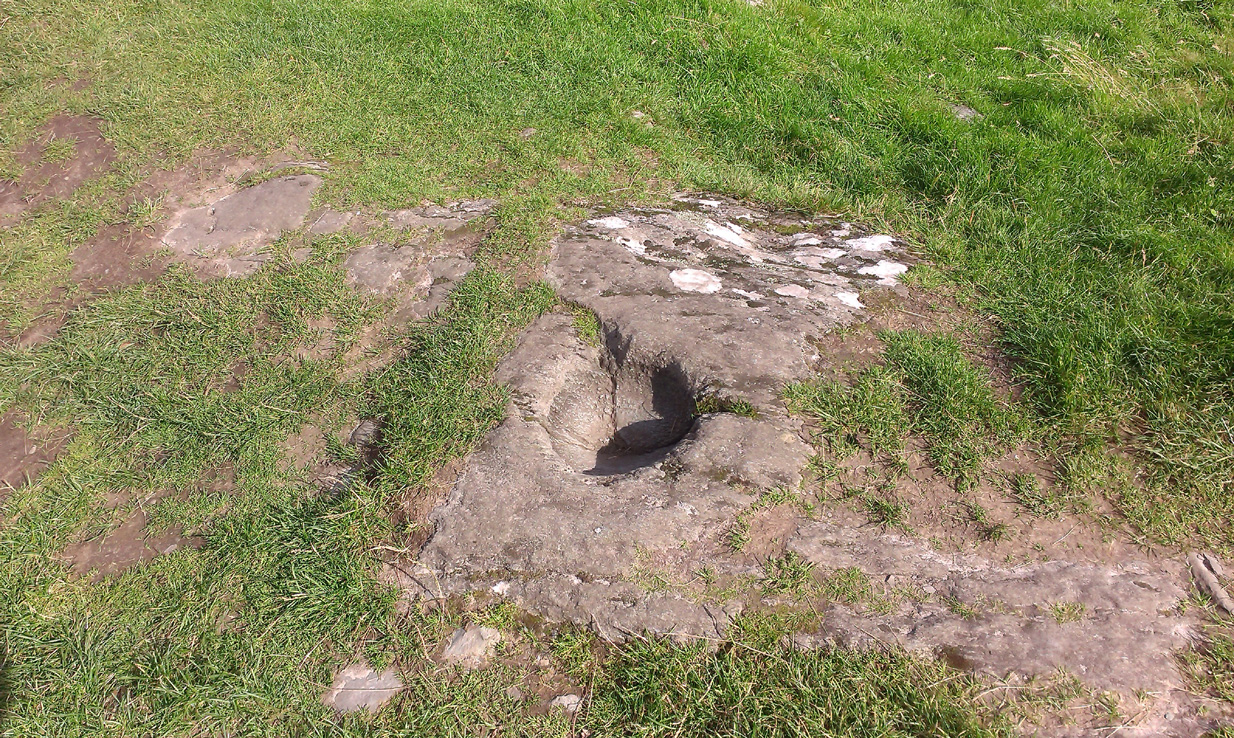
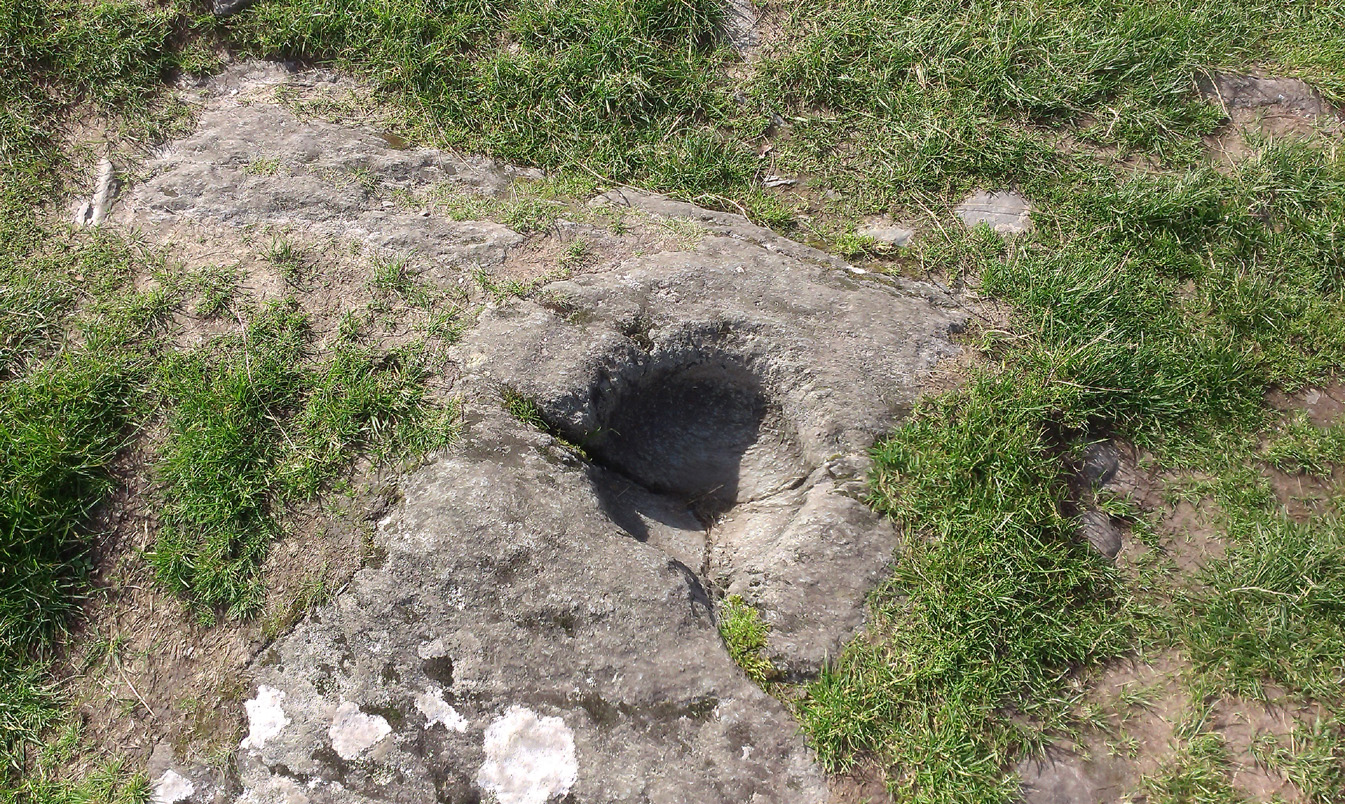
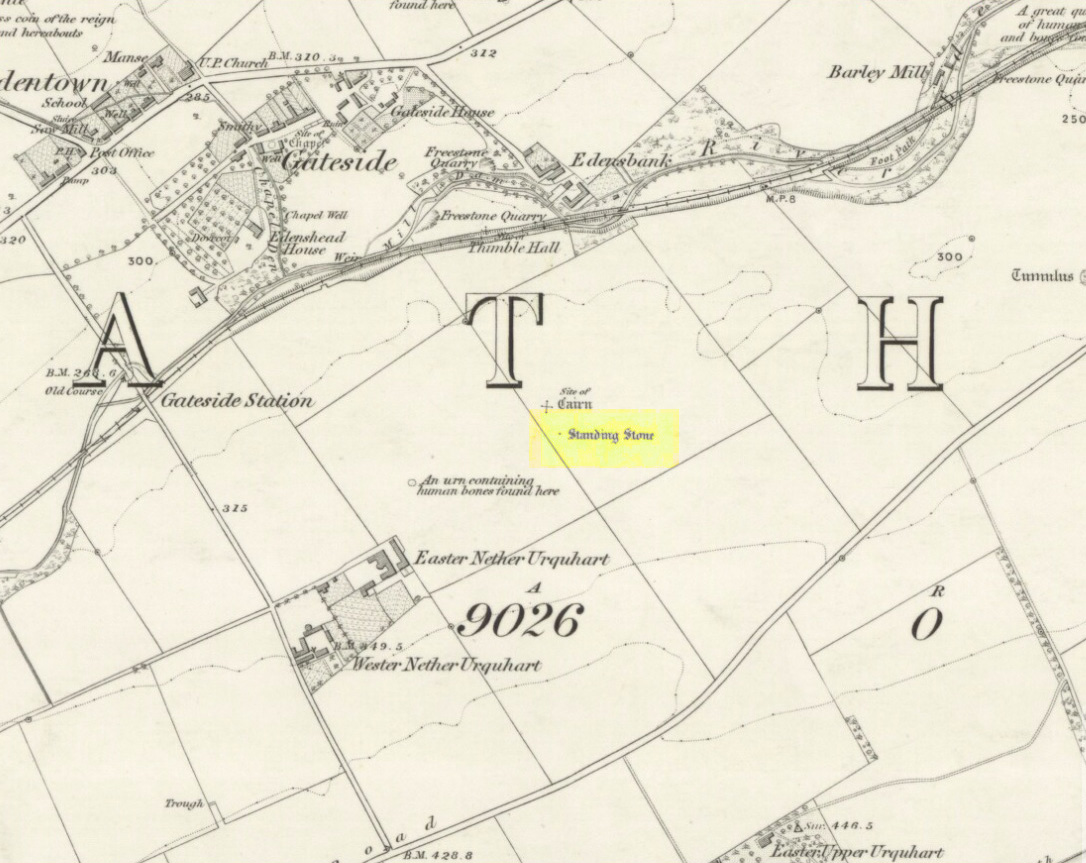
Our Lady’s Well, Gateside, Fife

Holy Well: OS Grid Reference – NO 18505 09169

Also Known as:

  1. Chapel Well

Getting Here

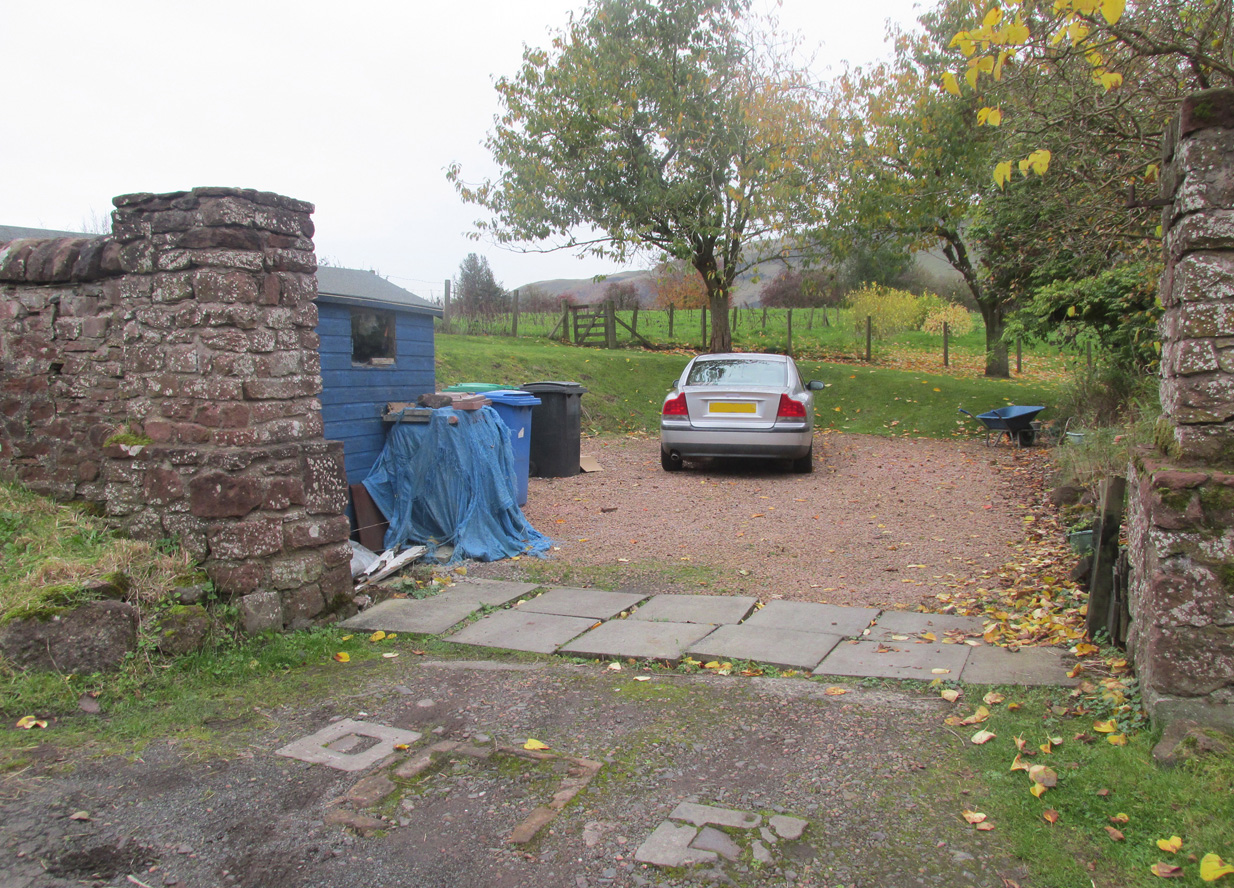
Access to the field - ask at the pleasant house!
Access to the field – ask at the pleasant house!

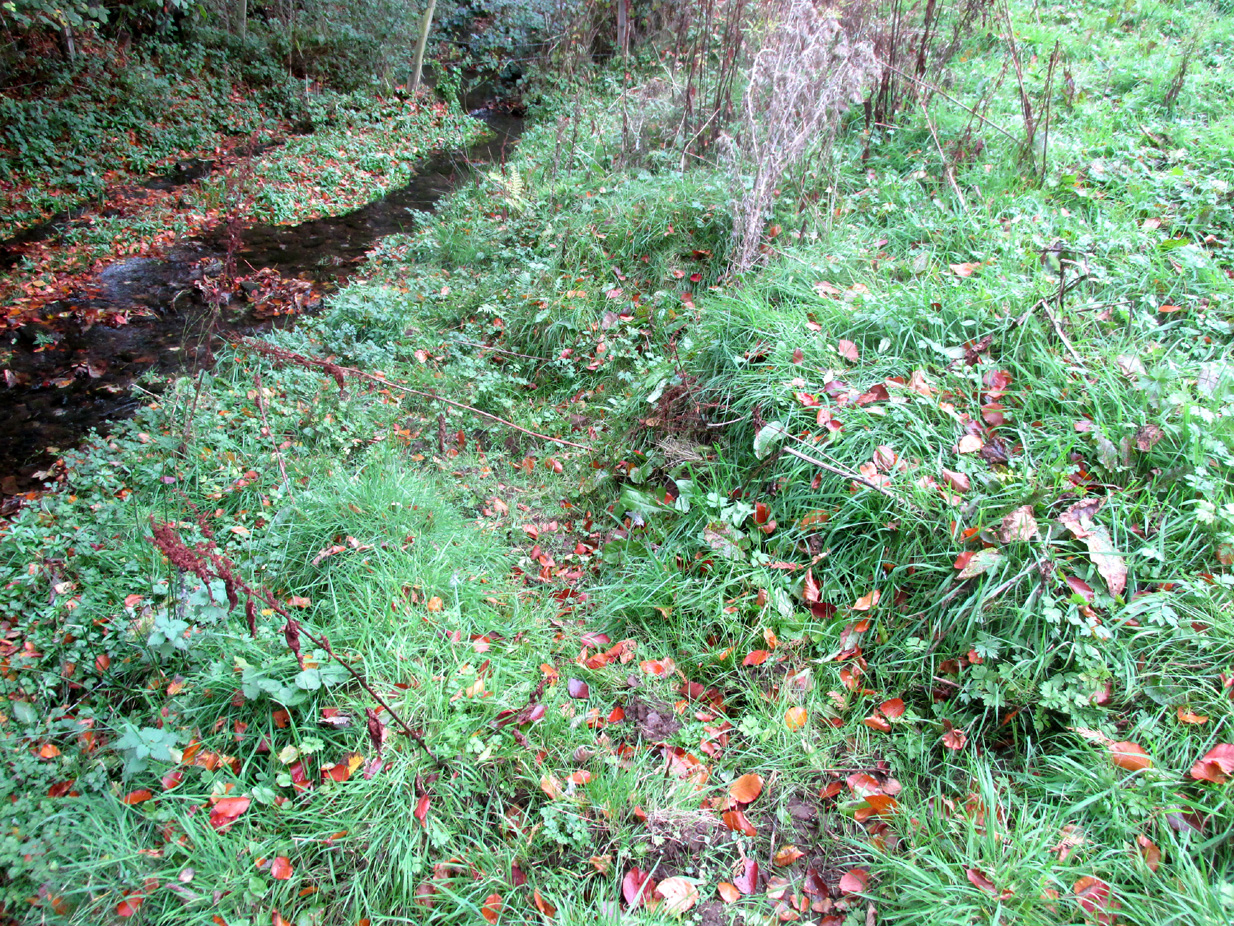
Travelling from Milnathort on the A91, in Gateside village, turn right down Old Town, and after the left bend in the road, park up.  Access to the field where the Well is situated is through the gate on land next to the easternmost house on the south side of Old Town.  Ask at the house first.  Walk down the field towards the Chapel Den burn, and the ruins of the Well will be seen next to the burn just before the line of bushes that cross the field.

Archaeology and History

In his brief description of Strathmiglo parish, Hew Scott (1925) wrote:

“At Gateside…there was a chapel of St Mary, with Our Lady’s Well beside it.”

It was described in the nineteenth century Ordnance Survey Name Books by an informant:

“A small spring well on the north side of the Mill Dam.  Supposed to have been used in the days of Popery as holy water and for other purposes when the building supposed to have been St Mary’s Chapel was in existence.”

Another informant wrote:

“…a Romish chapel is supposed to have been erected in this village and is borne out in a great measure by names of objects adjoining, namely Chapel Den, Chapel Well.”

And further:

“According to Doctor Small…it is stated, ‘The ancient name of this village called in old papers the Chapelton of the Virgin, changing its name at the Reformation.'”

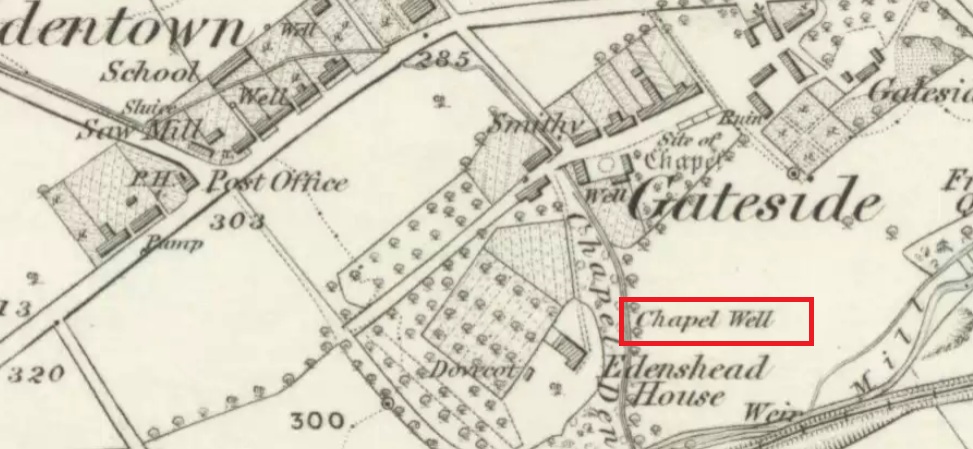
Shown as Chapel Well in 1856

This latter statement would seem to imply that the part of modern-day Gateside south of the main road (the north side was known as ‘Edentown’) was a pilgrimage centre of the Cult of the Virgin.  The chapel was erected by the monks of Balmerino to whom it was known as ‘Sanct Mary’s of Dungaitsyde’.  It was highlighted as the Chapel Well on the 1856 OS-map.

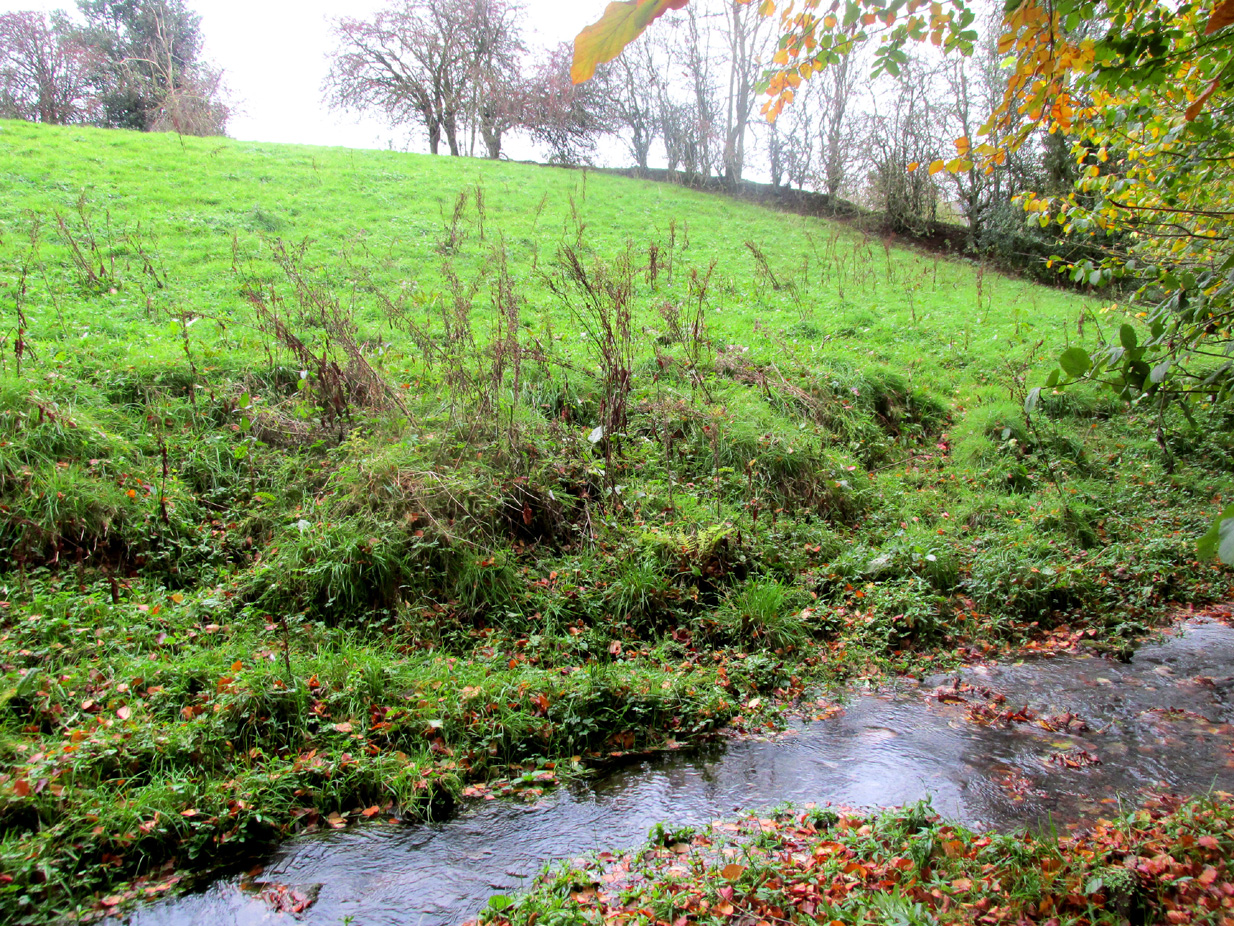
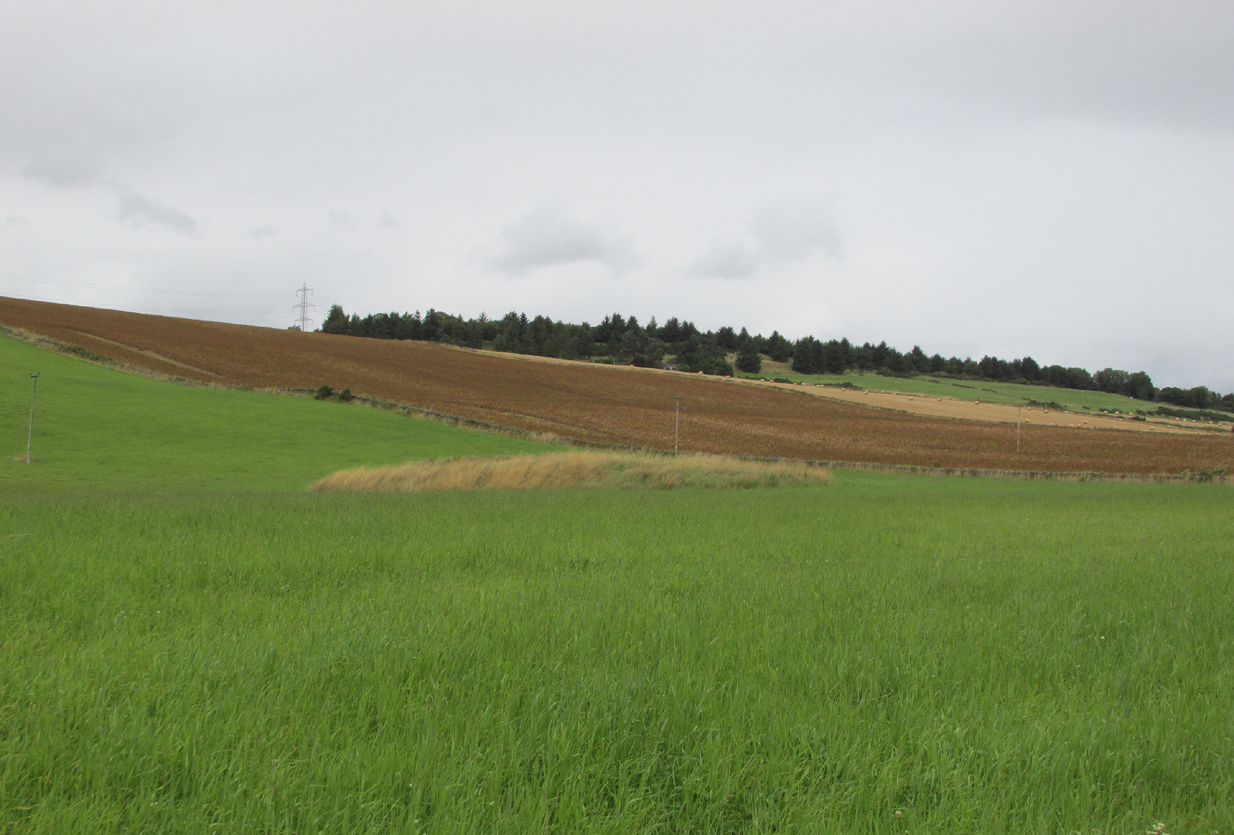
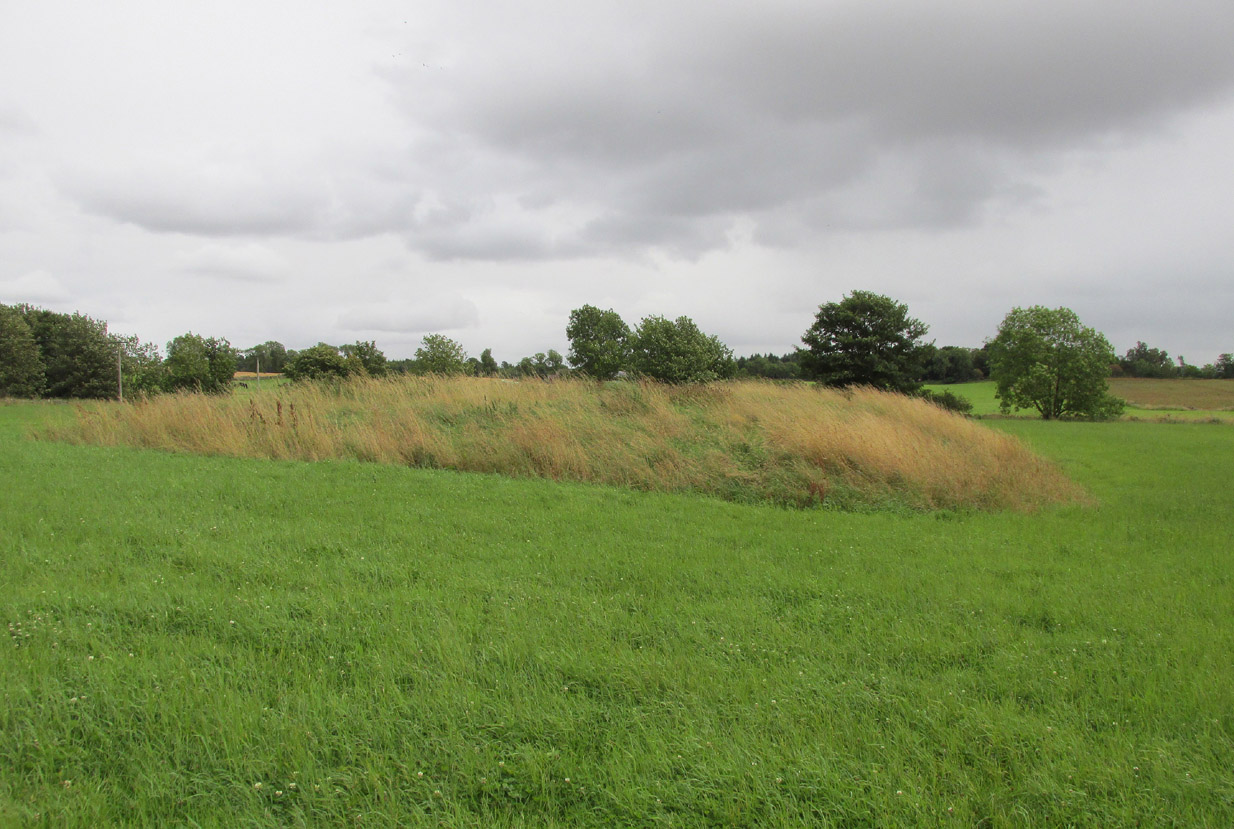
The ruined Well from across the burn
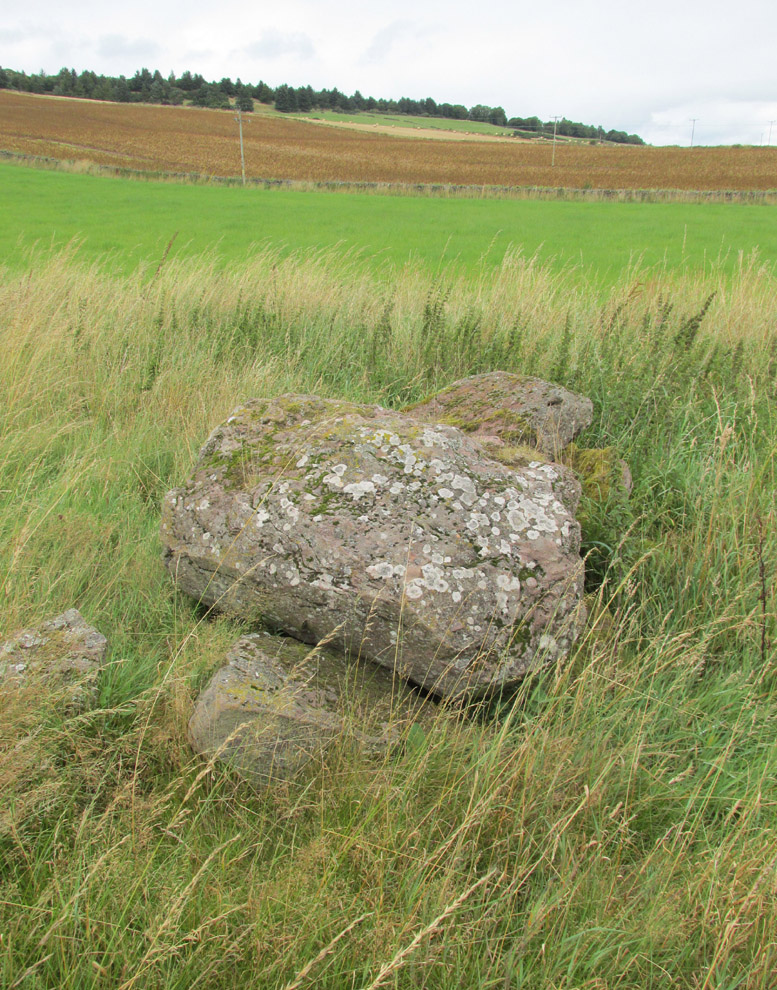
Nature takes back the ruined masonry at this magickal spot

While no trace of the chapel remains, the Well is evidenced by some low ruins of what had once been a red sandstone structure, and it was just possible to make out in the field the line of the pilgrim’s path to the well. But what a lovely serene place next to the burn! An ideal spot to meditate or daydream… The spring no longer flows, and a manhole in the field probably indicates the water supply has been diverted, perhaps to serve the long since closed Gateside Distillery?

References:

  1. Scott, Hew, Fasti Ecclesiae Scoticanae – Volume V, Oliver & Boyd: Edinburgh 1925.

Links:

  1. On Canmore

© Paul T. Hornby 2016 The Northern Antiquarian 


St Medan’s Well, Kirkton of Kingoldrum, Angus

Holy Well (destroyed): OS Grid Reference – NO 33410 54961

Getting Here

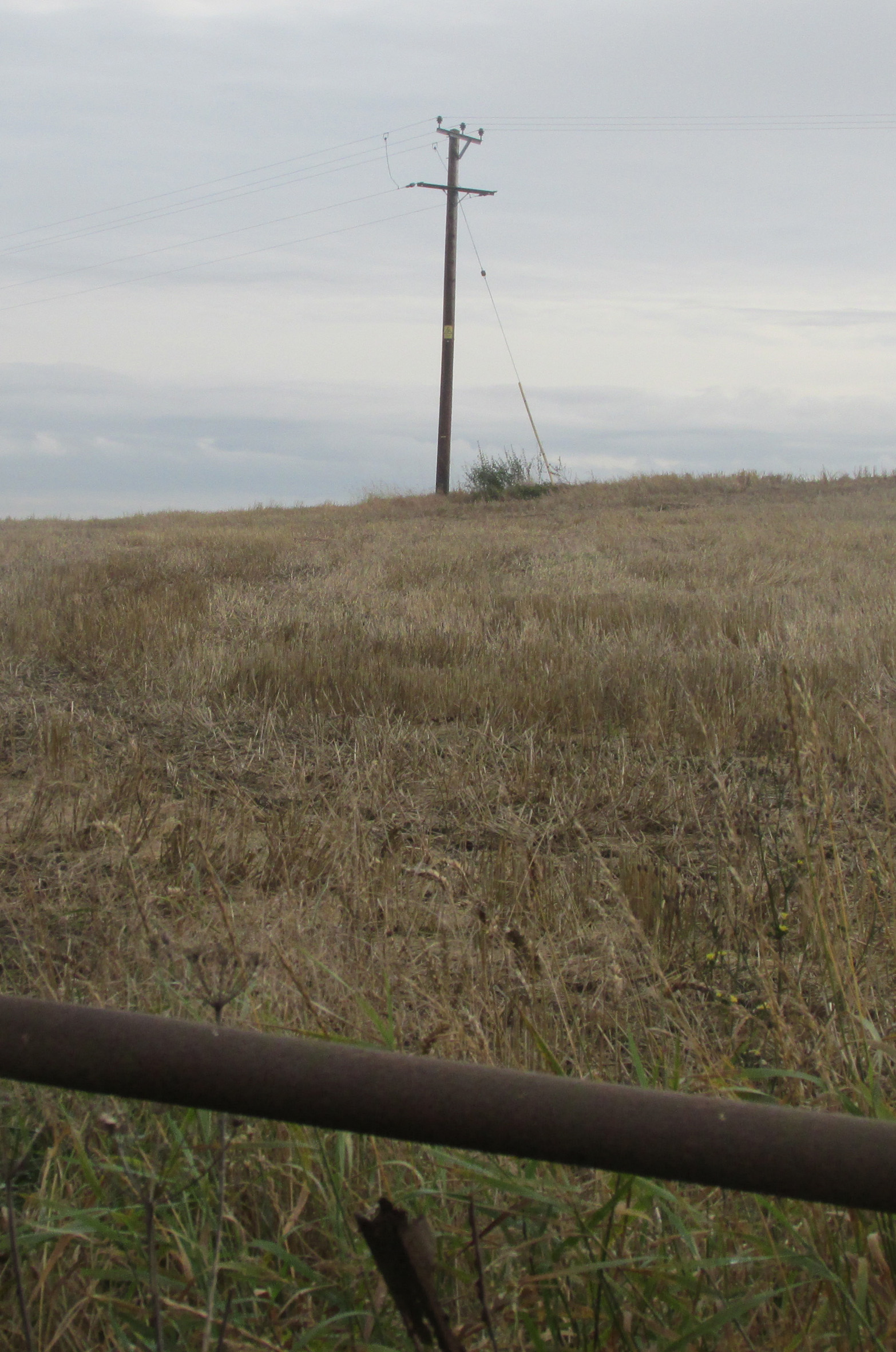
Travelling away from Kirriemuir towards the Braes of Angus on the B951, park outside the now disused Church of Scotland, and walk up the hill past the adjoining house, and turn left through the farm gate into the field. The site of the Well will be seen in front of you on the slope as a patch of nettles between an electricity supply pole and its ground tensioning wire.

The site of the well from the roadside.

Archaeology and History

According to Hew Scott’s Fasti Ecclesiae Scoticae (1925), ‘The church of Kingoldrum was dedicated to St Medan, and not far from it is St Medan’s Well‘.  The Canmore record in respect of  finds in the churchyard (Canmore ID 32254) has the following note in respect of a field visit by a Canmore official on 12 November 1975: ‘According to Mr Mackintosh, session clerk, St Medan’s Well (name verified) was a spring well situated on a hill slope “some 50 yards S of the cottage of the SW of the church. The ground was improved within living memory, and there is now no trace of the well.”‘

A close up of the well site.

Despite what was stated in the above quote, the site of the well is visible as a patch of nettles exactly where stated, the adjoining house owner confirming that the water is now piped to a cistern in front of the house, and marked by a blue painted stone.

The well is not recorded in the Ordnance Survey Name Books, nor is its position shown on the maps, and that usually reliable source of information on the history of this area, Andrew Jervise, does not mention it in his Epitaphs and Inscriptions in North East Scotland.  As this writer does not have access to the works referenced by Hew Scott, he feels that, in common with other saint’s wells, there may be some uncertainty as to the exact identity of the patron saint of the well, but it is likely to be a separate person to Saint Madden who gave his name to St Medan’s Knowe at nearby Kirkton of Airlie. The argument for this separate identity is strengthened by the discovery in 1843 of a quadrangular bronze coated iron bell that had been buried with other artifacts in the Kingoldrum churchyard. The history of the bell of St Madden of Kirkton in Airlie is historically recorded.

The Water from the well is piped to a roadside cistern in front of the blue painted stone

Alexander Forbes (1872) refers to a St Medan whom he identifies as Saint Medana, and who may be the patron of the well and the original owner of the bell, but he records this Irish born saint as having been active in Galloway, but that she “ended her days near the blessed bishop and confessor Ninian” who was active in Angus. He writes of her: “A native of Ireland, fleeing from the admiration of a soldier, came in a vessel with two handmaidens only to Scotland…where she lived a life of labour and poverty. The soldier pursued her, whereupon she and her maidens embarked upon a stone, which floated thirty miles to a place called Farnes….the soldier still pursued her, and passed without noticing it, the house where she lodged with her maidens, but his attention was drawn to it by the crowing of a cock. She now climbed into a tree, and finding that it was her face and eyes that were the soldier’s attraction, she plucked out her eyes. The soldier repented, and the virgin descending from the tree washed her wounds in a fountain which then and there sprang up“. It seems we can not know if this is the mythic history of the origin of St Medan’s Well.

References:

  1. Forbes, Alexander, Kalendars of Scottish Saints, Edmonston & Douglas: Edinburgh, 1872.
  2. Scott, Hew, Fasti Ecclesiae Scoticanae, the Succession of Ministers in the church of Scotland from the Reformation – Volume V, Oliver and Boyd: Edinburgh 1925.

Links:

  1. Kingoldrum Parish Church

© Paul T. Hornby 2016 The Northern Antiquarian 


Dunruchan Hill, Muthill, Perthshire

Standing Stone:  OS Grid Reference – NN 8022 1645 

Getting Here

Lisa standing with the old stone
Lisa with the old stone

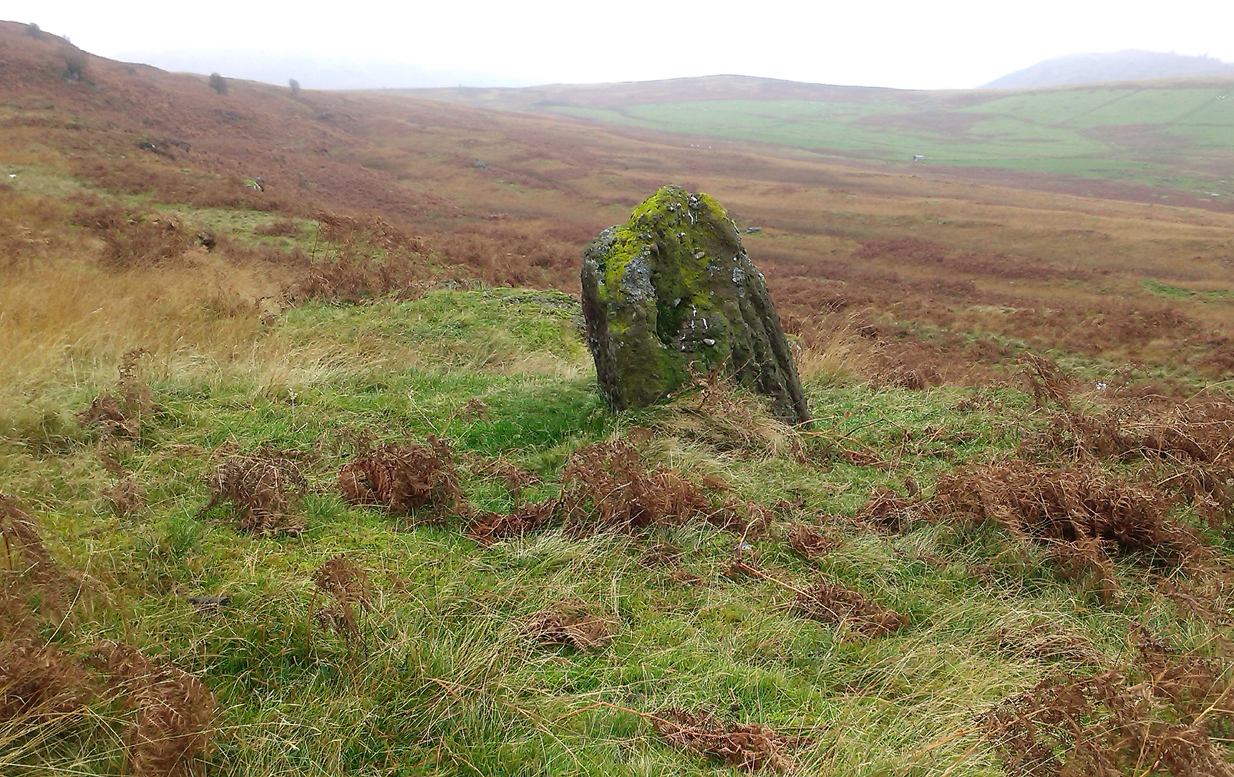
Take the directions to the hugely impressive Dunruchan A standing stone.  Walk directly south, over the gate and follow the fence straight down the fields, crossing the burn at the very bottom. Walk over the boggy grassland and start veering uphill, southeast.  You’ll notice the land goes up in geological ‘steps’ and, a few hundred yards up, a small standing stone pokes up on the near skyline ahead of you.  Head straight for it!

Archaeology & History

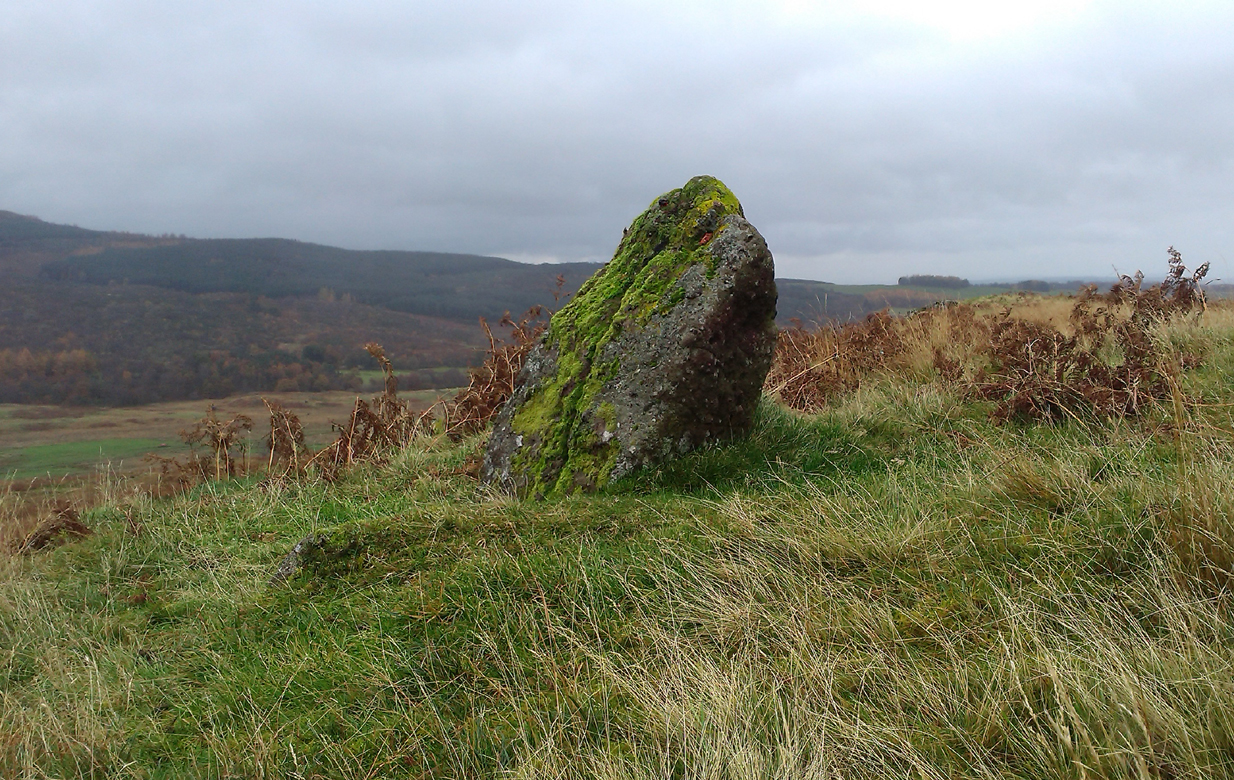
This small standing stone was first noted after a quick visit to the major Dunruchan megalithic complex in the summer of 2016.  Photographer James Elkington was taking images of the landscape and the standing stones when he noticed a stone on the horizon a half-mile away.  As we were in a rush, he took a couple of photos from different angles on the way back to the car—both of which looked promising.  And so, several months later, we revisited the site again.  Lisa, Paul and Mr Fukner and I meandered up the geological steps of the hillside until we reached the site in question.

Looking northwest
Looking northwest
Looking northeast
Looking northeast

Standing just over four-feet tall, this solitary stone overlooks the megalithic Dunruchan complex a half-mile or so to the north and northwest.  Like the Dunruchan C monolith, this smaller upright is conglomerate stone.  Paul Hornby noted what may be a single cup-marked stone roughly 100 yards east along the same ridge. (Please note that the grid-ref may be slightly out by perhaps 50 yards or so at the most. If anyone visits and can rectify my ineptitude on this matter, please let me  know.)

© Paul Bennett, The Northern Antiquarian 

St. Medan's Knowe, Kirkton of Airlie, Angus

Cairn:  OS Reference Number – NO 32021 52100

Also Known As:

  1. Battle Cairn
  2. Canmore 32360
  3. Cantsmill
  4. St. Madden’s Knowe

Getting Here

St Medan's Knowe, from the W
St Medan’s Knowe, from the W

At Kirkton of Airlie, park next to the church and walk north eastwards along the track, past the houses Crabra and Cleikheim, and cross the burn by the small bridge and the mound will be seen ahead of you in the field.

Archaeology & History

A largely flat topped, rectangular mound, measuring, according to Canmore,  28 metres by 22 metres, 2.2 metres high on the west side and about ½ metre high on the east side. There is a quantity of rubble strewn on the top among which are two stone slabs, described in 1958 as being possible cist cover stones. The site has clearly suffered considerable disturbance.

The site highlighted in red on the 1865 6" OS Map.
The site highlighted in red on the 1865 6″ OS Map.
The site from the north

Andrew Jervise, writing of the site in 1864 described it as having been 300′ in circumference and 6-7′ high before the owner started to remove it for agricultural ‘improvements’ around 1859. He described it as being sometimes known as the ‘Battle Cairn’. As part of the demolition of the mound, agricultural workers in October 1859 unearthed a large cinerary urn half filled with human bones and protected by a large sandstone flag.  Jervise writes:

“After the urn was found, care was taken removing other parts of the hillock; and on further reducing the surface, the top of a large boulder was exposed, upon and around which the mass of loose stones and earth appear to have been raised which composed the mound. The boulder, as far as ascertained, measures about 6 by 7½ feet; and the urn was found about four feet to the north east of the stone. At the distance of about four yards from the spot where the urn was found, there appeared to be a separate circle, rudely constructed of stones and earth – stones predominating. In this circle, at pretty regular distances, deposits of human and animal bones were found; and each of these deposits appeared to have been protected by two flat stones set up in a triangular form, resembling (an inverted letter V)…none of the deposits was more than 8″ below the surface”.  In February 1861, “..a stone cist was found a little to the south east of the boulder….it was 5 feet long by 2 in breadth. The lid, a single slab, was upwards of 6 feet in length…the depth of the cist was 2 feet….It was nearly empty, but one could see, from the soft, black, unctuous earth that was taken out of it, that it had contained a body.”

Jervise continues:

“The name of St. Medan’s Knowe is certainly significant, but, whether it would imply that the place had been that of his burial, or one of those of his ministry, and so been the original place of worship at Airlie – are interesting particulars upon which history and tradition are silent”.

Stone slabs on top
Stone slabs on top

The Ordnance Survey Name Books, and the 25-inch OS map of 1865 record the finding, 20 yards to the west of the knowe, of a bronze spear head, which was at that time in the possession of a Mr Dixon, a merchant of Kirriemuir, which may go some way to explaining the alternative name of the site as ‘Battle Cairn’.  The Name Books further record the testimony of a William Duncan that, ‘there have been 7 or 8 stone coffins and an urn found in the knowe, and that he believes a number more might be found if sought for, as the half of it is not yet excavated‘.

From the surviving evidence, it is very likely that Kirkton of Airlie was the centre of a cult of St. Madden (also known as ‘Medan’ and ‘Madan’), with the adjacent Holy Well, the (now destroyed) hamlet of St. Madden’s, and a Dewar’s land occupied by the hereditary custodians of St. Madden’s Bell. This site has no connection with St Medan’s Well at nearby Kirkton of Kingoldrum, that St Medan probably being a St Medana.

References:

  1. Andrew Jervise, Notice of Antiquities in the Parish of Airlie, Forfarshire, Proceedings of the Society of Antiquaries of Scotland, June 1864.
  2. Royal Commission on the Ancient and Historical Monuments of Scotland, The Archaeological Sites & Monuments of Central Angus, Angus District, Tayside Region, HMSO: Edinburgh 1983.
  3. Scotland’s Place Names

© Paul T. Hornby 2016 The Northern Antiquarian

Witch Hillock, Marykirk, Kincardineshire

Tumulus & (possible) Stone Circle: OS Grid Reference – NO 64400 67323

Also Known as:

  1. Canmore ID 36002
  2. Inglismaldie

Getting Here

The Wicth Hillock
The Witch Hillock

Travelling north on the Bridgemill to Fettercairn road, park at the layby just before the junction with the minor road (left) through the Forestry Commission’s Inverury Wood.  Go through the gate and walk along the track to the end where it joins another track and turn right. About 300 yards along, the Hillock is in a fenced enclosure to the right, accessible over a stile.

Archaeology & History

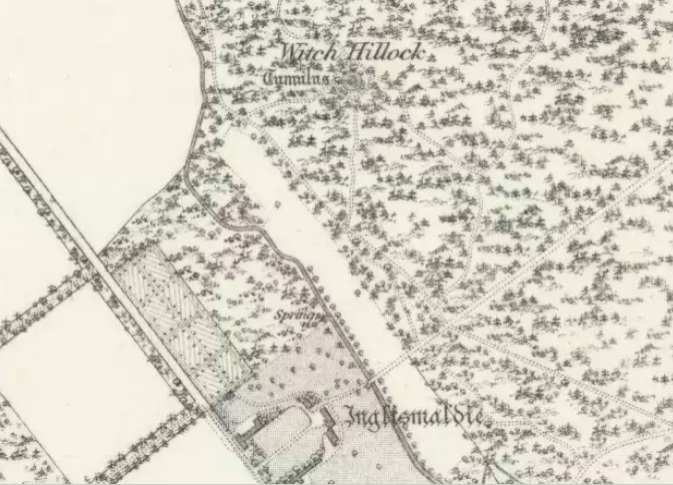
The site was not mentioned in the Statistical Accounts, nor is the origin of the name recalled, from which it is reasonable to assume that ‘witches’ (howsoever that term was interpreted in the days of persecution by the Kirk Sessions) met there. This is reinforced by there being a plot of land due west called ‘Witchfield’.  The Canmore report describes the mound as  being,

“situated near the edge of a low natural escarpment..measuring about 18m. in diameter and 2m. high.”

The Ordnance Survey reported in the mid-1860s that the Hillock was,

“An artificial mound….a remarkable looking object….enclosed with ornamental wire fencing, the name is well known in the district, but is not mentioned in the Statistical account nor any other document in the possession of the authorities. James Glenny, Gardener at Inglismaldie states that he assisted to open this, under directions from the Earl of Kintore, about Seven years ago, and that after clearing away the top soil there were found several stone coffins containing human bones and a clay urn containing what appeared to be calcined human bones….”

The site shown at the top of the 1865 6" OS Map.
The site shown at the top of the 1865 6″ OS Map.
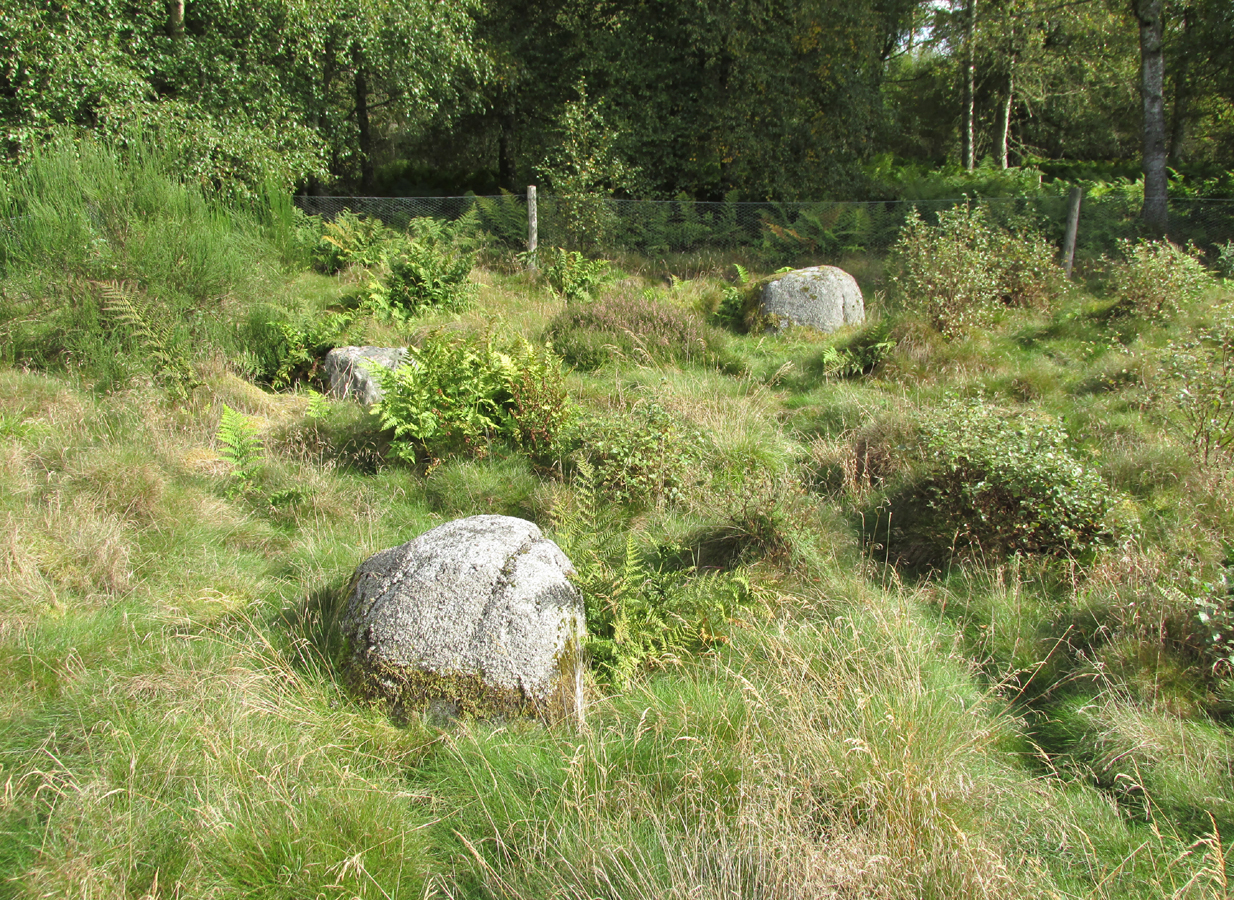
The Hillock with 3 stones in the foreground

Another remarkable feature of the Hillock enclosure is an arc of three large earth fast boulders to the north-west of the mound. It has the appearance of being an incomplete, possibly four poster circle. The stones are not listed by Aubrey Burl (2000) as being part of a circle, and if indeed it was a circle there doesn’t seem to be any evidence of the fourth stone, which would have been positioned nearest to the Hillock.  Unless the Hillock was imagined to be the ‘missing’ fourth stone.

Three stones - once part of a circle?
Three stones – once part of a circle?

A ‘well’ is shown on the modern OS map in the corner of the enclosure nearest the stile, but there was no evidence of this on the day of my visit.

Despite its rather remote location, it was noticeable by the well trodden state of the long grass on the day of my visit that the site receives quite a few visitors – a venue still for witches?

References:

  1. Burl, Aubrey, The Stone Circles of Britain, Ireland and Brittany, Yale University Press 2000.
  2. Royal Commission on the Ancient and Historical Monuments of Scotland, The Archaeological Sites & Monuments of South Kincardine, Kincardine and Deeside District, HMSO: Edinburgh 1982.

© Paul T. Hornby 2016 The Northern Antiquarian


Bogle’s Well, Glasgow, Lanarkshire

Sacred Well:  OS Grid Reference – NS 597 650

Archaeology & History

Of all the ancient wells in the city of Glasgow, this has to be one of the most intriguing! Descriptions of it are few and far between, but it is the name of the site which is of interest, to folklorists and occult historians alike.  For the word ‘Bogle’ is another term for a ‘boggart’ or goblin of some sort!  The well is mentioned in Andy MacGeorge’s (1880) excellent study in his description of ancient wells in the city. Citing notes from the 17th century, amidst many sites,

“Another was Bogle’s Well, in regard to which there is a minute of the town council “that Bogillis Well should be assayed for bringing and convoying the water of the same to the Hie street according to the right the town hes thereof,” and the magistrates are recommended to arrange for having this done “by conduits of led.””

…Obviously in the days when they were clueless about lead-poisoning!  The word ‘bogillis’ is the early plural form of the bogle, or bogill (Grant 1941:201).  But where exactly was this old well?  Are there any other records hiding away to help us locate its original position?  It seems to have been one in a cluster of legendary and holy wells in a very small area scattered between Glasgow’s cathedral, down the High Street and to the northern banks of the River Clyde… (the grid-reference given for this site is an approximation)

In a less esoteric fashion, the occult historian Jan Silver suggested that the name of the Well may relate to the family name, ‘Bogle’.  This could indeed be the real story behind the well’s name.

Folklore

Traditionally ascribed in the lower counties of England to be an evil malicious sprite, in more northern counties and in Scotland the creature was said by Katherine Briggs (1979) to be a more “virtuous creature”, akin to the helpful brownies or urisks of country lore.  This was said to be the case in William Henderson’s (1868) Folklore of the Northern Counties. Whether this well was haunted or the home of a bogle, we do not know as the folklore of this site appears to be lost; so I appeal to any students who might be able to enlighten us further on the place.  The Forteans amongst you might have a cluster of ‘hauntings’ hereby, perhaps….

References:

  1. Bennett, Paul, Ancient and Holy Wells of Glasgow, TNA 2017.
  2. Briggs, Katharine, A Dictionary of Fairies, Penguin: Harmondsworth 1979.
  3. Grant, William (ed.), The Scottish National Dictionary – volume 2, SNDA: Edinburgh 1941.
  4. Henderson, William, Notes on the Folklore of the Northern Counties of England and the Borders, W. Satchell: London 1879.
  5. MacGeorge, Andrew, Old Glasgow, Blackie & Son: Glasgow 1880.
  6. MacKinlay, James M., Folklore of Scottish Lochs and Springs, William Hodge: Glasgow 1893.
  7. Steele, Joyce, Seeking Patterns of Lordship, Justice and Worship in the Scottish Landscape, Glasgow University 2014.

© Paul Bennett, The Northern Antiquarian

Deanside Well, Glasgow, Lanarkshire

Healing Well (destroyed):  OS Grid Reference – NS 5974 6534

Also Known as:

  1. Meadow Well

Archaeology & History

Probable site of Deanside Well, 1857
Deanside Well ‘pump’ in 1857

This little-known well—destroyed about two hundred years ago—was said to be one of the finest of all of the water supplies in the Glasgow district in pre-industrial days.  The Glasgow historian Andy MacGeorge (1880) told it to be “a spring which was then, and for long afterwards, in great repute.”  It was described as early as 1304 CE in a grant by Robert, bishop of Glasgow, allowing the christians to take water from the well and into their convent.  The Latin transcript told:

“Noveritis Ros intuita caritatis, Dedisse fratribus Predicatoribus de Glasgu, Fontem quendam qui dicitur Meduwel in loco qui dicitur Denside scaturientem, in perpetuum conducendum in claustrum dictorum fratrum, ad usus necessarios eorundem”  (Meaning, “Know ye that I Rosh, of charity, Among His brethren shared with the Preaching Friars of Glasgow, the gushing fountain called Meadow Well or Deanside as the place is called, to the cloisters is said to meet the needs” of the monks.”)

There is the possibility that the well was deemed as ‘holy’ due to it being of vital use to the bishop and monks, but I can find no record of it being ‘blessed’ as such; and the exact site of the bishop’s convent has been lost to history.  In 1574 the “Deynside Well” needed cleaning due to  people clogging up the waters with earth and stones; and sometime in the 18th century the spring of water was turned into a draw-well.

A northern antiquarian by the name of ‘ Senex’ (real name, Robert Reid) visited the Deanside Well at the end of the 18th century, telling of its whereabouts:

“In the year 1789 I had occasion daily to mount and descend the Deanside Brae, upon business, so that the state of the place at that date is quite familiar to me.  The whole of the Deanside Brae was then vacant ground, as is shown in the old Maps of Glasgow.  The Deanside or Meadow Well was situated in a meadow at the west end of Grayfriars’ (or Bun’s) Wynd, close to the footpath leading up to the Rottenrow; it is now on the street, at 88 George Street, opposite to the lane leading into Shuttle Street.  The Deanside Well was then in a rural spot, the whole lands on the west, as far as Partick, being garden grounds and com fields.

“In Stuart’s Views the lonely foot passage up the Deanside Brae, to the Rottenrow, is very distinctly shown. The well stood at the south extremity of the said footpath, about the centre of the wynd.”

‘Senex’ also told that an ancient fair was held in “an enclosure” at the northwest corner of Shuttle Street, close to the Deanside Well.

References:

  1. Bennett, Paul, Ancient and Holy Wells of Glasgow, TNA 2017.
  2. MacGeorge, Andrew, Old Glasgow, Blackie & Son: Glasgow 1880.
  3. ‘Senex’, Old Glasgow and its Environs, D.Robertson: Glasgow 1864.
  4. Stuart, Robert, Views and Notices of Glasgow in Former Times, R.Stuart: Glasgow 1848.

© Paul Bennett, The Northern Antiquarian
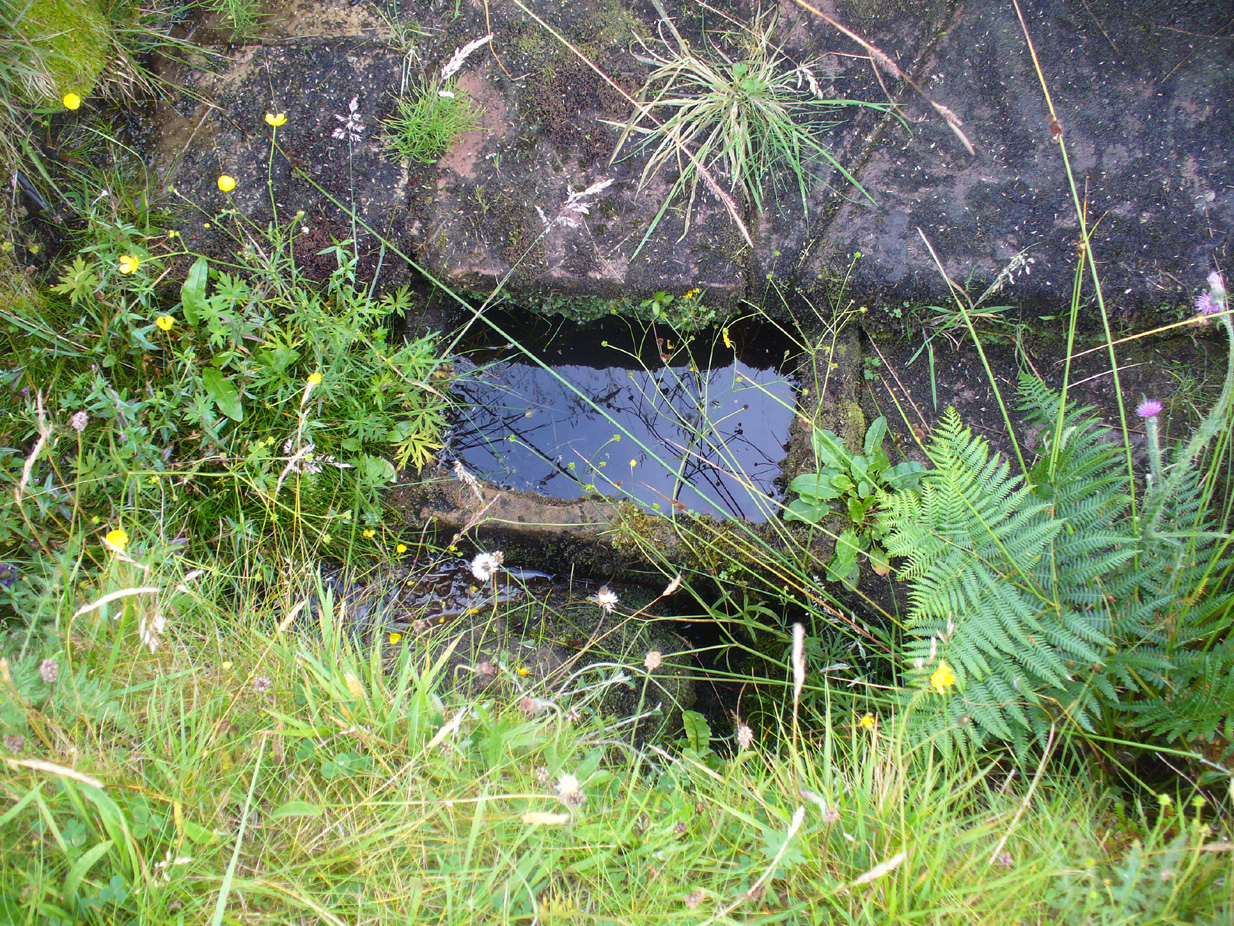

Shawfield, Rutherglen, Glasgow, Lanarkshire

Tumulus (destroyed):  OS Grid Reference – NS 6041 6297

Also Known as:

  1. Canmore ID 45108

Archaeology & History

Close to the ancient boundary of north Lanarkshire—if not actually on it—and looking down on the River Clyde, was once a prehistoric burial mound, probably Bronze Age in nature.  Described first of all in David Ure’s (1793) early survey of Rutherglen, he told that:

“A tumulus of earth, supposed to have been originally a burying place, was lately demolished in the estate of Shawfield, a few yards from Polmadie; and the place where it stood converted into a mill-dam.  None of its contents attracted the particular attention of the workmen employed in removing it.”

The site was subsequently referenced in Hugh MacDonald’s (1860) excellent work, but no remains of it now exist.

References:

  1. Macdonald, Hugh, Rambles round Glasgow, John Cameron: Glasgow 1860.
  2. Royal Commission Ancient & Historical Monuments of Scotland, Lanarkshire: An Inventory of the Prehistoric and Roman Monuments, HMSO: Edinburgh 1978.
  3. Ure, David, The History of Rutherglen and East Kilbride, Glasgow 1793.

© Paul Bennett, The Northern Antiquarian

St. Madden’s Well, Kirkton of Airlie, Angus

Holy Well:  OS Grid Reference – NO 3179 5188

Also Known as:

  1. Canmore ID 32367
  2. St. Madan’s Well 
  3. St. Medan’s Well

Getting Here

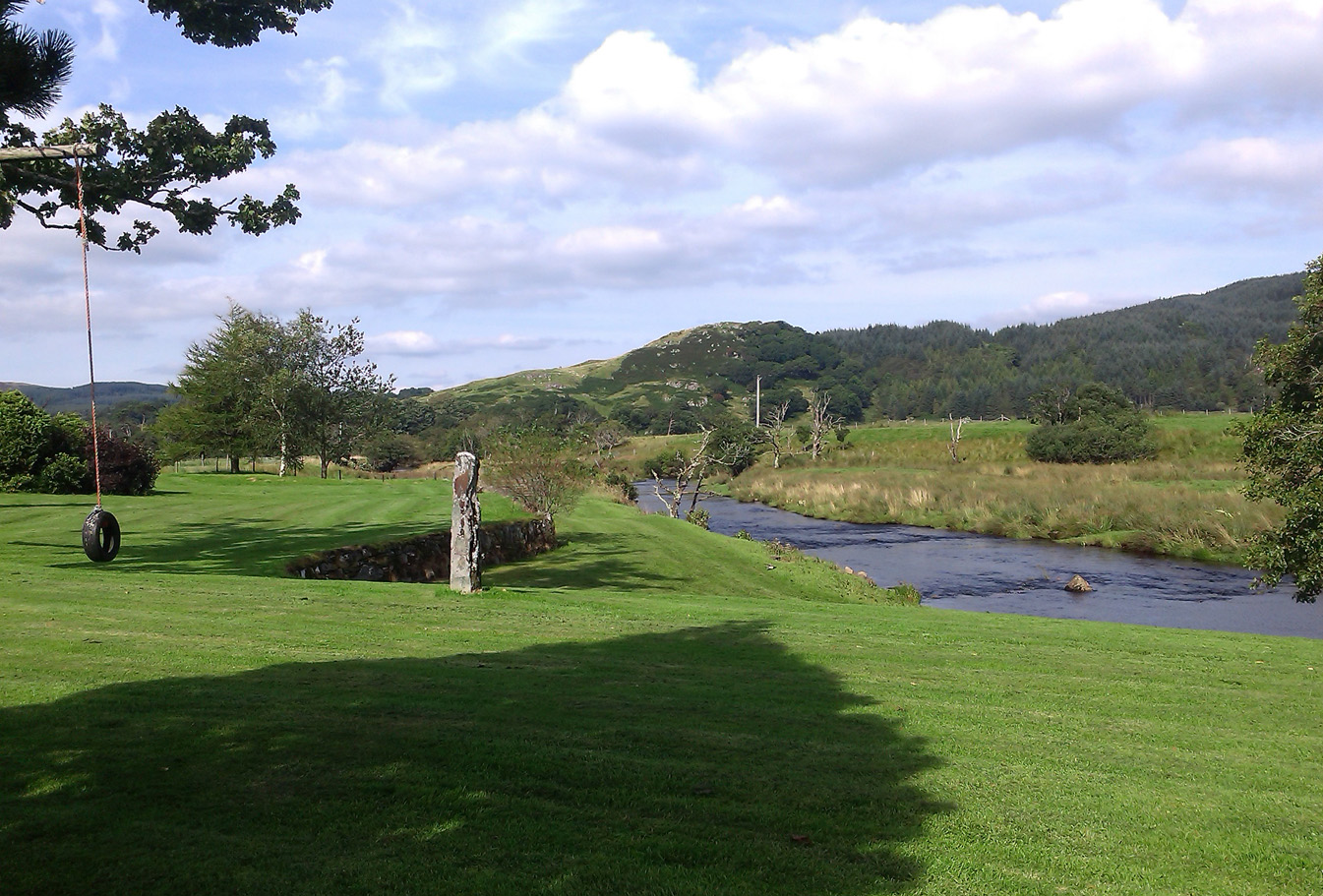
One of the present issues of St. Madden's spring looking south.
One of the present issues of St. Madden’s spring looking south.

At Kirkton of Airlie, park next to the church and walk north eastwards along the track, past the houses ‘Crabra’ and ‘Cleikheim’ and the spring that once supplied the Holy Well will be seen on the opposite side of the burn in a small fenced off enclosure. To the north east of the enclosure is a small hillock known as St Medan’s Knowe.

Archaeology & History

According to the Ordnance Survey Name Books, St Madden’s Well was located in a hamlet called St Maddens, which has since been almost entirely destroyed.  In the mid nineteenth century a number of stone coffins and pottery were recovered from around the site, and the well was described as,

“filled up and defaced, the spring…still to be seen issuing into the mouth of a covered drain that was made some few years ago”.

There are now two issues of water from the spring, while nothing now remains of the original well housing. An adjoining resident informed me that the local landowner had gone to some trouble to try to find any evidence of the well housing, but had found nothing.

St. Madden's Well highlighted in red on the 1865 6" OS Map.
St. Madden’s Well on 1865 Map

As is often the case with these early mediaeval Scottish saints there is some confusion as to St Madden’s identity. To some writers his Saint’s day is accepted to be April 29th, and he has been identified as Saint Middanus, abbot of the monastery of Holywood, but Bishop Alexander Forbes considers he is more likely to have been a Bishop Medanach listed in the Dunkeld Litany.

To confuse things even more, J.M. MacKinlay (1904) wrote:

“The Hamlet of St Madden’s or St Medan’s in the parish of Airlie, where are also St Medan’s Well and St Medan’s Knowe, probably retains the name of St Modan, believed to have been a contemporary of St. Ronan.  Skene says: ‘Modan appears in the Scotch calendars as an abbot on the fourth February, and as a bishop on the fourteenth November; but the dedications to him are so much mixed up together that it is probable that the same Modan is meant for both'”.

Andrew Jervise provides the following quote about St Medan:

“..bishop and confessor whose feast is held on 14th November was in great favour with King Conran c.503 – Coll. for Aberdeen and Banff.”

Another issue of the spring

Whosoever St Madden was, his quadrangular bell was the subject of an extant fifteenth century deed whereby the bell with its appurtenant parcel of land was granted to the Countess of Moray as dewar (hereditary keeper of a Holy Relic with appurtenant land), together with “the infeftment being completed by (the Countess) being shut up in a house and then receiving the feudal symbols of earth and stone.” On the death and subsequent disposal of the estate of the last dewar in the nineteenth century, the bell was sold along with a load of rubbish, its true identity and value not being realised at the time.

References:

  1. Andrew Jervise, The History and Traditions of the Land of the Lindsays, Edinburgh, Sutherland & Knox 1853.
  2. Andrew Jervise, Epitaphs and Inscriptions from Burial Grounds and Old Buildings in the North East of Scotland, Edinburgh, Edmonston and Douglas 1875.
  3. James Murray MacKinlay, Influence of the Pre-Reformation church on Scottish Place-Names, Edinburgh and London, William Blackwood and Sons 1904.
  4. Dom Michael Barrett, A Calendar of Scottish Saints, Fort Augustus 1919.
  5. Bishop Alexander Forbes, Kalendars of Scottish Saints, Edinburgh, Edmonston and     Douglas 1872.
  6. Scotland’s Place Names
  7. Andrew Jervise, Notice of Antiquities in the Parish of Airlie, Forfarshire, in Proceedings of the Society of Antiquaries of Scotland, June 1864

© Paul T. Hornby 2016 The Northern Antiquarian

St. Conval’s Well, Eastwood, Glasgow, Lanarkshire

Holy Well:  OS Grid Reference – NS 5519 6020

Also Known as:

  1. St. Ninian’s Well

Archaeology & History

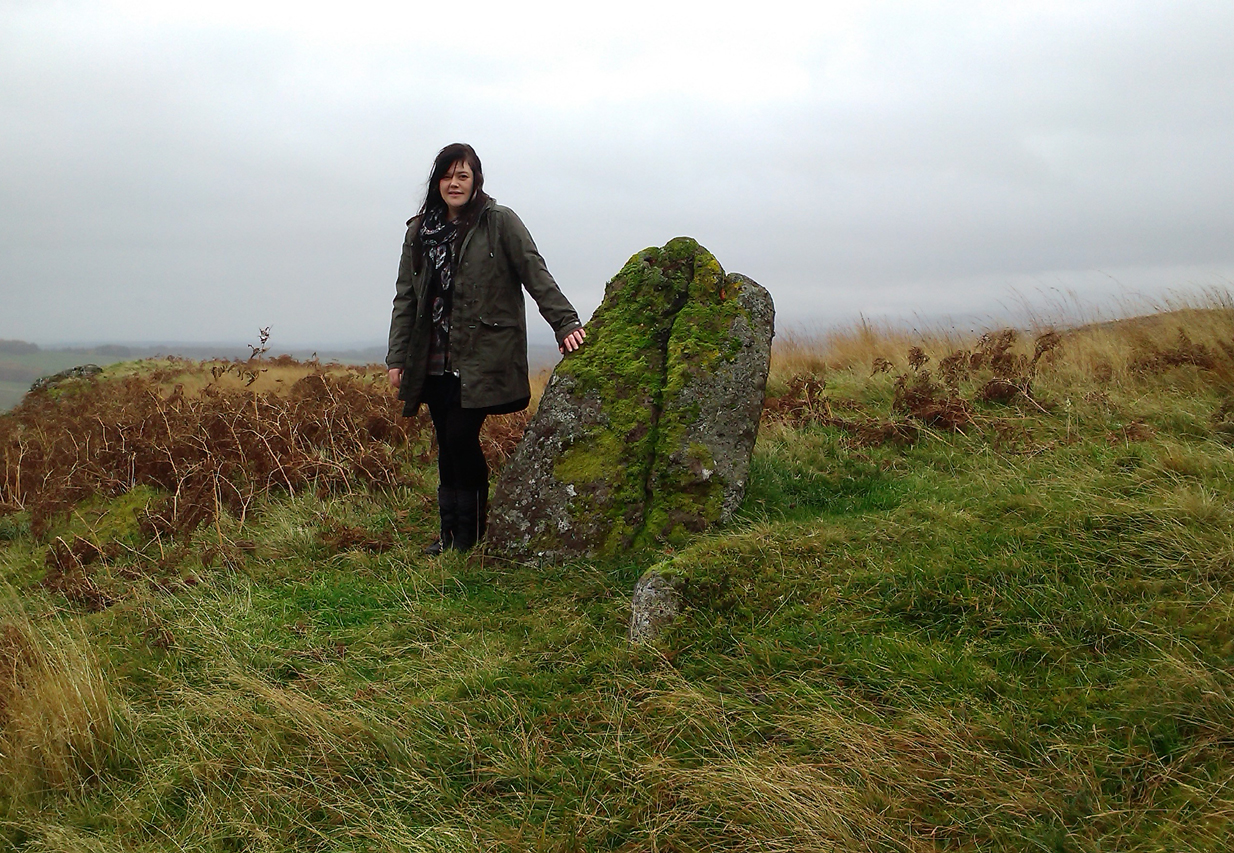
Site of St Conva's Well, beneath the elder tree, off-centre
Site of St Conval’s Well, off-centre beneath the tree

This all-but-forgotten holy well was becoming nothing but a faded memory even in the middle of the 19th century.  Excluded from all of the previous Scottish holy well surveys, the site is mentioned in George Campbell’s Eastwood (1902) where, in his description of the obscure saint, St. Conval or Convallus—to whom Eastwood parish was dedicated—the position of the well is mentioned.  When St. Conval first came to the area, said Campbell,

“The particular spot which the saint selected for his cell would be determined, as was so commonly the case, by the then remarkable spring which can still be traced in the lower part of what was the glebe before the excambion in 1854.  Within the memory of man, even of my own, as I resided for a year in the old manse, before its removal from the early site, this well, as stated in the last Statistical Account, discharged about eleven imperial pints a minute, and was perennial, affected neither by drought nor rain.  Up to that date the water was sufficiently abundant to supply the manse and all the families in what was still a bit of a hamlet, the remains of the Kirkton, as it was formerly called.  But coincident to the removal of the last living remains of an ecclesiastical establishment from the spot, it has well nigh dried-up, through disturbances caused, it is believed, by the working of pits and quarries in the neighbourhood; but it is confidently hoped that what remains of it may be preserved, and a memorial erected over it of the long-departed past, situated as it is within the enclosure of the now extended burial ground.  There can be no doubt that in its waters our fathers were baptised when they renounced Druidism, or whatever was their pagan form of faith, and a sacredness would thus naturally attach to it in former times…”

Site on 1863 map as 'Spring'
Site on 1863 map as ‘Spring’

When we sought out this well in the furthest corner of the old churchyard—where Ordnance Survey placed the ‘Spring’ on the 1863 map—we were greeted by a completely dried-up site, long since fallen back to Earth, with little hope of it ever resurfacing unless good local people choose to do something.  The well was surrounded by excrement and litter and it truly needs a good clean-up and a dig down to bring the waters back to the surface.

In an Appendix to Campbell’s Eastwood, he tells that he came across a map-reference to the site, where it was shown as “St. Ninian’s Well”, but I have been unable to locate this.

References:

  1. Bennett, Paul, Ancient and Holy Wells of Glasgow, TNA 2017.
  2. Brotchie, T.C.F., “Holy Wells in and Around Glasgow,” in Old Glasgow Club Transactions, volume 4, 1920.
  3. Campbell, George, Eastwood: Notes on the Ecclesiastical Antiquities of the Parish, Alexander Gardner: Paisley 1902.

Acknowledgements:  Huge thanks to Paul Hornby & Nina Harris for helping to locate the spot where this old well once existed.

© Paul Bennett, The Northern Antiquarian