Overlee, Clarkston, Renfrewshire

Souterrains & Settlement (destroyed):  OS Grid Reference – NS 577 572

Also Known as:

  1. Canmore ID 43802

Archaeology & History

Overlee Farm in 1896

This was an astonishing-sounding place, little-known beyond the pages of specialist historians.  It has been described in modern terms as simply “subterranean structures”, “weems”, or “prehistoric underground houses”; but were this site still in evidence it would be a huge attraction!  From the literary descriptions we possess, the extensive remains found and destroyed sound very much like the much-visited fogous found throughout Cornwall, or more commonly known as ‘souterrains’ in Scotland—although there’s no mention of the place in Wainwright’s (1963) singular study on such monuments.  Despite this, here, on the south-side of modern Clarkston, it seems we once had a Renfrewshire equivalent to the prehistoric Cornish village and fogous known as Carn Euny.

The first known account of this site was written by James Smith (1845) in the survey for the New Statistical Account, who thankfully gave us a reasonably lengthy account of what was once here.  He told:

“About thirty years ago, on the farm of Overlee, which lies on the north bank of the river Cart, in the south-west angle of the parish, Mr Watson, the proprietor, on removing the earth from a quarry which he wished to open, discovered a great many subterraneous houses ranged round the slope of a small swelling hill. Each house consisted of one apartment, from eight to twelve feet square. The sides, which were from four to five feet high, were faced with rough undressed stone, and the floors were neatly paved with thin flag stones which are found in the neighbourhood.  In the centre of each floor was a hole scooped out as a fire-place, in which coal-ashes still remained, and seemed to indicate that their occupiers had left the place on a sudden.  That coal and not wood or peat had been employed as fuel, seemed at first an argument against the antiquity of the houses, until it was remembered that many seams of coal crop out on the steep banks of the river in the immediate vicinity, which may have been picked out for firing by the aboriginal inhabitants, as is still done to a limited extent by a few of the poorer classes in the neighbourhood. Near the fire-places were found small heaps of water-worn pebbles, from two to three inches in diameter, the use of which it is difficult to conjecture. They may have been used as missiles for attack or defence in the rude warfare of ancient days, or more probably they served the purposes of an equally rude system of cookery, by which meat was prepared for being eaten by heated stones placed round it, as is still done in many of the South Sea islands.  The floors of the houses were covered to the depth of about a foot with a rich black vegetable mould, which was in all likelihood the decayed remains of the roofs mixed with soil filtered from the surface.  As was gathered from the different appearances of the soil, in and over them, the houses were partly excavated from the hill and partly built above ground, and a level approach to the entrances was dug out of the slope.  The number discovered amounted to forty-two, of which thirty-six formed the arc of a lower and larger circle, and the remaining six, also circularly ranged, stood a little higher up the hill.  The writer is informed that the ruins of villages of a similar description have been discovered in several parts of Scotland; and there is an account of one very much the same as the above, recorded in the third volume of the Transactions of the Antiquarian Society of Scotland.  About twelve querns or small hand-mills were found near the site of these houses, and a grave lined with stone containing a rude urn filled with ashes.  These latter relics, however, may have belonged to a still distant but less remote antiquity. The old castle of Lee or Williamwood was erected near the place, and it is not improbable that, in procuring materials for the building from the freestone, of which the hill consists, the soil, which for so many centuries concealed the remains of the village, was thrown down upon it. Several years ago, the proprietor, in clearing away the old foundations of the castle, which interfered with the rectilineal operations of the plough, found within the square which they enclosed many human bones, which he avers were of almost superhuman magnitude.

“If the natives of the village, described above, deserted their homes hastily, as may be conjectured from the fact of the fuel remaining on their hearths, it may have been in terror of the Romans—one division of whose invading army must have passed not far from the place. In a direct north-east line from this hill, without any intervening eminence, and at the distance of about two miles, there are still very distinct traces of a small Roman encampment on the summit of a hill, the name of which, from the circumstance, is Camp Hill…”

Although the modern official description of these remains is simply that of “a settlement”, the idea that some of the remains here were souterrains seems beyond doubt.  The comparison James Smith makes with remains that were found shortly afterwards that were “very much the same”, unearthed at Cairnconon—or the West Grange of Conon, as Canmore call it—northwest of Arbroath, confirms this idea.

Just over a decade after Mr Smith’s initial account, the Glaswegian historian James Pagan (1856), in his huge History of Glasgow, included another description of the place from the pseudonymous 19th century writer “J.B.”  In what were called Desultory Sketches, much of what he wrote merely echoed the original notes by Smith, but they are still worth repeating:

“Specimens of the winter houses, or weems, were to be seen, till recently, in our own district, at Cartland Craigs, near Stonebyres, on the Clyde; and one very interesting example of the pit-houses was revealed in 1808, on the farm of Overlee, near Busby, in the vicinity of Glasgow.  The following particulars regarding these were communicated to the writer of this sketch, by the parish minister of Cathcart, who had his information from an eye-witness.

“While the farmer was removing soil to get at freestone, for building a new steading, he came on a cluster of subterranean aboriginal huts. They were forty in number, and ranged round the face of the hill on which the farm-house of Overlee now stands. These huts were of the most primitive kind. They were mere semicircular pits, cut out of the hillside, with a passage to the door, also dug out of the slope, on a level with the floor, as indicated by the different colour of the soil. Each consisted of one small apartment, about twelve feet square, five feet high, and faced with stone. The floors were neatly paved with thin flag-stones, found in the neighbourhood. In the centre of each was a hole for a fireplace, in which ashes were still visible. Near the fireplace were small piles of water-worn stones, two or three inches in diameter, probably for cooking food, by placing heated stones round it, as is yet done by some of the islanders in the Pacific Twelve hand-querns of stone for grinding grain were found in the houses. At a short distance, a grave was discovered, lined with stone, and containing rude urns filled with ashes, thus indicating that the inhabitants of this primitive cluster, near what is now Glasgow, burned their dead. Unfortunately, the whole of these curious pit-houses were ruthlessly destroyed.

“In some of the weems and pit-houses, small groups of pretty oyster-shells have been found, perforated with small holes, as if they had been strung together, and formed an ornamental necklace—shall we say for the lady-savage of that distant epoch?  In others were discovered bodkins and skewers, made of horn, probably to hold together the folds of the wild beasts’ skins forming the savages’ winter covering; the bones of oxen, neatly notched, as if for ornament; bowls made of stone, the hollow having been drilled out by the circular action of another stone, sharper and harder, aided by the grit of sand (one of which is now before me); arrow-heads and lances formed of flint or bone, some of the former of which I happen to possess; —nay, swords have been found, fashioned from the bone of a large fish! Heavy oaken war-clubs, too, must not be omitted from this curious catalogue.”

Although highly unlikely, there is the remote possibility that some remains of these underground ‘houses’, or souterrains, could possibly still be unearthed hereby.  In recent years we’ve encountered a number of good farmers and land-owners who’ve told us about souterrains beneath their fields that are not in any record-books.  Intriguingly, each one asked us, “who are you working for?” – and when we’ve assured them that we have nothing to do with the ‘official’ bodies, they’ve opened up and showed us.  In one instance, a land-owner in Angus told us how he was farming the field as he’d always done, “when my tractor fell into a huge hole in the ground – and there was another souterrain!”

Why am I telling you this?  Well, if you’re a local, maybe get round to Overlee and ask around some of the olde local people.  You never know what you might find!  And we could perhaps try find more about the other souterrain which the pseudonymous ‘J.B.’ said was “at Cartland Craigs, near Stonebyres, on the Clyde.”

References:

  1. McBeath, H.D., Walks by Busby and Thorntonhall, with Historical Notes on the Area, EKDC: East Kilbride 1980.
  2. Pagan, James (ed.), Glasgow, Past and Present – volume 2, David Robertson: Glasgow 1856.
  3. Ross, William, Busby and its Neighbourhood, David Bryce: Glasgow 1883.
  4. Smith, James, “Parish of Cathcart,” in New Statistical Account of Scotland – volume 7: Renfrew, William Blackwood: Edinburgh 1845.
  5. Stuart, John, “Notice of Underground Chambers recently Excavated on the Hill of Cairn Conan, Forfarshire,” in Proceedings Society of Antiquaries, Scotland – volume 3, 1862.
  6. Wainwright, F T., The Souterrains of Southern Pictland. RKP: London 1963.

© Paul BennettThe Northern Antiquarian


Larkfield Moor, Inverkip, Renfrewshire

Cup-and-Ring Stone (destroyed):  OS Grid Reference – NS 2295 7591

Also Known as:

  1. Canmore ID 41327

Archaeology & History

When the moorland here was still free from the dodgy factory workings of Texas Instruments (UK) Ltd, a Mr F. Newall (1960) came across this curious example of ancient rock art—now long gone.  He described the find as,

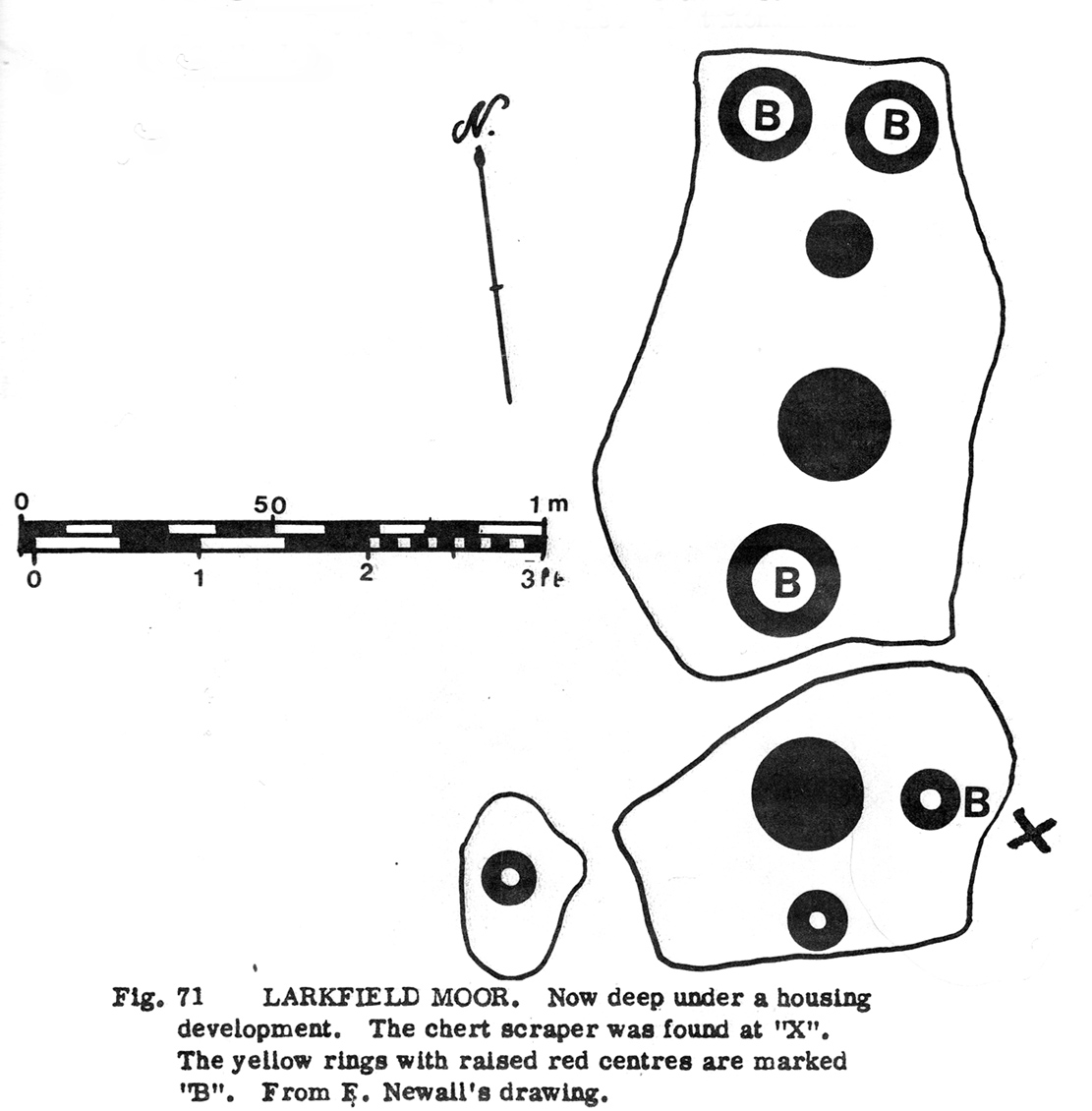
“A series of cup marks and one ring, worked in laminated sandstone (that) has been located on Larkfield Moor by Mr H.M. Sinclair. In several cases the outer edge of the cup has been deeply incised through yellow sandstone to leave a slightly raised boss of red sandstone at the centre.  From the side of the outcrop bearing the cups was recovered a chert scraper, doubly notched on one edge.”

Morris’ 1981 sketch

The “chert scraper” is marked on the adjacent diagram with an “X”.

Although this carving is described on the latest Canmore survey as being “possibly a freak geological formation”, we are best erring on the side of caution regarding their note.  The cup-marks on this stone were—as the illustration (right) shows—quite large, which is the reason for the geophysical suggestion.  However, the site was deemed to be authentic by the rock art authority R.W.B. Morris. (1981)  In his account of this petroglyph, Morris told of there being,

“6 rings up to 20cm (8in) diameters, cut so that they penetrated the next lower yellow sandstone layer; but in 4 cases having a ‘boss’ of red sandstone slightly raised in the middle, and also 3 cups. Greatest carving depth 1cm (½ in).”

References:

  1. Morris, Ronald W.B., “The Cup-and-Ring Marks and Similar Sculptures of South-West Scotland,” in Transactions of the Ancient Monuments Society, volume 14, 1967.
  2. Morris, Ronald W.B., The Prehistoric Rock Art of Southern Scotland, BAR: Oxford 1981.
  3. Morris, Ronald W.B. & Bailey, Douglas C., “The Cup-and-Ring Marks and Similar Sculptures of Southwestern Scotland: A Survey,” in Proceedings of the Society of Antiquaries, Scotland, volume 98, 1966.
  4. Newall, F., “Larkfield Moor,” in Discovery & Excavation, Scotland, 1960.

© Paul BennettThe Northern Antiquarian


Witch Tree, Aberuthven, Perthshire

Sacred Tree:  OS Grid Reference – NN 9621 1587

Getting Here

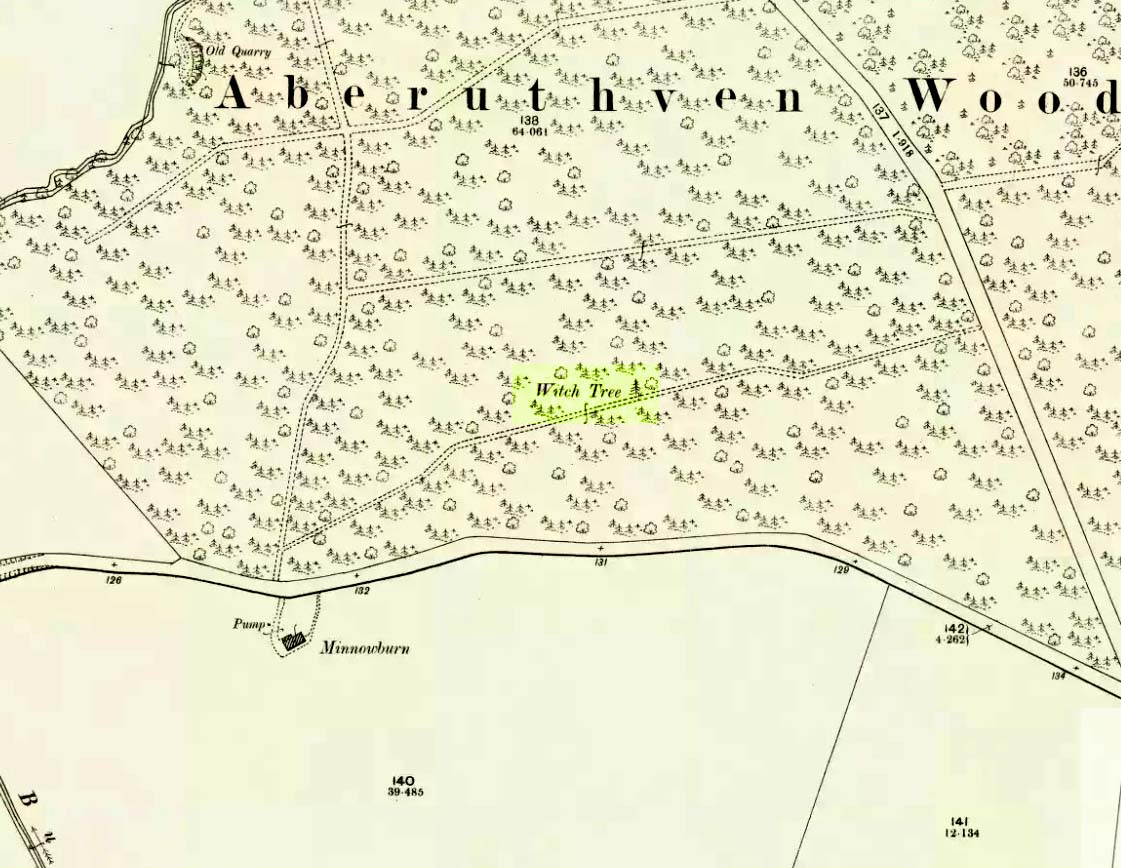
Witch Tree on 1901 OS-map

Witch Tree on 1901 OS-map

Just off the A9 between Stirling and Perth is Aberuthven village.  Down the Main Street and just south of the village, turn west along Mennieburn Road.  A half-mile on, just past Ballielands farm, you reach the woods.  Keep along the road for another half-mile, close to where the trees end and go through the gate where all the rocks are piled. Walk up to the tree-line 50 yards away and follow it along the line of the fence east, til it turns down the slope.  Naathen – over the barbed fence here, close to the corner, about 10 yards in, is the tree in question…

Archaeology & History

Witch Tree03

Looking along the fallen trunk

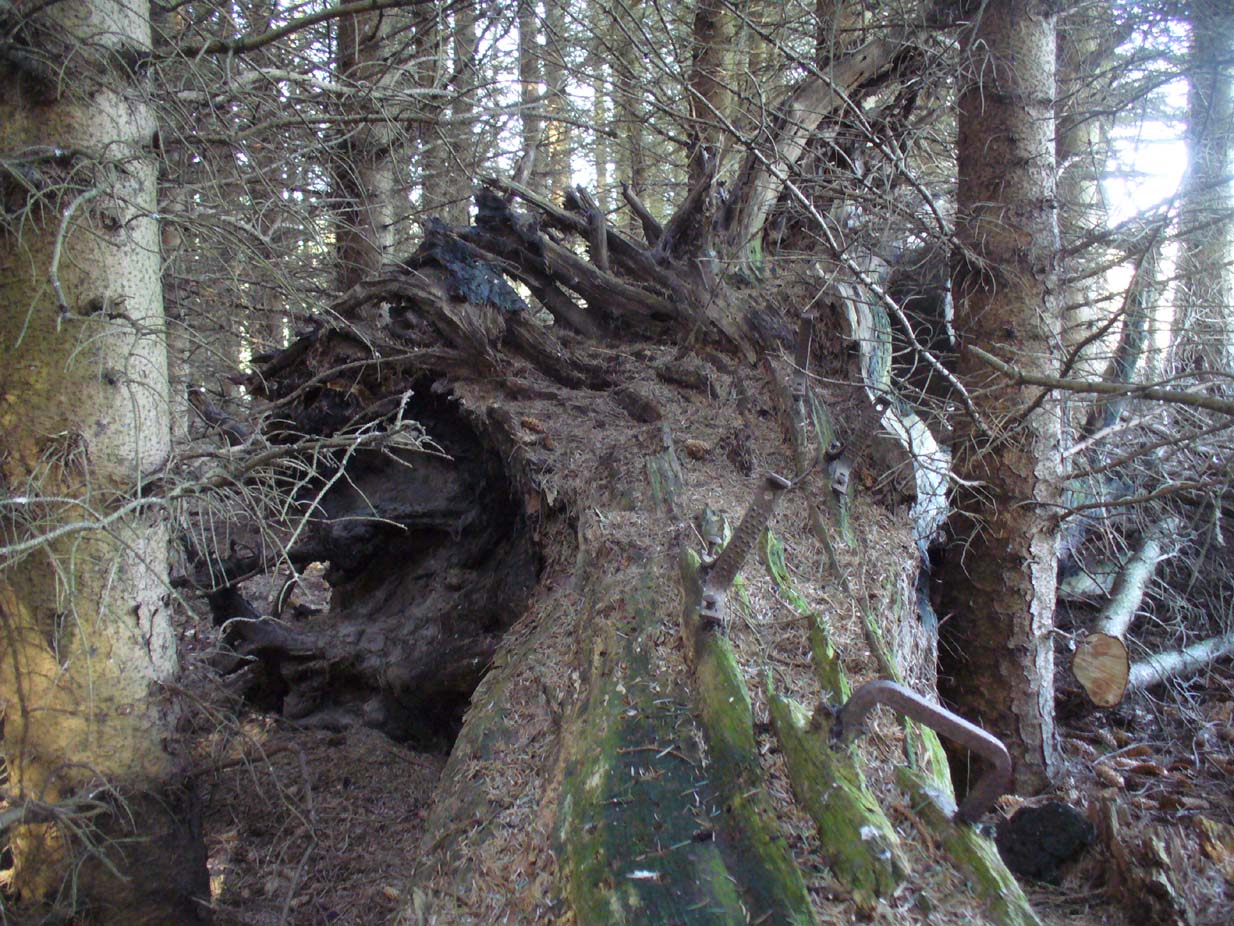
Laid down on the peaty earth, fallen perhaps fifty years ago or more, are the dying remains of this all-but forgotten Witch Tree.  To those of you who may strive to locate it—amidst the dense eye-poking branches of the surrounding Pinus monoculture—the curious feature on this dying tree are a number of old iron steps or pegs, from just above the large upturned roots.  About a dozen of them were hammered into the trunk some 100 years or more ago and, were it to stand upright again, reach perhaps 30 feet high or more.  These iron pegs give the impression of them being used to help someone climb the tree when it was upright; but their position on the trunk and the small distance between some of them shows that this was not their intention.  Their purpose on the tree is a puzzle to us (does anyone have any ideas?).

Embedded pieces or iron from roots...

Embedded iron from the roots

Embedded iron 30-40ft along

Embedded iron 30-40ft along

The fallen trunk has broken into two main sections, each with iron pegs in them.  The very top of the tree has almost completely been eaten back into the Earth.  Unfortunately too, all the bark has completely rotted away and so identifying the species of the tree is difficult (though I’m sure there are some hardcore botanists out there who’d be able to enlighten us).  The possibility that the early map-reference related to a Wych-elm (Ulmus glabra) cannot be discounted, although this would be most unusual for Ordnance officers to mistake such a tree species with a ‘witch’.  Local dialect, of course, may have been a contributing factor; but in Wilson’s (1915) detailed analysis of the regional dialect of this very area, “wych elm” for witches does not occur.  Added to this is the fact that the indigenous woodland that remains here is an almost glowing birchwood (Betula pendula) in which profusions of the shaman’s plant, Amanita muscaria, exceed.  There were no wych elms hereby.

The tree was noted by the Ordnance Survey team in 1899 and was published on their maps two years later, but we know nothing more about it.  Hence, we publish it here in the hope that someone might be able top throw some light on this historical site.

Folklore

Looking along the fallen trunk

Halfway along the fallen tree

We can find nothing specific to the tree; but all around the area there are a plethora of tales relating to witches (Hunter 1896; Reid 1899)—some with supposedly ‘factual’ written accounts (though much of them are make-believe projections of a very corrupt Church), whilst others are oral traditions with more realistic tendencies as they are rich in animistic content. One of them talks of the great mythical witch called Kate McNiven, generally of Monzie, nearly 8 miles northwest of here.  She came to possess a magickal ring which ended up being handed to the owners of Aberuthven House, not far from the Witch Tree, as their associates had tried to save her from the crazies in the Church.  This may have been one of the places where she and other witches met in bygone centuries, to avoid the psychiatric prying eyes of christendom.

Until the emergence of the Industrialists, trees possessed a truly fascinating and important history, integral to that of humans: not as ‘commodities’ in the modern depersonalized religion of Economics, but (amongst other things) as moot points—gathering places where tribal meetings, council meetings and courts were held. (Gomme 1880)  The practice occurred all over the world and trees were understood as living creatures, sacred and an integral part of society.  The Witch Tree of Aberuthven may have been just such a site—where the local farmers, peasants, wise women and village people held their traditional gatherings and rites.  It is now all but gone…

References:

  1. Gomme, Laurence, Primitive Folk-Moots, Sampson Lowe: London 1880.
  2. Hunter, John, Chronicles of Strathearn, David Philips: Crieff 1896.
  3. Reid, Alexander George, The Annals of Auchterarder and Memorials of Strathearn, Davdi Philips: Crieff 1899.
  4. Wilson, James, Lowland Scotch as Spoken in the Lower Strathearn District of Scotland, Oxford University Press 1915.

© Paul BennettThe Northern Antiquarian


Well of the Mosses, Glen Almond, Perthshire

Healing Well:  OS Grid Reference – NN 82865 33096

Getting Here

Spring of the Mosses

Spring of the Mosses

Take the dirt-track up Glen Almond for 3½ miles until you reach the standing stone of Clach an Tiompan.  The giant long cairn of the same name is just above the track on the other side.  Walk past this and start walking uphill, diagonally, until a few hundred yards up, a ridge levels out with some unrecorded habitation sites upon it.  The clear waters of this spring are on the eastern edge of this ridge.

Archaeology & History

A little-known spring of water found on the slopes immediately above the giant Clach an Tiompan long cairn.  Beautifully clear water emerges from beneath a large rock that rests by an ancient pathway running across the mountain-slope, used by the local people who lived here before the genocide of The Clearances.  When we visited the place recently, the waters were low, but still running, and the mosses which reach along the length of the burn were almost iridescent in the evening sunlight.

The living glows of moss & water

The living glows of moss & water

Looking upstream to its source

Looking upstream to its source

Upon drinking here, there was that subtle sweetness to the waters, typical of many moss-clad sites, indicating it to have that typical medicinal virtue as a place to renew or revitalise your low-sugar energies after you’ve finished your meditation and rest, gazing within the enchanting mountains in which you are being held.  It’s a truly wonderful little site!

© Paul BennettThe Northern Antiquarian


Tombreck (10), Kenmore, Perthshire

Cup-Marked Stone:  OS Grid Reference – NN 65042 37559

Getting Here

Tombreck's cup-marked stone

Tombreck’s cup-marked stone

Along the A827 north road around Loch Tay, between Killin and Kenmore, a few hundred yards east of Carie—and on the same side of the road—there’s a dirt-track down to the Tombreck community.  Go into it and just past The Big Shed you’ll see the small caravan where the helpful and friendly Gabriela lives.  The stone just in front of her caravan is the one you’re looking for!

Archaeology & History

Close-up of the cups

Close-up of the cups

Although this cup-marked rock has been known about for sometime by local people, it is one of many that are not in the archaeological record.  It’s nothing like as impressive as some of its petroglyphic neighbours on the slopes of Ben Lawers, as this simple carving comprises of two well-defined simple cup-marks, and another two that appear to have been worked slightly into natural cracks in the rock.  These two remain incomplete.  It’s nothing too special to look at and is, once again, only gonna be of interest to the petroglyphic purists amongst you.

© Paul BennettThe Northern Antiquarian


Tombreck (08), Kenmore, Perthshire

Cup-Marked Stone:  OS Grid Reference – NN 64795 38648

Getting Here

Tombreck (8) on its mound

Along the A827 road between Killin and Kenmore, park at the entrance to the Tombreck track and cross the road, walking up the track heading up Ben Lawers.  Pass the sheep pens, through the gate and keep going for a few hundred yards until you hit the old straight line of walling which runs off east into the pine trees a few hundred yards away. Walk along here, keeping to the south side, for less than 100 yards, watching out for a small stone on a small rise on a small hillock – and make sure your eyes are in good condition!

Archaeology & History

The stone in question

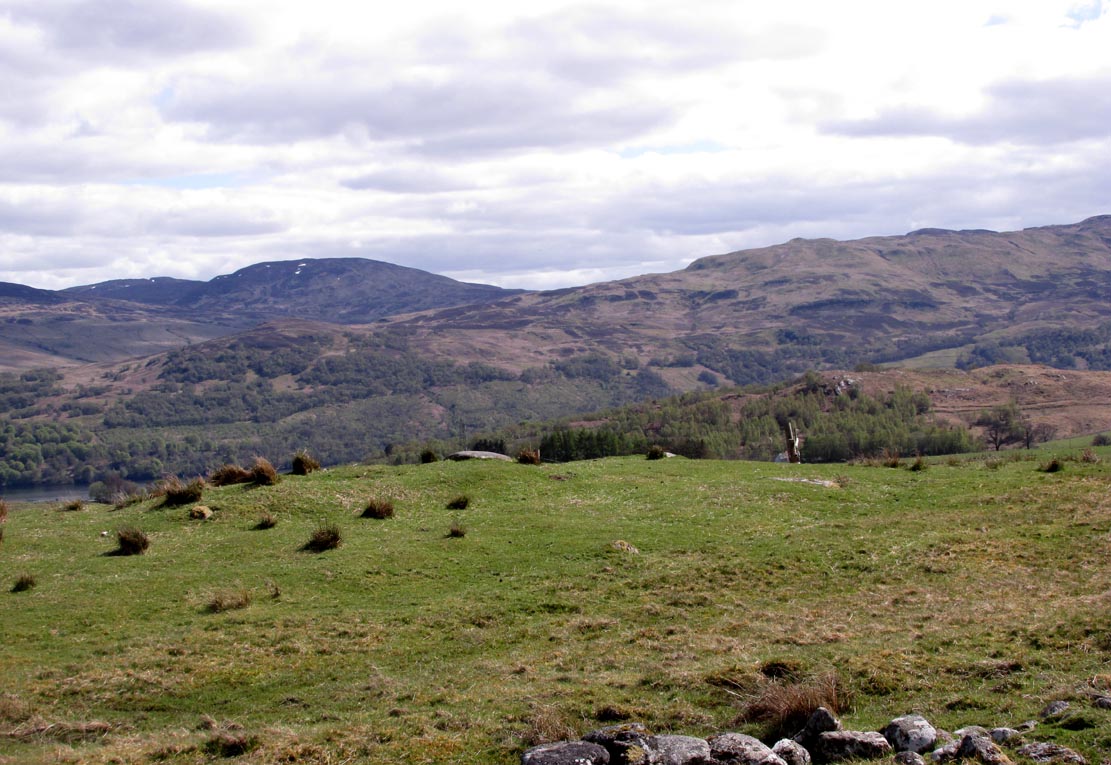
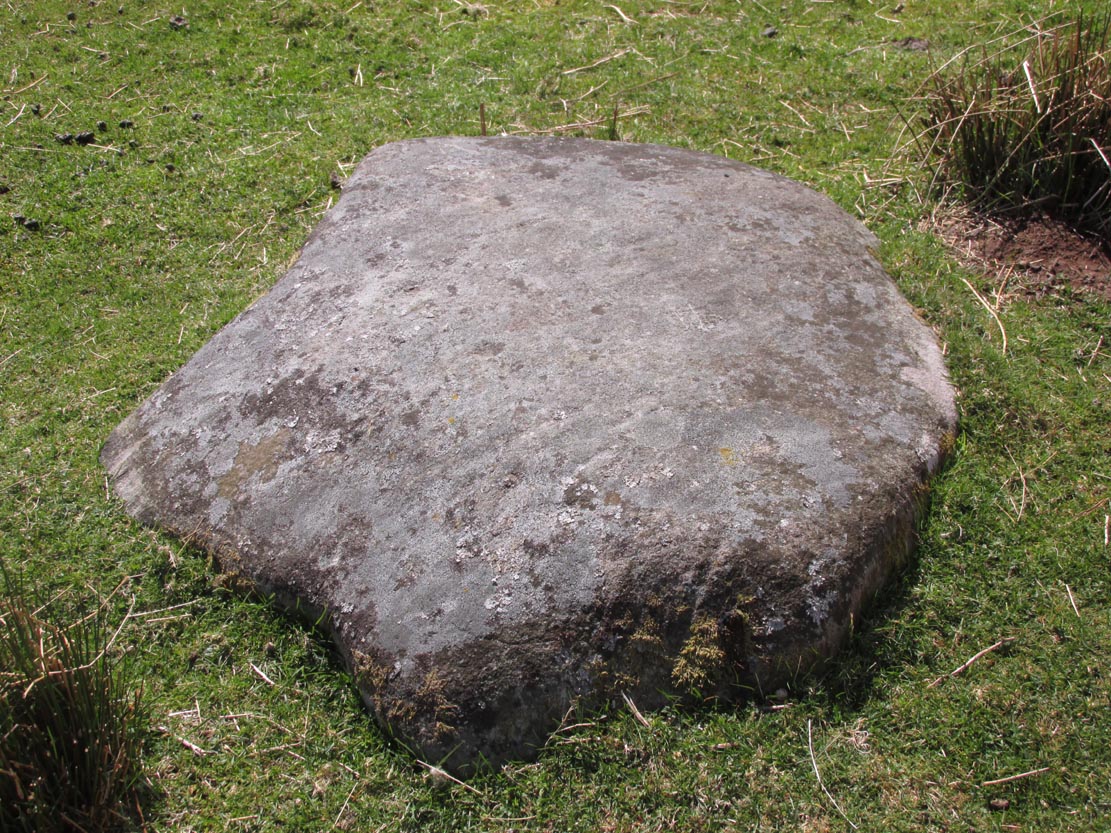
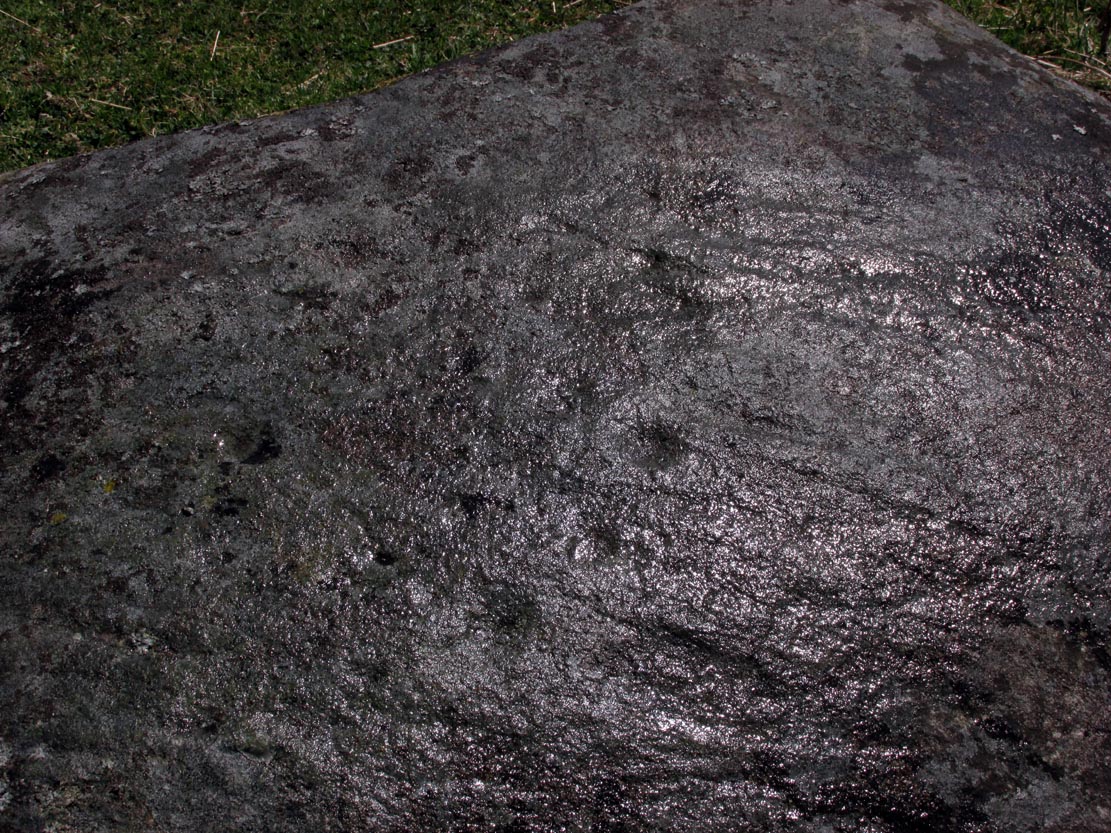
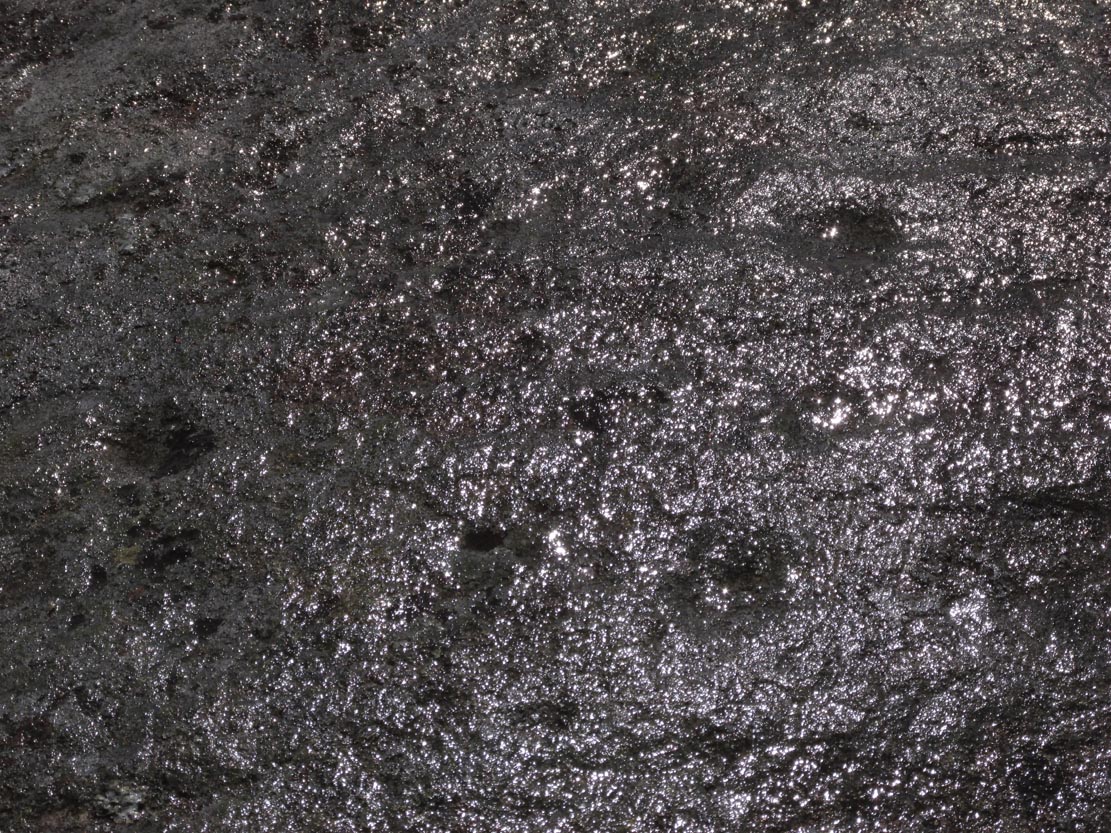
This is a seemingly unrecorded cup-marked stone, with very faint petroglyphic evidences just visible on the surface.  Set within the wider surrounds of more recent enclosure walling, this is a small slightly raised female (rounded, smooth) stone, roughly three feet in diameter, which has at least five cup-markings on its surface—mainly near the middle of the stone.  The rock itself is next to the western edge of a raised man-made feature, reminiscent of a collapsed denuded cairn or hut circle, which itself has not been archaeologically assessed.  It is one of a number of petroglyphs in relative proximity to each other on the geological ridge above Loch Tay (not visible from here).

Close-up of faint cups
Closer-up of faint cups

As you can see in the photos left and right, the cups are only truly visible when the stone has been wet.  Initially I thought that this carving may have been one that was mentioned briefly in George Currie’s (2009) notes—at NN 64736 38647, 62 (57m) yards to the east—but it doesn’t seem to be the case as the grid reference he cited differs from this.  There are going to be a number of other unrecorded carvings scattered about beneath the great shadow of Ben Lawers…

References:

  1. Currie, George, “Cup-and-Ring Marked Rocks,” in Discovery & Excavation, Scotland, volume 10, 2009.

Acknowledgements:  Huge thanks to Paul Hornby for the use of his photos in this site profile; and to Lisa Samson, for her landscape detective work at the site.

© Paul BennettThe Northern Antiquarian


Tombreck (07), Ben Lawers, Kenmore, Perthshire

Cup-Marked Stone:  OS Grid Reference – NN 65022 38285

Also Known as:

  1. Canmore ID 238573

Getting Here

Tombreck 7 carving, beneath Ben Lawers

Tombreck 7 carving, beneath Ben Lawers

Take the A827 road that runs alongside Loch Tay between Killin and Kenmore, and about 6 miles from Killin watch out for the signposts for The Big Shed.  Stop and walk NW up the track across the road from there, up toward Ben Lawers.  Several hundred yards up, past the sheep-fold on the left-side of the track, a line of ruinous walling runs straight over the grasslands. Walk along here until it meets with the next walling that runs uphill.  Look down into where the wall has collapsed.  It’s under your nose!

Archaeology & History

This is a fascinating and pretty impressive example of a simple cup-marked stone.  It’s the design that does it I suppose – similar in some ways to the well-known Idol Stone carving on my old playground of Ilkley Moor (that’s what this one reminded me of when I first clapped eyes on it)—but much better!

Lines of cups from above

Lines of cups from above

The carving from the east

The carving from the east

Its similarity lies in the series of parallel rows of cup-marks running very close together along the line of the low-lying rock, found at the base of some ancient walling that runs up the mountain for several hundred yards.  Not only that, but the line of walling itself also has a parallel line of walling running adjacent for the same distance up the mountainside — more than half-a-mile from start to finish.  This “parallel” feature of walling and cup-markings is a curious coincidence, perhaps.  But certainly the linearity of the cup-marks was itself a very deliberate feature by the person who carved it, representing something ‘structural’, in whatever mythic form that may have been!

The carving in its walling

The carving in its walling

Of the rows of cups constituting this petroglyph, four of them run completely from one side of the stone to the other, rough north to south; with four other shorter rows running only halfway across the rock surface.  Altogether there are perhaps seventy cups etched onto the rock.  No rings or semi-circles of any form were visible in our visit here—although the skies were grey and overcast, making any decent visual analysis more difficult.

A damn good carving and well worth checking out by anyone into prehistoric rock art!

© Paul BennettThe Northern Antiquarian


Shealwalls Enclosure, Alyth, Perthshire

Enclosure:  OS Grid reference – NO 23922 51484  —  NEW FIND

Getting Here

Aerial view of the oval, at centre

Aerial view of the oval, at centre

Take the B954 north out of the Alyth, up through the hills.  After just over 2 miles (3km), take the left turn up to Bamff.  Go along here and past the copse of trees on your right for literally three-quarters of a mile (1.2km), where a gate takes you into the overgrown meadows on your right.  Walk back on yourself for about 100 yards or more, across the boggy stream and up the slope.  The embankments of this enclosure are right under nose!

Archaeology & History

Some 70 yards west of the little four-poster ‘stone circle’ of Shealwalls, is this previously unrecorded enclosure.  Oval in shape and well-defined at ground level, the great majority of the inside of this enclosure is relatively even and flat.  Around its perimeter there are, at intervals, a number of small stones defining its edges along its internal embankment, but these are intermittent and seem to have no deliberate architectural regularity: they may simply be elements of an internal raised platform that have become visible due to erosion processes.

Northwest section of ditch

Northwest section of ditch

At its greatest width from the edges of the outer ditch to outer ditch, the enclosure measures more than 22 yards (20.3m) east-west, and at its longest it is 30 yards (27.3m) north-south.  The circumference of the enclosure is between 88-89 yards (80m).  The average width of the surrounding or enclosing ‘ditch’ is between 2 and 2½ yards (2m) and it has a depth of no more than 2 feet all round.  All along the southern side, very little remains of the ditch and in sections it has been eaten into by foraging rabbits and cattle.  The most conspicuous section of the surrounding ditch and embankment is along the eastern length (where it gives the impression of being hengi-form in nature); the more rounded northern section of the ditch is very distinct, but is overgrown in Juncus reeds; whilst the western section of the ditch is clear until reaching its southernmost part, where its outer edges become less visible.

SW edge of enclosure

SW edge of enclosure

NE arc of ditch, looking west

NE arc of ditch, looking west

There seemed to be no visible structures within the enclosure itself, which added to my thoughts that the site was hengi-form in nature, as defined in the surveys by A.F. Harding (1987) and Jan Harding (2006).  However, it is best to maintain a simple description regarding the nature of the site until archaeological evaluation can give us a more accurate assessment.  Without excavation it is obviously impossible to give an accurate idea of its age, but its architectural form and similarity with other enclosures would seem to place its construction in the late Bronze Age to early Iron Age period.

The monument proved very difficult to photograph with any success as it is much overgrown and the bright sun was in the wrong place! (serious) So, another visit is needed in the hope that we can get better images.  A fascinating little site!

References:

  1. Harding, A.F., Henge Monuments and Related Sites of Great Britain, BAR 175: Oxford 1987.
  2. Harding, Jan, The Henge Monuments of the British Isles, Tempus: Stroud 2006.

© Paul BennettThe Northern Antiquarian


St. Euchan’s Well, Collace, Perthshire

Holy Well (destroyed): OS Grid Reference – NO 1997 3297

Also Known as :

  1. Canmore ID 28605
  2. St Deuchan’s Well 
  3. St Teuchan’s Well
  4. St Ukan’s Well

Getting Here

The site of the well is on the north side of the road between Saucher and Collace, just past the small stand of trees.

Archaeology and History

s. euchans map 1860s

The site shown on the 1867 OS 25″ map

Nothing now remains of the well, but across the road on the strip of grass leading to the burn there is patchy Cotton Grass growth, evidence of the vestigial flow of the spring. A nearby water pumping station on the same side of the road as the former well is probably responsible for the spring well’s demise.

IMG_6737

The site of the Well

There may have been a nearby chapel dedicated to the Saint, of which no trace remains, and in the 1860s, the Ordnance Survey recorded “A few yards from the site of the chapel there is an excellent spring well by the name of  ‘St Teuchan’s Well.’”  The Ordnance Survey further recorded “Mr James Stewart, Kinrossie,… supposes [the Saint’s name] to be a corruption from St Vigean’s. Ukans appears to be the common pronunciation, and the T or D of the authorities being silent the spelling Euchans will…answer either of them.”

IMG_6738

Across the road from the Well, Cotton Grass provides evidence of the vestigial flow of the spring.

Saint Euchan was made the titular or patron Saint of Collace by Bishop de Bernham in 1242. The exact identity of the Saint is unclear but he is believed to be the Irish Saint Eoghan, the son of Caennach of Leinster who was ‘carried off in his early youth by pirates to Britain’ later spending some years at Whithorn, before returning to Ireland, where he became the master of St Kevin at Kilnamanach, the monastery he founded in County Wicklow, and Bishop of Ardstraw, County Tyrone.  His saint’s day is August 23rd. As there seems to be some doubt as to the Saint’s true identity it is perhaps worth mentioning that Euken is a Basque man’s first name, but this is almost certainly coincidence.

Folklore

The well was at one time believed to have had healing properties.

References:

  1. Forbes, Alexander Penrose, Kalendars of Scottish Saints, Edmonston and Douglas: Edinburgh 1872.
  2. Collace Parish Millenium Committee, Off The Main Road, Kinrossie District Recreation Club, 2010
  3. Scotland’s Place Names
  4. Gizonezkoen ponte-izenak (Basque Men’s Names) – Euskaltzaindia, Bilbao 2015.

© Paul T Hornby 2016 The Northern Antiquarian

Samson’s Stone, Crieff, Perthshire

Legendary Rock:  OS Grid Reference – NN 82519 22021

Also Known as:

  1. Canmore ID 96866

Getting Here

Samson Stone on 1866 map

Samson Stone on 1866 map

Tale the A85 road between Comrie and Crieff and, roughly halfway between the two towns, take the minor road south to Strowan (it’s easily missed, so be aware!).  A few hundred yards along, stop where the trees begin and walk into the fields immediately east.  Keep walking, below the line of the trees, and you’ll get to it within five minutes.

Archaeology & History

Samson's Stone, looking east

Samson’s Stone, looking east

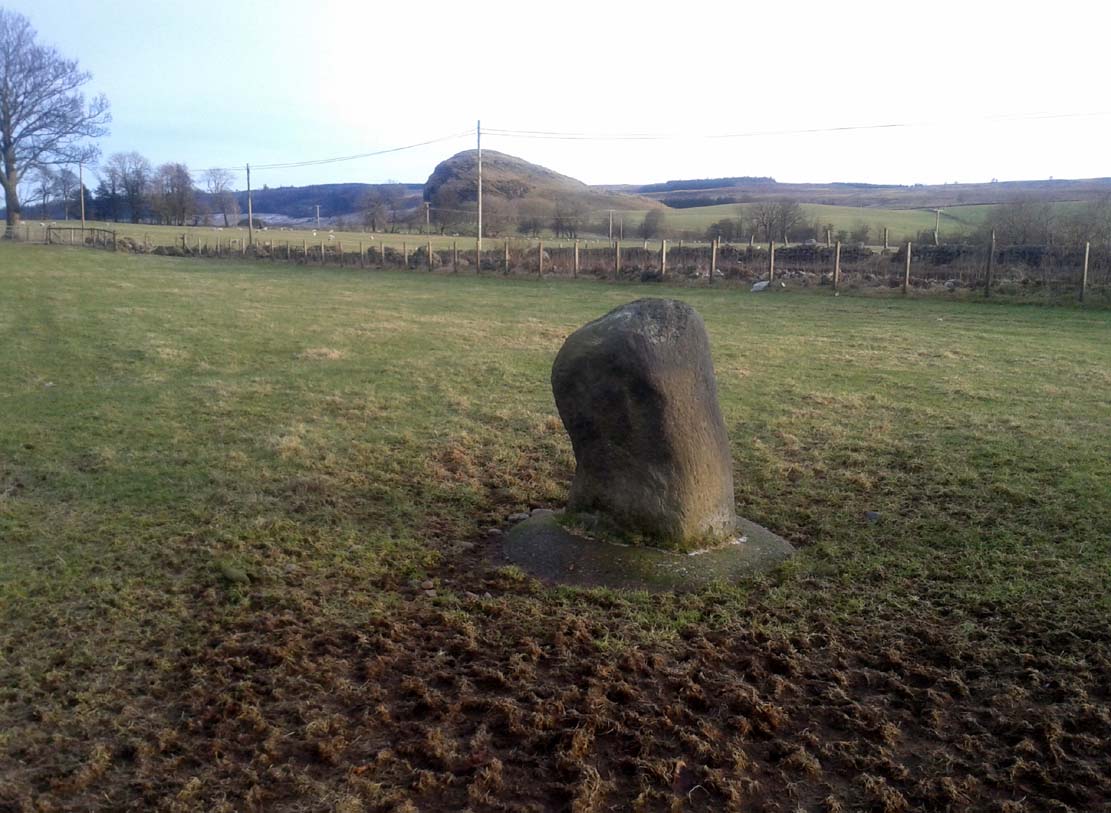
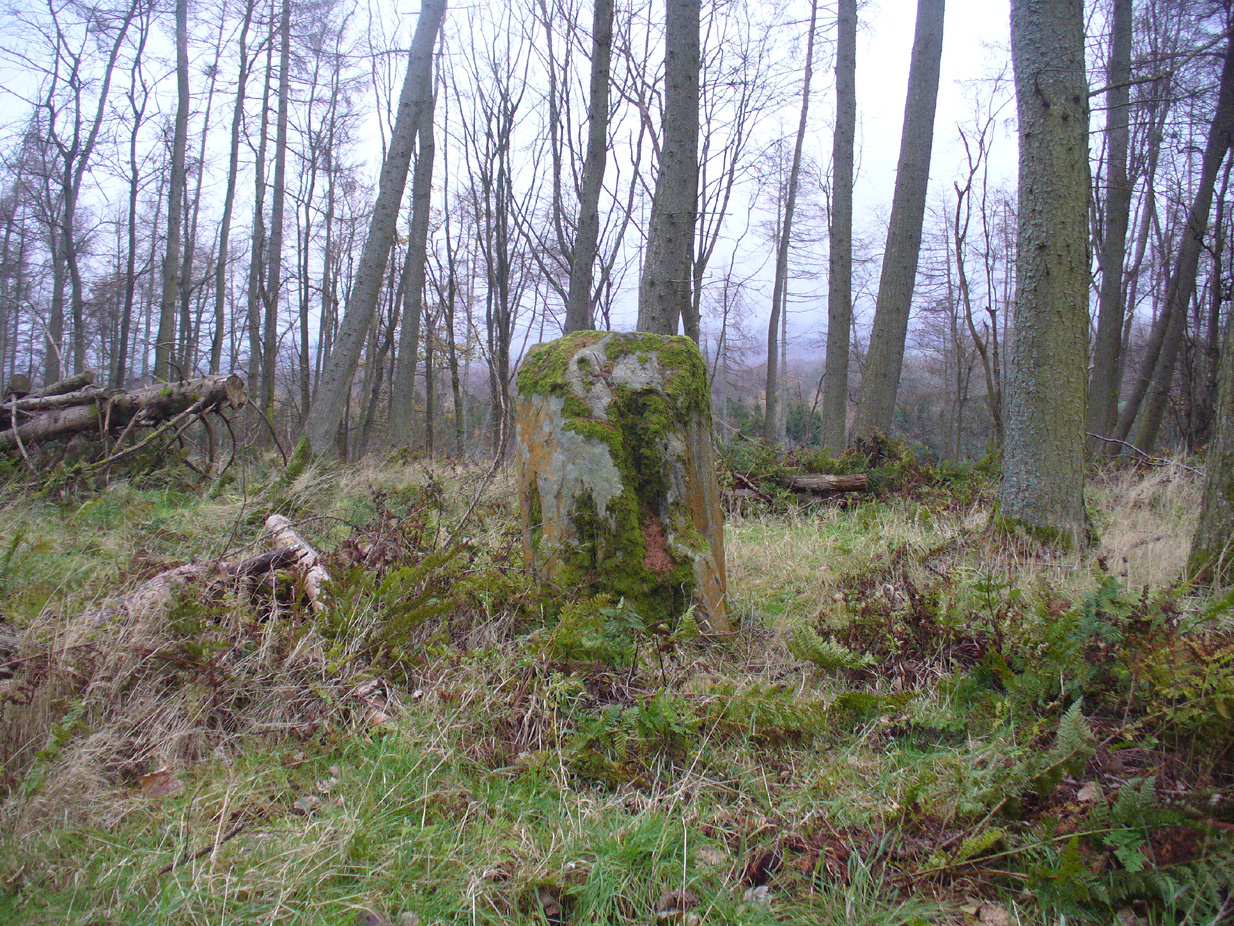
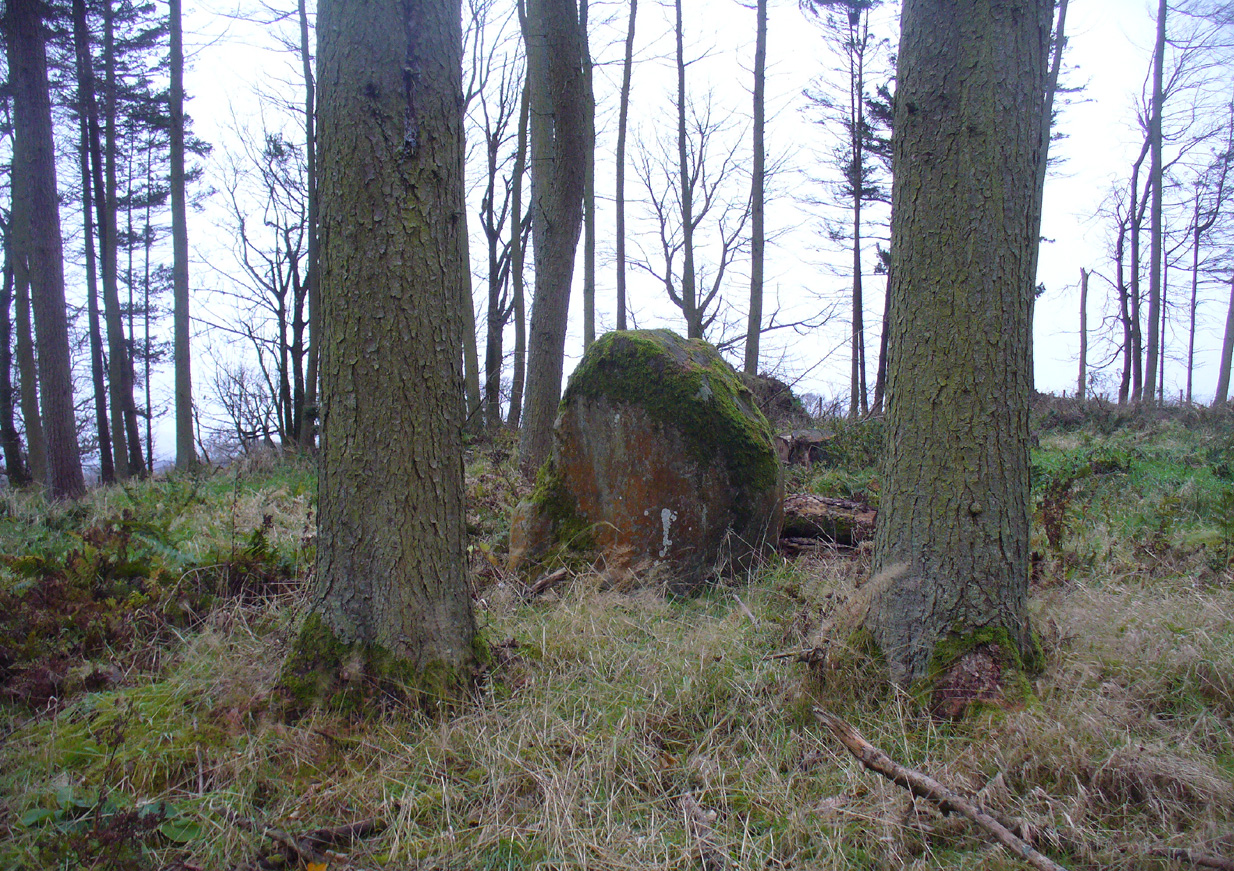
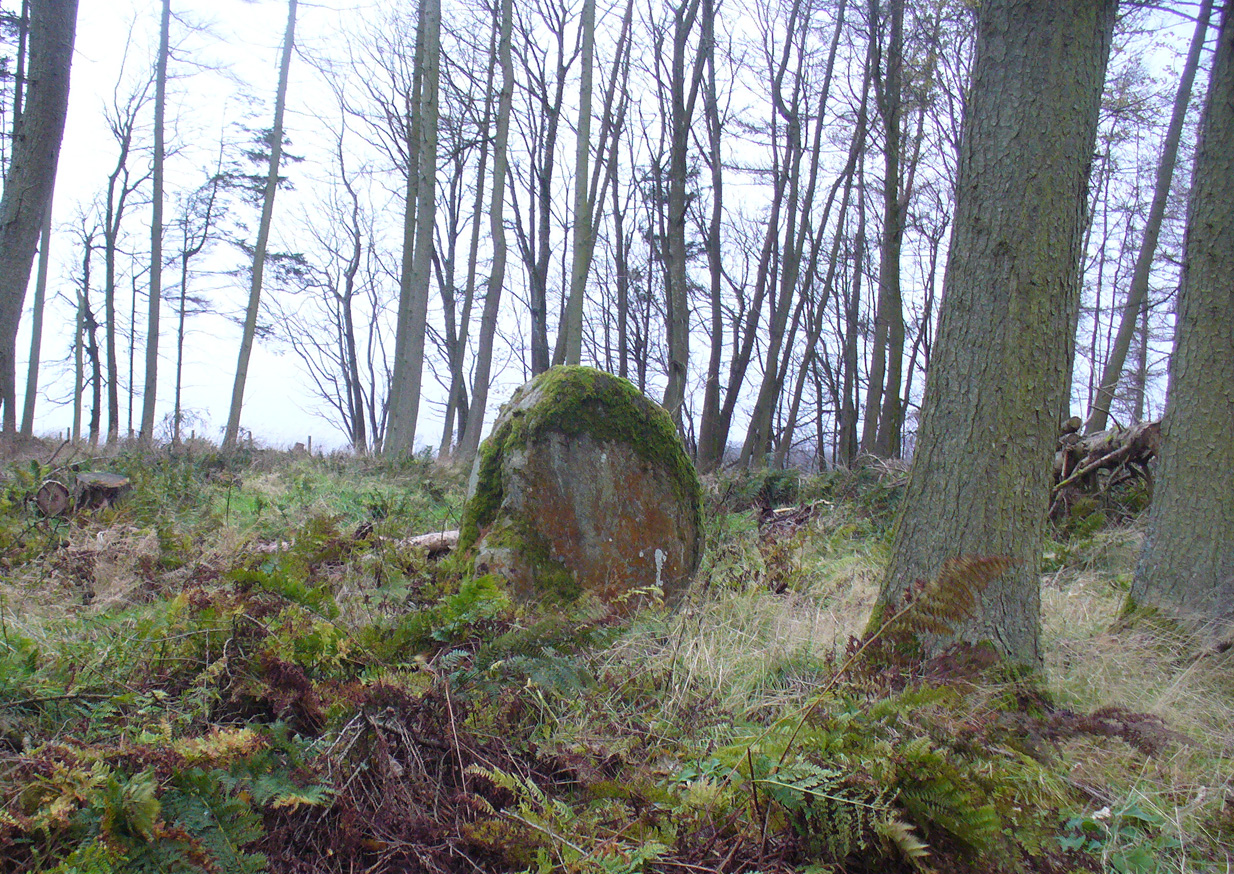
Mistakenly cited by some as a standing stone, the large boulder which rests here on the hillside just below the woodland is a glacial erratic.  Highlighted on the 1866 OS-map of the region, I hoped that we might find some rock art on the stone, but cup-and-rings there were none.  However, there is a curious ‘footprint’ on top of it, similar to the ones found at Dunnad, at Murlaganmore and other places (see Bord 2004); but I can find no previous reference to this carved footprint.

'Footprint' on top of stone

‘Footprint’ on top of stone

In 1863 the site was described in the local Name Book, where it was reported to be “a large oblong shaped stone lying on the surface, eight feet long, four wide, and three thick”; but, much like today, it was also reported that “There is no tradition respecting it in the neighbourhood. Supposed to have received the name in consequence of its great size.”

Most peculiar…..

References:

  1. Bord, Janet, Footprints in Stone, Heart of Albion Press 2004.

© Paul BennettThe Northern Antiquarian