Tabar Ruadh, Heaste, Skye

Healing Well:  OS Grid Reference – NG 66091 19694

Also Known as:

  1. Chalybeate Well

Archaeology & History

Chalybeate Well, Heaste road

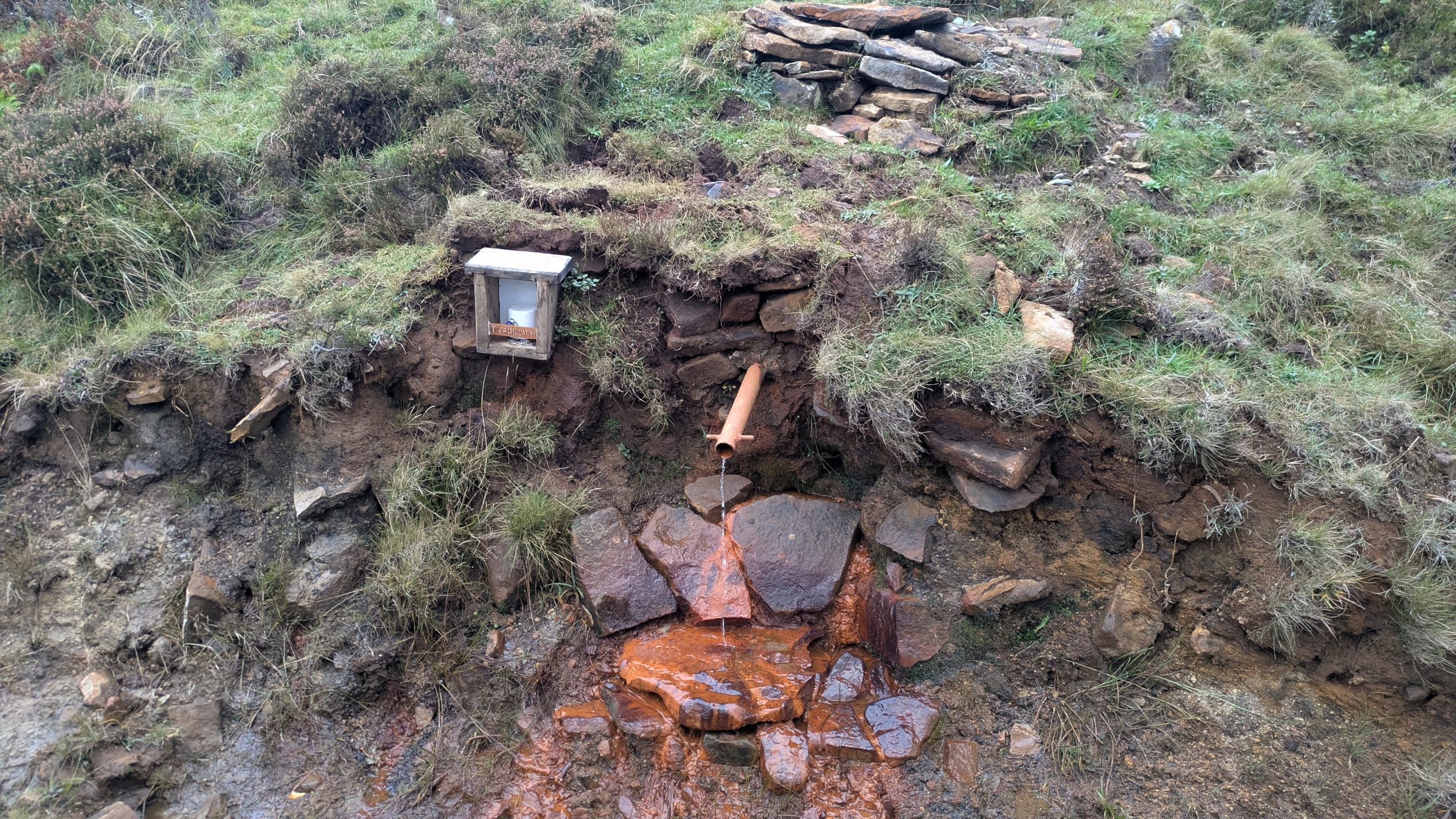
Highlighted on the earliest Ordnance Survey maps of the island, roughly halfway along the Broadford to Heaste road on the right (west) side you will come across the Tabar Ruadh (Gaelic for “Red Well”).  For many generations at this point was a Chalybeate well where villagers would stop and drink in a pewter mug from outlet of cast iron pipe which connected to the stone well some nine feet from the road.  It was a major stopping point for their horses and ponies to take a drink too.

This set up was functioning in the early 1980’s.  At that time I talked to Heaste locals who remembered fishermen from their village taking bottles of this water to pregnant women in the village of Elgol.  It was known then for it’s healing properties; this was the early 20th century.  The pewter mug was stolen and with road widening and the pipe removed, the site was becoming increasingly overgrown and in danger of being lost for ever.
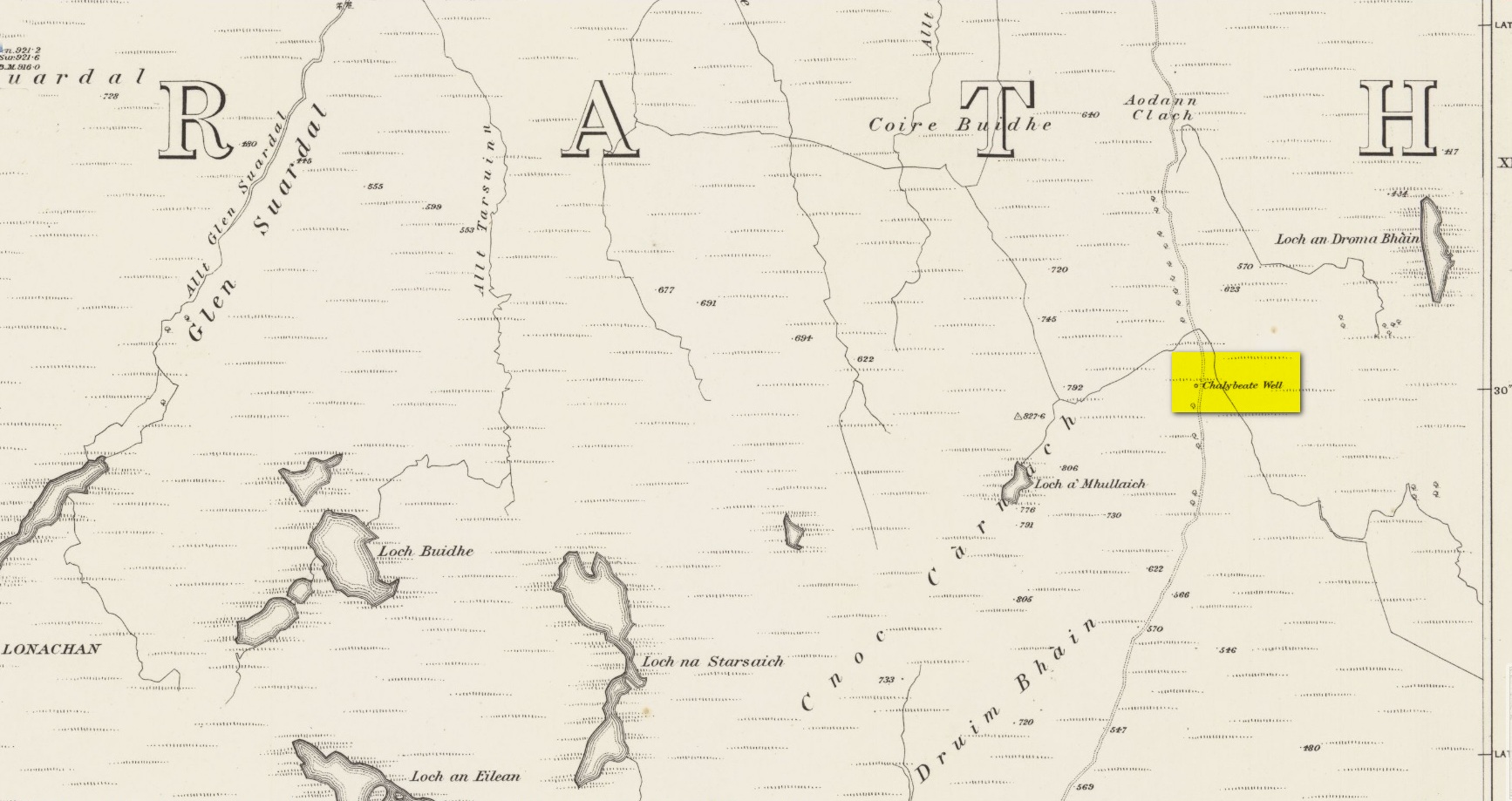
Site shown on 1881 map
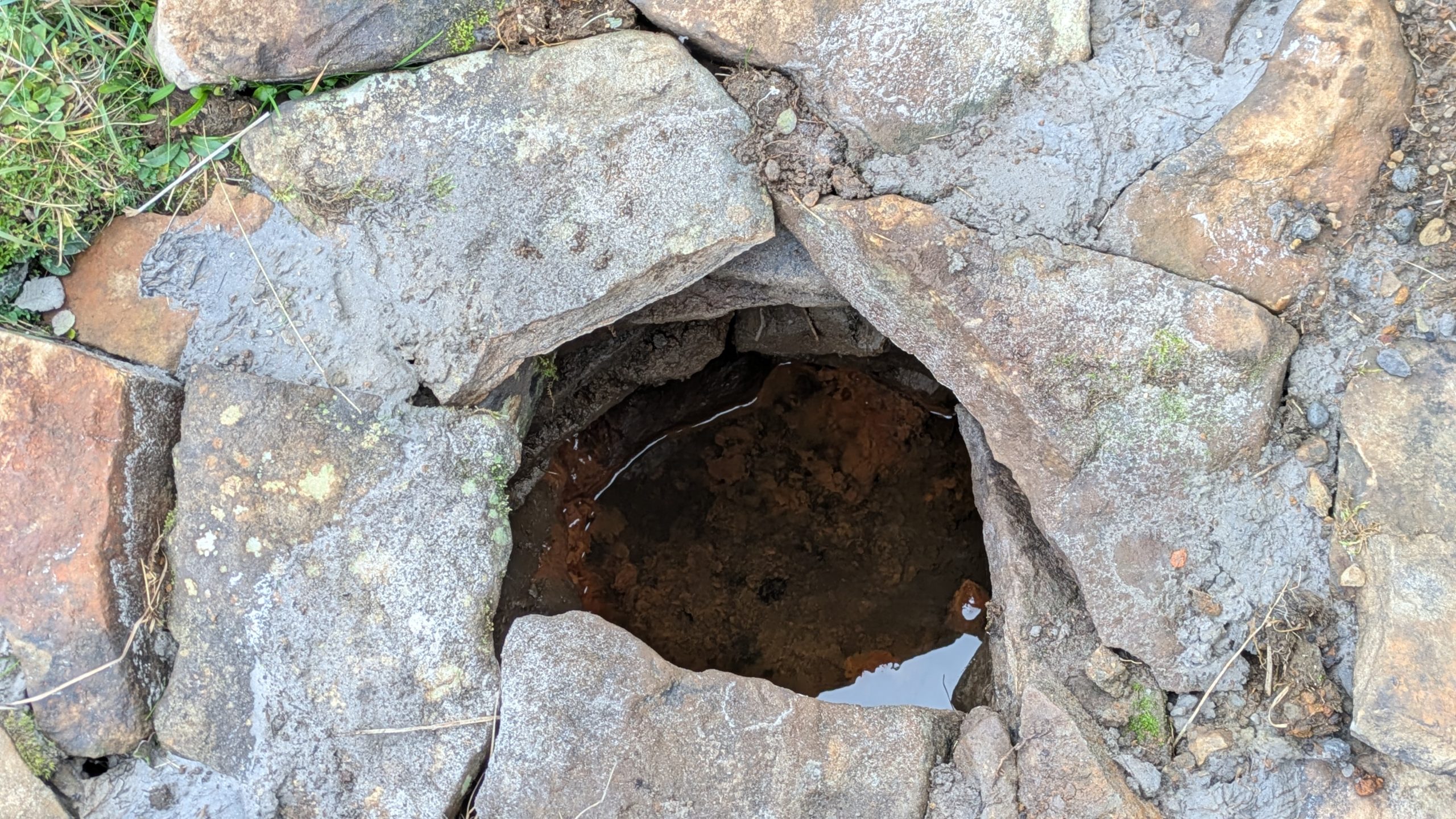
Water under the well cover

For the last fifteen years I have been walking this road and had made it a determination to find this well.  Success this summer! — and the hidden overgrown well was cleaned out a new steel pipe added.  Chalybeate water now flows and a wooden box is at the roadside with a tin mug.  On a wet roadside ditch this red water is very obvious where it joins the road.

Acknowledgements:  Huge thanks for use of the Ordnance Survey map in this site profile, reproduced with the kind permission of the National Library of Scotland

© John Gilbertson, The Northern Antiquarian
King’s Ring Well, Enfield, Middlesex

Healing Well (destroyed):  OS Grid Reference – TQ 3496 9623

Also Known as:

  1. King Ring Well
  2. Tim Ringer’s Well

Archaeology & History

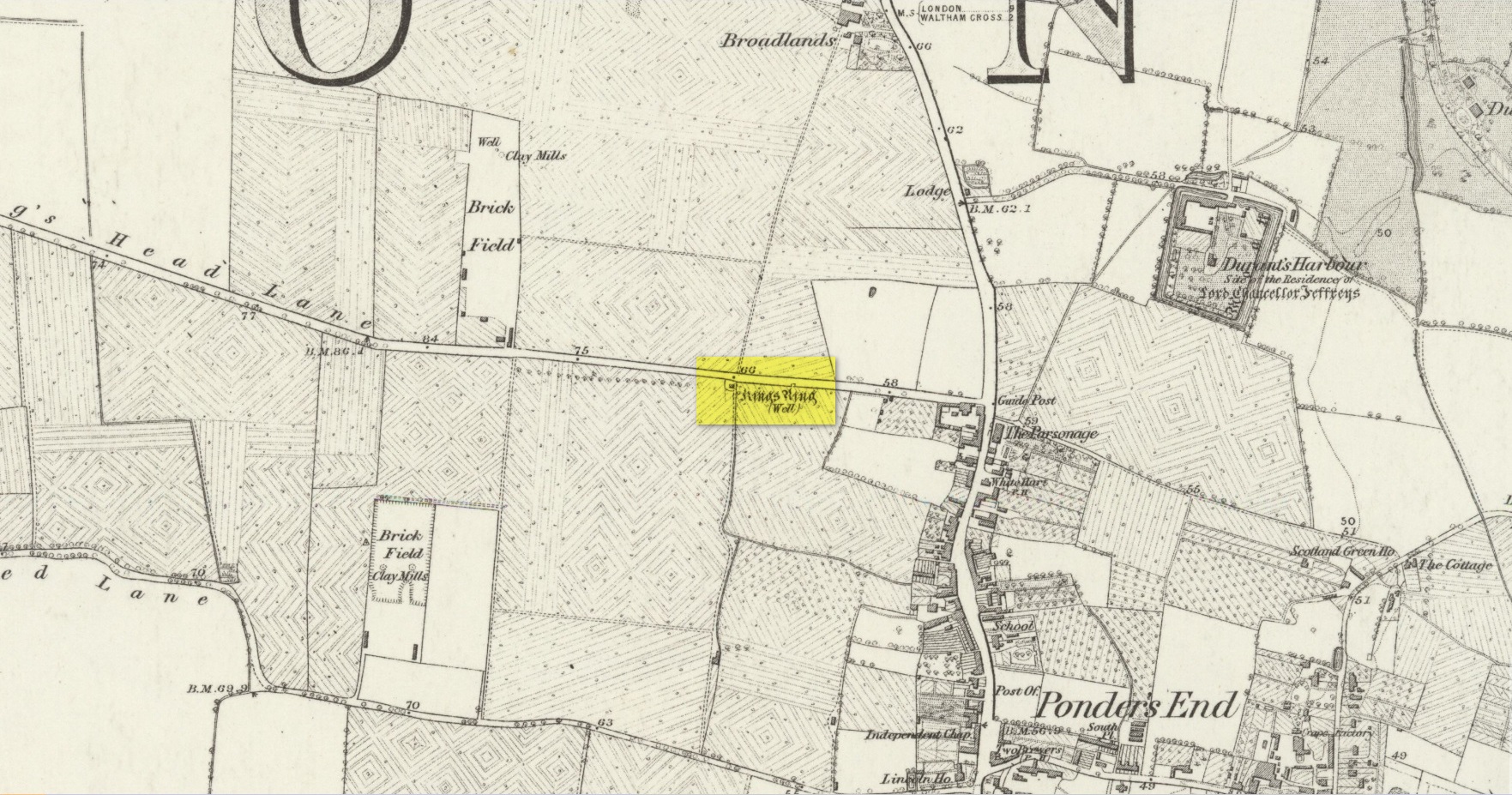
Site shown on 1879 map

Highlighted on the 1879 Ordnance Survey map, on the south-side of Southbury Road close to Ponders End, this curiously-named water source has a somewhat mundane history to it.  It’s likely that an old stone conduit that was shown on John Ogilby’s 1698 road map of the area is the King’s Ring Well—although it hadn’t acquired that name at the time.  It was described for the first time in Robinson’s (1823) classic work, located “on the south side of Gouldsdown-lane,”—which later became known as Nag’s Head Lane and today is Southbury Road.  Anyhow, he continued telling us that here,

“there is a moat dividing two square fields.  In the first there are remains of stables, barns, &c. and hollows, as of vaults, among the trees.  There is a deep well, bricked, called “King Ring” or “Tim Ringer well,” (Timothy Ring was an opulent farmer who occupied the lands; and it is supposed from his arrogant manner obtained the nic-name of “King Ring.”) whose spring, it is said, never freezes nor dries up, and the water is esteemed very efficacious in disorders of the eyes.”

Robinson noted that the local drovers, “who from being so much exposed to the dust are subject to sore eyes, frequently turn up the lane to use the water, and there have been instances of children being cured of sore eyes by it after the measles.”  He also alluded to a tradition that a religious house or convent once stood hereby, although he never obtained accurate information to prove his idea.  If that was the case, the site may have been a holy well.  The medicinal properties of the waters were repeated in Lewis’ Topographical Dictionary (1848); and again in Hodson & Ford’s (1873) subsequent survey of Enfield, emphasizing that it was “considered infallible as a remedy for inflammation of the eyes.”  Sadly the well has long since been destroyed.

References:

  1. Hodson, George H. & Ford, Edward, A History of Enfield in the County of Middlesex, J.H. Meyers: Enfield 1873.
  2. Hope, Robert Charles, Legendary Lore of the Holy Wells of England, Elliott Stock: London 1893.
  3. Robinson, William, The History and Antiquities of Enfield – volume 1, John Nichols: London 1823.

Acknowledgements:  Huge thanks for use of the Ordnance Survey map in this site profile, reproduced with the kind permission of the National Library of Scotland

© Paul BennettThe Northern Antiquarian

Acrehowe Well, Baildon Moor, West Yorkshire

Healing Well:  OS Grid Reference – SE 14733 40596

Also Known as:

  1. Acre Well

Archaeology & History

Up there, in the rushes…

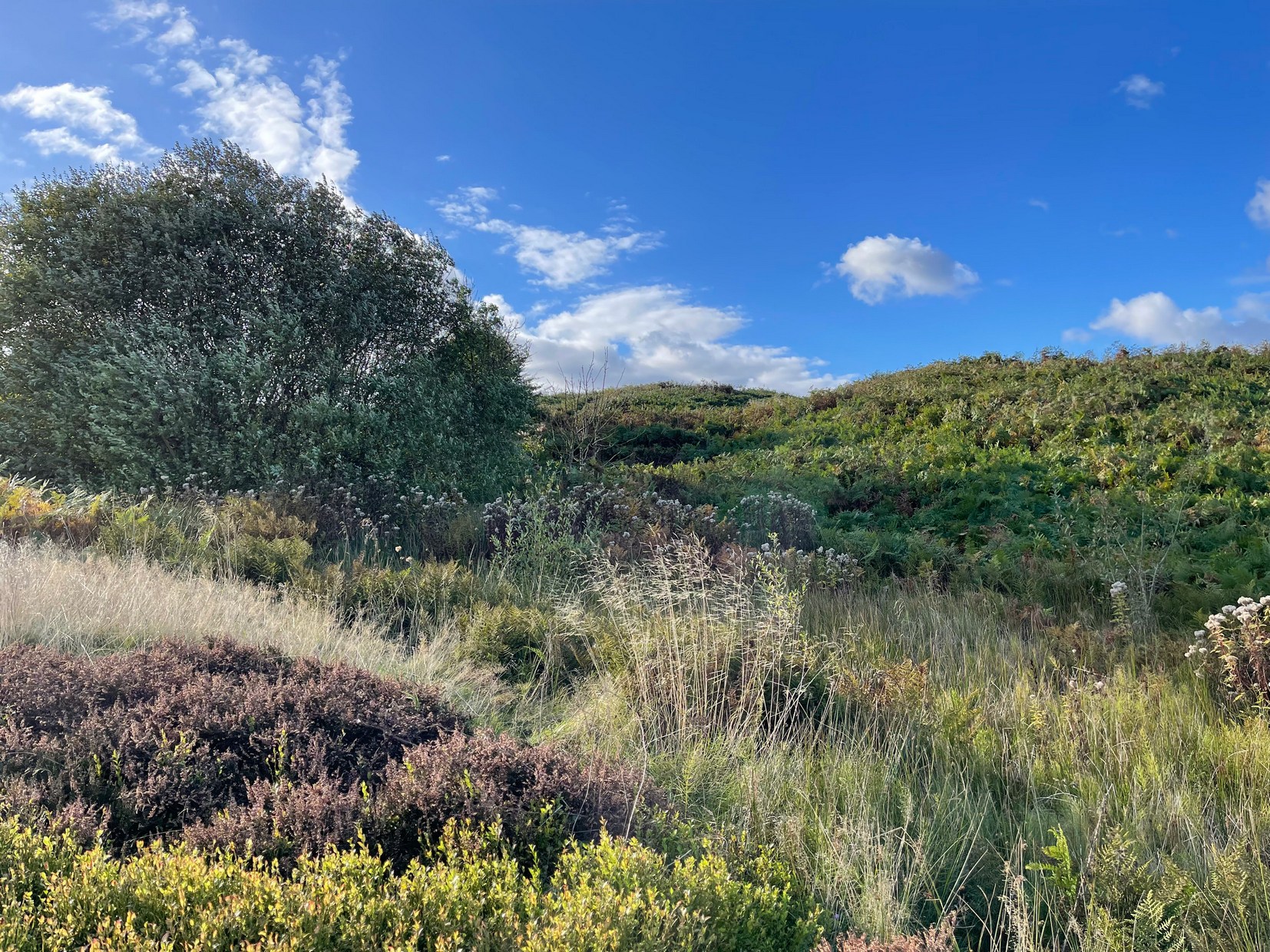
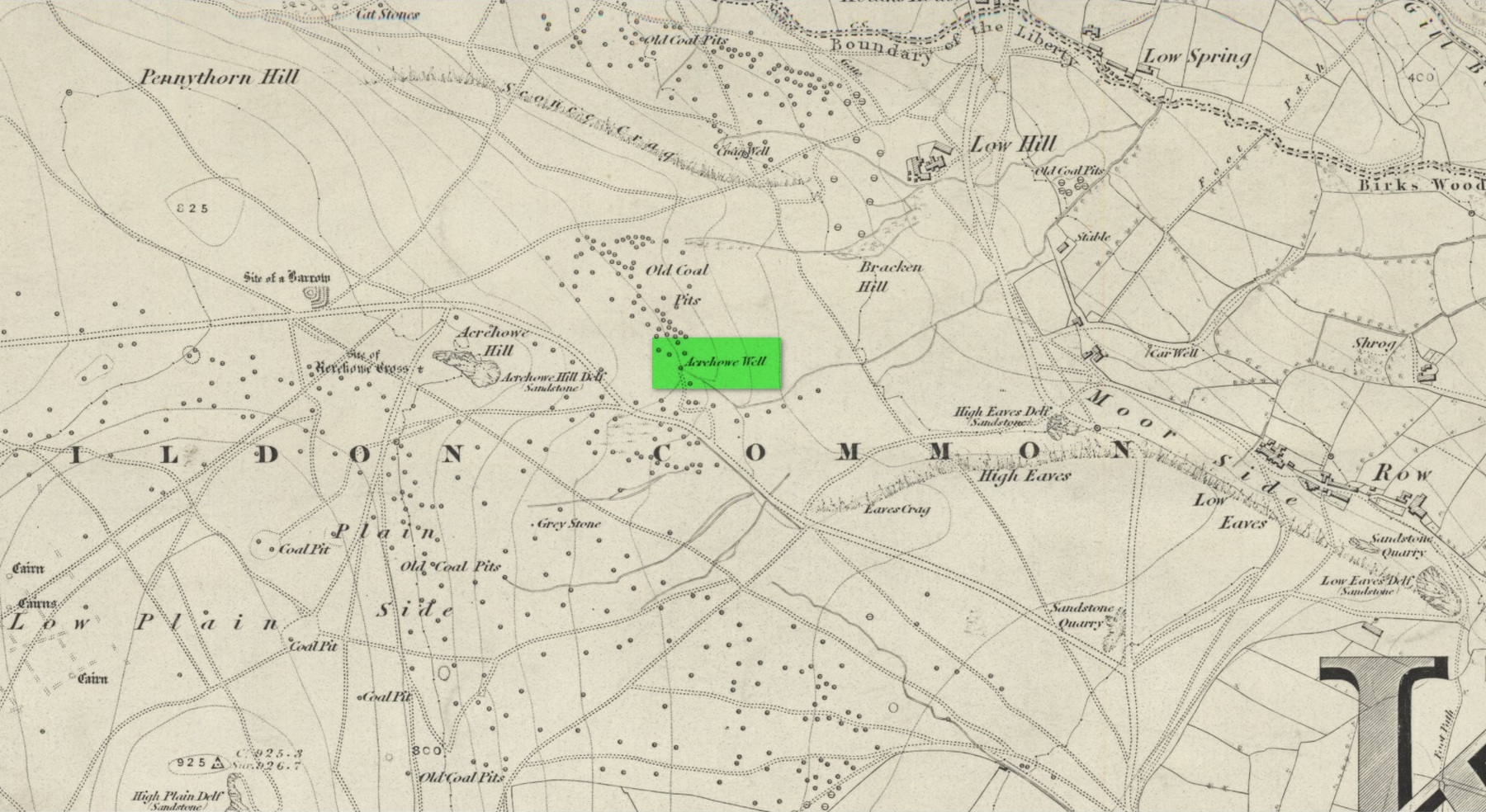
First illustrated on the 1852 Ordnance Survey map of the area and now only visible as a small marshy area, this once fast-flowing well gained its name from the old stone cross (very probably a standing stone before that) four hundred feet west of here, called Acrehowe Cross, now gone.  It is possible that this ‘cross’ gave the well a local reputation as a holy well.  A solitary path once led to the well, whose waters rise up through a coal seam giving the place its medicinal qualities, which have sadly been forgotten. Up and down this path towards Baildon village one would have regularly met a local character in the 19th century known as “Dinnis” (his real name was Joseph Halliday) who, along with his partner would take ‘kits’ (a large bucket with parallel sides) of water from the well into the village and sell it for a halfpenny each.

Site shown on 1852 map

Later in the 19th century, a cottage was built here (known as Acre Cottage) and gained its water supply from the well.  This was curtailed with the construction of the Baildon Moor reservoirs by the roadside, which took the water from both here and the nearby Spink Well (over the hill on the far side of the golf course), leaving us with little more than the trickling water we see today, just a little further down from its original location.

References:

  1. la Page, John, The Story of Baildon, William Byles: Bradford 1951.

Acknowledgements:  Huge thanks for use of the Ordnance Survey map in this site profile, reproduced with the kind permission of the National Library of Scotland

© Paul BennettThe Northern Antiquarian

Salt Well, Allington, Lincolnshire

Holy Well:  Ordnance Grid Reference – SK 85662 39798

Getting Here

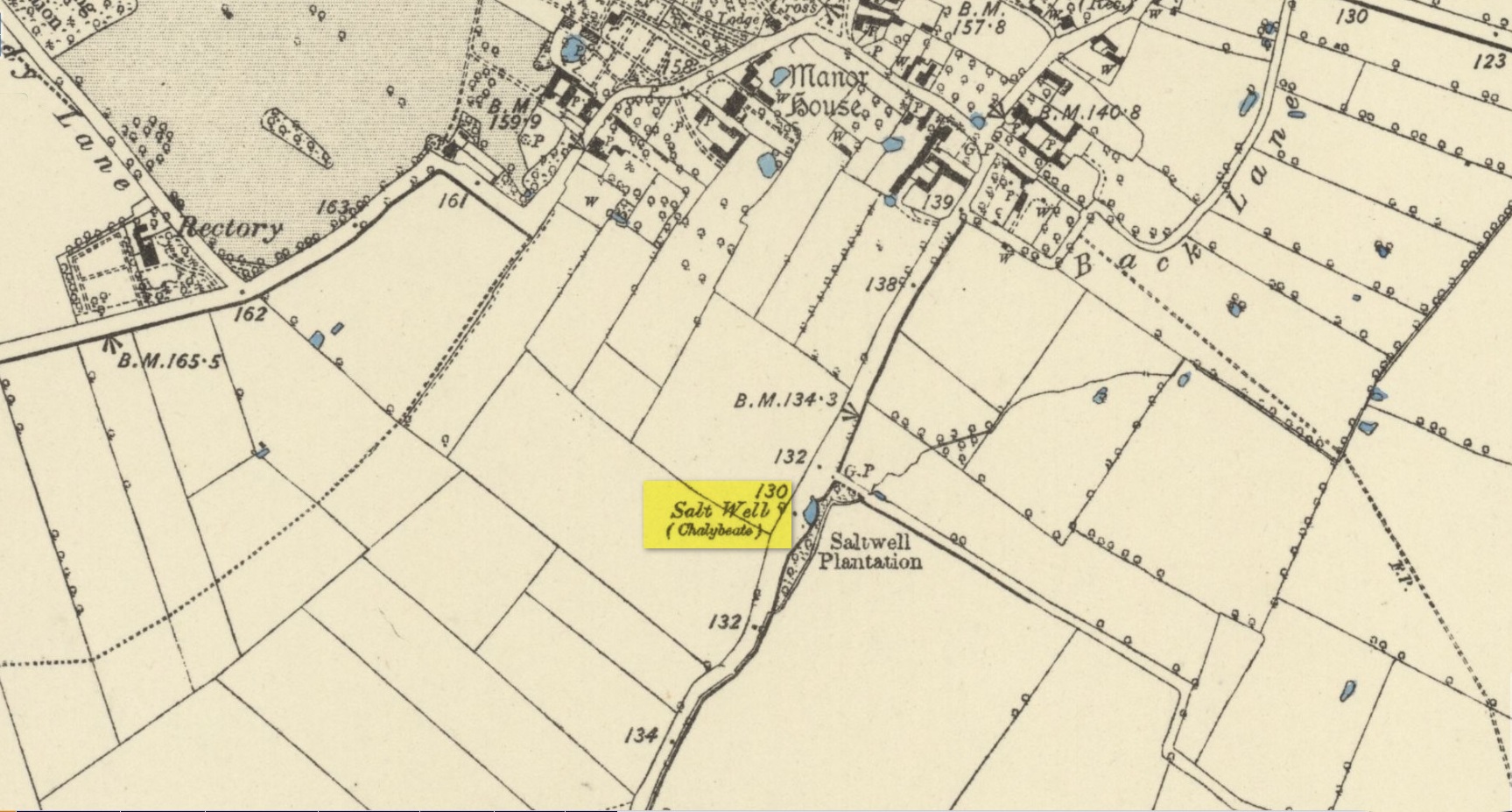
Salt Well on the 1887 map

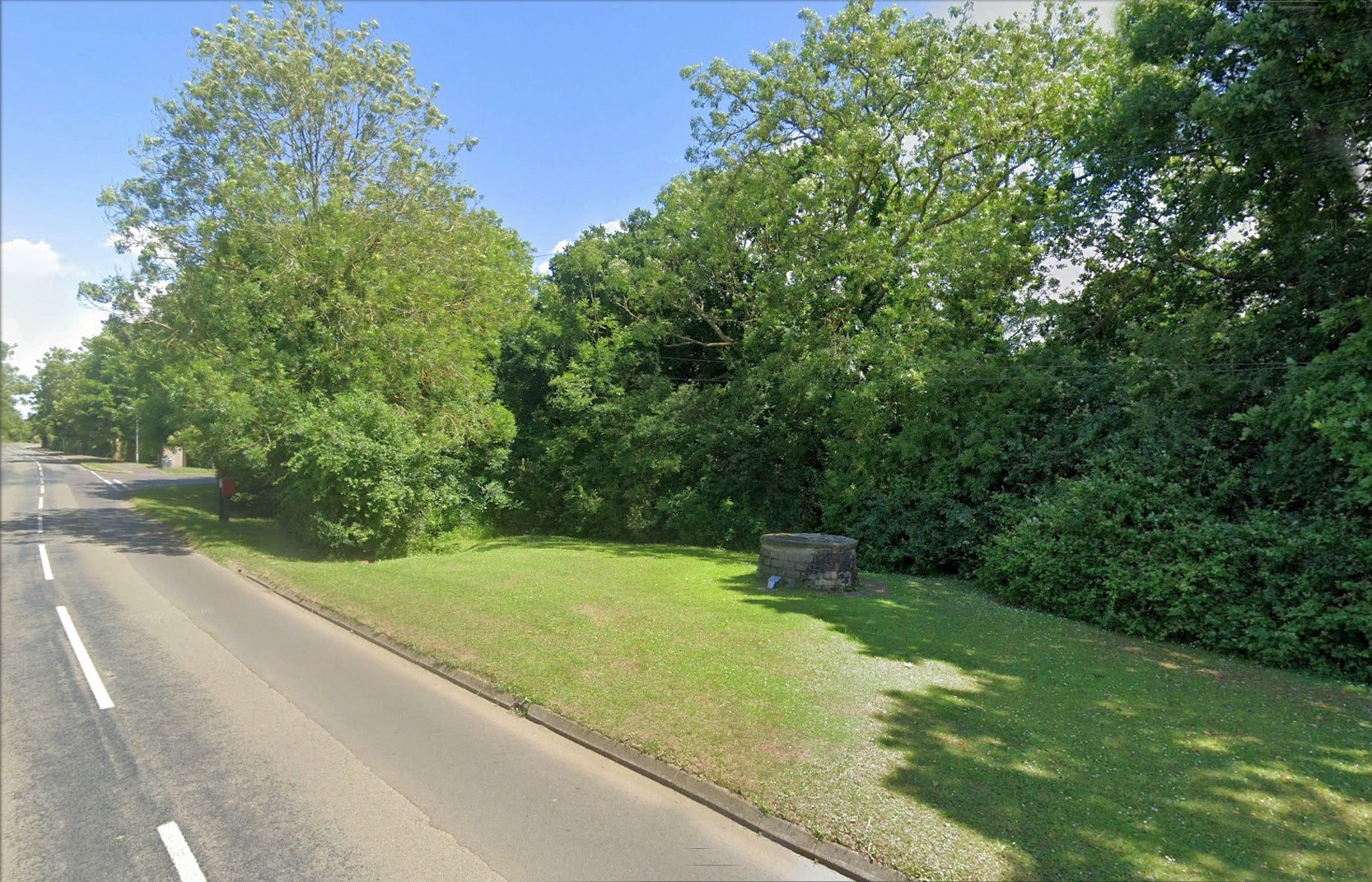
Nice ‘n easy: take the Sedgebrook Road south out of Allington village and, after a few hundred yards, just as you go past Peach Lane, keep your eyes peeled and look into the shrubs that are set back a few yards on the left-hand side of the road.  Just there you’ll see a small circular stone structure with a small plague in front of it.  That’s the Salt Well.

Archaeology & History

Salt Well by the roadside

Highlighted on the early Ordnance Survey maps of the area, this chalybeate spring was known as both the Salt Well and Holy Well.  Mentioned in Ian Thompson’s (1999) work, the waters here arise in a three-foot high pillbox-shaped structure, set into the grass verge just off the roadside between Allington and Sedgebrook.  On the early OS-maps it is shown to have originally been on the opposite side of the road.   The earliest reference to the well is from 1226 CE and, thereafter, a number of 16th Century wills are recorded making bequests for the maintenance of the well suggesting its considerable importance in bygone centuries—perhaps because it was the only local well that did not dry-up, no matter how severe the drought.

The small plaque at the side of the well states, “This spring has been a water source since the 13th Century and now remains a village landmark.”  An analysis of the waters here in 1990 revealed very low levels of iron but noted a high concentration of sodium sulphate.

References:

  1. Thompson, Ian, Lincolnshire Springs and Well, Bluestone: Scunthorpe 1999.

Acknowledgements:  Huge thanks for use of the Ordnance Survey map in this site profile, reproduced with the kind permission of the National Library of Scotland

© Paul BennettThe Northern Antiquarian

Sunnybank Well, Hawksworth, West Yorkshire

Healing Well:  OS Grid Reference – SE 16228 40696

Getting Here

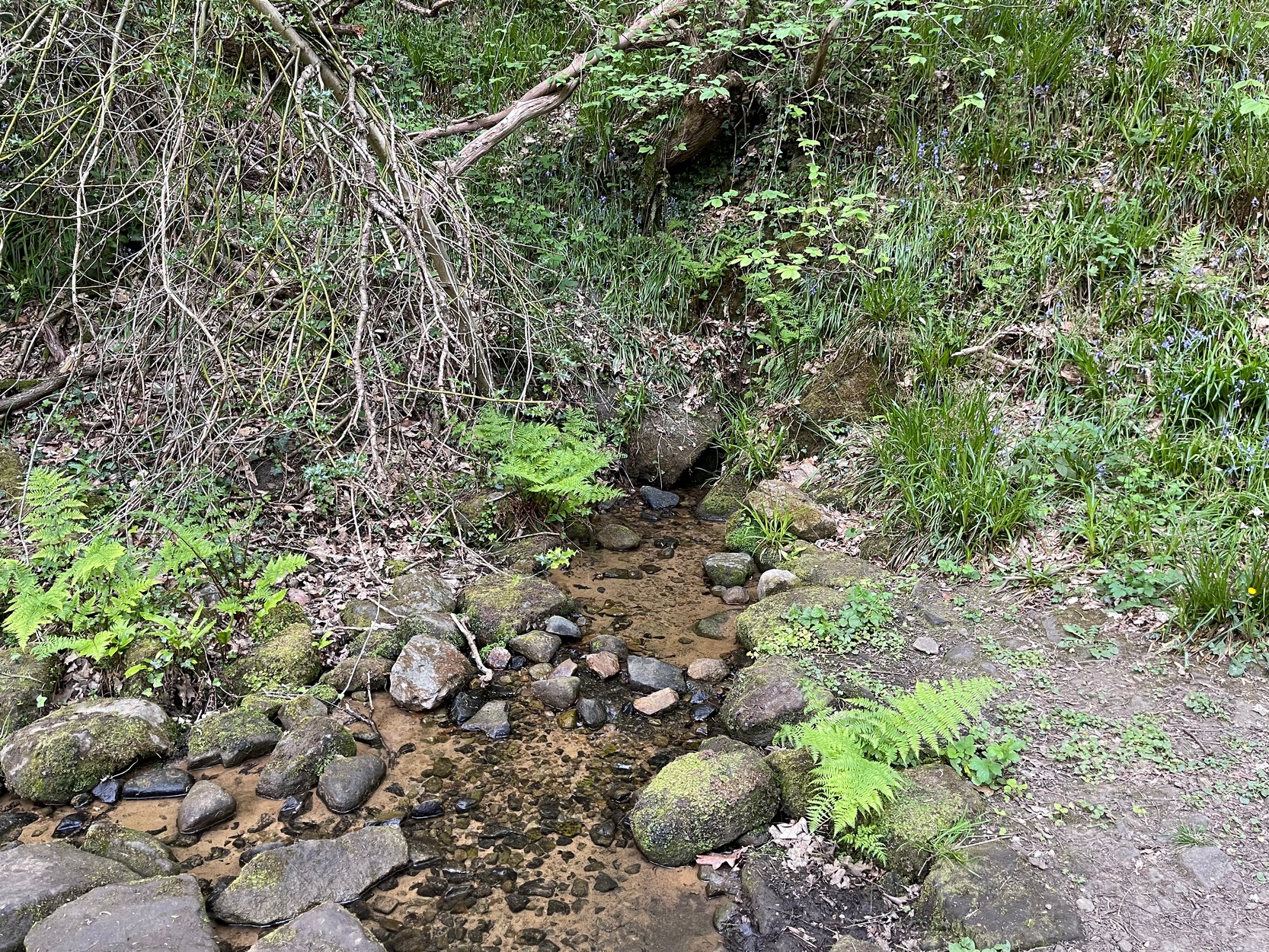
Sunnybank Well spring

My walk up to this place took me off the main A6038 Hollins Hill road, across from the petrol station and up the scruffy disused road to the hamlet of Tong Park, bending round the houses to the right when they appear.  Keep along this old track, then veer right, down the slope and along the footpath and into the trees under the railway arches, keeping on until you reach the lake on your left.  At the end of the lake, cross the bridge and follow the footpath as it bends to the left and into the trees.  You’ll go over a stile and then about 50 yards along, the stream that crosses the path emerges from a crack in the rocks on your right.  You’re here!

Archaeology & History

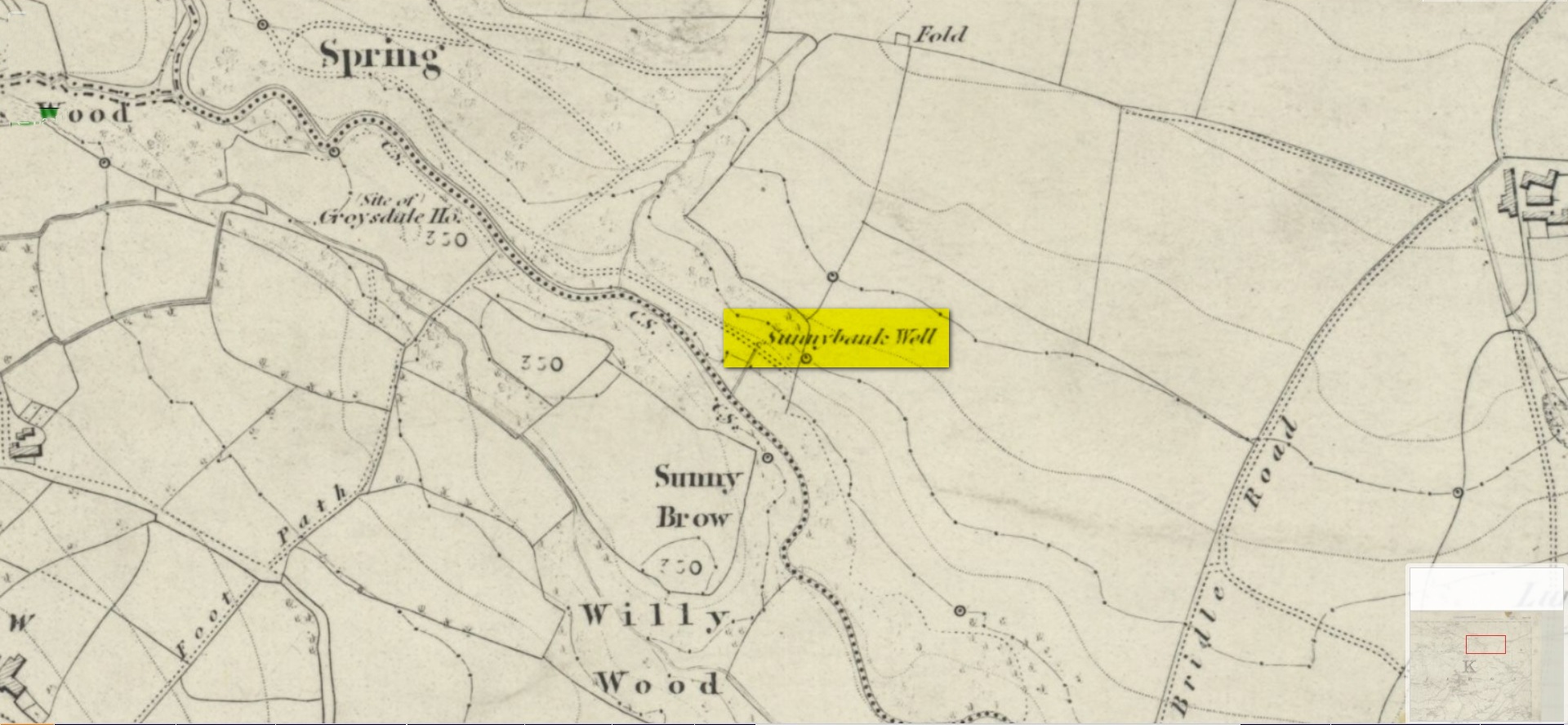
Site shown on 1852 map

All history and tradition of this site seems long gone. It was shown on the 1852 Ordnance Survey map of the region and doubtless receives its name from the location, as the spring of water emerges from beneath the sloping embankment which is a bit of a sun-trap in Spring and Summer.  It makes sense.  Although I can find no reference to any medicinal attributes, the waters of Sunnybank Well are cold, fresh and drinkable.

References:

  1. Shepherd, Val, Historic Wells in and Around Bradford, HOAP: Wymeswold 1994.

Acknowledgements:  Huge thanks for use of the Ordnance Survey map in this site profile, reproduced with the kind permission of the National Library of Scotland

© Paul BennettThe Northern Antiquarian

Balk Well, Cleckheaton, West Yorkshire

Healing Well:  OS Grid Reference – SE 19616 23695

Getting Here

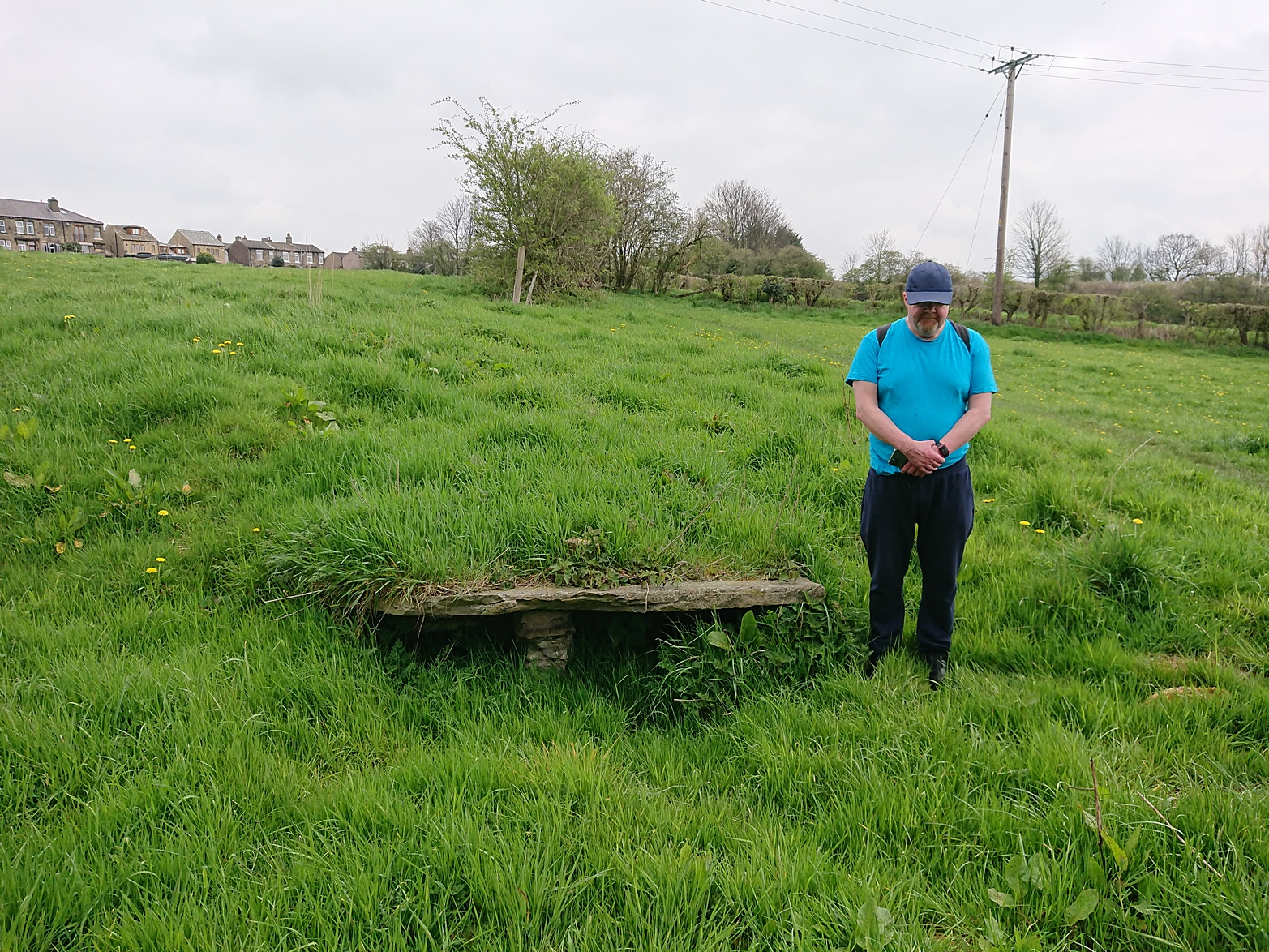
The Ferner at the Balk Well

Along Halifax Road (A649), get to the Shears Inn and then take the footpath at the back of the pub that runs down the side of the fields and alongside the allotments.  Less than 150 yards down, just through the stile into the edge of the field on your left, you’ll see the side-edge of a large flat stone in the grasses.  Check it out!

Archaeology & History

Along with the Attack Well and Tree Root Well, this was one of three springs close to each other that gave local villagers their water supply in bygone times.  When we visited here at the height of a long warm spell in the summer of 2023, there was still was a small amount of clear water trickling beneath the long flat slab of stone — although it was somewhat clogged-up with vegetation.  It wouldn’t take much work to completely clean this out and use the fresh drinking water once again.

The well gained its name from its position in the land, with balk, being “a portion of a field left unploughed”, or “a strip of ground left untilled” and variants thereof.

References:

  1. Wright, Joseph, The English Dialect Dictionary – volume 1, Henry Frowde: London 1898.

Acknowledgements: Huge thanks to the great Gary Ferner, for use of his photo and the day’s venture!

© Paul BennettThe Northern Antiquarian

Attack Well, Cleckheaton, West Yorkshire

Healing Well:  OS Grid Reference – SE 19569 23698

Archaeology & History

Attack Well on 1908 map

Located down the slope behind Shears Inn on Halifax Road (A649), past the stone-lined Balk Well, then round the other side of the allotments up where the footpath cuts to your right, the waters from this site can barely be found in the now large mass of brambles that make it virtually inaccessible to reach.  When Gary Ferner and I visited here, it seemed that a very small pool of water existed in the hollow beneath the prickly vegetative covering—but even I didn’t struggle to get through it all and so we don’t know if the waters are still running as once they were.  It was obviously one of the wells that fed local people in earlier times, but I can find no historical references to the site apart from its showing on the 1908 Ordnance Survey map.

© Paul BennettThe Northern Antiquarian

Holy Well, Allerton, Bradford, West Yorkshire

Holy Well (lost):  OS Grid Reference – SE 134 331 (approximation)

Archaeology & History

This site is both interesting and frustrating at the same time.  Interesting inasmuch that as early as 1258 CE, “the Knights Hospitallers of St. John of Jerusalem in England, had in Allerton a manor called the manor of Crosley.”  The Hospitallers, as some will know, were the immediate successors of the more famous Knights Templars.  As their name suggests, their patron saint was St John, whose festival date was summer solstice and had his name given to many holy wells.  But this one has left us with no name and its location has long since been lost.  In J.H. Bell’s (1888) essay on the early medical history of the area he told that local people with certain afflictions, “were wont to resort to them to drink their waters for their supposed medicinal virtues: there was one between Cemetery Bridge and Crossley Hall”.  But he doesn’t give its exact position.  In John James’ (1841) classic History of Bradford he thinks that near the place where the local stream known as the Hebble, “there was undoubtedly in former times a Holy well,” but is unable to cite a location.  No well is shown on the early maps between the old Hall and the cemetery and the only definitive reference to wells close by are in the early boundary perambulation record, which describe a Brock Well and a Cold Well.  Perhaps the the most probable contender and location is cited in Harry Speight’s (aka Johnnie Gray) Pleasant Walks (1890) where, taking a route between Great Horton and Allerton, he told us to,

“go through fields on to Necropolis Road, opposite Scholemoor cemetery, turn down lane left outside cemetery, ½ mile, descending steps, cross beck (here used to be the Spa Beck public gardens, now removed higher up) and ascend, at second field, leaving the forward path and turn left, following beck with Crosley Hall and trees to right.”

The location of the said Spa Beck gardens is very close to where Mr Bell described the medicinal spring and is/was the most likely position of what James (1841) thought to be a long lost holy well.  If we could get more information about the history of the Spa Well, we may be able to make more definitive statements about the place.

References:

  1. Bell, J.H., “Some Fragments of Local Medical History,” in Bradford Antiquary, volume 1, 1888.
  2. Gray, Johnnie, Where to Spend a Half-Holiday: One Hundred and Eighty Pleasant Walks around Bradford, Thomas Brear: Bradford 1890.
  3. James, John, History and Topography of Bradford, Charles Stanfield: Bradford 1841.
  4. Shepherd, Val, Historic Wells in and Around Bradford, HOAP: Wymeswold 1994.

© Paul BennettThe Northern Antiquarian

Tree Root Well, Liversedge, West Yorkshire

Healing Well:  OS Grid Reference – SE 19898 23679

Archaeology & History

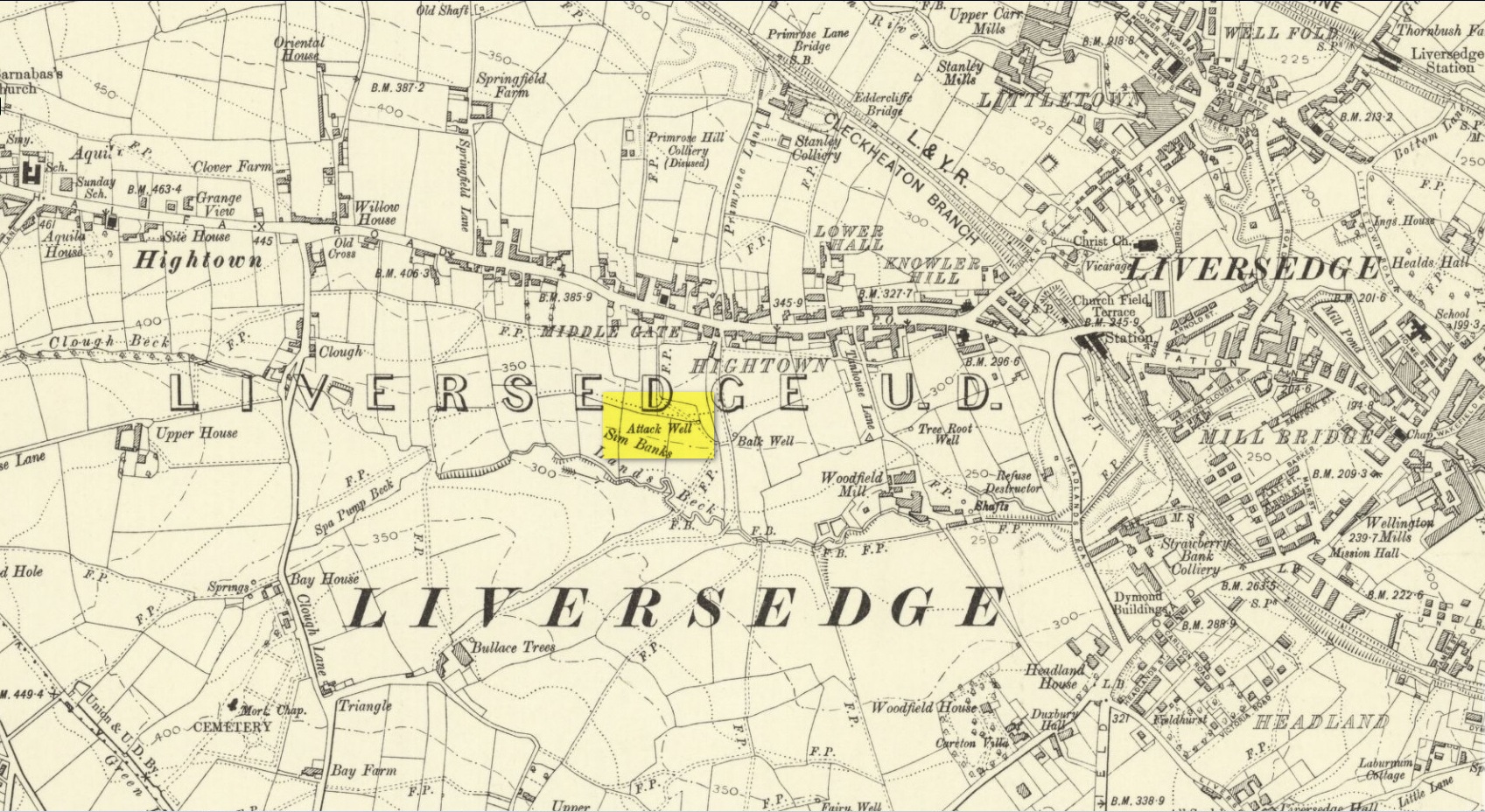
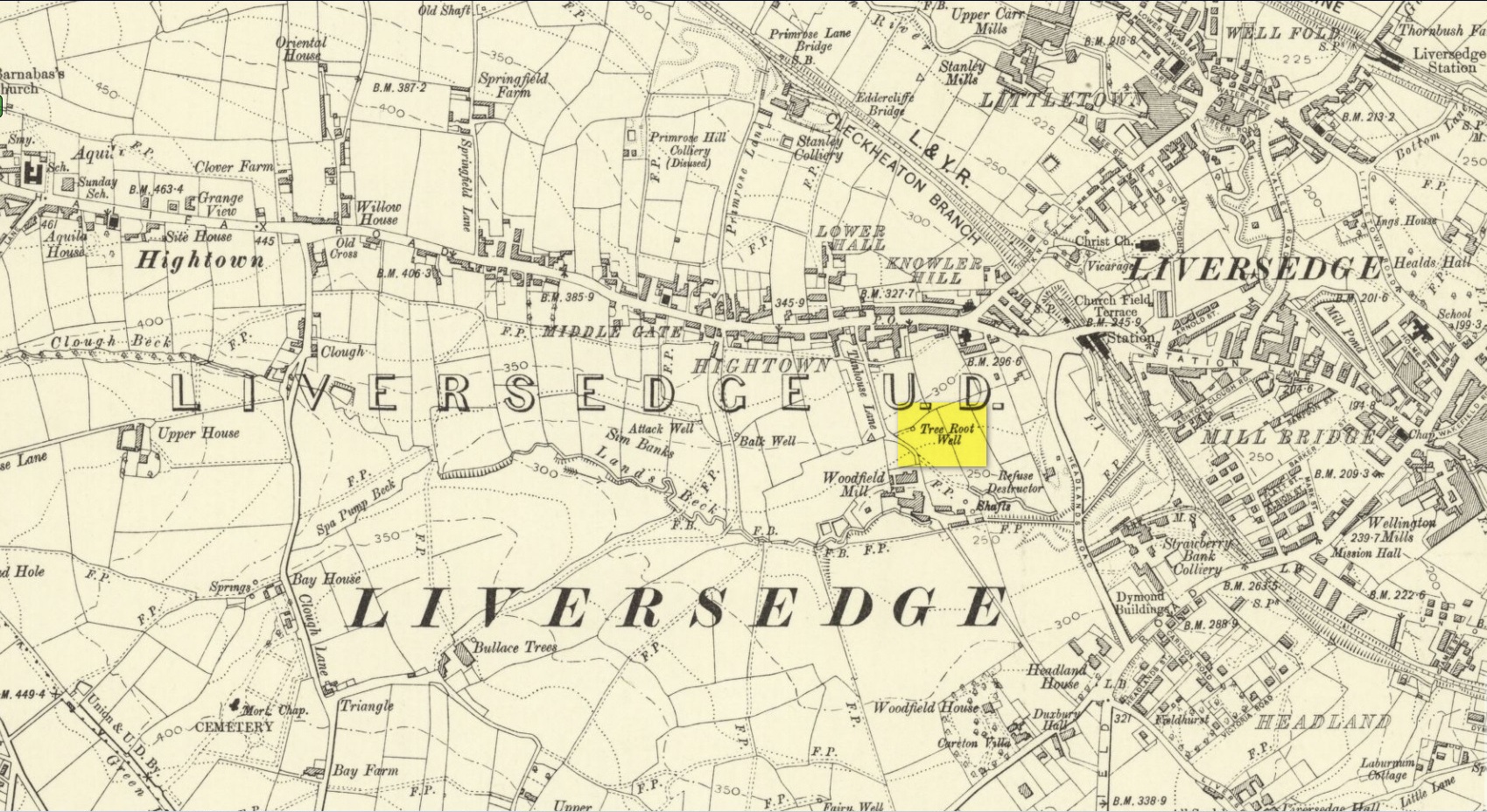
Tree Root Well, 1908 map

Along with the nearby Attack Well and Balk Well, this was one of three water supplies for the people of Middle Gate between Hightown and Liversdge in the 19th century.  Found near the bottom of the old track known as Tanhouse Lane, its waters emerged at the base of some Victorian walling that’s built into the hillside, above which are the decayed remains of what seems to be an old hawthorn tree, whose roots obviously reached down to the stone trough, giving the place its name.  Its waters have long since dried up and fallen back to Earth.  Although it is shown on the 1908 OS-map of the region, I can find no virtues ascribed to the well nor any local history notes.

Acknowledgements: Huge thanks to the great Gary Ferner, for help in locating the site and the day’s venture!

© Paul BennettThe Northern Antiquarian

Mineral Well, Upper Norwood, Surrey

Healing Well (destroyed):  OS Grid Reference – TQ 318 703

Archaeology & History

This was one of several so-called mineral springs in and around the Norwood area, but seemingly the least well-known—certainly in literary terms.  Whatever renown it may once have had was overwhelmed by the relative proximity of the much more famous curative waters of the Beulah Spa, a few hundred yards to the southeast.  It was mentioned, albeit briefly and already in the past tense, in John Anderson’s (1898) survey, when he told that “There used to be (a) mineral well at Biggin Hill. It is marked on the Croydon Inclosure Map” of 1800 and shown as a “Spring”, north of Biggens Farm.  It seems that it had only just been destroyed when Anderson wrote about it, as the research of Alfie Foord (1910) showed. His inquiries found that,

“There used to be another mineral well about half a mile to the north-west of Beulah Spa, at Biggin Hill, the water from which gushed up at the rate of seven gallons a minute.  In 1898 it was closed.  The subjoined analysis of water from a well, which is at White Lodge, Biggin Hill, formerly the residence of Mr. H. Wilson Holman, was kindly supplied by him to the writer in 1907.  This well, he says, undoubtedly taps the same spring that used to come out at the bottom of Biggin Hill, and which was blocked by the sanitary authorities in 1898.  The site of the spring was beyond the small tenement houses at the bottom of the hill, and there is still some masonry in existence—the end of the culvert where the water used to run out into a pond.  The reason of its being blocked was that it is alleged to have poisoned some domestic animal.”

References:

  1. Anderson, John C., The Great North Wood, Blades: London 1898.
  2. Foord, Alfred Stanley, Springs, Streams and Spas of London: History and Association, T. Fisher Unwin: London 1910.
  3. Gover, J.E.B., Mawer, A. & Stenton, F.M., The Place-Names of Surrey, Cambridge University Press 1934.

© Paul BennettThe Northern Antiquarian