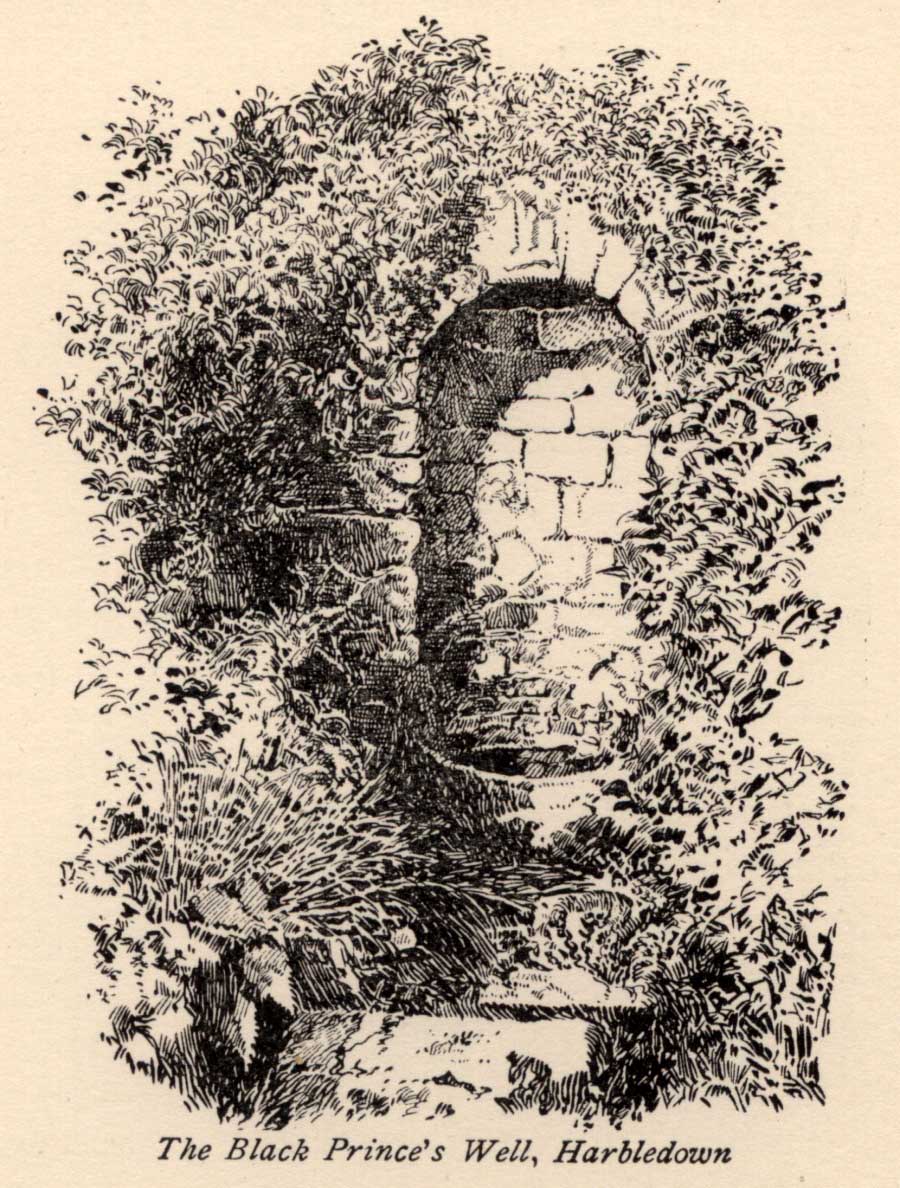
Black Prince’s Well, Harbledown, Kent

Holy Well: OS Grid Reference – TR 129 582

Also known as:

  1. Leper Well
  2. St. Thomas’s Well

Getting Here

The Black Prince’s Well is found to the right of a path that curves around past the Leper Hospital / almshouses, and through the forecourt of a house.

Archaeology & History
Black Princes Well

Black Princes Well

Behind the old leper hospital, and to the west of the Church, is the Black Prince’s Well, a holy well of some renown and interest. For Canterbury pilgrims, the well was a significant watering hole before they made the last steps to that great Shrine of St. Thomas. According to Watt (1917) this was the seventh St. Thomas’s Watering at Harbledown. It still bears the alternative name of St. Thomas’s Well, a dedication unlike other sites would seem to be related to be a direct relationship, for it is recorded that he drunk from the well, accidentally leaving a shoe. Understandably, after the martyrdom, this became an important relic, and was held by the Hospital.

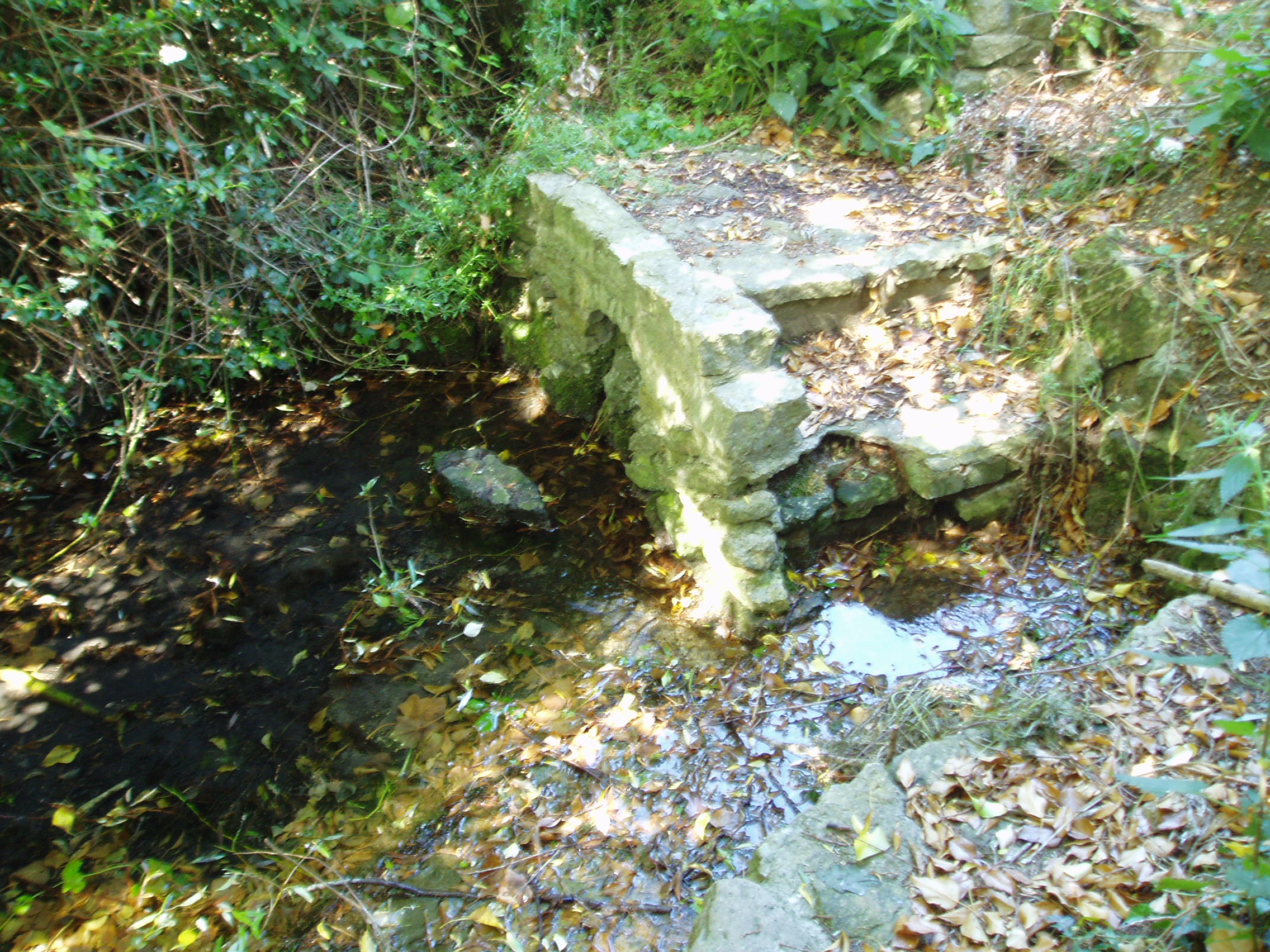
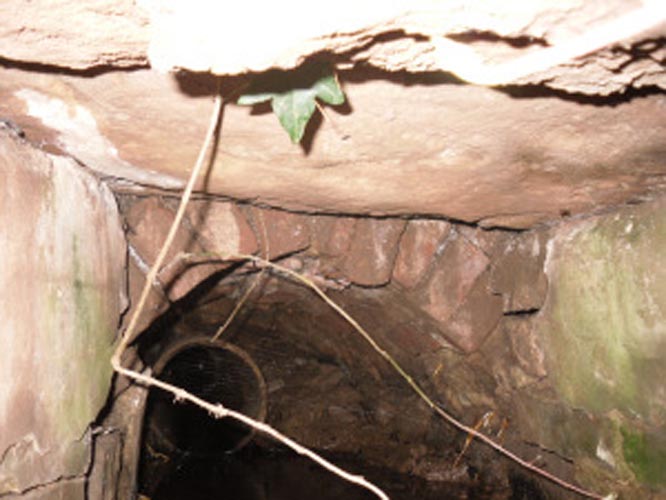
The spring emerges at the foot of the hill, enclosed in a six foot high semicircular domed well head made from rag stone. Most interesting a carved stone, in its central apse, depicts the Black Prince’s coat of arms, three feathers taken from the King of Bohemia at Crecy. This stone appears to havebeen possibly derived from another structure rather than being carved especially for the well head, as do the fluted stones shown in earlier photos (cf Goodsall (1968) in his Kentish Patchwork), which are now apparently missing. Either side of the well head are two courses of rag stone walling. The well is reached by a series of stone steps between two courses of stone walling. The water emerges, as a small trickle, through a five inch diameter red clay pipe, flowing to fill a circular basin.

Folklore

The well was noted as being able to cure leprous ailments, and presumably this is why the leper hospital was built in 1084 by Archbishop Lanfranc to exploit its properties. Among its many early pilgrims looking for a cure for this complaint was Edward the Black Prince, who patronised the well twice: the first on his last journey to Canterbury, when he was cured, and then finally, on his death bed in 1376. Unfortunately in this latter case the waters were obviously of no use, being unable to rid him of his syphilis, of which he died. The well subsequently named after the knight. For those unable to drink straight from the well, water was often administered to those living far from it. Evidence for this being the discovery of a leather pouch found near the well. Indeed, even the early part of this century the water was still used, especially by those from afar, for Snowdon Ward (1904) remarks that:

“the water is still in some repute for its curative powers. The sub-prior of the hospital told us that he still occasionally receives small remittances from various parts of the continent…”

Cartwright (1911) illustrates that its local reputation was still current before the Great War. He records that it was:

‘still believed by Country folks to be of great benefit to the eyes.’

Certainly the well is one of the most interesting and enchanting of Kent wells.

(taken from the forthcoming Holy Wells and Healing Springs of Kent)

Links:  http://www.insearchofholyandhealingwells.wordpress.com

© R.B. Parish, The Northern Antiquarian and Pixyledpublications

Gorrick’s Spring, Calverton, Buckinghamshire

Healing Well:  OS Grid Reference – SP 7880 3930

Getting Here

Take the Calverton Road out of Stoney Statford, then take the left hand road to Calverton and look for layby on the right near a copse.

Archaeology & History

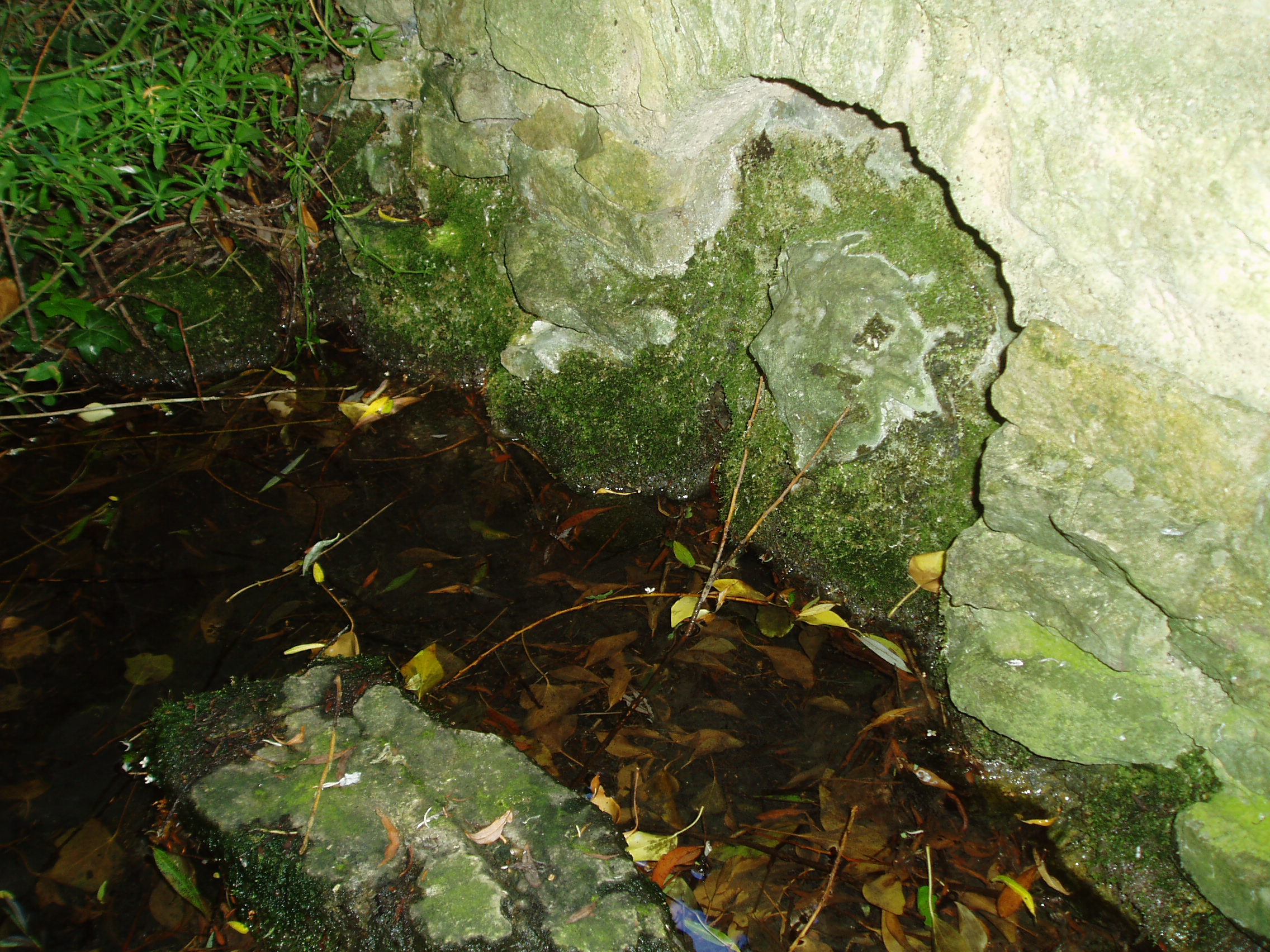
Gorrick’s spring is an interesting site and perhaps the best of the county’s holy wells. The water flows from a rather worn lion’s head beneath a stone arch under the steps, and pours into a stone lined chamber repaired with concrete slabs. It is reached by a series of steps from the layby and beside the spring is a narrow and as Rattue (2003) states an uncomfortable seat.

Folklore

It is unclear where the name comes from but a local legend tells how a witch’s pupil gave the sight back to a Gypsy tinker. A rhyme states in Romance around Stoney Stratford quoted by Rattue (2003):

“When Gorrick’s Spring flows fast and clear,
Stoop down and drink, for health is here,
If Gorrick’s Spring shuld e’er run dry,
Beware, for pestilence is nigh.”

Interestingly it did run dry in 1996 as noted in the local Herald of 8th November 1996:

“It’s a mystery,” confessed Calverton resident Lucinda Lourie. She said she realised water levels were currently low, but older residents of the village remembered the spring running through the drought of 1976. She said one wag at Anglian Water had suggested the source of the spring may have been a burst pipe which the Anglian Water work had cured – unlikely since the spring is reputed to have been used by monks in the 13th century!”

An author named Bartley (1928) mentioned by Rattue (2003) in his Holy Wells of Buckinghamshire notes:

 “the monks of old….deemed the delicious waters of this wayside spring as sacred, possessing healing properties for all humans. Daily the holy Friar would hie to the mossy bank and reach the water with his ancient pitcher, and bear it homeward to his suffering flock”

As Rattue (2003) notes it appears unlikely that a friar would have visited the site as there  is no record of any religious institutions connected with the site.

Extracted and amended from the below post (which also discusses St Rumbold’s Well)

http://insearchofholywellsandhealingsprings.wordpress.com/2012/01/12/a-buckinghamshire-field-trip-gorricks-spring-and-st-rumbolds-well/

References:

    1. James Rattue (2003) Holy Wells of Buckinghamshire


St. Helen’s Well, Thorpe Hesley, South Yorkshire

Holy Well (lost): OS Grid Reference – SD 370 960

Archaeology & History

In Rob Wilson’s (1991) study on the saints and wells of South Yorkshire, he mentions this site which, it would seem, may have been lost to history.  In Wilson’s site-entry for the St. Helen’s Well at nearby Barnburgh, he tells that,

“There may have been other wells in South Yorkshire dedicated to St. Helen… Two 18th century surveys by William Fairbank list St. Helen’s Fieldin Thorpe Hesley and St. Ellen’s Field in Wentworth.”

Around ten different wells are highlighted in the village itself on the first Ordnance Survey map of the area, with a number of others scattered in the surrounding fields.  Any one of these may be the well in question.  Much of the region was badly disfigured by the Industrialists in their usual desecration of the landscape, which may make any recovery of this site impossible.  However, a foray into the whereabouts of William Fairbank’s survey could be worthwhile — and if St. Helen’s Field is one that remained untouched by local mining, the site could be recovered from its present “lost” status.

(Please note: the grid-reference cited above is an approximation until further data allows us to correct it.)

References:

  1. Wilson, Rob, Holy Wells and Spas of South Yorkshire, Northern Arts: Sheffield 1991.

© Paul BennettThe Northern Antiquarian


Egg Well, Ashenhurst, Leek, Staffordshire

Healing Well:  OS Grid Reference — SK 005 540

Getting Here

Egg Well, Ashenhurst

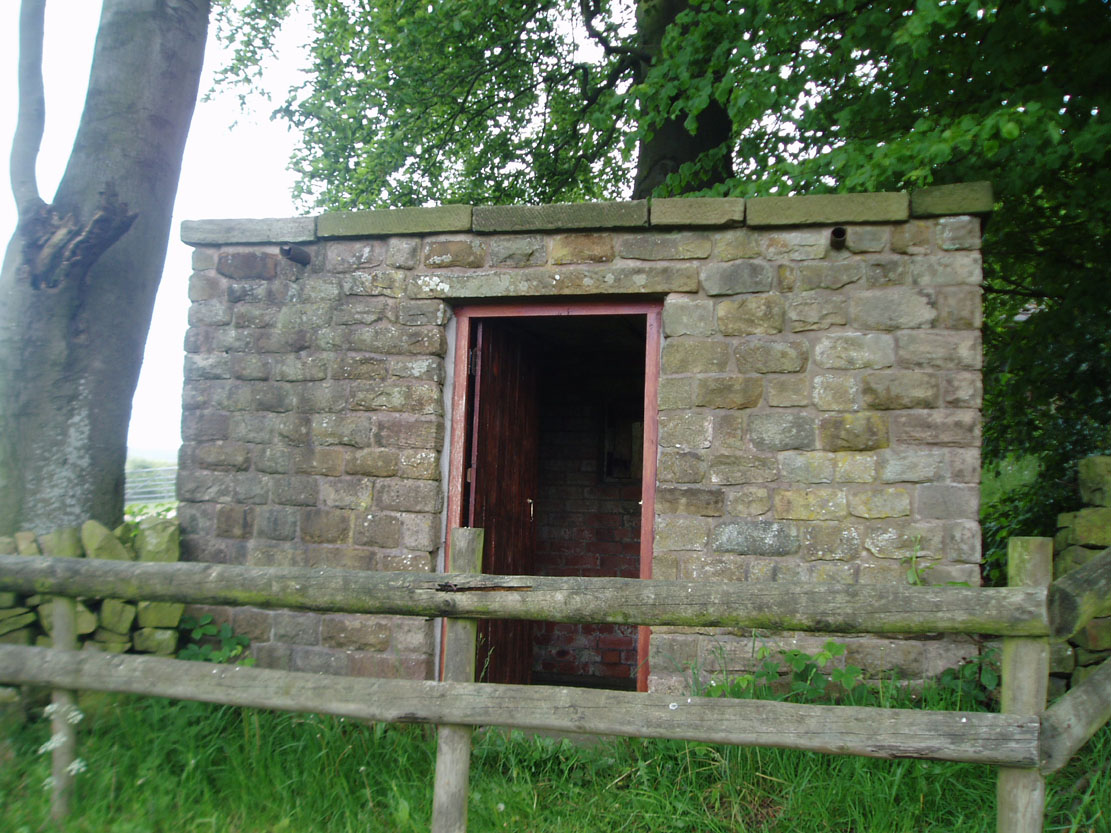
Just outside of Leek a right-hand lane leads to the small hamlet of Ashenhurst, turning left pass the gated road and on the right hand side at the next fork is the The egg well on the right in a small brick building.

Archaeology & History

The Egg Well is a curious site.  No evidence appears to record it as a holy well, nor a spa— but it appears to be a secular healing well.  Local tradition believes that the site was used by the Roman, but the older fabric was set in place by William Stanley, the owner of Ashenhurst Hall bewteen 1744 and 1752.  The present house was erected in the 19th century.


Waters of the well

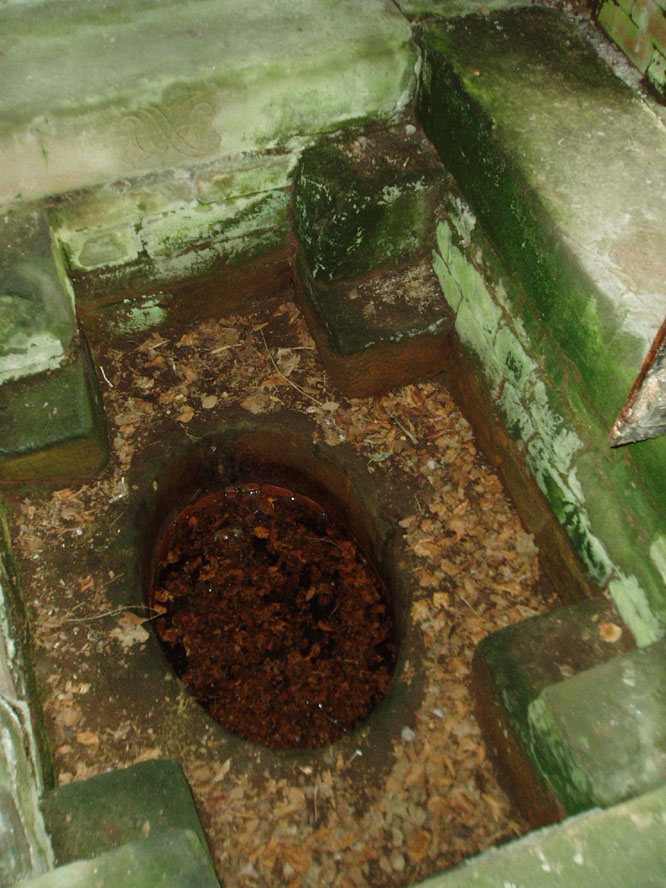
The name of the well is curious; it could refer to the shape of the basin, but could also refer to sulphurous waters although I could not detect a smell.  Today, a rather ugly 19th century brick-built structure surrounds this stone lined bath-shaped structure, which was roofed at a later date.

Folklore

The site was used by the Romans, but there is no evidence.  Its properties are recorded on the basin is this monogram and an interesting Latin inscription which reads:

“Renibus, et splenui cordi, jecorique medatur, Mille maelsi prodest ista salubris aqua.”

The translation being:

“The liver, kidneys, heart’s disease these waters remedy. And by their healing powers assuage full many a malady.”

References:

  1. Parish, R.B., Holy Wells and Healing Springs of Staffordshire – in publication.

Links:

  1. Holy Wells & Healing Springs – Staffordshire

© R.B. Parish, The Northern Antiquarian


St. Mary’s Well, Wallingwells, Nottinghamshire

Holy Well:  OS Grid Reference – SK 572 840

Archaeology & History

Old photo of St Mary's Well

Old photo of St Mary’s Well

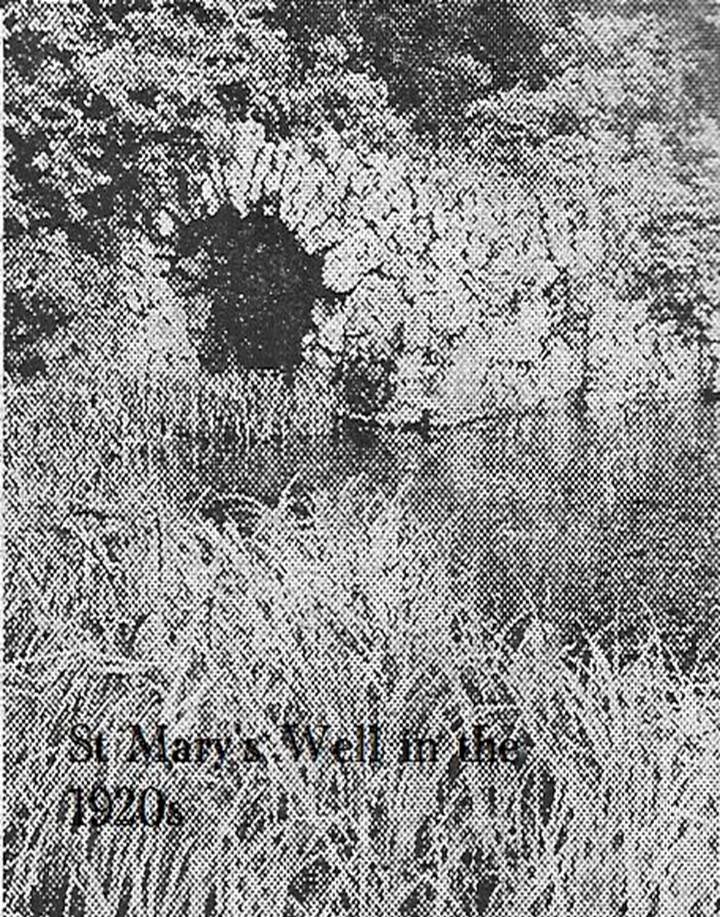
First mentioned in Pipe Rolls and referred to by the founder of Wallingwells Benedictine Priory (founded around 1150 CE) as ‘juxta fonts et rivum fontium’, the site Wallingwell or originally Waldon-by-the-Wells, may be significant.  The name refers to ‘bubbling wells’, but whether these wells were dedicated appears to be unknown, although it does seem likely.  Indeed, an anonymous article from the Worksop Guardian dated 1929 on the Wallingwell Estate, shows the well arising under a rough stone work arch beside the site of a lake.  Close by, appears to be a grotto of a similar construction. The article states that the grotto was built 250 years (from 1929 this suggests a date of 1679 which appears a little too early for this folly, a date in the 18th century being more likely). This was done by Thomas White using stone from petrified springs in Derbyshire. No reference is made of the well, but one assumes that it was built at the same time, but whether White was constructing a folly around an existing traditional site again is unknown.

Baker (2000) refers to the castle folly but fails to reference these sites suggesting that it had vanished. However, grotto and well still exist in the overgrown and forlorn garden to the back of the house.  The grotto is well-preserved, although signs of ruination are evident and the urn within has gone.

The internal brickwork

The internal brickwork

The overgrown well

The overgrown well

St. Mary’s Well is the most ruined. The archway appears to have fallen or been knocked down but the channel or basin the spring flows into still exists. Observation underneath a flattened stone covering the channel show that the spring flows from a pipe further up and under a series of neat brick arches. It is clear that the well structure was never accessible as it abutts onto the Lake, but was designed to be seen from the other side of the Lake. This view now is difficult due to the considerable plant growth obscuring the sites. It is good to see that the well still exists and hopefully the garden could be restored.

Extracted from R. B. Parish (2009) Holy Wells and Healing Springs of Nottinghamshire

Links:

  1. Holy & Healing Wells

© R.B. Parish, The Northern Antiquarian


Hawklemass Well, Whittingham, Northumberland

Healing Well:  OS Grid Reference – NU 0683 1228

Archaeology & History

Hawklemass Well on 1866 map

Hawklemass Well on 1866 map

References to this site seem very scarce.  A well is highlighted on the 1866 OS-map of the region close to the spot which D.D. Dixon (1895) said it was found, “near to the Howbalk Lane end, where is also the Hawklemass Stile and Hawklemass Well.”  A stone trough could once be seen here, but its presence today needs to be confirmed by local researchers.  The site is listed in Binnall & Dodds (1943) survey, but with no additional comments to those made by Mr Dixon.

Folklore

The historian D.D. Dixon (1895) told that the village of Whittingham only had one ghost, but it was known as the “Hawklemass Ghost” and was occasionally encountered at the Hawklemass Well:

“This was a place never passed after nightfall by the youth of the village without feeling an eerie, creepy sensation, and with many a furtive glance on either side.  This unearthly visitant, in its gambols and uncanny pranks, was said to rattle the chain by which it was supposed to be bound in a fearsome manner.  It was usually seen or heard by persons who, having lingered long at the village inn, could say with Tam o’ Shanter,

“While we sit bousing at the nappy,
An gettin’ fou and unco happy,
We think na on the lang Scots miles,
The mosses, waters, slaps and styles,
That lie between us and our hame.”

One Saturday night many years ago—perhaps fifty—a poor fellow on his way from Whittingham to Glanton fel into the roadside at Hawklemass, where he was found, quite dead, the next morning by some persons on their way to Glanton meeting.  This sad affair may have given rise to the tradition of the Hawklemass Ghost.”

The name of the old lane at whose junction the Hawklemass Well once flowed, ‘Howbalk Lane’, may derive from a lost tumulus, as the word how (and its variants) regularly relate to prehistoric mounds in our more northern climes.  Such an ancient tomb, close to the well, may be the origin of the ghost story.

References:

  1. Binnall, P.B.G. & Dodds, M.H., “Holy Wells in Northumberland and Durham – part 2”, in Proceedings of the Society of Antiquaries Newcastle-upon-Tyne, 10:2, 1943.
  2. Dixon, David Dippie, Whittingham Vale, Northumberland, Robert Redpath: Newcastle 1895.

Acknowledgements:  With thanks to Gill Rutherford for prompting me to finish this; and to Claire Heron for the OS-map reference.

© Paul BennettThe Northern Antiquarian


Ragged Spring, Healing, Lincolnshire

Healing Well:  OS Grid Reference — TA 199 096

Also Known as:

  1.  Ragged Well

Getting Here

The site can be found along Wells road, just after the turning for Healing wells farm and after the mirror.  One may need to beat through the thickets to reach it.

Archaeology & History

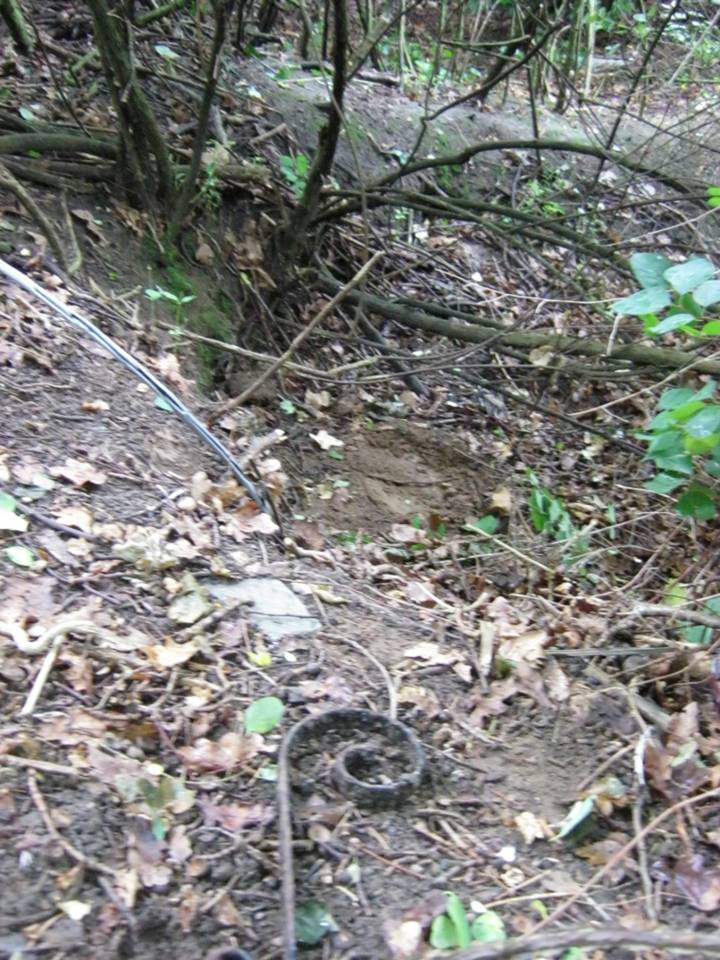
The Ragged Spring

The Ragged Spring

Some confusion exists over the relationship between the wells and the parish name. This is possibly an ancient site, as the earliest name for the parish is ‘Heghelinge’ and perhaps derive from the springs.  However, this is at variance to the view of Kenneth Cameron (1997) in his Place-Names of Lincolnshire, where it is noted that ‘Hægelingas’ is derived from “the sons or followers of a man named Hægel” rather than healing, although it is of course a strange coincidence!

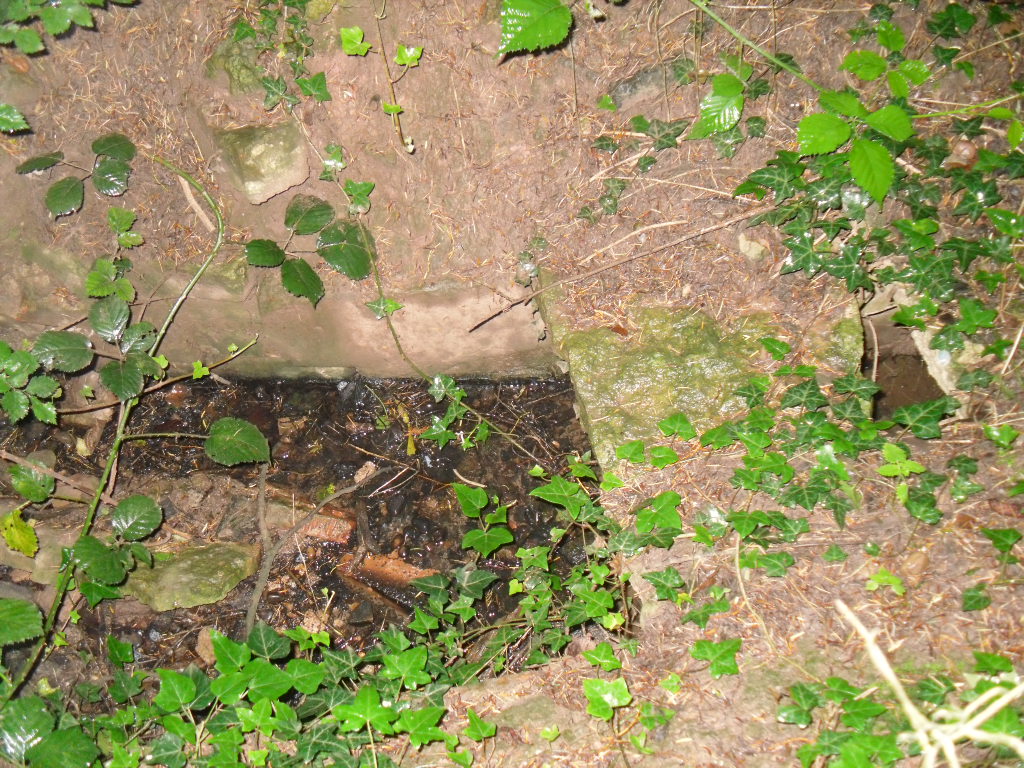
The springs are still marked on the current OS map, as Healing Wells, in a small plantation, but they are, as the photo shows, only marked by circular indentations in the ground.  The first spring is the easier one to trace and it appears to have holes, although these may be made by animals.  The springs are now quite dry, perhaps that the clogging of the springs noted above continued as the waters were forgotten, resulting in the current situation. There is no clear lining around the well or other structures. Lying around the springs are a range of metal buckets in various stages of decay and some metal pieces which may be remains of a metal fence around it. Sadly, I was unable to find any sign of rags although the man I asked in the whereabouts referred to them as “the ragged springs.”

Folklore

The Ragged Springs fed a stream where people paddled or hung garments on bushes to acquire good health strangely rather than the wells themselves. Gutch and Peacock  (1908) in their County Folklore note that a,

“Mr. Cordeaux visited them not long since for the purpose of discovering whether pins are ever dropped into them, but the bottom of the water in both cases was too muddy and full of leaves to allow accurate examination.”

According to Gutch and Peacock (1908) each well had a different use, one spring being a chalybeate one was done for eye problems, whereas the other was for skin problems. They continue to note that a:

F S, a middle-aged man, who grew up in an adjoining parish, states that when he was a lad, one spring was used for bathing, and the second for drinking. The latter was considered good against consumption, among other forms of sickness. . . . What the special gift of the bathing well was F S cannot say. He often plunged his feet into it when a boy, but he does not venture to assert that it had any great power in reality, although ‘folks used to come for miles,’ and the gipsies, who called the place Ragged Spring or Ragged Well, frequently visited it. A Gentleman who hunts with the Yarborough pack every winter, says that he notices the rags fluttering on the shrubs and briars each season as he rides past. There is always a supply of these tatters, whether used superstitiously or not, and always has been since his father first knew the district some seventy years ago.”

This would appear to be the site recorded as below under Great Cotes by R.C. Hope (1893) in his Legendary Lore of Holy Wells:

“there is a spring celebrated locally for its healing properties. It rises from the side of a bank in a plantation, and is overshadowed by an ancient thorn, on the branches of which hang innumerable rags, fastened there by those who have drunk it waters.”

The custom apparently continued until the 1940s.  Indeed a visitor in the 1920s noted that even the trunks were covered with longer pieces of rag.  A picture in the 1995 edition of Lincolnshire Past and Present journal shows a number of rags on the bushes. It is worth noting that perhaps the presence of a large thorn perhaps suggests a great antiquity to the site.

References:

  1. Cameron, Kenneth, The Place-Names of Lincolnshire – volume 5, EPNS: Nottingham 1997.
  2. Gutch, Mrs & Peacock, Mabel, County Folk-lore – volume v: Examples of Printed Folk-lore Concerning Lincolnshire, David Nutt: Folk-lore Society 1908.
  3. Hope, Robert Charles, Legendary Lore of the Holy Wells of England, Elliott Stock: London 1893.
  4. Parish, R.B., Holy Wells and Healing Springs of Lincolnshire. Pixyled Publications 2013

Links:

  1. Holy & Healing Wells

© R.B. Parish, The Northern Antiquarian


St. Patrick’s Well, Portpatrick, Wigtownshire

Holy Well (destroyed):  OS Grid Reference – NX 0010 5412

Also Known as:

  1. Canmore ID 60610

Archaeology & History

St Patricks Well on 1849 map

This long-lost  holy well was located on the southeast side of the town.  It was highlighted on the first OS-map in 1849, but its waters were disrupted shortly after this. Daniel Conway (1882) told that,

“It flowed where there was a quarry used for the harbour works. The writer of this notice heard from two men, John Mulholland and Owen Graham, dwelling at Portpatrick in 1860, that they had seen on the rock beside the well what tradition said was the impression of the knees and left hand of St. Patrick.”

When the holy wells writer E.M.H. M’Kerlie (1916) came to visit this site, it was “no longer to be seen.”  He wrote:

“The water which issued from a rock on the south side of the village is now diverted by means of pipes into another course.”

References:

  1. Agnew, Andrew, The Agnews of Lochnaw: The History of the Hereditary Sheriffs of Galloway, A. & C. Black: Edinburgh 1864.
  2. Agnew, Andrew, The Hereditary Sheriffs of Galloway – volume 1, David Douglas: Edinburgh 1893.
  3. Conway, Daniel, “Holy wells in Wigtonshire,” in Archaeological & Historical Collections Relating to Ayr & Wigton, volume 3, 1882.
  4. Harper, Malcolm MacLachan, Rambles in Galloway, Edmonston & Douglas: Edinburgh 1876.
  5. M’Kerlie, E.M.H., Pilgrim Spots in Galloway, Sands: Edinburgh 1916.
  6. MacKinlay, James M., Folklore of Scottish Lochs and Springs, William Hodge: Glasgow 1893.
  7. Morris, Ruth & Frank, Scottish Healing Wells, Alethea: Sandy 1982.
  8. Royal Commission Ancient & Historical Monuments of Scotland, Inventory of Monuments and Constructions in Galloway – County of Wigtown, HMSO: Edinburgh 1912.
  9. Walker, J. Russel, “‘Holy Wells’ in Scotland,” in Proceedings of the Society of Antiquaries of Scotland, vol.17 (New Series, volume 5), 1883.

© Paul Bennett, The Northern Antiquarian 


Penny Well, Granton, Edinburgh, Midlothian

Healing Well:  OS Grid Reference – NT 2187 7654

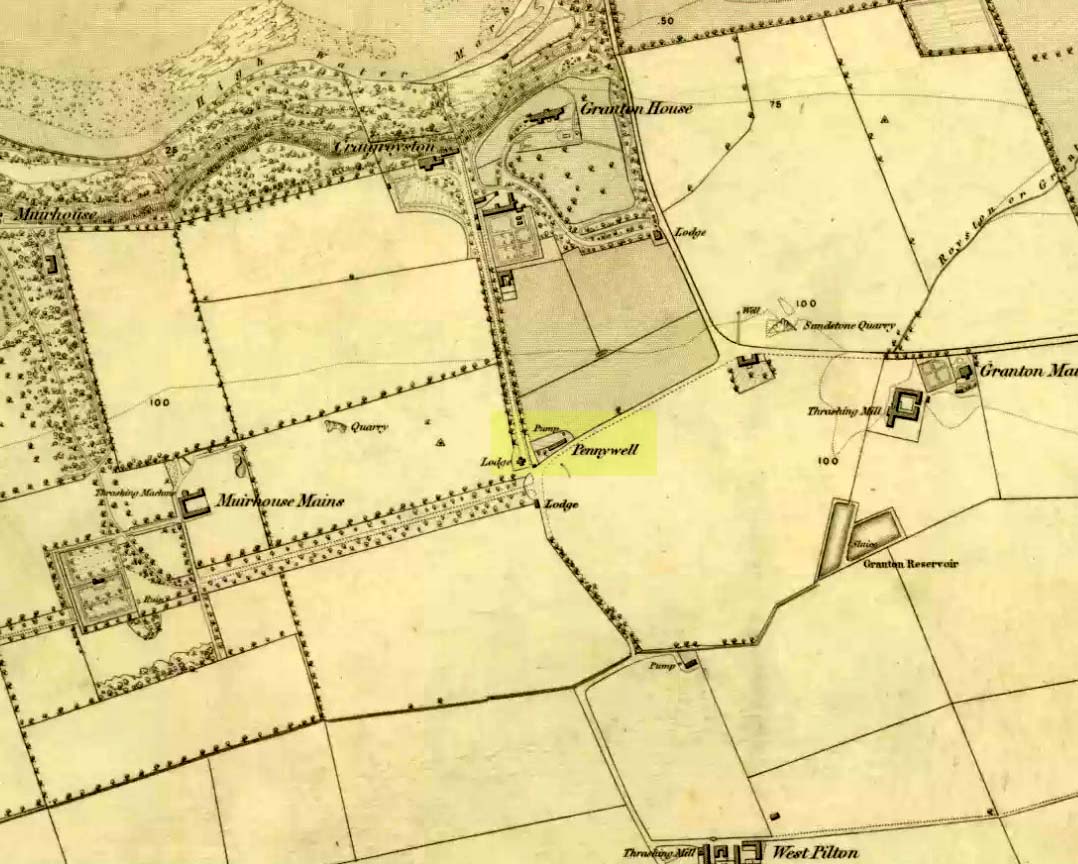
Penny Well on 1853 map

Archaeology & History

On the 1853 Ordnance Survey map of Granton we are show the house and place-name of Pennywell with a ‘pump’ adjacent to it.  Sadly we don’t have as rich a history of the place as its namesake at Newington.  Its earliest written appearance seems to be in 1812.  A few years later, in the  Ordnance Name Book of the area, it was recorded that,

“Two cottages on the property of Sir John McNeil the name appears to be derived from a well which was formerly situated at the North east end of the houses where one Penny was paid for a draught of water.”

Remembered as a watering place for horses, the old Scots word ‘penny’ may be behind this old name, in terms of it giving the animals and locals their water supply.  Stuart Harris (1996) thought that this Penny Well may have been the long lost St. Columba’s Well in the parish of Cramond.

References:

  1. Bennett, Paul, Ancient and Holy Wells of Edinburgh, TNA 2017.
  2. Harris, Stuart, The Place-Names of Edinburgh: Their Origins and History, Gordon Wright: Edinburgh 1996.

© Paul BennettThe Northern Antiquarian


Tobair na h-oige, St. Kilda, Outer Hebrides

Sacred Well (lost):  OS Grid Reference – NA 100 000

Also Known as:

  1. Well of Eternal Youth

Folklore

An old story told in previous centuries by the indigenous folk of Hirta (St. Kilda) described a long-lost well that was thought to be an abode of the little people, known as the Well of Eternal Youth.  Not to be confused with the Well of Virtues near the Amazon’s House less than a mile west, the rough whereabouts of this site is cited by J. Sands (1878) in the folklore section of his otherwise historical account on these faraway Atlantic islands.  He wrote:

“Once on a time an old fellow, in going up Connagher with a sheep on his back, observed a Well which he had never seen or heard of before.  The water looked like cream, and was so tempting, that he knelt down and took a hearty drink.  To his surprise all the infirmities of age immediately left him, and all the vigour and activity of youth returned. He laid down the sheep to mark the spot, and ran down the hill to tell his neighbours. But when he came up again neither sheep nor well were to be found, nor has any one been able to find the Tobair na h-oige to this day.  Some say that if he had left a small bit of iron at the well—a brog with a tacket in it would have done quite well—the fairies would have been unable to take back their gift.”

Explorations of old maps and texts has failed to show with certainty where this legendary well may have been (the grid-ref is an approximation), but it was reported in Mrs Banks’ Scottish Calendar Customs (1937) to have been “issuing out of the face of a rock on the north-side of the east bay…only accesible by the inhabitants, no stranger daring to climb the steep rock.” Some of us would try!

References:

  1. Banks, M. MacLeod, British Calendar Customs: Scotland – volume 2, Folklore Society: London 1937.
  2. Sands, J., Out of the World; or Life in St. Kilda, Maclachlan & Stewart: Edinburgh 1878.

© Paul Bennett, The Northern Antiquarian