Loch Moraig, Bridge of Tilt, Blair Atholl, Perthshire

Hut Circles:  OS Grid Reference – NN 9047 6722

Getting Here

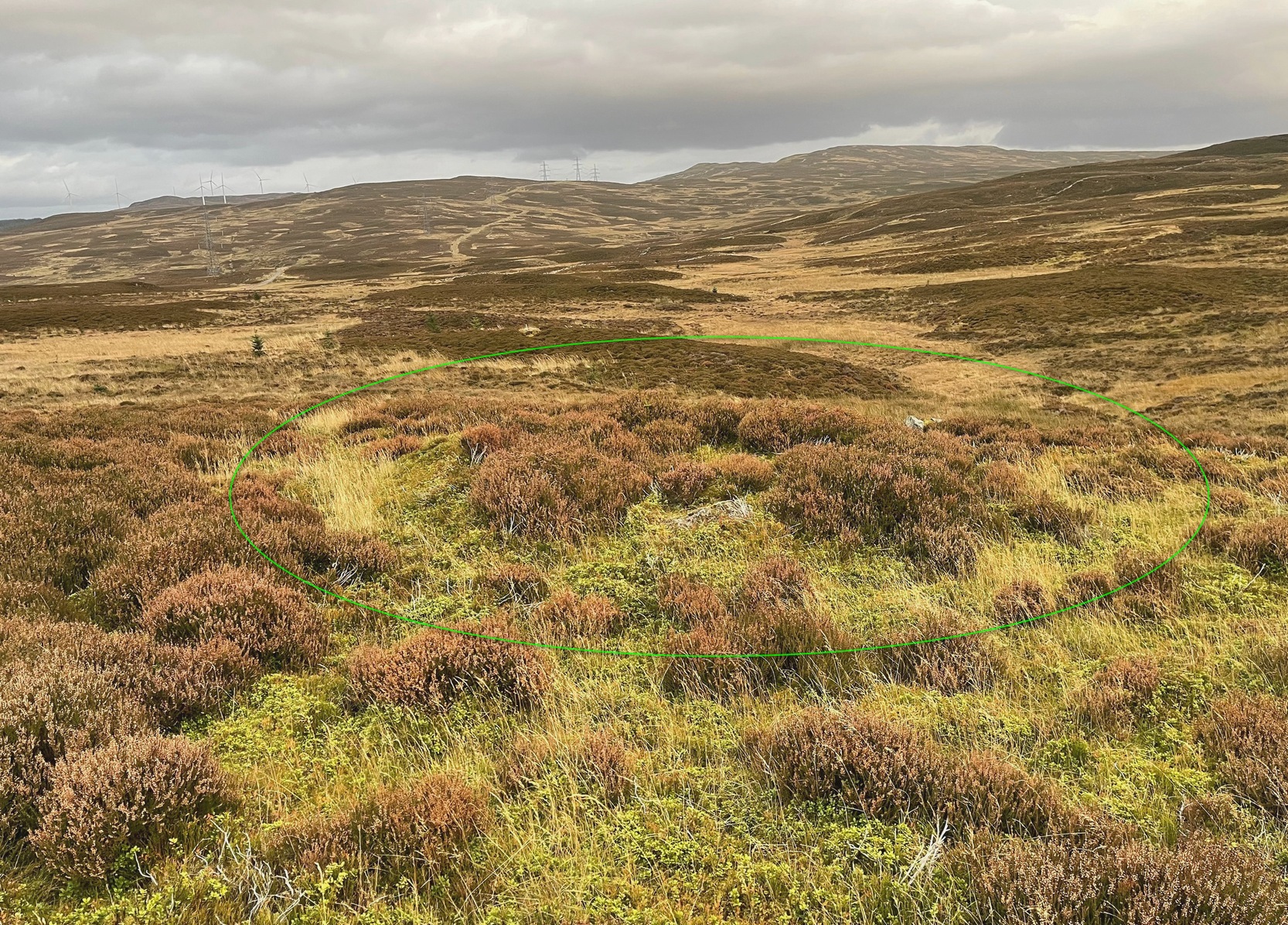
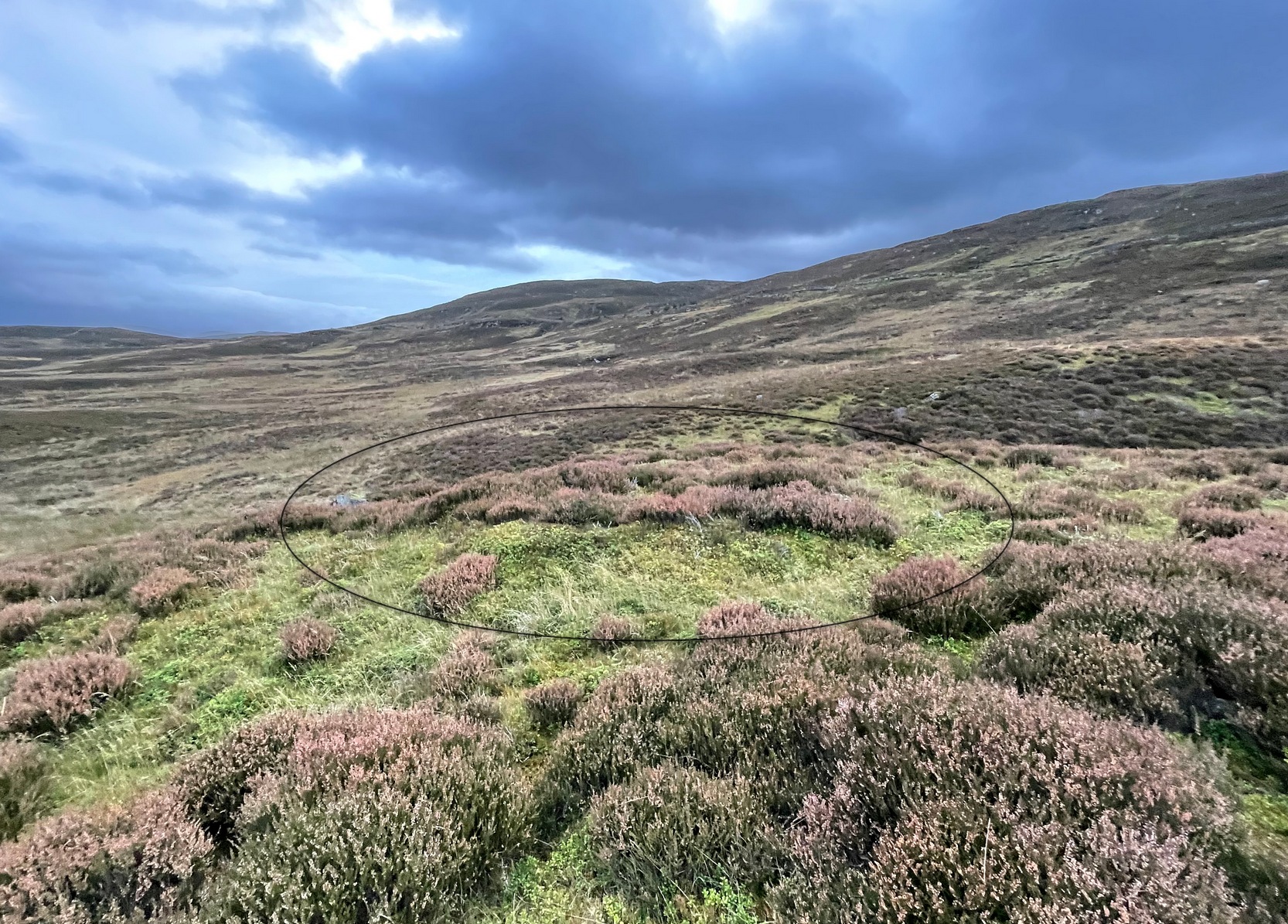
Hut circle, outlined

Along the B8079 road in Blair Atholl village, take the minor road signposted to the Bridge of Tilt.  After half-a-mile, where the road splits, keep to the right and head further uphill and, where the almost-track-like road splits again another quarter mile up, bear to the right again and just keep going uphill for nearly two miles until your reach the large car-park on the left.  Park here.  Note the long straight line of walling on the top-side of the car-park that runs to the NW.  Walk along the other side of the wall and, after 100 yards, you go down the marshy dip and, once it rises up onto the small rise, truly truly truly keep your eyes peeled to see what lays beneath your feet.  They’re there – honestly!

Archaeology & History

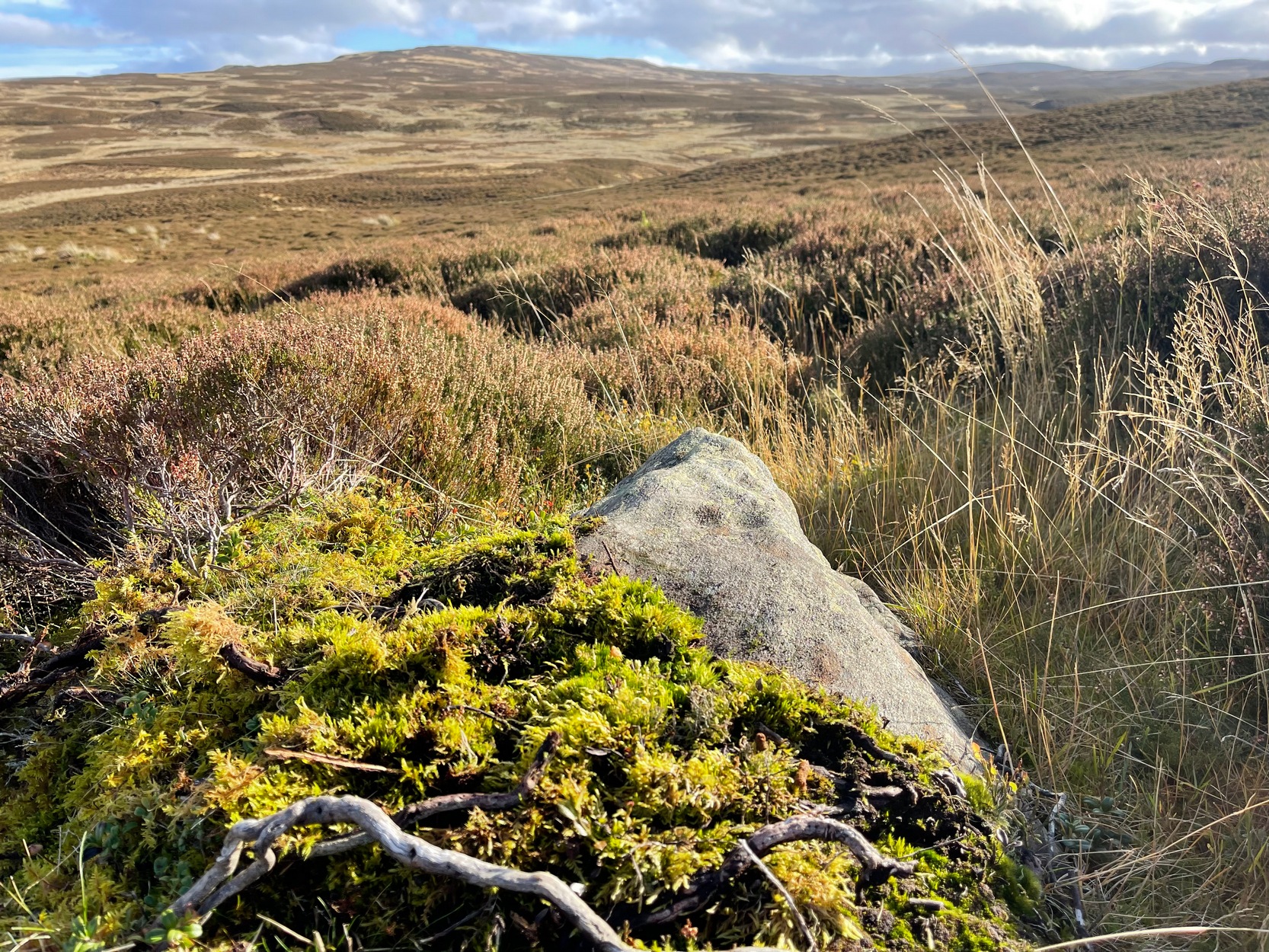
As the years drift by, the remains of these two hut circles—separated barely ten yards from each other—have become increasingly difficult to see.  Upon our visit here, the hillside vegetation was at its lowest at the end of the Winter, yet it was still difficult to see them clearly, even when we stood right in them!  The land here is marshy and it’s spreading more and more into the soil, slowly but surely taking these old circles back to Earth, where all things return….

It’s there, under your nose!

The circles—and their half-dozen companions on the far-side of the wall—were shown to the archaeologist Margaret Stewart in the 1960s by the farmer at Monzie, who made notebooks of various places and traditions in this area.  Both of them are between 12 and 13 yards across, with the outlining walls that define them still thankfully visible above ground level—just!  The hut circle that’s closest to the modern wall is more oval-shaped than its circular companion, both of whom have their respective doors or entrances on the southwestern sides—but these were equally difficult to make out when we came here.

To be honest, if you’re wanting to see the hut circles, I’d head for those on the other side of the wall, two or three hundred yards to the west, which are much easier to find and are in better condition.

Acknowledgements:  To my awesome Naomi – for getting us up here.

© Paul BennettThe Northern Antiquarian

Monzie, Bridge of Tilt, Blair Atholl, Perthshire

Cairn:  OS Grid Reference – NN 90266 68032

Getting Here

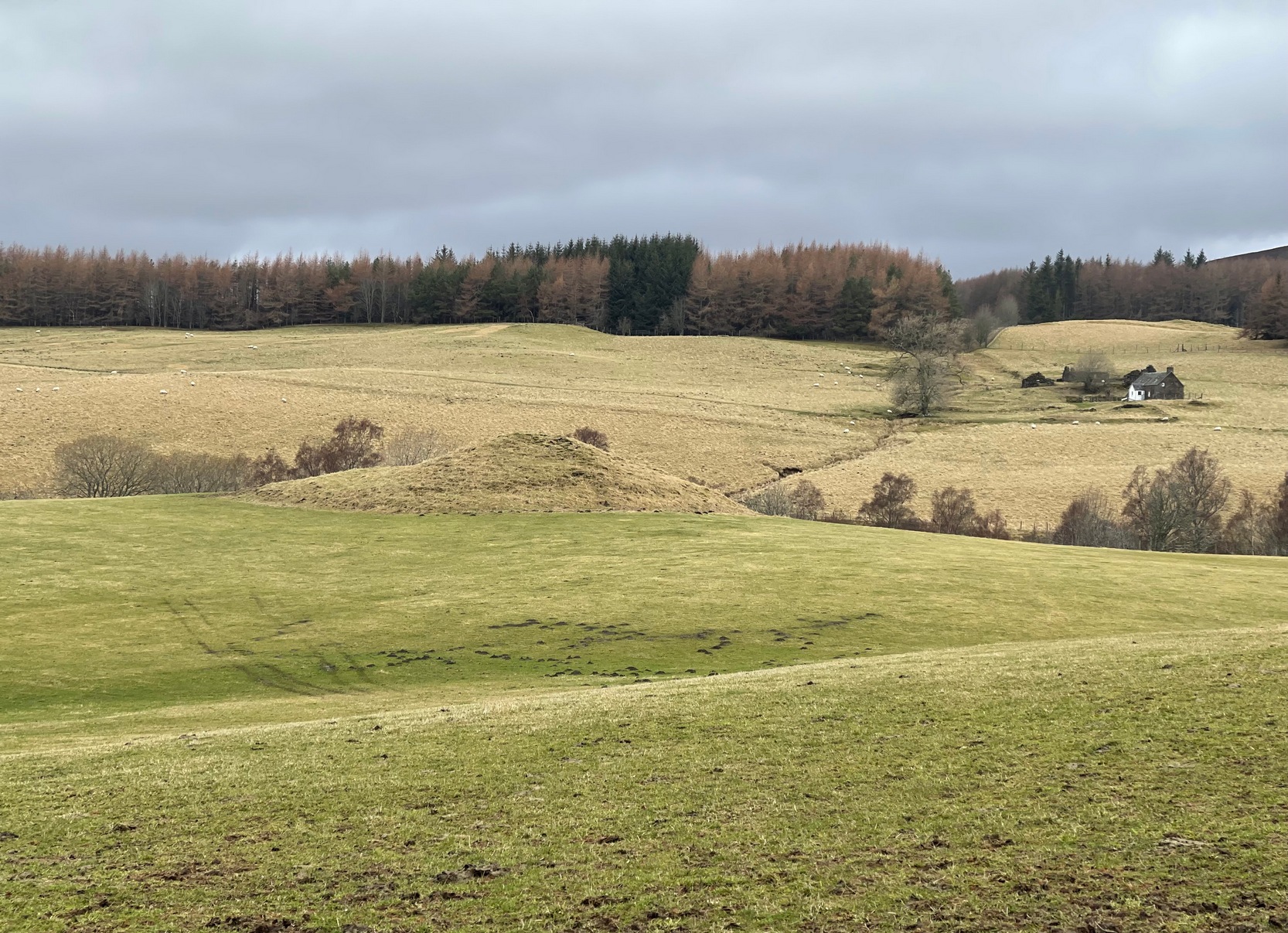
Approaching Monzie cairn

Along the B8079 road in Blair Atholl village, take the minor road signposted to the Bridge of Tilt.  After half-a-mile, where the road splits, keep to the right and head further uphill and, where the almost-track-like road splits again another quarter mile up, bear to the right again and just keep going uphill for nearly two miles until your reach the large car-park on the left.  Park here and then take the dirt-track to the farm (truly friendly helpful folk) where, in the field to the rear of the buildings, a large unmissable mound rises up!

Archaeology & History

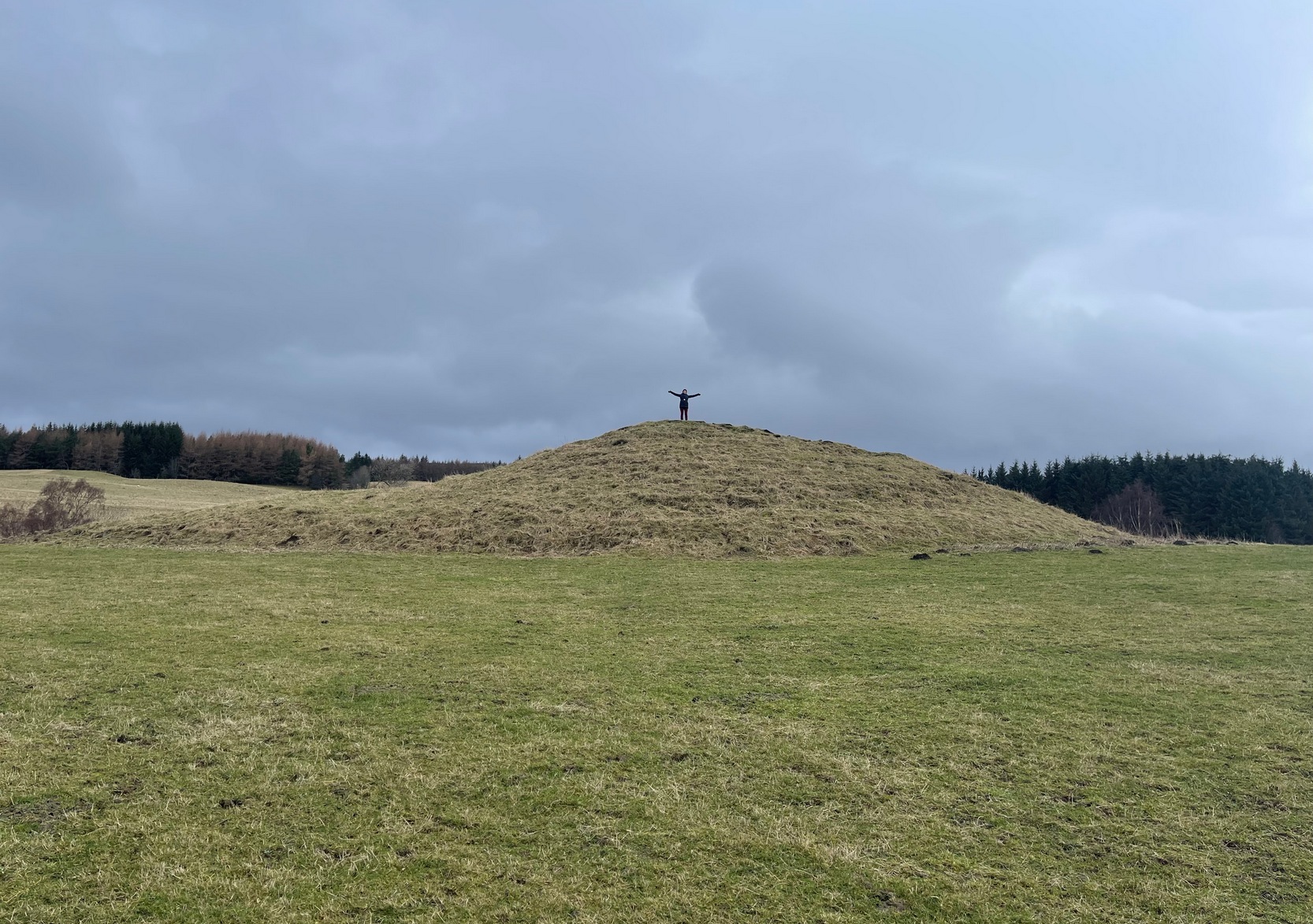
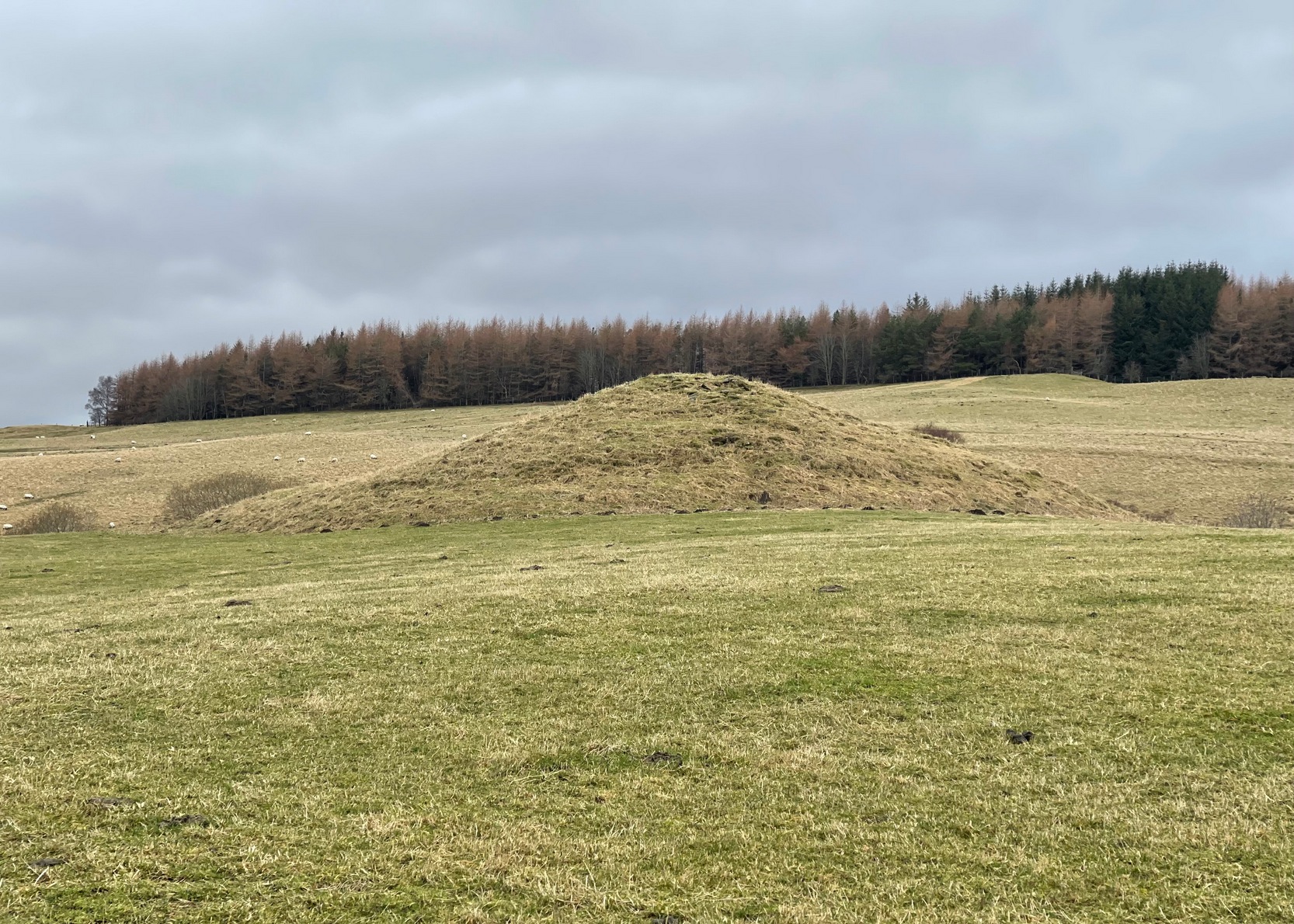
This is a bit of a beauty!  Hiding away on the southern edges of the Cairngorms we find this huge archetypal burial mound, 35 yards across and all but covered nowadays in deep layers of soil.  But it looks good.  When you walk onto its crown, about twelve feet up, you see and feel beneath you the scattered mass of small rocks and stones that comprise the monument as a whole, from top to bottom.  On its south-western side, the cairn is lower and elongated: this is due, on the whole, to where field clearance stones were pushed up against the monument many decades ago, making that side of it look bigger than it originally was.

Naomi on top for size!
Monzie cairn, looking W

Curiously perhaps, no archaeological attention of any worth has been give to the site apart from the usual estimates of its size and a guesstimate of it being neolithic or Bronze Age in nature (an easy thing to suggest).  On top, just beneath the grasses, is what may be the section of a small cist, but this may just be a fortuituous formation.  Excavation is required!  It’s one of a small number of old cairns and tombs in this locale, but this seems to be the biggest — unless, of course, the lost but legendary Carn Deshal, less than a mile to the south, stood larger…

Acknowledgements:  To my awesome Naomi – for getting us up here.

© Paul BennettThe Northern Antiquarian

Craig Hill (17), Kenmore, Perthshire

Cup-and-Ring Stone:  OS Grid Reference – NN 81334 45077

Getting Here

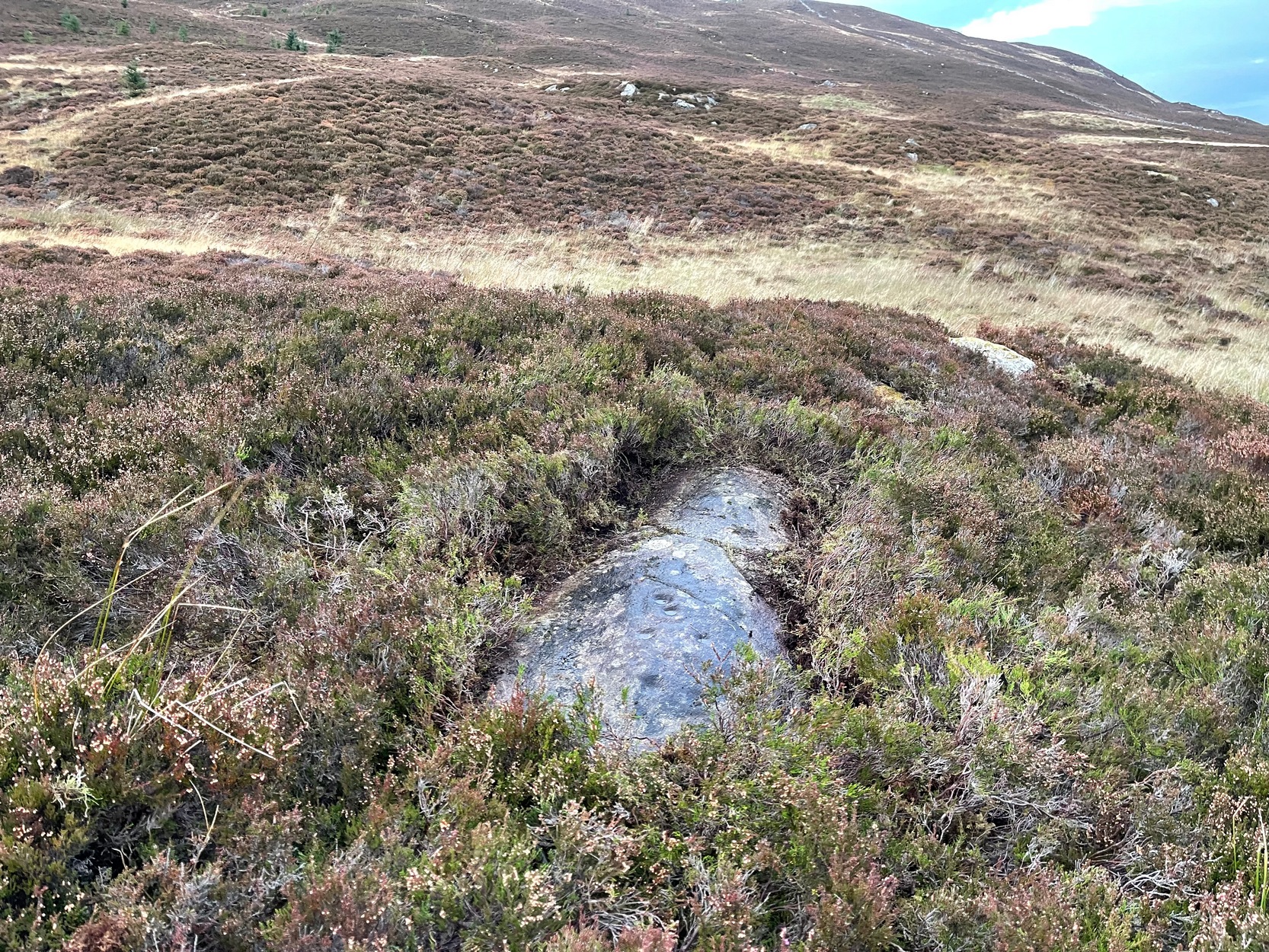
Craig Hill (17) looking NE

Like many of the Craig Hill carvings, this takes some finding when the heather’s deep… If you can locate the Craig Hill hut circle (there are actually several of them close to each other), face uphill (looking at the trees) and then from the hut circle walk diagonally to your right (northeast) and walk up the slope for 30-40 yards.  A large boulder is in front of you and, just past it at the edge of a small rock-face, a fallen tree is your marker.  Just a few yards above and past this is an earthfast elongated stretch of rock.  You’ll find it…

Archaeology & History

Some cups & 2-in-a-ring

On my visit to this carving I arrived near the end of the day. Within the hour, beneath an already cloudy grey sky, night had fallen; and so, obviously, my assessment of this carvings design was somewhat hampered…

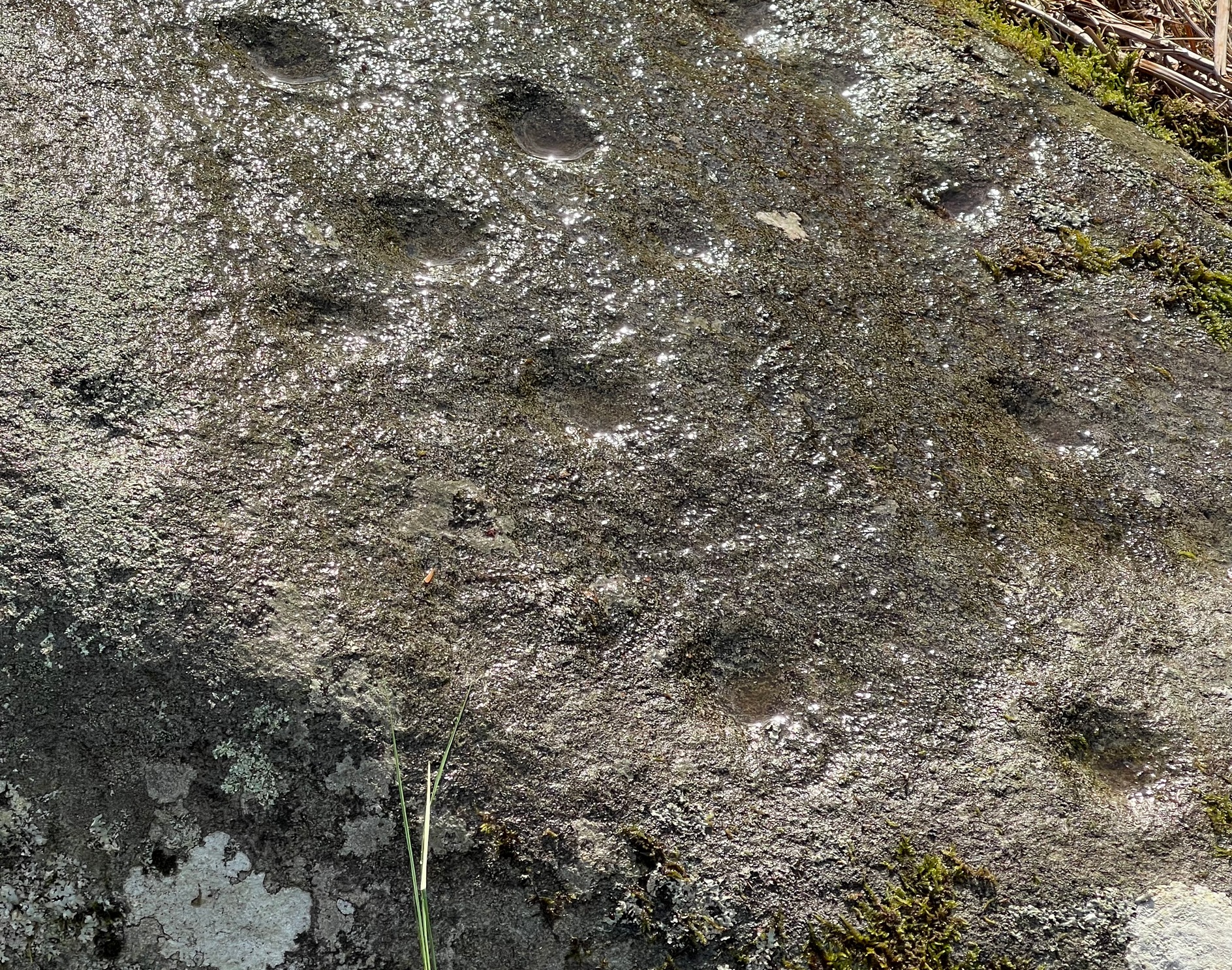
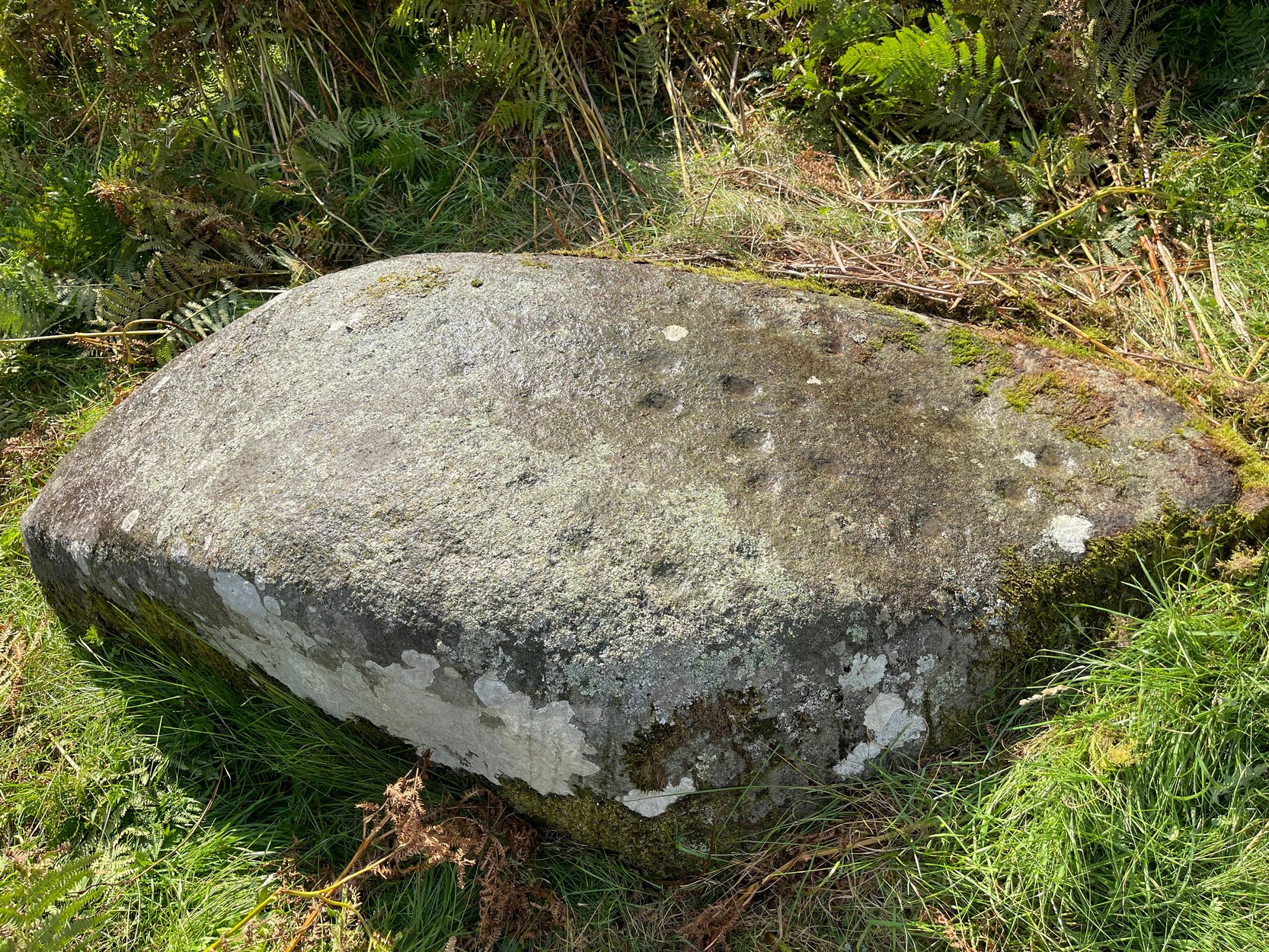
It’s one of several quite separate petroglyphs that almost collide with each other on adjacent rock faces.  Etched across this, an elongated slightly convex stone, we find a series of cup-marks in no particular order, mainly running along the topmost section of the stone.  Others fall away at the edges, with what seemed like one or two at the more northeastern end of the stone.  However, due to the poor lighting when I came here, I struggled to make out the full design and so probably missed some important elements.  I’ll update this if/when I visit it again – or if a fellow antiquarian visits the spot and sends in some good images.

© Paul BennettThe Northern Antiquarian

Kilravock, Croy, Nairnshire

Cup-Marked Stone (lost):  OS Grid Reference – NH 814 503

Archaeology & History

Somewhere on the outskirts of Kilravock Castle grounds sat (or still sits, hopefully) one of our country’s legendary healing stones bound within the animistic veil of a cup-marked stone.  It seems to have fallen off the archaeological registers (if it was ever included!) and so I add it here in the hope that someone can locate it and let us know of its present condition.

Described during a meeting of the Inverness Scientific Society by a Dr Grigor in a short presentation on cup-marked stones at Nairn in July 1884, the matter of some faint traditions concerning a tiny number of cup and ring stones in Scotland was mentioned, and,

“Dr Grigor said he would be able, next day, at the roadside on the Kilravock property, to point out a large rounded stone of gneiss, in the centre of which is a large cut cup-mark of a diameter of six or seven inches which, fifty years ago, was resorted to by many, and water was taken from it long distances.  The water was believed to cure skin diseases, but it was principally used for washing warts on the human subject, which it was believed the water quickly removed.  It was also particularly in repute for removing warts from cow’s teats.”

The custom described here sounds very similar to others found at so-called ‘Wart Stones’ in England and Scotland (there was one that existed a short distance from where I grew up near Eccleshill, West Yorkshire).  Several miles west of here is the cluster of prehistoric carvings in the Clava complex, but this one at Kilravock seems to have fallen off the radar. Does anyone know if it can still be seen? (the grid-reference given to this site is an approximation)

References:

  1. Grigor, Dr, “Cup Marked Stones,” in Transactions Inverness Scientific Society Field Club, volume 3, 1884.

Acknowledgements:  Huge thanks for use of the Ordnance Survey map in this site profile, reproduced with the kind permission of the National Library of Scotland

© Paul BennettThe Northern Antiquarian

Craig Hill, Kenmore, Perthshire

Hut Circle:  OS Grid Reference – NN 81327 45039

Getting Here

Craig Hill hut circle

From Kenmore village, just as you’re going out of the village towards Aberfeldy (A827 road), turn right as if you’re going on the minor road on the south-side of Loch Tay.  Almost immediately on this road, turn left and take the tiny, steep road uphill towards Amulree.  After 2½ miles uphill, the road begins to level out and a small loch is on your left (north).  Just past it, on the same side, a track runs onto the moors.  Walk along here for nearly a mile where the track splits: keep to your left and the track follows the line of walling.  Now’s the hard bit: after literally ⅔-mile, walk downhill and cross the burn (stream), then less than 50 yards up the slope on the other side, zigzag around…

Archaeology & History

Craig Hill circle looking SW

Overlooking a small (unnamed) burn immediately to the right and a large wide marshy hollow to the front, is this small and seemingly singular hut circle, in a good state of preservation, surrounded by the scattered mass of cup-and-ring stones—some complex, some very plain—all over this moorland slope.  It’s a very long journey to take just to visit a single hut circle, but I’d assume that you’d be wanting to see the petroglyphs surrounding it too—so mebbe have a look at this whilst you’re fondling the rock art!

Internally this is quite a small circle, measuring barely 5 yards (east-west) by 6 yards (north-south), seemingly with its entrance on the north.  Its small size suggests it was constructed for the use of just one person; two at the very most.  The structure is still in very good condition considering its age (possibly Bronze Age), with minimal damage apart from Nature’s wind and weathering.  The circle is made up primarily of a number of large rocks with many filling stones, with the walling being a yard or so wide all round.  In all likelihood, the rest of the building would have been made of timber, with a typical tented roof.  It’s an excellent spot to base yourself to explore all the cup-and-ring stones on these slopes.  Perhaps, just perhaps, this might have been a shaman’s hut, looking over the ancestral images on the rocks hereby…. ♥

© Paul BennettThe Northern Antiquarian

Urlar Burn (4), Aberfeldy, Perthshire

Cup-Marked Stone:  OS Grid Reference – NN 81875 44068

Getting Here

The cup-marks, looking S

Take the long steep zigzag road from Kenmore to Amulree, and just where the road begins to level out, park up near the isolated hut by the roadside at the side of the lochan.  Just past here, a track on your left takes you onto the moors, past the lochan.  Nearly a mile along the track splits: bear to the right, uphill slightly, then it’ll wind downhill and you’ll pass another track on your right. Ignore it, keep walking along and where you find a grassy little passing-place on your right—stop!  Now walk uphill, onto the moor, through the heather for 175 yards and the land has levelled out.  Look around!

Archaeology & History

Cupmarks from above

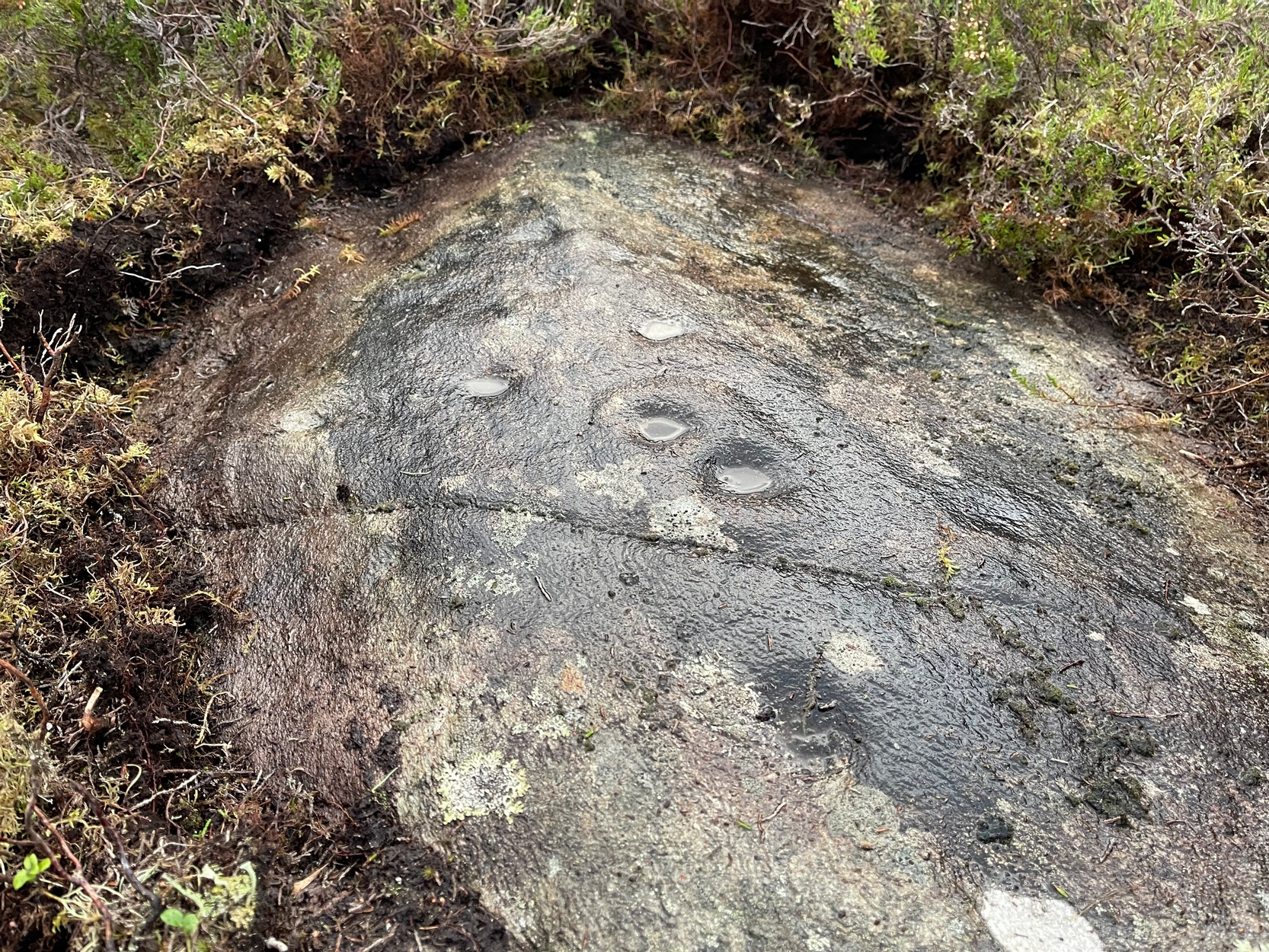
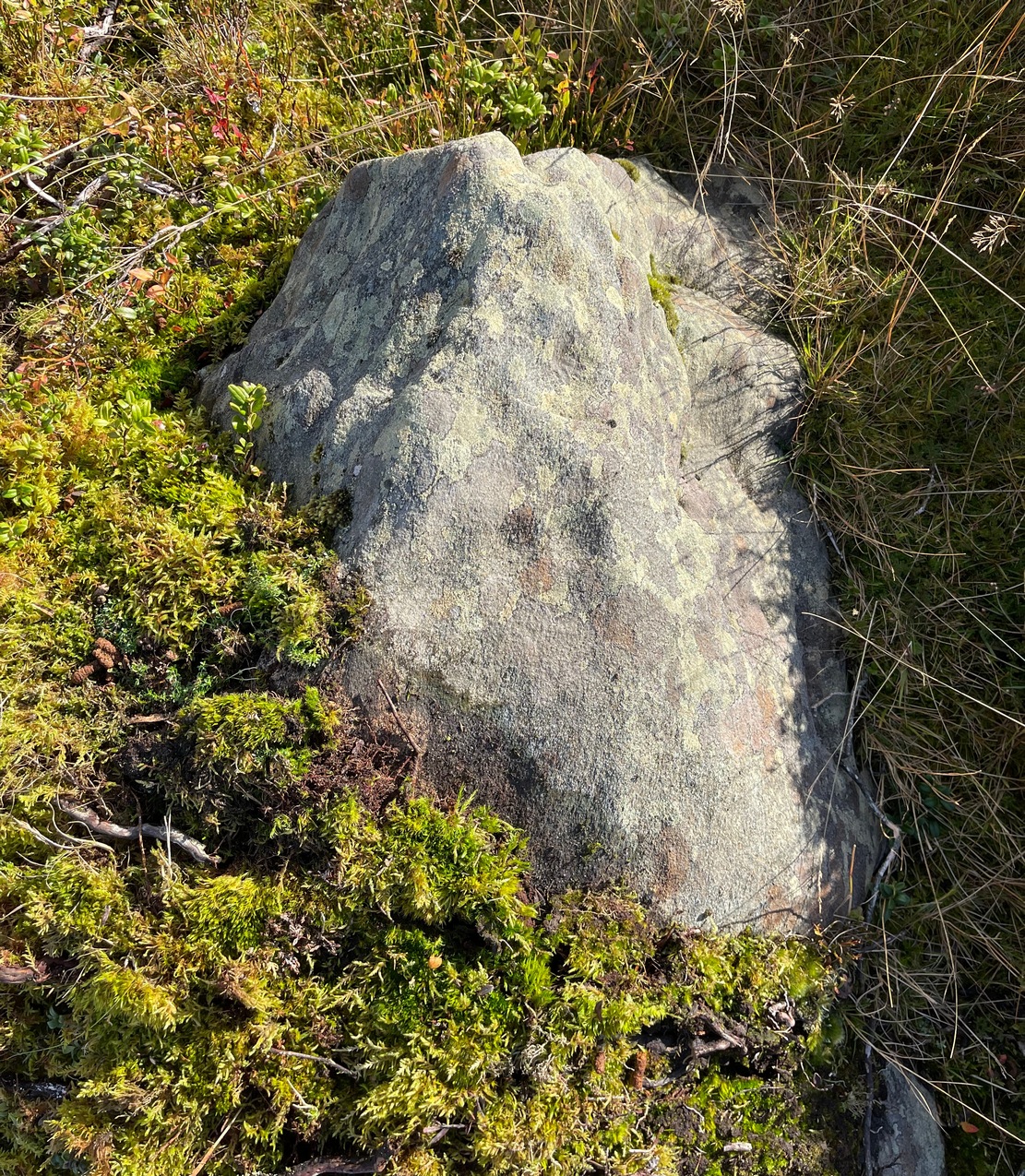
I came across this very basic carving when checking out a couple of others close by and found that it hadn’t been recorded before. It’s nothing special to look at, but is an outlier of the main Craig Hill cluster of carvings a few hundred yards to the west.  The design consists of at least two cup-marks that have been etched near the top of the rock, although when I wet the stone it seemed as if a third one was next to the other two, as if in a line.  The sun was at its peak when I found it, which meant that I couldn’t get any decent photographs to illustrate this—even when I watered the olde thing!  It’s another carving that will only be of interest to the real petroglyph fanatics amongst you.

© Paul BennettThe Northern Antiquarian

St. Bride’s Well, Pitlochry, Perthshire

Holy Well (destroyed):  OS Grid Reference – NN 9397 5770

Archaeology & History

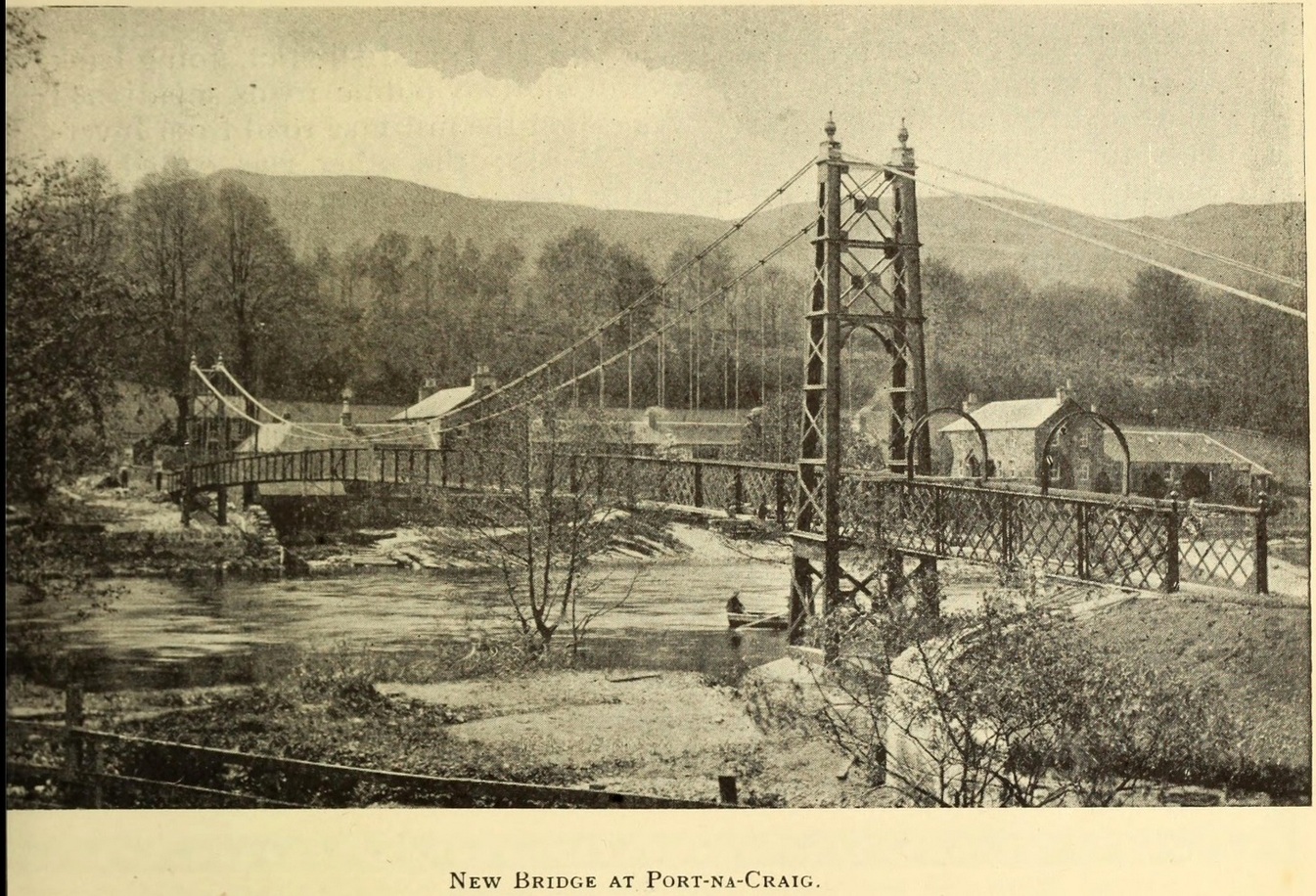
It was more than a hundred years ago that the waters of this sacred well fell back to Earth.  They emerged above the eastern side of the River Tummel, close to the bridge where previous there had been a local ferry at the site known as Port-na-Craig.  The mythic history of the ferry and the holy well went hand-in-hand, according to local tradition.  Its lore was was spelled out by the local author and historian Hugh Mitchell in a speech he gave when a new bridge was opened here in 1913.  He said:

The Well was on the far side of the bridge

“The ferry at Port-na-Craig, though not as old as many ferries in Scotland, bears the respectable antiquity of something like eight hundred years.  It was established by the monks of Coupar Angus when they got a gift of the lands of Fonab, and as Coupar Angus lay on the north side of the river Tummel, they established the ferry in order to have communication.  In those days the ferry boat was made of skins stretched on branches or twigs, so it was somewhat dangerous to cross in, and the monks thought that they would improve the occasion by dedicating the well near the old ferry to St. Bride, so that people, when they ventured across the ferry, might propitiate the saint.  It was customary for people to drop either a small coin or a brass pin into the well.  He was afraid that brass pins rather prevailed, and no doubt, St. Bride, being a lady, would find them more useful.  The well remained until recent times, when it had, unfortunately, to be filled up, on account of being contaminated by neighbouring fields.”

For “fields”, read sewage—for that was the actual reason it was closed.  Mr Mitchell (1923) told as much in his subsequent history of Pitlochry, saying that “sewage was percolating into it.”  John Dixon (1925) echoed the same thing a few years later.

The curative and magickal properties of St Bride’s Well had considerable renown for local people.  Mitchell told that:

“It had a great reputation at one time for cases of lung disease… Pins and coins were dropped into the well as votive offerings, and the bushes above it were hung with rags to call the attention of the saint to the sufferer.”

A few miles north from here, at the back of Blair Castle, an old church is dedicated to St. Bride, whose celebration date is February 1.  “The day was known as Candlemas in the Highlands,” wrote Mrs Banks, saying, in commemoration of the Celtic Brigit, “Feill Bride, the festival of Bride, displaced the festival of Mary.”

References:

  1. Dixon, John H., Pitlochry, Past and Present, L. Mackay: Pitlochry 1925.
  2. MacKay, L., Atholl Illustrated, L. MacKay: Pitlochry 1912.
  3. Mitchell, Hugh, Pitlochry District: Its Topography, Archaeology and History, L. Mackay: Pitlochry 1923.

© Paul BennettThe Northern Antiquarian

Clach Mhor, Aberfeldy, Perthshire

Cup-Marked Stone (destroyed?):  OS Grid Reference – NN 8575 4901

Also Known as:

  1. Clachmore

Archaeology & History

The Clach Mhor, or the Big Stone, is all but forgotten as an antiquarian relic in Aberfeldy.  It’s history is somewhat piecemeal.  First described in Hugh MacMillan (1884)’s essay on local cup-and-ring stones, he told that:

“A short distance above the village of Aberfeldy, where General Wade’s old road emerges from the houses, a huge stone, called the Clach Mhor, lies on the left-hand side in a slanting position half  erect, as if supported by the garden wall of which it forms a part. …In all likelihood it originally stood erect, and formed one of a group of similar stones, its companions having been broken up in the formation of the road. …On the upper face there are some small cup-markings, not quite so well formed as usual, owing to the hardness of the material… The fact that they occur on only one side of the stone, and are scattered indiscriminately all over its surface, are sufficient to convince any one who is skilled in the subject that they are genuine specimens of prehistoric sculpture.”

Nearly thirty years after this initial description, MacMillan (1901) found that it had previously been a part of The Tullich stone circle, and following its destruction the Clach Mhor was moved and used as “part of a garden wall on the old military road passing along its base.”

More than fifty years later, the Aberfeldy historian N.D. Mackay (1954) told that up to 1910 the Clach Mhor was a conspicuous object, standing “as it were overlooking and to some extent overhanging the roadway down near the Square.” However, it

“was blasted and broken up in 1910 in the course of road widening operations, but a considable part of it was built into, and still forms the lower corner of, the garden boundary wall, nearest The Square, of the house which bears its name, ‘Clachmhor’.  Its present position is slightly east of the site it occupied when I first knew it and, unless Wade’s men did actually move it, the site it occupied for centuries.”

Mackay also mentioned what he called the “indentations” on the stone which MacMillam deemed as cup-marks, but he pointed out that one Rev. John MacLean “believed they were made by the levers, jacks, etc, of (General) Wade’s men” when they cut the road into Aberfeldy in the 18th century, whilst

“A third solution was given by the son of a one-time local strong man called Big Robert, “What a strong man my father was,” he said, “he lifted that stone. Don’t you see the marks of his fingers on it?””

It’s not known what became of the Clach Mhor and whether it remains hiding in some walling, or whether it has met its demise….

References:

  1. Mackay, N.D., Aberfeldy Past and Present, Town Council: Aberfeldy 1954.
  2. MacMillan, Hugh, “Notice of Cup-Marked Stones near Aberfeldy”, in Proceedings Society of Antiquaries Scotland, volume 18, 1884.
  3. MacMillan, Hugh, The Highland Tay, Virtue: London 1901.

© Paul BennettThe Northern Antiquarian

Glen Ogle, Lochearnhead, Perthshire

Cup-and-Ring Stone:  OS Grid Reference – NN 58727 24527

Getting Here

Glen Ogle (1) carving

In Lochearnhead village start walking up the Glen Ogle road and, just past the last house on the right, a dirt-track bends down to an old building.  Just before the building, keep your eyes peeled for the small footpath that runs down to the river.  Walk along here and cross the river-bridge, then bear diagonally to your left and walk up the singular footpath.  It snakes through the trees for a few hundred yards then opens out into a field.  About 75 yards along the path in the field the land levels out.  From here, walk through the grasses to your right about 20 yards.  Zigzag about – you’ll find it.

Archaeology & History

Main cluster + v.faint ring

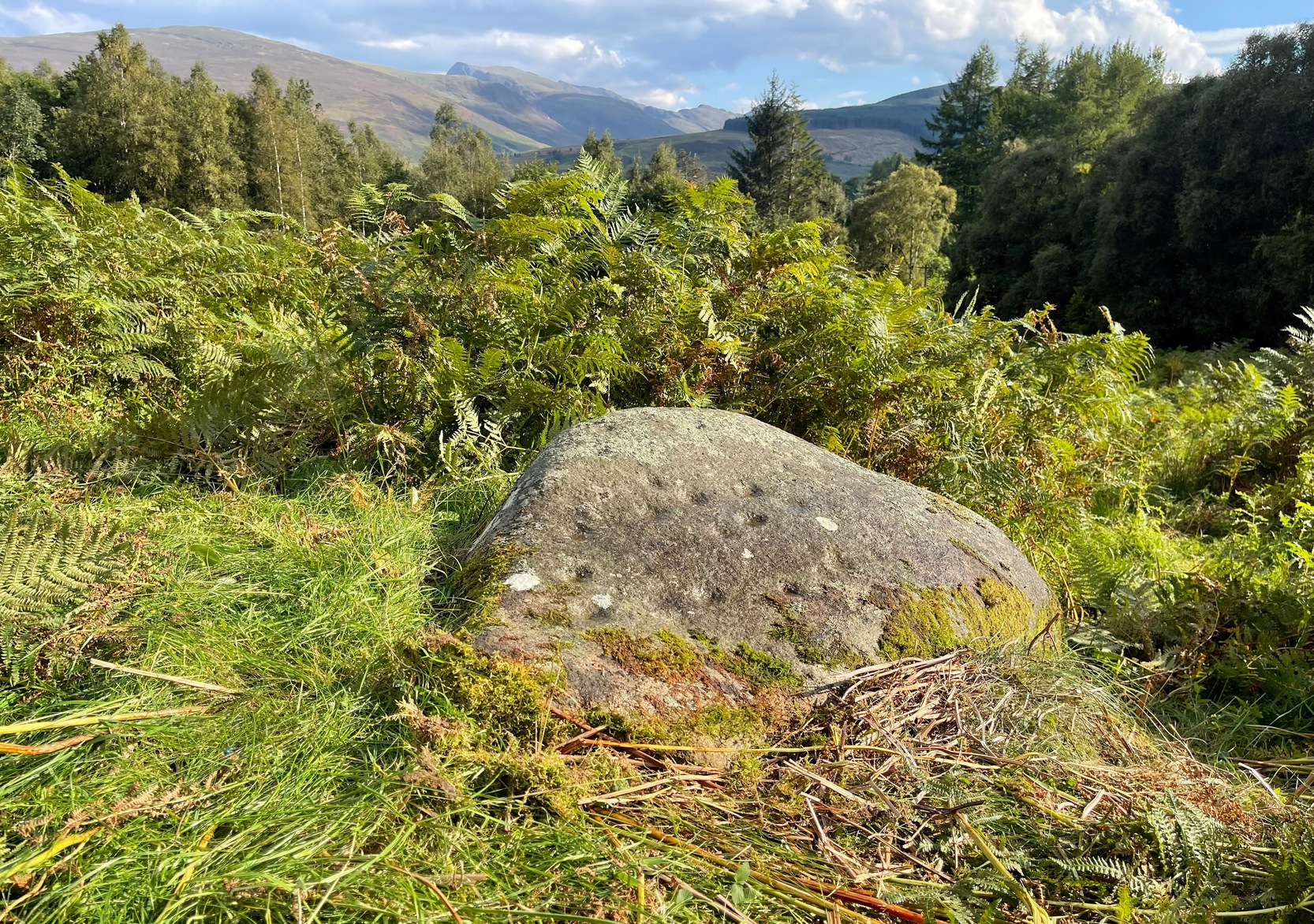
The setting of this carving is, like many of Perthshire’s petroglyphs, quite beautiful.  It was made when the ‘artist’ carving the stone was crouched or sat on the ground, gazing at the southern landscape and heights around Ben Vorlich, whose mythic nature may have been part of the design.

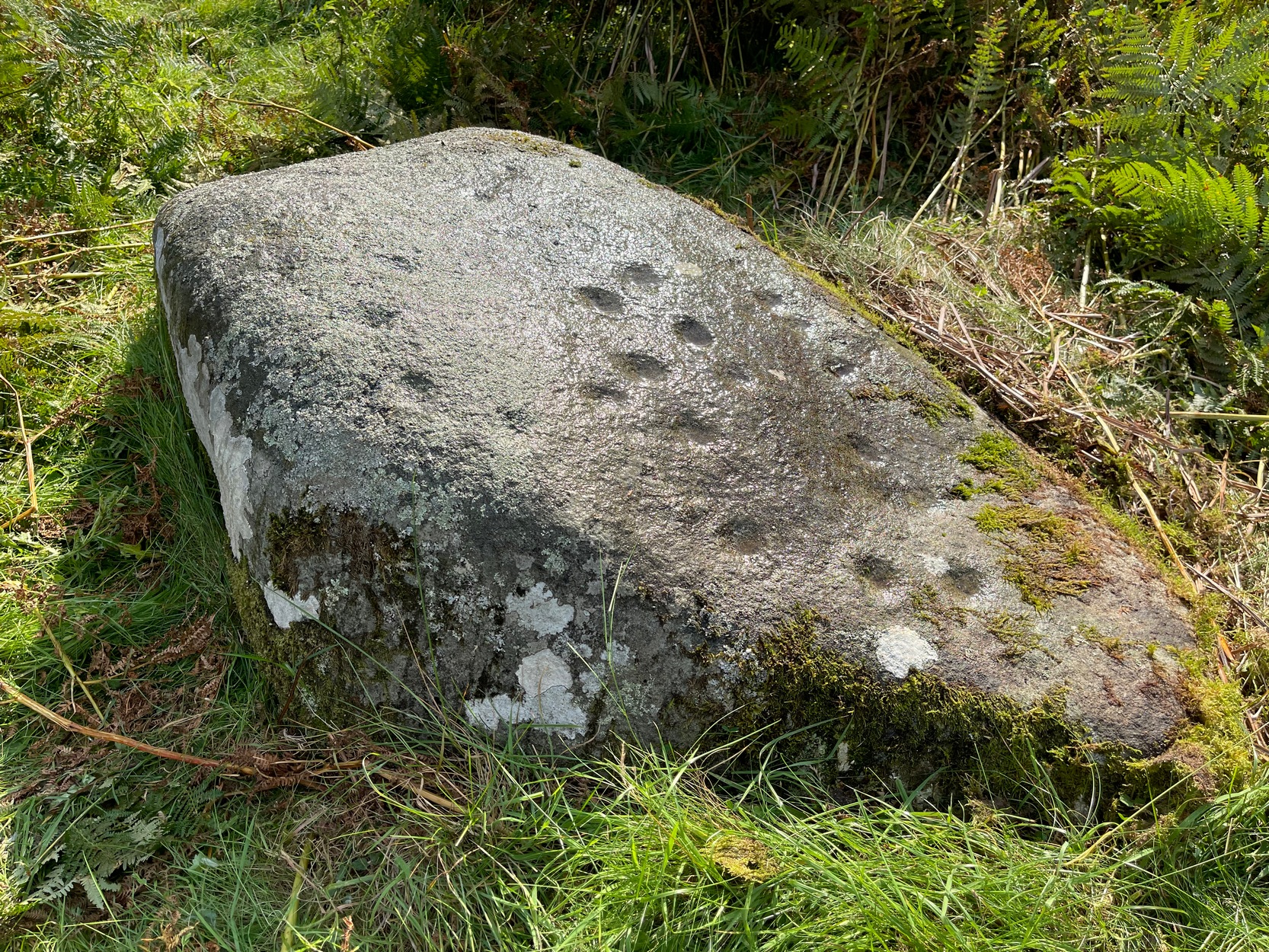
Comprising of a cluster of typical cup-marks, there are two, perhaps three very faint rings in the design, which seems to have been described for the first time in George Currie’s (2012) typically short minimalist way.  He told that in the field,

“50m E of the Ogle Burn is a boulder 2.1 x 0.9 x 0.5m, which bears 21 cup marks, 2 of which have single rings.”

Cup and faint ring
Faint cups on the crown

Much of the original design is difficult to see in full unless the lighting is good.  We spent several hours here and counted 25 cup-marks and found rings around three of them—but these proved difficult to photograph and some more visits are needed to capture them.  “Officially” at least, there are no other carvings close to this one.  But that’s obviously not going to be the case.  Well worth checking out when you’re in the area.

References:

  1. Currie, George, “Stirling: Balquhidder, Glen Ogle – Cup-and ring-marked rock”, in Discovery & Excavation Scotland, volume 13 (New Series), 2012.

© Paul BennettThe Northern Antiquarian

The Tullich, Aberfeldy, Perthshire

Stone Circle (destroyed):  OS Grid Reference – NN 857 489

Archaeology & History

In an early essay on the rock art around Aberfeldy, Hugh MacMillan (1884) remarked on what he thought was a tumulus on the southern slope above the town and where a large old petroglyph once lived.  Subsequently (MacMillan 1901), in his beautiful artistic foray through upper Tayside, he revised his earlier remarks telling that:

“On the side of a high, tree-covered hillock, rising up abruptly behind the central part of Aberfeldy, called the Tullich, there was once a Druidical circle, one of the huge stones of which, called the Clachmore, forms part of a garden wall on the old military road passing along its base.”

The circle was mentioned in Mackay’s (1954) excellent work, albeit in the past tense, and he could add no more to it other than his memory of the whereabouts of the Clach Mhor (as it was more accurately known), on which were numerous cup-markings. (Note: the grid-reference to this site is an approximation)

Folklore

In bygone times the people of Aberfeldy observed the celebration of Samhain, the old pre-christian New Year’s Day—a.k.a. Hallowe’en—on November 11th.  Interestingly for us, “bonfires were numerous and there was always a great blaze on the Tullich,” said Dr John Kennedy. (1901)  Considering the small area of The Tullich, it would be unusual if such festivities did not have some relationship with the stone circle.  Samhain relates primarily to the passing over of the dead in the cycle of the year: the spirits of the ancestors moving through the worlds.  If this circle had such a relationship with the bonfires, it may have been a ring cairn and not a free-standing stone circle.

References:

  1. Kennedy, John, Old Highland Days, Religious Tract Society 1901.
  2. Mackay, N.D., Aberfeldy Past and Present, Town Council: Aberfeldy 1954.
  3. MacMillan, Hugh, “Notice of Cup-Marked Stones near Aberfeldy”, in Proceedings Society of Antiquaries Scotland, volume 18, 1884.
  4. MacMillan, Hugh, The Highland Tay, Virtue: London 1901.

© Paul BennettThe Northern Antiquarian