Tormain Hill (8), Ratho, Midlothian

Cup-Marked Stone:  OS Grid Reference – NT 12907 69667

Also Known as:

  1. Tormain ‘H’ (Allen 1882)

Archaeology & History

Dodgy cups of Tormain-8

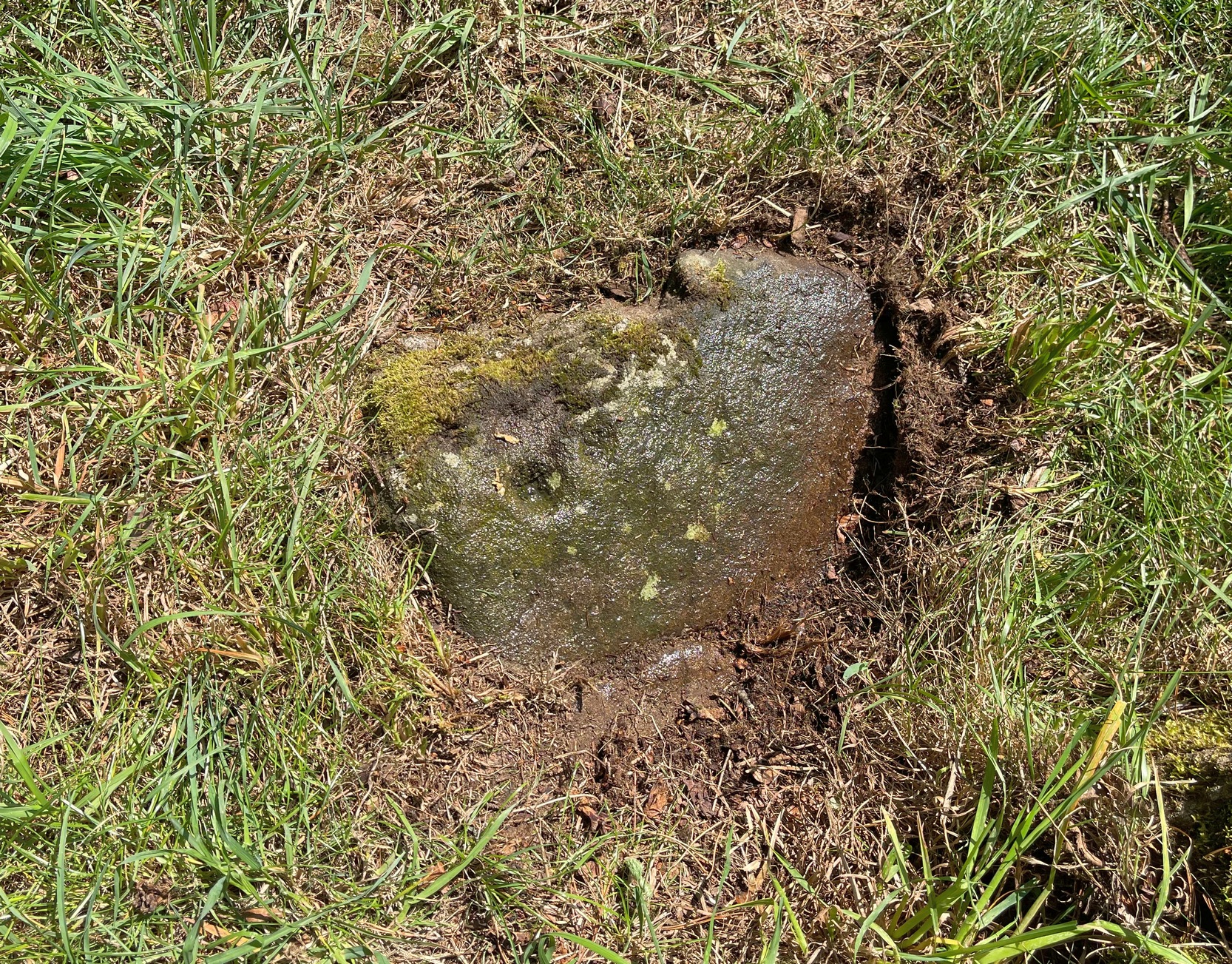
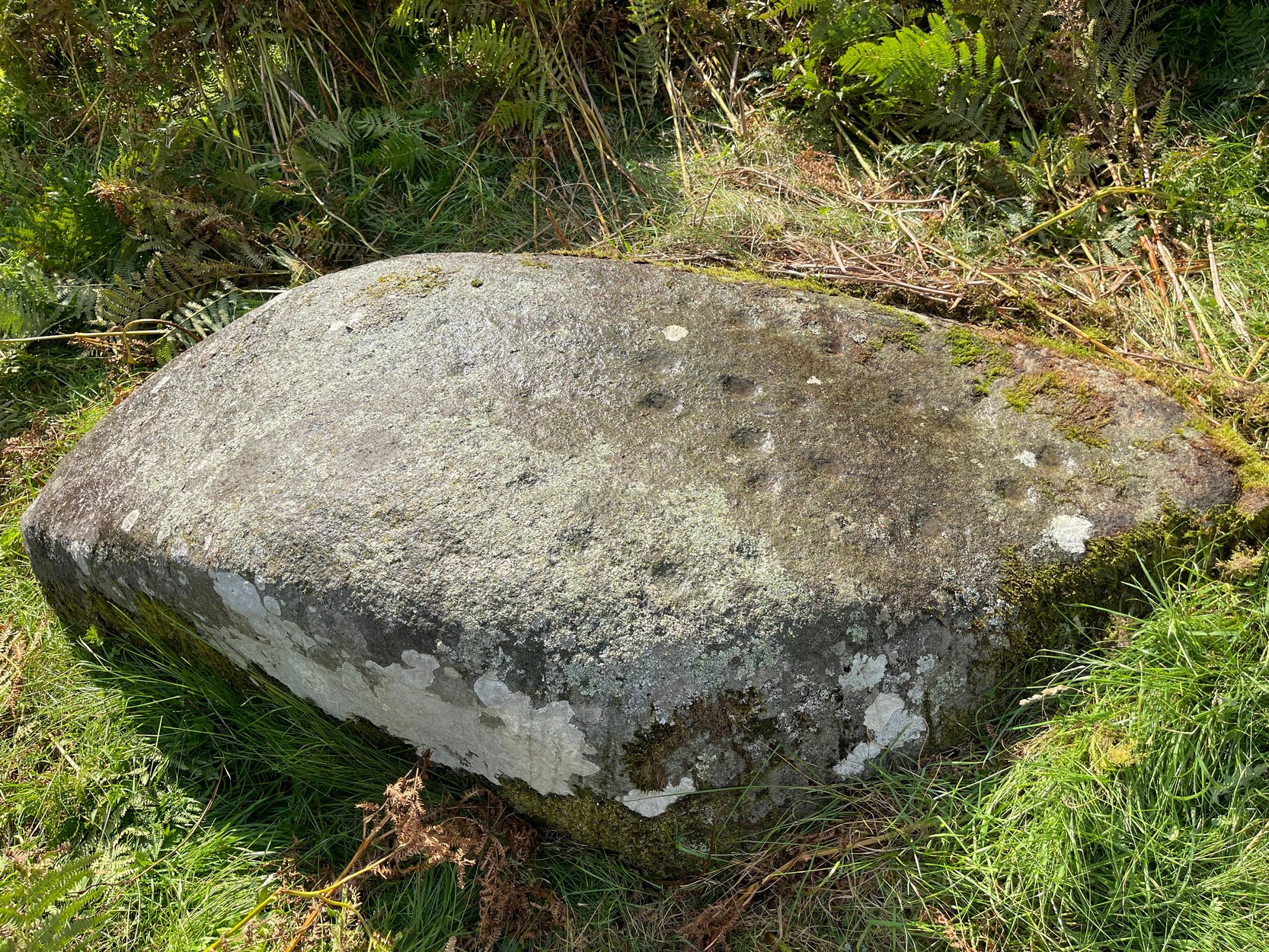
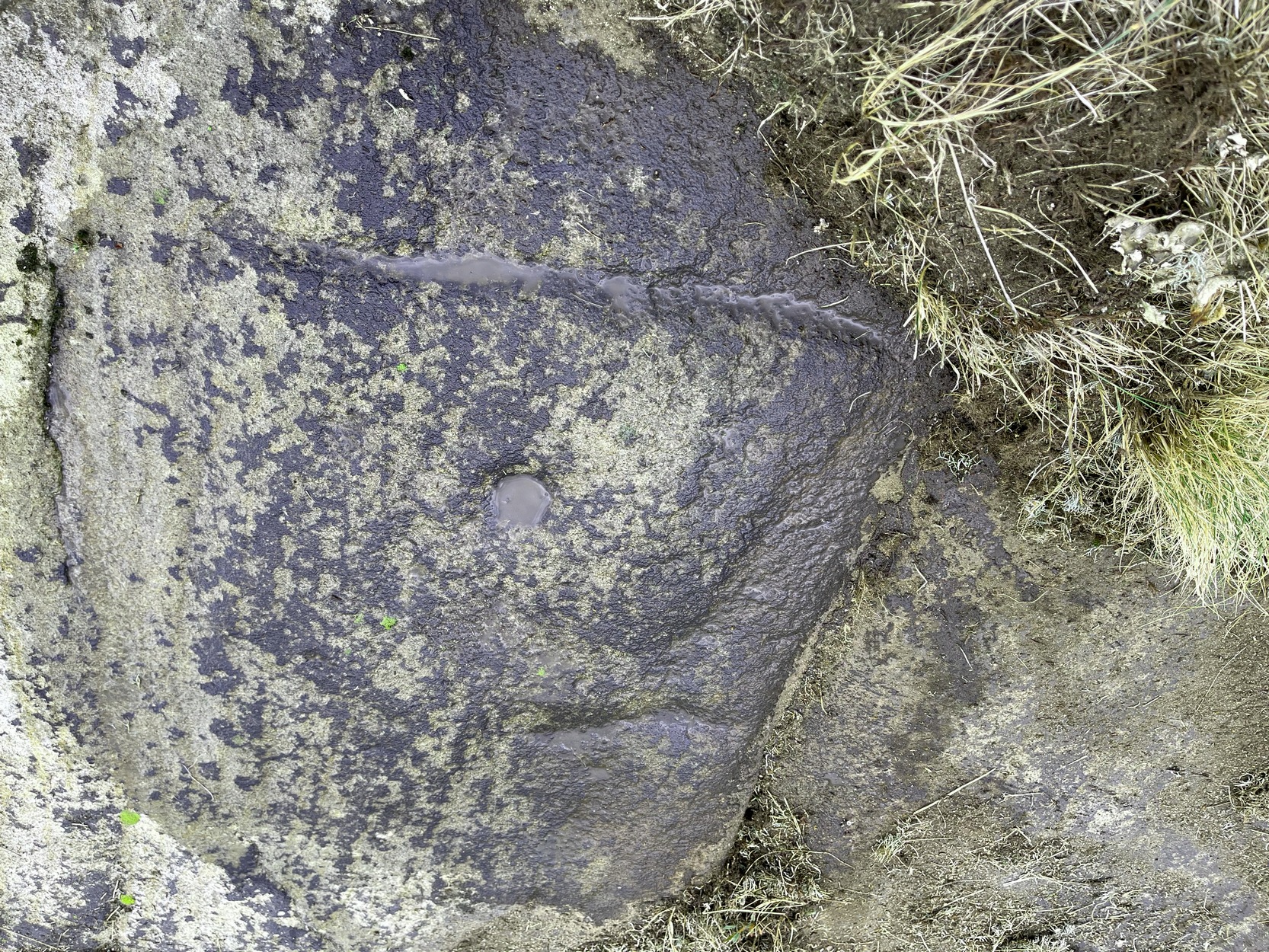
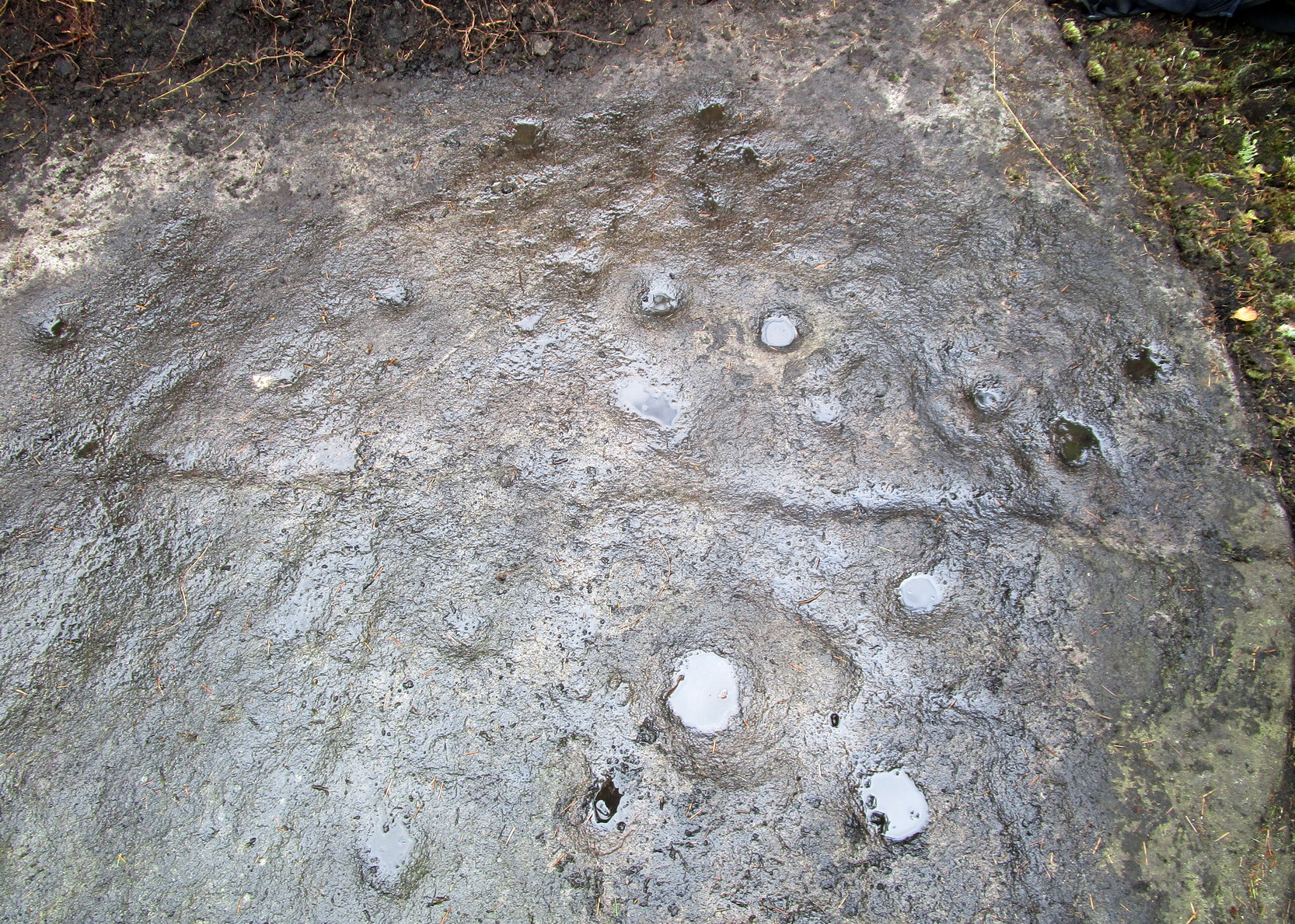
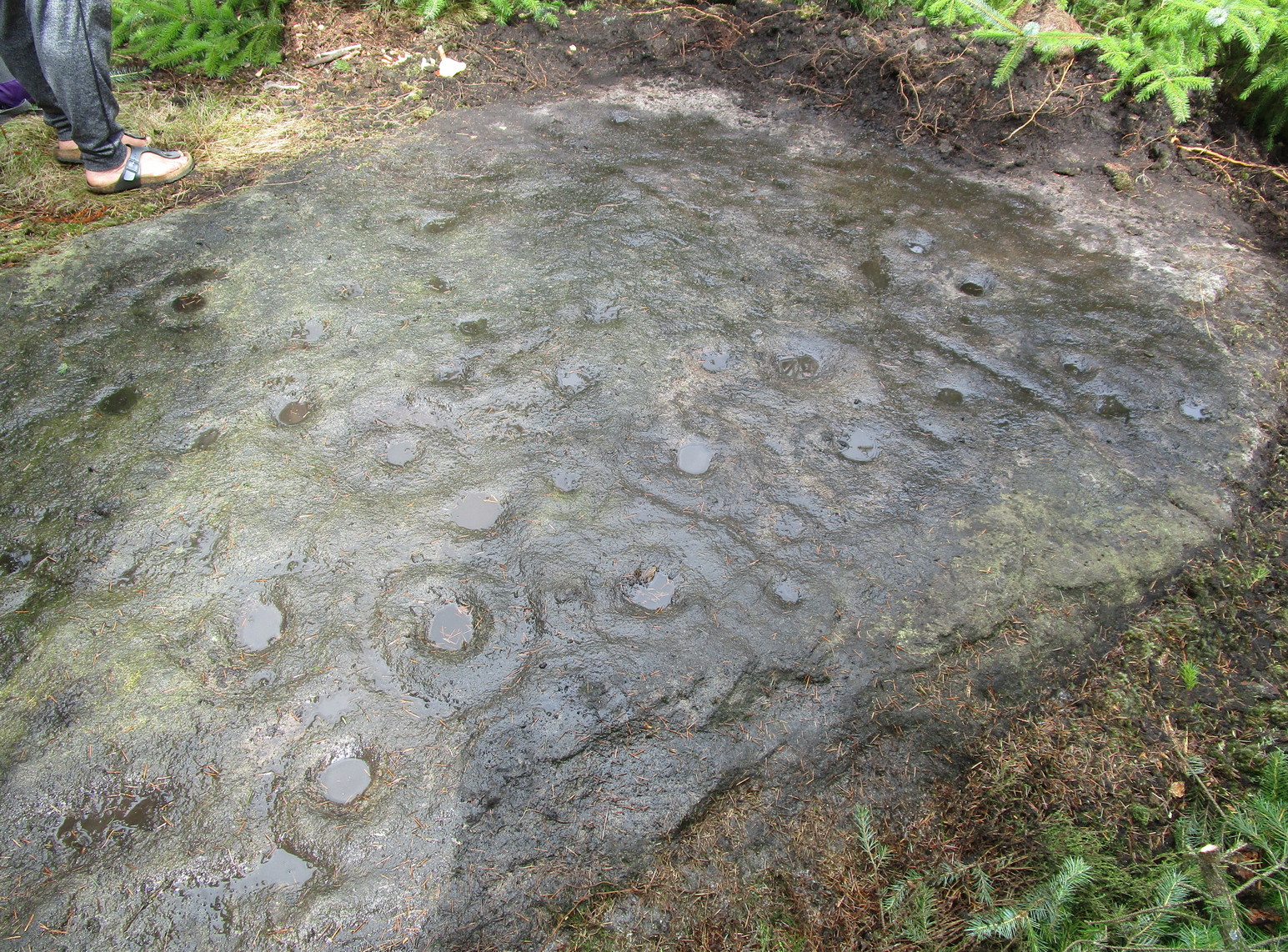
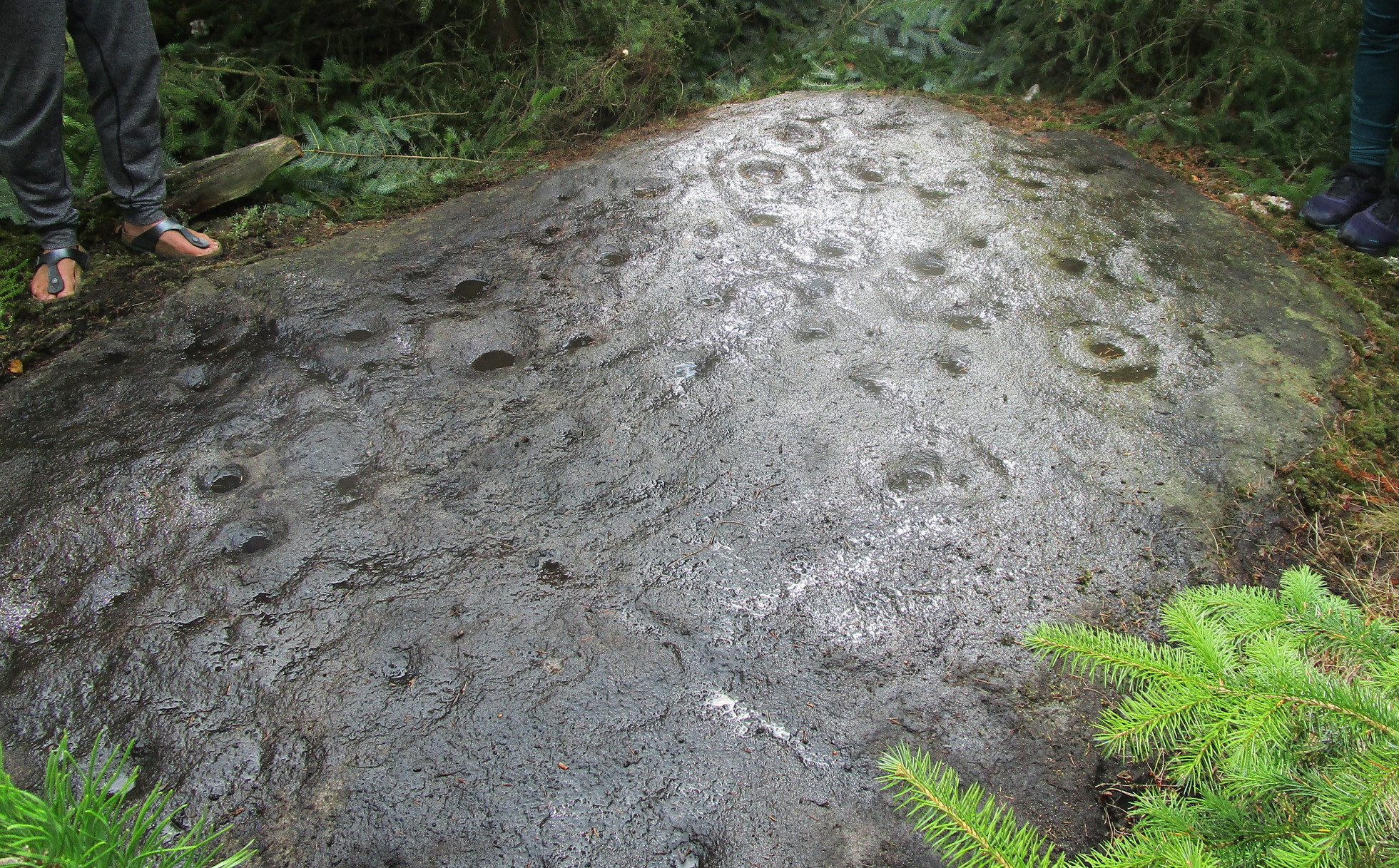
Found barely 12 inches east of the Tormain (7) carving, this ‘cup-marked stone’ is another somewhat dubious design in the Tormain cluster, but which I’m adding here for the sake of completeness.  It’s designated as authentic by the Scottish Rock Art Project—but I’m not convinced.  Consisting of just two cup-marks, Romilly Allen (1882) was the first to notice them and described them respectively as, “one 1 inch in diameter and the other 1½ inch across.”  The smaller of the two, I’m pretty sure, is geophysical in nature.


References:

  1. Allen, J. Romilly, “Notes on some Undescribed Stones with Cup Markings in Scotland,” in Proceedings of the Society of Antiquaries Scotland, volume 16, 1882.

© Paul BennettThe Northern Antiquarian
Glen Ogle, Lochearnhead, Perthshire

Cup-and-Ring Stone:  OS Grid Reference – NN 58727 24527

Getting Here

Glen Ogle (1) carving

In Lochearnhead village start walking up the Glen Ogle road and, just past the last house on the right, a dirt-track bends down to an old building.  Just before the building, keep your eyes peeled for the small footpath that runs down to the river.  Walk along here and cross the river-bridge, then bear diagonally to your left and walk up the singular footpath.  It snakes through the trees for a few hundred yards then opens out into a field.  About 75 yards along the path in the field the land levels out.  From here, walk through the grasses to your right about 20 yards.  Zigzag about – you’ll find it.

Archaeology & History

Main cluster + v.faint ring

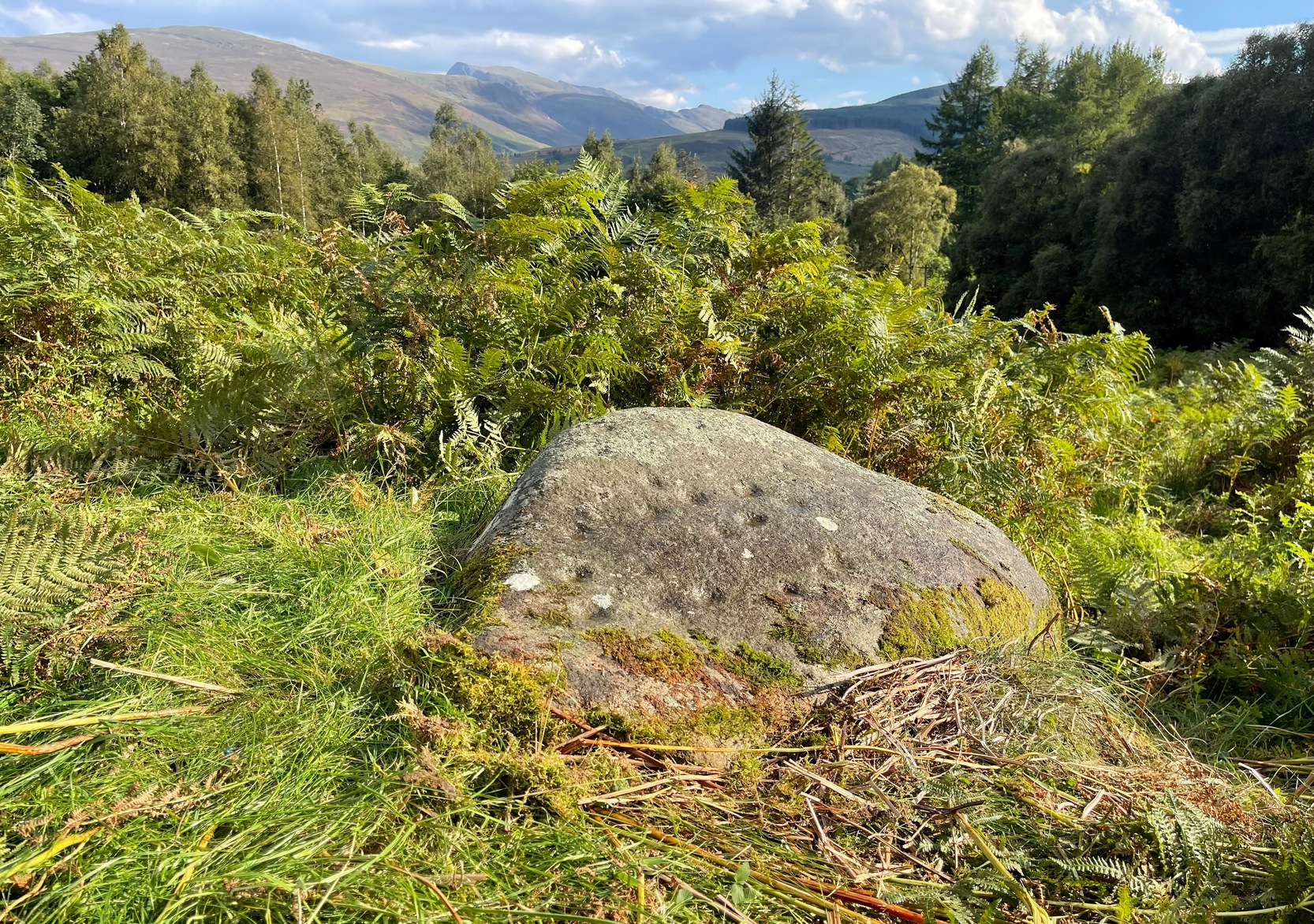
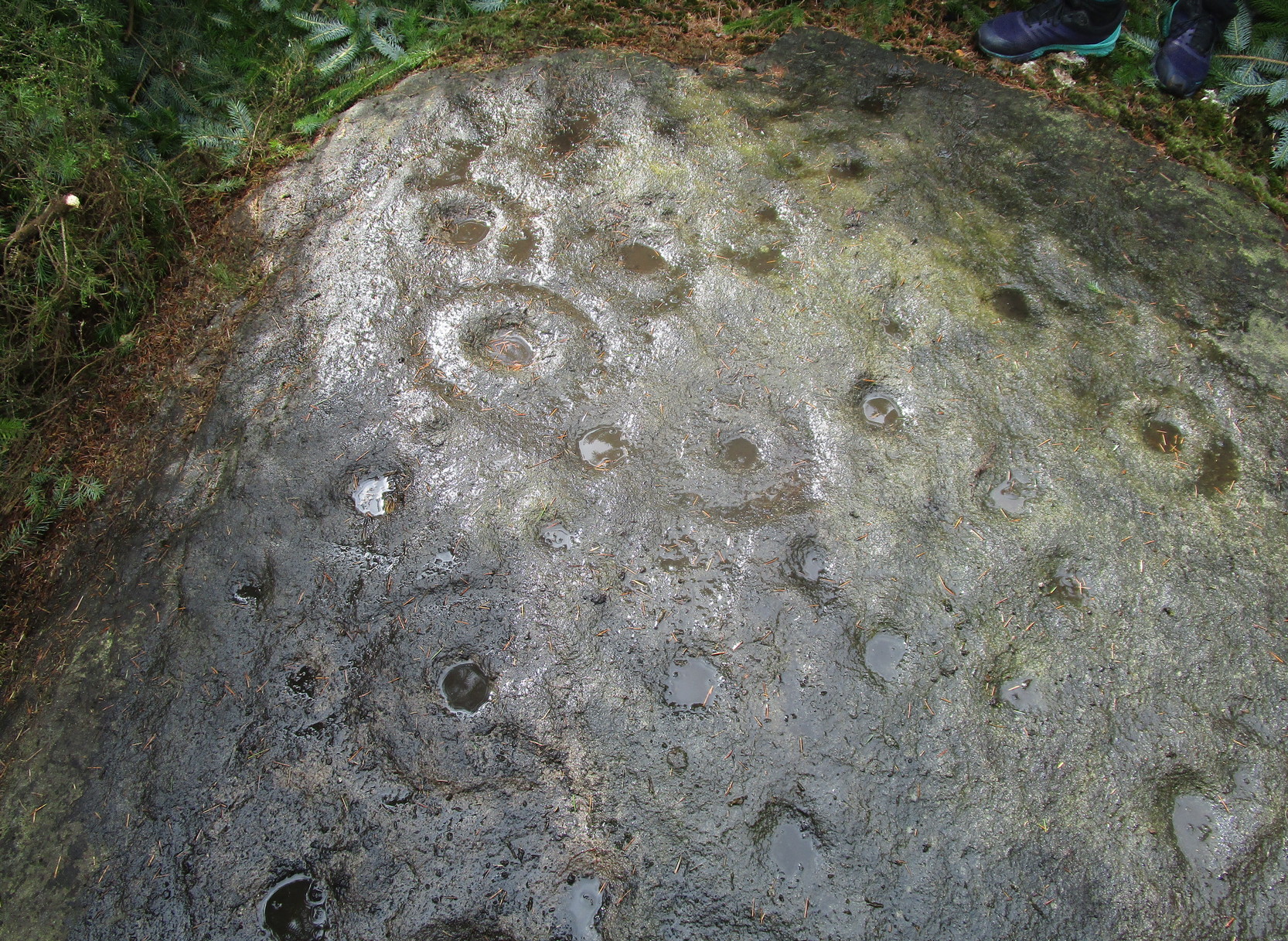
The setting of this carving is, like many of Perthshire’s petroglyphs, quite beautiful.  It was made when the ‘artist’ carving the stone was crouched or sat on the ground, gazing at the southern landscape and heights around Ben Vorlich, whose mythic nature may have been part of the design.

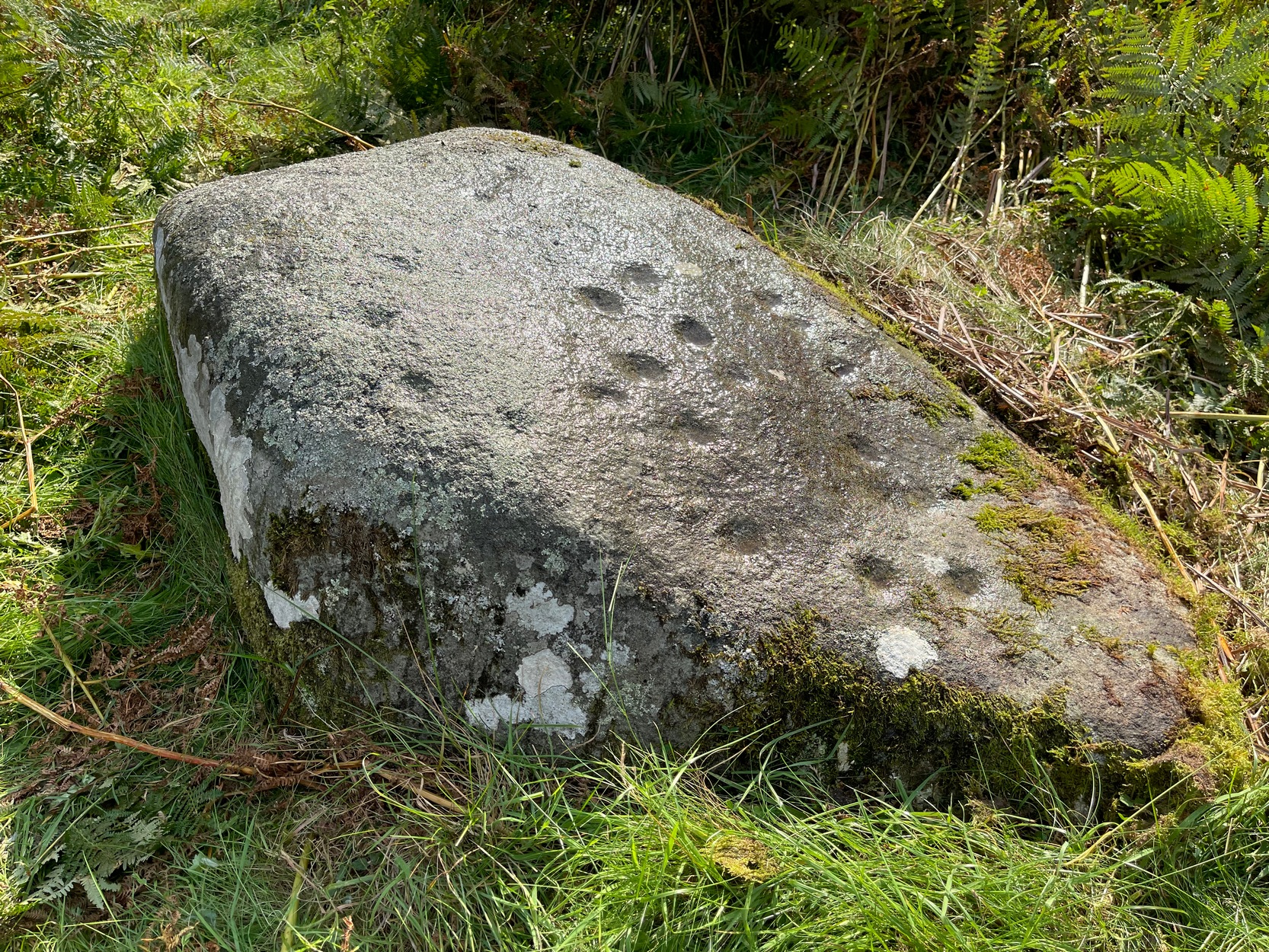
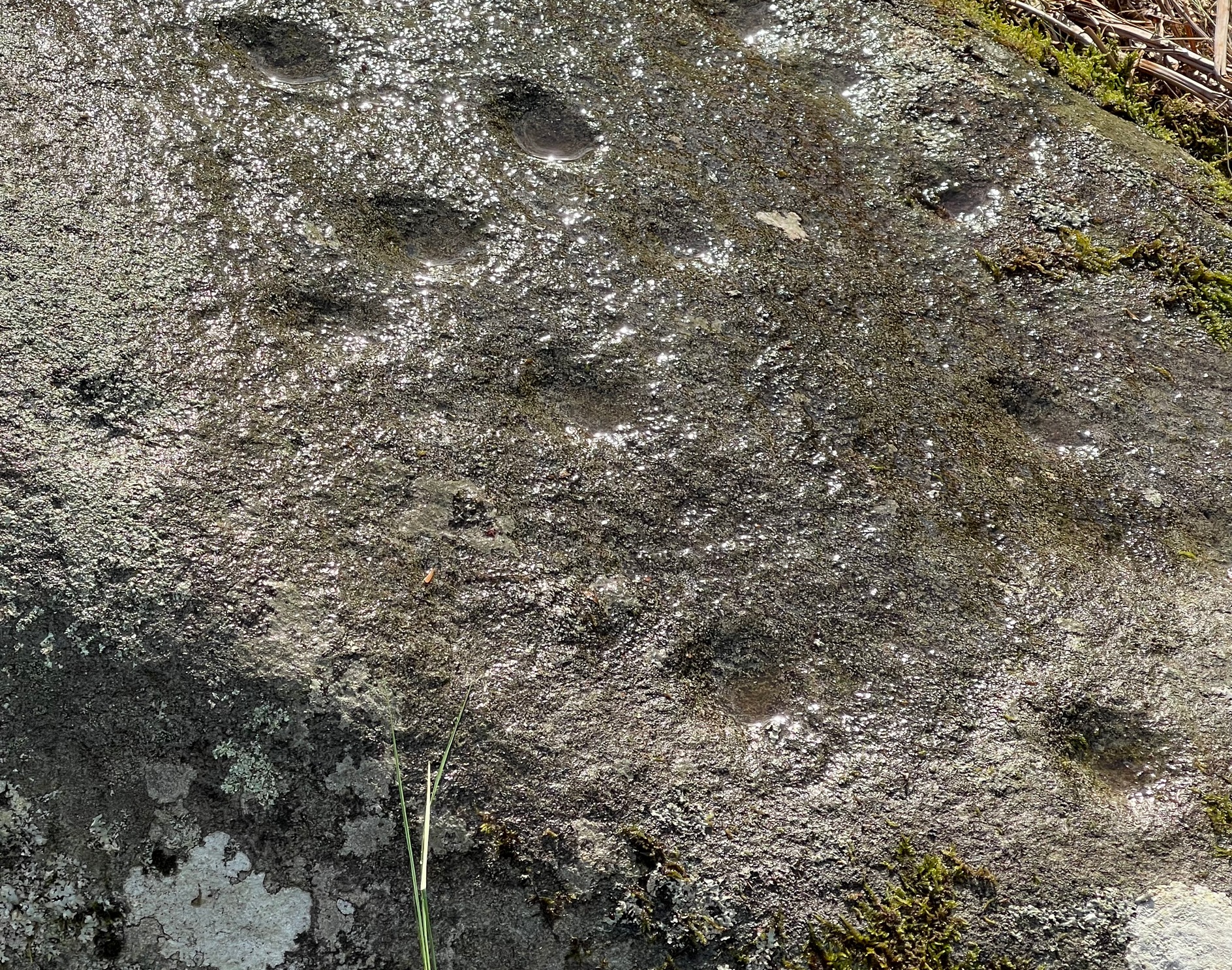
Comprising of a cluster of typical cup-marks, there are two, perhaps three very faint rings in the design, which seems to have been described for the first time in George Currie’s (2012) typically short minimalist way.  He told that in the field,

“50m E of the Ogle Burn is a boulder 2.1 x 0.9 x 0.5m, which bears 21 cup marks, 2 of which have single rings.”

Cup and faint ring
Faint cups on the crown

Much of the original design is difficult to see in full unless the lighting is good.  We spent several hours here and counted 25 cup-marks and found rings around three of them—but these proved difficult to photograph and some more visits are needed to capture them.  “Officially” at least, there are no other carvings close to this one.  But that’s obviously not going to be the case.  Well worth checking out when you’re in the area.

References:

  1. Currie, George, “Stirling: Balquhidder, Glen Ogle – Cup-and ring-marked rock”, in Discovery & Excavation Scotland, volume 13 (New Series), 2012.

© Paul BennettThe Northern Antiquarian
Jenny Lane, Baildon, West Yorkshire

Cup-Marked Stone (removed):  OS Grid Reference – SE 1579 3995

Archaeology & History

Jenny Lane carving

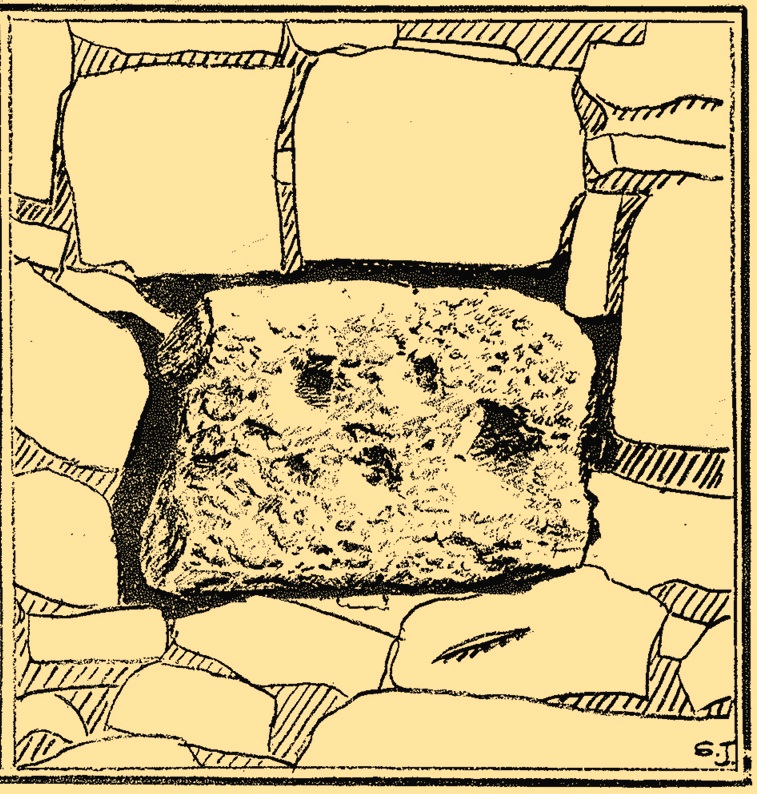
A small, seemingly broken cup-marked stone that may have once been part of a prehistoric tomb, found itself being included in an old wall at some time in the not-too-distant past: in the south-facing wall of the cricket ground at the top end of town.  No one seemed to know it was there until it was noticed in the 1950s by a local man who brought it to the attention of Sidney Jackson (1958), editor of the local Bradford archaeology mag at the time.  Jackson visited the site and thankfully did a sketch of what it looked like, before it was removed at a later date.  He wrote:

“The small rectangular stone bearing four cup-shaped hollows…is another of Mr George Pritchard’s finds.  It forms part of the high wall which bounds the Baildon Cricket Club’s ground in Jenny Lane… Its appearance suggests that it is part of a Bronze age cup-marked rock which was split to make building stones.”

Following its removal more than twenty years ago, it ended up in the hands of a dude from Cononley called Gerald Wright.  I’m not sure whether it still lives over there or has subsequently found a new abode.  Does anyone know what’s become of it…?

Folklore

Although there’s nothing specific to this carving, the place where it was found, on Jenny Lane, was where a phantom black dog used to be seen in bygone years.  It was renowned as the harbinger od death.

References:

  1. Jackson, Sidney, “Cup-Marked Stone in Jenny Lane, Baildon,” in Cartwright Hall Archaeology Group Bulletin, volume 3, part 10, 1958.

© Paul BennettThe Northern Antiquarian
Shipley Glen (136), Baildon, West Yorkshire

Cup-and-Ring Stone:  OS Grid Reference – SE 13266 38928

Also Known as:

  1. Carving BM14 (Hedges)
  2. Carving no.136 (Boughey & Vickerman)

Getting Here

Faint carving no.136

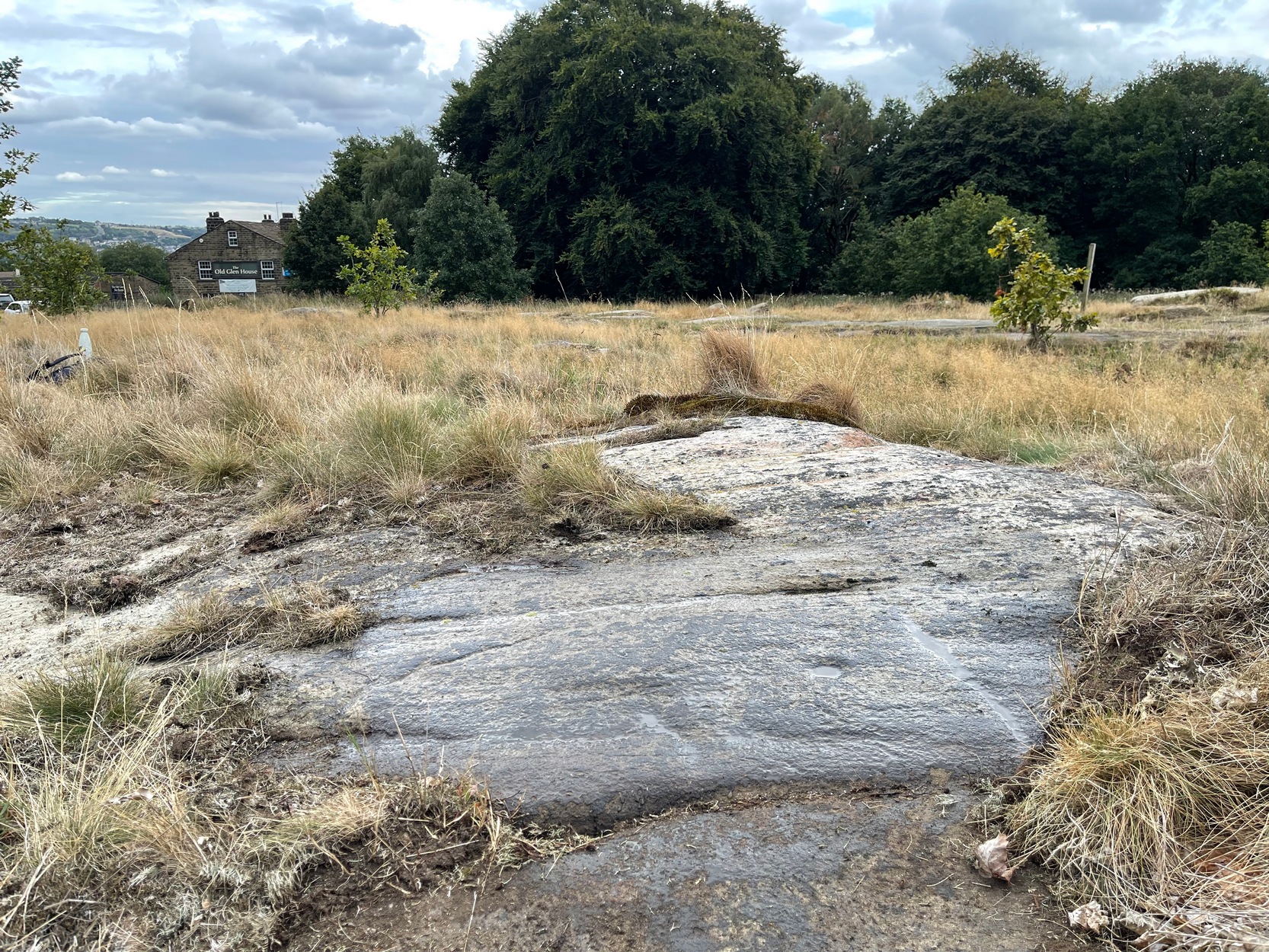
Once you’ve got yourself to the start of Shipley Glen, from the Old Glen House pub, from the car-park outside walk up the road for 60 yards (if you reach the next small car-parking spot, you’ve gone too far) then step off-road into the vegetation on your left and you’ll see the large flat fractured section of earthfast rock.  Get low down and seek out the cup-mark first!

Archaeology & History

This is a very faded and quite basic design and unless you get decent low sunlight, it can be very difficult to discern.  On my most recent visit here, conditions weren’t too good, as the photos here indicate.

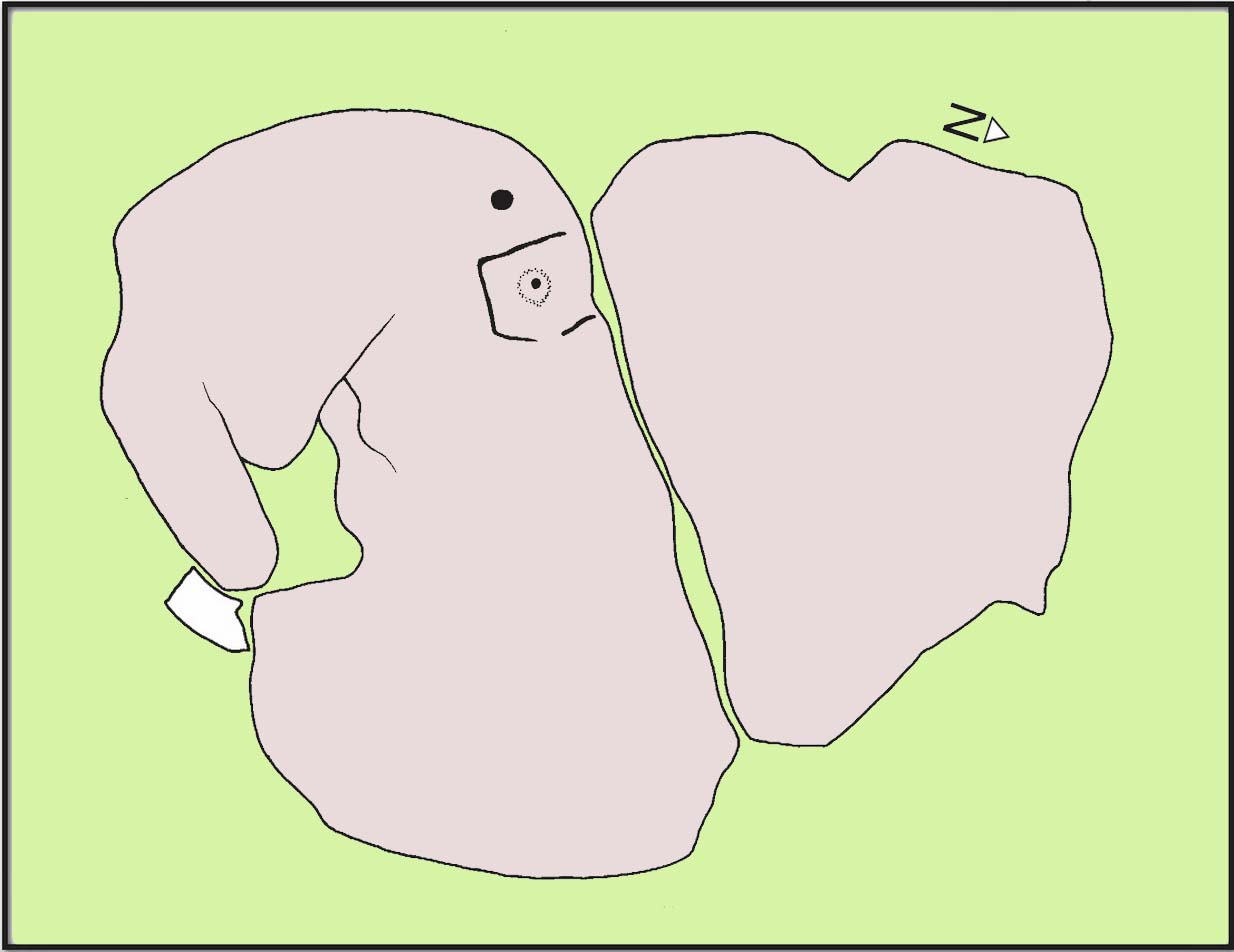
The main feature is a single cup-mark surrounded by a very wide ‘square’ ring (if y’ get mi drift).  It was first mentioned and illustrated in John Hedges (1986) survey, who described it simply:

“Striated, pitted bedrock with crack down centre, in grass and amongst other rocks and bedrock. Carving, centre and W end: enclosure type angular grooves and two cups.”

John Hedges 1986 sketch
Cup & surrounding lines

One of the two cups is presently beneath some shallow vegetation (easily removed if anyone’s passing), but the main feature of the large enclosing square and its central cup is presently exposed and can be seen when your eyes eventually adjust.  Interestingly, Hedges shows the existence of a faint ring around the central cup inside of the larger square enclosure.  If someone is able to capture a photo of this, please add it on our Facebook page. 🙂

I must point out that somewhere, not too far from this carving, was once found a very similar design known as the Brackenhall Green carving that possessed the same curious squared-ring feature that we find on this stone.

References:

  1. Boughey, Keith & Vickerman, E.A., Prehistoric Rock Art of the West Riding, WYAS: Wakefield 2003.
  2. Hedges, John (ed.), The Carved Rocks on Rombalds Moor, WYMCC: Wakefield 1986.

© Paul BennettThe Northern Antiquarian
Brackenhall Green, Baildon, West Yorkshire

Cup-and-Ring Stone (destroyed):  OS Grid Reference – SE 133 389

Archaeology & History

The lost carving of Brackenhall, in 1888

I first came across a description of this lovely-looking cup-and-ring carving during some research I was doing in the archives at Bradford Central Library in the 1980s—and decided there and then that I had to find it!  It was described and illustrated for the first time by William Glossop (1888) when he made a short survey of some of the prehistoric sites on Baildon Hill and Shipley Glen.  He told that it was one amidst “a cluster of rocks on Bracken Hall Green”—but was seemingly destroyed not too long after he wrote about it.  There was some discussion in the late-1980s that it may have been a petroglyph that was cataloged by John Hedges as carving ‘BM14’ (at SE 13272 38924), due to it possessing a similar ‘artistic’ element (or motif, as some like to call it) and which is also along the Brackenhall plateau by the roadside about 160 yards below the entrance to the Brackenhall centre—but it turned out not to be the case.

A few years after Mr Glossop uncovered this carving, a short note by J.H. Turner (1894) described two cup-marked stones, “both now destroyed” that could be seen in the same area just as you entered “the plateau where the Easter fair is now held”.  And his description closely fitted Glossop’s sketch.  Turner wrote:

“The cups were three inches in diameter, and one inch deep, in an oblong 18 by 12 inches, with line 6 feet long towards the east.  The second oblong, same size, had also an eastern pointer and one cup in the centre. These have both disappeared since June, 1889; I fear by wanton mischief.”

This would seem to be the same carving illustrated by Glossop, although it’s still difficult to say with any accuracy where it was located.  The great historian W.Paley Baildon (1913) thought it may have been the same carving which Harry Speight (aka Johnnie Gray) described at the Glen Gate—and it does sound similar, but until we are able to ascertain (i) where Glen Gate was; and (ii) whether it coincided with the location of “where the Easter fair” was held, we must err on the side of caution.  Tis an intriguing mystery… (Note: the grid-reference given for this site profile is an educated guesstimate!)

References:

  1. Baildon, W. Paley, Baildon and the Baildons – volume 1, Adelphi: London 1913.
  2. Glossop, William, ‘Ancient British Remains on Baildon Moor,’ in Bradford Antiquary, no.1, 1888.
  3. Gray, Johnnie, Through Airedale from Goole to Malham, Walker & Laycock: Leeds 1891.
  4. Turner, J. Horsfall, ‘Cup Marks, Shipley Glen,’ in Yorkshire County Magazine – volume 4, J.E. Watmough: Idel 1894.

© Paul BennettThe Northern Antiquarian
Slinger Stone, Rivock, Silsden, West Yorkshire

Cup-and-Ring Stone:  OS Grid Reference – SE 07540 44730

Getting Here

The Slinger Stone carving

A real pain-in-the-arse to find this one, and even describing how to get there is troublesome—but I’ll try my best!  I think the best starting point would be from the track that runs through Rivock plantation.  Follow directions to reach the Ripple Stone carving, then walk 35-40 yards east to the ornate multiple-ringed stones of Rivock (067) and company.  Now comes the tricky bit.  From here walk, zigzag fashion (it’s the only way y’ can do it!) up the slope ever-so-slightly east of due south until you reach the top of the slope, where the land levels out.  If you walked in a dead straight line from the triple-ringed Rivock (66) carving, it is almost bang on 100 yards. Anyhow, now you’re on top of the slope, zigzag about and look for the large flat oval-shaped stone.  Take your time—you’re gonna need it!

Archaeology & History

Section of carving

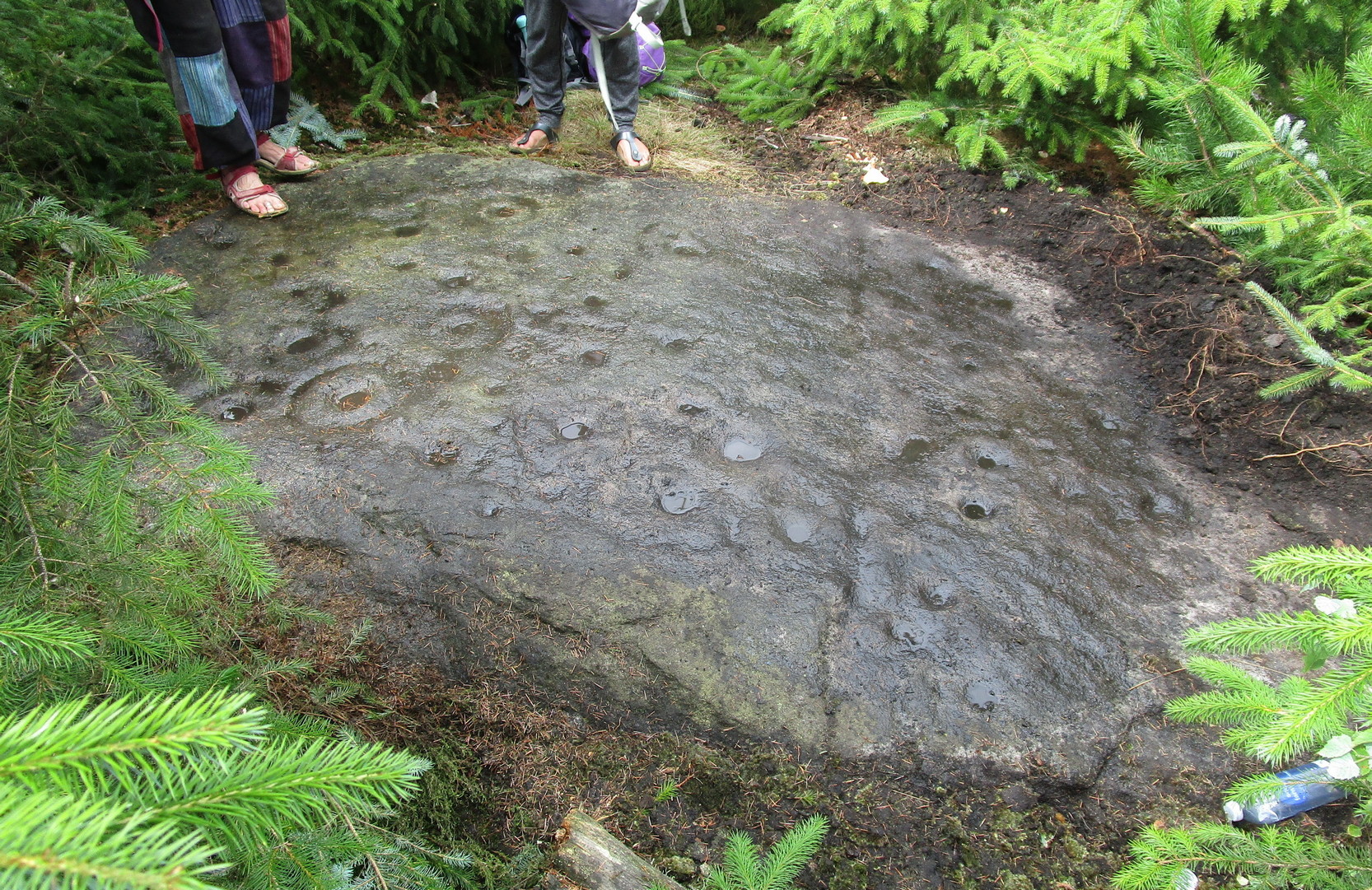
Laid amongst the dense mass of cheap crappy pine trees that plagues some of our upland countryside depriving the land of necessary nutrients for animals, flowers and other trees, this impressive multiple cup-and-ringed marked rock lies sleeping.  It was rediscovered in 2017 by local hunter Chris Slinger during one of his many ventures through the undergrowth.  I’m informed that one of his compatriots reckons that he already knew about it some forty years prior to Chris claiming it—but as yet we have no way of knowing that for sure, so the name of the carving goes to Mr Slinger.  And it’s a beauty—one helluva beauty!

Main line & ring cluster
Scattered mass of rings

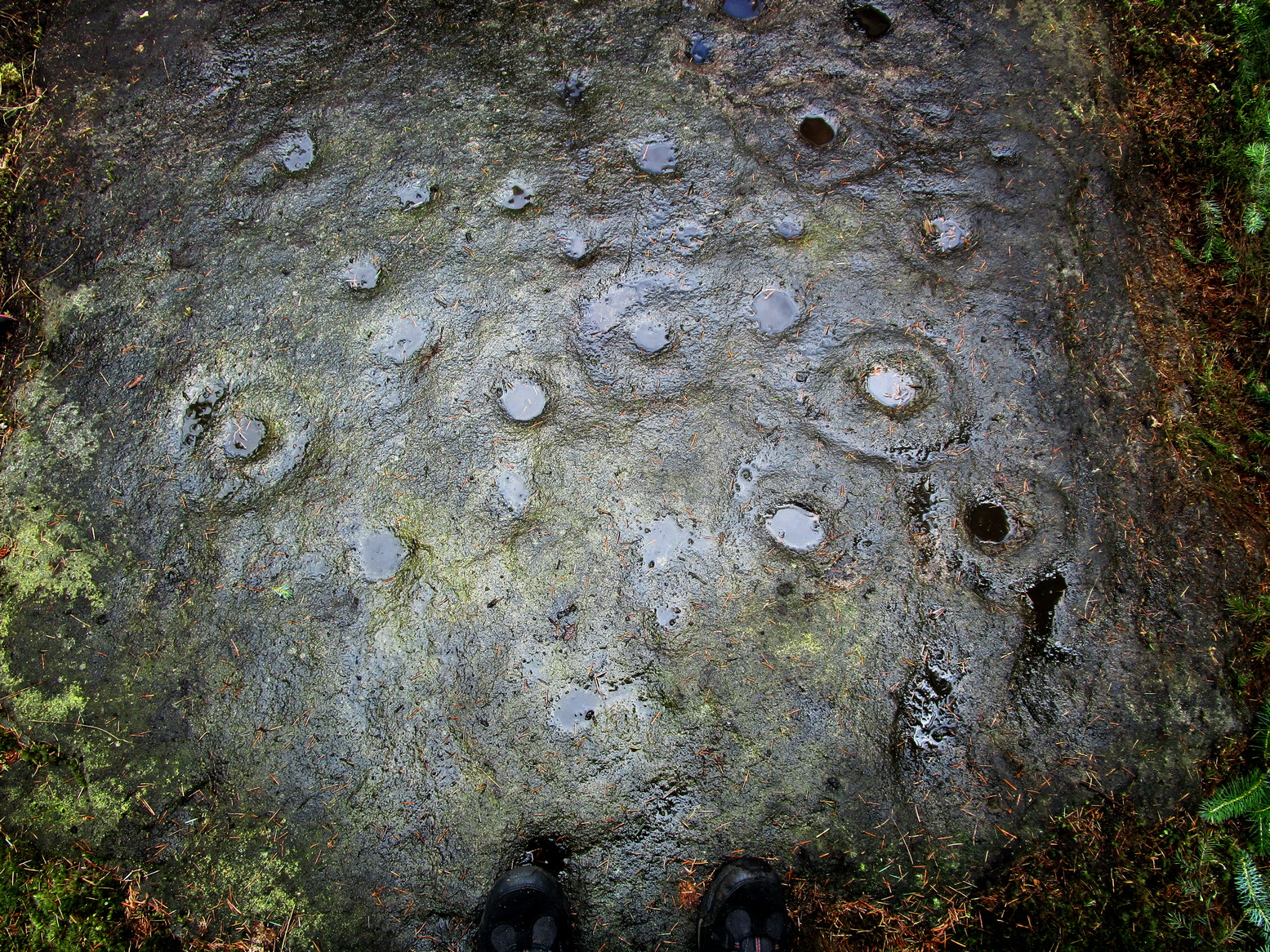
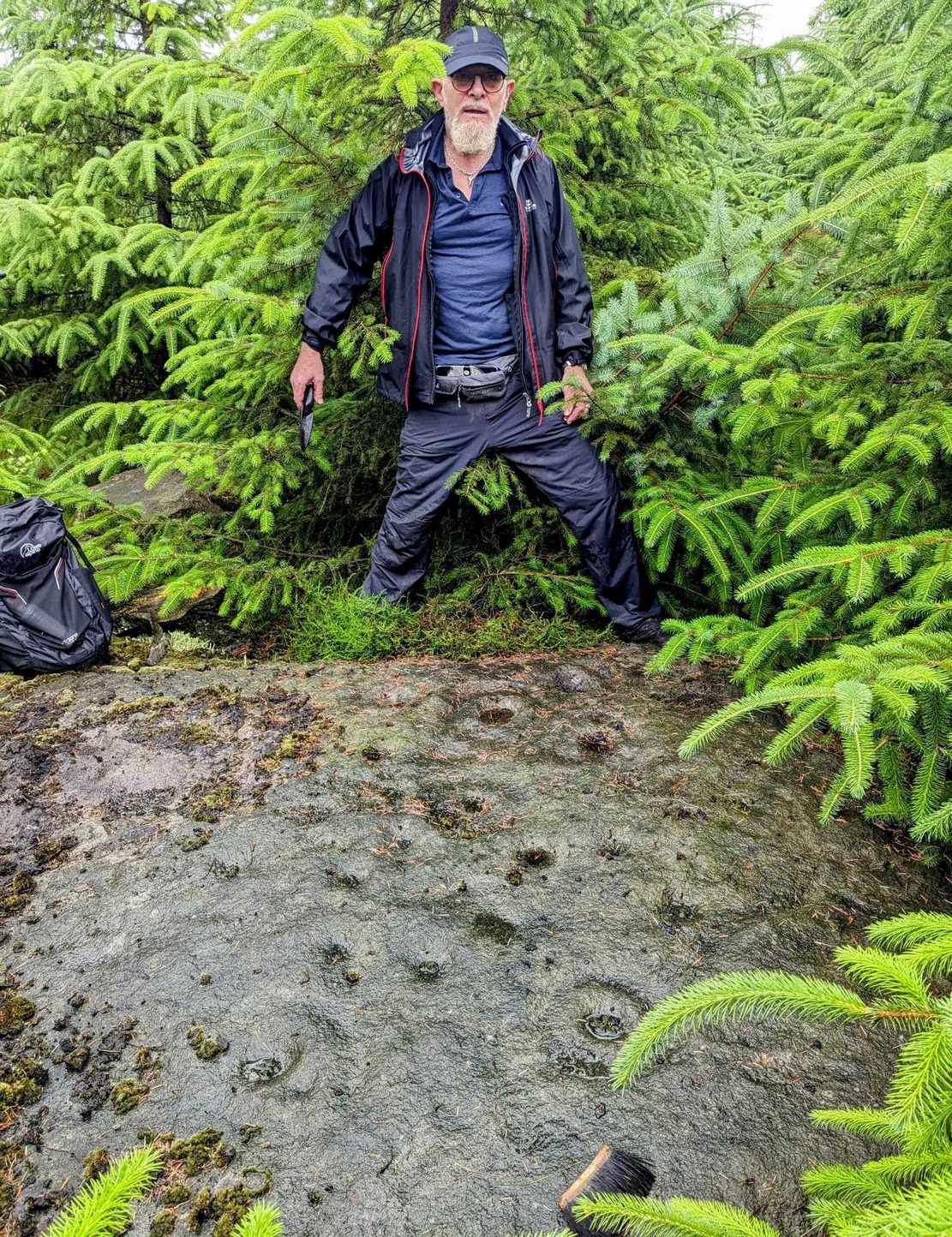
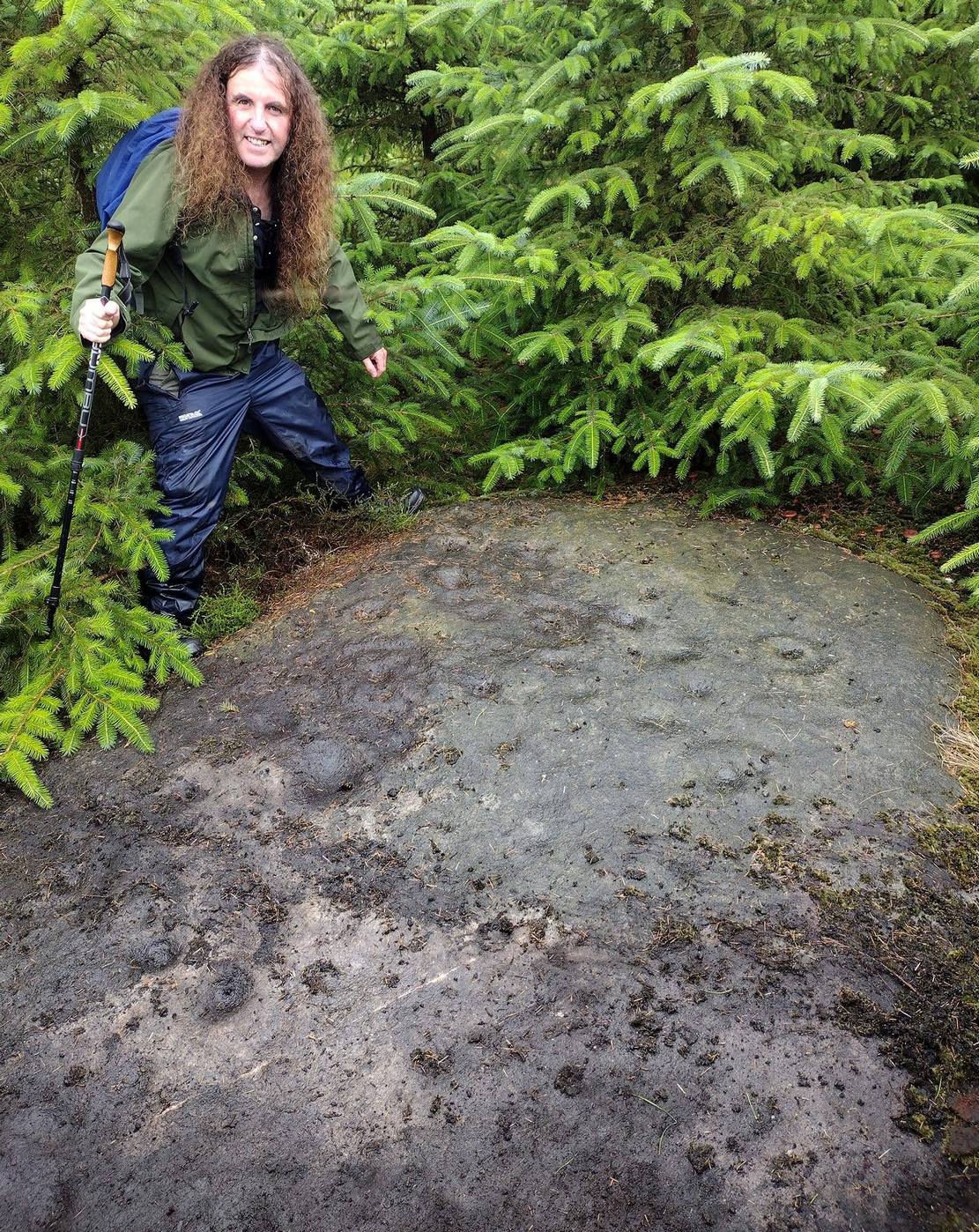
This large, flat, ovoid-shaped stone, roughly 10 feet by 7 feet across, is virtually covered from head to foot in large and not-so-large cup-and-rings at varying levels of erosion.  The carving appears to have been partitioned, so to speak, into two sections that are clearly defined by a carved line that runs the breadth of the stone.  On the top, larger section above this main line are about 30 cup-marks, with perhaps a dozen of them having rings around them—some complete, some incomplete—scattered about in the usual non-linear manner.  One or two of the cup-and-rings may have double-rings, but due to dark conditions in here none of us could be sure.  On one visit, a local lady (Liz of Fell Edge if I remember rightly) noticed that the largest cluster of cup-and-rings near one quarter of the stone seemed to be arranged in a similar form to the Swastika Stone, 1.9 miles northeast of here!

Main line, cups & rings
Cluster of cup & rings

On the lower smaller section of the carving, beneath the main line if you like, there’s not quite as much going on.  At least twelve cup-marks are apparent here, at least five of which have rings around them.  The main little bunch of these are pushed right up against the long carved line, seemingly communicating with other rings on the top-side of it. In some photos it looks as if, in this section of the stone, carved lines link the cup-and-rings on each side of the main dividing line (if y’ get mi drift).  There’s a lot going on here.  It’s a pretty complex carving as you can see: one of the best in the Rivock cluster and one that I’d like to spend more time with, if only to get a complete picture of what the carving looks like in full as we’ve not yet got to the outer edges of the stone itself, meaning that there may be more of it beneath the vegetation.

Stone-fondler Koot
Stone-fondler Sean

I was hoping to get some much better photos of this site and clear back more of the covering foliage, but as the carving is now all but covered in dense forestry, we may have seen the last of it for a few decades.  Even worse, there’s the great possibility that the carving will be destroyed when the forestry lads come to cut down the trees—through no fault of their own—as they’ll have no idea that it’s directly beneath their machinery.  It would be good if some local volunteers could perhaps completely clear and protect this stone to avert such a likely disaster a few decades from now.  A small metal fence with a little notice-board would do the trick!

Acknowledgements:  Firstly, to Chris Slinger for rediscovering the carving; then to the modern stone-fondlers Rod ‘Koot’ Chambers and Sean Dillon for beginning the cleaning process, and for their photographs in this site profile; and then to Sarah Walker, Sarah Jackson and Marianna, for helping to bring the entire stone into view.

© Paul BennettThe Northern Antiquarian
Tormain Hill (4), Ratho, Midlothian

Cup-Marked Stone:  OS Grid Reference – NT 12907 69674

Also Known as:

  1. Bonnington Mains
  2. Tormain ‘D’ (Allen 1882)

Getting Here

Tormain (4) stone

Take the same directions as if you’re visiting the impressive Tormain (1) carving. About ten yards before you reach it, just at the top of the hill itself, almost the first flat stone you come across is the one you’re after.  You’ll find it easily enough.

Archaeology & History

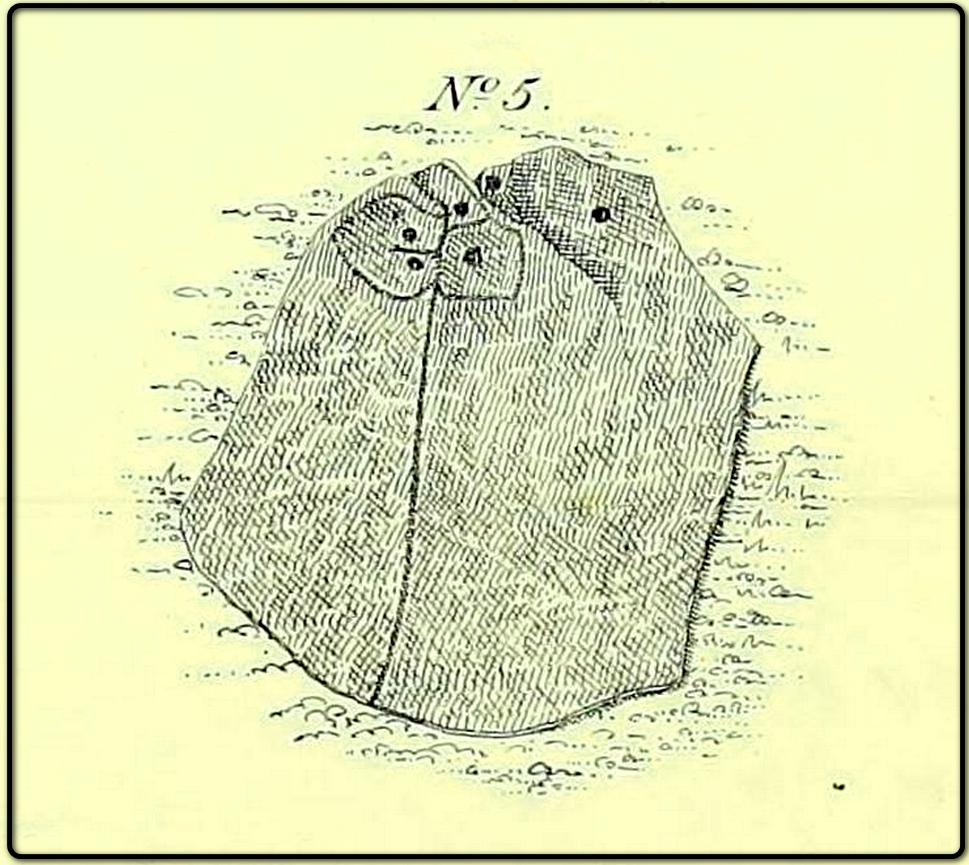
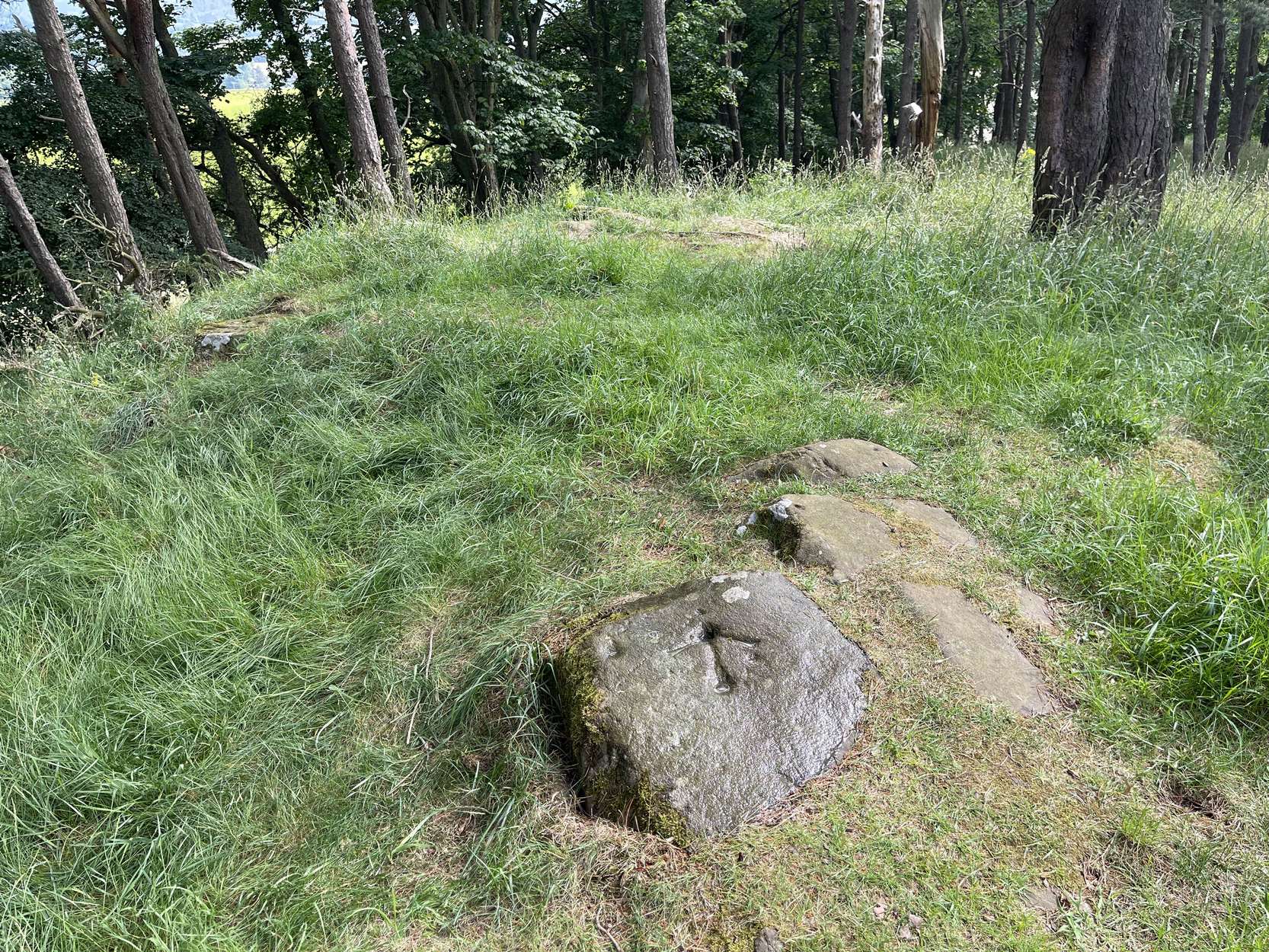
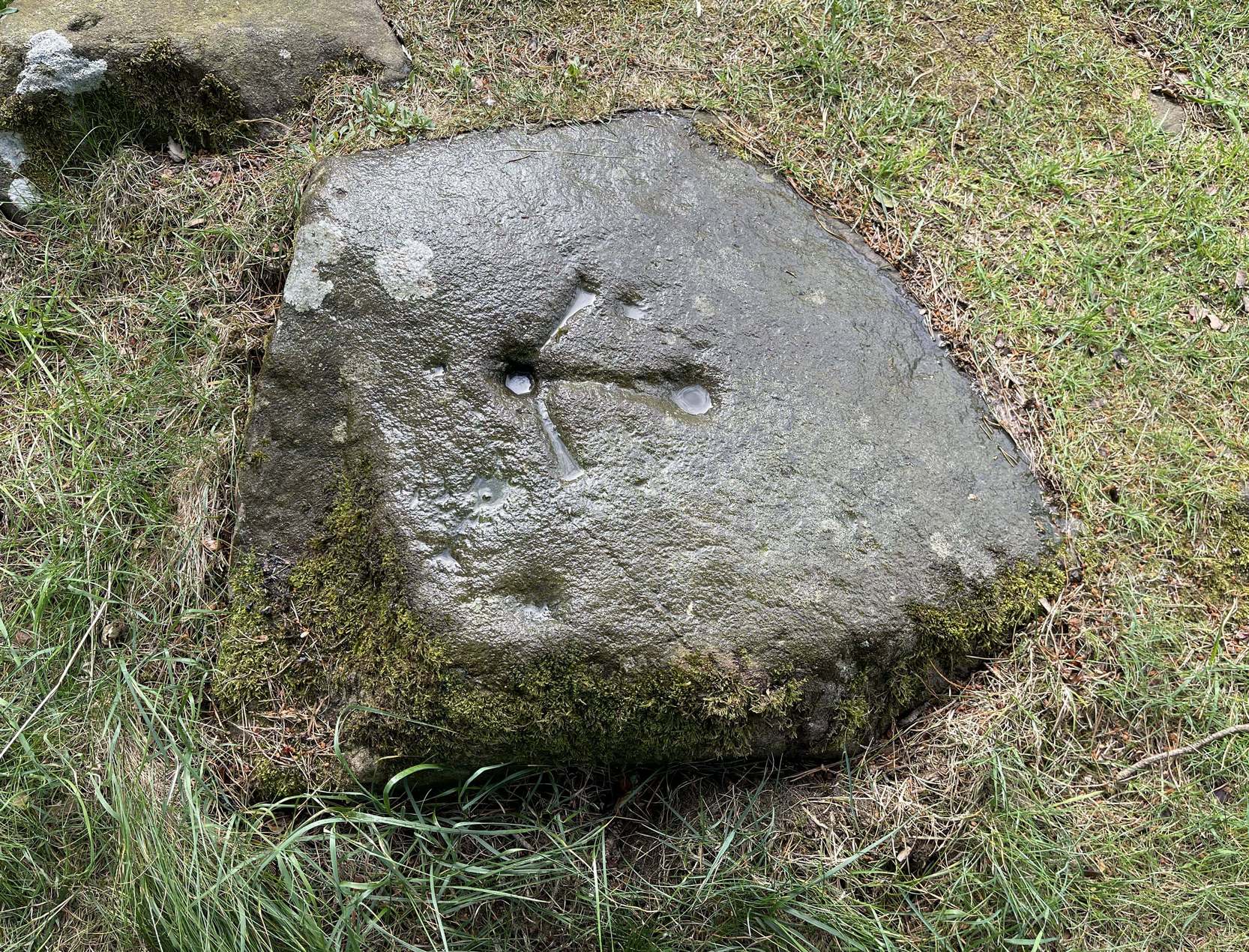
This is a notable design by virtue of the Ordnance survey lads marking it with an unusually large benchmark, utilizing at least one of the prehistoric cup-marks on their much more modern symbol.  You can clearly see it in all the photos.  The stone itself may have had a section of it cut or split from a once larger piece, probably in the 19th century when a lot of quarrying was being undertaken round here.

This carving was first described, albeit briefly, in John Smith’s (1874) piece on the nearby Witch’s Stone, where he told:

Allen’s 1882 sketch

“there is a group of three cup-like hollows near the highest summit of the hill; this last has, however, been altered in our own day by the officials of the Government Ordnance Survey combining them into one figure, by drawing from cup to cup their well-known and characteristic mark of the Queen’s ‘broad arrow.’”

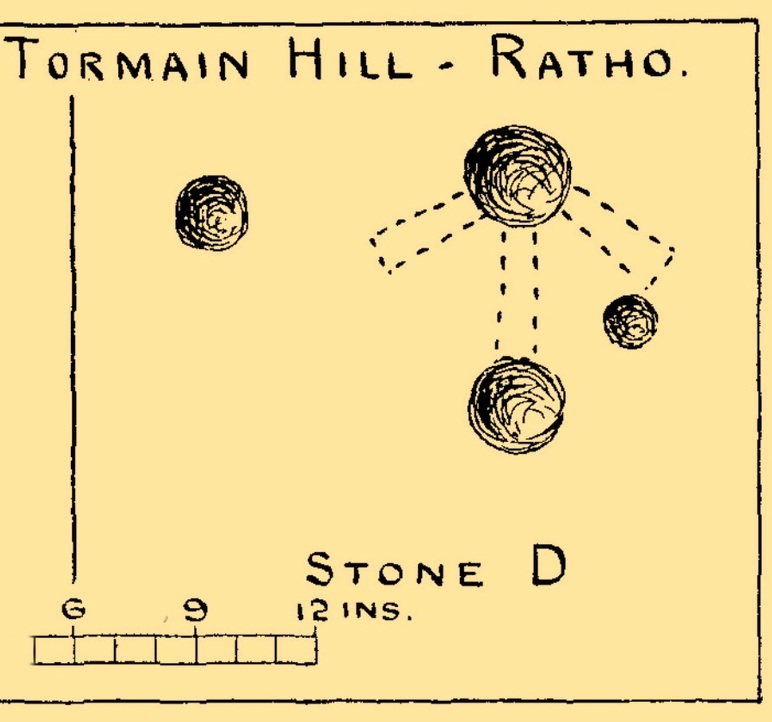
To be honest, there’s not much more that can be said of it.  A few years later when Romilly Allen (1882) surveyed all the Tormain stones, he simply wrote that,

“Stone D…lies 30 feet from stone A, and is the most northerly of the group; it is also the highest as regards level, and has an Ordnance bench mark cut on it…  Round the bench mark will be found four cups, varying in diameter from 1 to 2½ inches.”

Not all of the cup-marks on this stone are prehistoric, as is obvious when you look at them close-up.  Two, perhaps three of them are OK, with at least one of those that are attached to the Ordnance Survey mark widened and deepened when they came here in the 19th century.

References:

  1. Allen, J. Romilly, “Notes on some Undescribed Stones with Cup Markings in Scotland,” in Proceedings of the Society of Antiquaries Scotland, volume 16, 1882.
  2. Morris, Ronald W.B., “The Cup-and-Ring and Similar Early Sculptures of Scotland; Part 2 – The Rest of Scotland except Kintyre,” in Transactions of the Ancient Monuments Society, volume 16, 1969.
  3. Morris, Ronald W.B., “The Cup-and-Ring Marks and Similar Sculptures of Scotland: A Survey of the Southern Counties – part 2,” in Proceedings of the Society of Antiquaries, Scotland, volume 100, 1969.
  4. Morris, Ronald W.B., The Prehistoric Rock Art of Southern Scotland, BAR: Oxford 1981.
  5. Royal Commission Ancient & Historical Monuments of Scotland, Inventory of Monuments and Constructions in the Counties of Midlothian and West Lothian, HMSO: Edinburgh 1929.
  6. Smith, John Alexander, “Notes of Rock Sculpturings of Cups and Concentric Rings, and ‘The Witch’s Stone’ on Tormain Hill; also of some Early Remains on the Kaimes Hill, near Ratho, Edinburghshire,” in Proceedings of the Society of Antiquaries Scotland, volume 10, 1874.

© Paul BennettThe Northern Antiquarian
Tormain Hill (7), Ratho, Midlothian

Cup-Marked Stone:  OS Grid Reference – NT 12905 69666

Also Known as:

  1. Tormain ‘G’ (Allen 1882)

Archaeology & History

Cup-mark at the top

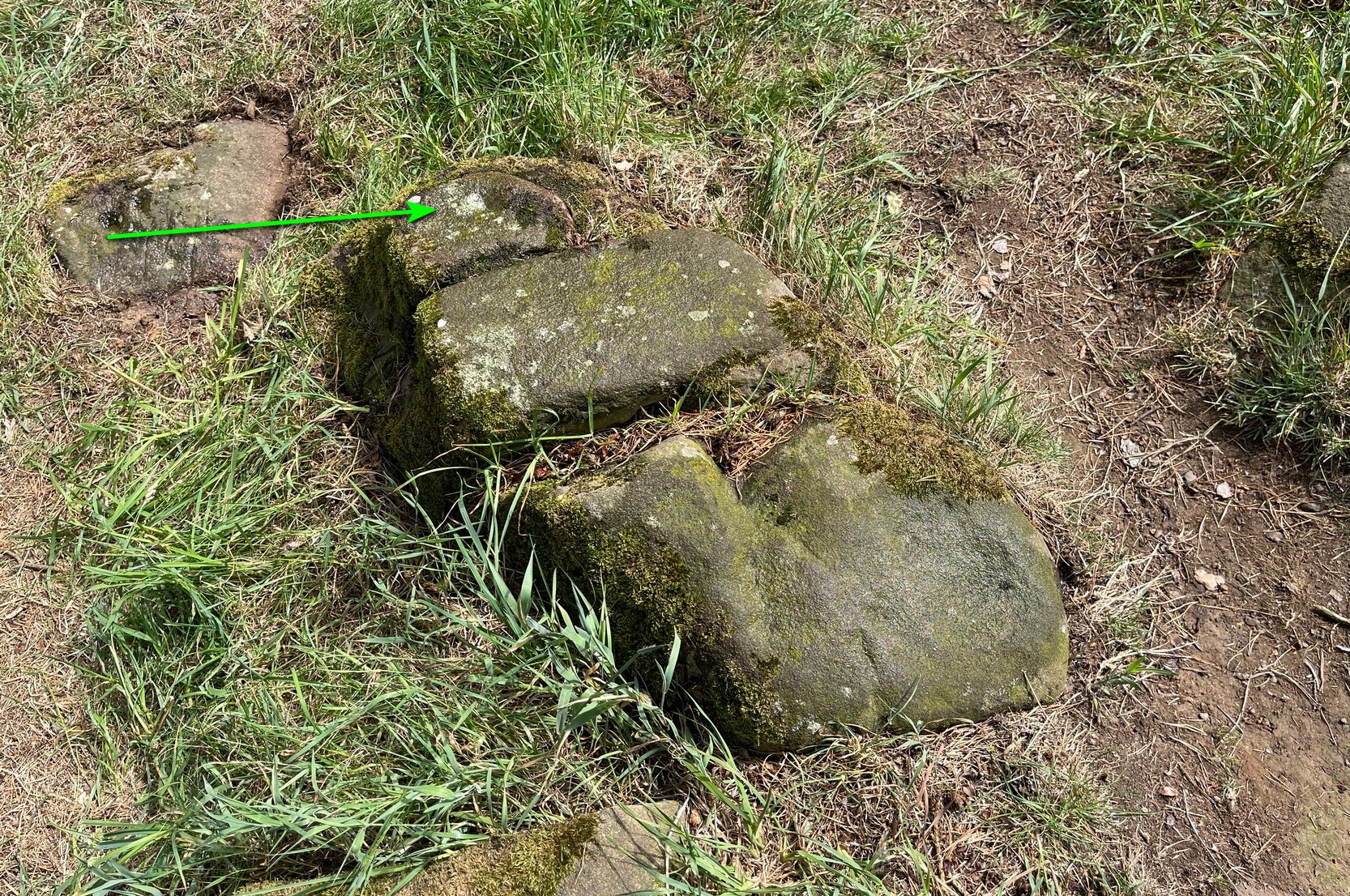
Two or three yards from the impressive Tormain (1) carving you’ll see this elongated stone, cracked into three separate pieces.  Its sloping southeastern section is possessed of a single cup-marking, an inch or two across, which, if you found it anywhere else, you’d just shrug your shoulders and walk on by.  It’s only due to this stones proximity to the more impressive carvings that it’s received any attention (ordinarily I wouldn’t even have added this to the database).  It was first noticed when Romilly Allen (1882) visited the area.  The Royal Commission’s (1929) survey of Tormain Hill mentioned “a single cup on one boulder,” but didn’t specify which of the three examples up here they were referring to.

References:

  1. Allen, J. Romilly, “Notes on some Undescribed Stones with Cup Markings in Scotland,” in Proceedings of the Society of Antiquaries Scotland, volume 16, 1882.
  2. Royal Commission Ancient & Historical Monuments of Scotland, Inventory of Monuments and Constructions in the Counties of Midlothian and West Lothian, HMSO: Edinburgh 1929.

© Paul BennettThe Northern Antiquarian
Tormain Hill (6), Ratho, Midlothian

Cup-Marked Stone (dubious):  OS Grid Reference – NT 12908 69669

Also Known as:

  1. Tormain ‘F’ (Allen 1882)

Archaeology & History

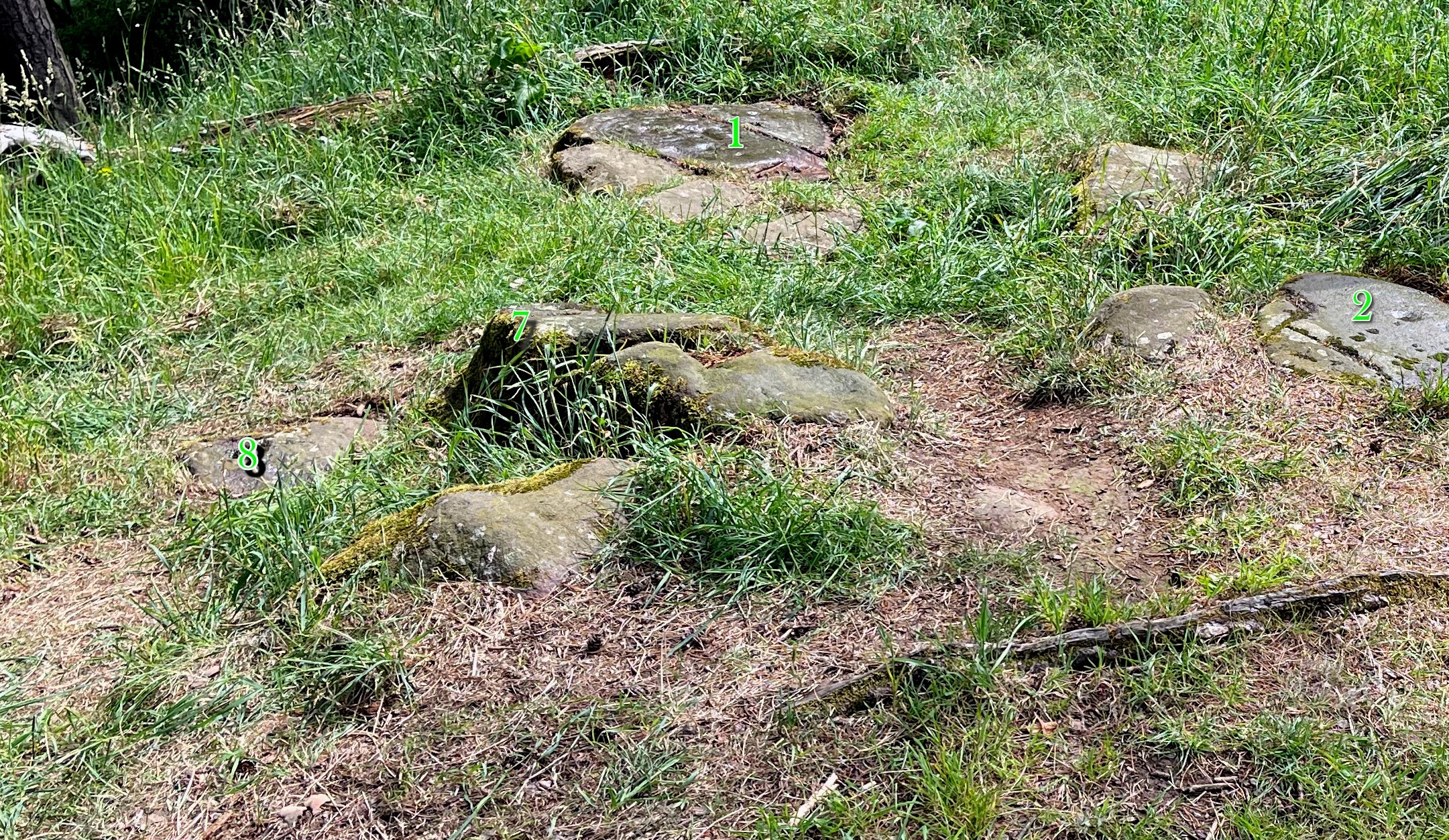
Tormain 6 (left of centre)

On the small rock right next to the plain Tormain (7) cup-marking is this, the least impressive and least likely candidate as an authentic cup-marked stone.  Its existence was first added to the Tormain Hill cluster by Romilly Allen (1882) following his visit here.  The carving has been maintained as the real deal, even by the Scottish Rock Art Project, but I have severe doubts as to the archaic nature of this marking.  It seems to be geophysical in nature and there are innumerable marks such as the one found here that I’ve dismissed on my countless petroglyphic excursions over the years.  I’d like to be wrong though. (the “carving” is so unimpressive that I didn’t even waste time taking a decent photo of it —so my apologies to those who wanted greater image clarity)  When the Royal Commission (1929) surveyed Tormain Hill, they mentioned “a single cup on one boulder,” but gave no indication which of the three single cup-marked stones they meant.

References:

  1. Allen, J. Romilly, “Notes on some Undescribed Stones with Cup Markings in Scotland,” in Proceedings of the Society of Antiquaries Scotland, volume 16, 1882.
  2. Royal Commission Ancient & Historical Monuments of Scotland, Inventory of Monuments and Constructions in the Counties of Midlothian and West Lothian, HMSO: Edinburgh 1929.

© Paul BennettThe Northern Antiquarian

Tormain Hill (3), Ratho, Midlothian

Cup-Marked Stone:  OS Grid Reference – NT 12906 69669 

Also Known as:

  1. Bonnington Mains
  2. Tormain Bullaun
  3. Tormain ‘C’ (Allen 1882)

Getting Here

Follow the same directions to get to the Tormain (1) carving, but take a few steps backwards from it and it’s on a small flat earthfast stone to your right (west).  You’ll see it.

Archaeology & History

Tormain bullaun stone

Just a stride or so away (north) from the dubious Tormain (2) cup-marking we find a much more likely prehistoric contender in front of us.  It’s notably different from the others on the hill in that it possesses a very large wide and deep ‘cup mark’ which, if it was found in Ireland, would undoubtedly be classed as a bullaun stone.  That was the first thing I exclaimed to myself when I clapped eyes on it!  A bullaun can be a man-made or natural hollow or basin cut into outcropping rock, boulders or small portable stones and used for various pragmatic and ritual purposes – many with traditions and folklore attached.  Sadly, no such folklore is remembered here.

There are four other smaller standard sized cup-marks, at various distances from the primary bullaun, one of which may be Nature’s handiwork.  They were illustrated by the great Romilly Allen (1882) when he first wrote about the carving.  One of the cups may have a faint carved line running from it, but this would require the attention of the computer imagery dudes to confirm or deny this.  It wasn’t seen by Allen, who simply said of it:

“The carvings on it consist of a bowl-shaped depression, 6 inches in diameter and 2 inches deep, and four cups near it varying in diameter from 1 to 1½ inches.”

Tormain 3 carving
Tormain 3 (with 1, 2 & 7 marked)

The fact that bullauns possess a number of practical uses implies the large ‘bowl’ may have been used in a pragmatic sense for something, with the proximity of the impressive Tormain (1) carving just yards away almost appealing for ceremonial association of one form or another.  We find similar bullaun/petroglyph associations at a number of other recognized rock art sites: the Mixing Stone in North Yorkshire being just one example.  Large bowl-shaped hollows have been used in some cultures like mortar and pestles to macerate herbs, used in medicines and paints, both of which may have been applicable here.

References:

  1. Allen, J. Romilly, “Notes on some Undescribed Stones with Cup Markings in Scotland,” in Proceedings of the Society of Antiquaries Scotland, volume 16, 1882.

© Paul BennettThe Northern Antiquarian