Haw Farm (01), Swartha, Silsden, West Yorkshire

Cup-Marked Stone:  OS Grid Reference – SE 05206 46856

Archaeology & History

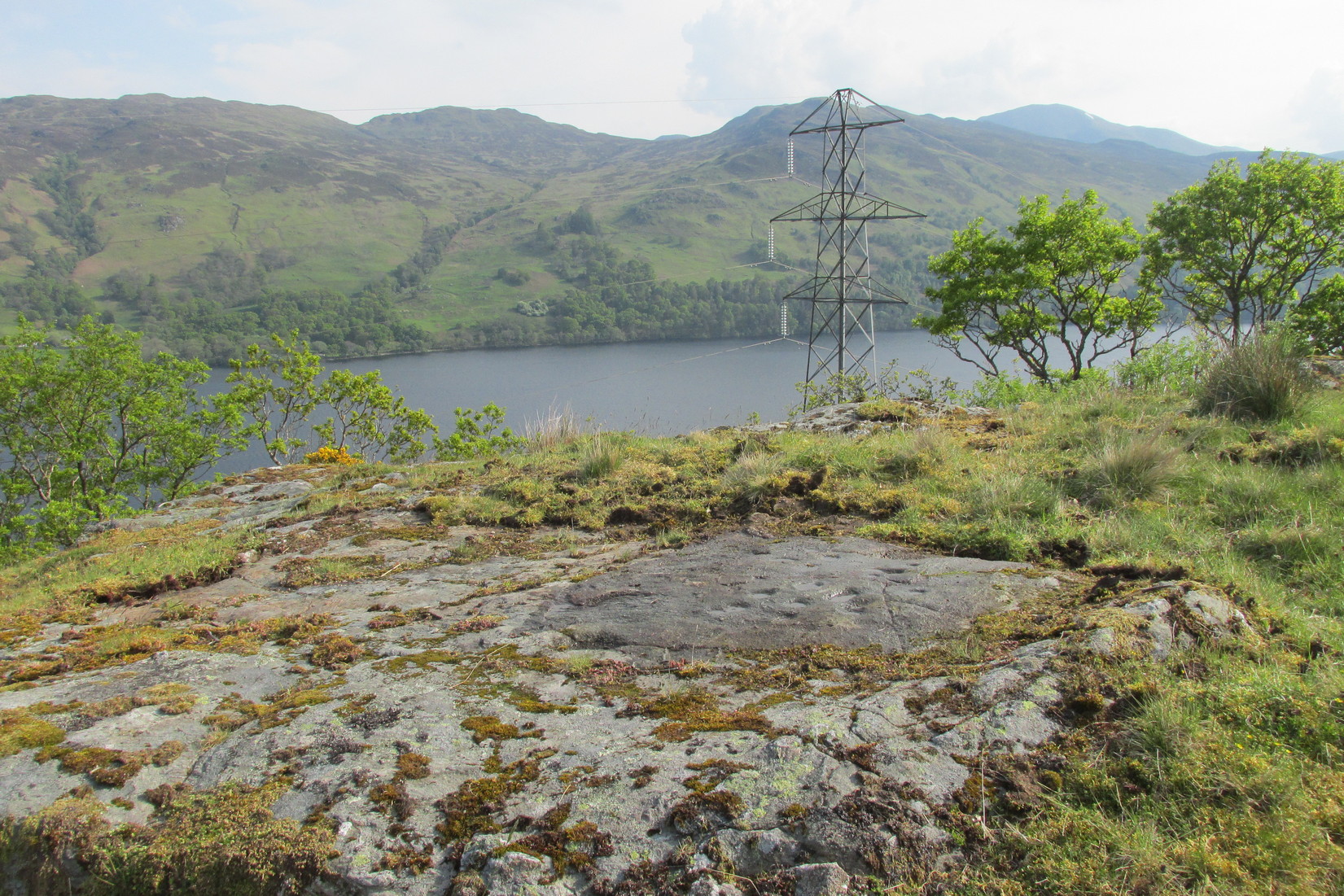
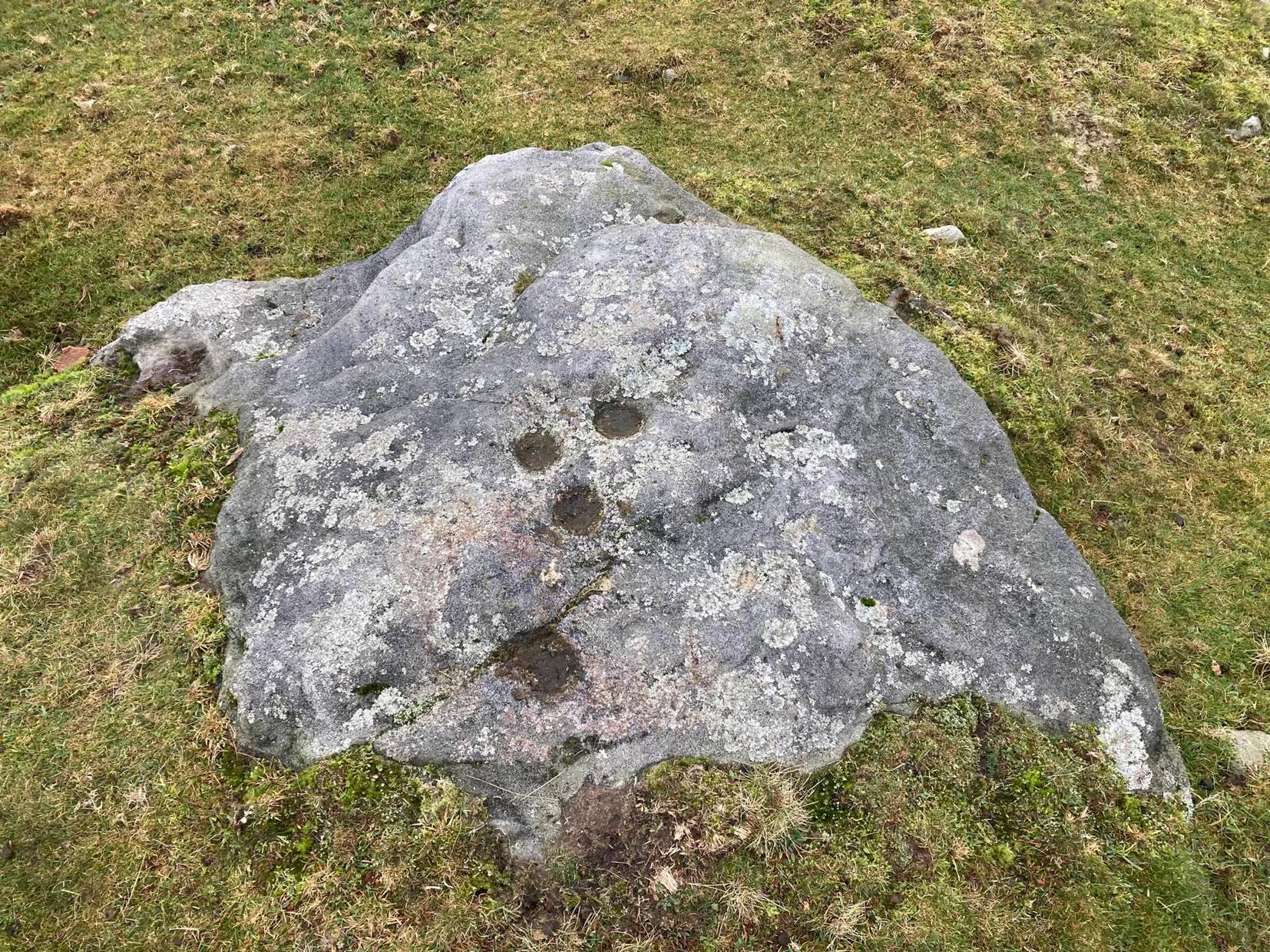
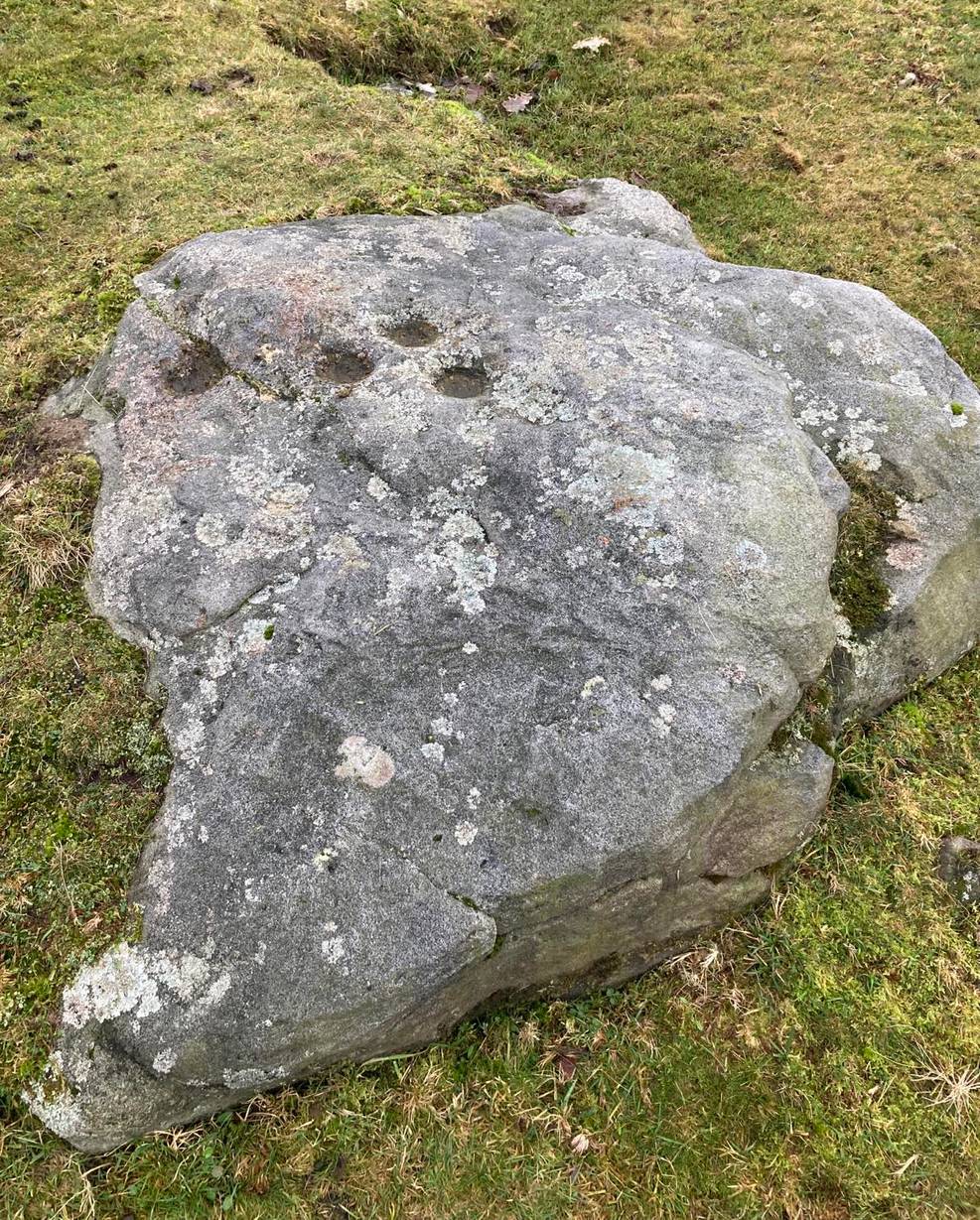
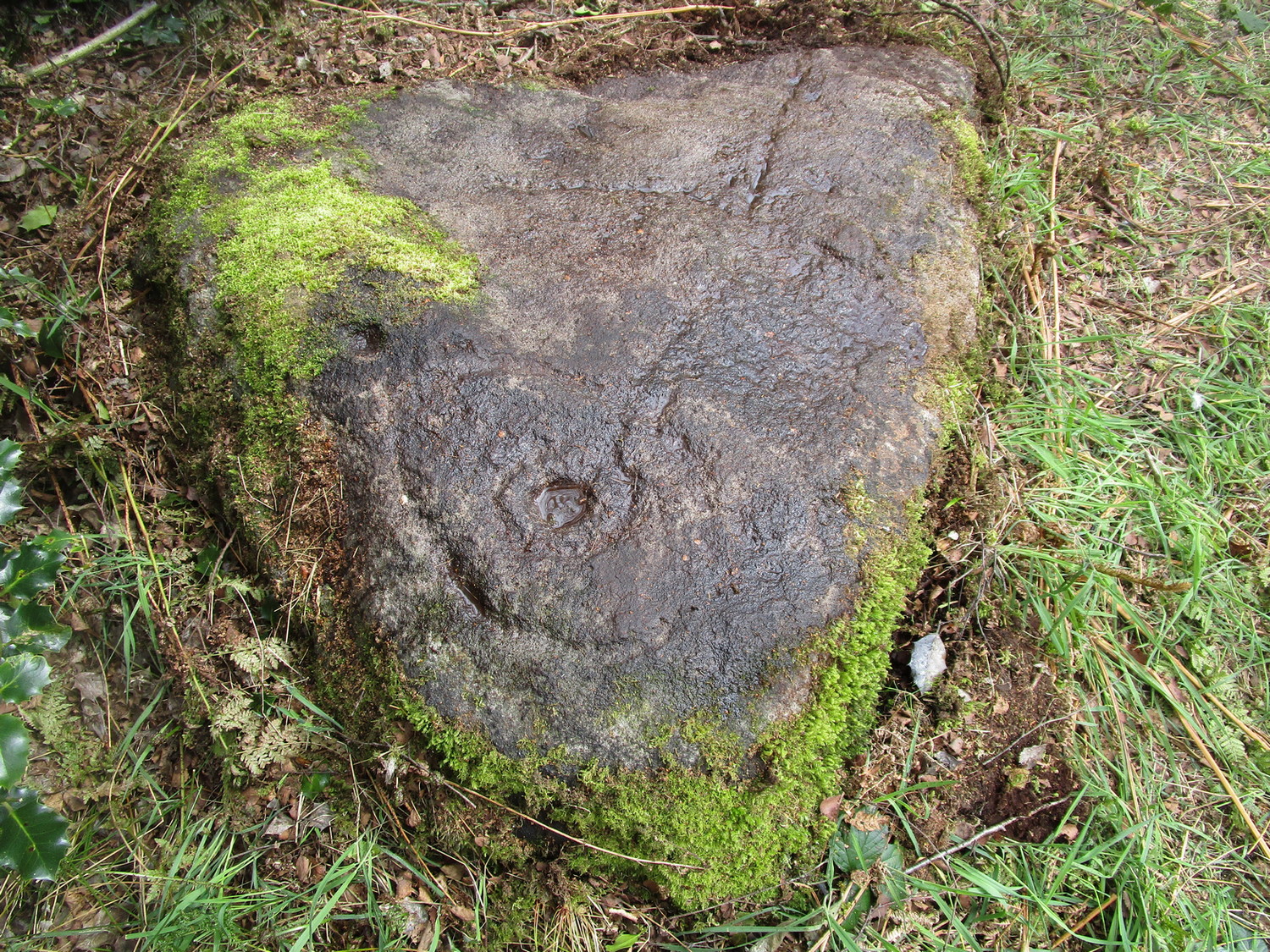
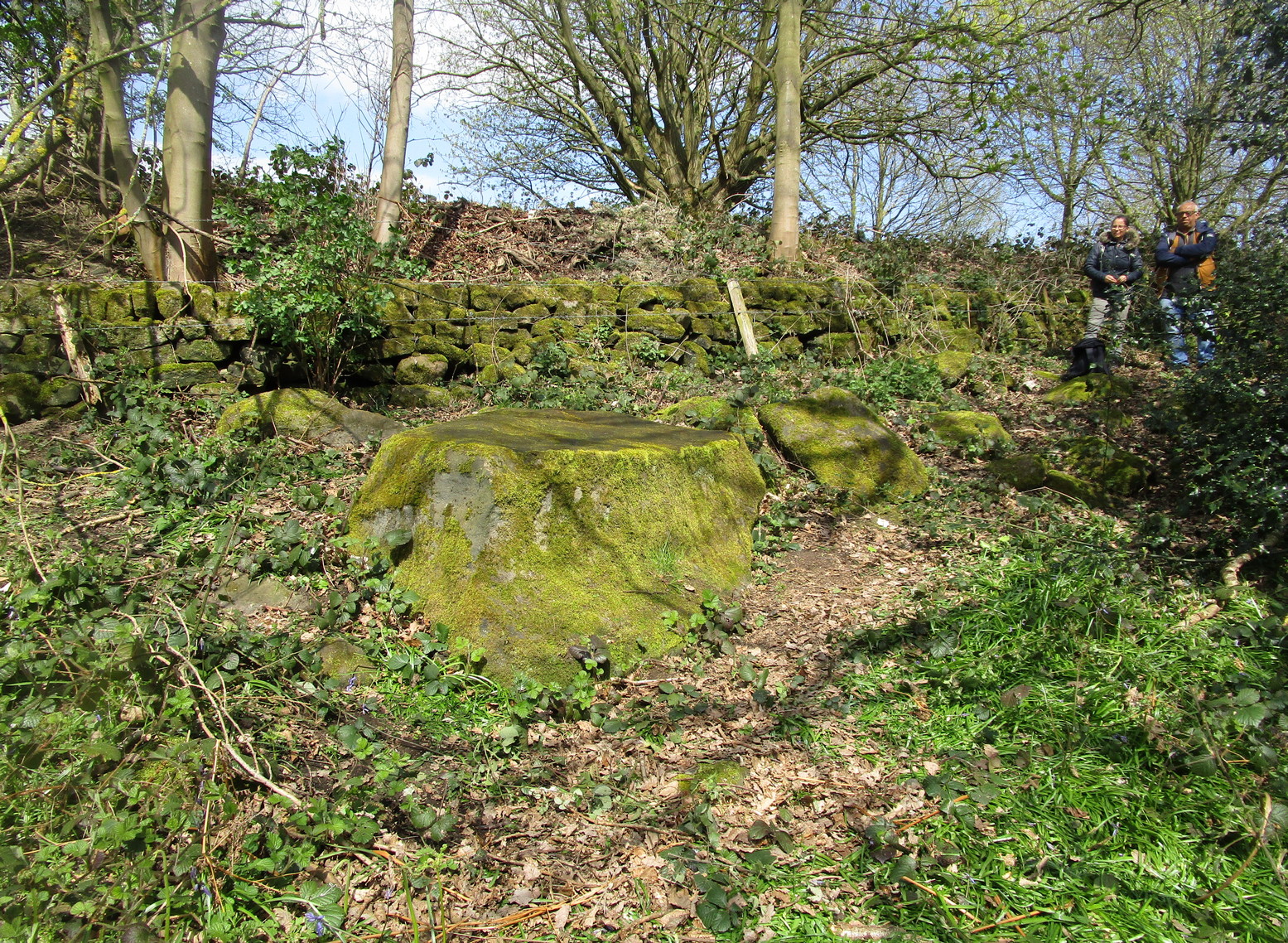
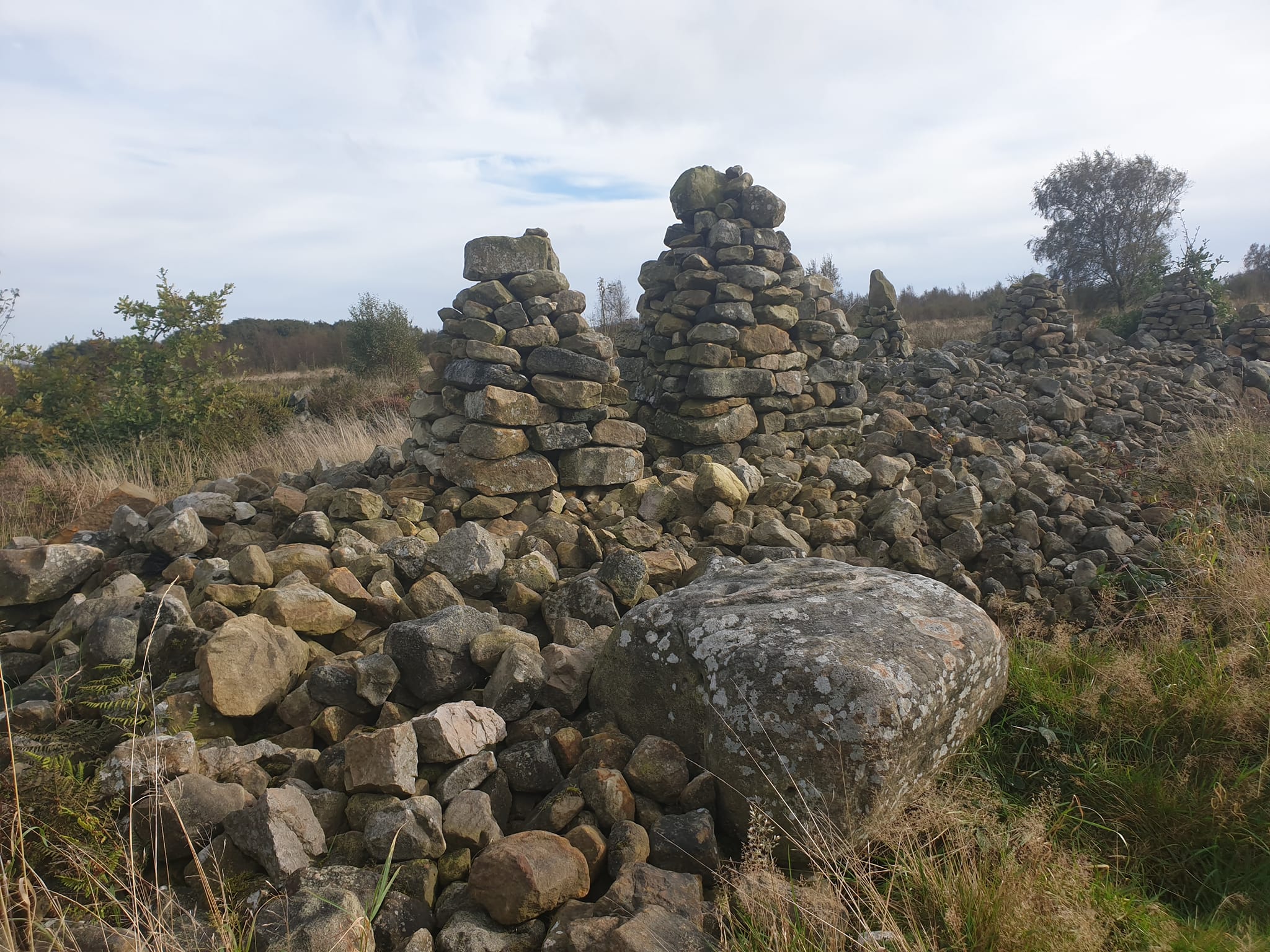
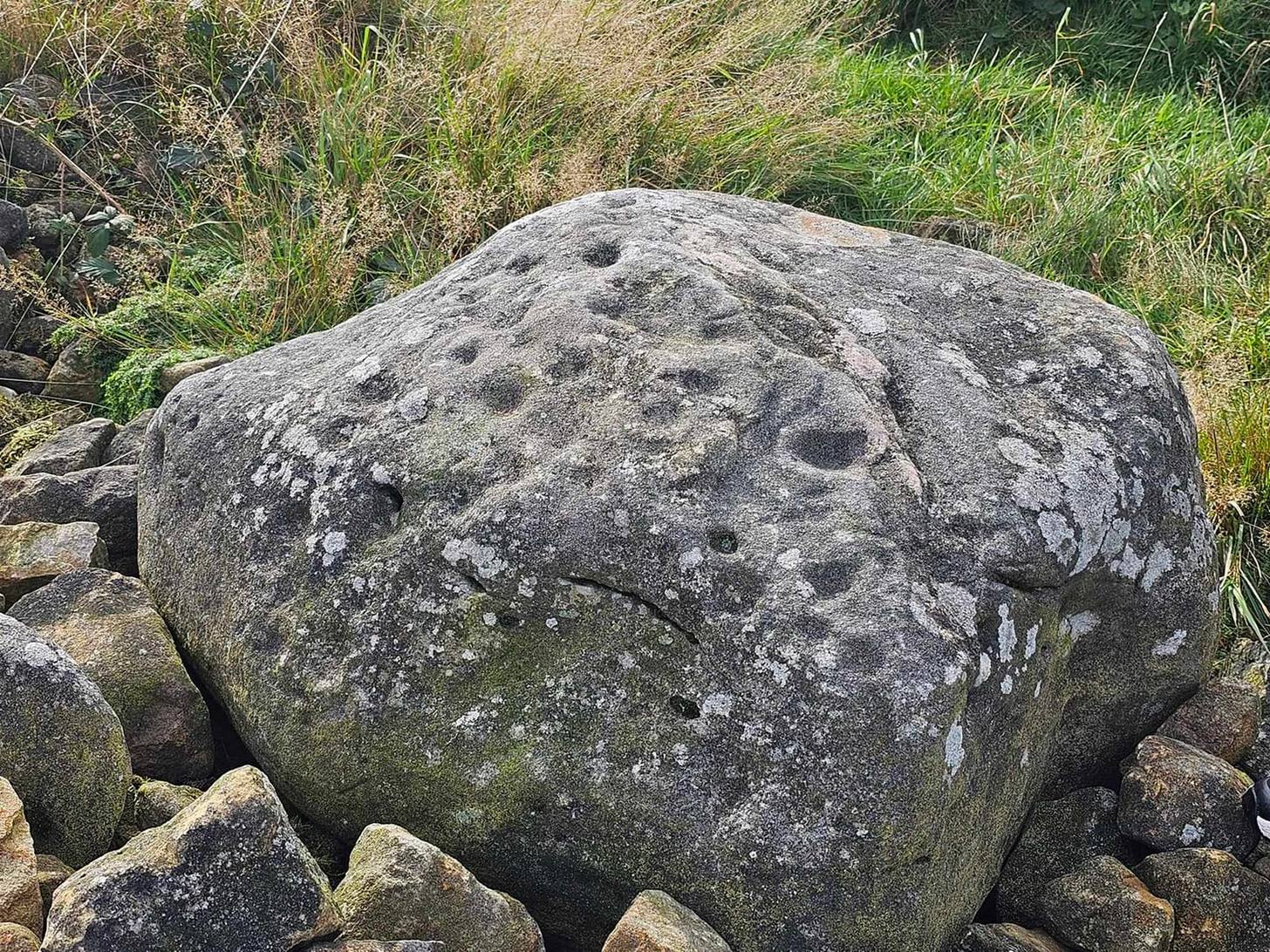
An intriguing find, made not too long ago by Jeff Wallbank of Silsden.  Simplistic in design, it’s found on a small ridge of rocks adjacent to an old quarry (so there may have been other carvings here in times gone by), rising up immediately south of Haw Farm about 20 yards away, from where you can ask permission of the kind land-owner to have a look at the stone.

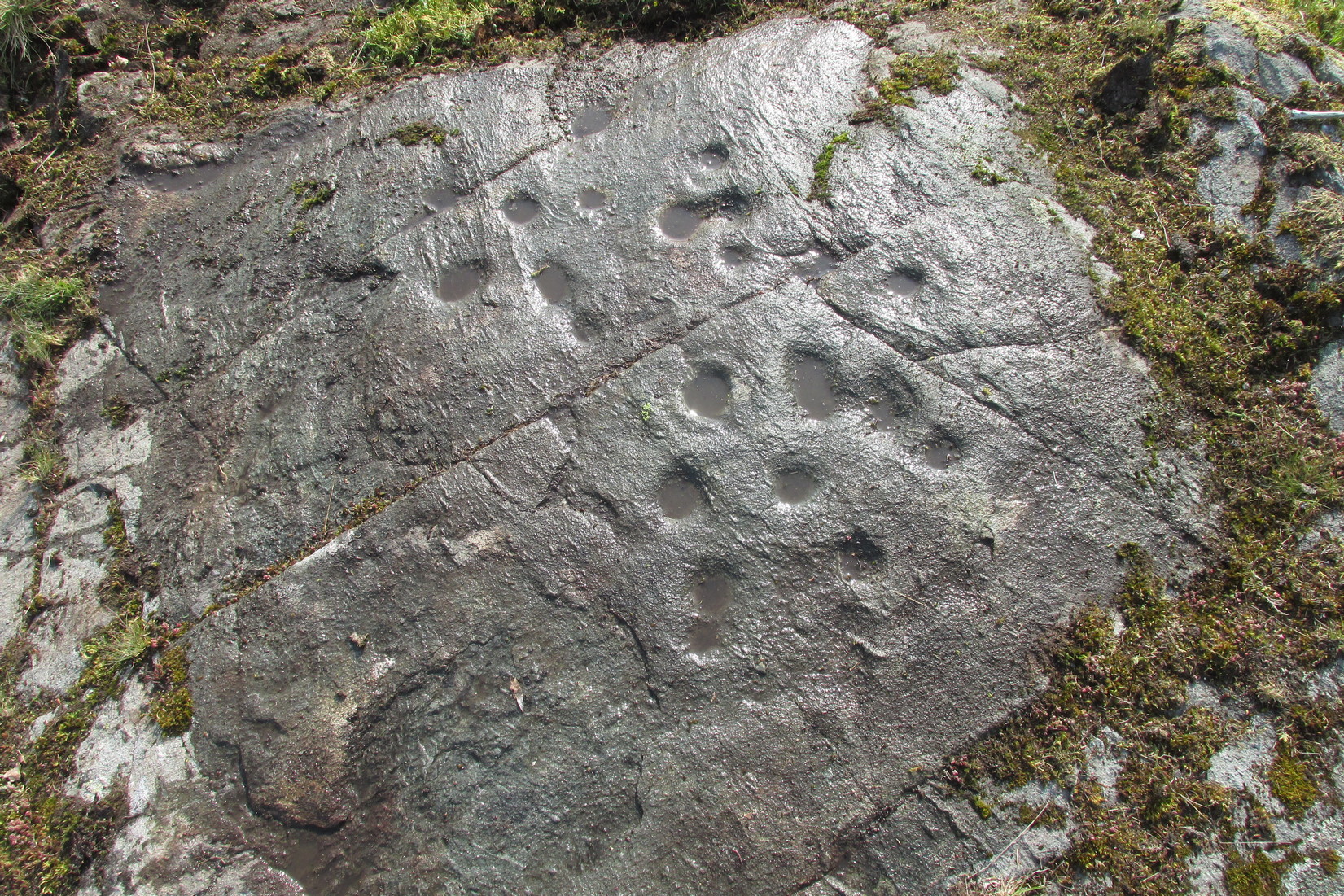
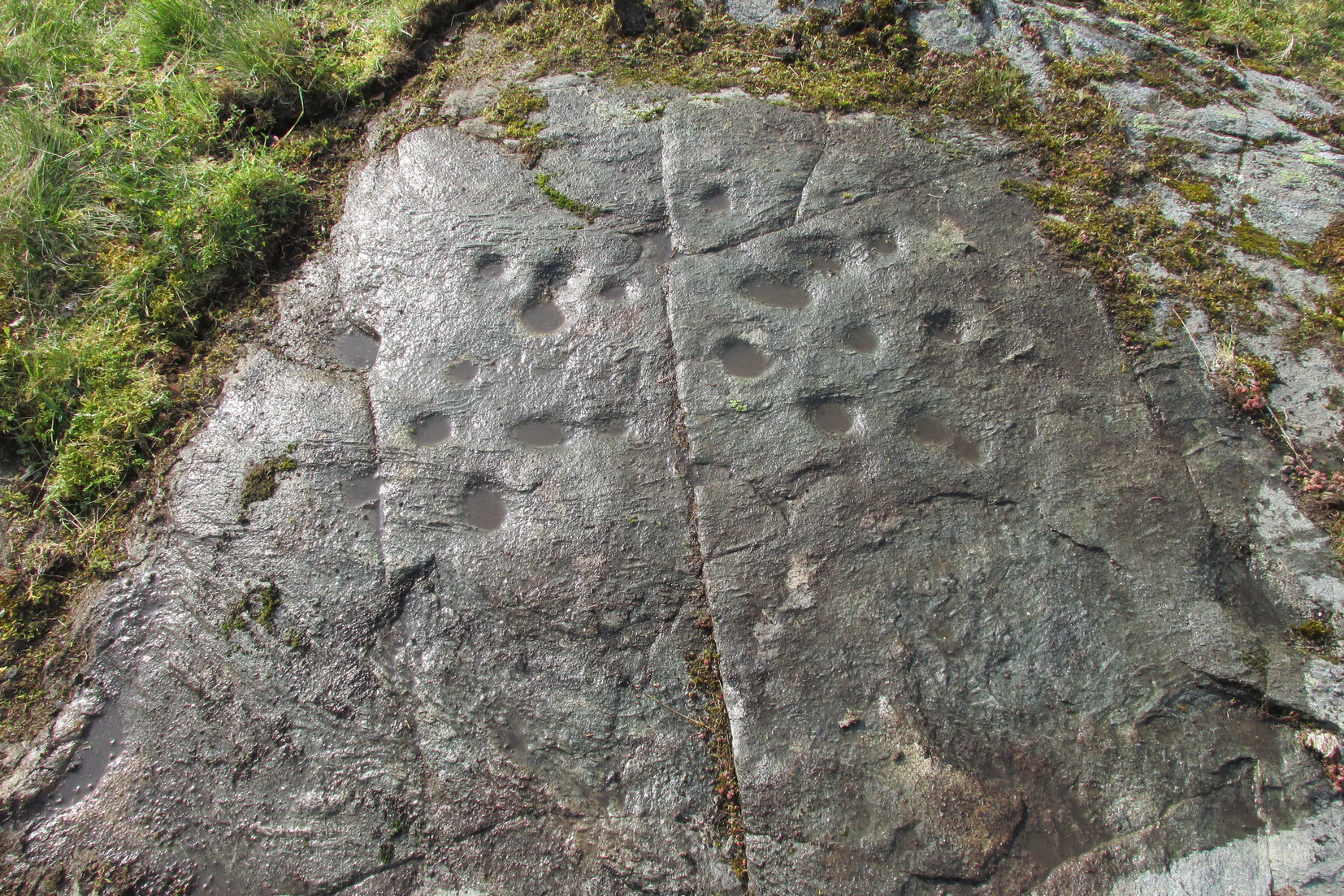
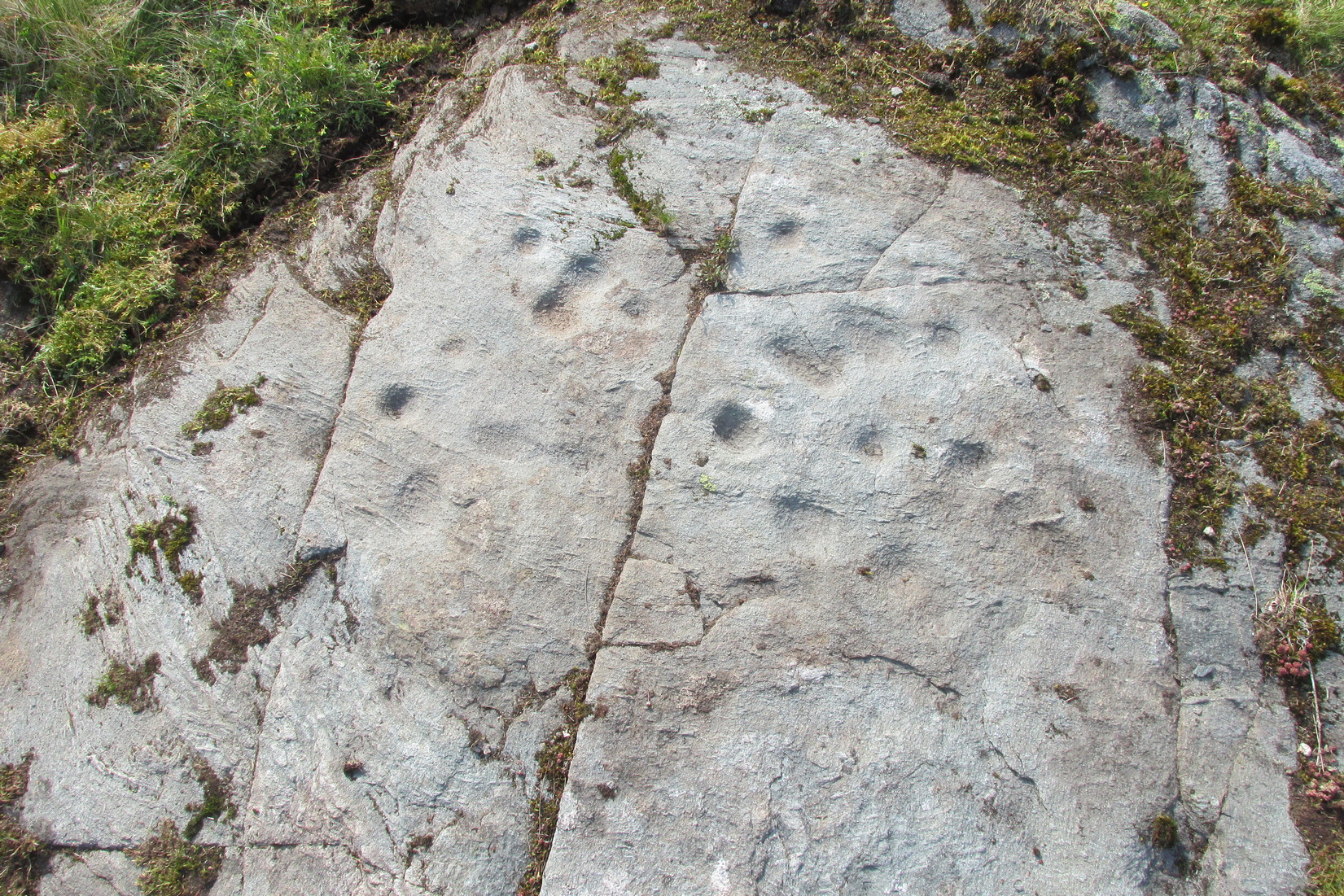
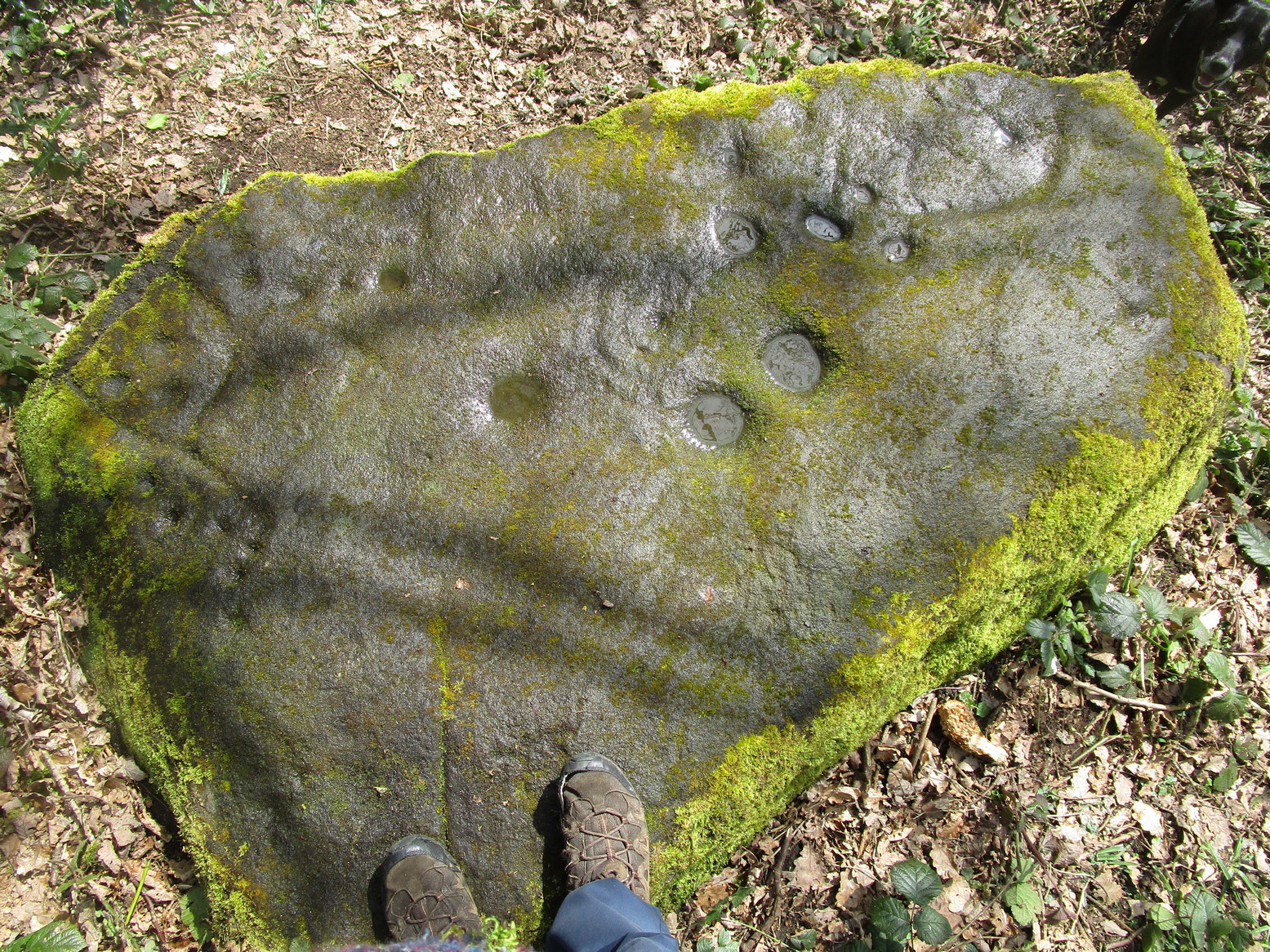
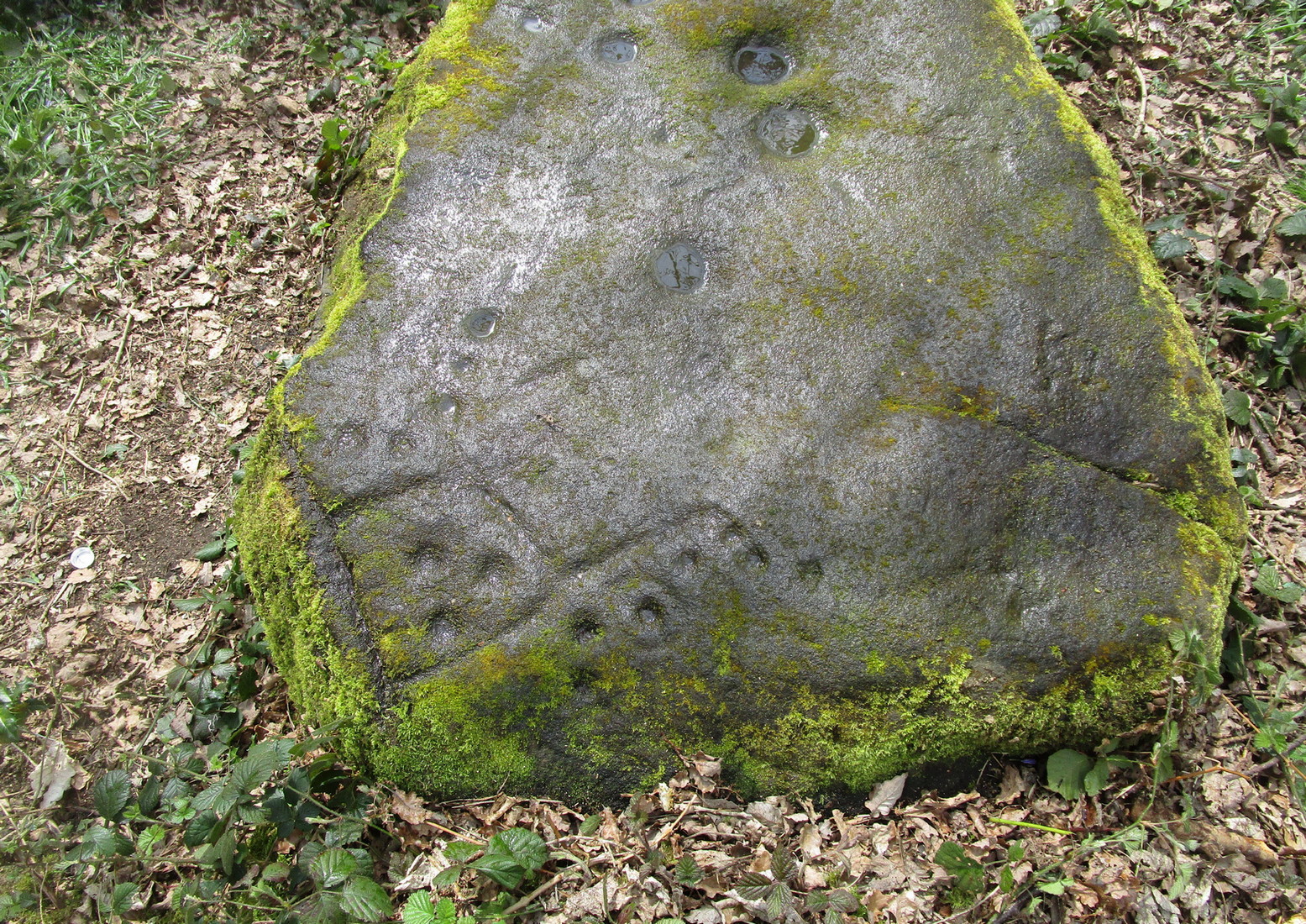
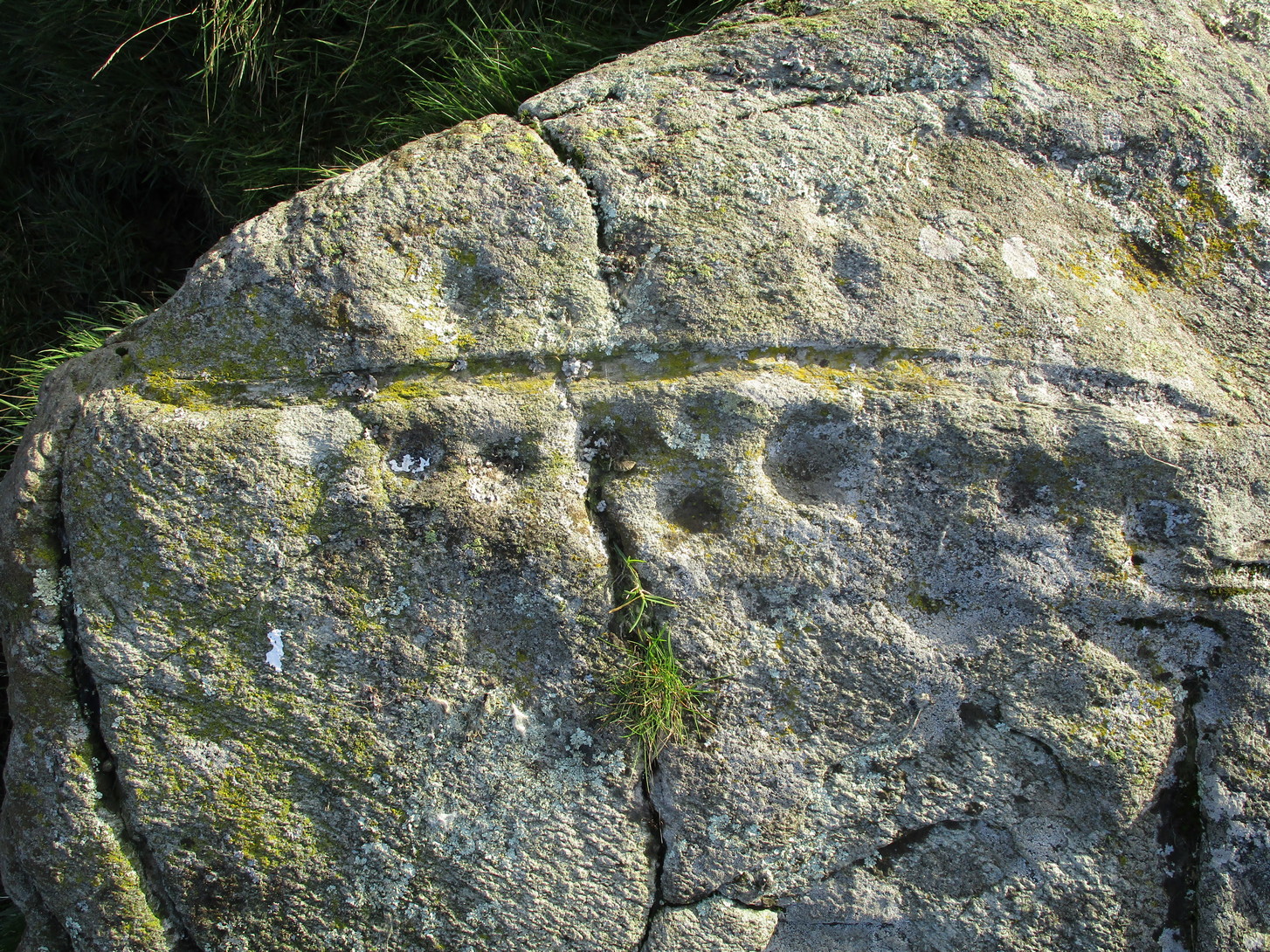
It’s pretty basic: consisting of a distinct triangle of three plain cup-marks on one side of a natural crack that runs across a section of the stone. Immediately adjacent and on the other side of this crack, is another singular cup.  This appears to have a carved line running from it and possibly an elongated semi-circular element around the cup itself.  It’s not too special when compared to the much more ornate petroglyphs further east, but is worth checking out if you’re walking in this gorgeous western edge of Rombalds Moor.

Acknowledgements:  HUGE thanks to Sarah Walker, without whose help and permission to use her photos, this site profile could not have been written.

© Paul BennettThe Northern Antiquarian
Gab Wood (2), Cookridge, Leeds, West Yorkshire

Cup-and-Ring Stone:  OS Grid Reference – SE 24602 40614

Getting Here

Gab Woods (2) carving

Follow the same directions as if you’re visiting the Gab Woods (1) carving—which you’re probably visiting if you’re checking this one out.  Walk south into the middle of the woods and you’ll soon notice the road/houses on the other side of the trees.  Once here, staying in the woods, follow the walling down for about 100 yards, keeping your eyes peeled for a reasonably large flat stone about 15 yards from the wall in the trees.  If you can’t find it at first, patiently zigzag back and forth until it eventually appears!

Archaeology & History

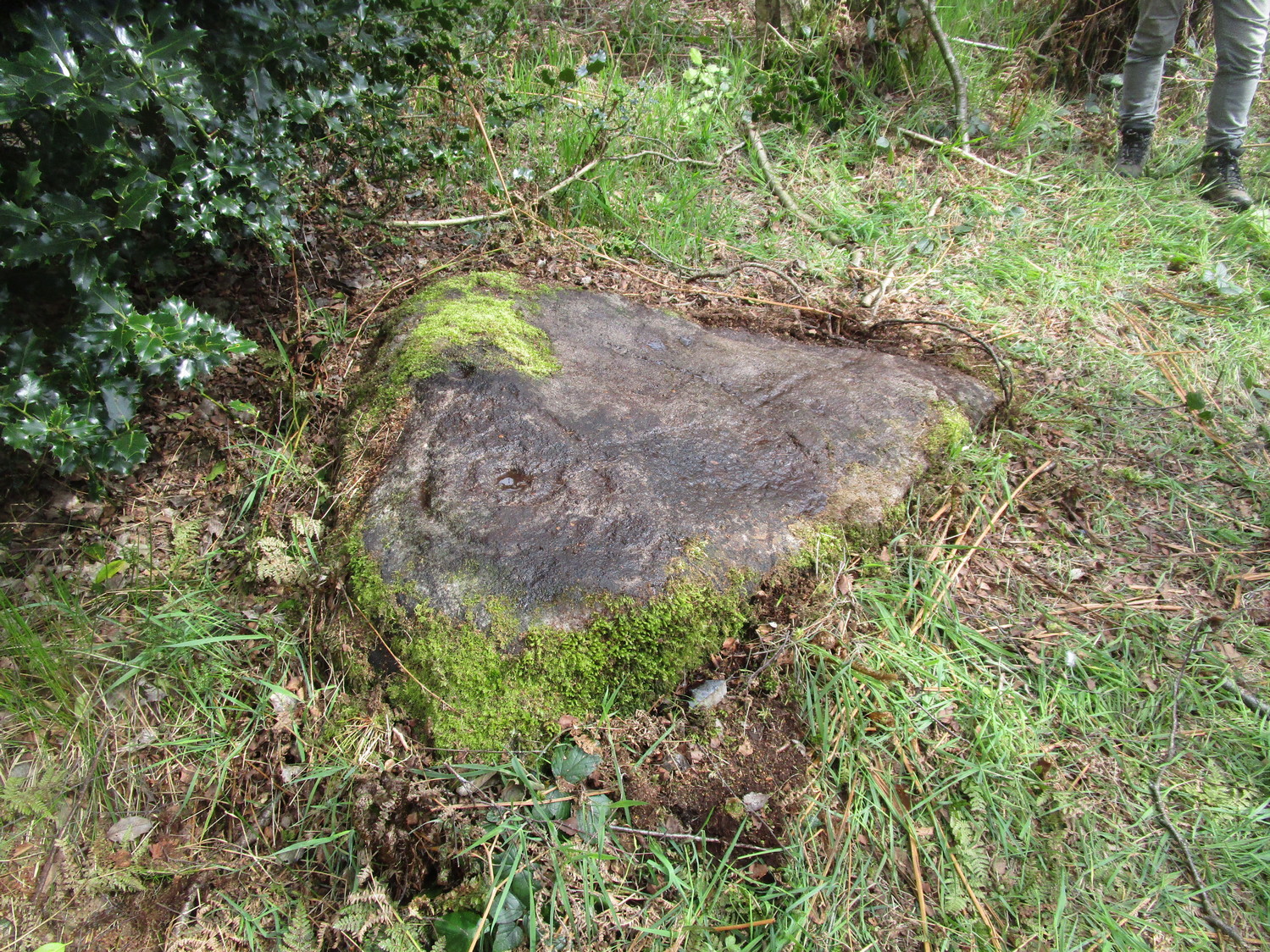
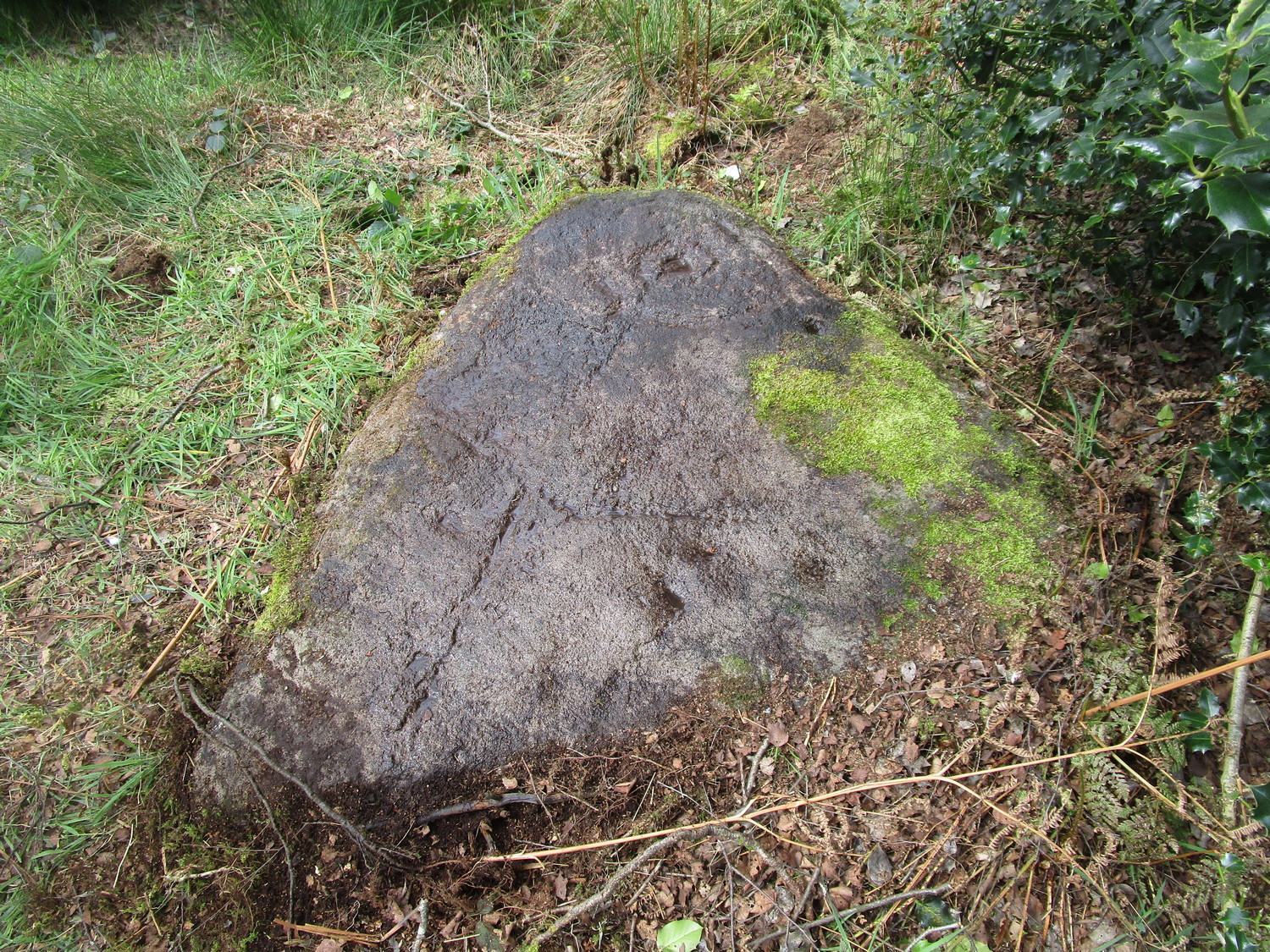
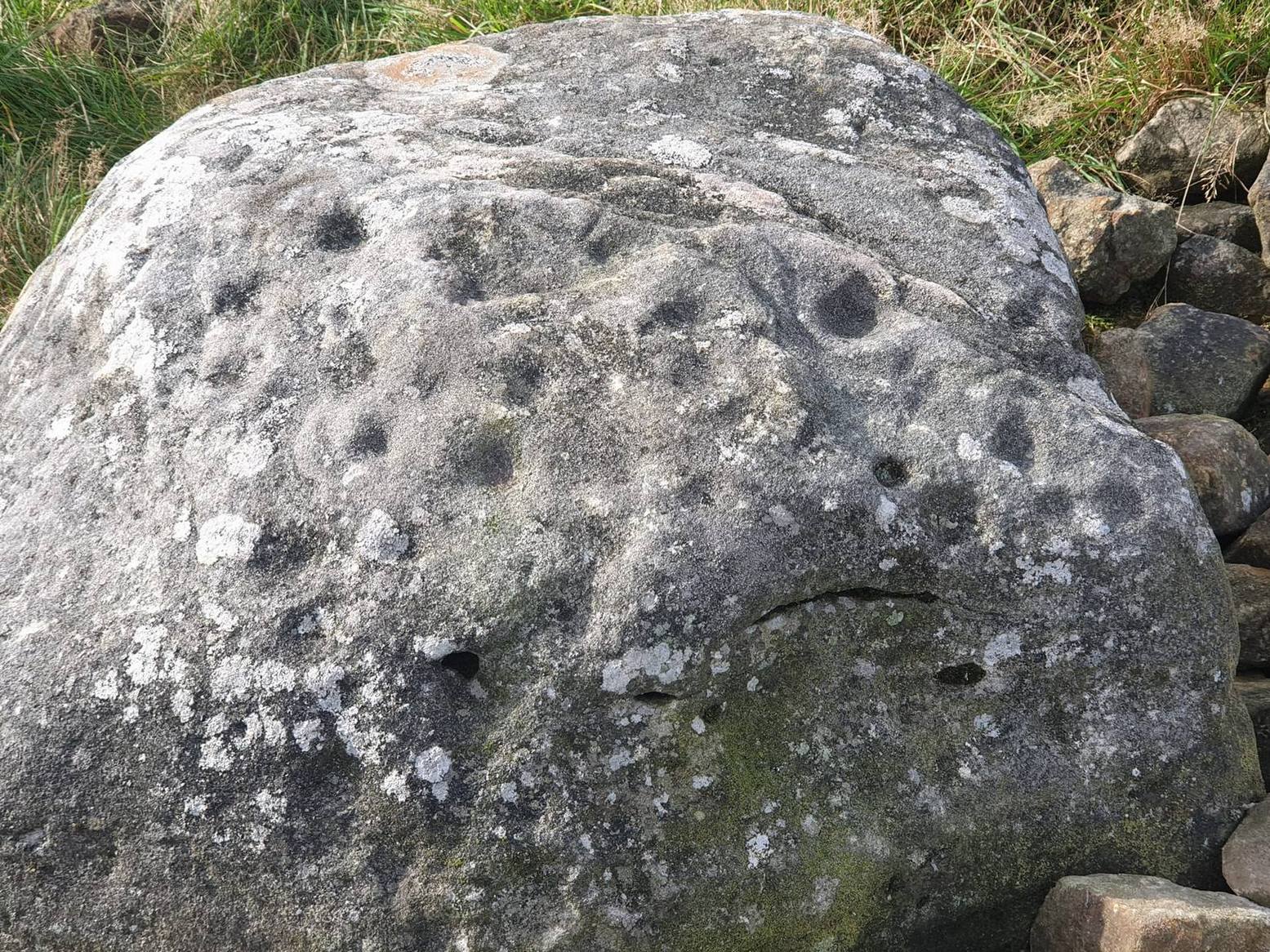
One of two known petroglyphs in this woodland (there may be more hidden away) that was first found in the 1940s by Dan Cole.  The main feature here consists of a cup-mark encircled by two large, well-defined oval-shaped “rings”, a bit like a large eye.  From the central cup, a long carved line runs down the gently sloping surface of the stone and, roughly halfway down from the cup-and-ring to the edge of the stone, another carved line cuts across at rough right-angles, giving the carving a slight anthropomorphic (human-like) appearance when looking up the stone.  This humanesque figure may have been the intention—though for my part I have to say that I’m slightly skeptical about it.  We may never know either way.  Several other single cups are on the stone: one to the side of the large “eye” and two or three below the elongated “arms.”

Vague humanesque figure
Large eye-shaped element

An additional, interesting non-petroglyphic feature is the name of the woodland in which the stone resides.  In Thomas Wright’s massive dialect work, Gab is a northern dialect word meaning “to talk”, or “idle chatter” (and variants thereof); this is echoed in Blakeborough’s (1911) Yorkshire survey; and Wilkinson’s (1924) local study tells simply it’s “idle talk…able to talk glibly and with much plausibility—a Town Hall Square orator for instance.” This makes the place as something akin to being “the woodland that talks”, “the chattering woods” or “the talking woodland”, etc.  You can make up your own mind as to what this might mean… *

References:

  1. Blakeborough, Richard, Wit, Character, Folklore and Customs of the North Riding of Yorkshire, W. Rapp: Saltburn 1911.
  2. Wilkinson, John H., Leeds Dialect Glossary and Lore, privately published: Leeds 1924.
  3. Wright, Joseph, English Dialect Dictionary – volume 2, Henry Frowde: London 1900.

Links:

  1. Dan Cole’s Image Archive, The Thoresby Society

Acknowledgements:  Huge thanks must go to Peter Murphy for recovering this impressive carving from the archives, and from beneath the carpet of soil and vegetation, so enabling it to see the light of day once again.  Also big thanks to the usual culprit of James Elkington, as well as Sarah Walker and Sarah Jackson.

* a Scottish dialect variant of gab relates to the mouth, tongue, taste.

© Paul BennettThe Northern Antiquarian
Bucking Hill (02), High Moor, Brunthwaite, West Yorkshire

Cup-Marked Stone:  OS Grid Reference – SE 0844 4529

Also Known as:

  1. Carving no.87 (Boughey & Vickerman)
  2. Carving no.217 (Hedges)

Archaeology & History

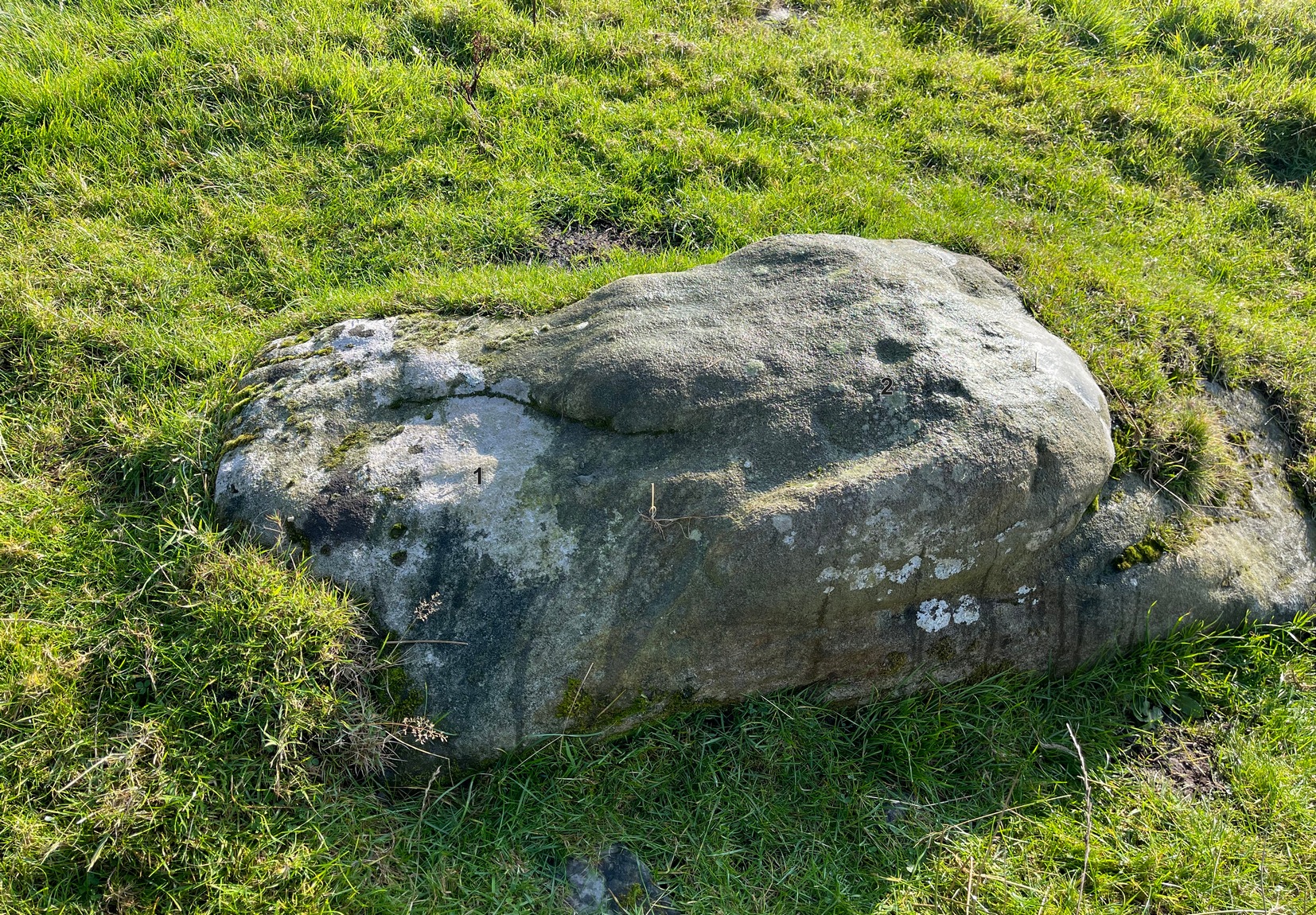
This was one of two carvings reported by Stuart Feather (1964) that were very close to each other (see Bucking Hill 3), both of which consisted of simplistic designs but which, he thought, may once have been part of the same rock.  Its precise whereabouts are not known (the grid-ref is an approximation).  He wrote:

“On the southern slopes of Bucking Hill, a fine gritstone rock 5ft 6in by 4ft 6in by 1ft 6in high, has a very clear cup-mark 2in in diameter and ½in deep carved 8in from the straight eastern edge of the rock.”

Feather thought that the edge of the rock had been cut and quarried for use in the boundary wall to the east.  He may have been right.

References:

  1. Boughey, Keith & Vickerman, E.A., Prehistoric Rock Art of the West Riding, WYAS 2003.
  2. Feather, Stuart, “Mid-Wharfedale Cup-and-Ring Markings – Nos 21 and 22: Bucking Hill, High Moor, Rombald’s Moor,” in Bradford Cartwright Hall Archaeology Group Bulletin, 9:5, 1964.
  3. Hedges, John (ed.), The Carved Rocks on Rombalds Moor, WYMCC: Wakefield 1986.

© Paul BennettThe Northern Antiquarian
Bucking Hill (01), High Moor, Brunthwaite, West Yorkshire

Cup-and-Ring Stone (lost):  OS Grid Reference – SE 0828 4507

Also Known as:

  1. Carving no.84 (Boughey & Vickerman)

Archaeology & History

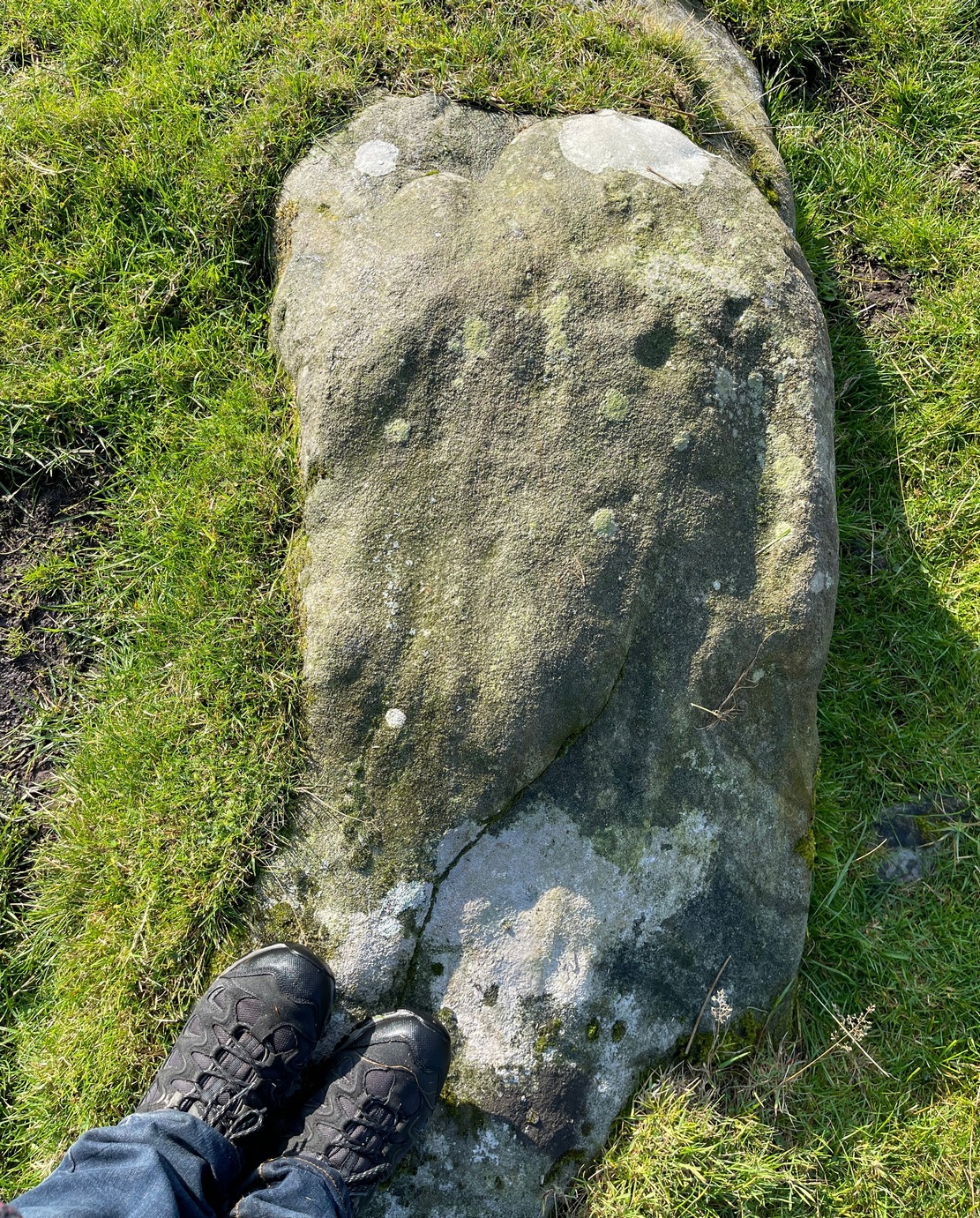
Described by Boughey & Vickerman (2003) as being located somewhere “below Dirk Hill Sike” in the Rivock woods plantation, this is (or was) a “medium, upstanding rock lying NW-SE (with) one possible heavily weathered large cup-and-ring: cup 75mm diam. and ring 200mm diam.”  However, the authors give no references to this site, nor images, or notes as to who rediscovered this stone.  In their survey they also included one of the Bucking Hill carvings twice, giving the impression that there was more here than had previously been reported.  These errors have subsequently been repeated elsewhere on-line.  In saying this, there are a number of rocks scattered in this area which may have had carvings on them, but it’s been heavily forested and, recently, the trees have been felled and so many of them will have been damaged, turned over, or simply destroyed as a result of the forestry shennanigans.

References:

  1. Boughey, Keith & Vickerman, E.A., Prehistoric Rock Art of the West Riding, WYAS 2003.

© Paul BennettThe Northern Antiquarian
Gab Wood (1), Cookridge, Leeds, West Yorkshire

Cup-and-Ring Stone:  OS Grid Reference – SE 24610 40721

Getting Here

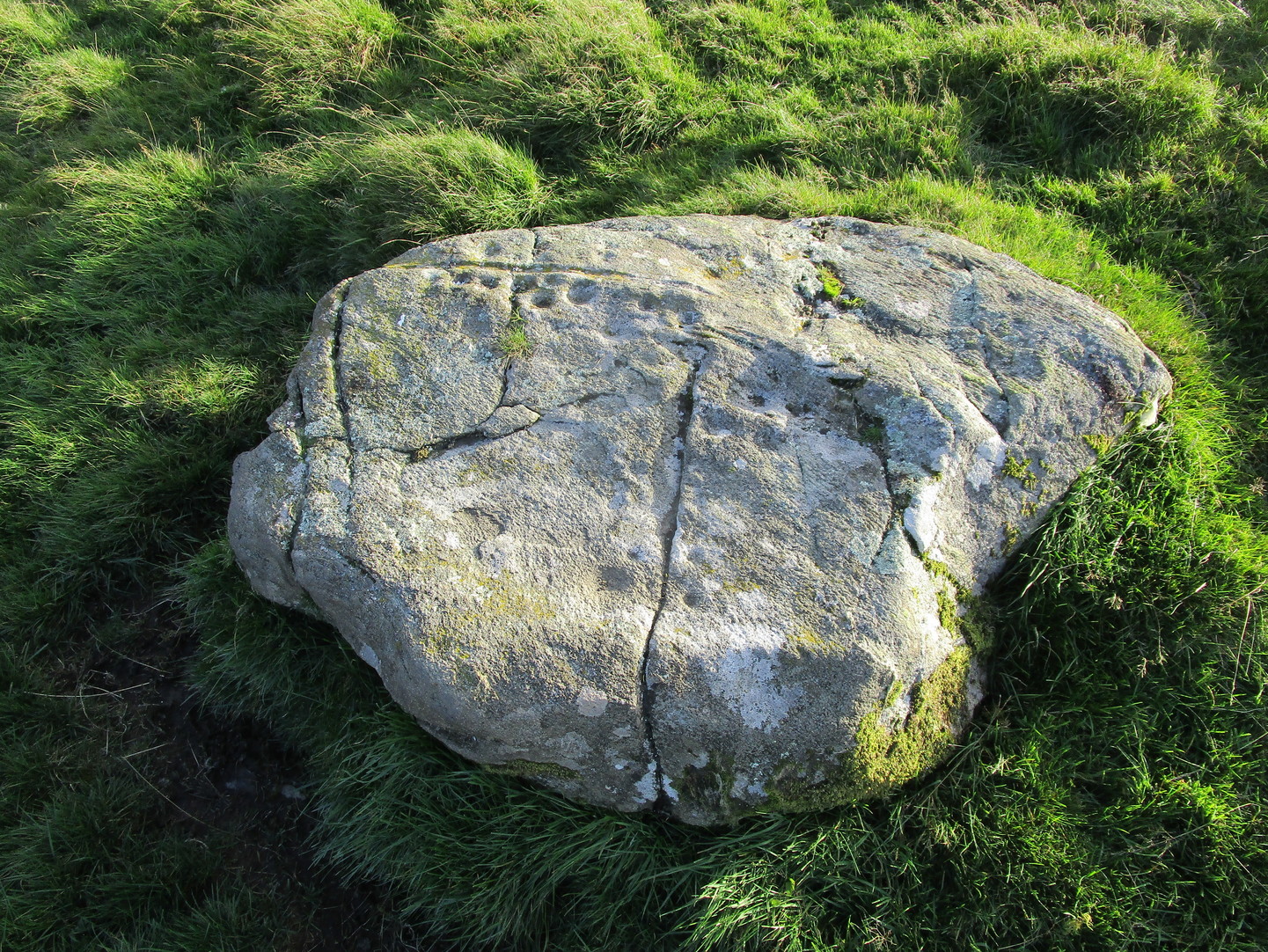
Gab Wood (1) stone

On the north side of Cookridge, find Smithy Lane and go to the western-end, where it meets up with a dirt-track.  Walk straight along here by the side of the cricket-pitch and then take the first turn left where you walk along the other edge of the cricket pitch.  About 150 yards along, the track hits the woods; keep along here for about another 200 yards where you’ll find a small footpath on your left goes into the woods. Once you’re in in the trees, walk to your right, following the wall, for about 50 yards where you’ll see a large flat stone by the holly trees.  That’s it!

Archaeology & History

Rediscovered by the Leeds historian Don Cole in the 1940s, this complex multi-period carving etched onto a flattened rock surface is an unusual outlier from the Rombalds Moor complex several miles to the west.  At its heart, around the semi-natural deep “cups” near the middle of the southern side of the stone, is the oldest part of the carving comprising a very faint incomplete triple-ring design which, as we move around it, almost has the look of a Newgrange-lozenge form to it.  But I’m unsure…

Very faint incomplete triple-ring at top-middle
Waves & cups and rings

More obvious (apart from the deep “cups”), and the first thing you notice as you approach the stone, are the later and much more well-defined elements on the east side of the stone: a curious wave-form writhes from the edge of the rock across its smooth surface, beneath which we find a cup-and-ring and a number of single cup-marks, some enclosed inside a rounded box, with others sat between the curved carved line and the stone’s edge.  The “rounded box” with its three cups at first seems to be on its own, but as the light changes you’ll notice a much fainter (possibly older) rectangular box attached to it; no cups are visible inside this.

A hundred yards due south in the same woodland you’ll find the Gab Woods (2) carving.

One interesting feature is the name of the woodland in which the stone resides.  In Thomas Wright’s massive dialect work, Gab is a northern dialect word meaning “to talk”, or “idle chatter” (and variants thereof); this is echoed in Blakeborough’s (1911) Yorkshire survey; and Wilkinson’s (1924) local study tells simply it to be “idle talk…able to talk glibly and with much plausibility—a Town Hall Square orator for instance.” This makes the place as something akin to being “the woodland that talks”, “the chattering woods” or “the talking woodland”, etc.  You can make up your own mind as to what this might mean… *

References:

    1. Blakeborough, Richard, Wit, Character, Folklore and Customs of the North Riding of Yorkshire, W. Rapp: Saltburn 1911.
    2. Wilkinson, John H., Leeds Dialect Glossary and Lore, privately published: Leeds 1924.
    3. Wright, Joseph, English Dialect Dictionary – volume 2, Henry Frowde: London 1900.

Acknowledgements:  Huge thanks must go to Peter Murphy for recovering this impressive carving from beneath the carpet of soil and vegetation, and so enabling it to be seen by others once more. Also big thanks to the usual culprit of James Elkington, as well as Sarah Walker and Sarah Jackson.

* a Scottish dialect variant of gab relates to the mouth, tongue, taste.

© Paul BennettThe Northern Antiquarian
Allt Thorrisdail (1), Torrisdale, Sutherland

Cup-Marked Stone:  OS Grid Reference – NC 66574 61814

Getting Here

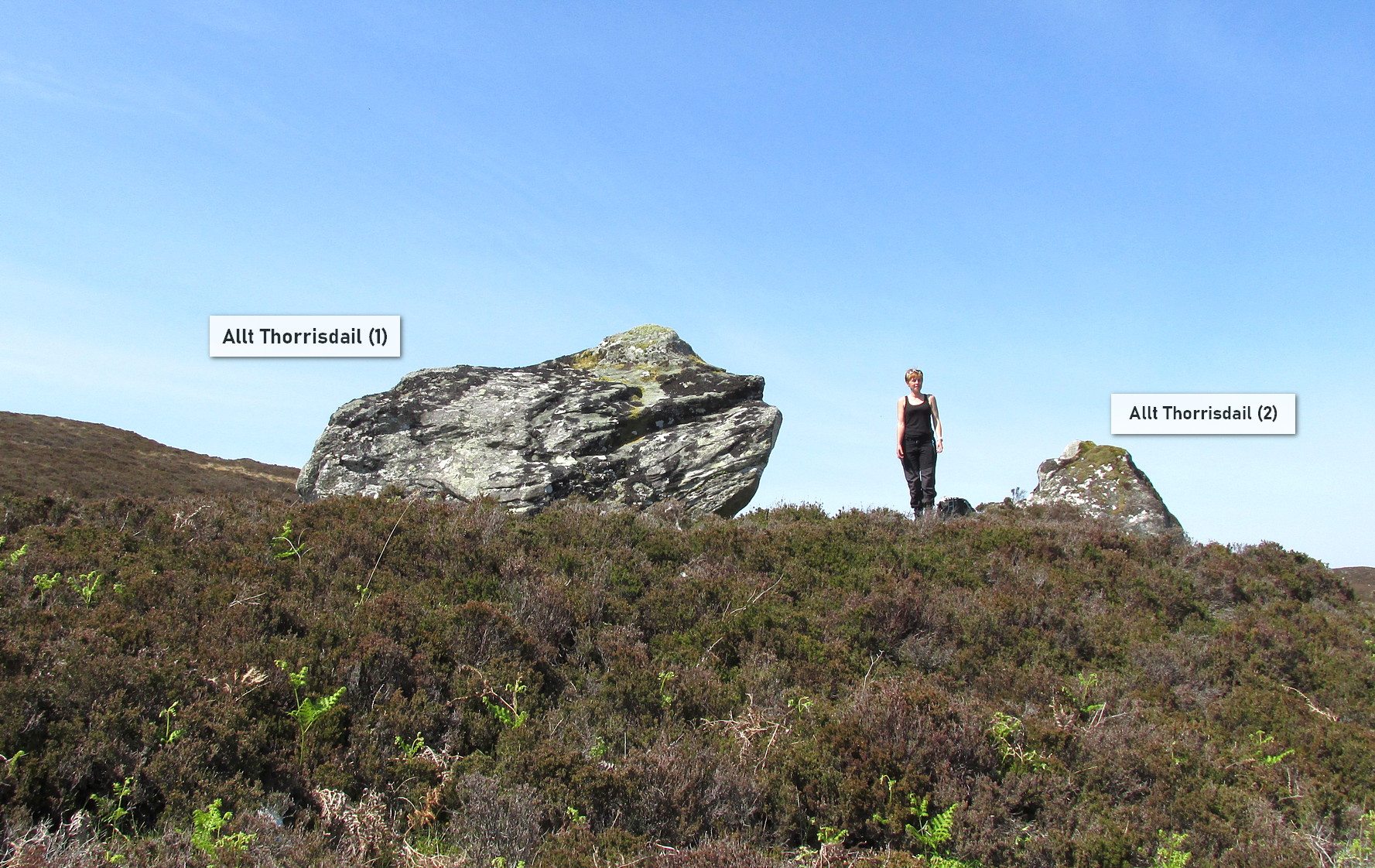
Petroglyph rocks 1 & 2 – with Sarah for size

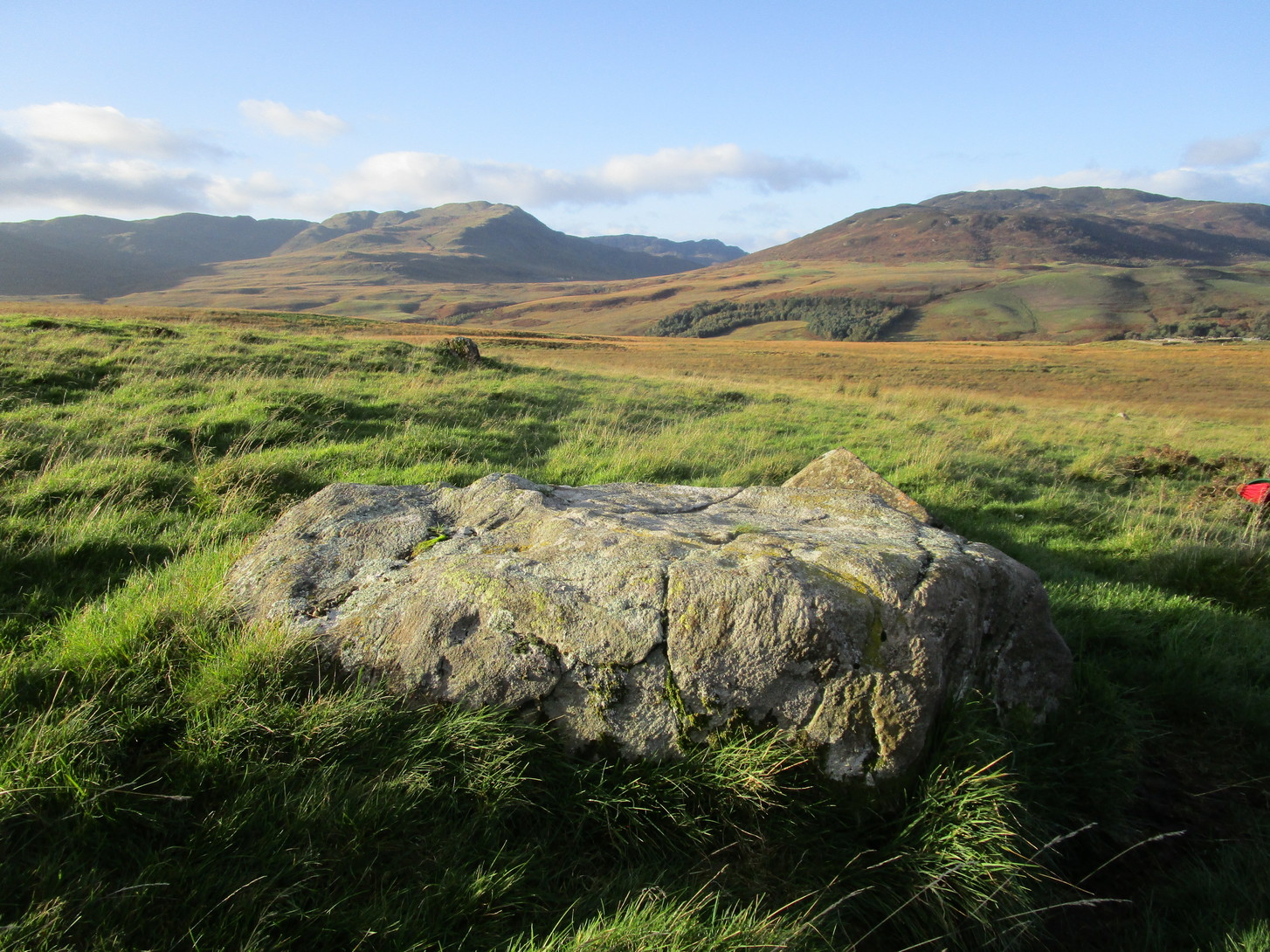
Roughly halfway between Bettyhill and Tongue on the A836 road, keep your eyes peeled for the sign to Skerray (4 miles) and travel down that road.  About 1¾ mile on, take the tiny lane on your left up the slope for 0.6 miles (1km), and just before the sharp bend in the road (across a small bridge) there’s a gate on your left.  Go thru here and follow the tiny path alongside the burn (stream) westwards for half-a-mile until where the waters become a bog within a wide oval bowl in the landscape.  At the far-side you’ll see two large boulders sat above this watery bowl.  That’s where you need to be!

Archaeology & History

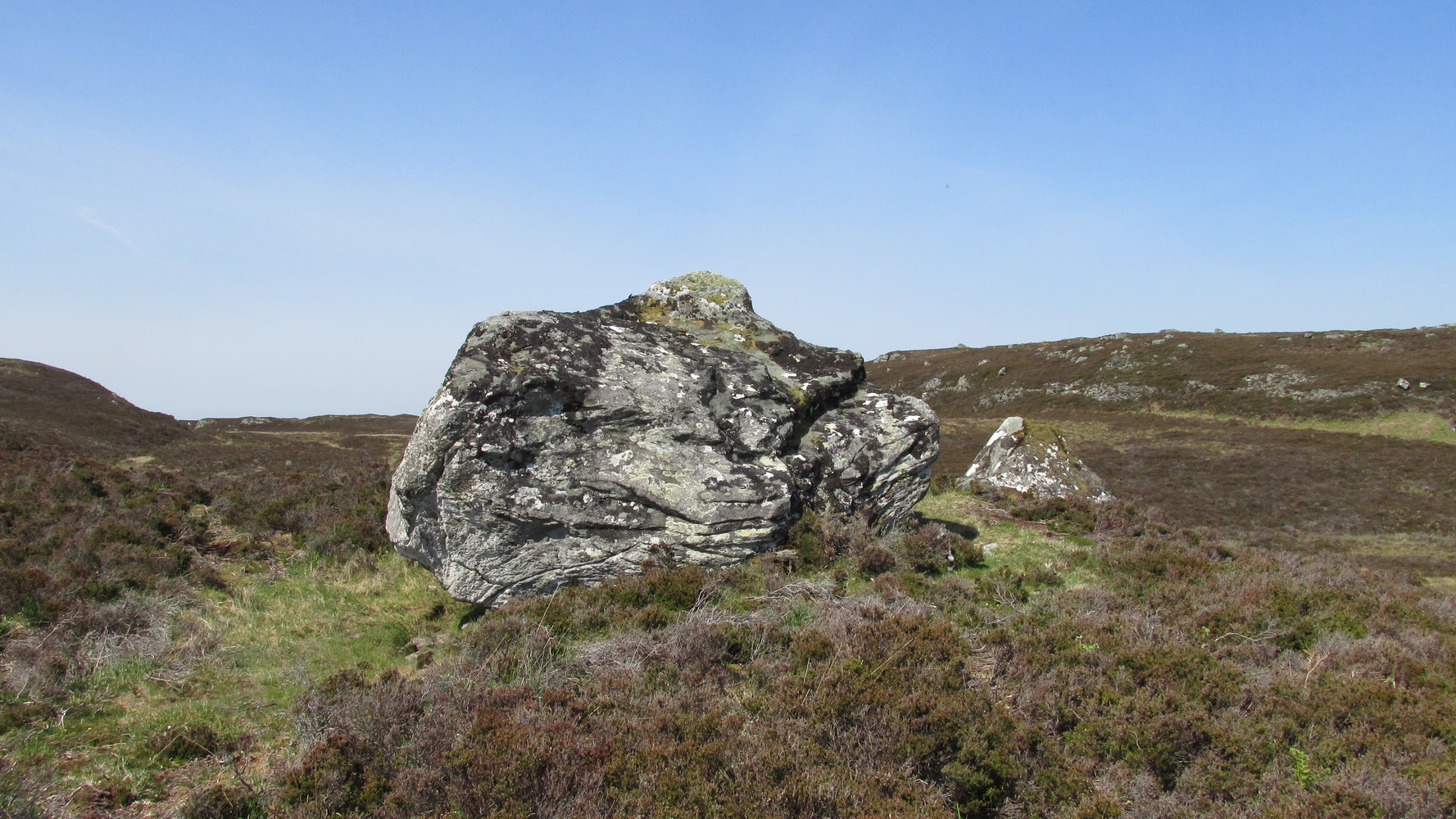
The big fella of the two

This is carving “number one” of two great incised boulders that are sat upon a natural ridge overlooking a dried-up lochan.  An impressive spot that give a thoroughly distinct impression of altar stones above the sunken waters, from whence rites and proclamations were performed.  It has that look and feel about it—and any animist would tell you the same.  My hardcore dreams aside though…

This profile is for the larger of the two boulders that live here (Allt Thorrisdail 2 is here).  It has very curious petroglyphic attributes—much like its compatriot—unlike many of those in these northern lands.  The pair of them seem to have been described for the first time in Hew Morrison’s (1883) fine meanderings through the mythic history of the region.  He told that,

“About a mile distant (from Torrisdale) two large cup marked boulders lie on the slope of a hill.  The marks are disposed in groups of one large and nine smaller cups.  On the larger boulder there are two of these groups and seven separate marks.”

There are slightly more than that, and this was pointed out when the Royal Commission (1911) lads came to see it:

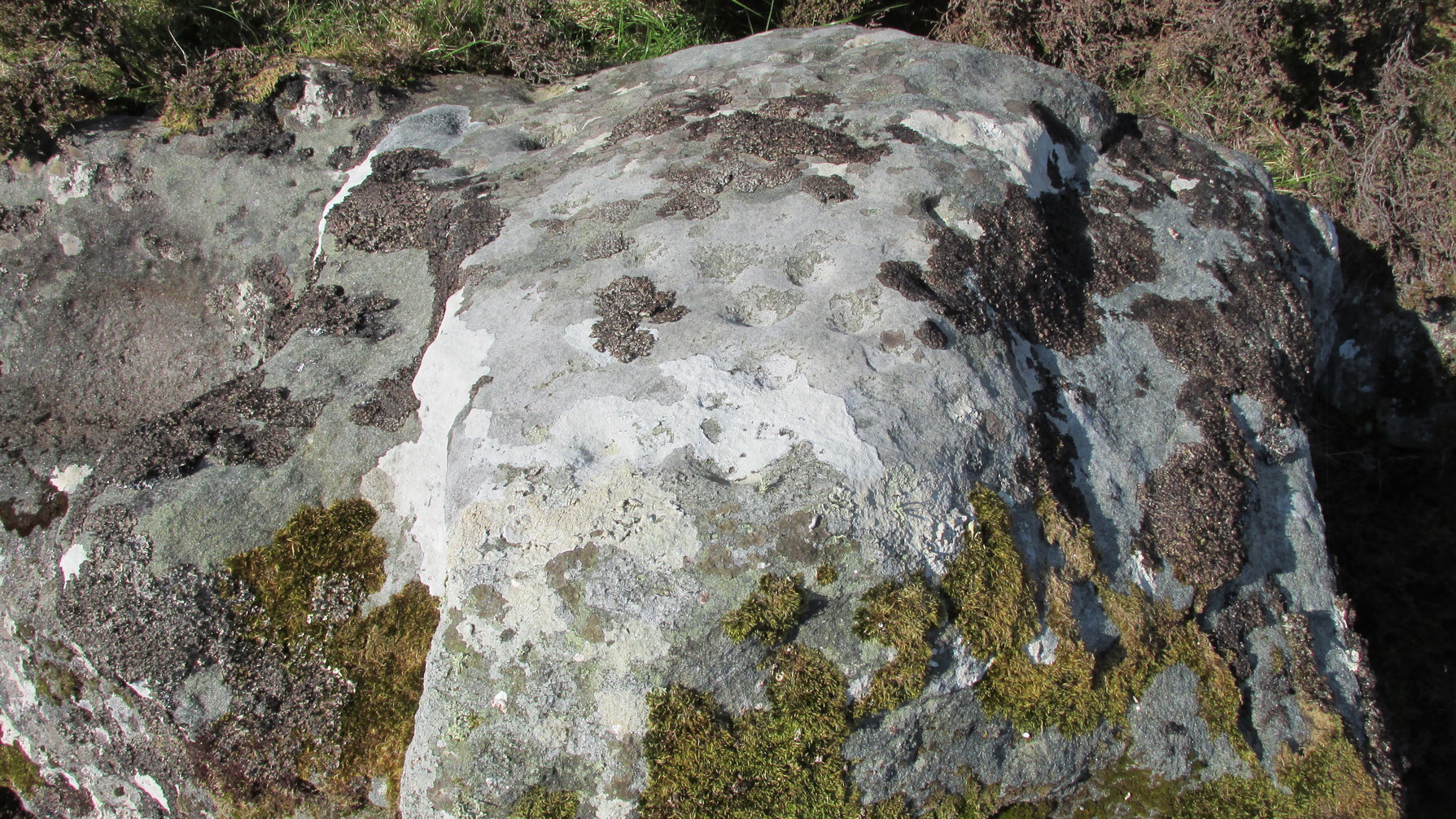
“The largest boulder, that situated furthest west, is about 8 feet high and 14 feet in length.  On its south side, chiefly on the flat and less abrupt face of the stone, are groups of cup-marks of from 2in to 3in in diameter, the deepest being about 1in in depth, while a number are now almost obliterated.  The extent of the markings is not very definite, but there appear to be two groups containing about twelve cup-marks each.”

Another chorus of cups
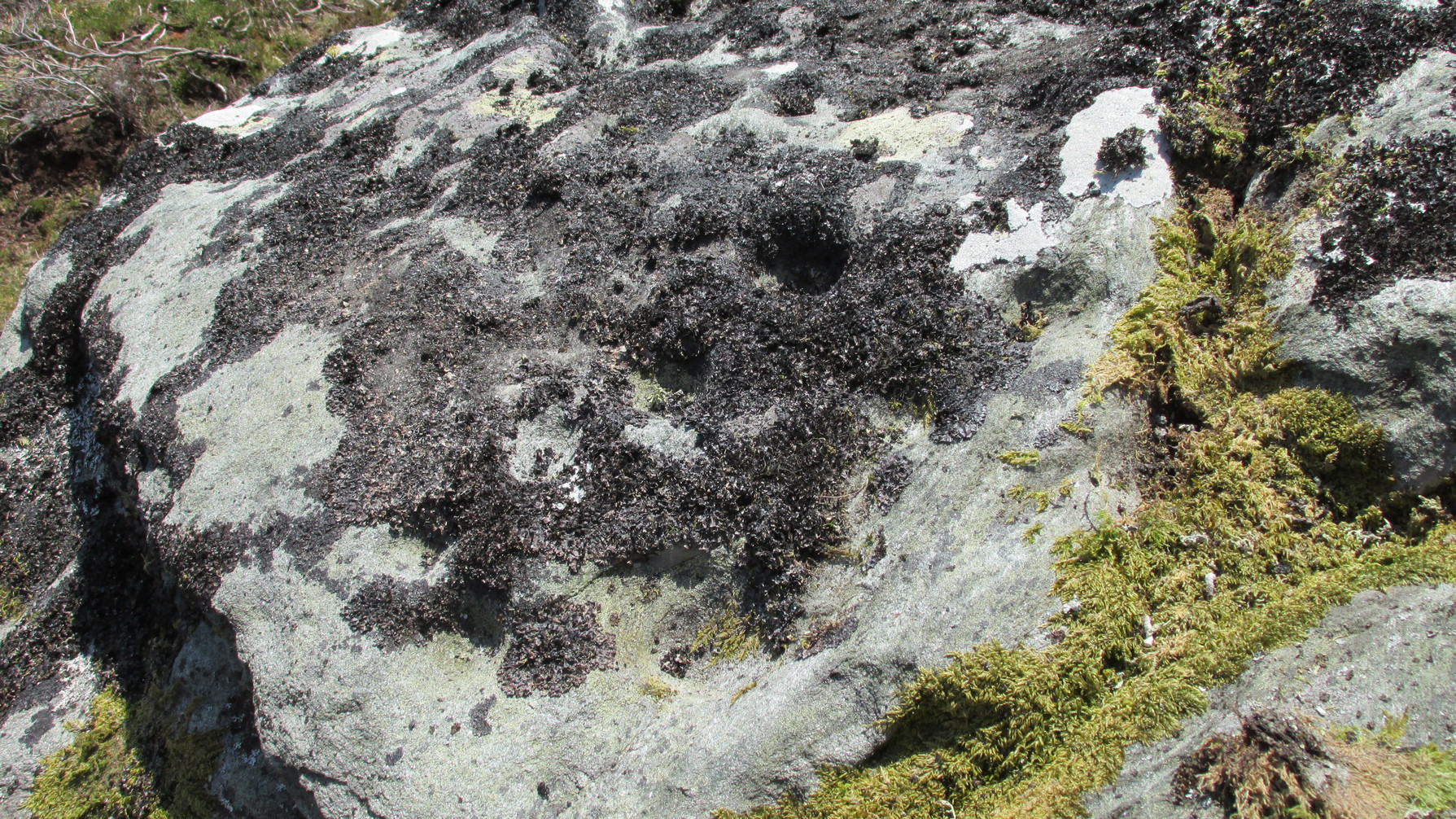
Lichen-dappled cupmarks

But this only tells of half the stone’s symbolic story.  For on the vertical northern face of the rock, from just above ground-level, we have a distinct almost straight line of many cup-marks, going up diagonally, at an angle of about 35º.  I took a number of photos of this aspect of the stone, but the covering of lichens didn’t highlight them clearly at all.  When you’re stood looking at them they stand out like a sore thumb!

I have to be honest and say that I bloody well love this site!  You have to paint the entire environment in the right light, as it was when the stone was first carved, surrounded by the scattered woodland of birch, pines and rowan all across where now we have stunning barren moorlands.  Tis a ritual place indeed – without any shadow of doubt!

References:

  1. Mercer, R.J., Archaeological Field Survey in Northern Scotland 1976-1979, University of Edinburgh 1980.
  2. Morrison, Hew, A Tourist’s Guide to Sutherland and Caithness, D.H. Edwards: Brechin 1883.
  3. Royal Commission on Ancient & Historical Monuments, Scotland, Second Report and Inventory of Monuments and Constructions in the County of Sutherland. HMSO: Edinburgh 1911.

Acknowledgements:  Huge thanks to Sarah MacLean for her company and landscape knowledge in visiting this and other nearby antiquarian remains. And to Aisha Domleo, for getting me into this neck o’ the woods.

© Paul BennettThe Northern Antiquarian
Holy Moor, Holymoorside, Derbyshire

Cup-and-Ring Stone:  OS Grid Reference – SK 3211 6866

Getting Here

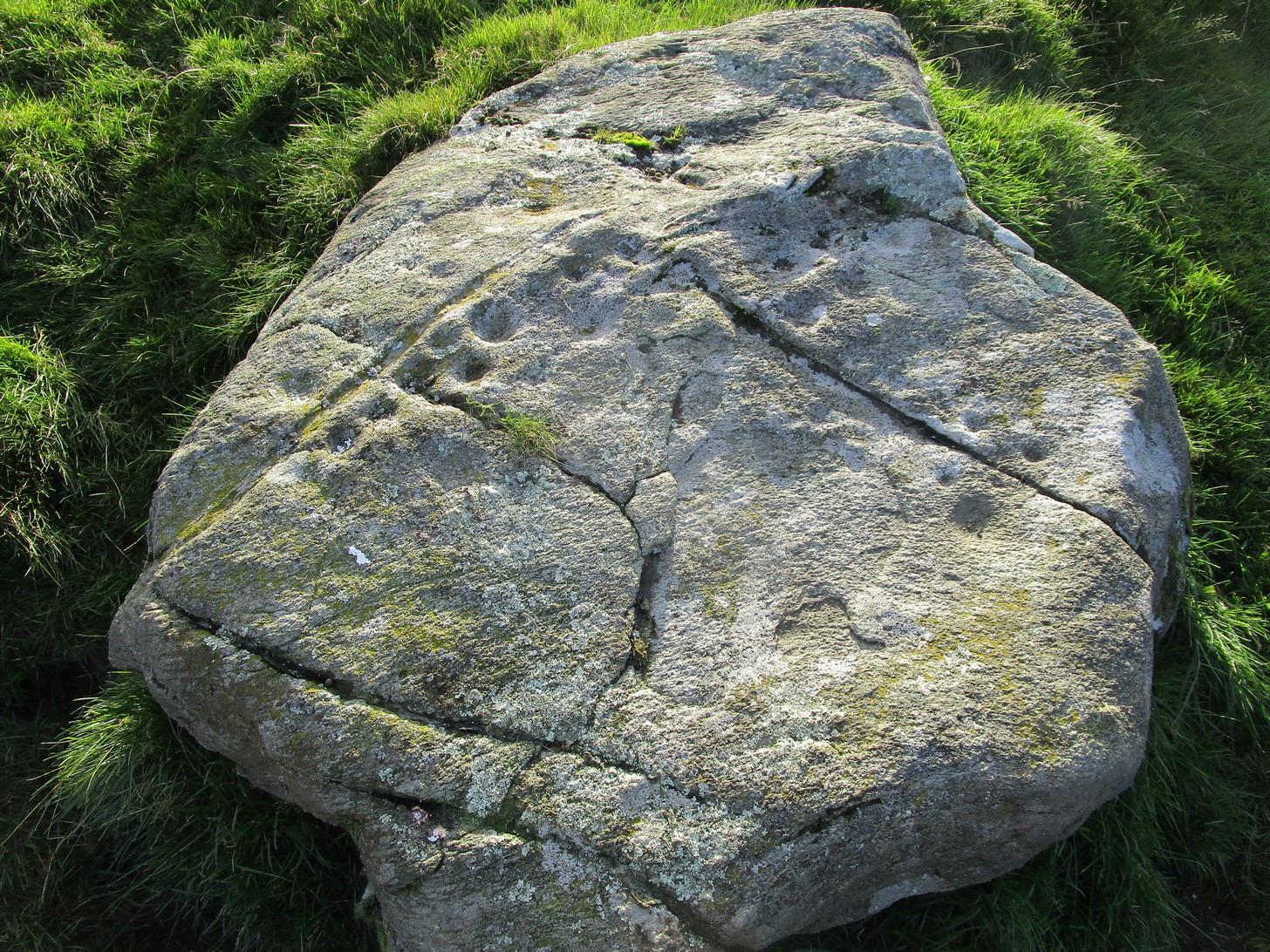
The stone in question!

From Holymoorside, take the long straight Loads Road running west out of the town into Longside Road. ¾-mile along, past Home View and just before Well Lane (on the right), there’s a public footpath sign pointing into the fields on your left. Walk dead straight, dead south along the wallside for 450 yards, then walk straight left again along the other wall until you reach the tiny bit of moorland less than 150 yards away.  The carved rock is just on the other side of the stile at the edge of the old walling.  You’ll find it.

Archaeology & History

Rediscovered sometime in 2002, this would seem to be an isolated cup-and-ring stone.  It was first mentioned in John Barnatt’s (2003) short gazetteer of Peakland petroglyphs, where he wrote,

“This irregularly-shaped small boulder was identified recently lying amongst post-medieval field clearance adjacent to a field corner and footpath… Its upper parts ar covered with 40-46 cupmarks.  On the exposed irregular top they are badly worn and sometimes uncertainly identified.  In one instance a cup is partly encircled by a worn ring, while a second partial ring nearby may be fortuituous.  On a ledge near one edge of the boulder preservation is better and the cups are clearly defined and densely arranged.”

The stone looks as if it’s been moved into its present location, obviously for use in the walling.  It’s original position would have been somewhere close by, but we know not where that might be.

References:

  1. Barnatt, John & Robinson, F., “Prehistoric Rock Art in Ashover School and Further New Discoveries Elsewhere in the Peak District,” in Derbyshire Archaeological Journal, 123, 2003.

Links:

  1. Pecsaetan – Holymoorside Cup-and-Ring Marked Boulder 

Acknowledgements:  Huge thanks to Geoff Watson for use of the photos in this site profile.  It wouldn’t have been written without them.

© Paul BennettThe Northern Antiquarian
Reva Hill (1), Hawksworth, West Yorkshire

Cup-Marked Stone:  OS Grid Reference – SE 15230 43179

Getting Here

Main cups numbered

Numerous ways to get here, it’s probably the easiest (direction wise) to reach here starting from Dick Hudson’s public house on the southern road surrounding Rombalds Moor. From the pub, head left (east) along Otley Road (passing Weecher reservoir) for 1.9 miles (3.1km) until you reach Reva reservoir where a track leads you to the waters. A small parking spot is on the left-side of the road. From here, go through the gate and up the footpath (north) for about 200 yards then turn right and go up the field towards the wall where, about 20 yards before it, you’ll see find the stone in question.

Archaeology & History

This long earthfast stone has two distinct cup-markings: one near its northern upper end, and the other near the lower southern end, as highlighted on the above photo. (forgive the poor image, but we took it when the sun was pretty high in the sky)  It seems as if there are two or three other very faint cup-marks on the upper end of the stone, close to the most distinct one, but none of our photos show them with any clarity.

Acknowledgements:  Huge thanks to Sarah Walker and Thomas Cleland for help with location and imagery for this stone.

© Paul BennettThe Northern Antiquarian

Allt na Drochaide (1), Glen Artney, Comrie, Perthshire

Cup-and-Ring Stone:  OS Grid Reference – NN 72780 16532

Getting Here

Allt na Drochaide (1) stone

From Comrie take the B827 road to Braco, passing the large Roman Stone monolith, turning right at the tiny Glen Artney road a half-mile along (easy to miss).  3 miles on, pass the derelict Dalness cottage, you can follow the directions to get to the Mailer Fuar (2) cup-and-ring stone; and from here go up the field past the Mailer Fuar (1) carving, through the gate and follow the fence to your right, then drop down into the great boggy reeds, over the burn and up as if you’re heading to the rounded hill of Cnoc Brannan.  On a grassy knoll a hundred yards or so up the slope, you’ll see a rock or two.  It’s thereby!

Archaeology & History

The stone in its setting

I came across this petroglyph not too long ago on the same day I found the Cnoc Brannan standing stone a little further up the slope from here.  Covered in cup-markings over all except the northeastern portion of its surface, a faint ring seems to be around one of them on its northern side.  Of the twenty-two cups on the stone, the majority of them, as the photos show, are clustered alongside a curved natural scar that runs across the topmost section of the rock.  There are less pronounced faded cups on the more northern and western portions of the rock, with what looks like one on its near-vertical southern face.  Despite its lack of complexity, it has an impressive feel to it.

Main cluster of cups

The home of this carving in its natural setting is what stands out when you’re up here and is certainly what gives it that vibe!  The wooded greenery of Glen Artney stretches ahead of you to the east and west, with the craggish mountains of Beinn Dearg, Halton and their compatriots drawing you to the northern side.   Tis a gorgeous arena indeed!  So, if you’re going to visit its near neighbors at Mailer Fuar a half-mile below, stick this one on your itinerary and, if you’re the roving type, get your feet wet and look around for some more of them.  There’ll be others, as yet unknown, hiding away nearby…

© Paul BennettThe Northern Antiquarian

Craig Hill cluster (5), Kenmore, Perthshire

Cup-and-Ring Stone:  OS Grid Reference – NN 81305 44422

Getting Here

Craig hill cluster (5) stone

From Kenmore go east up the steep mountain road towards Glen Quaich, or if you’re coming from Amulree, go west along the same glen.  After 2½ miles (4km) up the Kenmore route (nearly 9 miles on the Amulree route) you’ll reach a small lochan on your left (you’ve got a very small parking spot a coupla hundred yards before the loch).  A gate and stile past the loch takes you east along a track into the moors.  More than a mile on, the track splits, but you need to keep to the left and follow the track along the wall-side for another 400 yards or so, where you’ll see a small crag of rocks 100 yards down the slope on your right. Once here, the deformed triangle-shaped stone to the left-side of the cluster is the one you’re looking for.

Archaeology & History

About four yards west of the Craig Hill cluster (3) carving, this gently smooth sloping rock was initially noted to have between six and seven cup-marks on it.  Under the grey skies it was difficult to see any of this clearly, and so we wet the surface when Nature gave us some short bursts of light through the clouds which then enabled us to get a much better look at the design—but it’s still far from clear.

Curious eye motif
Central elements of carving

We found at least eight cups on here, two of which had single rings: the one near the top of the stone seems to be complete, whilst the other nearest the bottom of the stone looks to be incomplete.  Another cup had a curious double ring; whilst the one nearest the middle of the stone has what may be three rings, with what could be a carved line running from its centre—but it’s very difficult to say with certainty until we’ve made another visit.  I have little doubt that there’s more to this petroglyph than we could make out beneath the grey skies.  On the west-side of the stone, the “curious” double-ring has, as its outer surround, an “eye” motif, or lozenge, which is also found on the Craig Hill cluster (3)  stone a few steps away.  The eye motif on both stones have the same levels of erosion and, I would suggest, were carved within a century or two of each other; perhaps even around the same time.

This one’s well worth checking out!

Acknowledgements:  Huge thanks to Prof Paul Hornby for use of his photos in this site profile; and to Myrna Hurley for getting us up there.  Cheers doods. 😉

© Paul BennettThe Northern Antiquarian