Druim An Rathaid, Glenbarr, Kintyre, Argyll

Cairn:  OS Grid References – NR 66926 38320

Also Known as:

  1. Glencreggan Cairn

Archaeology & History

First described in the Object Name Book* of 1867 as being “the remains of a cairn in which D MacMillan of Glenbarr says a cist was found”, this prehistoric tomb was subsequently going to be destroyed in the 1950s by the farmer when local researchers Mr & Mrs J.G. Scott (1958) took to checking the place out before its demise.  And it was a damn good job they did!  The cairn still remains to this day—albeit in a very dilapidated state.  The assistant editor of The Prehistoric Society journal, Ian Longworth (1959), wrote an account of the findings, telling:

“A small mound, apparently the remains of a cairn, was excavated on the farm of Glencreggan by Mr and Mrs J.G. Scott.  The mound was roughly oval in shape, about 20 feet by 14 feet in size, and about 2 feet in height, with its longer axis lying almost E-W.  A large stone slab, about 8 by 3 feet in size, lay against its N corner.

“The cairn was found to consist of a small and fairly compact core of stones intermixed with sand and clay, surrounded by a rather ill-defined outer ring of boulders, the intervening space being largely filled with earth.  Remains of a cremated burial were found beneath the centre core, but there was no trace of a cist, and the bones seemed to be scattered, giving the impression that the cairn might mark the spot where the cremation took place.  Apart from a flint flake, the only finds were two small boulders, each bearing a single cup-mark, which were incorporated in the material of the centre core.”

Of the two cup-marked stones found beneath the cairn, they’re presently living in some box somewhere in the Kelvingrove Museum, Glasgow, who are very approachable when it comes to viewing them if you make an appointment.  I have to say though, one of them may be natural, as it has the distinct look of being the creation of molluscs, who live in profuse numbers just off the coast hereby.  Nonetheless, they were left in the tomb as offerings to the ancestral spirits here. 

References:

  1. Bede, Cuthbert, Glencreggan – 2 volumes, Longman Green: London 1861.
  2. Longworth, Ian, “Notes on Excavations in the British Isles, 1958,” in Proceedings of the Prehistoric Society, volume 25, 1959.
  3. Royal Commission Ancient & Historical Monuments of Scotland, Argyll – volume 1: Kintyre, HMSO: Edinburgh 1971.
  4. Scott, Mr & Mrs J.G., “Argyllshire: Glencreggan, Glenbarr, Kintyre,” in Discovery & Excavation, Scotland, 1958.
* The Object Name Book website recently got “upgraded”, to make it better, smilier, user-friendly, and the usual buzzwords we all hear when things are just gonna get worse.  The website is now a real pain-in-the-arse to use since those halfwit management-types upgraded the site, making it much more hard work to find anything.  Fucking idiots! Who pays these morons?!

© Ian Carr, The Northern Antiquarian
Netherlargie, Kilmartin, Argyll

Standing Stone:  OS Grid Reference – NR 8279 9773

Also Known as:

  1. Kilmartin ‘S6’ (Thom)

Getting Here

Netherlargie Stone

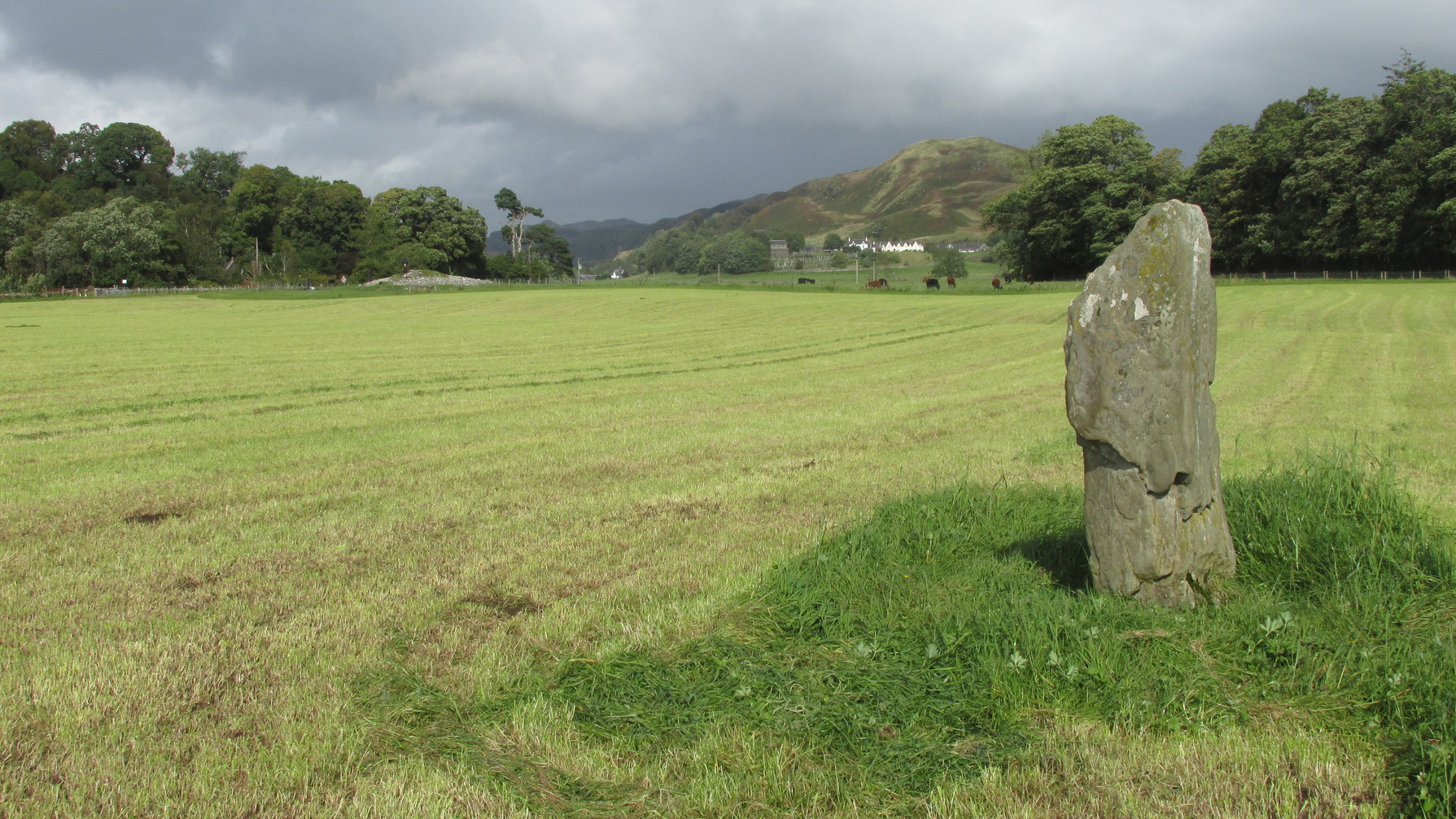
Along the A816 road, just less than a mile south of Kilmartin, take the right-turn on the B8025 Tayvallich road.  Barely 50 yards along here, park up on the left-side of the road.  Cross the road and walk along the well-marked footpath to the mighty megalithic Kilmartin ‘X’.  The path continues to Temple Wood but you’ll see, in the field to your right, this single standing stone. (you’ll see the mighty Netherlargie South cairn in the field beyond)

Archaeology & History

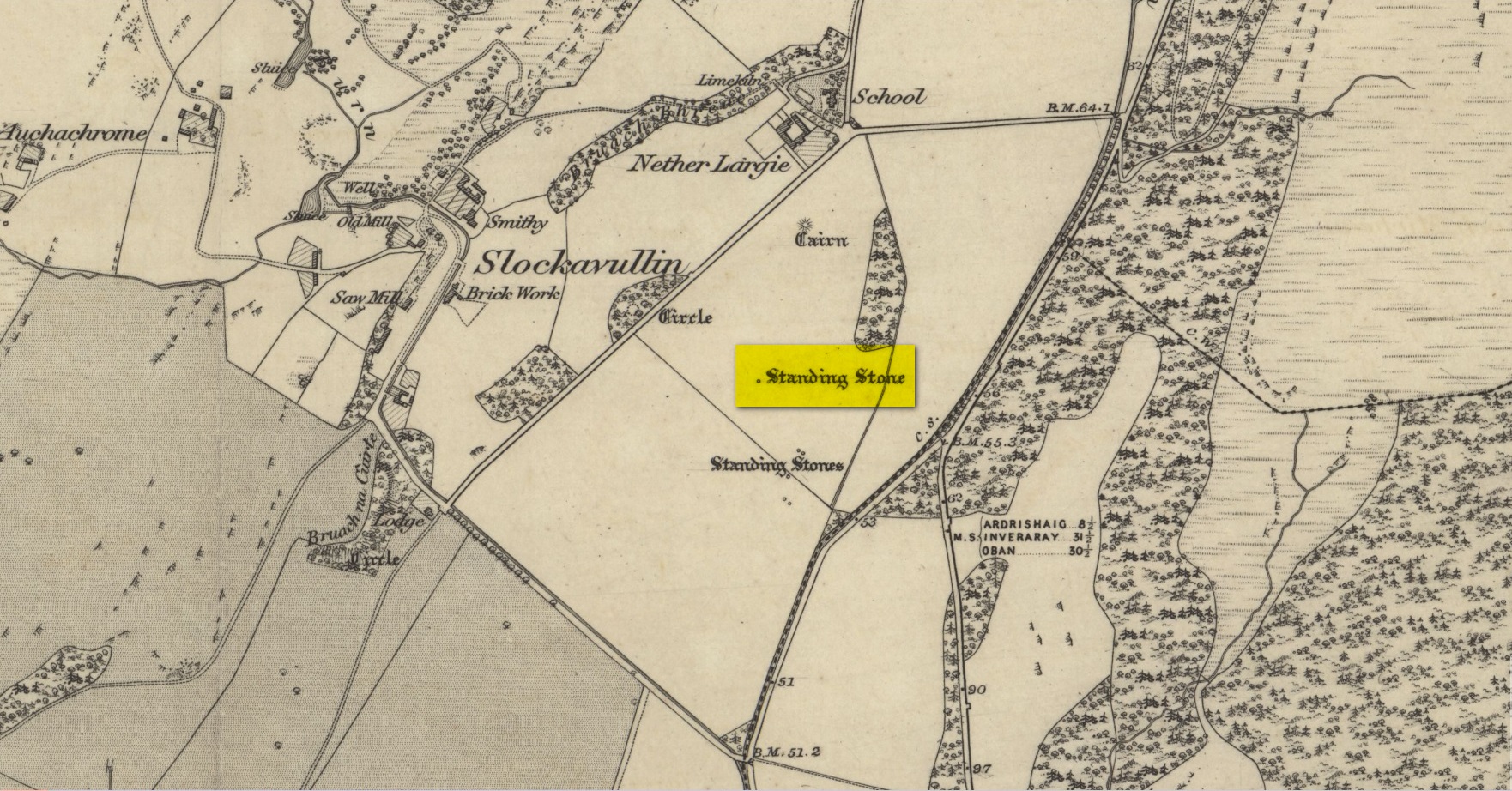
Stone on the 1874 OS-map

First illustrated on the 1874 Ordnance Survey map, this solitary stone (though it may once have had companions) stands some 200 yards south-east of the Temple Wood circle and 355 feet north-west of the northernmost stone in the Kilmartin ‘X’ megalithic complex.  When Alexander Thom surveyed this area, despite finding astronomical alignments at the many standing stones nearby, nothing seemed apparent with this solitary stone.  Its function remains hidden for the time being, although everyone assumes it had some relationship with the giant tombs close by.  It makes sense.

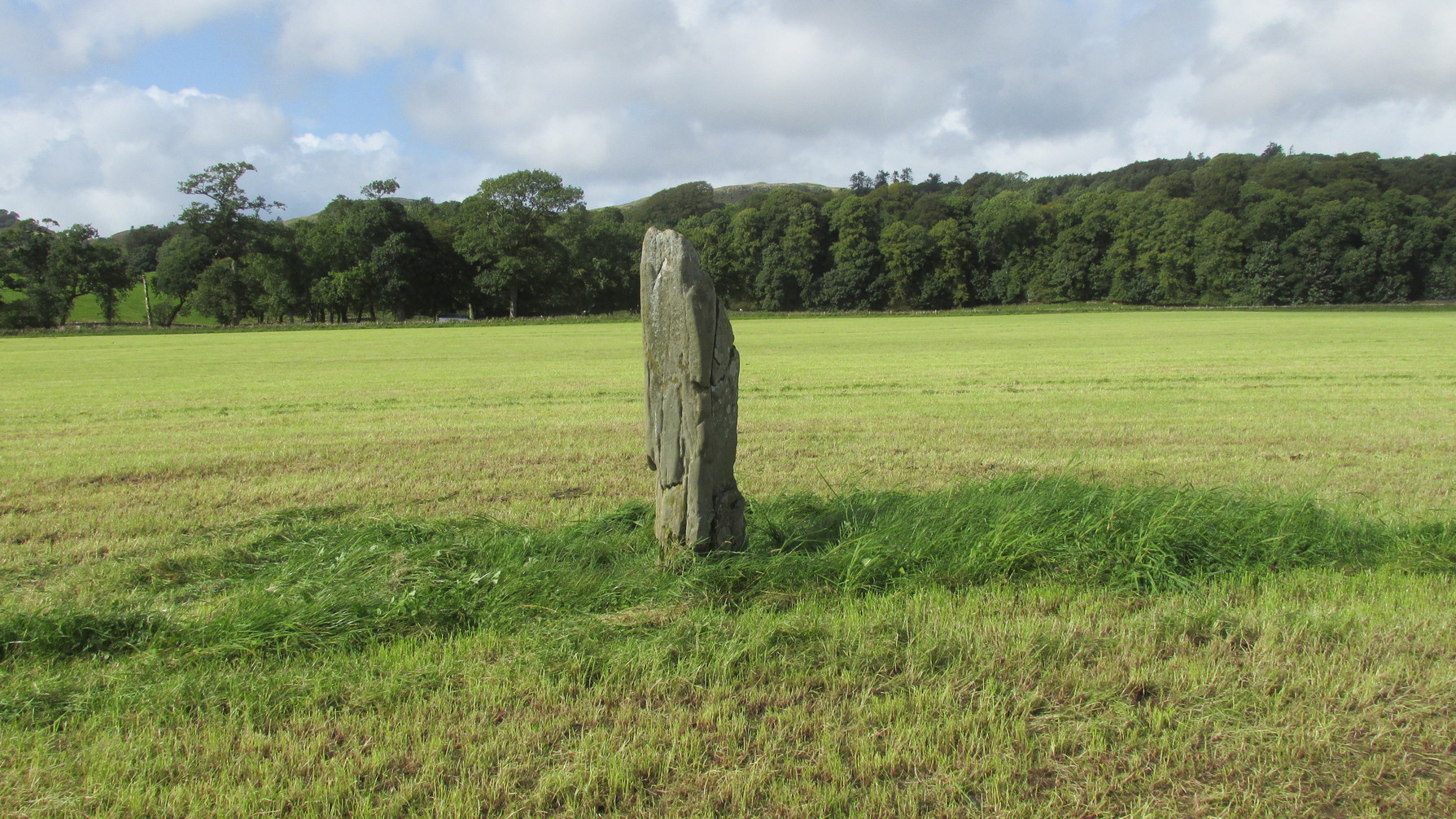
Looking W to Temple Wood
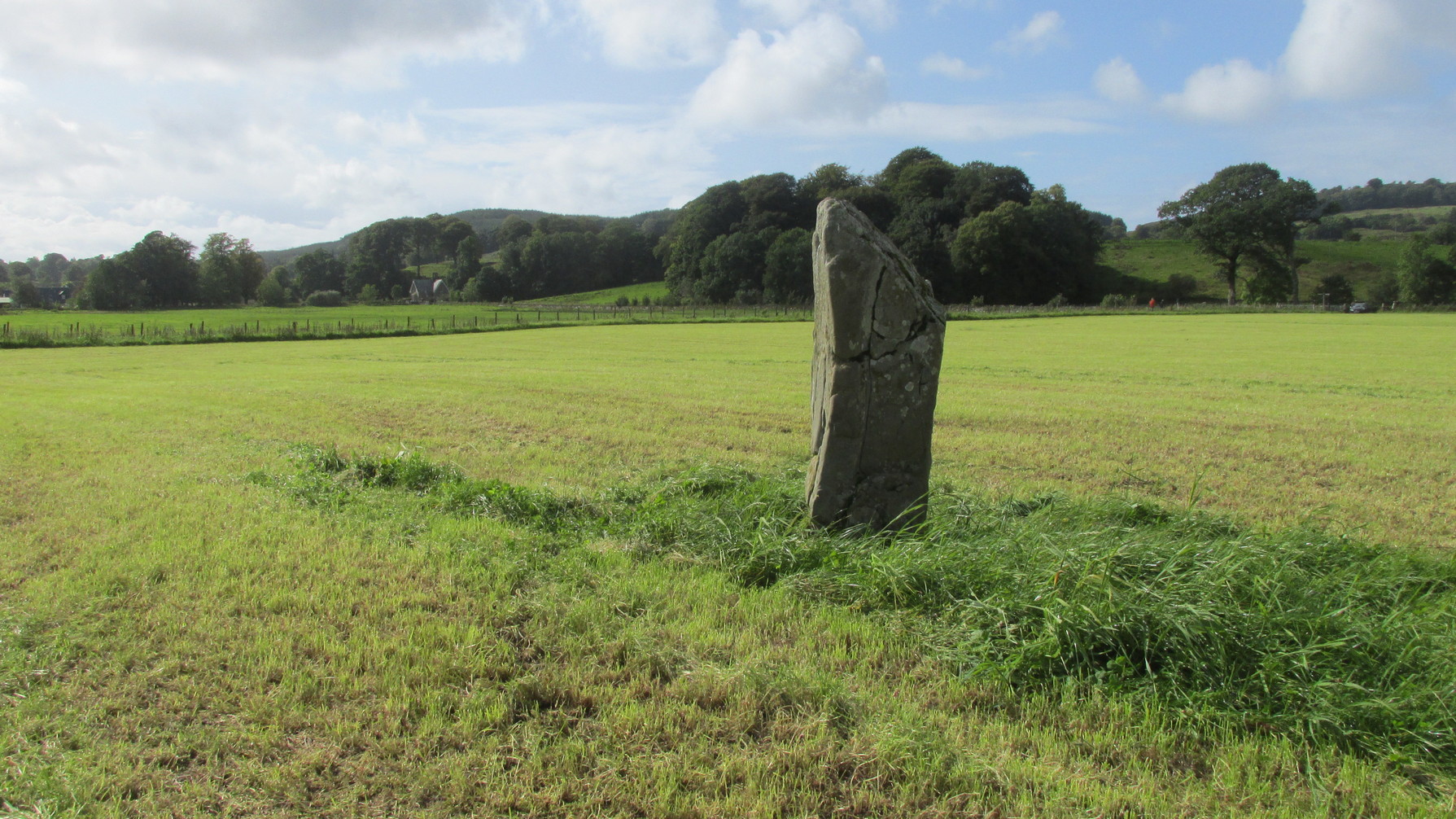
Looking to the southwest

Despite being referenced in a number of prehistoric surveys, archaeological circles say very little about it.  When the Royal Commission (1988) visited here they told how it was leaning to the south-east.  It fell over a few years later but was thankfully resurrected.  When the archaeologists fondled around the base of where it had stood, apart from a few packing stones at one side of the monolith, nothing was found.

References:

  1. Butter, Rachel, Kilmartin – Scotland’s Richest Prehistoric Landscape, HT: Kilmartin 1999.
  2. Campbell, Marion & Sandeman, M.L.S., “Mid-Argyll: A Field Survey of the Historic and Prehistoric Monuments”, in Proceedings of the Society of Antiquaries, Scotland, volume 95, 1964.
  3. Pearson, Jane, Kilmartin – The Stones of History, Famedram: Alexandria 1975.
  4. Ritchie, Graham, The Archaeology of Argyll, Edinburgh University Press 1997.
  5. Royal Commission on the Ancient & Historical Monuments of Scotland, Argyll – Volume 6: Mid-Argyll and Cowal, HMSO: Edinburgh 1988.
  6. Ruggles, Clive, “The Stone Alignments of Argyll and Mull,” in Records in Stone (ed. C.L.N. Ruggles), Cambridge University Press 1988.
  7. Thom, Alexander, Megalithic Lunar Observatories, Oxford University Press 1971.

Acknowledgements:  Huge thanks for use of the Ordnance Survey map in this site profile, reproduced with the kind permission of the National Library of Scotland

© Paul BennettThe Northern Antiquarian

St. Moluag’s Chair, Lismore, Argyll

Legendary Stone:  OS Grid Reference – NM 86972 44042

Also Known as:

  1. St. Maluag’s Chair

Getting Here

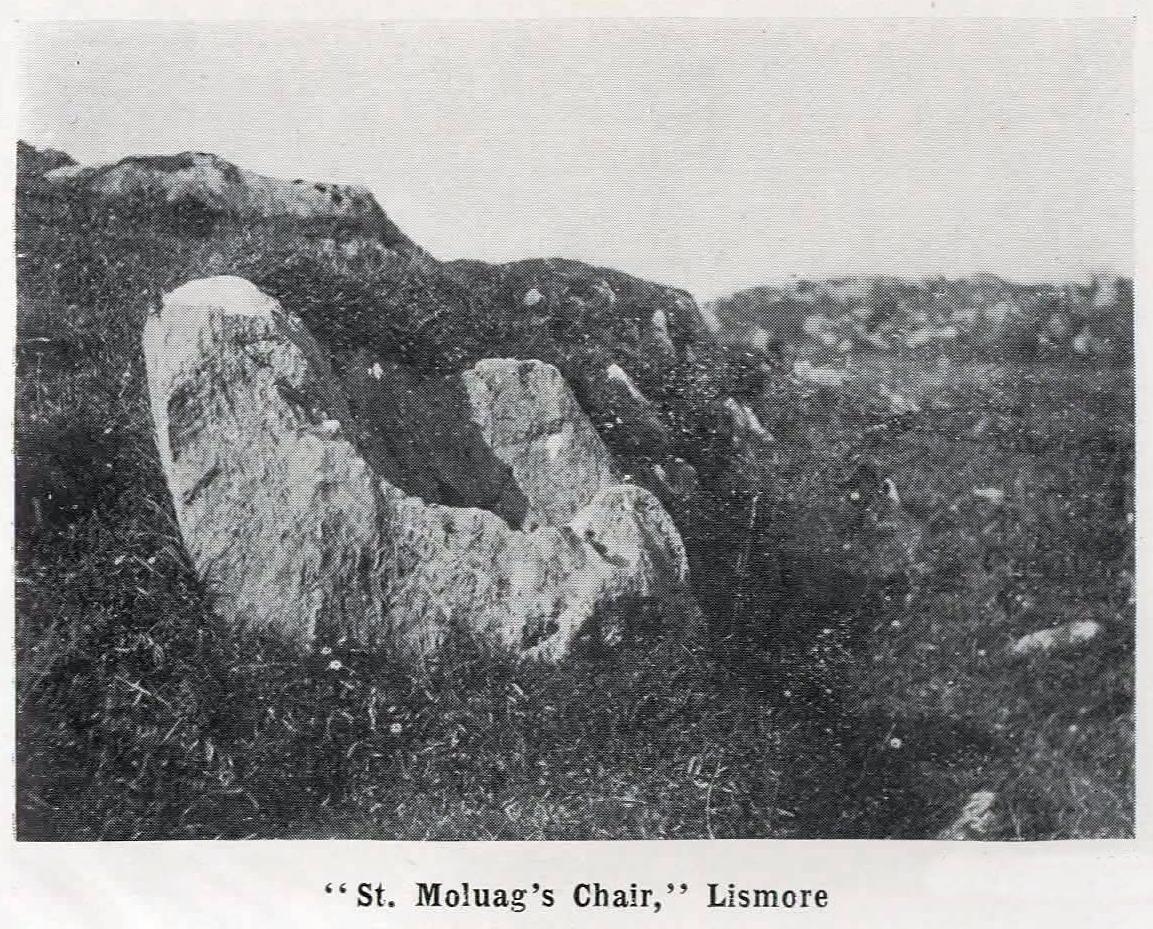
St Molaug’s Chair, c.1930

From the Port Appin ferry onto the northern tip of the island, go along the B8045 road for literally 3.5km (2.17 miles) and, shortly after passing Achuaran, a single small white house is on your right. Just yards before here is a small raised rocky knoll. …Or from the Achnacroish ferry, up the road for nearly a mile, then turn right along the B8045 road to Clachan.  A half-mile past the hamlet, go past the old School House, then past Mountain View cottage, and the next small white house on the left has a rocky knoll just past it.  Just over the wall from the road, a sign points out the legendary Chair that you’re seeking!

Archaeology & History

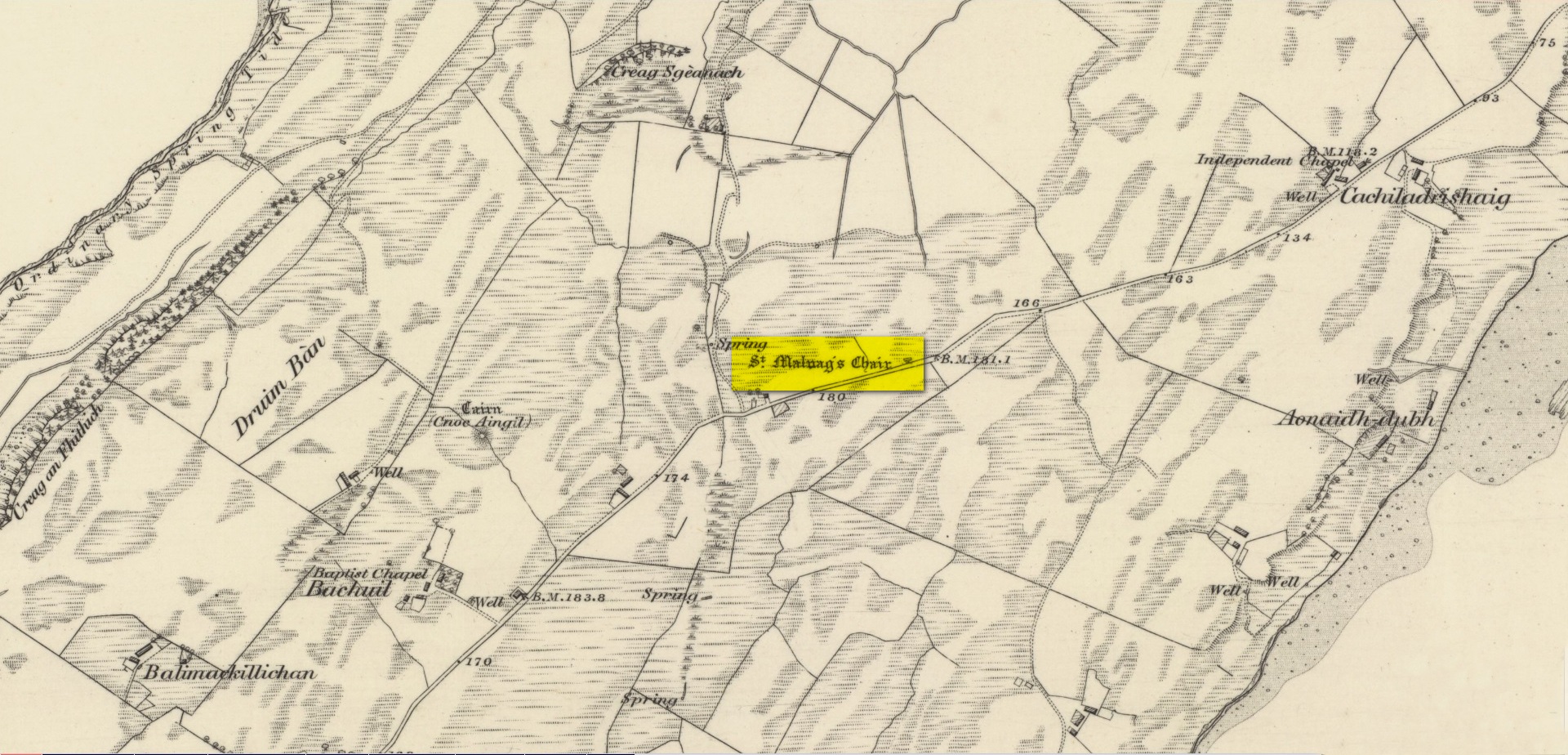
Site shown on 1875 map

St Moluag, a contemporary of the renowned St Columba, was a 6th century Irish saint who came to reside on Lismore—“the sacred isle of the western Picts”—and here taught the early christian doctrines, fused with indigenous animistic traditions.  He used sites of Nature as places of reflection and meditation and this chair-shaped boulder came to be a place renowned as one of his ritual sites, not far from his church.  It was described in Frank Knight’s (1933) huge work as possessing healing properties:

“To sit in it used to be considered a sovereign remedy for rheumatism.”

The site was highlighted on the earliest Ordnance Survey map of the island and its lore was remembered by local people of the time.  The chair had wider ‘arms’ until the beginning of the 20th century when in widening the road, they were accidentally broken off by one of the workmen.

References:

  1. Knight, G.A. Frank, Archaeological Light on the Early Christianizing of Scotland – volume 1, James Clark: London 1933.

Acknowledgements:  Huge thanks for use of the Ordnance Survey map in this site profile, reproduced with the kind permission of the National Library of Scotland

© Paul BennettThe Northern Antiquarian

Dun Toiseach, Ford, Kilmartin, Argyll

Dun:  OS Grid Reference – NM 8808 0476

Getting Here

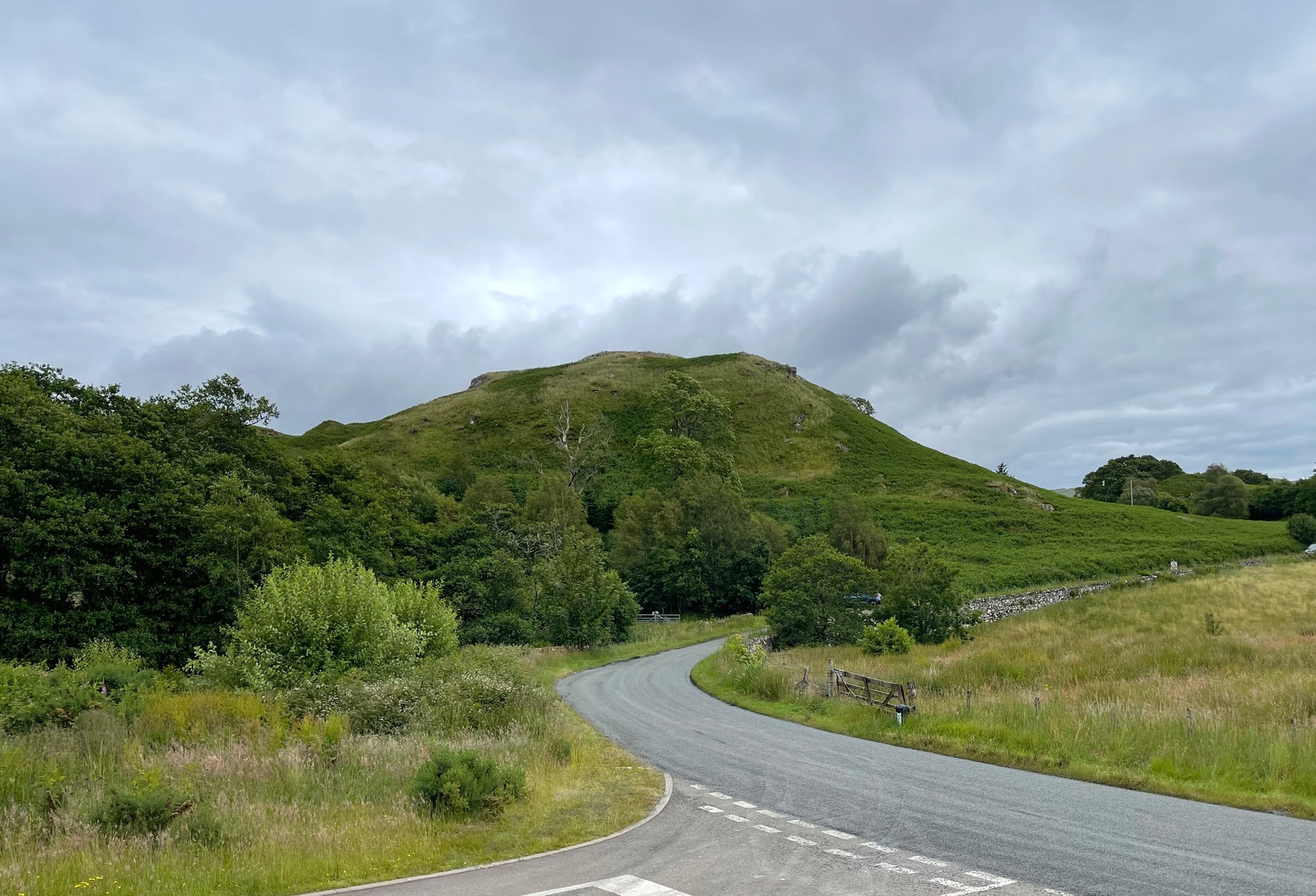
The hill of Dun Toiseach

You can see the rocky hillock ‘pon which this old dun sits from the roadside – and can approach it by either climbing up the slope, or go round t’ back and approach it from t’ track. Either way, it’s easy to get to.

Archaeology & History

This old dun was rather ramshackled when I used to sit here, sometimes on my way home from working at the Inverliever Nursery, a bit further up the lochside — but it was a good spot to sit and daydream into Loch Awe and beyond…

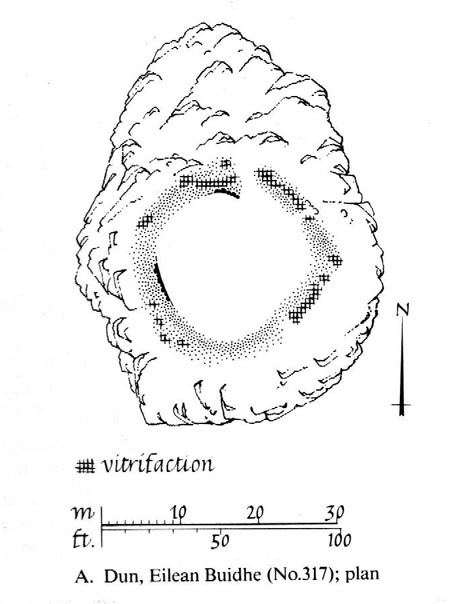
Described as a vitrified fort, the structure is oval in shape.  Thought to have been constructed in the Iron Age, Dun Toiseach was originally about 50 feet across and its walls averaged 10 feet thick, with an entrance at its northeastern side.  The Royal Commission lads (1988) described it thus:

Dun Toiseach plan (after RCAHMS 1988)

“Situated on a prominent rocky knoll overlooking the S end of Loch Awe 250m ESE of Torran farmsteading, there is a severely ruined dun measuring about 16m by 13m within a wall which has been some 4m thick. Two stretches of outer facing-stones are visible, as well as a few possible stones of the inner face, but, particularly on the NE, the wall has been severely robbed and the core material scattered. The entrance lies on the NE, the innermost portion of the SE passage-wall and what may be a door-jamb on the opposite side still being visible.  The knoll has acted as a focus for recent field-walls, but there is no indication that it was additionally defended by outworks. A small modern cairn…surmounts the dun wall on the SE.”

References:

  1. Royal Commission on the Ancient & Historical Monuments of Scotland, Argyll – Volume 6: Mid-Argyll and Cowal, HMSO: Edinburgh 1988.

© Paul Bennett, The Northern Antiquarian


Dun Dubh, Ford, Argyll

Dun:  OS Grid Reference – NM 8640 0479

Getting Here

From Ford village, take the track that goes uphill (west) running near the edge of the forest-line. Keep going until you hit the top of the forest and the large rocky hill above you (on your right) is where you need to be heading.  The rise to your left is Dun Chonallaich.  Walk around the bottom of the hill until you get to the other side (you should be 100 yards or more above the tree-line) where you’ll notice a ‘pass’ running west, with a rocky knoll above you on your right.  That’s it!

Archaeology & History

Thought to date from the Iron Age, the remains here cover an area 15 yards by about 25 yards.  Remains of walling around the edge of the summit nearly a yard wide in places define quite clearly where the ‘fort’ was centred.  The entrance to the site was found on the northwestern side.  In more recent times however, animal pens have intruded on the remains here and the archaeological remnants are much denuded.

Folklore

Samhain fires were lit on the larger ridge above this ruined fort until recent years, as some old local folk will tell you. These Halloween fires (done to celebrate the old New Year) were stopped a short time after the new ‘owner’ of the Auchinellan Estate (on whose land Dun Dubh is found) took exception to them and, for all intent and purpose, deemed them a fire hazard! The lady in question who inherited the Estate was in fact a devout christian who took exception to the local “pagan” goings-on, contrary to the beliefs of the previous Estate owner, who not only allowed such old events, but played a part in them.  Local folk hereabouts, not surprisingly, aint too keen on their part-time dictatorial christian neighbour.

The fires up here were also related to the linear cemetery at Kilmartin. Here the giant tombs all line up & point to Dun Chonallaich, behind which hides the more flattened top of Dun Dubh. When the Halloween fires were lit on top of this, the glow from behind the great pyramid of Chonallaich all the way down to Valley of the Kings, was spectacular! One wonders just how long the local people had been doing this…

References:

  1. Royal Commission on the Ancient & Historical Monuments, Scotland, Argyll – volume 6, HMSO: Edinburgh 1988.

© Paul Bennett, The Northern Antiquarian


Loch Seil, Kilninver, Argyll

Crannog (submerged):  OS Grid Reference – NM 80390 20292

Also Known as:

  1. Canmore ID 22994

Getting Here

A beautiful place found along the roadside towards Seil Island, on the B844 a few miles south of Oban.  When you get near the south end of the loch right by the road, have a gander!  If the waters are low you can sometimes see the ghostly island appear above the waves…

Archaeology & History

You’re lucky to see anything here – as the crannog has all but submerged.  This old artificial island could once be clearly seen less than 400 yards south of Duachy farmhouse, near the southwestern edge of the loch.  It measured roughly 10 yards by 8 yards, was built of stones, seemingly “with a boat-slip on the west side and a ‘square place’ on the east as if for a landing stage.”  All trace of the causeway linking it to the shore has apparently vanished.  But if you do stop here, check out the Duachy Standing Stones on the hillside behind you!

References:

  1. Royal Commission on the Ancient & Historical Monuments of Scotland, Argyll – volume 2: Lorn, HMSO: Edinburgh 1974.#

© Paul Bennett, The Northern Antiquarian