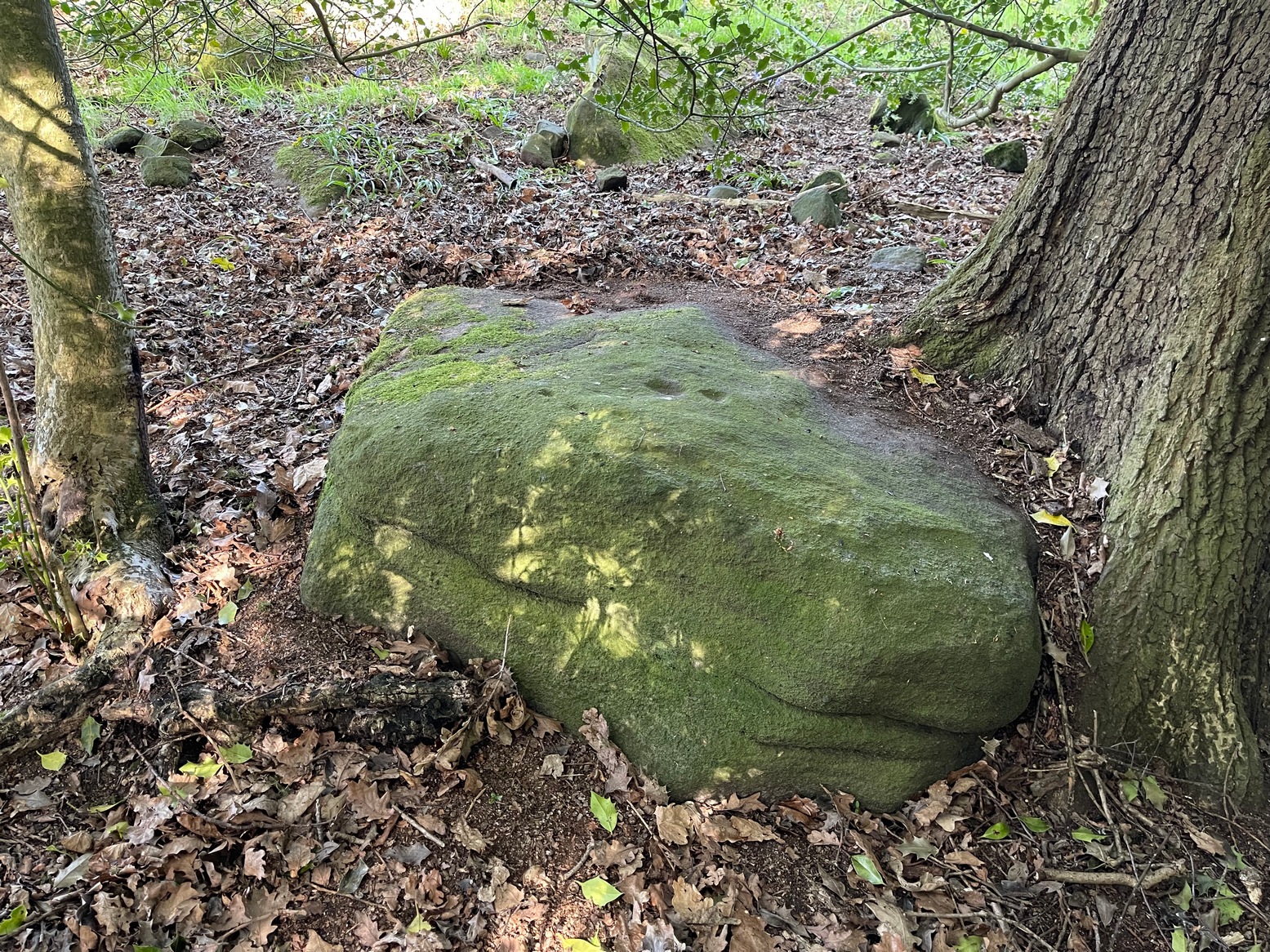
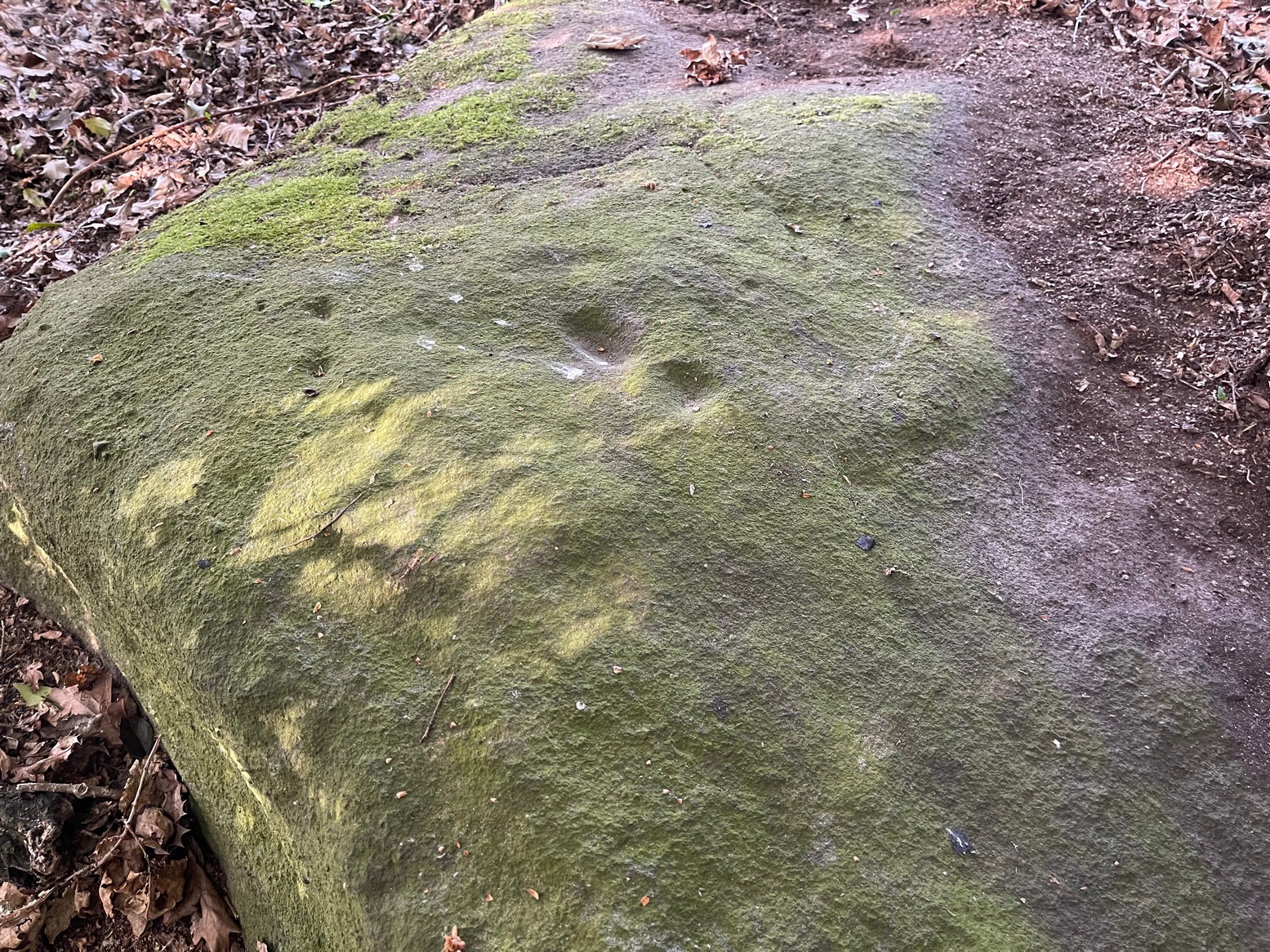
Jenny Lane, Baildon, West Yorkshire

Cup-Marked Stone (removed):  OS Grid Reference – SE 1579 3995

Archaeology & History
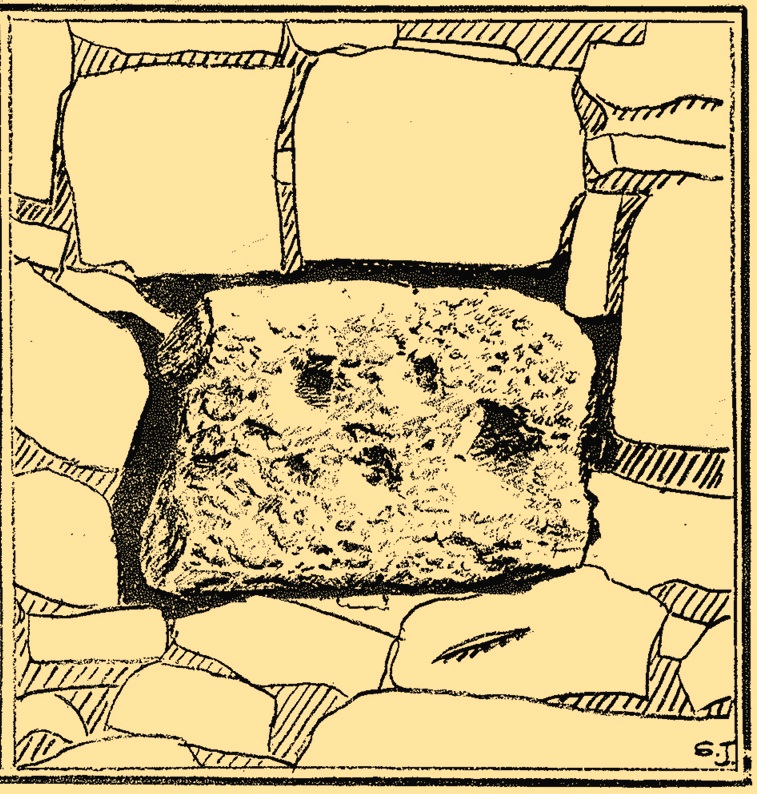
Jenny Lane carving

A small, seemingly broken cup-marked stone that may have once been part of a prehistoric tomb, found itself being included in an old wall at some time in the not-too-distant past: in the south-facing wall of the cricket ground at the top end of town.  No one seemed to know it was there until it was noticed in the 1950s by a local man who brought it to the attention of Sidney Jackson (1958), editor of the local Bradford archaeology mag at the time.  Jackson visited the site and thankfully did a sketch of what it looked like, before it was removed at a later date.  He wrote:

“The small rectangular stone bearing four cup-shaped hollows…is another of Mr George Pritchard’s finds.  It forms part of the high wall which bounds the Baildon Cricket Club’s ground in Jenny Lane… Its appearance suggests that it is part of a Bronze age cup-marked rock which was split to make building stones.”

Following its removal more than twenty years ago, it ended up in the hands of a dude from Cononley called Gerald Wright.  I’m not sure whether it still lives over there or has subsequently found a new abode.  Does anyone know what’s become of it…?

Folklore

Although there’s nothing specific to this carving, the place where it was found, on Jenny Lane, was where a phantom black dog used to be seen in bygone years.  It was renowned as the harbinger od death.

References:

  1. Jackson, Sidney, “Cup-Marked Stone in Jenny Lane, Baildon,” in Cartwright Hall Archaeology Group Bulletin, volume 3, part 10, 1958.

© Paul BennettThe Northern Antiquarian
Shipley Glen (136), Baildon, West Yorkshire

Cup-and-Ring Stone:  OS Grid Reference – SE 13266 38928

Also Known as:

  1. Carving BM14 (Hedges)
  2. Carving no.136 (Boughey & Vickerman)

Getting Here

Faint carving no.136

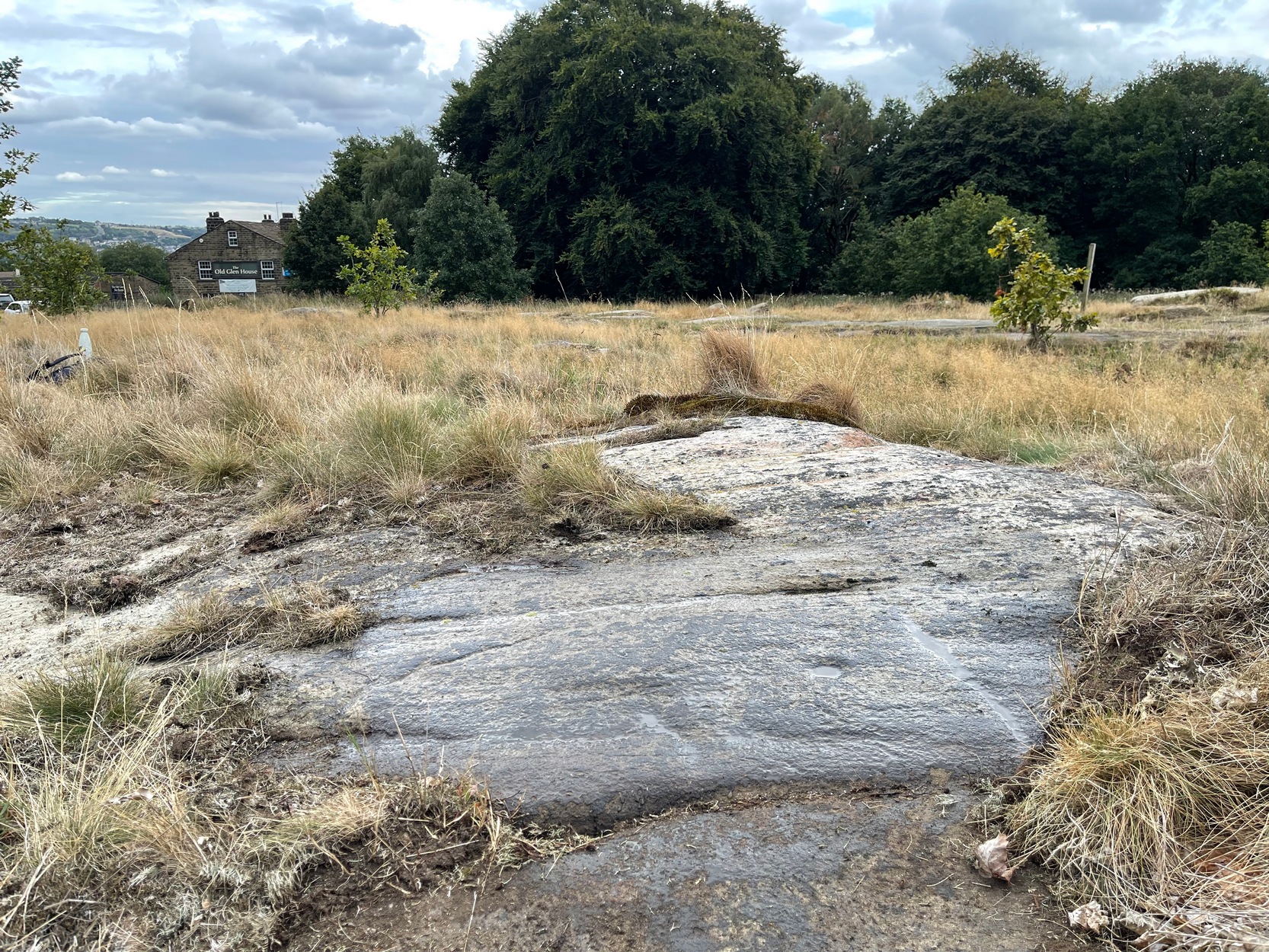
Once you’ve got yourself to the start of Shipley Glen, from the Old Glen House pub, from the car-park outside walk up the road for 60 yards (if you reach the next small car-parking spot, you’ve gone too far) then step off-road into the vegetation on your left and you’ll see the large flat fractured section of earthfast rock.  Get low down and seek out the cup-mark first!

Archaeology & History

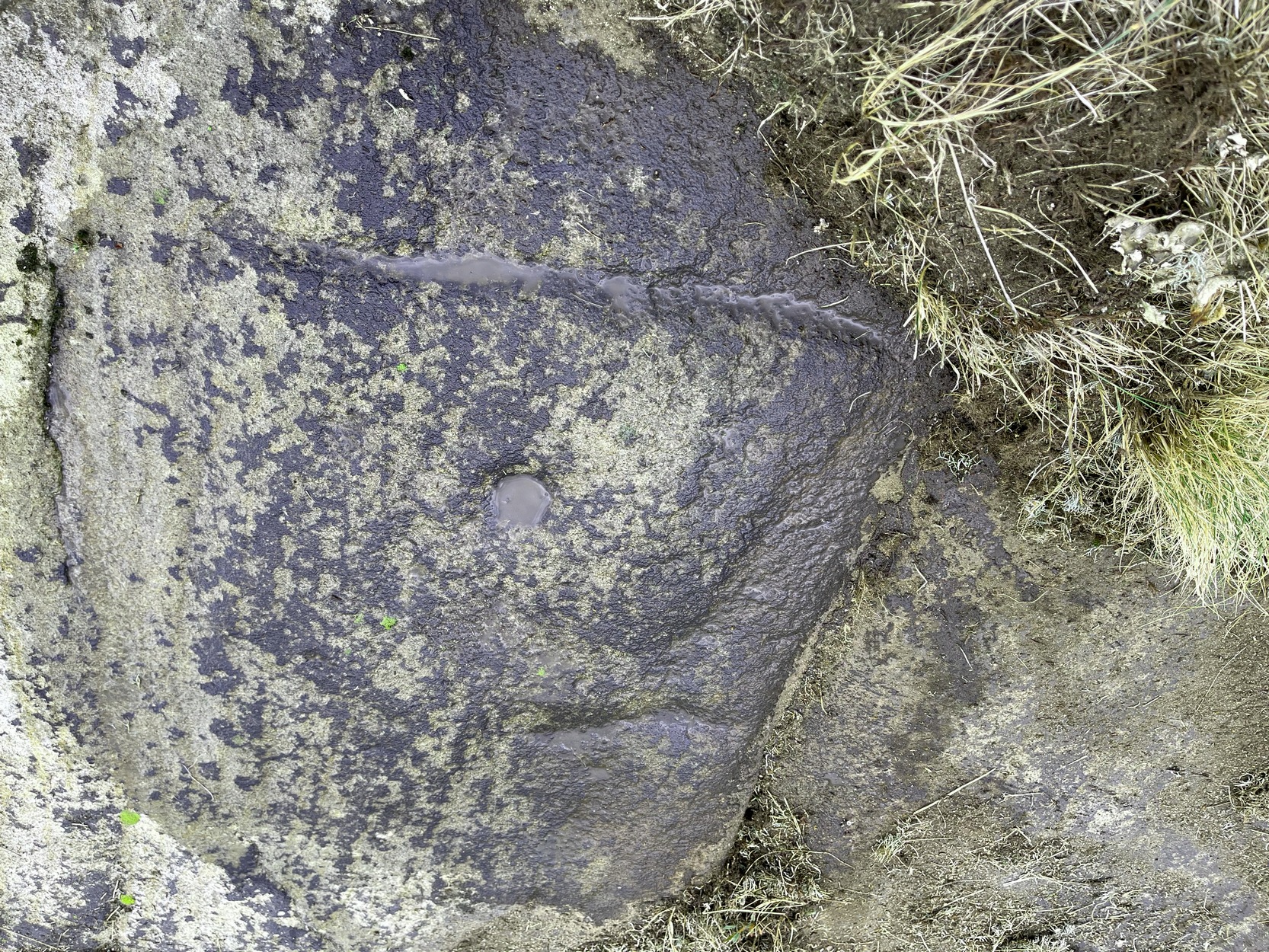
This is a very faded and quite basic design and unless you get decent low sunlight, it can be very difficult to discern.  On my most recent visit here, conditions weren’t too good, as the photos here indicate.

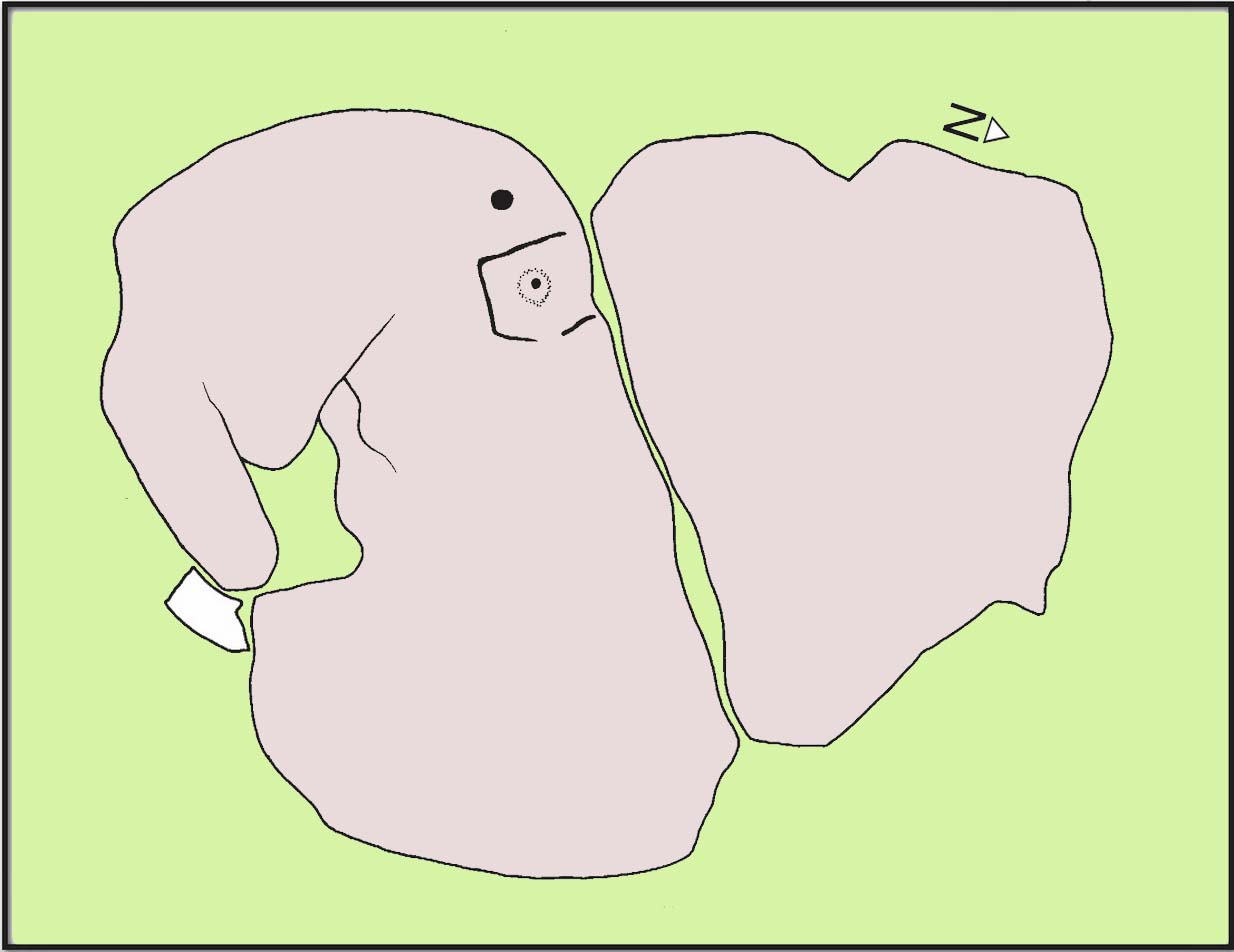
The main feature is a single cup-mark surrounded by a very wide ‘square’ ring (if y’ get mi drift).  It was first mentioned and illustrated in John Hedges (1986) survey, who described it simply:

“Striated, pitted bedrock with crack down centre, in grass and amongst other rocks and bedrock. Carving, centre and W end: enclosure type angular grooves and two cups.”

John Hedges 1986 sketch
Cup & surrounding lines

One of the two cups is presently beneath some shallow vegetation (easily removed if anyone’s passing), but the main feature of the large enclosing square and its central cup is presently exposed and can be seen when your eyes eventually adjust.  Interestingly, Hedges shows the existence of a faint ring around the central cup inside of the larger square enclosure.  If someone is able to capture a photo of this, please add it on our Facebook page. 🙂

I must point out that somewhere, not too far from this carving, was once found a very similar design known as the Brackenhall Green carving that possessed the same curious squared-ring feature that we find on this stone.

References:

  1. Boughey, Keith & Vickerman, E.A., Prehistoric Rock Art of the West Riding, WYAS: Wakefield 2003.
  2. Hedges, John (ed.), The Carved Rocks on Rombalds Moor, WYMCC: Wakefield 1986.

© Paul BennettThe Northern Antiquarian
Brackenhall Green, Baildon, West Yorkshire

Cup-and-Ring Stone (destroyed):  OS Grid Reference – SE 133 389

Archaeology & History

The lost carving of Brackenhall, in 1888

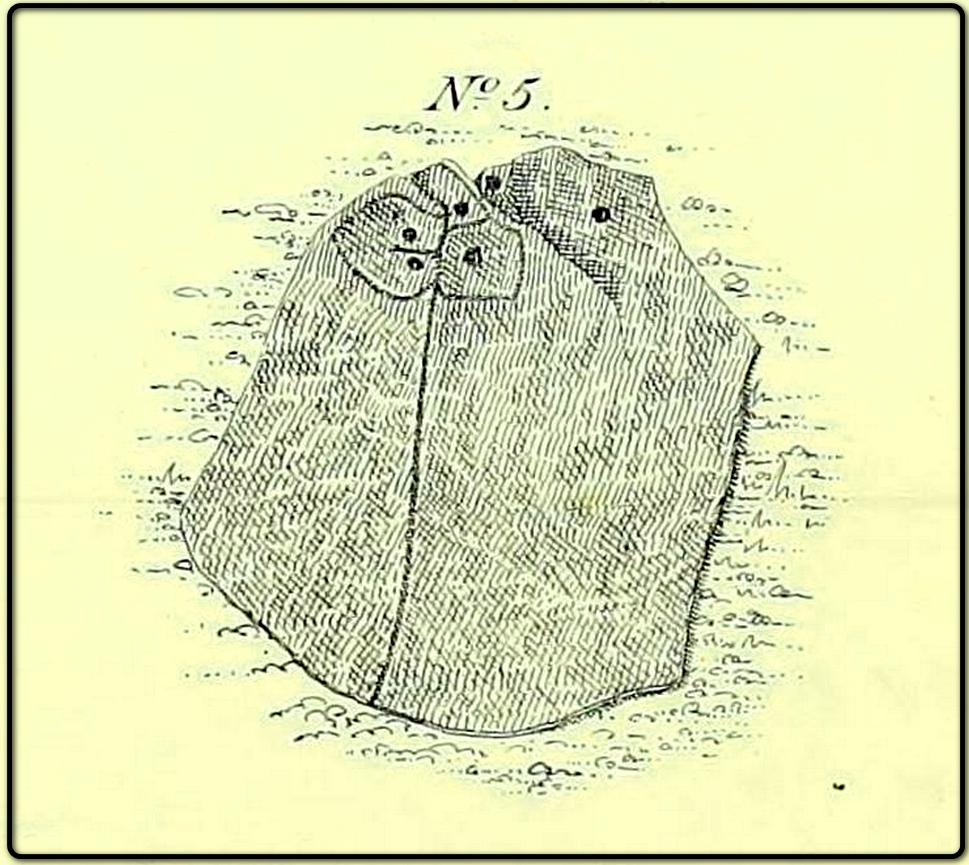
I first came across a description of this lovely-looking cup-and-ring carving during some research I was doing in the archives at Bradford Central Library in the 1980s—and decided there and then that I had to find it!  It was described and illustrated for the first time by William Glossop (1888) when he made a short survey of some of the prehistoric sites on Baildon Hill and Shipley Glen.  He told that it was one amidst “a cluster of rocks on Bracken Hall Green”—but was seemingly destroyed not too long after he wrote about it.  There was some discussion in the late-1980s that it may have been a petroglyph that was cataloged by John Hedges as carving ‘BM14’ (at SE 13272 38924), due to it possessing a similar ‘artistic’ element (or motif, as some like to call it) and which is also along the Brackenhall plateau by the roadside about 160 yards below the entrance to the Brackenhall centre—but it turned out not to be the case.

A few years after Mr Glossop uncovered this carving, a short note by J.H. Turner (1894) described two cup-marked stones, “both now destroyed” that could be seen in the same area just as you entered “the plateau where the Easter fair is now held”.  And his description closely fitted Glossop’s sketch.  Turner wrote:

“The cups were three inches in diameter, and one inch deep, in an oblong 18 by 12 inches, with line 6 feet long towards the east.  The second oblong, same size, had also an eastern pointer and one cup in the centre. These have both disappeared since June, 1889; I fear by wanton mischief.”

This would seem to be the same carving illustrated by Glossop, although it’s still difficult to say with any accuracy where it was located.  The great historian W.Paley Baildon (1913) thought it may have been the same carving which Harry Speight (aka Johnnie Gray) described at the Glen Gate—and it does sound similar, but until we are able to ascertain (i) where Glen Gate was; and (ii) whether it coincided with the location of “where the Easter fair” was held, we must err on the side of caution.  Tis an intriguing mystery… (Note: the grid-reference given for this site profile is an educated guesstimate!)

References:

  1. Baildon, W. Paley, Baildon and the Baildons – volume 1, Adelphi: London 1913.
  2. Glossop, William, ‘Ancient British Remains on Baildon Moor,’ in Bradford Antiquary, no.1, 1888.
  3. Gray, Johnnie, Through Airedale from Goole to Malham, Walker & Laycock: Leeds 1891.
  4. Turner, J. Horsfall, ‘Cup Marks, Shipley Glen,’ in Yorkshire County Magazine – volume 4, J.E. Watmough: Idel 1894.

© Paul BennettThe Northern Antiquarian
Intake Farm, Hawksworth, West Yorkshire

Cup-Marked Stone:  OS Grid Reference – SE 15867 41244

Getting Here

Intake Farm carving

In Hawksworth village, less than 100 yards past the primary school, take the footpath on your left into the open fields.  200 yards down the fields, go over the stile on your right, into the next field and walk diagonally across it (SW) for 250 yards until you reach the wall; then walk alongside it, west, for another 150 yards where the walling goes due south and walk down here for 135 yards, going through the gate at the bottom into the next field and, at the bottom of this one go through the gate and bear right.  OK, now walk along the wall-side for 55 yards and you’re just about standing on it!  Alternatively you can reach it via the Hawksworth Spring (1) and (4) carvings, following the wall along for roughly 150 yards till you reach the gate. Go through here and walk diagonally NNW across the field for nearly 150 yards where you’ll see the stone stuck out in front of the wall.

Archaeology & History

My first sight of this came about as I walked alongside the walling.  Approaching the stone, I noticed what looked like a recent cup-like marking with a curved line emerging from it on its eastern surface; but it didn’t look too old and was more like the scratch-marks you see sometimes when farmers have been dragging rocks along to be used in walling.  So I shrugged in slight disappointment—until the far-side, the western-side of the stone came into view.

Line of cups
Main scatter of cups

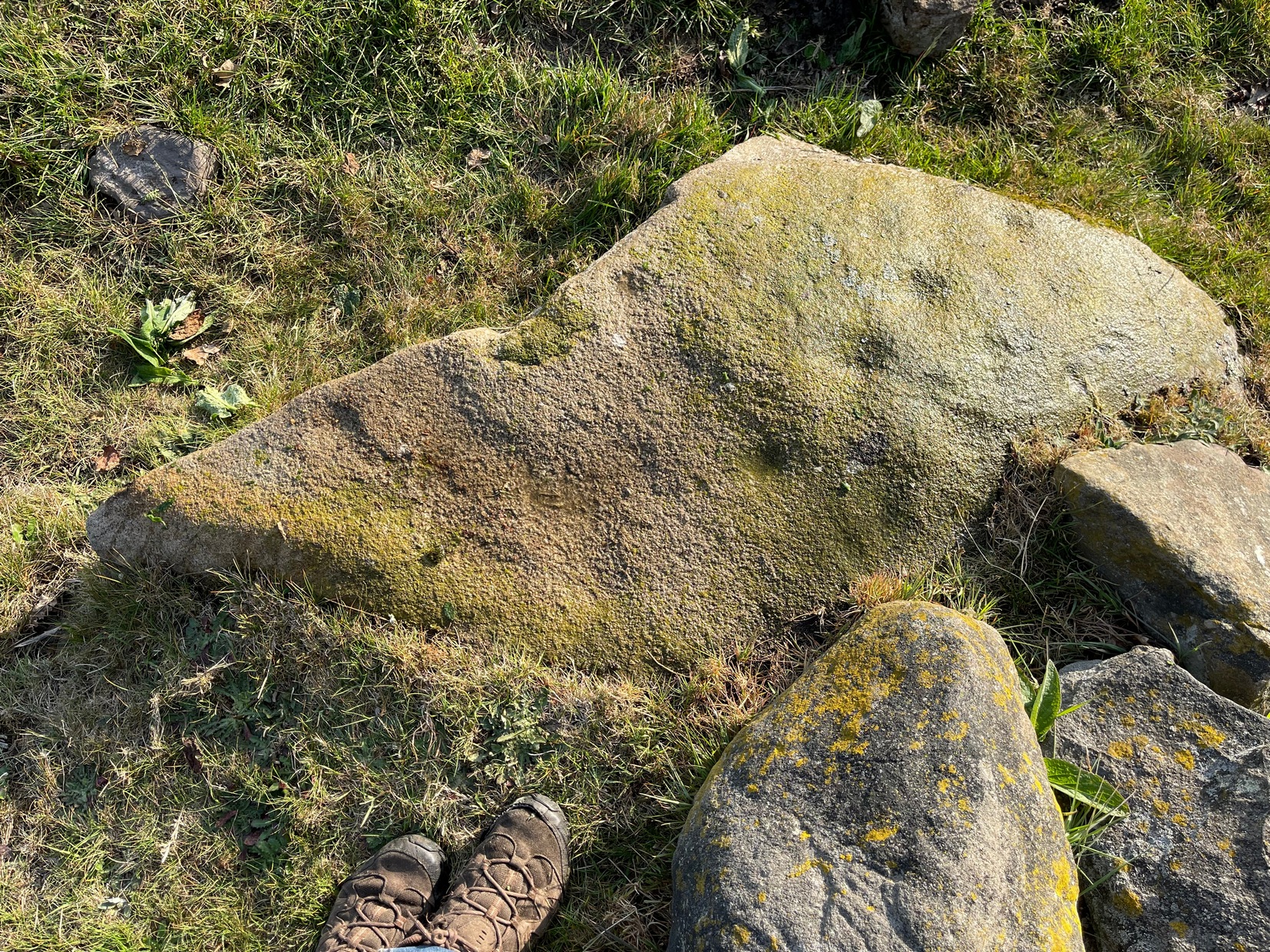
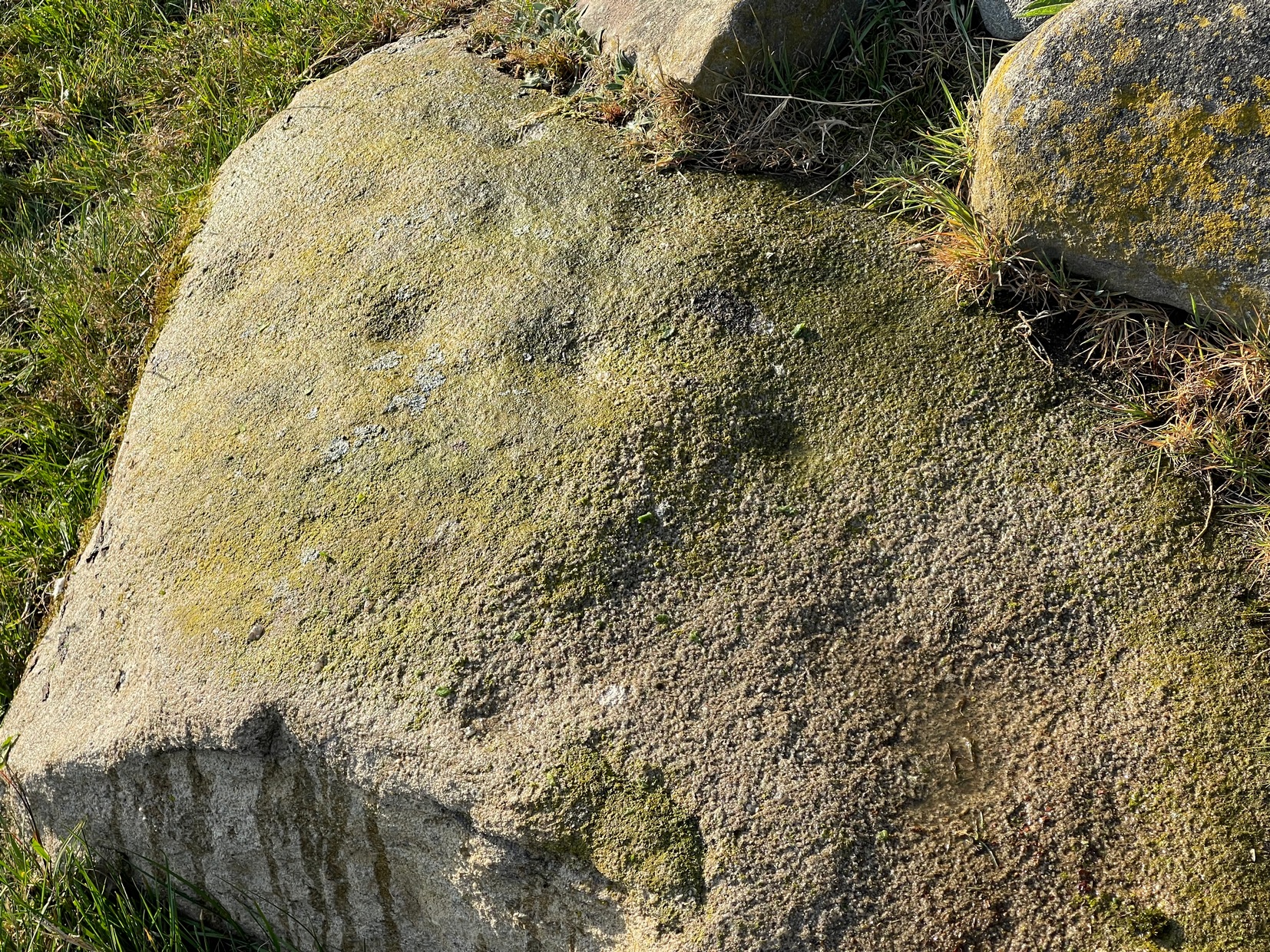
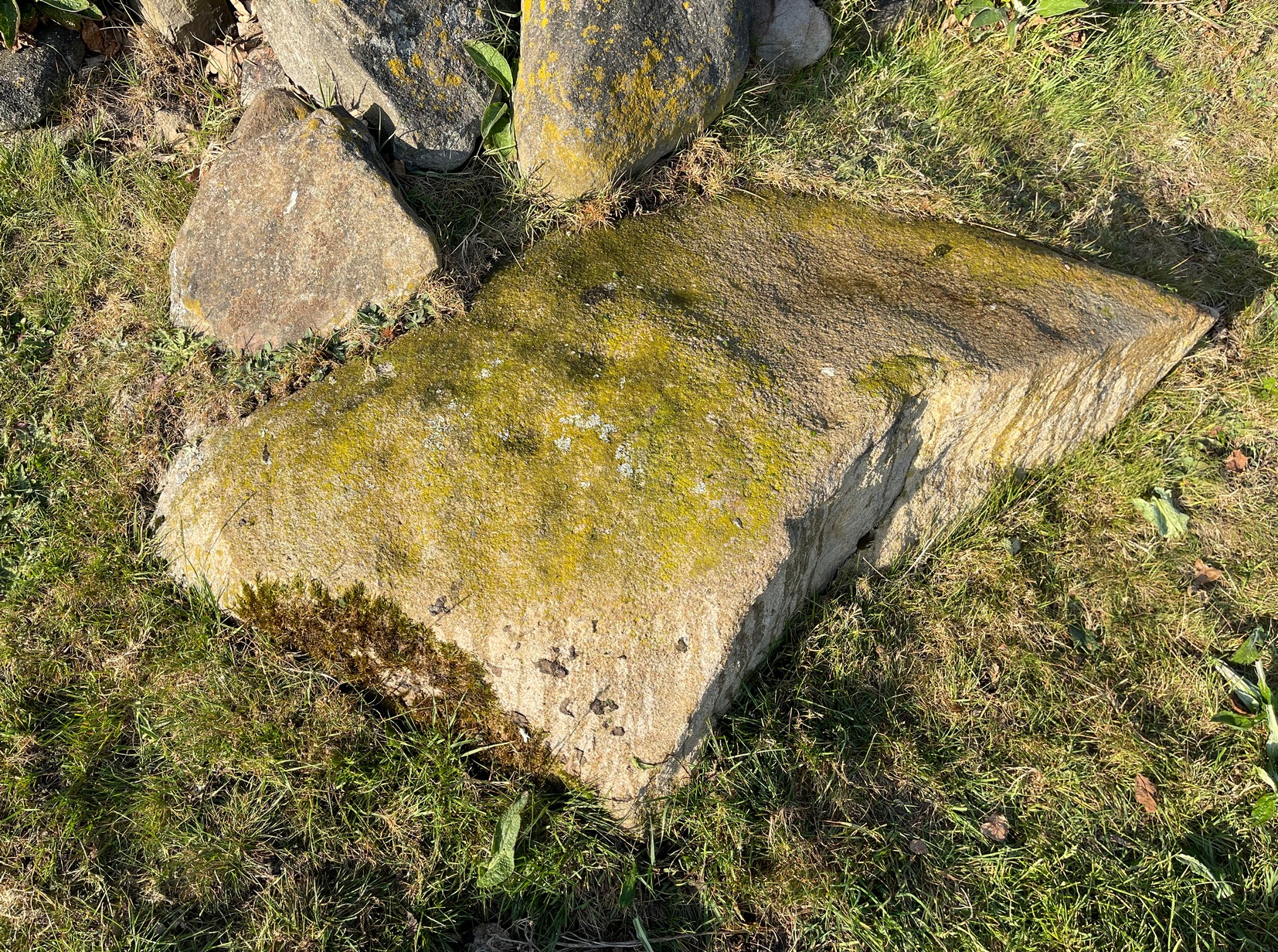
Sloping ever-so-slightly down into the ground, the surface of the stone had a cluster of quite worn, shallow, but distinct cup-markings between one and two inches across, four of which ran in a line from the top to the edge of the stone in a slight curve.  As I walked round it, looking from different angles, it became obvious that two or three other cups existed—mainly from the top to the western side of the rock.  One seemed to exist near the edge, whilst two other faint ones sat to the side of the line-of-four—almost creating a square formation.  From some angles it looked as if there may be faint lines running between some of the cups but (as usual) the sunlight didn’t really help highlight them and they could just be faded erosion lines.

Looking down at the cups
Water & sunlight & cups

It was obvious that a section of the stone on its southern edge had been broken off in the not-too-distant past, raising the idea that the design may originally have been larger than its present form.  This thought returned when I walked another 60 yards west along the wall and came across a broken section of stone that had been placed into it, pretty recently, and on its vertical face noticed a single cup-mark in a good state of preservation, indicating that it had either been cut recently or instead been dug out of the ground not too long ago and shown intself to the world after a sleep of several millenia.  Look at it when you have a gander at the main carving here and make up your own mind….

© Paul BennettThe Northern Antiquarian
Hawksworth Spring (04), Hawksworth, West Yorkshire

Cup-Marked Stone:  OS Grid Reference – SE 15802 41206

Getting Here

Hawksworth Spring (04)

Take the same directions as if you’re going to visit the Hawksworth Spring (1) carving.  From here, the small footpath at its side keeps going uphill, curving to the right and following the line of walling.  After about 20 yards where the land begins to level out, keep your eyes peeled for a small elongated earthfast rock, less than three feet long, just to the left of the path and only three or four yards away from the wall.  If the leaves have covered the stone, get on your hands and knees and scrub around a bit.  You’ll find it!

Archaeology & History

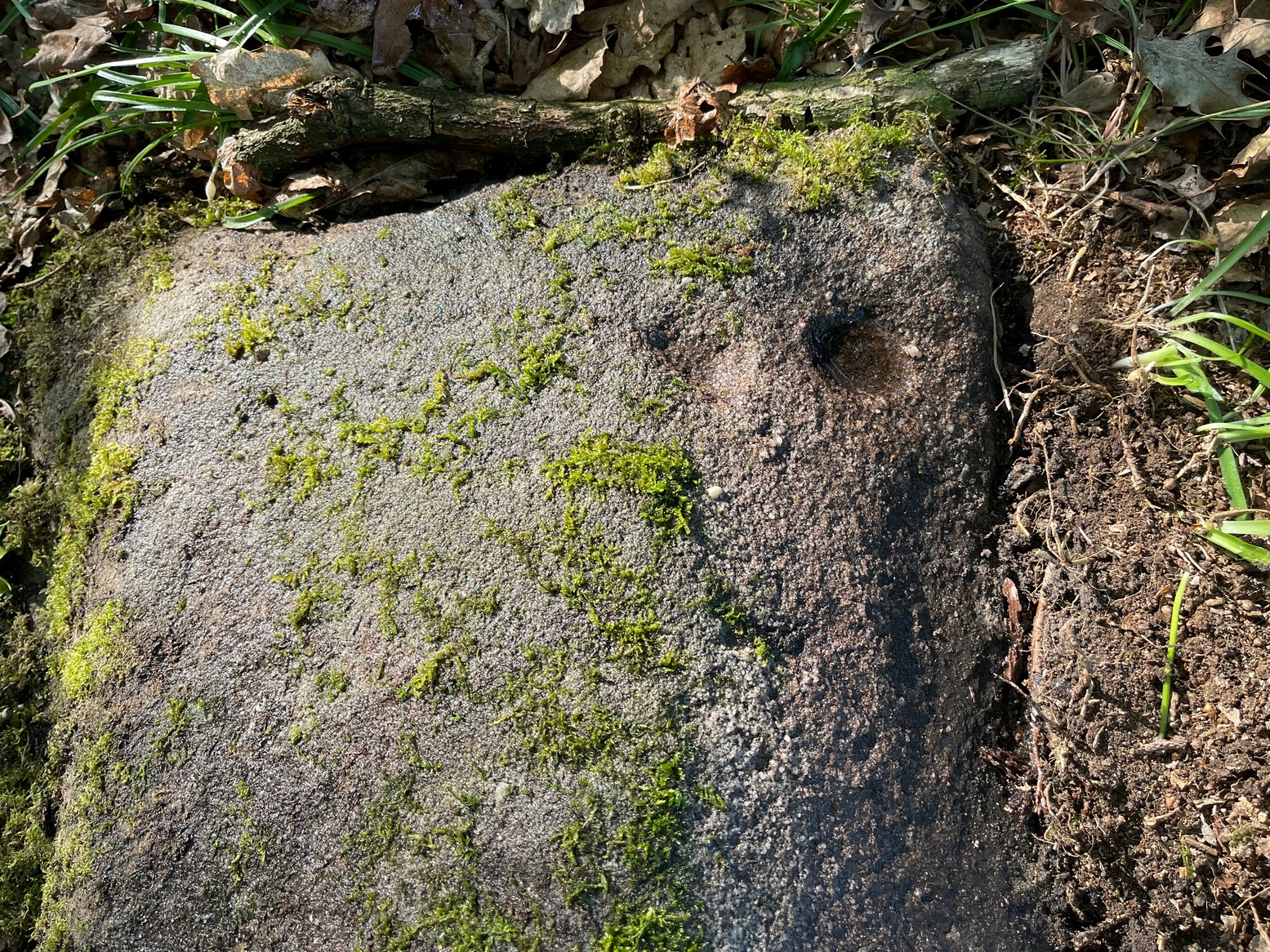
Primary cup-marking

This was a frustrating find as there are several elements on the stone, only one of which I could be 100% certain about – and that’s the singular cup-marking on the top-left of the stone.  Just next to this is what looks to be another one, unfinished, cut into a natural fissure in the rock—but the daylight was frustrating, allowing only glimpses of visual clarity on the stone.  At the other end of the stone, as the photo shows, are what stand out as two or three more cup-marks, but these seem geophysical in nature—although examples such as these scatter the works of Boughey & Vickerman (2003; 2018) as authentic, which shows the problem we all have as rock art students. Anyhow, at least one of these cups is the real deal.  I’ll let the computer-tech lads sort the rest of it out for us…

© Paul BennettThe Northern Antiquarian

Hawksworth Spring (03), Hawksworth, West Yorkshire

Cup-Marked Stone:  OS Grid Reference – SE 15807 41196

Getting Here

Hawksworth Spring (3) CR

Once you’ve located the carvings of Hawksworth Spring (1) and (2), walk up the slope towards the topmost section of the walling where the land begins to level out.  Hereby you’ll see the Hawksworth Spring (4) carving (if it’s not covered in leaves) several yards below the wall. Turn around and look diagonally to your left, into the trees, where you need to walk into and beneath the overhanging holly branches.  Here you’ll reach the large earthfast rock whose edge rests up against the trunk of a larger tree.  You can’t miss it!

Archaeology & History

Notable curious “cups”

I’m not 100% convinced that this a prehistoric design, despite it being listed as such in Boughey & Vickerman’s (2003) survey—although, to be fair, they do suggest it as being “doubtful.”  The two most notable so-called “cups” have more of a recent hallmark to them and the other elements are troublesome to see with any certainty, but they may be geophysical in nature.  Their description of it told us this was a “fairly large fine-grained rock with some included pebbles.  Two pairs of cups, one pair connected by groove”.  Make of it what you will….

References:

  1. Boughey, Keith & Vickerman, E.A., Prehistoric Rock Art of the West Riding, WYAS: Wakefield 2003.

© Paul BennettThe Northern Antiquarian

Glen Gate, Baildon, West Yorkshire

Cup-and-Ring Stone (lost):  OS Grid Reference – SE 1347 3882

Also Known as:

  1. Carving no.143 (Boughey & Vickerman)

Archaeology & History

In Johnnie Gray’s (aka Harry Speight) early work on Airedale (1891), he described a number of the prehistoric sites on and around Baildon Moor and Shipley Glen.  Almost all of the things he wrote about have been identified, but a cup-and-ring stone at “Glen gate” (as he called it) remains elusive.  He wrote:

“After crossing the stream from the Glen gate, and going about thirty paces, we come upon…an incised stone, whereon are a number of circling lines and cup-like cavities — one at each corner, with a long line branching off to the north-east; but this stone unfortunately has got broken, and lying on the main path is much defaced.”

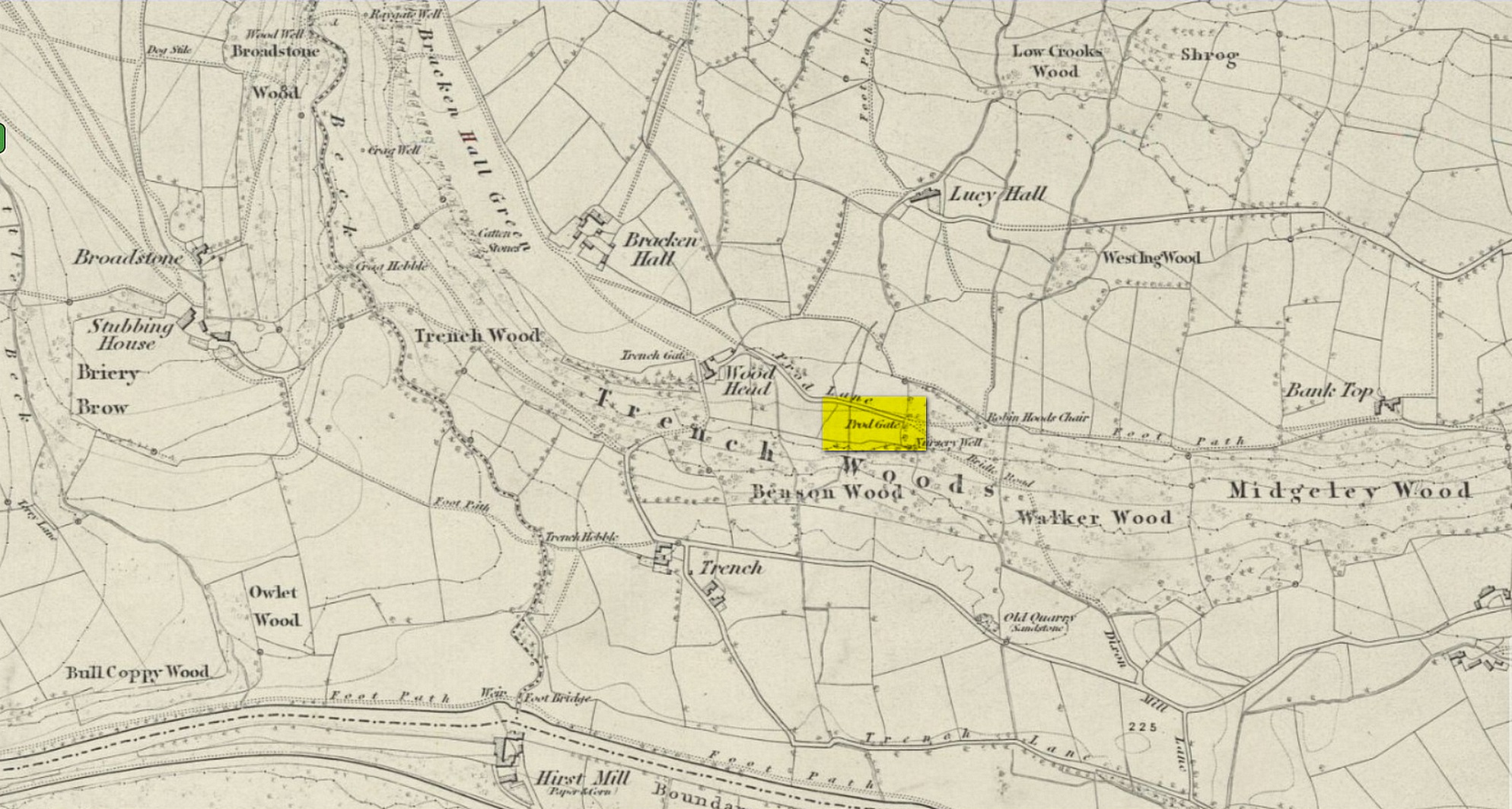
Prod Gate on 1852 map

The exact location of this has proven difficult as the name ‘Glen gate’ was obviously a local one as it wasn’t included on the Ordnance Surveys of the period.  There are two named “gates” hereby: one is Prod Gate at the east end of Prod Lane, and the other is Trench Gate a few hundred yards west at the other end of Prod Lane.  But the most likely gate of the two would be Prod Gate.  When Speight wrote his words, a stream existed that crossed the track about 70 yards west of Prod Gate, whereas no such water-course existed anywhere close to Trench Gate.  And so we assume that he was writing about “the stream from the Glen (Prod) Gate.”

Having said all that, there are no known petroglyphs like the one that Speight described anywhere hereby.  There are a couple of so-called “carvings” that have been included in so-called official surveys (Boughey & Vickerman 141  and 142; aka ERA- 2445 and ERA-2446) another 150 yards or so on the left-side of the road that could have been regarded as contenders, but these stones have just a mix of modern and natural markings and can be discounted.  In all likelihood, this impressive-sounding petroglyph was broken up and destroyed when the proper road was laid in the middle of the 20th century; or perhaps broken up and stuck into one of the garden walls along the roadside.  Either way, the carving seems long lost.

References:

  1. Boughey, K.J.S. & Vickerman, E.A., Prehistoric Rock Art of the West Riding, WYAS: Leeds 2003.
  2. Gray, Johnnie, Through Airedale from Goole to Malham, Walker & Laycock: Leeds 1891.

Acknowledgements:  Huge thanks for use of the Ordnance Survey map in this site profile, reproduced with the kind permission of the National Library of Scotland

© Paul BennettThe Northern Antiquarian

Acrehowe Well, Baildon Moor, West Yorkshire

Healing Well:  OS Grid Reference – SE 14733 40596

Also Known as:

  1. Acre Well

Archaeology & History

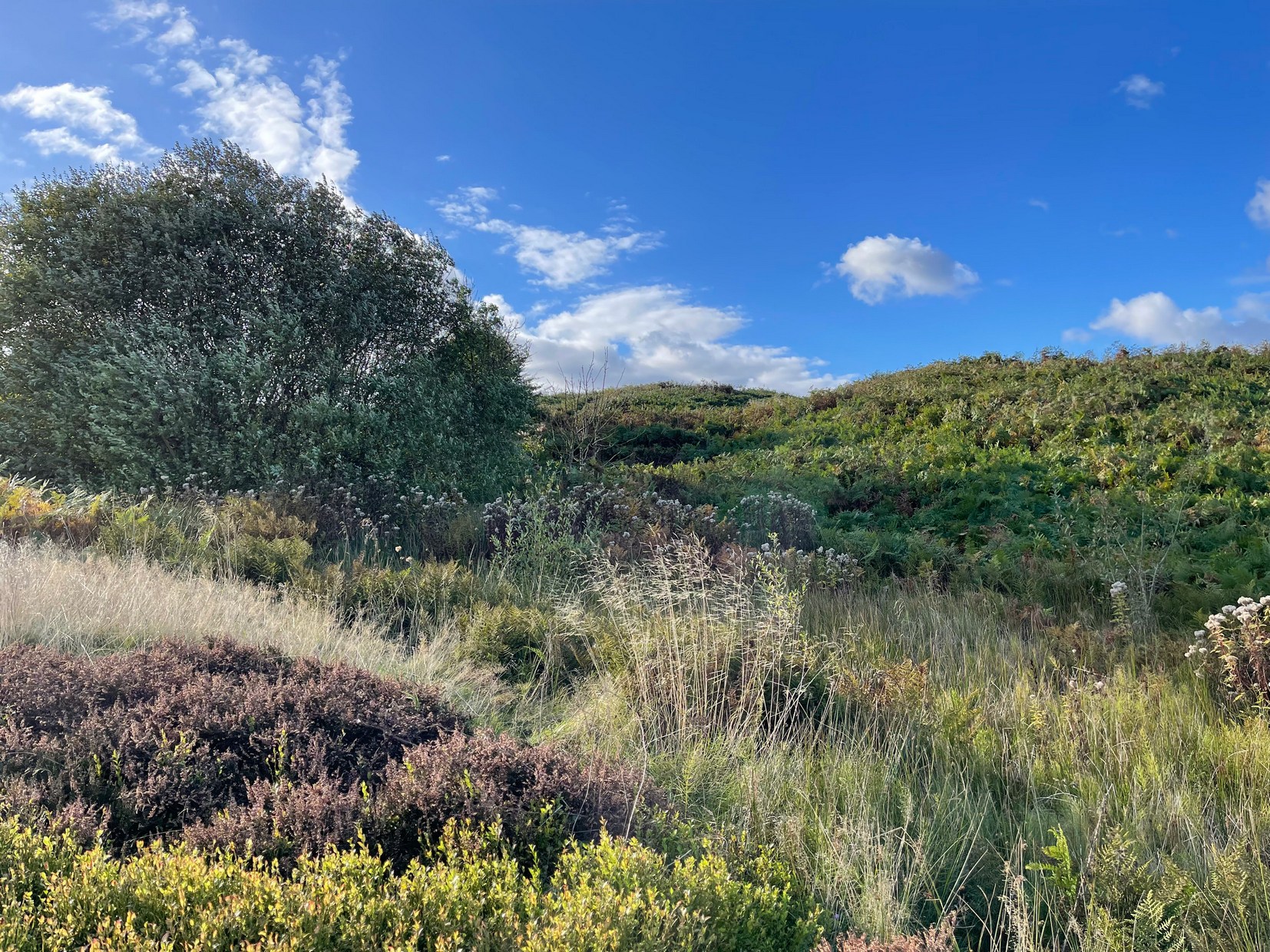
Up there, in the rushes…

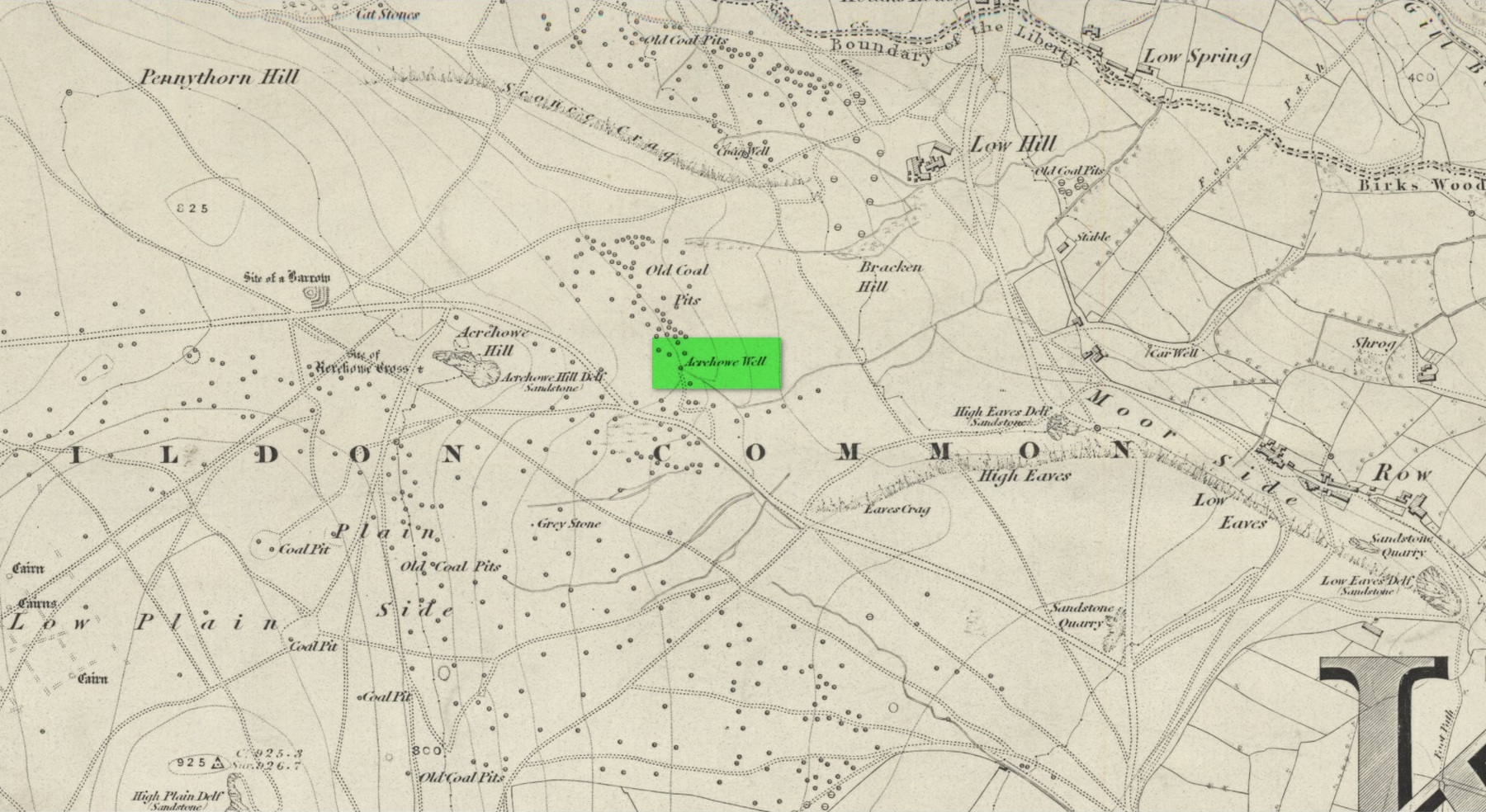
First illustrated on the 1852 Ordnance Survey map of the area and now only visible as a small marshy area, this once fast-flowing well gained its name from the old stone cross (very probably a standing stone before that) four hundred feet west of here, called Acrehowe Cross, now gone.  It is possible that this ‘cross’ gave the well a local reputation as a holy well.  A solitary path once led to the well, whose waters rise up through a coal seam giving the place its medicinal qualities, which have sadly been forgotten. Up and down this path towards Baildon village one would have regularly met a local character in the 19th century known as “Dinnis” (his real name was Joseph Halliday) who, along with his partner would take ‘kits’ (a large bucket with parallel sides) of water from the well into the village and sell it for a halfpenny each.

Site shown on 1852 map

Later in the 19th century, a cottage was built here (known as Acre Cottage) and gained its water supply from the well.  This was curtailed with the construction of the Baildon Moor reservoirs by the roadside, which took the water from both here and the nearby Spink Well (over the hill on the far side of the golf course), leaving us with little more than the trickling water we see today, just a little further down from its original location.

References:

  1. la Page, John, The Story of Baildon, William Byles: Bradford 1951.

Acknowledgements:  Huge thanks for use of the Ordnance Survey map in this site profile, reproduced with the kind permission of the National Library of Scotland

© Paul BennettThe Northern Antiquarian

Lane End, Baildon, Shipley, West Yorkshire

Cup-Marked Stone (destroyed):  OS Grid Reference – SE 152 393

Also Known as:

  1. Carving no.195

Archaeology & History

A basic cup-marked stone could once be seen up near the top of the slope behind the Bay Horse pub as you’re heading up to Baildon village.  The site would seem to have been destroyed following the demolition of buildings thereby.  A photograph of the carving was taken and it was described, albeit briefly, by Sidney Jackson (1961), who told:

“A small boulder with two cups in it was found at the junction of a narrow bye road leading to 30 Lane Ends, Baildon, with the road which runs behind the Bay Horse Inn, on 12 April (1961), by Mr Alan E. Rowe, 10 Beaufort Grove, Bolton, Bradford  and a photograph of it was taken for the Museum Reference Collection.”

Years back I contacted the Bradford Museum about this photo and they were about as helpful as a zionist in Palestine! – i.e., I never got to see it.  It would be good if someone could locate the image.

References:

  1. Boughey, Keith & Vickerman, E.A., Prehistoric Rock Art of the West Riding, WYAS: Wakefield 2003.
  2. Jackson, Sidney, “Cup-marked Boulders, Baildon Finds,” in Cartwright Hall Archaeology Group Bulletin, volume 6, no. 6, 1961.

© Paul BennettThe Northern Antiquarian

Sunnybank Well, Hawksworth, West Yorkshire

Healing Well:  OS Grid Reference – SE 16228 40696

Getting Here

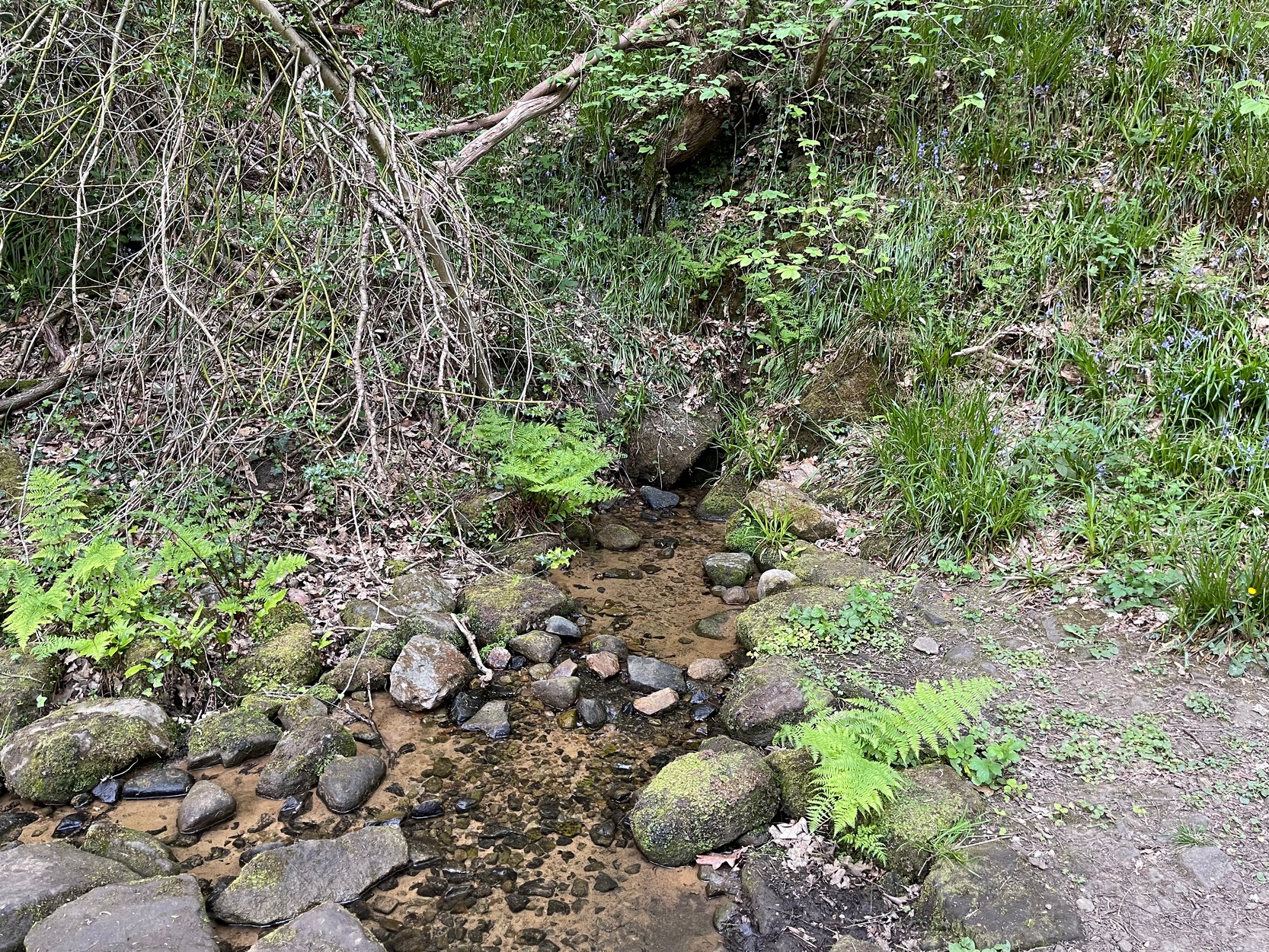
Sunnybank Well spring

My walk up to this place took me off the main A6038 Hollins Hill road, across from the petrol station and up the scruffy disused road to the hamlet of Tong Park, bending round the houses to the right when they appear.  Keep along this old track, then veer right, down the slope and along the footpath and into the trees under the railway arches, keeping on until you reach the lake on your left.  At the end of the lake, cross the bridge and follow the footpath as it bends to the left and into the trees.  You’ll go over a stile and then about 50 yards along, the stream that crosses the path emerges from a crack in the rocks on your right.  You’re here!

Archaeology & History

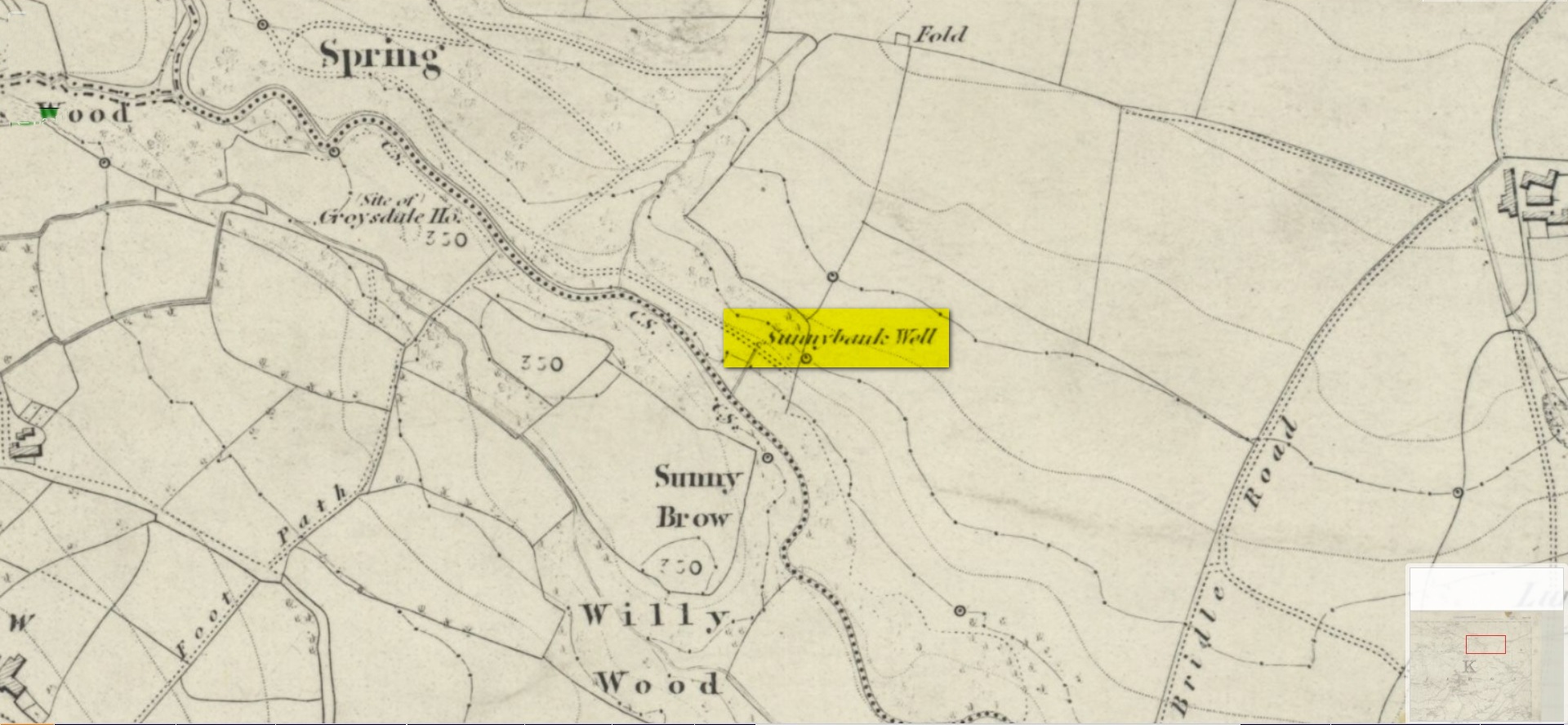
Site shown on 1852 map

All history and tradition of this site seems long gone. It was shown on the 1852 Ordnance Survey map of the region and doubtless receives its name from the location, as the spring of water emerges from beneath the sloping embankment which is a bit of a sun-trap in Spring and Summer.  It makes sense.  Although I can find no reference to any medicinal attributes, the waters of Sunnybank Well are cold, fresh and drinkable.

References:

  1. Shepherd, Val, Historic Wells in and Around Bradford, HOAP: Wymeswold 1994.

Acknowledgements:  Huge thanks for use of the Ordnance Survey map in this site profile, reproduced with the kind permission of the National Library of Scotland

© Paul BennettThe Northern Antiquarian