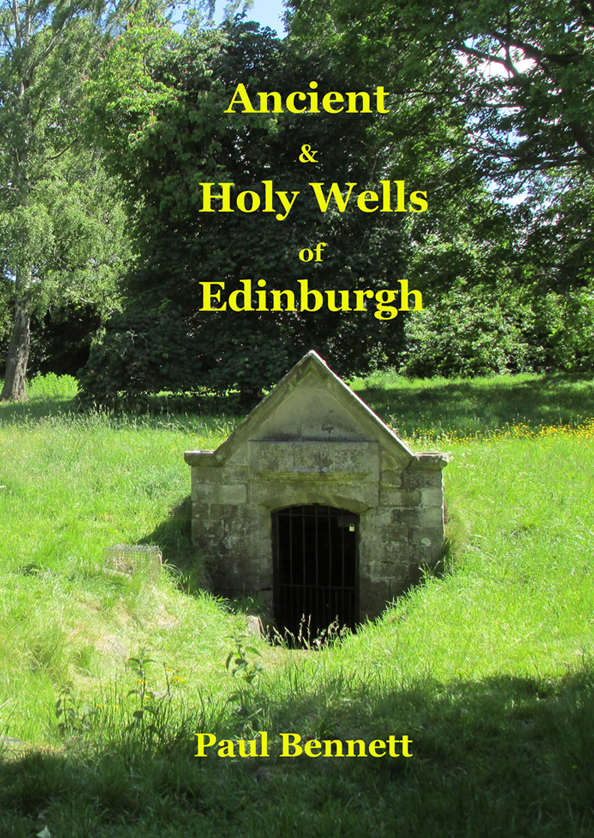
This is the first detailed guide ever written on the holy wells and healing springs in and around the ancient city of Edinburgh, Scotland. Written in a simple A-Z gazetteer style, nearly 70 individual sites are described, each with their grid-reference location, history, folklore and medicinal properties where known. Although a number them have long since fallen prey to the expanse of Industrialism, many sites can still be visited by the modern historian, pilgrim, christian, pagan or tourist.
The book opens with two introductory chapters: the first explores the origin and nature of holy wells and what they meant to local people in earlier centuries; and the next is a comparative overview of water cults worldwide. It is an invaluable guide for any student or tourist who wants to look beneath the modern history of the city and get a taste of the more archaic customs that once belonged here…
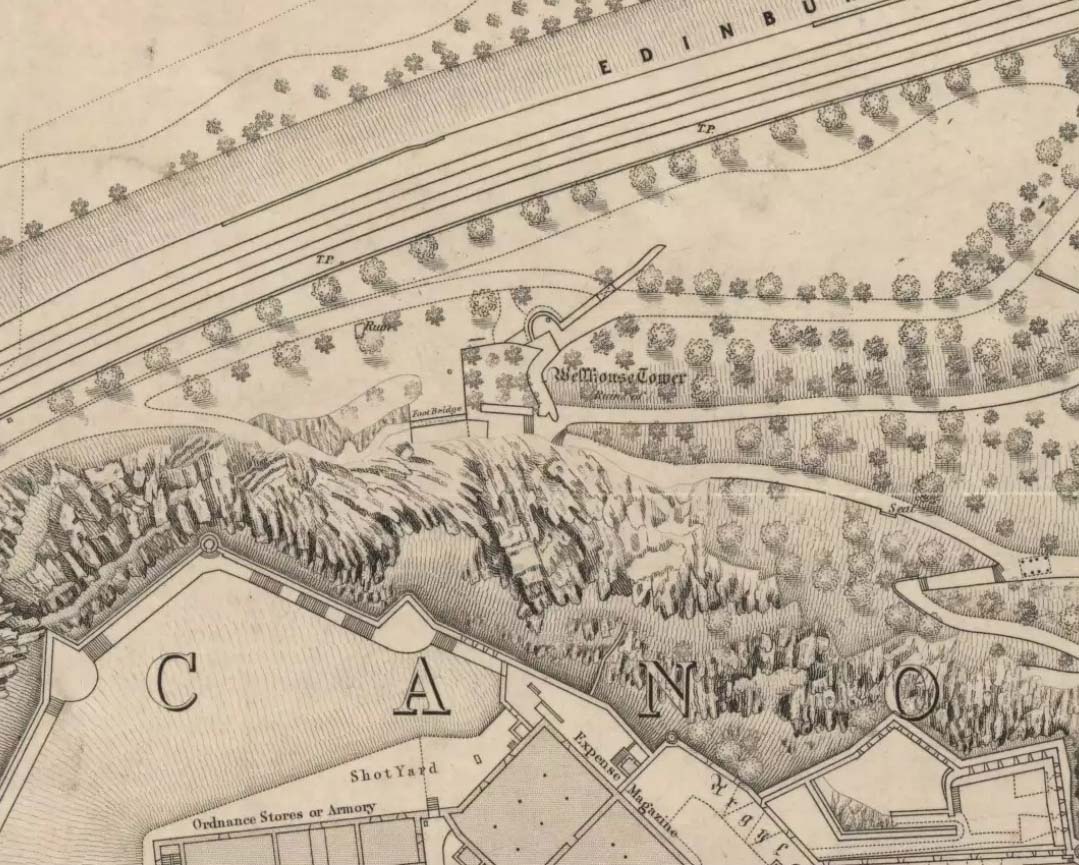
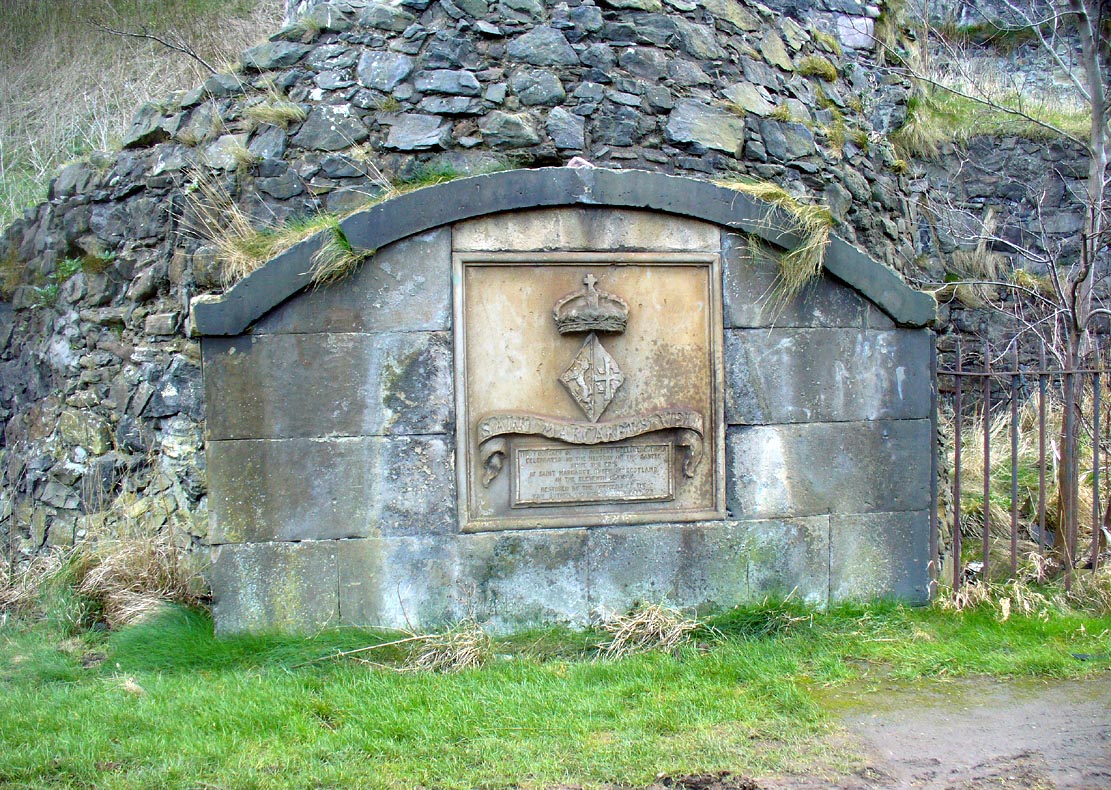
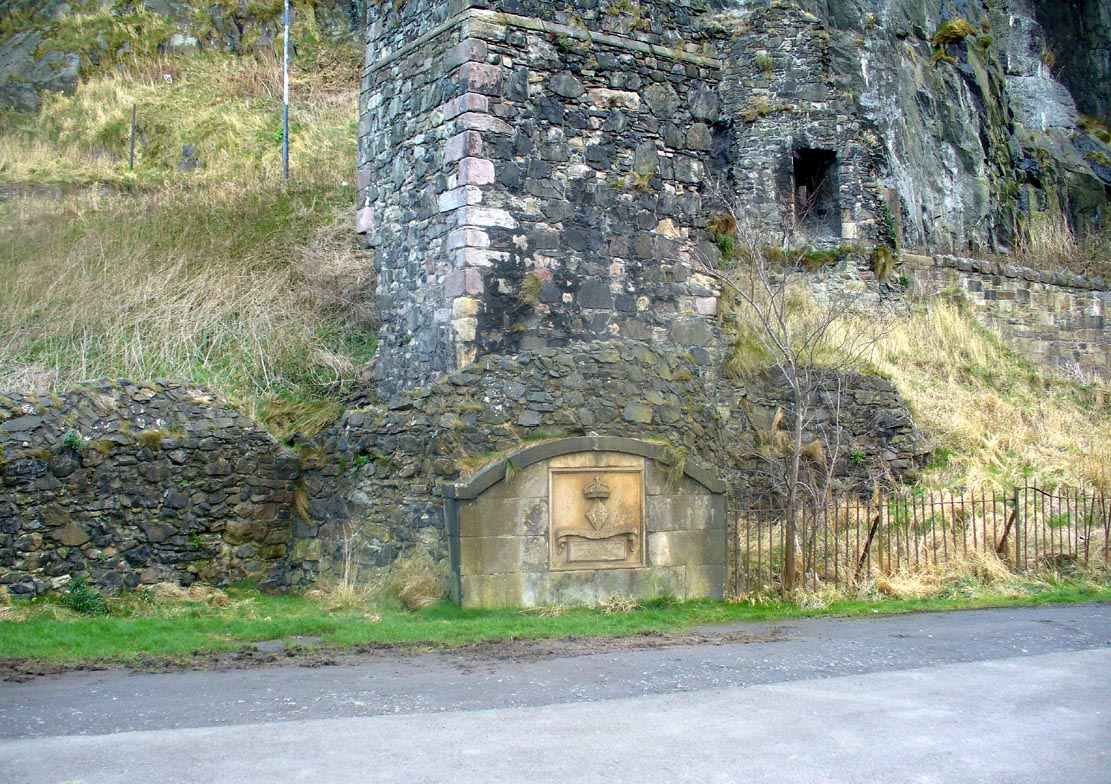
Along the more western end of Princes Street, looking up at the castle, wander into the park below and walk towards the railway line. There’s a foot-bridge over it. Once on the other side, turn right and walk along the path for just over 100 yards until you’re just about beneath the cliffs. There, in front of you, a ruinous stone building and carved faded plaque reads “St Margaret’s Well.”
Archaeology & History
The bedraggled architectural remnants we see of St. Margaret’s Well today, is not where the waters originally emerged. We must travel 2-300 hundred yards west of the present edifice, along old Kings Stables Road near St Cuthbert’s Church, for its original position. Long since gone of course…
Close-up of plaqueSt Margarets, by the old ruins
The history of this holy well tends to be found scattered in a number of sources—but none give us a decent narrative of its medicinal or traditional lore. Perhaps the best was conferred in W.M. Bryce’s (1912) lengthy essay on St. Margaret’s chapel where he told:
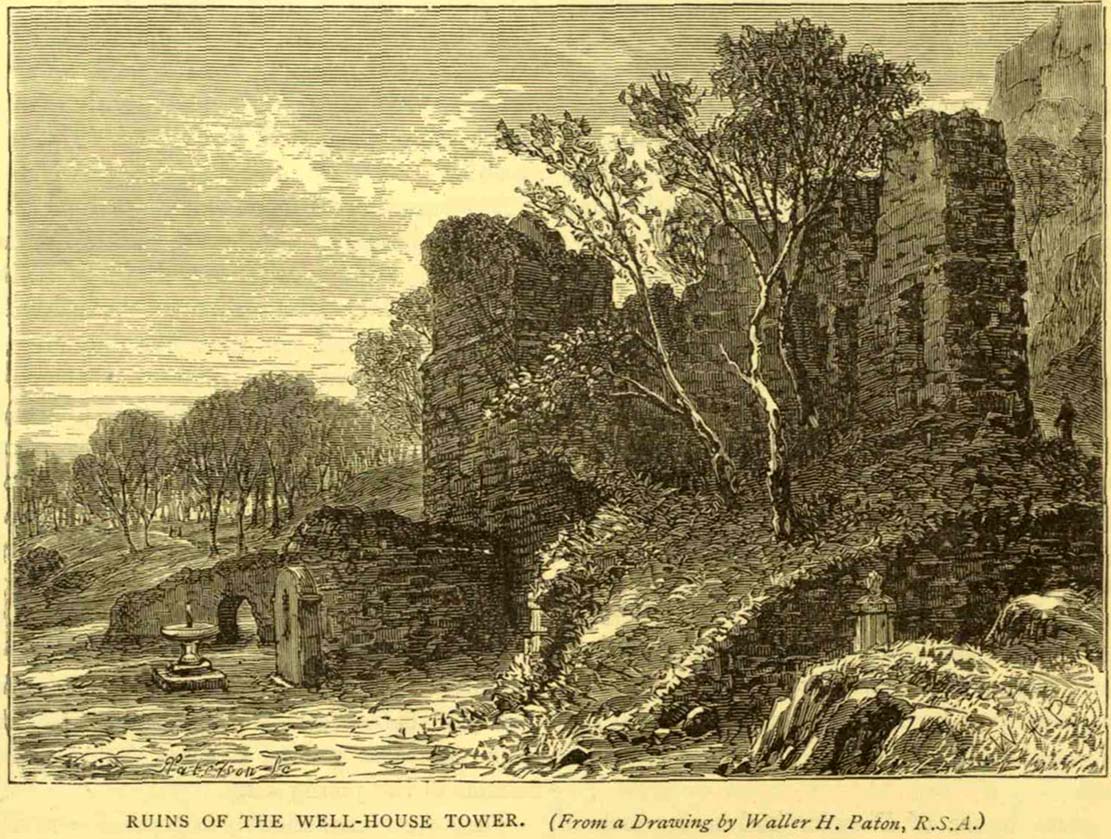
“Of the fountain in West Princes Street Gardens, also known as St. Margaret’s, and for the protection of which the Well-house Tower was erected in 1362, no legend of a similar nature seems to have survived. It was a little flowing stream of pure water, and down to the year 1821 was utilised for drinking purposes for the supply of the garrison, in supplement of the ancient draw-well of the Castle. The earliest notice of this fountain appears in a charter by David I in favour of the Church of St. Cuthbert, dated circa 1127, in which he conveys the land under the Castle from the fountain which rises close to the corner of the King’s Garden, and along the road leading to the church. It was here, in this royal garden, beside the pellucid waters of the well which was afterwards to bear her name, that Queen Margaret, in the company of her husband and children, spent many a sunny afternoon under the shade of the rugged old Castle rock.”
St Margarets Well in 1870s
The carved plaque in front of the old tumbled-down well-house sadly hides no water anymore; merely some trash and heroin-addicts needles at the back. Best avoided.
Folklore
This Scottish Queen and consort of King Malcolm Canmore, ‘St Margaret’, had several days in the calendar on which she was commemorated. Mrs Banks (1941) told how, traditionally, her day is June 10:
“This day was appointed for her festival by papal decree, but in Scotland her day is that of her death, November 16. The festival of her translation was commemorated on June 19th.”
W.M. Bryce (1912) cited St Margaret’s Day to be generally accepted as June 19, which is closer to Midsummer and could easily be accommodated into local heathen traditions.
References:
Banks, M. MacLeod, British Calendar Customs: Scotland – volume 3, Folk-lore Society: London 1941.
Royal Commission on the Ancient & Historical Monuments, Scotland, Inventory of the Ancient & Historical Monuments of the City of Edinburgh, HMSO: Edinburgh 1951.
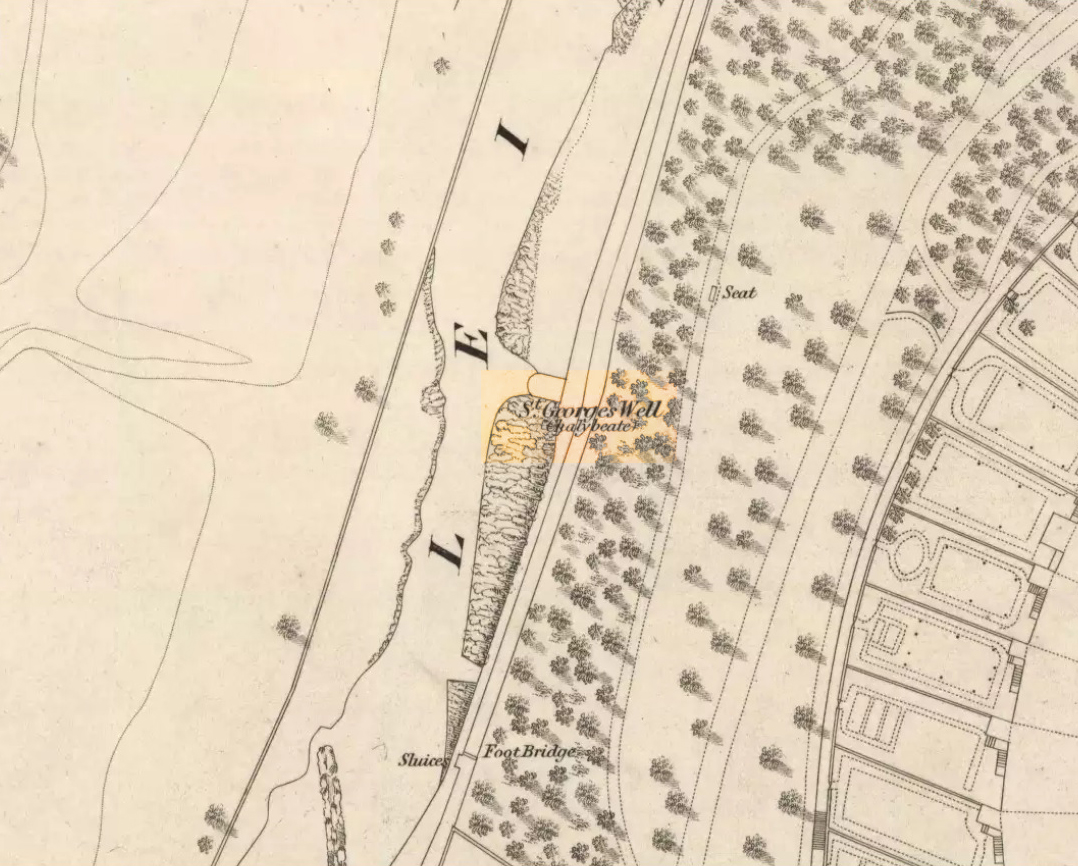
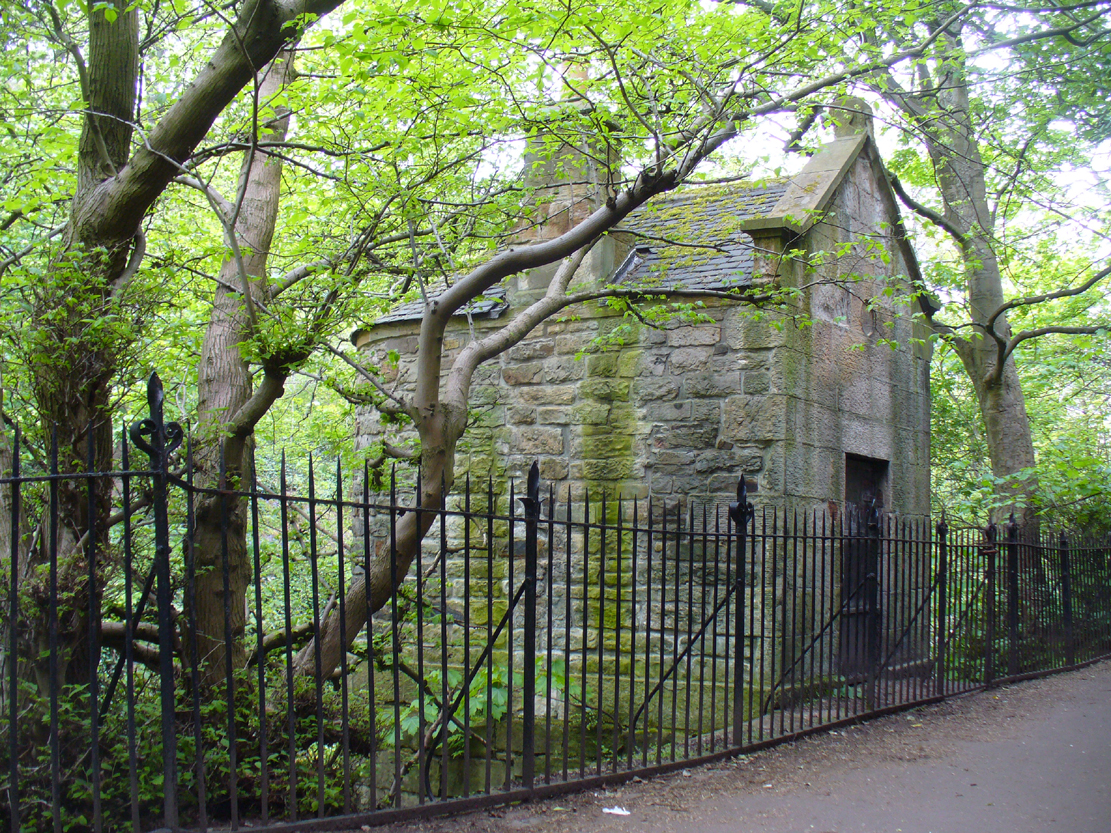
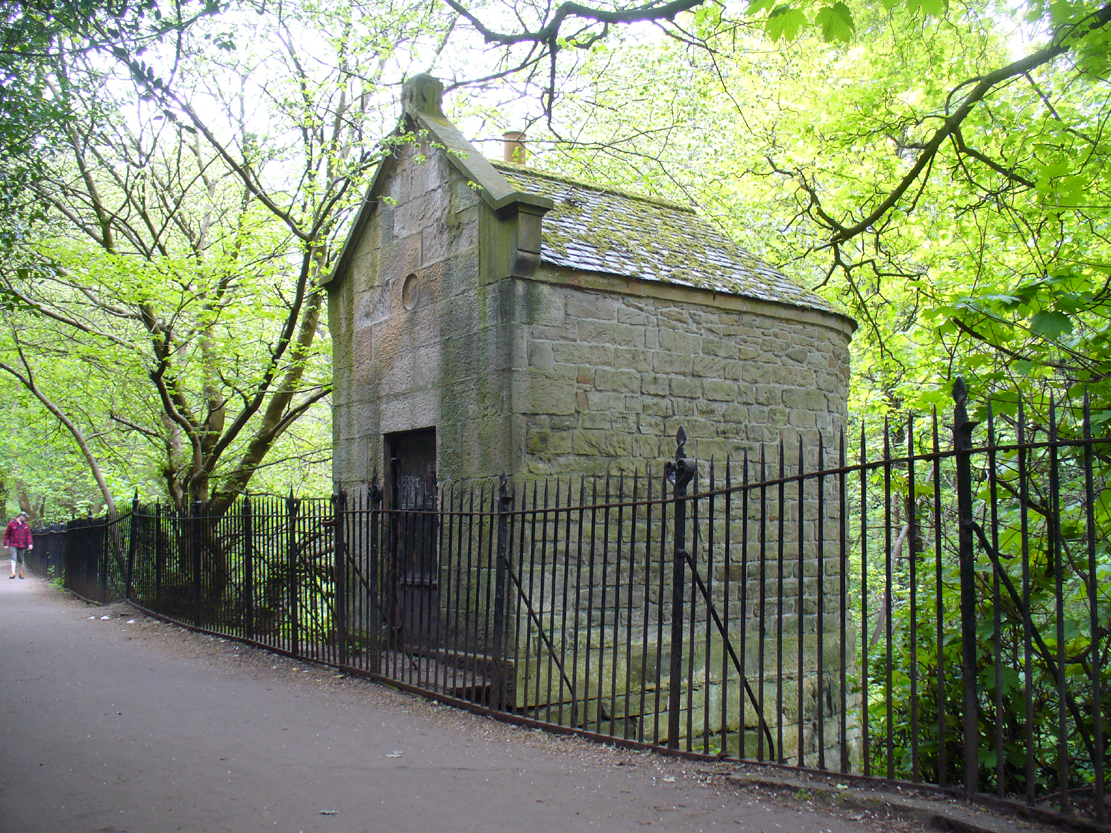
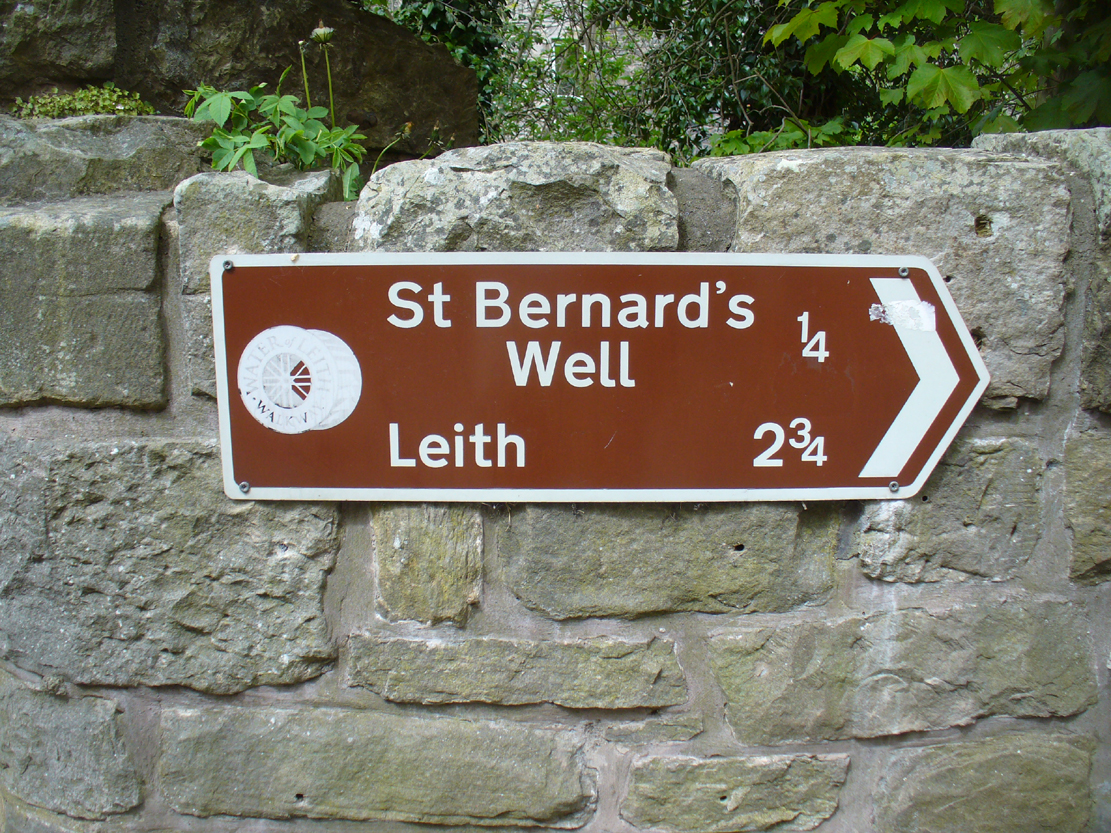
In Edinburgh, get to the west-end of Princes Street (nearest the castle), and where there’s the curious mess of 6 roads nearly skewing into each other, head down Queensferry Street for 450 yards until, just before you go over the bridge, walk down Bells Brae on your left, then turn right down Miller Row where you’ll see the sign to St. Bernard’s Well. St. George’s Well is the small, dilapidated spray-painted building right at the water’s edge 200 yards before St. Bernard’s site.
Archaeology & History
Compared to its companion holy well 200 yards downstream, poor old St. George’s Well is a paltry by comparison, in both historical and literary senses. The site was said to have been “set up in competition with St Bernard’s Well but never achieving its purpose”, wrote Ruth & Frank Morris (1982)—which is more than a little sad. Not on the fact that it failed, but on the fact that some halfwits were using local people’s water supply to make money out of and, when failing, locked up the medicinal spring and deny access to people to this day!
In Mr Grant’s Old & New Edinburgh (1882), the following short narrative was given of the site:
“A plain little circular building was erected in 1810 over (this) spring that existed a little to the westwards of St. Bernard’s, by Mr MacDonald of Stockbridge, who named it St. George Well. The water is said to be the same as the former, but if so, no use has been made of it for many years…”
St George’s Well, looking NSt George’s Well, looking SW
The association to St. George was in fact to commemorate the jubilee of King George III that year. If you visit the place, the run-down little building with its grafitti-door has a small stone engraving etched above it with the date ‘1810’ carved.
As the waters here were found to possess mainly iron, then smaller quantities of sulphur, magnesia and salts, it was designated as a chalybeate well. Its curative properties would be very similar to that of St. Bernard’s Well, which were very good at,
“assisting digestion in the stomach and first passages … cleansing the glandular system, and carrying their noxious contents by their respective emunctories out of the habit, without pain or fatigue; on the contrary, the patient feels himself lightsome and cheerful, and by degrees an increase to his general health, strength and spirits. The waters of St. Bernard’s Well operates for the most part as a strong diuretic. If drunk in a large quantity it becomes gently laxative, and powerfully promotes insensible perspiration. It likewise has a wonderfully exhilarating influence on the faculties of the mind.”
Royal Commission on the Ancient & Historical Monuments, Scotland, Inventory of the Ancient & Historical Monuments of the City of Edinburgh, HMSO: Edinburgh 1951.
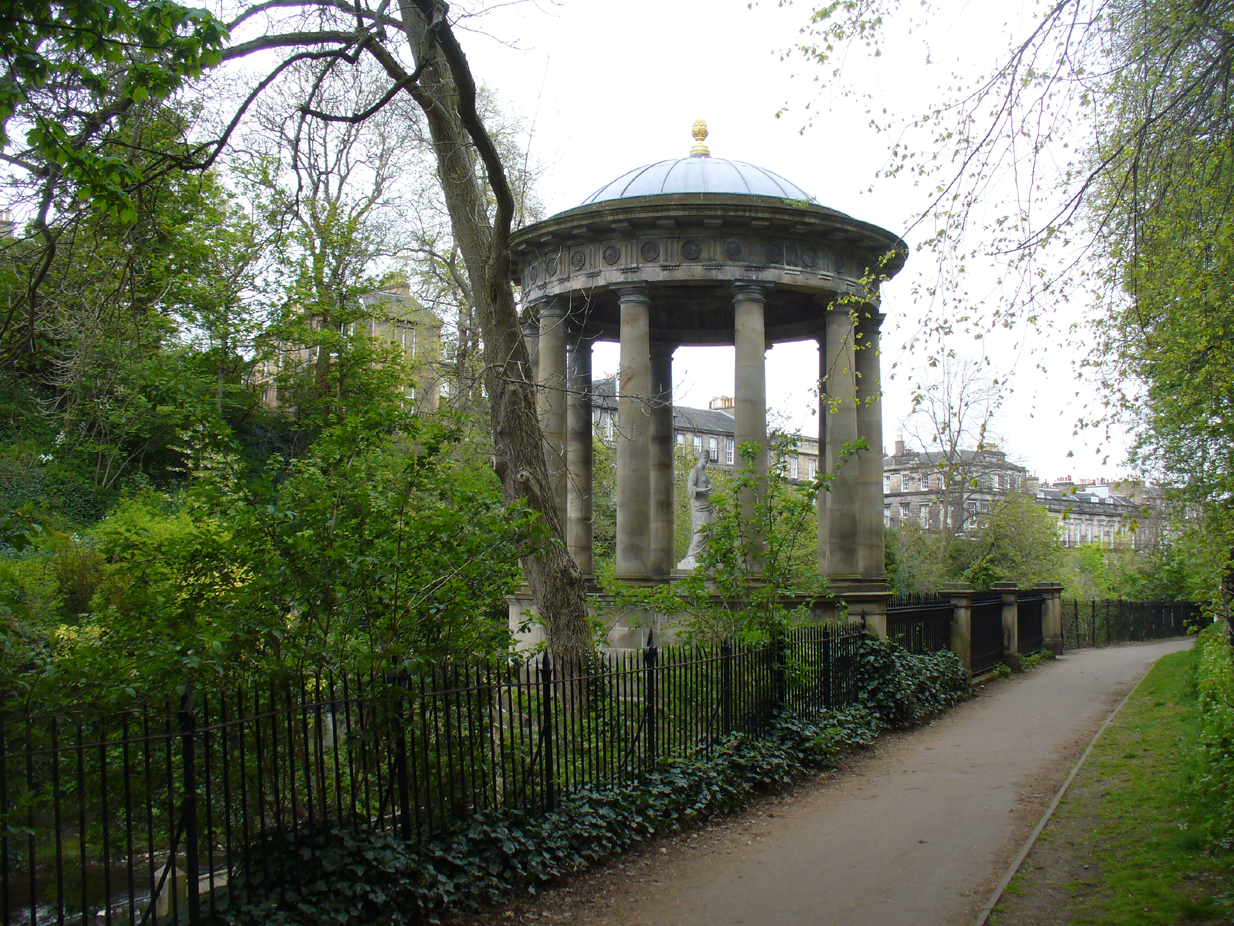
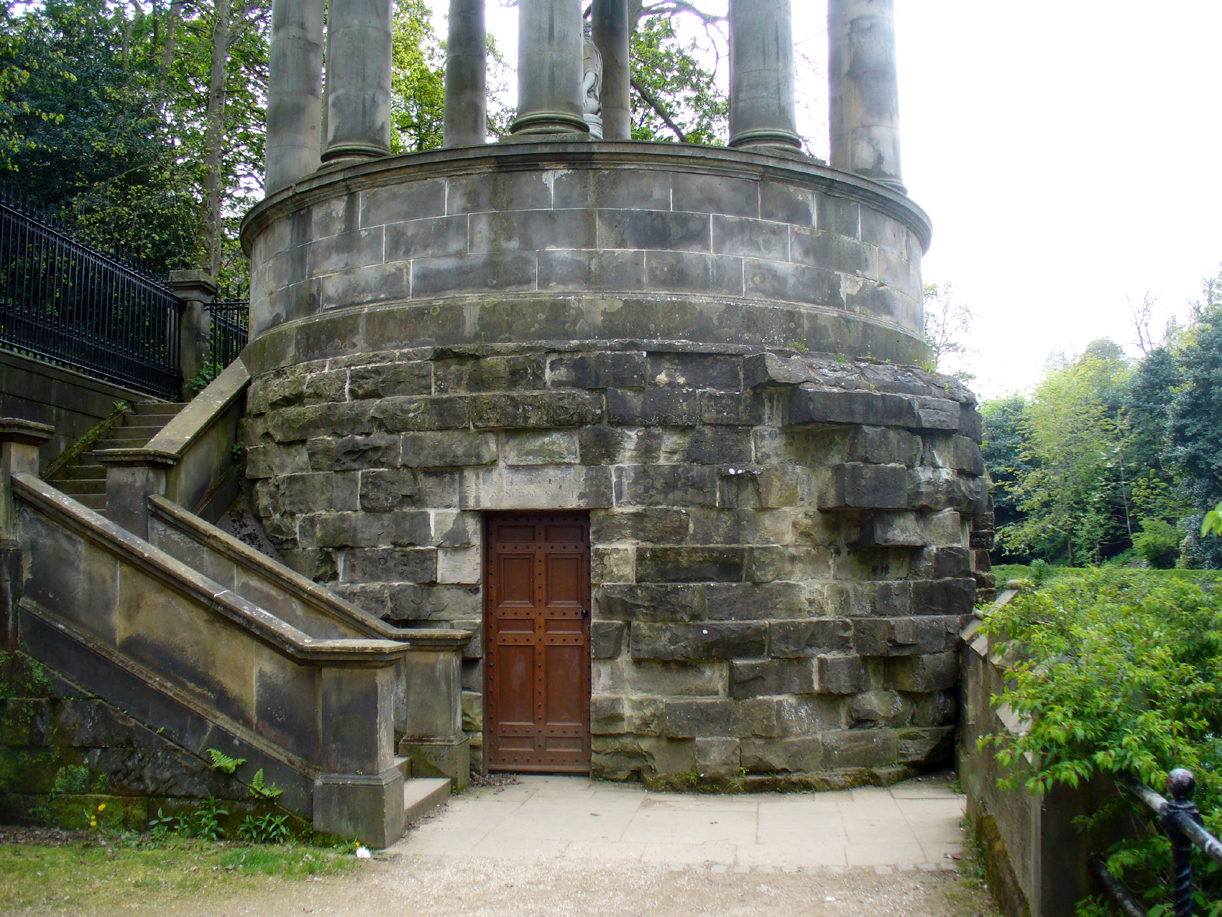
So you’re in Edinburgh. Get to the west-end of Princes Street (nearest the castle), and where there’s the curious mess of 6 roads nearly skewing into each other, head down Queensferry Street for 450 yards until, just before you go over the bridge, walk down Bells Brae on your left, then turn right down Miller Row to the river where you’ll see the sign pointing the way! Walk alongside the river, past St George’s Well for another coupla hundred yards until you reach the large Romanesque domed building right by the riverside on your left. Steps take you down to it.
Archaeology & History
St Bernard’s Well, 1790
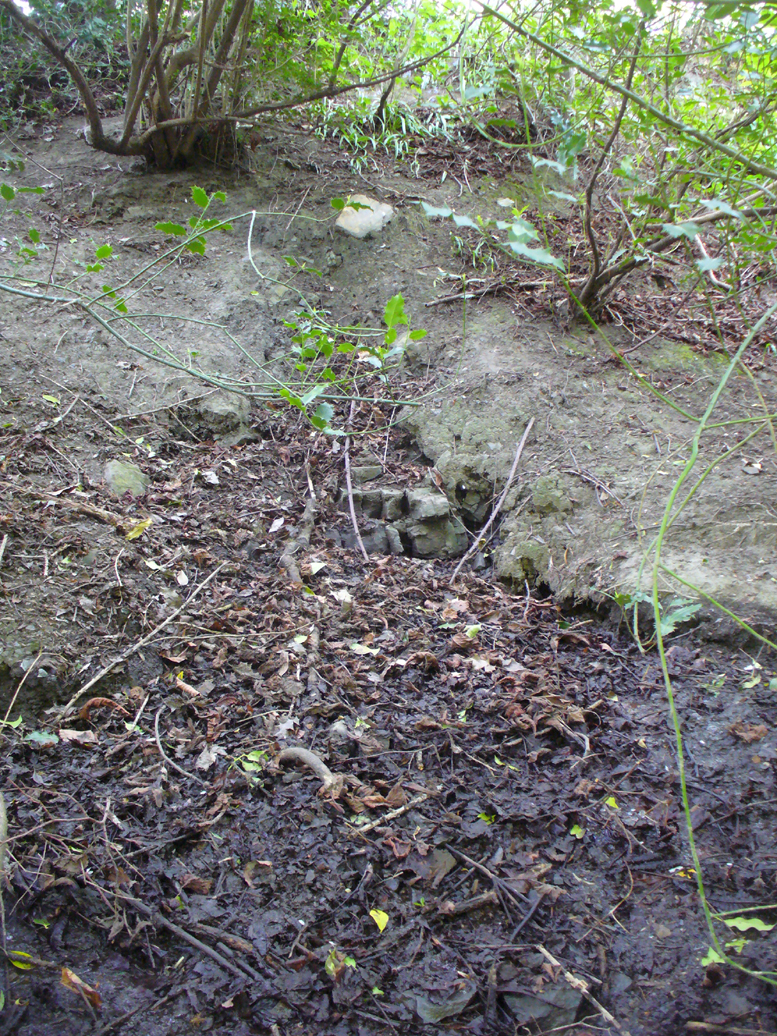
When J. Taylor (1790) wrote his singular book on St Bernard’s Well, this sacred site could be seen in landscape that was described as “a wild, romantic, and very pleasant appearance.” How things change! Although the waters of Leith below which the well arises give the region, still, that air of romanticism that Taylor described, on either side of the waters the stone buildings of the Industrialists have grown, denouncing Nature. But to be honest, it’s still a fine place, considering it’s near the middle of a city!
Small spring above the well
In the shrubs and small trees on the slopes just above the architectural edifice that now covers St Bernard’s Well, after rainy days you can see several small springs of water running down the slope and onto the modern path. In earlier centuries there were six of these springs next to each other which ran a short distance down the slope and converged into two, which then ran into a small stone trough. Local people used these fresh waters, not only for basic needs, but for medicinal purposes too.
It seems that the earliest mention of what Stuart Harris (1996) called “this fancy name” of St. Bernard’s Well appeared in an article in The Scots Magazine of September 1760. It clearly shows how the Scottish Freemasons played their part in bringing the waters of this healing well to the fore:
“A mineral well has lately been discovered between the village and the Water of Leith and Stockbridge, about half a mile north of Edinburgh, which is said to be equal in quality to any of the most famous in Britain. To preserve the well from the injury of the weather, and prevent its being overflowed by the Water of Leith, on the banks of which it is situated, a stone covering is to be erected over it. The foundation-stone of this building was laid September 15th (by a deputation from the Earl of Leven, the present Grand Master of Scotland), by Alexander Drummond, brother of Provost Drummond, lately British Consul at Aleppo, and Provincial Grand Master of all the Lodges in Asia and in Europe, out of Britain, holding of the Grand Lodge of Scotland. He was attended by many of the brethren, in their proper clothing and insignia, preceded by a band of music, and the ceremony was performed in the presence of a great number of spectators. It is called St. Bernard’s Well.”
The following year, the poet James Wilson Claudero wrote a poem about the laying of the foundation stone at the well, in which the medicinal virtues of the waters were described. A section of the poem is as follows:
“When heaven propitious to grant his desire
To the utmost extent his heart could require,
For the health of the poor sent this sanative well,
A blessing to all that around it do dwell;
This water so healthful near Edinburgh doth rise
Which not only Bath but Moffat outvies.
Most diseases of nature it quickly doth cure.
“It cleans the intestines and appetite gives
While morbific matter it quite away drives.
Its amazing effects can not be denied,
And drugs are quite useless where it is applied,
So what doctors can’t cure is done by this spring
Preserved till this year of great Drummond’s reign.”
St Bernards Well, looking NSt Bernards Well, looking SW
A few years later in 1786, the construction we see today which now covers the medicinal waters, began to be built. The ‘fashion’ of the rich and wealthy acquiring healing wells used by local people was in vogue at the time and the place became frequented by the usual snooty class of doods who played their social gatherings here. The Scots Magazine gave a brief resumé of what unfolded—intriguingly at Beltane (perhaps the day when its waters were of greatest repute, as is the case at the majority of sacred wells), telling:
“On the 1st of May, the foundation-stone of the mineral well of St Bernard’s, in the vicinity of Edinburgh, was laid in the presence of several gentlemen of the neighbourhood. A plate of metal was sunk into the stone, with the following inscription:
Erected For the benefit of the public at the sole expense of Francis Garden, Esq. of Troop A.D. 1789 Alexander Nasmith, Architect, John Wilson, Builder.
This building is erected in the most picturesque spot in the neighbourhood of Edinburgh, and when finished, from the elegance of the plan, and the excellent quality of the materials, will long be an ornament to the city, and prove a lasting monument of the refined taste, liberality, and public spirit of the honourable founder.”
As the reputation of the place spread amongst those who could read and had money, so the day-to-day habits of local people, who kept drinking the waters and collecting them for domestic use, became increasingly frowned upon. Some rich doods bought the land and, thereafter, local people were only allowed to use the well at certain times and in certain ways. I kid you not! This is a familiar tale at a lot of city sites. After the construction of the Romanesque building that still covers the well (based on an ancient temple at Tivoli, Italy, with a statue on top of the goddess of Health, Hygeia) which, to this day, hides the waters inside behind lock and key, the land-owner Lord Gardenstone appointed and paid a ‘keeper of the well’. The ‘keeper—George Murdoch of Stockbridge —had a series of rules to abide by, for which he got paid a tidy sum. Gardenstone wrote to him:
“George — From long experience I entertain a very favourable opinion of your honesty and decent manners. I, therefore, am resolved to make a trial of your capacity to perform properly the duties of a trust which is of a public nature, and requires good temper, patience, and discretion.
“I hereby authorise and appoint you to be Keeper of St Bernard’s Well during pleasure, and you are to observe punctually the following directions and rules, or such other regulations as may be found more expedient and may be hereafter prescribed:
“I. You are to furnish proper glasses and cups for drinking the water.
“II. During the proper season you are to attend the well, at least from six till nine, every morning. During the above period none shall have access to drink or use the water but those who shall pay at the moderate rates subjoined.
“III. Such as choose to subscribe for the season, from the 1st of May to the 1st of October, shall pay down, before they begin to drink, at least five shillings sterling.
“IV. Persons who do not choose to subscribe, but choose at their pleasure to drink the water any time of the morning period, occasionally, shall pay before they begin to drink every morning — for grown persons each one penny, and for children each one halfpenny; or at the rate of sixpence and threepence per week respectively.
“V. For water drawn from the well to be used at a distance, in bottles or other vessels in the mornings, payment must be made at the rate of one halfpenny for every Scots pint.
“VI. No person shall be allowed, on any pretence, to bathe their limbs or sores at, or in sight of, the well during the morning period.
“VII. All persons who are either unable or unwilling to pay as above, shall have free access to the use of the waters from ten to one every forenoon; and those who have once paid may return and use the waters at any time of the day.
“VIII. The keeper shall attend from five to seven o’clock in the afternoon for the service of all who have paid; and after seven for all without distinction.
“IX. Upon a proper certificate from any regular physician, surgeon, or apothecary of Edinburgh, the keeper shall supply poor persons with water at any time prescribed.
“X. The proper and customary method of drinking at mineral waters is, that persons after drinking a glass or cup of water retire immediately and walk about, or take other exercise for an interval of at least five minutes, both as a benefit to themselves, and to make way for other water drinkers. A contrary practice prevails at St Bernard’s, and sometimes a crowd of people continue at the well till they have drunk their quota. Hereafter every person must retire as above, and the keeper must require them to do so, this regulation being very necessary.
“XI. Another irregularity, prejudicial to the credit and use of the waters, has prevailed and must also be corrected, which is that quantities of the water are carried to distant parts in open vessels. All mineral waters should be transported in well- corked bottles or other close vessels. The keeper must strictly adhere to this regulation, and suffer no water to be carried off in open vessels.
“Hints and observations for the better regulation and public use of those waters will be thankfully received by the proprietor.
“Some accounts of the virtues of this mineral water, and of certain remarkable cures performed by the proper use of it, will soon be published by a medical gentleman of character and experience.
“N.B. — The effects of this water when used in making either tea or punch are remarkably agreeable.
St Bernards Well on the 1819 Kirlands map
This must have caused some friction amongst locals, and no doubt given Mr Murdoch problems at times, as he would be denying the people who were born and bred here access to their drinking and medicinal spring. And so a missive was written on July 4, 1810, which instructed the keeper “to supply the poor with water gratis each day from eleven to twelve o’ clock noon.” Sensible…..
By now, the properties and reputation of the waters were widespread among the elitists and money-addicts. St Bernard’s Well was being compared with the famous healing waters of Bath, Harrogate, Strathpeffer and more. Its cause was encouraged by a series of scientific reports that showed a variety of health-giving minerals in good quantities; and many cases of ‘cures’ were reported by those who drank here. When the local doctor, J. Taylor (1790) opened his treatise on this very issue, he began,
“In the course of my practice, having occasion to visit most of the families in Stockbridge, especially of the poorer sort, I was informed that St Bernard’s Well had been of great benefit to people that resorted to it for various complaints…”
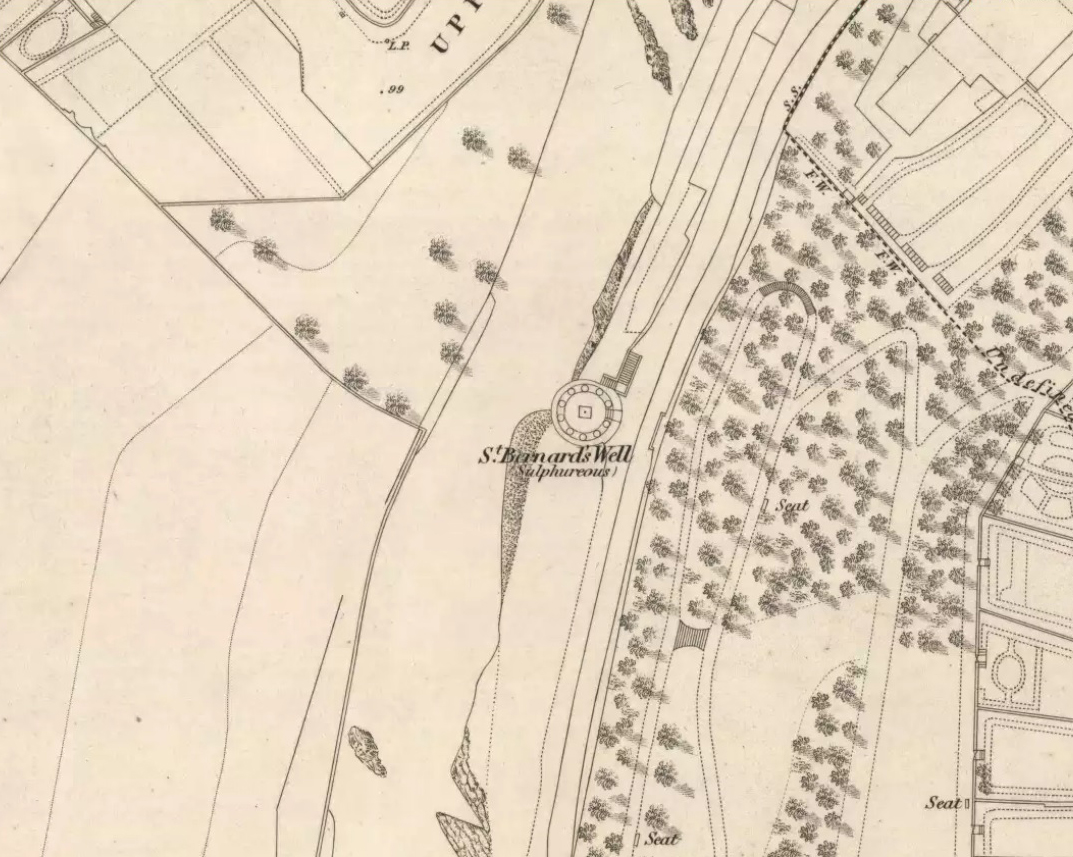
Entrance to the wellSt Bernards Well on 1851 map
Many more cases were to follow. It was the chemical constituents in St. Bernard’s waters that did the trick—although most modern folk would squirm at the very look and whiff of them, as Taylor reported how “the peculiar odour of this water is somewhat nauseous”! That’s because they are primarily sulphurous in nature, along with good traces of iron, magnesia and salts. I’ve drank such waters at some of Yorkshire chalybeates and found them damn invigorating – but most folk won’t touch them with a barge-pole! (chlorinated flouridated tap-water seems most folk’s preference these days) Dr Taylor told how St. Bernard’s Well was very good at,
“assisting digestion in the stomach and first passages … cleansing the glandular system, and carrying their noxious contents by their respective emunctories out of the habit, without pain or fatigue; on the contrary, the patient feels himself lightsome and cheerful, and by degrees an increase to his general health, strength and spirits. The waters of St. Bernard’s Well operates for the most part as a strong diuretic. If drunk in a large quantity it becomes gently laxative, and powerfully promotes insensible perspiration. It likewise has a wonderfully exhilarating influence on the faculties of the mind.”
He thereafter cited a number of cases of people with various ailments whose illnesses were cured by these waters. I recommend a perusal of his work and the other references below for specifics on such matters. The writings on this one sacred site are plentiful indeed, and the bibliographic references are but a morsel of works that describe it.
Folklore
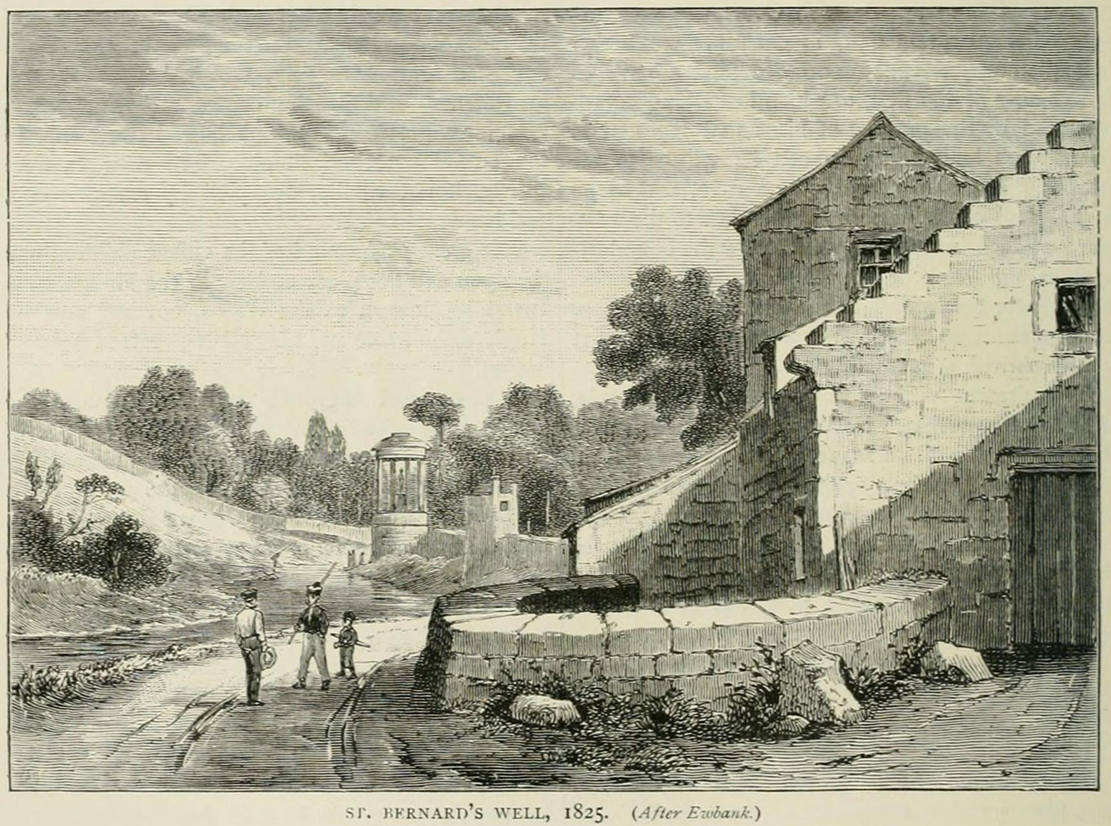
St Bernards Well in 1825
Local tradition ascribed the discovery of the medicinal waters here by three local boys from Heriot, years before the legendary St. Bernard got in on the act; and, despite the wishes of many, St. Bernard of Clairvaux was not in any way related to the legendary Nursie of Blackadder fame (can anyone find a short link so as to educate the unenlightened on this matter?). His hagiography (biography of a saint) tells that his saint’s day was August 20, and his symbols were: a white dog, a chained demon and beehives. Whether any of these symbols related to any indigenous myths at the site is difficult to say.
Mr Cumberland Hill (1887) told the story of how this spring acquired its christian title:
“There is an ancient oral tradition in the district (we read of it also in an old book when we were young) that St Bernard visited Scotland. There are different ways of telling the legend, but the following appears to be the general version. St Bernard, while preaching the second crusade in France and Germany, was advised to go to Scotland as a country rich in faith and fighting men. He was disappointed with his reception at court. In grief, aggravated by ill-health, he withdrew and lived in a cave in the neighbourhood of the spring. There certainly was a cave of considerable dimensions in the steep cliffs to the westward. Its entrance was covered up by the building of the wall that bounds the back of Randolph Crescent, but when it formed part of Lord Moray’s grounds we, and the other boys of Stockbridge, knew that cave well. The saint’s attention was attracted by the number of birds that resorted to the spring. He drank of its healing waters, and, soothed by the sound of the river and the beauty of the scenery — the valley, still very beautiful, must then have been surpassingly fair — his health and serenity of mind returned. He called the inhabitants of the district to the spring, revealed to them its virtues, and, after bestowing upon the people his blessing, he returned to his place of public duty. Christendom concurs that this was the blessing of a good man. He was canonised by the Roman Catholic Church, but as canonisation is growing to be an invidious distinction, we quote Luther’s opinion: “If there ever lived on the earth a God-fearing and holy monk, it was St Bernard of Clairvaux.” We give the tradition as a tradition, not as history, though it is as credible and certainly more creditable than many of the legends of the saints.”
Royal Commission on the Ancient & Historical Monuments, Scotland, Inventory of the Ancient & Historical Monuments of the City of Edinburgh, HMSO: Edinburgh 1951.
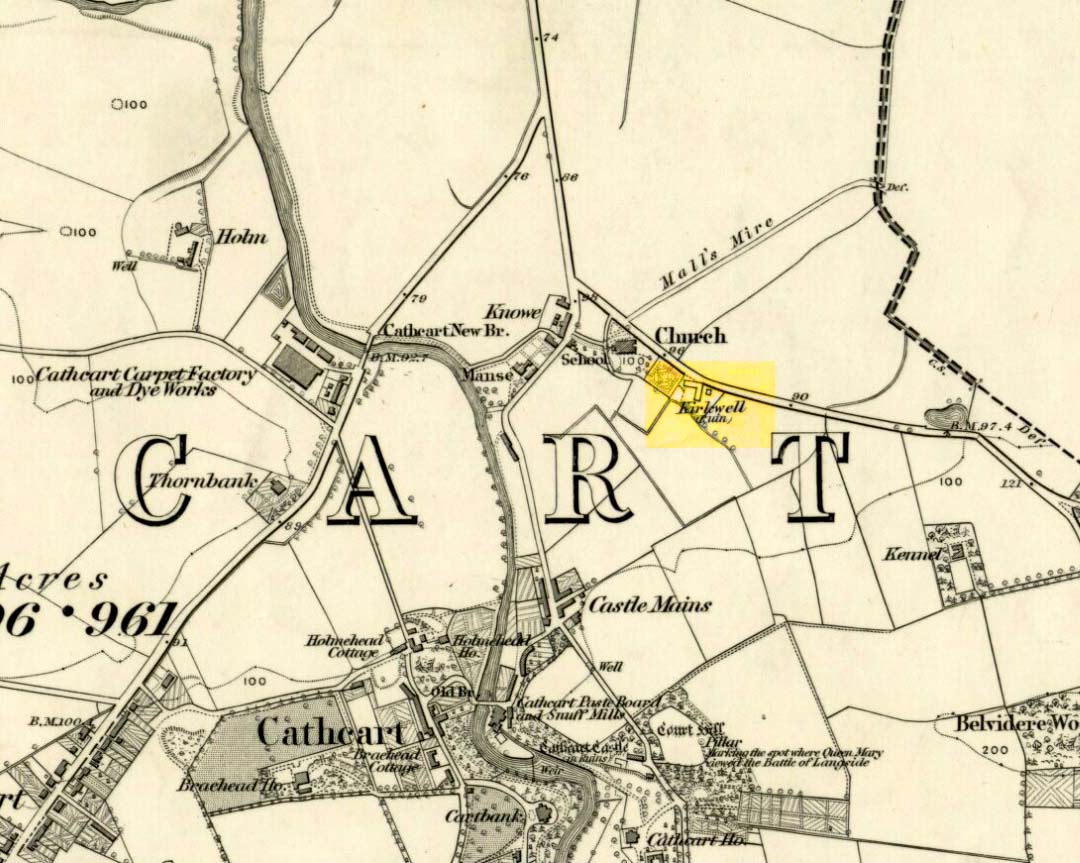
St. Oswald’s Well was described in Hew Scott’s (1920) magnum opus as being beside the parish church of the same name, but other references to it are scant. An old well-house was built besides or over the waters, which subsequently became known as the Kirk Well due to its proximity to the church, 125 yards to the northwest. All trace of it appears to have gone. The road to the west of the site also 125 yards away, called Kirkwell Road, seems to be the last piece of folk memory that remains.
St. Oswald himself was a British tribal leader of Northumbrian descent who, legend tells, went to Iona and became a christian. He had to leave the island eventually and go back into Yorkshire to bring peace back into the northern counties. Whether this Well of his was dedicated to him as a result of his journey from back south from Iona, we do not know. His saint’s day is August 5—very close indeed to that old heathen celebration time of Lughnasadh or Lammas. Most likely this is not just a coincidence, but will have related to what local folk were doing before the christian impositions.
Holy Well (destroyed?): OS Grid Reference – NS 553 658
Archaeology & History
This is the conjectural title conferred by T.C.F. Brotchie (1920) upon a Well uncovered during construction of the Pearce Institute in Govan in 1908. It was certainly an old site and very well made by the sound of it: being “a stone-built well some ten feet deep (and) some eight feet below the present surface of the ground.” Brotchie thought it to be medieval in age – and he may have been right.
On asking local people if they knew anything about the site, he was lucky to meet “a very old man, a Mr Rellie”, who told him that when he was a boy his granny spoke of a lost “guid well (that) was near the kirk.” He continued:
“I have no doubt that the well discovered in 1908 was the guid well, and judging from its proximity to the god’s acre, and also from adjective ‘guid’, that the well was at one time the holy well of St. Constantine, who in the 6th century founded a church in Govan. Of course, that is conjecture, but I venture to think that the conjecture is reasonably well founded.”
The church is immediately adjacent and is indeed dedicated to St. Constantine. Inside of it are a variety of fascinating archaeological relics: not least of which is what Sam Small (2008) called the ‘Pagan Sun Stone’ upon which is carved an ancient swastika! That – I’ve got to see!
Holy Well (destroyed): OS Grid Reference – NS 667 653
Archaeology & History
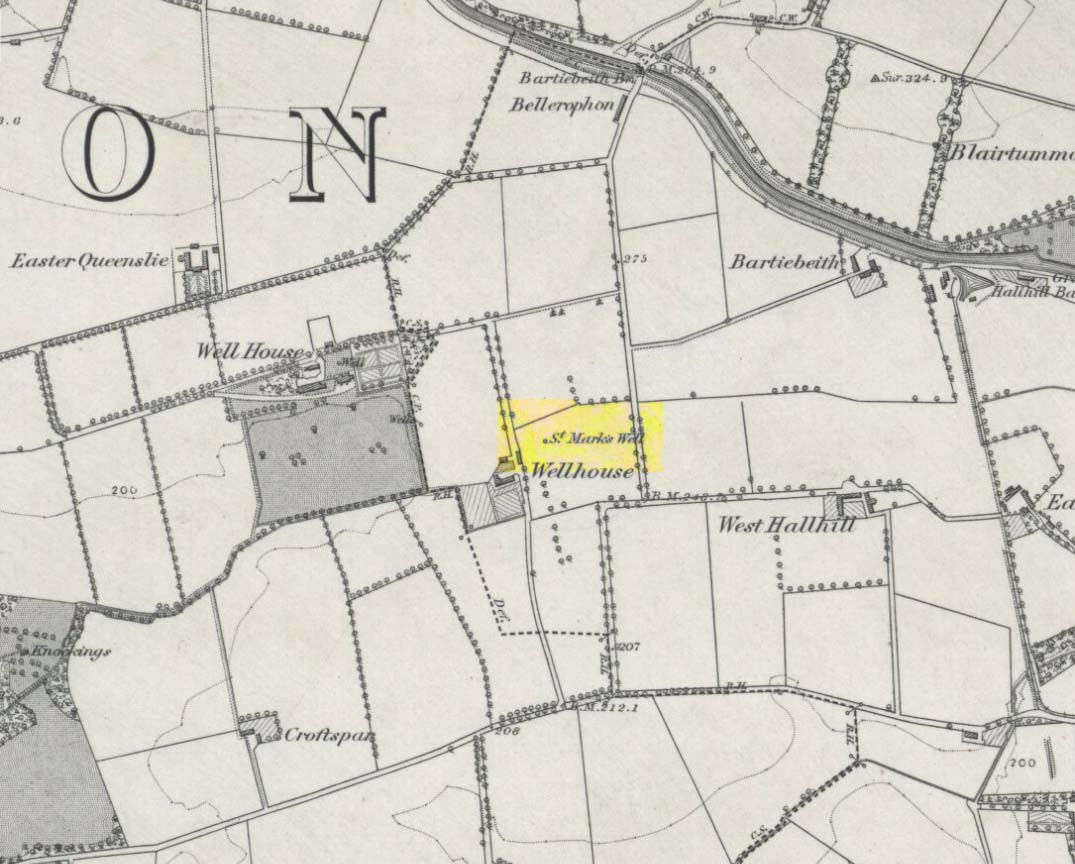
St Marks Well on 1864 map
Information on this long forgotten holy well that once flowed a few miles east of Glasgow city centre, beneath what is now Wellhouse estate, is all but lost. Local history works of the area tell us little (though there must surely be something somewhere?) and even the place-name surveyor of this area—Peter Drummond (2014)—could find nothing. Noted by the Ordnance Survey lads in 1858, when they came to re-survey the area again in 1899 its waters had, it seems, been covered and carried into the ‘Well house’ less about 50 yards to the southwest (another ‘Wellhouse’ found 150 yards further west is the site that gives the estate its present name). From thereon, this wellhouse and St. Mark’s Well fell into the forgotten pages of history and, sadly it seems, even its oral tradition has died…
The origin and nature of the ‘well house’ isn’t too troublesome, as Drummond (2014) explains:
“The name Wellhouse exists in several places in Scotland, and could indicate a ‘house beside wells’, or a protective ‘house over wells’; the early record here suggests the former, since the first Glasgow Water Company’s Act was obtained in 1806, many years later.”
However, the reasons behind the dedication to St. Mark at this probably heathen arena in times gone by, seems to be quite a mystery. Perhaps the folklore of the saint concerned may be of some help.
Customs practiced on St. Mark’s Eve and St. Mark’s Day (April 24-5) are replete with animistic elements throughout and are certainly not christian! Six months after the old New Year, we find rituals once more allowing, not for the passing of, but the emergence of the dead: bringing the spirits into the Spring and Summer. Divination rites were practiced with Cannabis sativa no less! Prophecy and wise-women were advisors to the young. Walking backwards around wells were known at some St. Mark’s wells; whilst others without his name—but on this saint’s day—were leapt across, symbolizing the crossing of danger and darkness in the ritual calendar. All around this period of time, up to and including Beltane, the end of the dark cold year has passed, and these plentiful rites are prequels to the lighter days, warm spring, summer and good autumn: all vital rites for the people in their myths of the eternal return…
St. Mark’s Well at Glasgow meanwhile, seems to have lost its old tales… Surely not?
References:
Banks, M. MacLeod, British Calendar Customs: Scotland – volume 2, Folk-lore Society: Glasgow 1939.
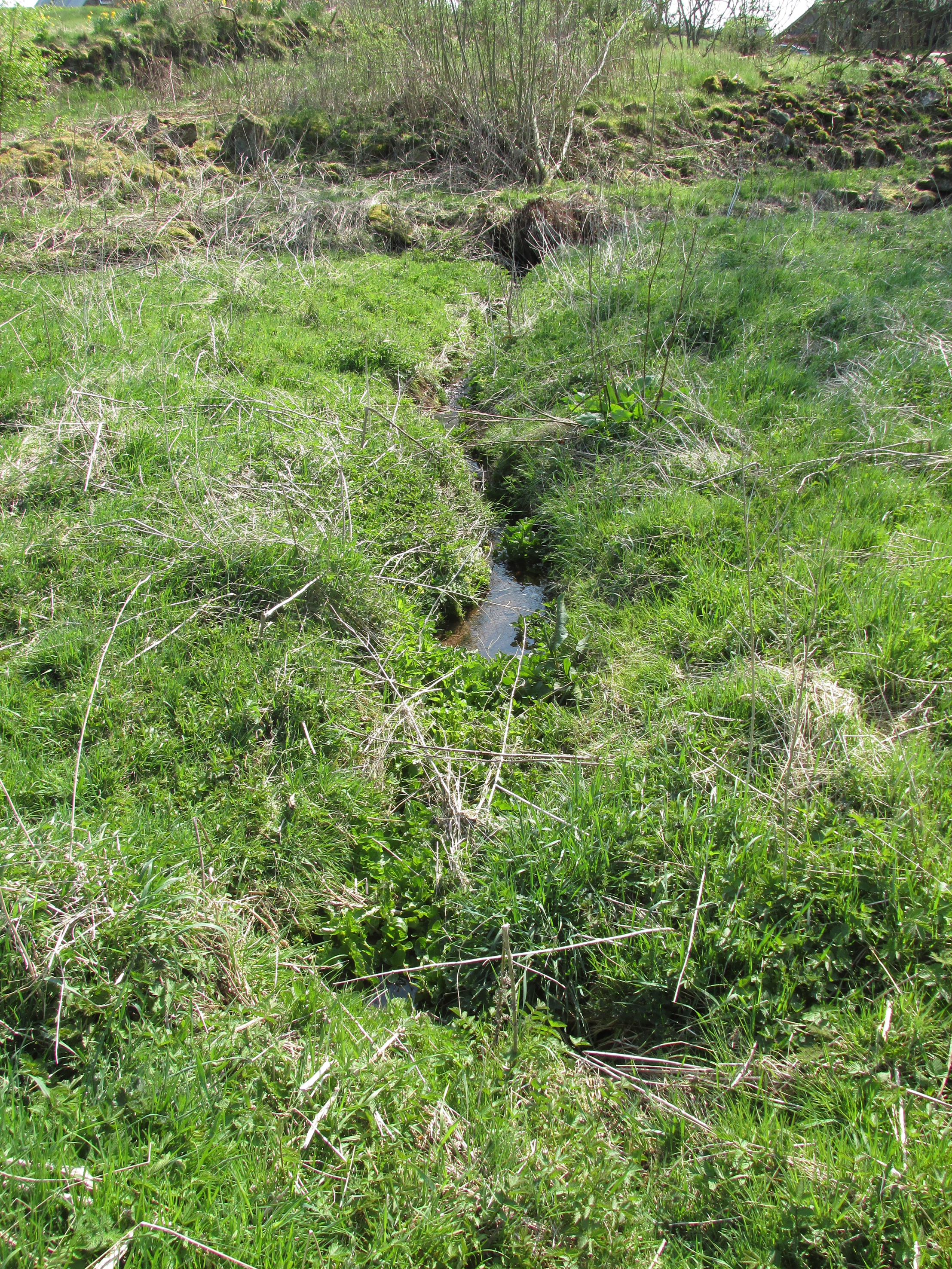
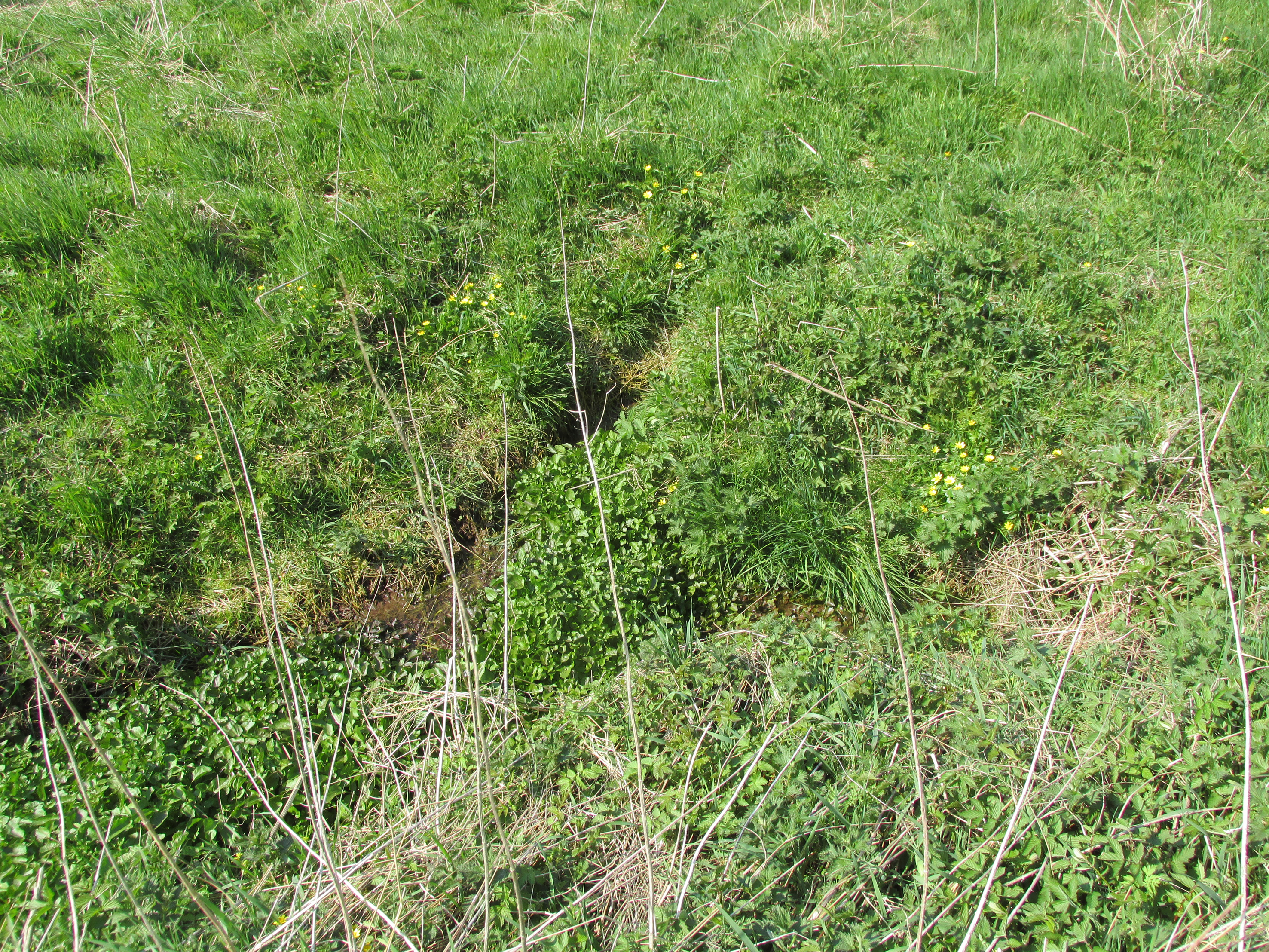
One of the present issues of St. Madden’s spring looking south.
At Kirkton of Airlie, park next to the church and walk north eastwards along the track, past the houses ‘Crabra’ and ‘Cleikheim’ and the spring that once supplied the Holy Well will be seen on the opposite side of the burn in a small fenced off enclosure. To the north east of the enclosure is a small hillock known as St Medan’s Knowe.
Archaeology & History
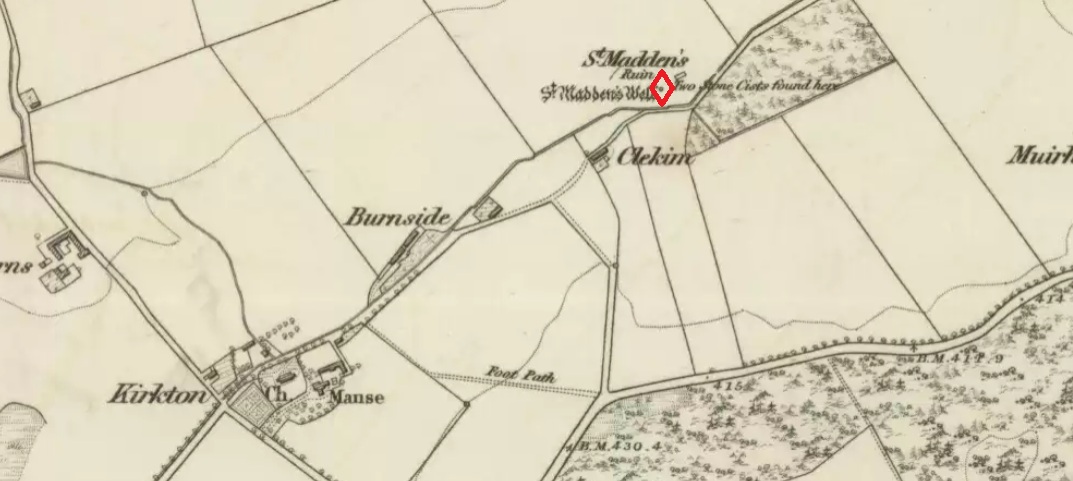
According to the Ordnance Survey Name Books, St Madden’s Well was located in a hamlet called St Maddens, which has since been almost entirely destroyed. In the mid nineteenth century a number of stone coffins and pottery were recovered from around the site, and the well was described as,
“filled up and defaced, the spring…still to be seen issuing into the mouth of a covered drain that was made some few years ago”.
There are now two issues of water from the spring, while nothing now remains of the original well housing. An adjoining resident informed me that the local landowner had gone to some trouble to try to find any evidence of the well housing, but had found nothing.
St. Madden’s Well on 1865 Map
As is often the case with these early mediaeval Scottish saints there is some confusion as to St Madden’s identity. To some writers his Saint’s day is accepted to be April 29th, and he has been identified as Saint Middanus, abbot of the monastery of Holywood, but Bishop Alexander Forbes considers he is more likely to have been a Bishop Medanach listed in the Dunkeld Litany.
To confuse things even more, J.M. MacKinlay (1904) wrote:
“The Hamlet of St Madden’s or St Medan’s in the parish of Airlie, where are also St Medan’s Well and St Medan’s Knowe, probably retains the name of St Modan, believed to have been a contemporary of St. Ronan. Skene says: ‘Modan appears in the Scotch calendars as an abbot on the fourth February, and as a bishop on the fourteenth November; but the dedications to him are so much mixed up together that it is probable that the same Modan is meant for both'”.
Andrew Jervise provides the following quote about St Medan:
“..bishop and confessor whose feast is held on 14th November was in great favour with King Conran c.503 – Coll. for Aberdeen and Banff.”
Another issue of the spring
Whosoever St Madden was, his quadrangular bell was the subject of an extant fifteenth century deed whereby the bell with its appurtenant parcel of land was granted to the Countess of Moray as dewar (hereditary keeper of a Holy Relic with appurtenant land), together with “the infeftment being completed by (the Countess) being shut up in a house and then receiving the feudal symbols of earth and stone.” On the death and subsequent disposal of the estate of the last dewar in the nineteenth century, the bell was sold along with a load of rubbish, its true identity and value not being realised at the time.
References:
Andrew Jervise, The History and Traditions of the Land of the Lindsays, Edinburgh, Sutherland & Knox 1853.
Andrew Jervise, Epitaphs and Inscriptions from Burial Grounds and Old Buildings inthe North East of Scotland, Edinburgh, Edmonston and Douglas 1875.
James Murray MacKinlay, Influence of the Pre-Reformation church on Scottish Place-Names, Edinburgh and London, William Blackwood and Sons 1904.
Dom Michael Barrett, A Calendar of Scottish Saints, Fort Augustus 1919.
Bishop Alexander Forbes, Kalendars of Scottish Saints, Edinburgh, Edmonston and Douglas 1872.
Scotland’s Place Names
Andrew Jervise, Notice of Antiquities in the Parish of Airlie, Forfarshire, in Proceedings of the Society of Antiquaries of Scotland, June 1864
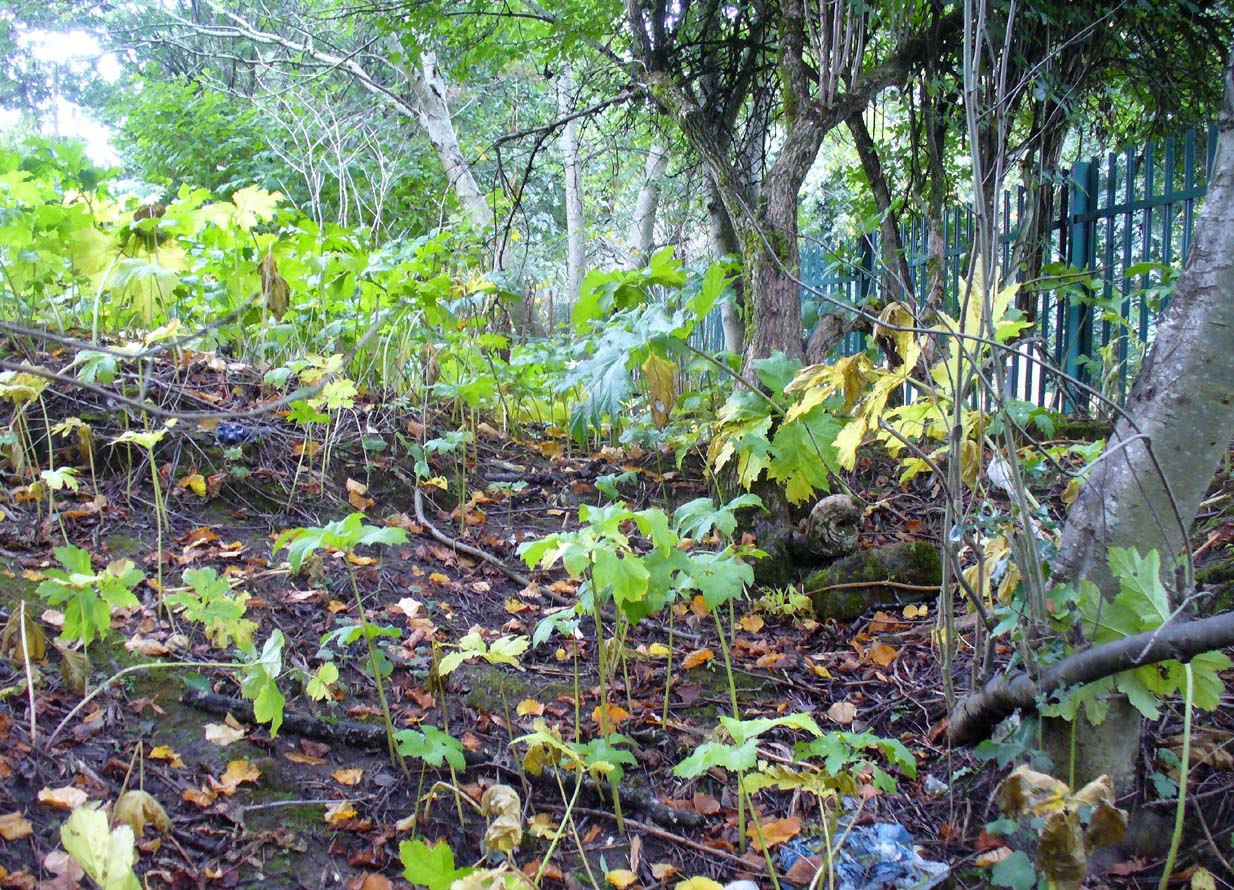
Site of St Conval’s Well, off-centre beneath the tree
This all-but-forgotten holy well was becoming nothing but a faded memory even in the middle of the 19th century. Excluded from all of the previous Scottish holy well surveys, the site is mentioned in George Campbell’s Eastwood (1902) where, in his description of the obscure saint, St. Conval or Convallus—to whom Eastwood parish was dedicated—the position of the well is mentioned. When St. Conval first came to the area, said Campbell,
“The particular spot which the saint selected for his cell would be determined, as was so commonly the case, by the then remarkable spring which can still be traced in the lower part of what was the glebe before the excambion in 1854. Within the memory of man, even of my own, as I resided for a year in the old manse, before its removal from the early site, this well, as stated in the last Statistical Account, discharged about eleven imperial pints a minute, and was perennial, affected neither by drought nor rain. Up to that date the water was sufficiently abundant to supply the manse and all the families in what was still a bit of a hamlet, the remains of the Kirkton, as it was formerly called. But coincident to the removal of the last living remains of an ecclesiastical establishment from the spot, it has well nigh dried-up, through disturbances caused, it is believed, by the working of pits and quarries in the neighbourhood; but it is confidently hoped that what remains of it may be preserved, and a memorial erected over it of the long-departed past, situated as it is within the enclosure of the now extended burial ground. There can be no doubt that in its waters our fathers were baptised when they renounced Druidism, or whatever was their pagan form of faith, and a sacredness would thus naturally attach to it in former times…”
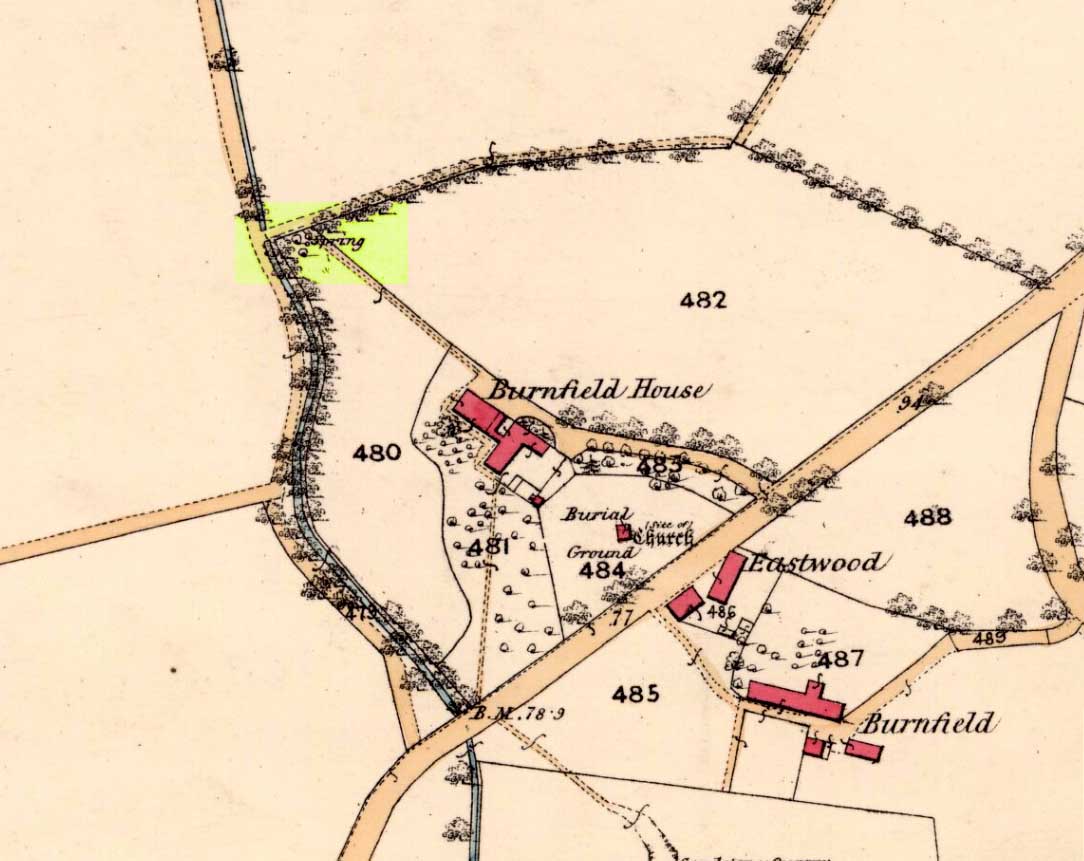
Site on 1863 map as ‘Spring’
When we sought out this well in the furthest corner of the old churchyard—where Ordnance Survey placed the ‘Spring’ on the 1863 map—we were greeted by a completely dried-up site, long since fallen back to Earth, with little hope of it ever resurfacing unless good local people choose to do something. The well was surrounded by excrement and litter and it truly needs a good clean-up and a dig down to bring the waters back to the surface.
In an Appendix to Campbell’s Eastwood, he tells that he came across a map-reference to the site, where it was shown as “St. Ninian’s Well”, but I have been unable to locate this.
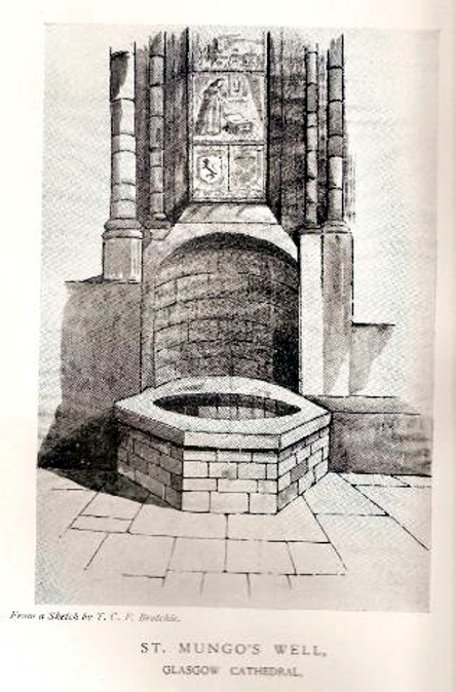
Not to be confused with the sacred well of the same name found along Gallowgate a short distance to the south, the waters of this ancient well have sadly fallen back to Earth. The structure built above it, however, is thankfully still preserved inside the Cathedral, as visitors will see.
Folklore and history accounts tell its dedication to be very early – and the tale behind the erection of the cathedral is closely associated with the waters themselves. Indeed, if the folklore is accepted, we find merely a transference of early animistic ideas about the death of an ancestor placed onto this early Saint, with a simple association in the formula of: tomb, holy site and architectural form. It could almost be Bronze Age in nature!
The lengthiest (and best) description of St Mungo’s Well was by Mr Brotchie (1920) in a lecture he gave on the city’s holy wells in April 1920, which was thankfully transcribed by the local history society. He told us:
“It seems to me that Glasgow in a very particular degree is a case that illustrates emphatically the existence of the early cult of the sacred fountain (sketch attached)… How came it to be there? In itself it represents the very beginning of Glasgow. It was to the little spring on the hillside overlooking the Molendinar that there came the earliest of christian missionaries, Ninian. All that we know of Ninian is from the account of Jocelin, the monk of Furness, who tells us that “ane holy man Ninian cam to Gleschu or Glasgow in the third century”, and made his cell on the banks of the Molendinar. When Kentigern or Mungo came to Glasgow in the sixth century, he made his settlement near a certain cemetery, which had long before been consecrated by St. Ninian, and which at the time when Jocelin wrote (twelfth century), was “encircled by a delicious density of overshadowing trees.” The crypt of the Cathedral—in reality an under church of extraordinary beauty of design and magnificence of mason work—is the shrine of St. Mungo, who is buried there, and the whole design of the lower church shows that the architect who in 1230 planned the building…built his scheme up with the idea of providing a shrine for the saint’s tomb and his holy well.
“The well is in the lower eastern corner of the church just opposite to the chapter house. John Hardying, the chronicler, who visited Scotland in 1413, states that St. Mungo’s shrine was then the centre of the life of Glasgow. In 1475 James III, on account of his great devotion to St. Kentigern, granted three stones of wax yearly for the lights at the tomb of the saint in the cathedral, near his holy well.
“St. Mungo adopted this well from the pagans of the district and changed its purpose from evil to good. Beside it he erected in 560 his little wattle hut where he died. He was buried inside it, and when the great cathedral was built the holy well was included within its walls…
“St. Mungo’s Well was a place of pilgrimage to the early christian fathers, and we find it described as “an idolatrous well” in 1614. In 1579 we have a public statute prohibiting pilgrimages to wells, and in 1629 the Privy Council denounced these pilgrimages in the strongest terms, it being declared that for the purpose of “restraining the superstitious resort of pilgrimage to chapels and wells, which is so frequent and common in this kingdom, to the great offence of God, scandall of the kirk, and disgrace of his majesties government,” that commissioners cause diligent search in “all such pairts and places where this idolatrous superstition is used, and to take and apprehend all such persons of whatever rank and qualitie whom thay sall apprehend going on pilgrimage to chapels and wells.” That decree was issued under the Dora of 1629. But all in vain. The custom of visiting chapels and wells had become a habit – and habits, as we all know, though easily formed are difficult to break. The wells continued to be visited by stealth if need be.”
 This is the first detailed guide ever written on the holy wells and healing springs in and around the ancient city of Edinburgh, Scotland. Written in a simple A-Z gazetteer style, nearly 70 individual sites are described, each with their grid-reference location, history, folklore and medicinal properties where known. Although a number them have long since fallen prey to the expanse of Industrialism, many sites can still be visited by the modern historian, pilgrim, christian, pagan or tourist.