Strathblane Churchyard, Stirlingshire

Standing Stone:  OS Grid Reference – NS 56387 79375

Also Known as:

  1. Canmore ID 44452

Getting Here

Strathblane church's heathen creator

Strathblane church’s heathen creator

From whichever direction you’re coming from along the A81 into Strathblane, make sure you keep your eyes peeled for where the A891 turns off it to the east.  Go  and along there and barely 100 yards on the church is set back from the road.  Walk into the graveyard, turn left and you can’t really miss it amidst the mass of modern graves.

Archaeology & History

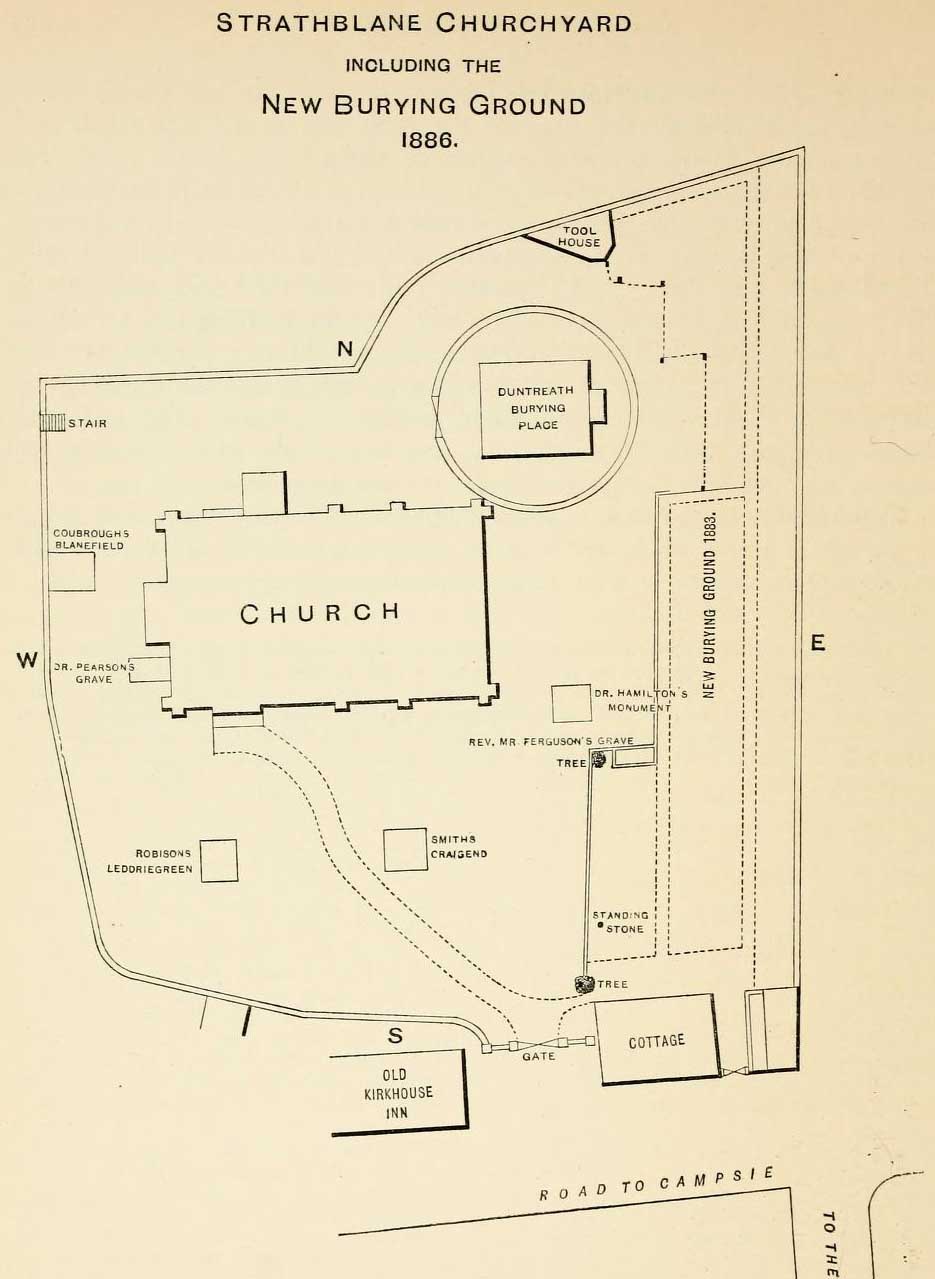
Location of the stone, from Smith 1886

Location of the stone, from Smith 1886

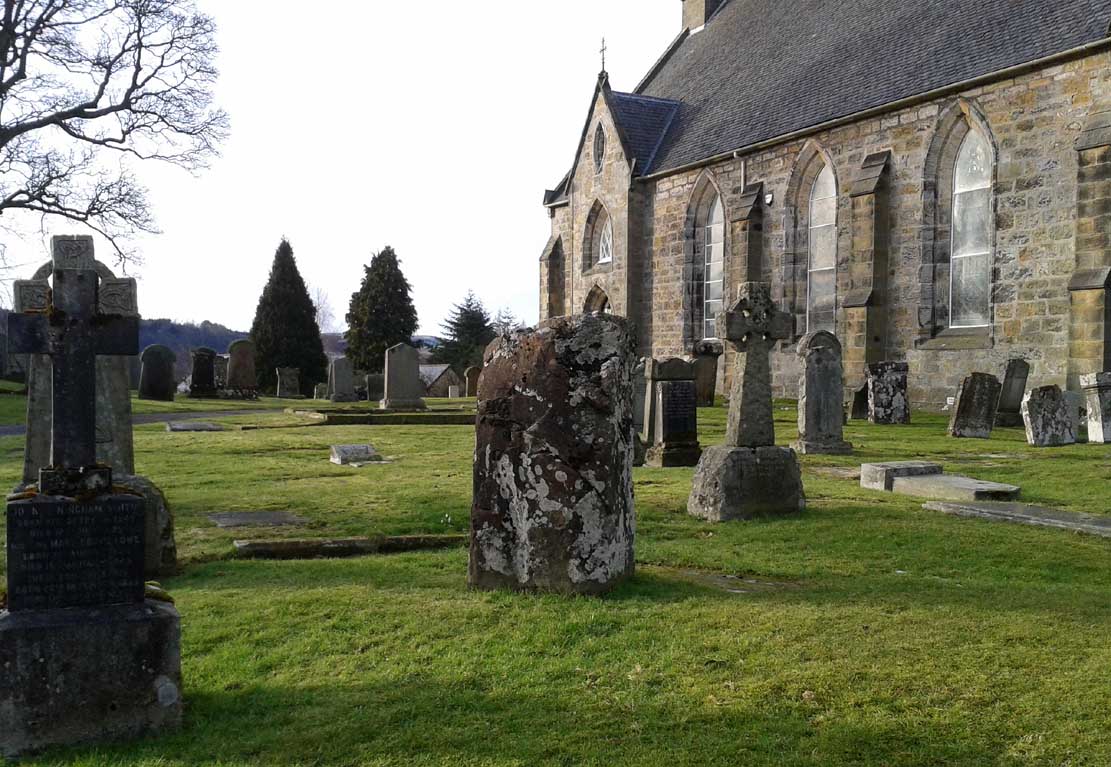
In accordance with the occasional tradition of standing stones in churchyards (such as the Rudston monolith and many others), a short stumpy monolith, less than four feet high, here stands alone in the christian burial ground surrounding Strathblane’s parish church.  The top of the stone is quite flat and it’s possible that this once stood much taller, with the top of the stone being chopped off (such destruction has happened at the Cuckoo Stones and many other megalithic sites).  It’s certainly worth looking at and stands amidst a cluster of other ancient sites—some gone, some still in evidence—in and around this lovely old village.  Not much has been written about the stumpy little fella and its first literary reference seems to be in Mr Smith’s (1886) magnum opus on the area, where he tells:

“There is a very old standing stone in the churchyard, but most probably it was placed there long before there was any church in the parish.”

…Nothing else.  Even the Royal Commission (1963) lads said little about it, merely telling us:

“A few yards within the entrance to the graveyard of Strathblane Parish Church…a standing stone appears among the monuments.  It is a five-sided pillar, 3ft 9in high, with an uneven but flattish top.  At ground level the sides range from 1ft 9ins to 2ft 3in in width.”

The stone, looking south

The stone, looking south

The stone, looking southeast

The stone, looking southeast

The fact that it stands by the church (rebuilt around 1803 out of its more ancient fabric) suggests that the site was a heathen temple or sacred site, redesignated by the invading christian priesthood.  A short distant east and west have been found a number of prehistoric remains in the forms of burials, standing stones and giant cairns, indicating this site to have had particular mythic importance in earlier centuries.  From the standing stone if we look southeast, we see the rise of Dunglass, but the view to the stones and great pyramid of Dumgoyach, northwest, is blocked by the rise of Cuilt Brae, which I found to be a little surprising.

References:

  1. Royal Commission on the Ancient & Historical Monuments Scotland, Stirling – volume 1, HMSO: Edinburgh 1963.
  2. Smith, John G., The Parish of Strathblane, James Maclehose: Glasgow 1886.
  3. Ure, David, The History of Rutherglen and East Kilbride, Glasgow 1793.

© Paul BennettThe Northern Antiquarian

Broadgate Farm, Strathblane, Stirlingshire

Standing Stone:  OS Grid Reference – NS 56929 79402

Also Known as:

  1. Canmore ID 44439

Getting Here

Broadgate Farm standing stone

Broadgate Farm standing stone

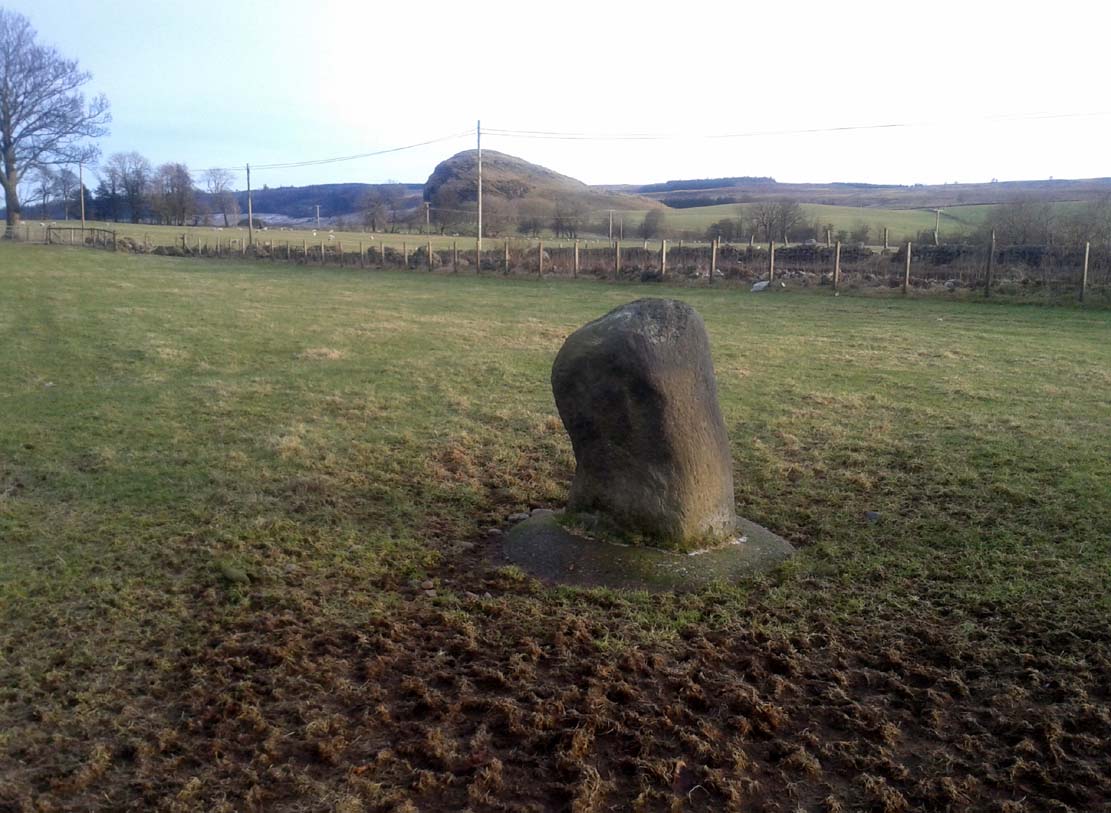
From Strathblane, take the A891 road eastwards out of the village, past the standing stone in the churchyard and the row of houses set back off the road until, a few hundred yards along, the fields open up on both sides of you.  In the very first field on the north side of the road, you’ll see the standing stone, all alone, resting quietly.  There’s a gate enabling you access into the field…

Archaeology & History

Broadgate Stone, with Dunglass SE

Broadgate Stone, with Dunglass SE

Found in close proximity to the destroyed chambered tomb of Broadgate, this small standing stone is presently set in a concrete base after an excavation here in 1982 located a cremation urn beneath the stone, confirming an old tradition that told as much.  But there are some who think the stone isn’t a prehistoric one—the Royal Commission (1963) lads for one.  In their brief resumé of the site they wrote:

“This stone stands just N of the road from Campsie to Strathblane, 140 yds E of Broadgate farmhouse.  It is 4ft high and measures 2ft 3inches by 3ft at ground level.  It may well be the stone referred to in the New Statistical Account as marking the spot where Mr Stirling of Ballagan was murdered in the 17th century and should therefore not necessarily be accepted as of prehistoric origin.”

And were it not for an excavation nearly twenty years later, this view may have been maintained.  However, when Lorna Main (1982) told of what was found beneath the monolith, no mention was made of any recent remains.  She wrote:

“Excavation at the base of the fallen standing stone was undertaken prior to its re-erection. A ledge had been cut on the south-west side of the shallow stone hole and fragments of the base survived and the diameter of the base is approximately 17cm.  The urn contained a cremation and a small quantity of charcoal.  It lay only 15cm below the ground surface and is in a poor condition.”

The very fragile state of the urn and the very eroded rounded stature of the rock itself would seem to indicate that this is more a prehistoric upright than a later 17th century one.

Folklore

There are legends of early battles in this region and J.G. Smith (1886) thought that perhaps “this great stone…mark the resting-places of Cymric heroes who did their share of the battle on the north side of the valley.”

References:

  1. Main, Lorna, “Broadgate Farm – Standing Stone and Cinerary Urn,” in Discovery & Excavation Scotland, 1982.
  2. Royal Commission on the Ancient & Historical Monuments Scotland, Stirling – volume 1, HMSO: Edinburgh 1963.
  3. Smith, John G., The Parish of Strathblane, James Maclehose: Glasgow 1886.
  4. Ure, David, The History of Rutherglen and East Kilbride, Glasgow 1793.

© Paul BennettThe Northern Antiquarian

Broadgate, Strathblane, Stirlingshire

Chambered Cairn (destroyed):  OS Grid Reference – NS 5674 7938

Also Known as:

  1. Canmore ID 44453

Archaeology & History

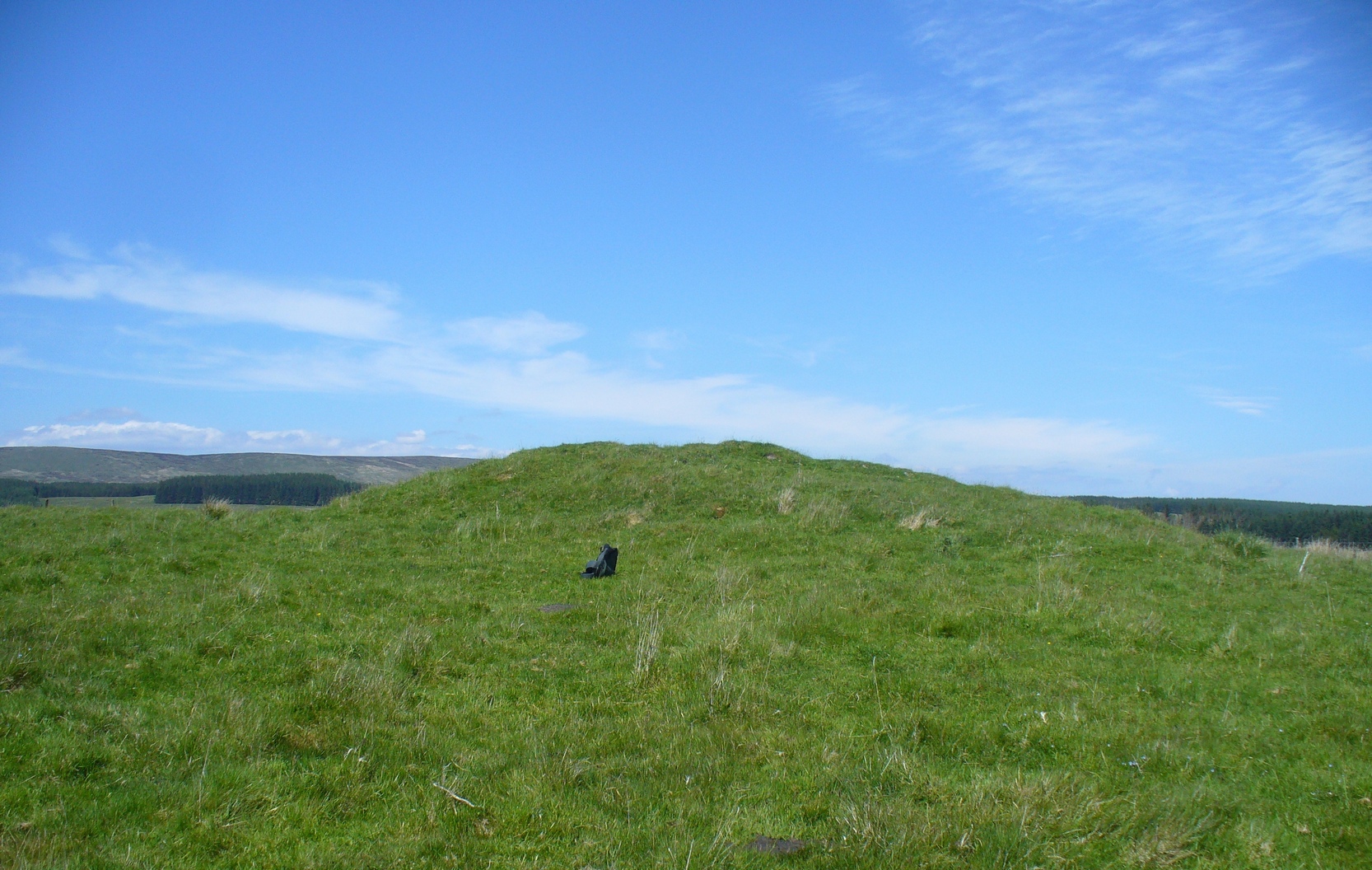
A once-impressive large prehistoric long cairn could be found close to the grid-reference given here, whose existence and destruction was recorded, thankfully, by local antiquarians in the 18th and 19th centuries respectively.   There are remains of other prehistoric sites in and around the spot—including the standing stones of both Broadgate Farm and Strathblane Church—close to which Mr J.G. Smith (1866) described,

“towards the end of last century a mound was levelled at Broadgate near this spot, and many stone coffins, each containing an urn full of earth and burnt bones, were found.”

Smith himself refers to the lengthier description of the mound’s destruction in Ure’s History of Rutherglen (1793), in which the site was described as

“an ancient burying place, the origins of which is unknown, was 60 yards in length, 14 feet in height, and of a considerable breadth.  It was composed of gravel, and lay east and west.  In the bottom were a great many coffins of stone, placed in a row, and separated from one another by a single flag.  Every coffin contained an urn, that was full of earth and burnt bones.  Beside each urn was a pillar about 3 feet in height, and 8 inches in thickness.  They were fragments of basaltic five-sided columns, a few rocks of which are found in the parish.  Most of the pillars are built in a dyke adjoining to the church.  The urns on being touched fell in pieces.”

Due to the seemingly extravagant lay-out of this cairn, Audrey Henshall (1972) took the site to be a chambered tomb of some considerable importance.  She was probably right!  In her magnum opus (1972) on the subject she wrote:

“The description of the ‘cists’ suggests a segmented chamber of Clyde type, but the mound composed of gravel (instead of being a cairn) suggests a natural feature.  A long mound, probably natural, exists on Broadgate Farm in which a restricted excavation produced a cist of Bronze Age type. Possibly the Strathblane mound was similar; it may have contained a segmented chamber (…where a chamber has been built into a natural mound), or it may have contained cists of later type for single burials.”

Subsequent explorations by the Royal Commission (1963) and local historians to find any remains of the site have proved fruitless.

References:

  1. Henshall, Audrey S., The Chambered Tombs of Scotland – volume 2, Edinburgh University Press 1972.
  2. Royal Commission on the Ancient & Historical Monuments Scotland, Stirling – volume 1, HMSO: Edinburgh 1963.
  3. Scott, J.G., “Inventory of Clyde Cairns,” in Megalithic Enquiries in the West of Britain,Liverpool University Press 1969.
  4. Smith, John G., The Parish of Strathblane, James Maclehose: Glasgow 1886.
  5. Ure, David, The History of Rutherglen and East Kilbride, Glasgow 1793.

© Paul BennettThe Northern Antiquarian

Long Man’s Grave, Abernyte, Perthshire

Tomb:  OS Grid Reference – NO 2218 3153

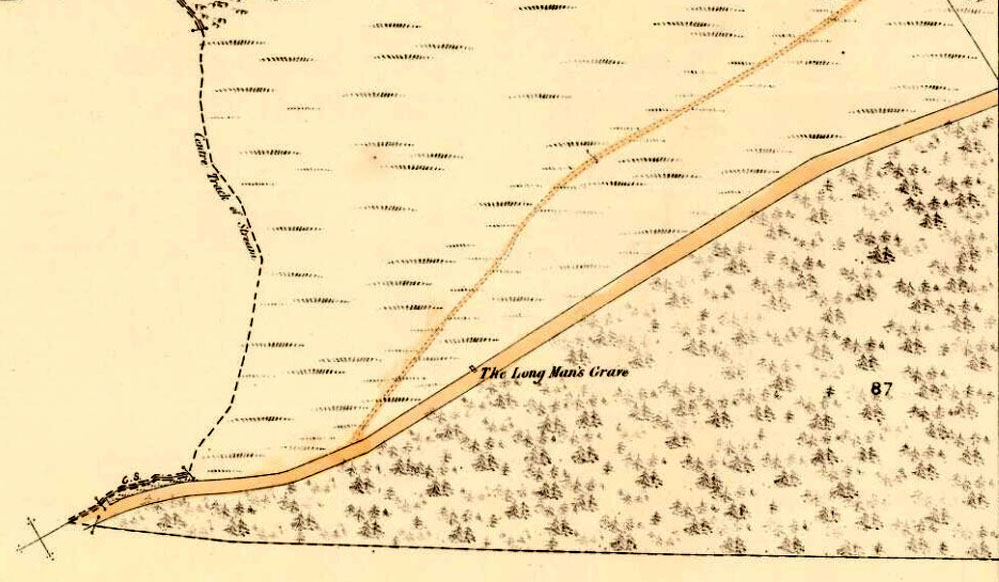
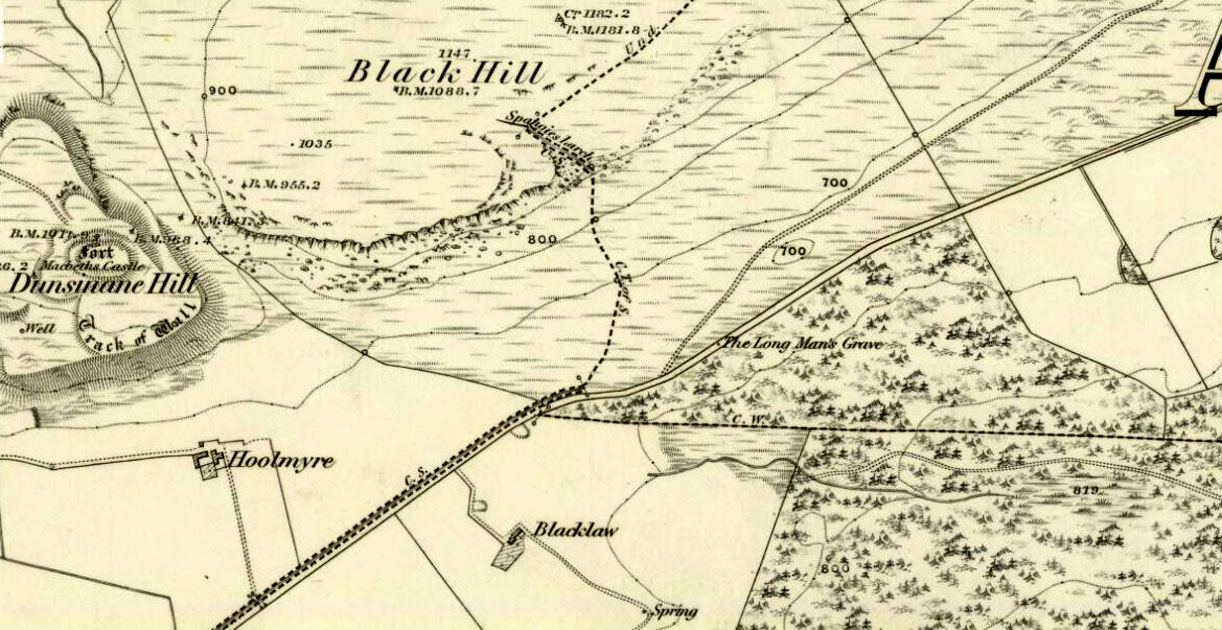
1867 OS-map of the site

1867 OS-map of the site

Also Known as:

  1. Canmore ID 30663
  2. Hoolmyre
  3. The Lang Man’s Grave
  4. MacBeth’s Grave

Archaeology & History

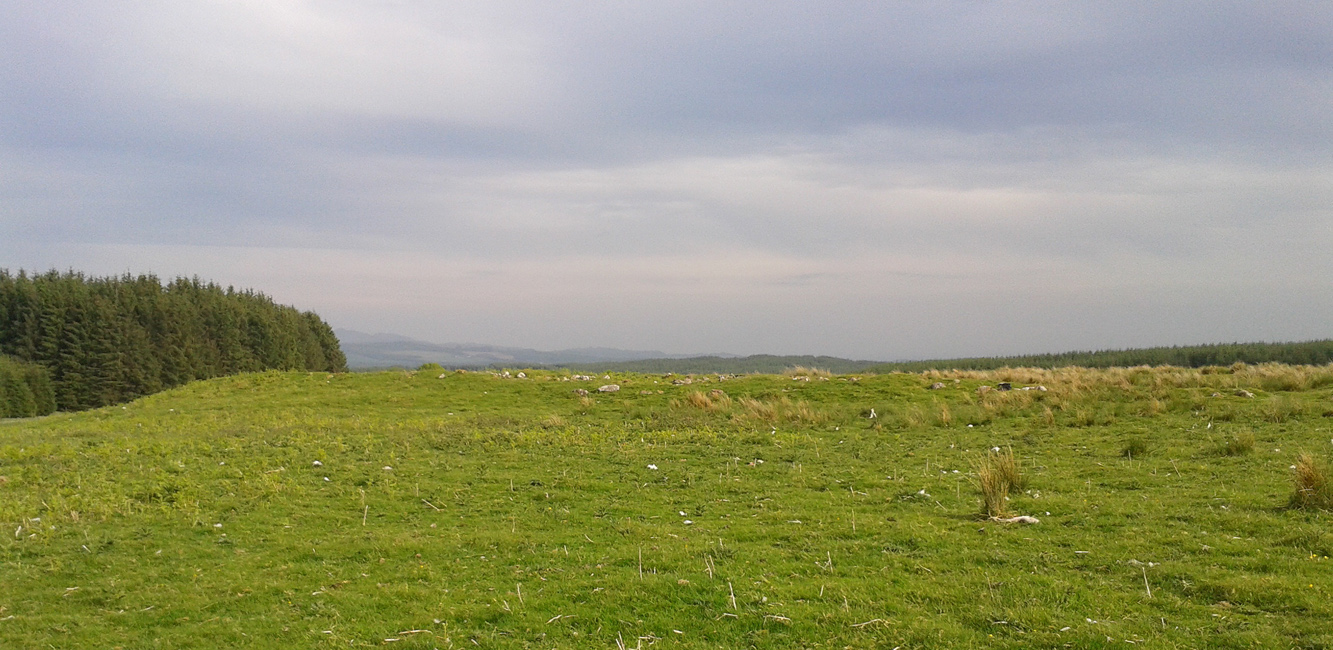
A little-known, but once important site in the mythic history of Scotland, this Long Man’s Grave was said to be the spot where MacBeth—described by Aitchison (1999) as “Scotland’s foremost King”—died.  It would seem that any remains of the stone which once stood here has gone.  When Robert Chambers (1827) told of the site, he said that

“At the bottom of Dunsinnan Hill, on the east side, and near the west end of a drystone wall which runs along the side of the road from Baledgarno, is a large stone about eight feet in length, beneath which MacBeth is said to have been interred.  It is usually called the Lang Man’s Graff, probably from a supposition that the stone was made to suit the length of the deceased.”

More than fifty years later when the Scottish historian Thomas Hunter (1883) wrote about the site, he thought that it had probably been a prehistoric one, telling that

“The tumulus, on being examined, proved to be a druidical stone that had toppled over, and no relic was discovered that could throw light on the tradition.”

Long Man's Grave on 1867 6-inch map

Long Man’s Grave on 1867 6-inch map

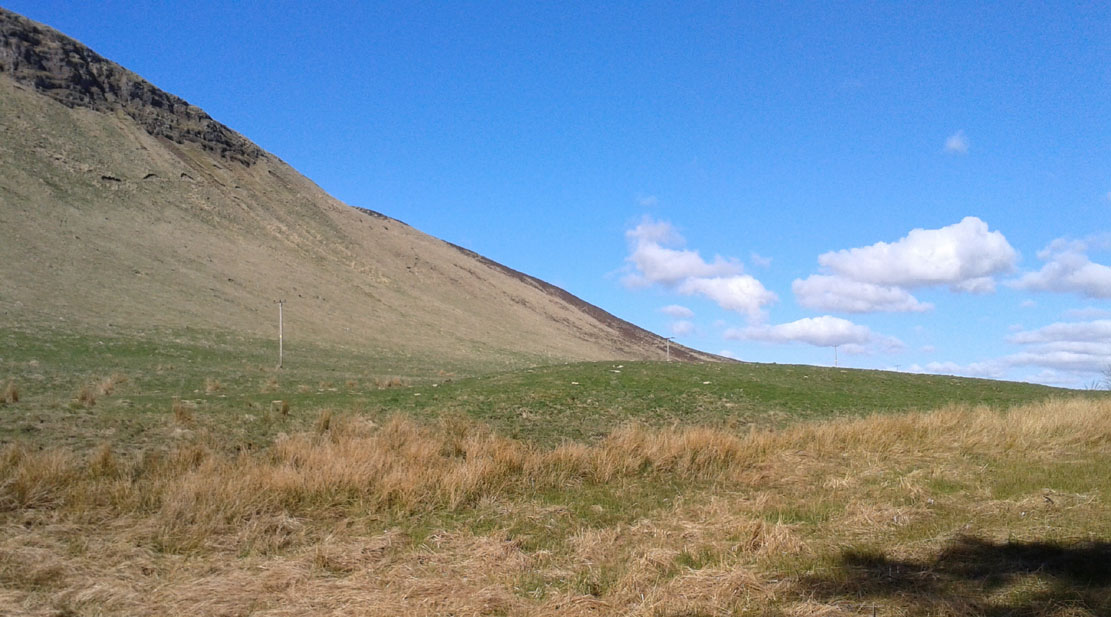
Site of the Long Mans Grave

Site of the Long Mans Grave

The site was shown on the earliest OS-maps of the region (as highlighted here), but we don’t know for certain about the exact nature of the site.  Although a bunch of lads from the Royal Commission popped along to see the place in 1969 and proclaimed (without excavation) that the stone was “probably a ‘grave slab’ and not a “standing stone” which has toppled over”, we have to treat their words with caution.  Close by are the remains of Bronze Age stone circles; above us we have the prehistoric hillfort of Dunsinane, with even older neolithic remains being found within it; and we also have neolithic rock art remains nearby; other prehistoric tombs, and plenty more besides…

Folklore

Echoing the early folklore of the site as narrated by local people, Hunter (1883) told that,

“the tradition of the district is that MacBeth, finding it impossible to escape from MacDuff, threw himself from the top of the (Dunsinane) Hill, was killed upon the rocks, and buried at the ‘Lang Man’s Grave’.”

References:

  1. Aitchison, Nick, MacBeth – Man and Myth, Sutton: Stroud 1999.
  2. Chambers, Robert, The Picture of Scotland – volume 2, William Tait: Edinburgh 1827.
  3. Hunter, Thomas, Woods, Forests and Estates of Perthshire, Henderson, Robertson & Hunter: Perth 1883.
  4. Melville, Lawrence, The Fair Land of Gowrie, W.Culross 1939.
  5. Pennant, Thomas, A Tour in Scotland and Voyage to the Hebrides – volume 2, London 1776.
  6. Royal Commission on Ancient & Historical Monuments, Scotland, South-East Perth: An Archaeological Landscape, HMSO: Edinburgh 1994.
  7. Sinclair, John, The Statistical Account of Scotland, 1797 – volume 11: South and East Perthshire, Kinross-shire, EP: Wakefield 1976.

© Paul BennettThe Northern Antiquarian

Glen Cochill Cairnfield (01), Little Dunkeld, Perthshire

Cairns:  OS Grid Reference – NN 9035 4145

Getting Here

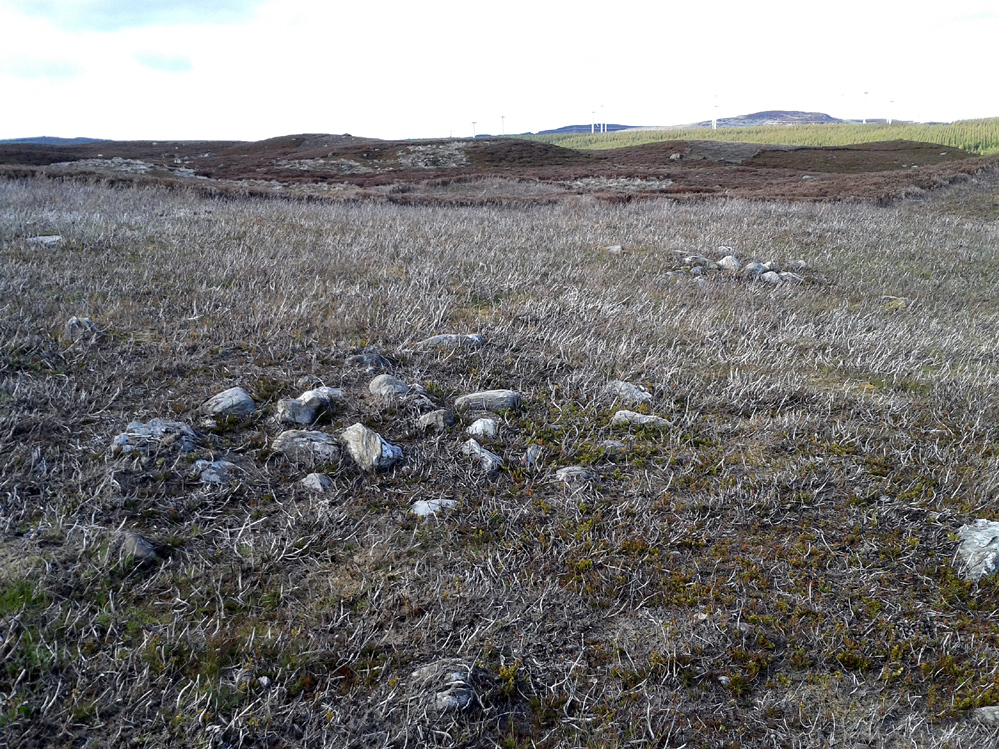
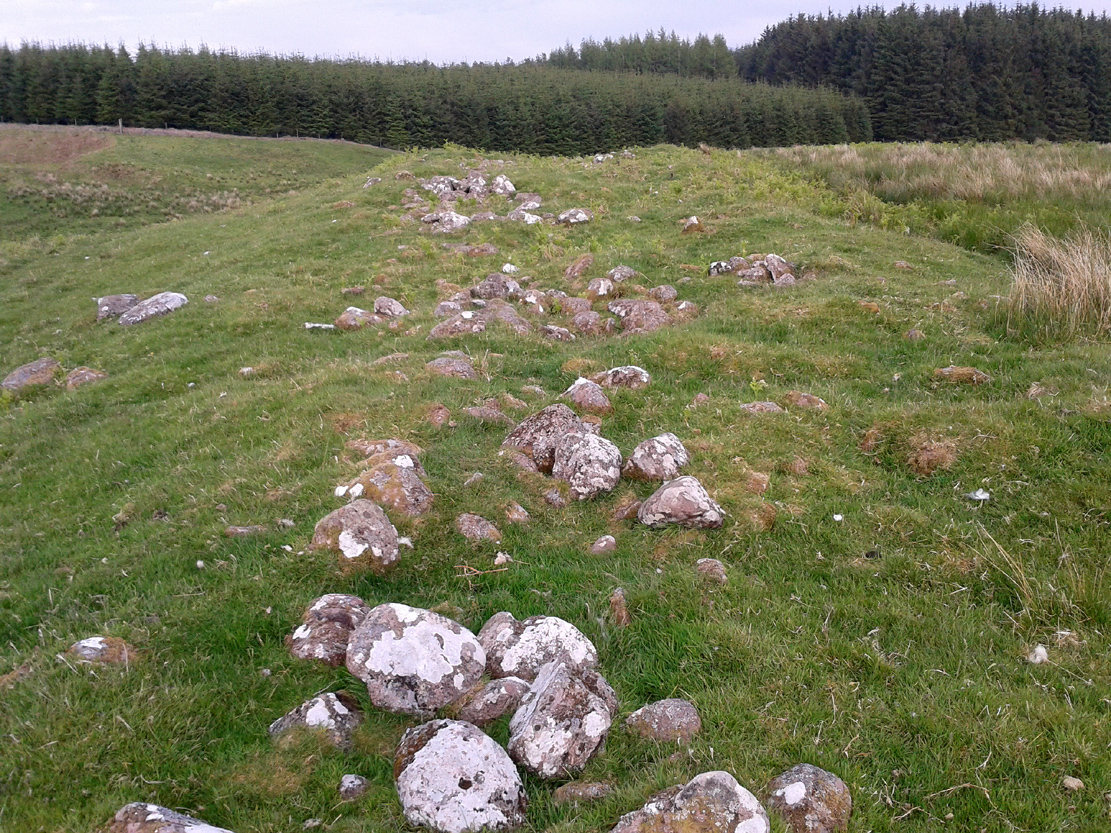
Two of at least five cairns hereby

Two of at least five cairns hereby

Take the A826 road south out of Aberfeldy, uphill, till you reach the White Cairn or Carn Ban, then follow the dirt-track for 700 yards onto the moors until you reach the Glen Cochill Circle 1.  From here, look at the large stone atop of the very notable rounded hillock barely 50 yards east (at NN 90367 41478) and meander on the slopes immediately below it on the south and west.  If the heather’s grown back, you don’t stand a chance!

Archaeology & History

As far as I’m aware, despite there being some brief notes of cairnfields in and around the rich prehistoric arena of Glen Cochill, I can find no data indicating that the five small single cairns a short distance south and southeast of the Glen Cochill Ring (01), have been described before.

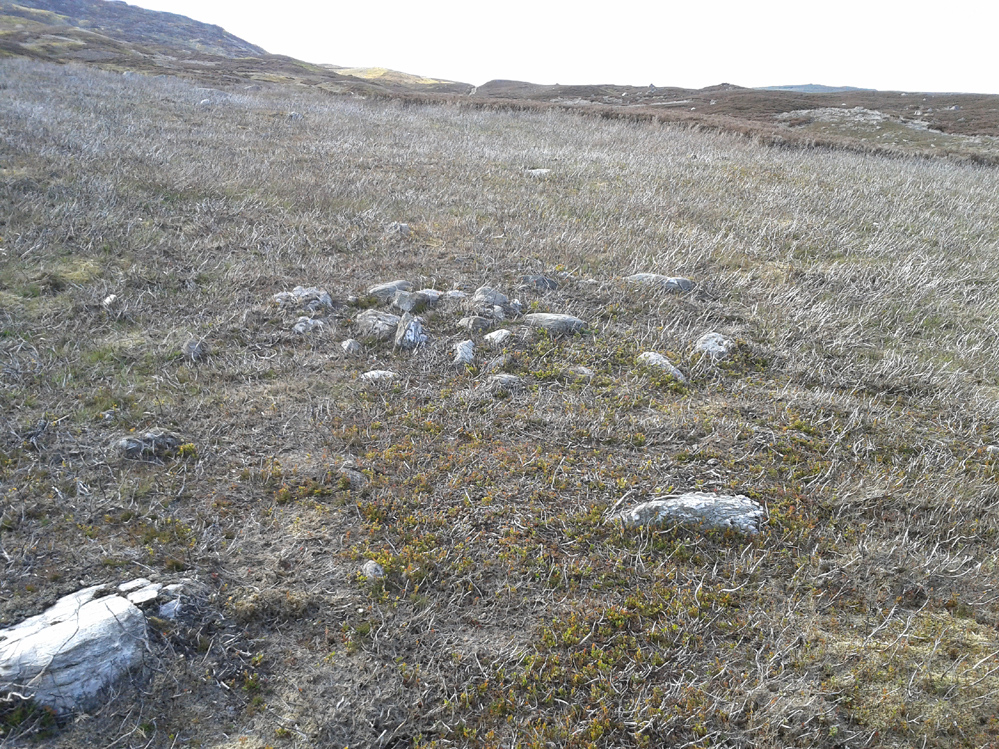
Cairn 1 - looking north

Cairn 1 – looking north

Cairn 2 - looking north

Cairn 2 – looking north

Deeply embedded into the peat, they are only visible when the heather has been burnt away, as highlighted in the accompanying photos.  Each cairn is of roughly the same size and structure: 2-3 yards across and only a couple of feet above ground-level, consisting of the traditional small rounded stones, each probably constituting a single burial or cremation.

Cairn 4, below the hilltop rock

Cairn 4, below the hilltop rock

Of at least five cairns that we found here (there may be others beneath the covering heather), it was very notable that they’re on edges of a rounded pyramidal hillock, whose top is surmounted by a large pointed stone – probably a glacial erratic.  We looked at this rock in the hope of finding some cup-markings, but there were none.  However, it seemed as if the cairns and this crowning stone were related to each other, as if rites for the dead were proclaimed here for those in the tombs.  It may sound silly, but go there and take a look at it yourselves – before the heather grows back.  Just as a priests today, and shamans throughout history, have used an altar or plinth to make commemorations to the dead, so this crowning stone may equally have been used.  It makes sense.  And, as if to add validating ingredients: if we look east, past the crowning stone and across the River Cochill, we see the great rocks in the forest known as Creag a Bhaird, or the Crag of the Bard, from whence orations and tales were known to be told… But that’s another site with its very own story…

Acknowledgements:  Once again, thanks must be given to Mr Paul Hornby for his help in finding these sites.

© Paul BennettThe Northern Antiquarian

Judge’s Cairn, Dunblane, Perthshire

Cairn:  OS Grid Reference – NN 73944 05618


Also Known as:

  1. The Big Cairn
  2. Canmore ID 24661
  3. Dalbrack

Getting Here

Judges Cairn, looking west

Along the A820 road between Dunblane and Doune, from the Dunblane-side, take the very first minor road on your right a few hundred yards after you’ve come off (or over) the A9 dual-carriageway.  Go all the way to the very top of this long and winding road for several miles, until you reach the gate which prevents you going any further. Walk up the slope on your left (west) and you’ll see the large grassy mound a coupla hundred yards ahead of you. That’s it!

Archaeology & History

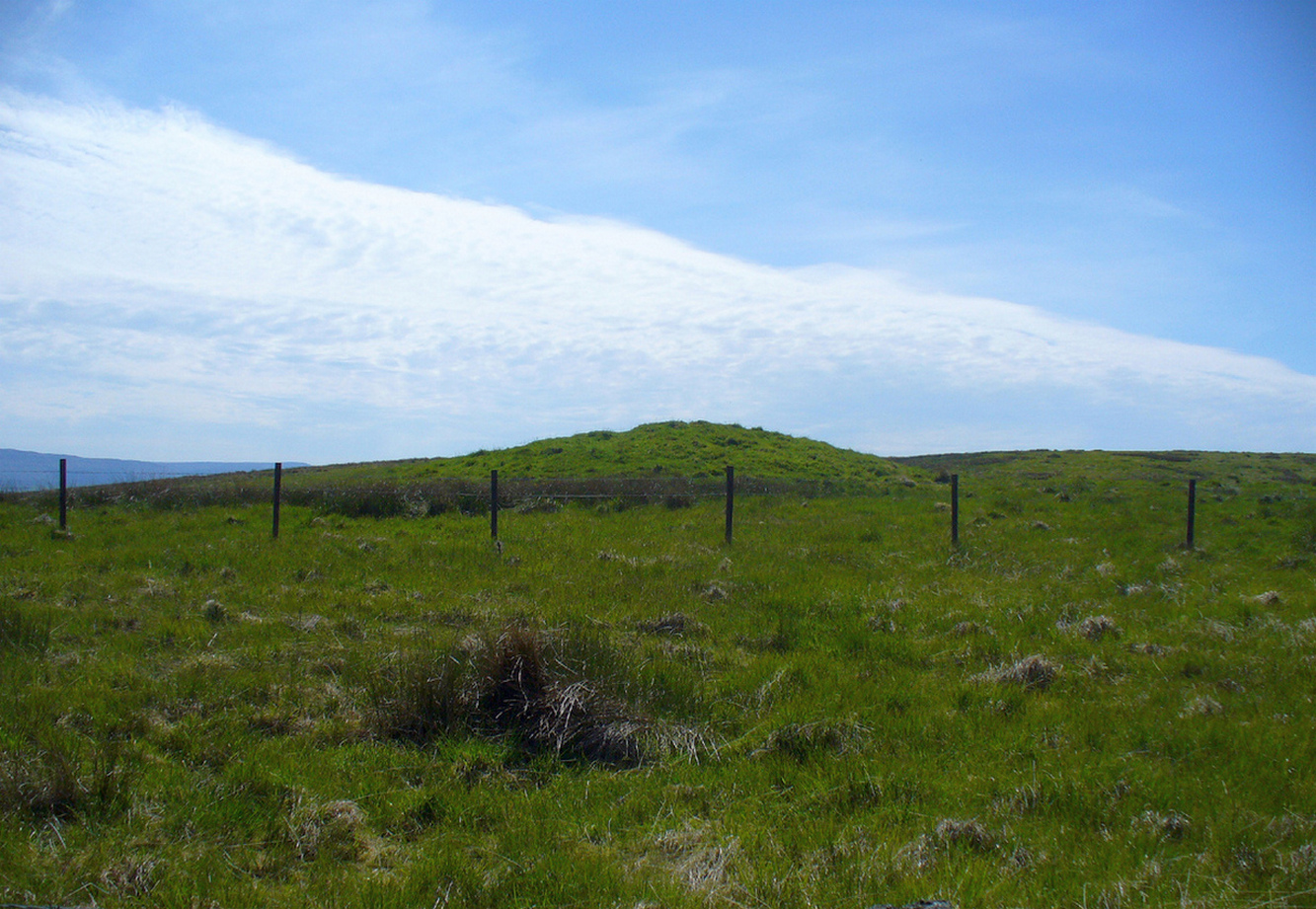
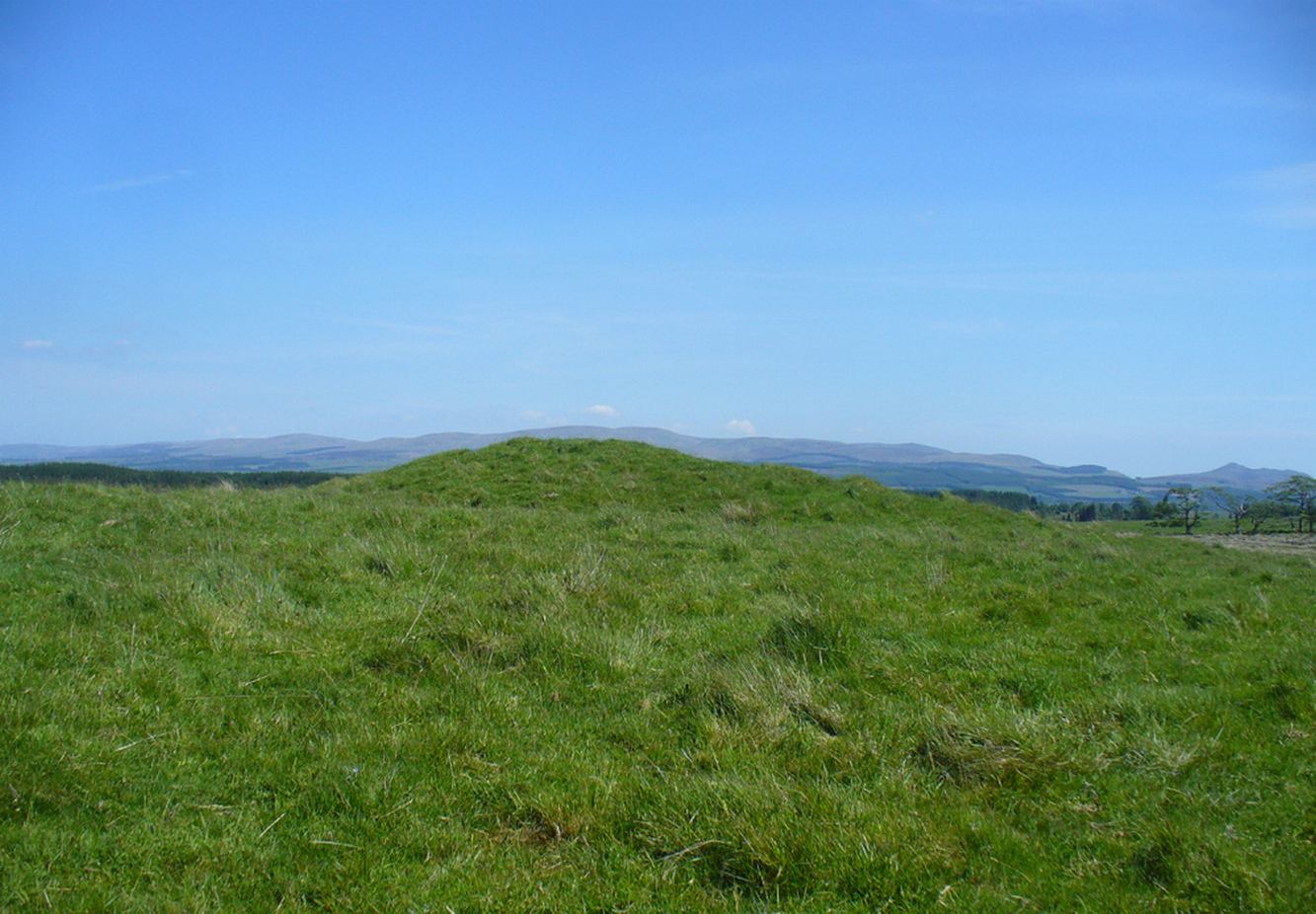
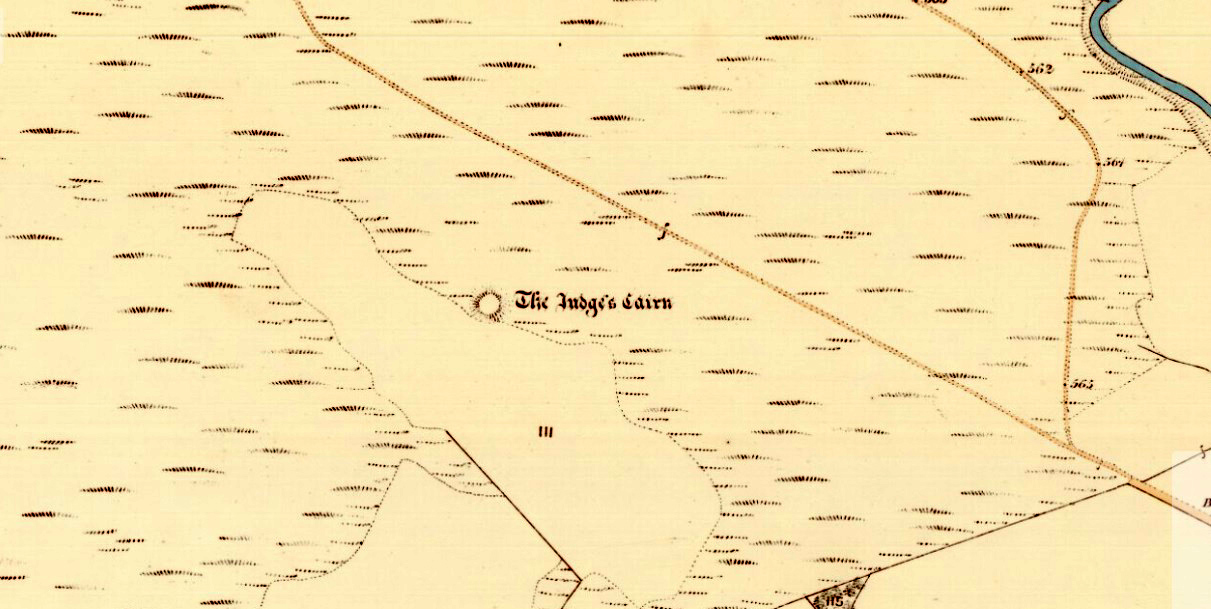
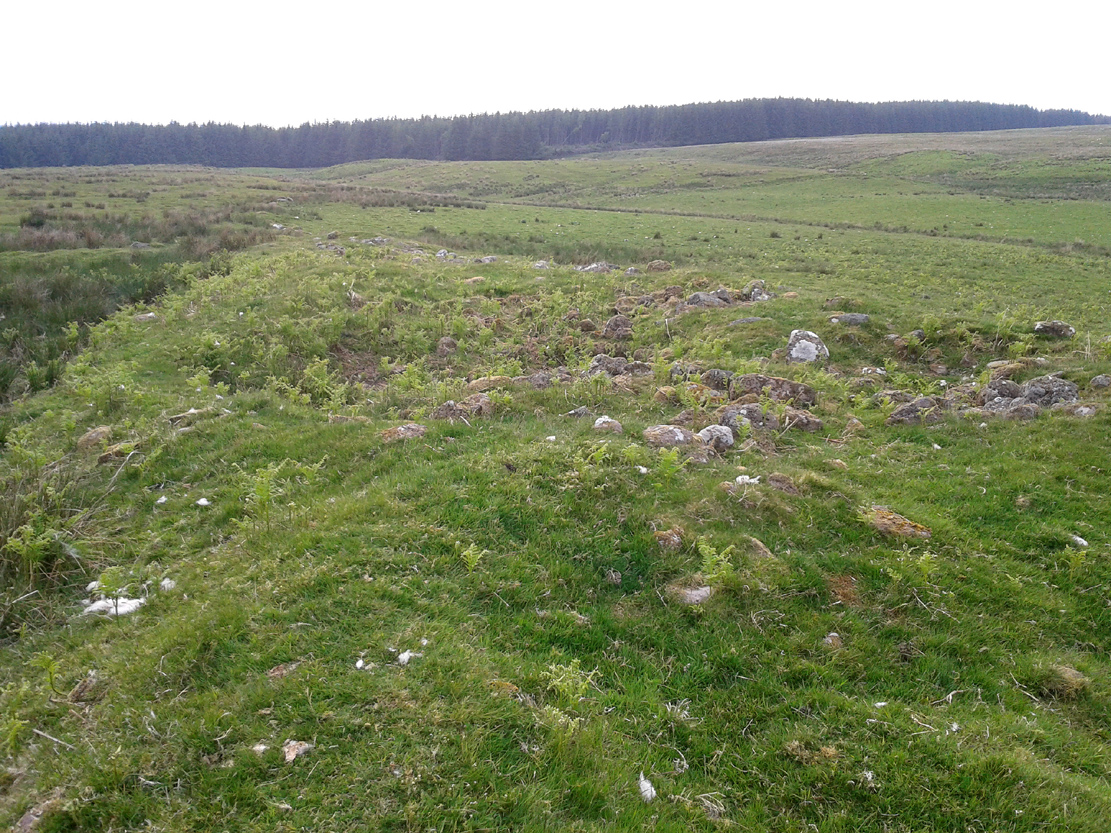
Highlighted on the first Ordnance Survey map of the area in 1862, this is a large rounded prehistoric cairn of some considerable size, whose position in the landscape allows for an impressive 360° view way into the distance in several directions—a deliberate ingredient, no doubt, when it came to building this probable tomb.  I say “probable”, as there has never been a dig (not an ‘official’ one anyway) into the heart of this overgrown rocky mound.

Looking SE into the Ochils
Judges Cairn on 1862 map

More than 60 feet in diameter at its greatest and 6 feet high, with a circumference of 67 yards (61m), the top of the mound has been disturbed and, clearly, has been dug into at some time in the distant past—but archaeohistorical accounts are silent on this matter.  The first description of the Judge’s Cairn seems to have been in Peter Stewart’s (1839) notes on the local antiquities of Dunblane, where he described it most simply as:

“The Judges Cairn, yet undispersed, a circular heap of rough mountains stones covered with furze, on the farm of Bowie, barony of Kilbride.”

Along with the Ordnance Survey lads who came here in 1862, all subsequent visits gave rise to only short notes about the place.  Odd, considering its size and distinct vantage point.  And yet it remains hidden from view unless you come from the north, from whence that archetype of a fairy mound raises itself above Nature’s fair body into the eyes of any ambling wanderer…. A wonderful place to sit and dream for a while…

Folklore

Judges Cairn, looking NE

We enquired with a local whose family had been resident here since the mid-18th century about the name and folklore of the site, but he said he knew of nothing.  However, in earlier times it was said to be a place where the local sheriff held court and dispensed justice.  Mr Mackay (1984) told that the site “has been connected with the Judge’s Seat at Severie” nearby.  It seems possible that, as “it is just outside the parish boundary” between Doune and Dunblane, this may have been a moot site in ancient times, from whence laws were dispensed.  Old perambulation records may, perhaps, prove fruitful…

References:

  1. Barty, Alexander, The History of Dunblane, Eneas MacKay: Stirling 1944.
  2. Mackay, Moray S., Doune – Historical Notes, Forth Naturalist: Stirling 1984.
  3. Royal Commission on the Ancient & Historical Monuments of Scotland, Archaeological Sites and Monuments of Stirling District, Central Region, Society of Antiquaries of Scotland 1979.
  4. Shearer, John E., “Prehistoric Man and Prehistoric Remains in Britain,” in Transactions of the Stirling Natural History & Archaeological Society, 1907.
  5. Stewart, Peter G., Essay on the Dunblane Mineral Springs, Hewit: Dunblane 1839.

© Paul BennettThe Northern Antiquarian

Cromlix Lodge, Dunblane, Perthshire

Long Cairn:  OS Grid Reference – NN 7617 0671

Also Known as:

  1. Bracklin Burn
  2. Canmore ID 73465

Getting Here

Long line of the cairn, looking S

Long line of the cairn, looking S

Take the B8033 north out of Dunblane and, immediately out the other side of Kinbuck, as you cross the river, take the first track on your left to Cromlix.  Keep right along here to Cullings and beyond, till you reach the edge of the forestry plantation.  Go left instead of going into the trees and, instead, follow the edge of the woodland for about 750 yards.  You’ll see the land rise up on the other side of the stream and the huge length of stones thereby.  That’s it!

Archaeology & History

Main axis of the cairn

Main axis of the cairn

Not included in any major archaeology tomes, this giant long prehistoric pile of rocks—probably constructed in neolithic times—sits along the edge of a natural ridge, out of sight of all but the lone wanderer and the birds.  Aligned ESE to WNW, this huge monument measures more than 61 yards (56m) in length and is 12 yards across at its present widest section.  Much of the tomb has been severely robbed for stone in making the local walling: two of which emerge out of the structure itself—one running directly downhill from its larger eastern edge, and a more extensive wide line of walling running west and northwest for quite some distance.  This western section of walling has the hallmarks of being constructed as far back as the Iron Age, which may be when the initial destruction of the chambered cairn first started.  But, until we get an excavation here, we won’t know for sure.

Portion of the central mass of stones

Portion of the central mass of stones

Western wall leads to the cairn

Western wall leads to the cairn

The next closest tomb of any great size is the Judge’s Cairn, 1½ miles (2.4km) to the southwest.  Clusters of smaller single cairns exist about nearly a mile northwest, with prehistoric settlement traces accompanying them—but nothing seems in immediate attendance to this Cromlix giant.

Other sites, obviously, await discovery in this area.  We know that a spring of water roughly 50 yards east of here was used by so-called ‘witches’ in earlier centuries, for both healing and sympathetic magick.  Whether this tradition ever had any relationship with the cairn is difficult to say.


References:

  1. Royal Commission Ancient & Historical Monuments of Scotland, Braes of Doune: An Archaeological Survey, Edinburgh 1994.

© Paul BennettThe Northern Antiquarian

Giant’s Grave, Tweedsmuir, Peeblesshire

Tumulus (destroyed):  OS Grid Reference – NT 0925 2410

Also Known as:

  1. Canmore ID 48535

Archaeology & History

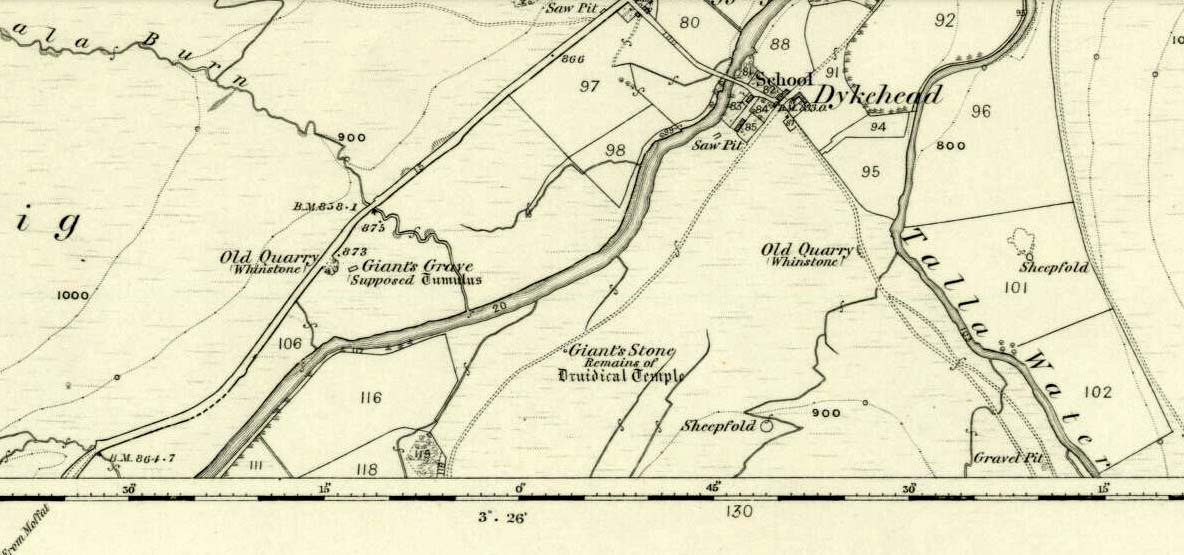
Giant's Grave & Stone on 1865 OS-map

Giant’s Grave & Stone on 1865 OS-map

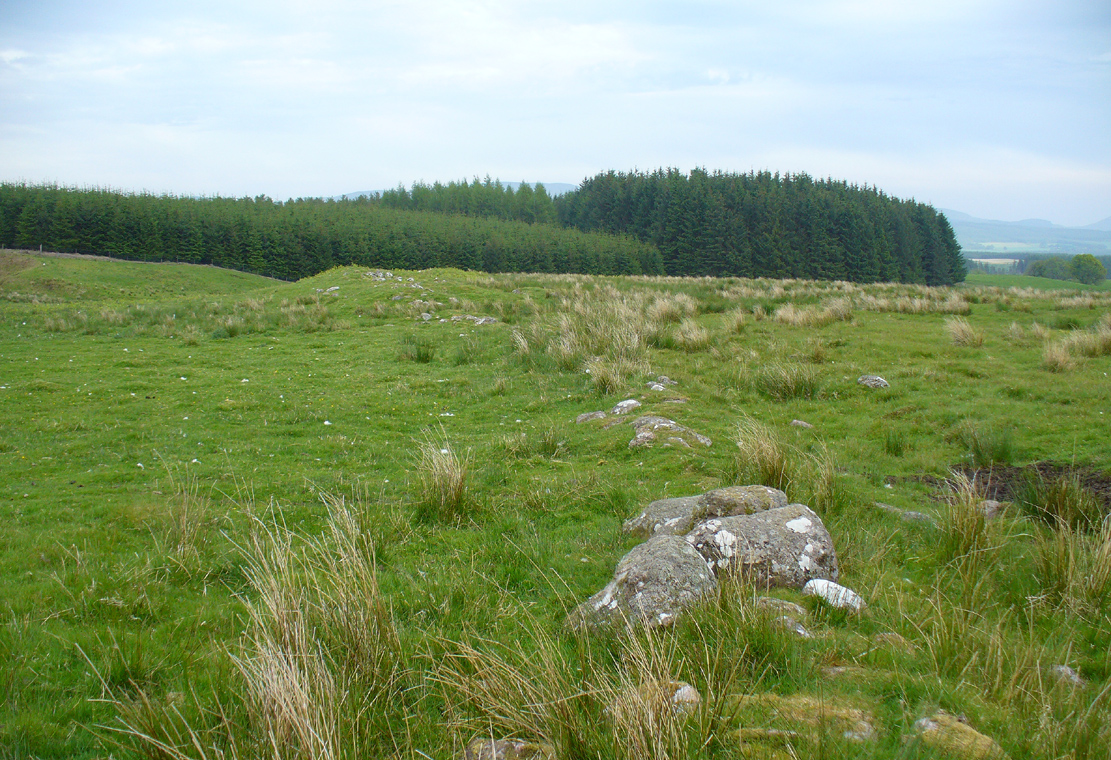
Marked on the 1865 OS-map as a “tumulus”, it was destroyed by some idiot in 1818 due to some basic lacking; but we can see from the old map how close it was to the Giant’s Stone on the south-side of the River Tweed, to which it may have had an archaeological connection with.  When it was destroyed, the New Statistical Account in 1845 described there being a six-foot long stone coffin (cist) beneath the tumulus, containing the usual burial urn.

Folklore

When the 18th century writer Alexander Pennecuik (1715) wrote about this old tomb, he narrated the tradition of the site as told him by the local people, telling:

“….upon the head of a burn on the south side of Tweed, stands the old-house of Hawkshaw, belonging (to) Porteous, from a numerous race of Ancestor’s Chiefs of that surname.  Over against the foot of Hawkshaw-Burn in a Kairn beside the High road is the Giants Grave, so called from a huge and mighty Fellow, that robbed all on the way, but was at length from a Mount in the over side of the River supprised and shor to Death as Tradition goes.”

References:

  1. Pennecuik, Alexander, A Geographical, Historical Description of the Shire at Tweeddale, John Moncur: Edinburgh 1715.
  2. Royal Commission on the Ancient & Historical Monuments, Scotland, Peeblesshire – volume 1, Aberdeen University Press 1967.

© Paul BennettThe Northern Antiquarian


Law Knowe, Niddrie, Edinburgh, Midlothian

Tumulus (destroyed):  OS Grid Reference – NT 3076 7177

Archaeology & History

Long since gone, this little-known burial mound could once be seen not far from the old mansion of Niddrie House.  The only reference I’ve found of it is in Thomas Whyte’s (1792) early essay on the parish of Liberton, where he told:

“East from the house and plantations, and on the north side of the public road, is a rising ground, or tumulus, called the Law Know, where, in more early times, judgment was dispensed, and where, probably, certain acknowledgments were made, by those who held of the baron or family.  It is of a circular form.  And this is the cafe with all places of the same kind. For they were considered as emblems of the sun, that great object of Druidical worship.”

The site appears to have been destroyed when the Industrialists blasted their quarry here and, as historians well know, quarrymen are dreadful when it comes to making notes of anything!  Any additional info on this place would be good….

References:

  1. Whyte, Thomas, “An Account of the Parish of Liberton in Midlothian, or County of Edinburgh,” in Archaeologica Scotica, volume 1, 1792.

© Paul BennettThe Northern Antiquarian


Kipps, Linlithgow, West Lothian

Stone Circle (destroyed):  OS Grid Reference – NS 9909 7387

Also Known as:

  1. Canmore ID 47920

Archaeology & History

Site shown on 1856 map

In an Address to the Scottish Society of Antiquaries in the middle of the 19th century, Sir James Simpson (1862) pointed out the outright destruction and vandalism that incoming land-owners (english mainly, and probably christians too) had inflicted on the monuments of the Scottish people.  Stone circles and two cromlechs, he said, that had existed in this part of West Lothian for thousands of years, were recently destroyed when Simpson was alive.  One of them was here at Kipps.  He told:

“In 1813 the cromlech at Kipps was seen by Sir John Dalzell, still standing upright.  In describing it, in the beginning of the last century, Sir Bobert Sibbald states that near this Kipps cromlech was a circle of stones, with a large stone or two in the middle; and he adds, “many such may be seen all over the country.”  They have all disappeared; and latterly the stones of the Kipps circle have been themselves removed and broken up, to build, apparently, some neighbouring field-walls, though there was abundance of stones in the vicinity equally well suited for the purpose.”

Simpson suggested, quite rightly, that efforts should be made to resurrect the old monument.  In his day the fallen remnants of the ‘cromlech’ that had stood inside the circle were still in evidence and it was highlighted on the early OS-map of the region; and when the northern antiquarian Ratcliffe Barnett (1925) came walking here earlier in the 20th century he told he could still see “the remains of an ancient cromlech, which stood within a circle of stones.”  Around the same time, the Royal Commission (1929) lads looked for these remains but seemed to have gone to the wrong site, “a quarter-mile northwest of Kipps Farm”, where they nevertheless found,

“a tumbled mass of boulders containing about thirty stones, one being erect; they vary from 6 by 3 by 1½ feet by 4 by 3 by 2½ feet, and are probably the remains of a cairn.”

When the renowned chambered tomb explorer Audrey Henshall (1972) followed up the directions of the Royal Commission, she was sceptical of giving any prehistoric provenance to the rocks there, describing them simply as geological “erratics.”

The very place-names Kipps may derive from the monument, for as Angus MacDonald (1941) told, “the word seems to come from Gaelic caep, ‘a block’”, but the word can also mean “a sharp-pointing hill, a jutting point, or crag on a hill”, and as the house and castle at Kipps is on an outlying spur, this could be its meaning.

Folklore

Local lore told how lads and lassies would use the stones as a site to promise matrimony with each other, by clasping their hands through a gap on the top boulder.  Using holes in or between stones to make matrimonial bonds, where the stone is the witness to the ceremony, occurs at many other sites and became outlawed by the incoming christian cult, which took people away from the spirits of rock, waters and land.

References:

  1. Barnett T. Ratcliffe, Border By-Ways & Lothian Lore, John Grant: Edinburgh 1925.
  2. Duns, J., “Notes on a Burial Mound at Torphichen, and an Urn found near the ‘Cromlech’ at Kipps, Linlithgowshire”,  in Proceedings of the Society of Antiquaries, Scotland, volume 12, 1878.
  3. Henshall, Audrey S., The Chambered Tombs of Scotland – volume 2, Edinburgh University Press 1972.
  4. Lewis, A.L., “The Stone Circles of Scotland,” in Journal Anthropological Society Great Britain, volume 30, 1900.
  5. MacDonald, Angus, The Place-Names of West Lothian, Oliver & Boyd: Edinburgh 1941.
  6. Royal Commission on the Ancient & Historical Monuments, Scotland, Midlothian and Westlothian, HMSO: Edinburgh 1929.
  7. Simpson, James Y., “Address on Archaeology,” in Proceedings Society of Antiquaries, Scotland, volume 4, 1862.

Acknowledgements:  Accreditation of early OS-map usage, reproduced with the permission of the National Library of Scotland.

© Paul BennettThe Northern Antiquarian