St. Maughold’s Well, Ramsey, Isle of Man

Holy Well:  OS Grid Reference – SC 49624 91926

Also Known as:

  1. Chibber Maghal
  2. Chibbyr Vaghal
  3. Chibbyr y Vashtee

Archaeology & History

St. Maughold’s Well—also called Chibbyr Vaghal—is found on the northeast side of the headland on the cliff face about a hundred feet above the sea, a quarter mile from the St. Maughold’s church.  It was a pilgrimage site which people visited on the dates of November 15 and July 31.

“…Beneath the head, under some moss clad rocks, is a deep spring, formerly much celebrated for its supposed medicinal virtues.”
– George Jefferson, 1840
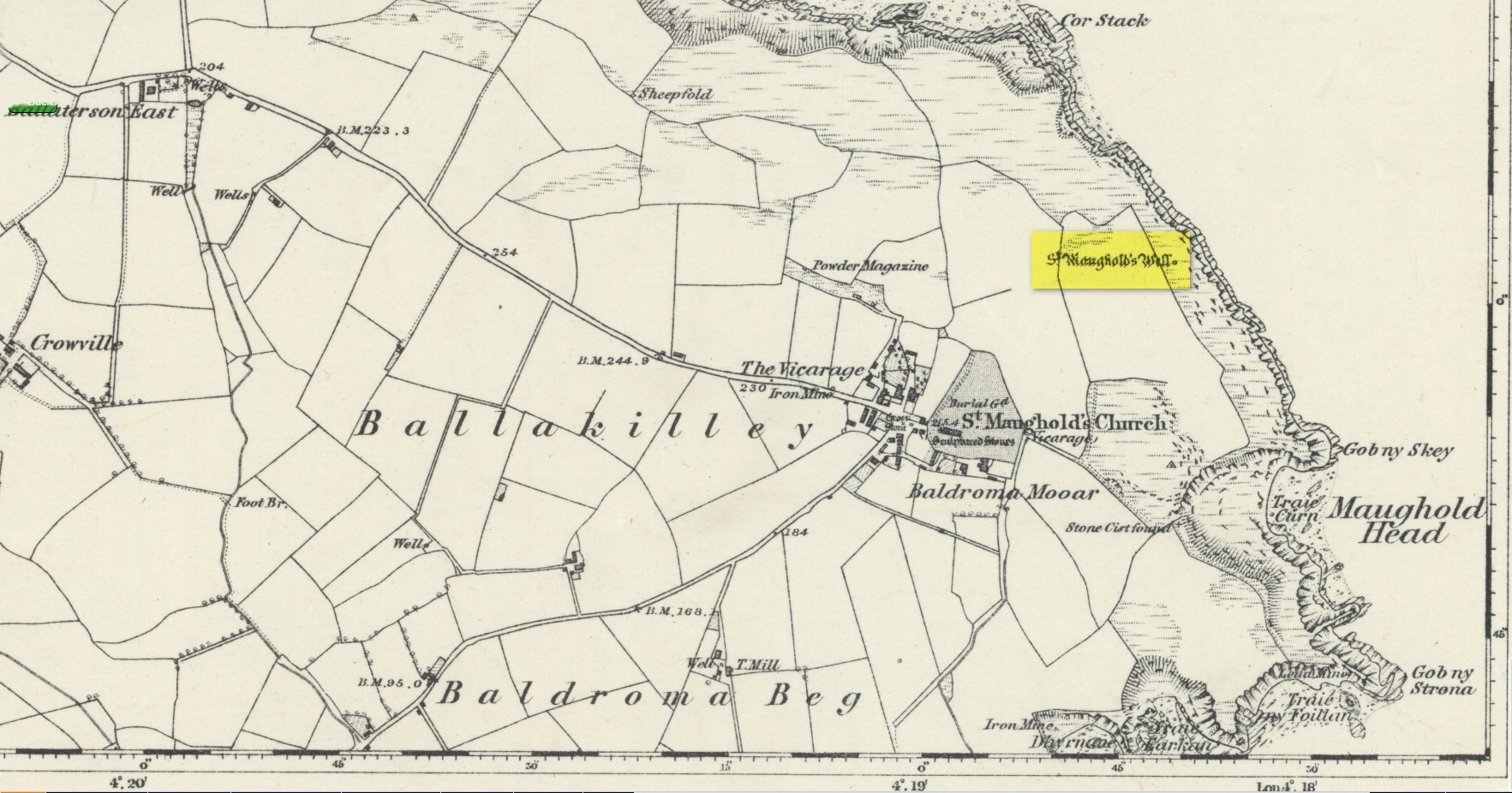
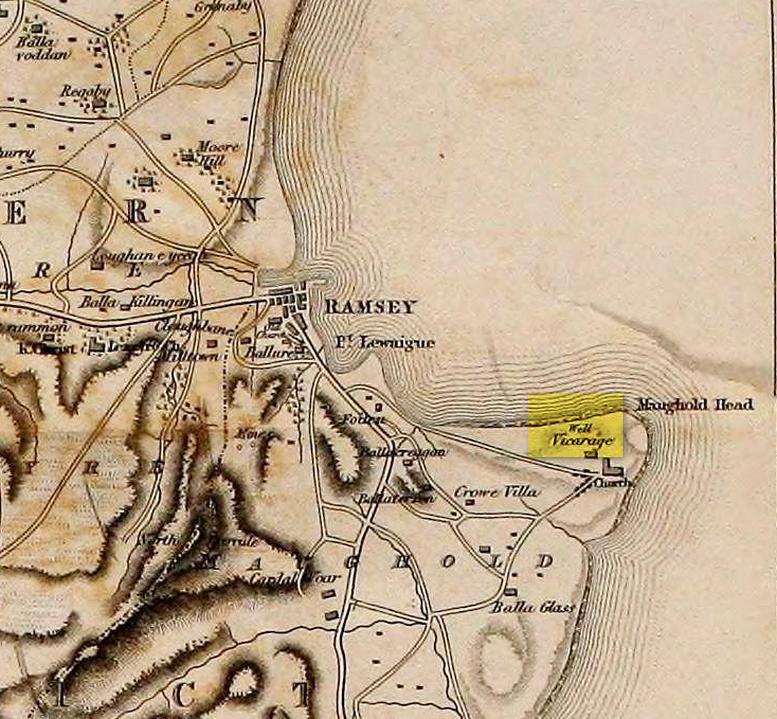
St Maughold’s on 1870 map
‘Well’ on the 1836 map

Its medicinal properties are of great repute and was resorted to by many on account of its sanctity by crowds of pilgrims.  The well was traditionally visited on the first Sunday in August, being the first Sunday after the Saint ‘s principal feast day, July 31 (significant in the Celtic calendar), but the devotions here have their origins in pre-christian times.  The principal benefit at the well was a cure for sore eyes.  After bathing the eyes or drinking the water it was/is customary to drop a coin, pin or button into it.  Alternatively, a piece of cloth which had been used for bathing the eyes would be left by the well or on a nearby bush.  As the cloth rotted, the ailment would be cured; while anyone who picked up the rags would himself receive the complaint associated with the offering; and to receive the full benefit of the well’s curative powers it should be visited on that first Sunday in August, and “while books were open in the church” — or in pre-reformation days, whilst Mass was being offered.

“…Where the spring gushes forth the rock has been hollowed into a small basin, and over it has been erected a simple shed of rough unhewn blocks of the rock immediately at hand. Hither the Saint is said to have resorted; nor is it altogether improbable that nearly fourteen hundred years ago at this very font he administered the baptismal rite. Certainly it was for many ages in great repute for its medicinal properties, and was resorted to on account of its sanctity by crowds of pilgrims from all parts. Nor is it yet forgotten.”
– J.G. Cumming, 1848

“…A drink of its water, taken after resting in the saint’s chair close by, is supposed to be an unfailing cure for barrenness in women.”
– A.W. Moore, 1890

Folklore

At Maughold churchyard above the well, ghostly whispers are said to be heard by the steps in the churchyard.  This is interesting as when excavations were done here, the labourers found bones buried beneath the same steps.  They were dug and exposed during the day and one worker who stayed in the church heard distant sounds, whispers and murmuring all around the church.  When the bones were reinterred, the haunting stopped. (Bord & Bord 1985)

References:

  1. Bord, Janet & Colin, Sacred Waters: Holy Wells and Water Lore in Britain and Ireland, Granada: London 1985.
  2. Cumming, J.G., The Isle of Man: Its History, Physical and Ecclesiastical, J. van Voorst: London 1848.
  3. Hall, John, “Earth Mysteries of the Isle of Man,” in Earth, no.17, 1990.
  4. Moore, A.W., The Surnames and Place-Names of the Isle of Man, Elliot Stock: London 1890.
  5. Jefferson, George, Jefferson’s Isle of Man, G. Jefferson: Douglas 1840.
  6. Radcliffe, William & Constance, A History of Kirk Maughold, Manx Museum: Douglas 1979.

© John Hall, 1990

Acknowledgements:  Huge thanks for use of the Ordnance Survey map in this site profile, reproduced with the kind permission of the National Library of Scotland

Oxenhope Cross, West Yorkshire

Cross:  OS Grid Reference – SE 03111 35206

Getting Here

The cross in the wall

If you’re coming up to Oxenhope from Keighley, up the A6033 road, when you reach the school on the right-hand side of the road, a one-way street (Cross Lane) is where you need to walk down, for 200 yards, and keep your eyes peeled in the walling just before Cross Farm Court.  Alternatively, via Haworth, go along Marsh Lane for a few hundred yards until your reach Moorhouse Lane on your left.  Go down here for ⅓-mile (0.5km) and then go up Cross Lane on your right. About 120 yards up, in the walling just past the entrance into Cross Farm Court is where you’ll find it.

Archaeology & History

Very little seems to be known about the remains of this cross, embedded into the old walling.  When it was described by Brigg & Villy (1914), they could find no information about it, and surmised that it marked the original track or road to Oxenhope from both Haworth and Halifax, “on the line of the old road by Withens.” Ostensibly it would seem to have been a wayside cross, marking old trackways (ley hunters take note!).

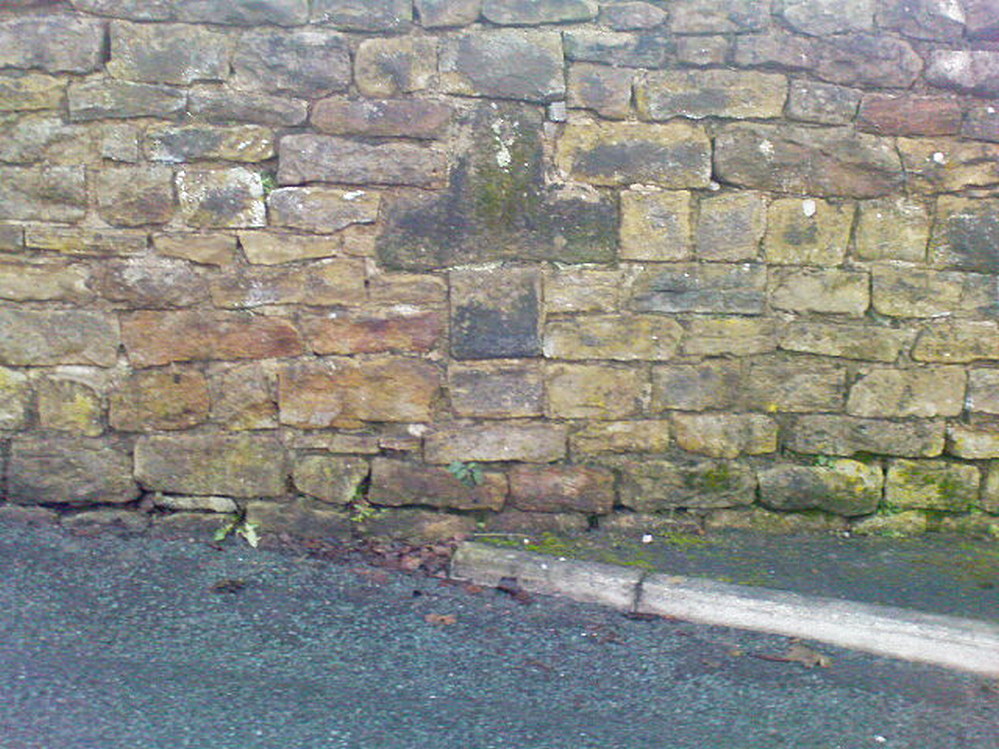
Visitors looking at it today can see that it’s barely noticeable.  It looked no different even in Brigg & Villy’s days.  It simply consists of only part of the original head of the cross, “the shaft having been broken off flush with the horizontal limb.”  Some of the other stones that make up the bottom of this very poor-looking excuse of a cross were probably not part of the original, but were assembled into the wall to at least leave of memory of what it used to look like.  It’s in a sorry state to be honest.  A historic plaque should be placed here.

References:

  1. Brigg, J.J. & Villy, F., “Three Ancient Crosses near Keighley,” in Bradford Antiquary, New Series 6, 1921.

© Paul BennettThe Northern Antiquarian

Market Cross, Elstow, Bedfordshire

Cross:  OS Grid Reference – TL 04864 47498

Archaeology & History

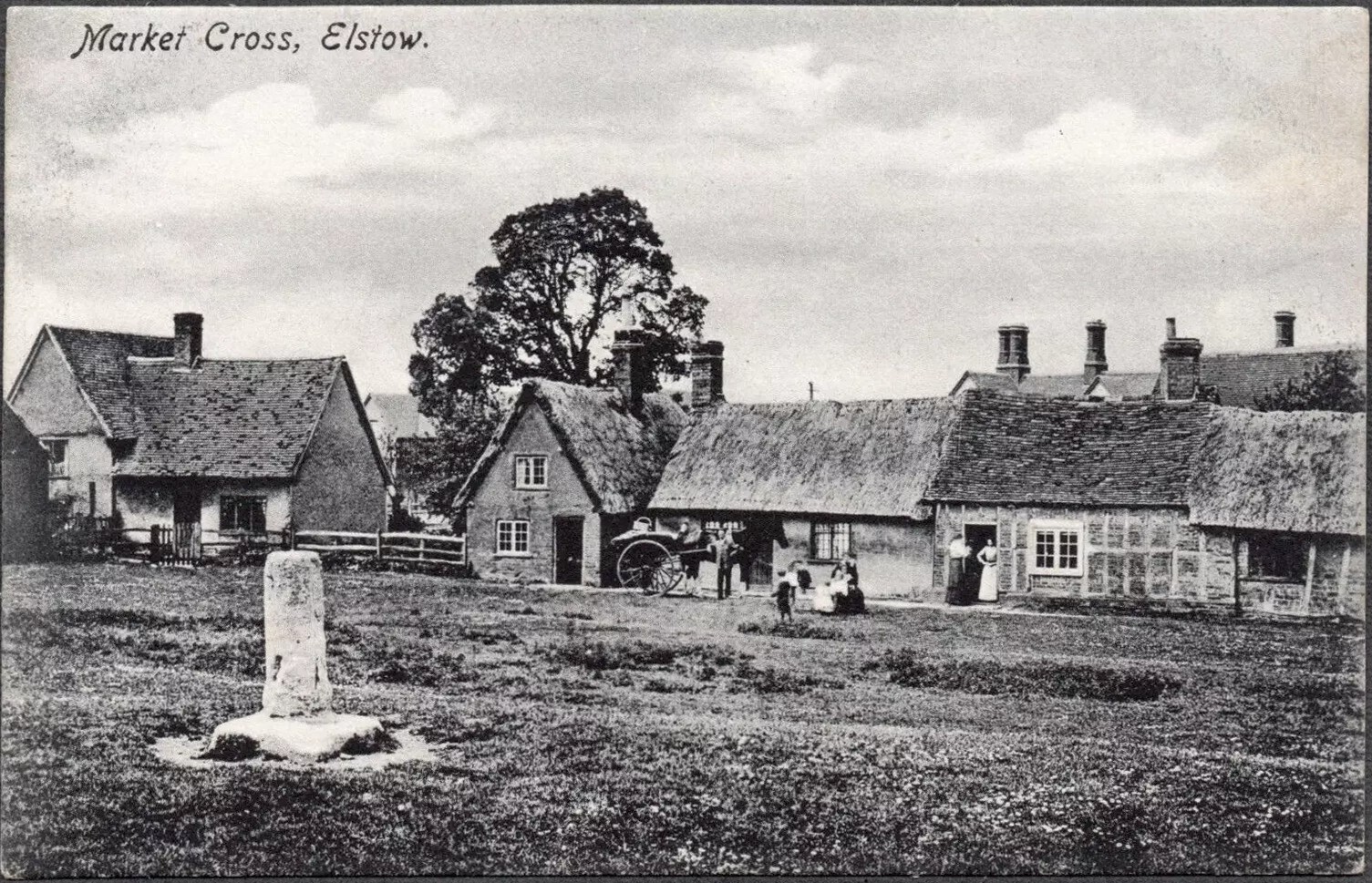
Elstow’s old cross, c.1900

Sitting quietly “on the village green, where the fair is still held,” wrote Wigram (1885), “stands the base of the old market-cross, reduced to a shapeless stump, but still bearing traces of leaden setting.”  Thought to be mediaeval in age, it was described as a sundial on some of the early Ordnance Survey maps which, perhaps, it may have been used as for a short period (although records are silent on the matter).  Standing just three-feet tall, this old stone pillar still lives on its ancient spot, as quiet as always, keeping itself to itself…

References:

  1. Wigram, S.R., Chronicles of the Abbey of Elstow, Parker & Co.: Oxford 1885.

© Paul BennettThe Northern Antiquarian

Crowan Cross, Kerrier, Cornwall

Cross (remains):  OS Grid Reference – SW 6456 3449

Getting Here

Photo from abaat 20yrs ago

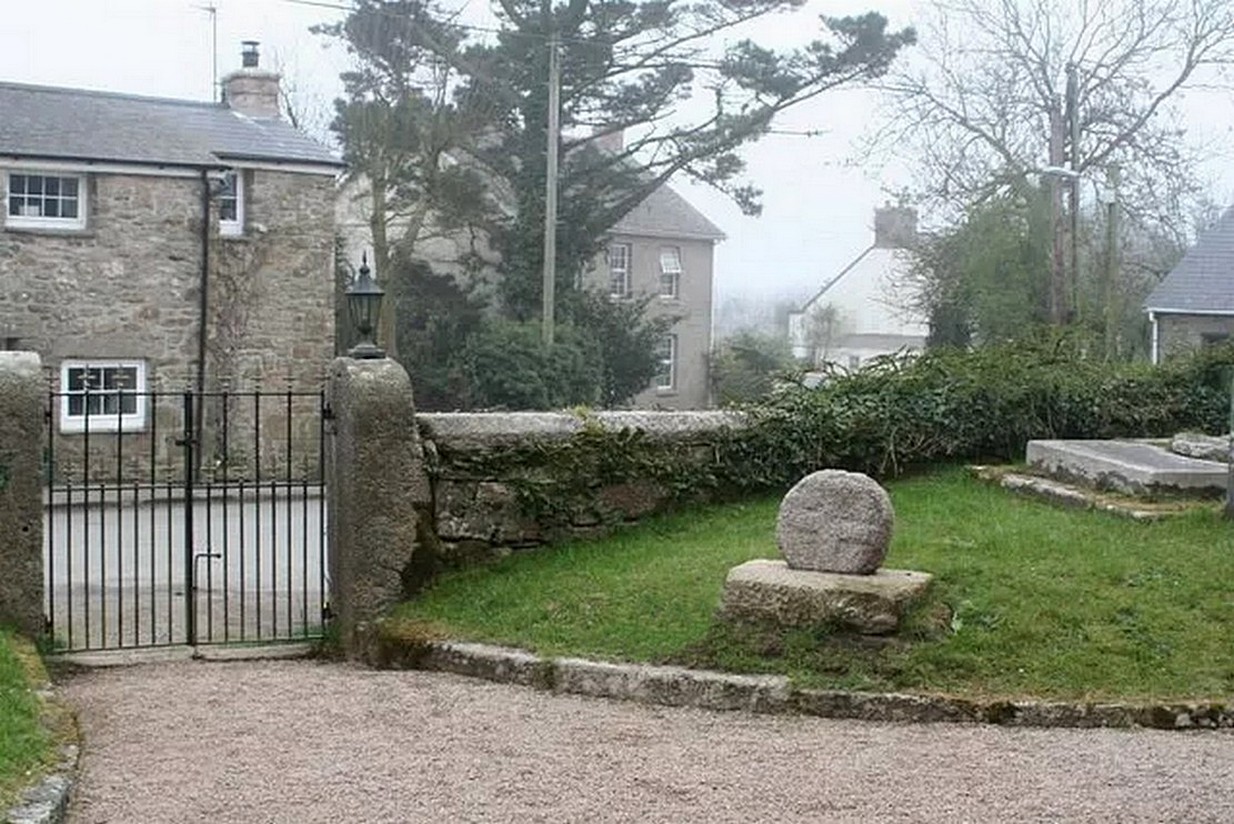
Nice ‘n easy: get into the village and walk through the church gates and there, on your left on the grass verge, a plinth and the cross-head sits before thee!

Archaeology & History

When the great Arthur Langdon (1896) wrote about Crowan’s cross-head, he was puzzled.  At the time it was in the garden of a local surveyor in the nearby village of Praze-an-Beeble, but its origins seemed mysterious.  The surveyor in question, a Mr William Carah, wrote to Langdon and said,

“It seems a mystery where the cross we have originally came from.  A friend of mine, living abroad at present, saw it, I think, at a farm-place, being used as a bottom for a beehive.  He asked the people for it, intending to fix it somewhere.  At any rate, when he left England he had not done so, and at my request they gave the cross to me.”

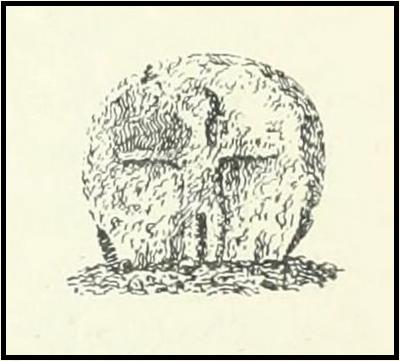
The condition of the cross-head wasn’t too good and Langdon suggested it had “received some very rough treatment” – no doubt when it was hacked from its shaft.   With his usual precision he gave the dimensions of the cross-head as follows:

“Height, 1 ft. 6 in.; width, 1 ft. 8 in.; thickness: at the bottom 6½ in., at the top 5½ in.

Front. — Part of a small conventional figure of Christ, extending to the knees, at which point the fracture occurred which separated the head from the shaft.

Back. — The remains of a mutilated Latin cross in relief.”

The stone shaft or menhir that once supported this carved head has, it would seem, long since been destroyed.

References:

  1. Blight, J.T., Ancient Crosses and other Antiquities in the West of Cornwall, Simpkin Marshall: London 1858.
  2. Courtney, R.A., The Evolution of the Wheel Cross, Beare & Sons: Penzance 1914.
  3. Doble, Gilbert H., A History of the Parish of Crowan, King Stone Press: Shipston-on-Stour 1939.
  4. Langdon, Andrew, Stone Crosses in West Cornwall, Federation of Old Cornwall Societies 1999.
  5. Langdon, Arthur G., Old Cornish Crosses, Joseph Pollard: Truro 1896.

© Paul BennettThe Northern Antiquarian

Reva Hill, Hawksworth, West Yorkshire

Cross:  OS Grid Reference – SE 15297 42972

Also Known as:

  1. Plague Stone
  2. Riva Cross
  3. Stone Cross

Getting Here

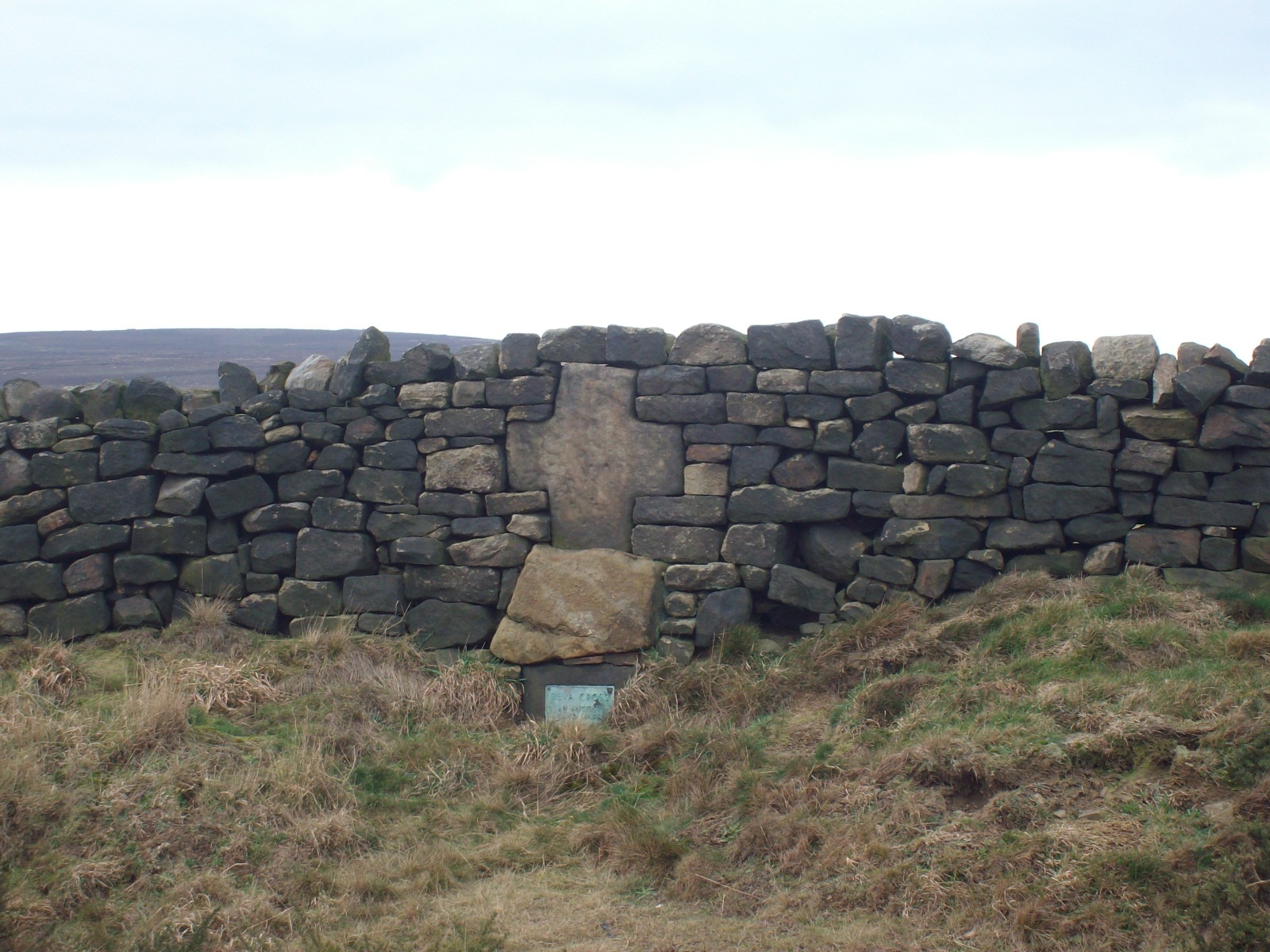
Reva Hill cross in walling

Two main routes to get here: i) from Dick Hudson’s public house, head left (east) along Otley Road (passing Weecher reservoir) for 1.9 miles (3.1km) until you reach Reva reservoir where a track leads you to the waters, and there’s a small parking spot on the left-side of the road. Stop here. (ii) coming from Hawkworth and Guiseley, head west along Hawksworth Lane which runs into Goose Lane and, at the T-junction at the end, turn right and nearly 500 yards along on the left-side of the road is the same small parking spot. From here, walk uphill for nearly 150 yards and then look at the walling to your left.

Archaeology & History

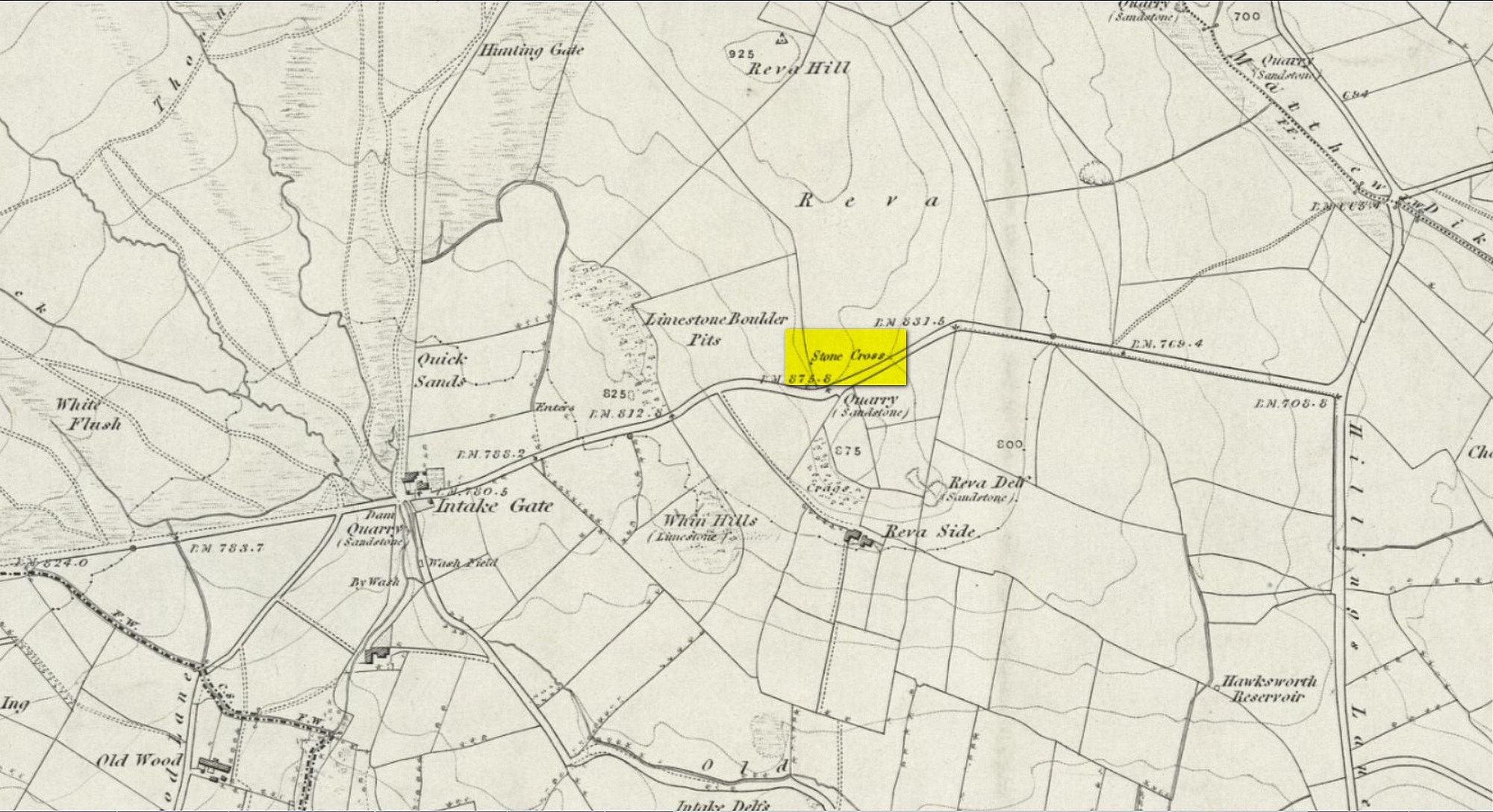
Reva Cross on 1851 map

This relic can be found on the far eastern edges of Hawksworth Moor, near Guiseley, and was said by the historian Eric Cowling to have originally stood upon a large rock nearby.  It has an odd history. Initially, the cross was an ancient boundary or mark stone, referred to in a 15th Century document and outlined by William Preston in 1911, that marked the limit of the southern township of Burley township.  Local historian C.J.F. Atkinson asserted that this cross in fact came from Otley, although his ideas were considered somewhat “fanciful” by archaeologists and other historians.

Its present position by the roadside is relatively new as it stood, not too long ago, a short distance away in the field to the rear, as highlighted on the early OS-map of this area.  E.C. Waight of the archaeology division to Ordnance Survey wrote:

“Situated at SE 1530 4297 on the western side of the gate from the road into the field containing the remains of Reva Cross is a cross base (apparently in situ) serving as a bolster stone to the wall head at the gate opening.”

He described the dimensions of the base and the remainder of the cross, both of which “are contemporary with one and other,” he told.  In the 1960s, the local council moved the cross to its present position.

Tradition told that despite its religious symbolism, it was also used as a market cross in bygone times. A certain Mrs Fletcher (1960), writing to the Cartwright Hall Archaeology Group, narrated that,

“Mrs Turner Greenwood….tells me that her mother, who, if living, would be in her nineties, lived at Gaping Goose Farm on the western side of Reva Hill… Mrs Greenwood’s father.. .remembered the cross erected on this hill, and related seeing the roads black with people climbing to it from Otley and Bingley, for the market held there.”

Despite this, Sidney Jackson was somewhat sceptical of it being the site of a market.  Weather conditions and the bleakness of the spot would have made this site somewhat intolerable, he thought.  However, people in previous centuries were much hardier than modern people and so it’s not as unlikely as you’d initially think.

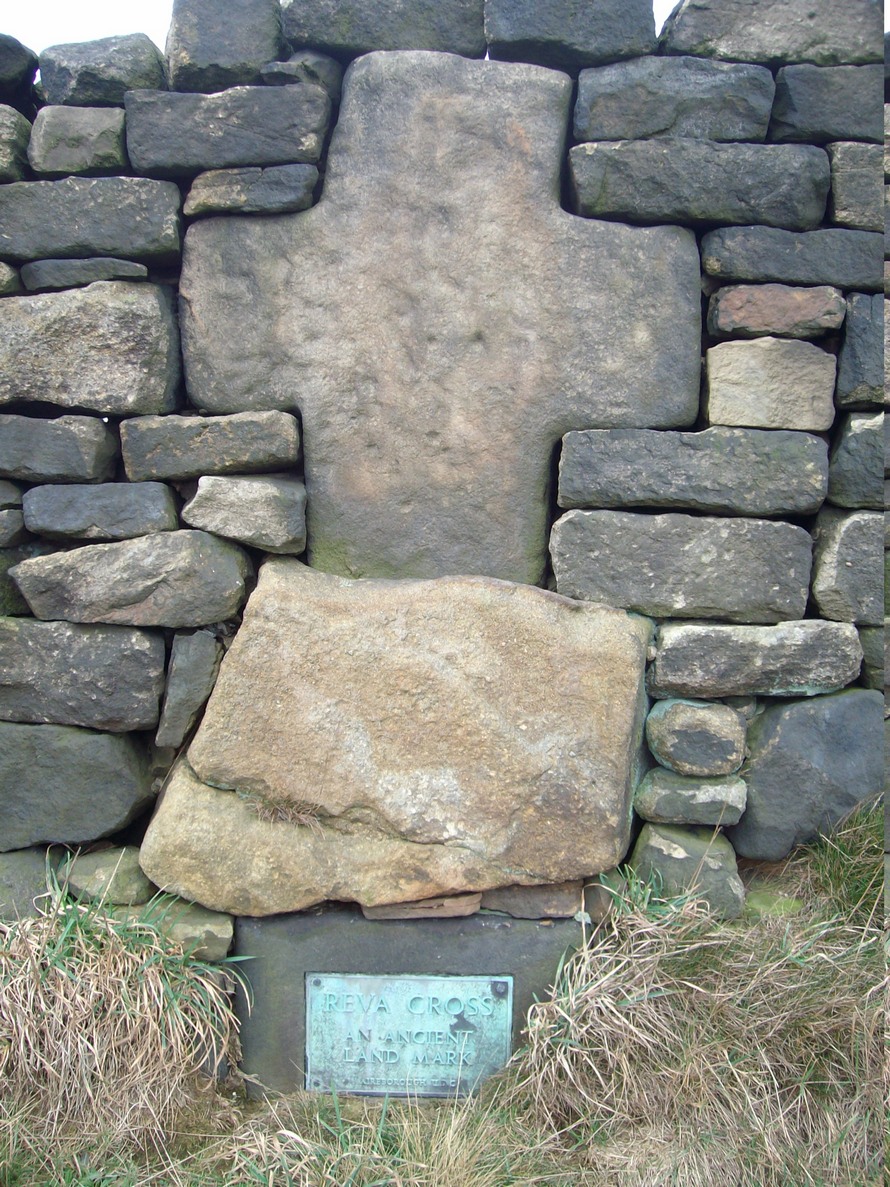
Close-up of cross
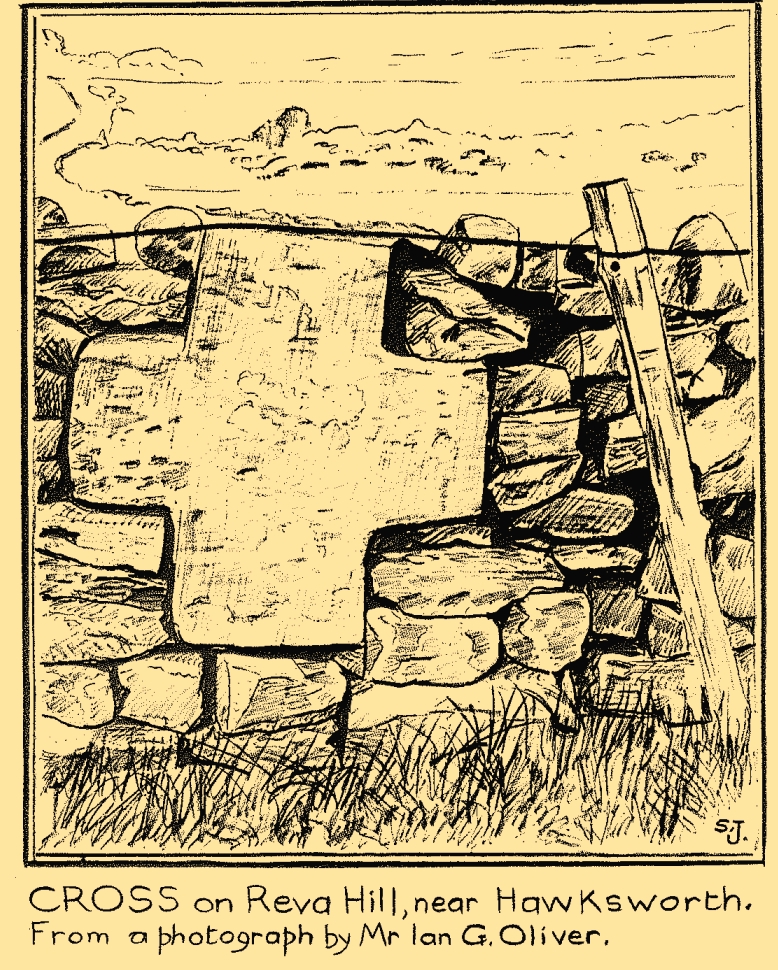
Sid Jackson’s sketch

A much more interesting tradition of the cross was its use in times gone by as a Plague Stone. However, this name only applied to the cross-base at the time as no cross was stood upon it; merely a natural rock laid upon the moorside with a basin cut into it. It gained this name around the time of the great plague of 1660.  During the plague, food was left on this table-like rock and money in return was placed in a basin full of vinegar.  This tradition may have originated at the large natural rock bowl on one of the earthfast stones near the very top of Reva Hill a short distance to the west (also a number of cup-marked stones are close by and folklore records show that some cup-marks had healing properties).  One account tells that it was Sir Walter Hawksworth (of the legendary Grand Lodge of ALL England masonic lodge) who was responsible for the siting of the cross as a Plague Stone.

References:

  1. Cowling, Eric T., Rombald’s Way, William Walker: Otley 1946.
  2. Cowling, Eric T., ‘Letter,’ in Cartwright Hall Archaeology Group Bulletin, 5:5, May 1960.
  3. Fletcher, Elsie, “Letter,” in Cartwright Hall Archaeology Group Bulletin, 5:5, May 1960.
  4. Jackson, Sidney, “Ancient Crosses,” in Cartwright Hall Archaeology Group Bulletin, 1:12, 1955.
  5. Jackson, Sidney, “Cross on Reva Hill,” in Cartwright Hall Archaeology Group Bulletin, 5:1, p.2, 1960.
  6. Jackson, Sidney, “Reva Hill Cross Base Found,” in Cartwright Hall Archaeology Group Bulletin, 9:9, September 1964.
  7. Jackson, Sidney, “Fresh Site for Reva Cross,” in Cartwright Hall Archaeology Group Bulletin, 11:7, July 1966.
  8. Preston, William Easterbrook, “On an Ancient Stone Cross on Riva Hill,” in Bradford Antiquary, New Series 3, 1911.

Acknowledgements:  Huge thanks for use of the Ordnance Survey map in this site profile, reproduced with the kind permission of the National Library of Scotland

© Paul BennettThe Northern Antiquarian

St. Giles’ Well, Lightcliffe, West Yorkshire

Holy Well (lost):  OS Grid Reference – SE 134 245

Archaeology & History

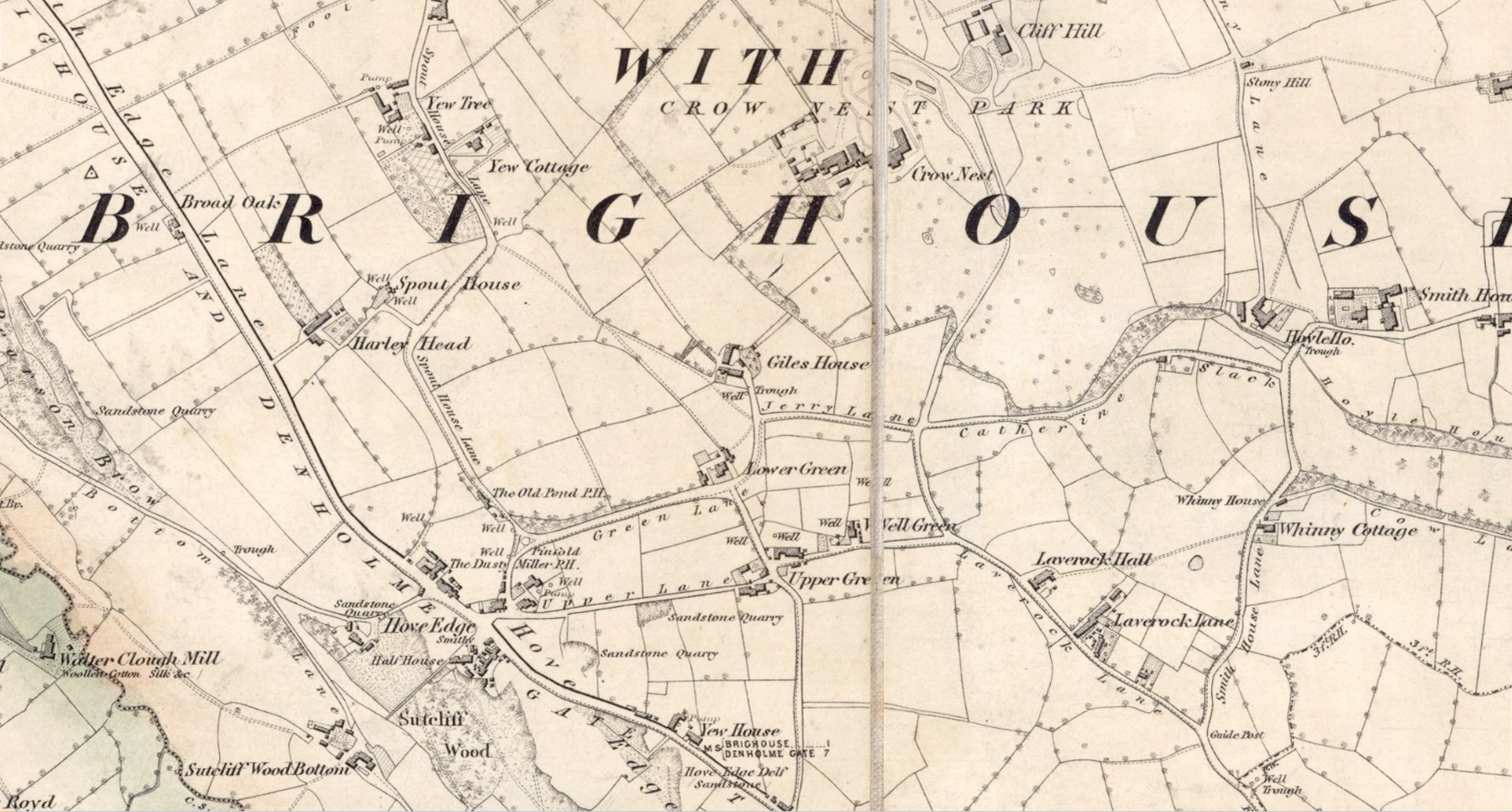
Giles’ House to centre

In times gone by there was a singular St.Giles’ Well in the old village of Lightcliffe, but the only reference we have of it is from one of James Parker’s works (1904) where, in his description of St. Giles’ House, he tells, “It derives its name from an ancient well, called ‘St. Giles’ Well,’ which once existed near to the house, and was dedicated to St. Giles”: an 8th century Greek prince who left everything to become a hermit. He lived on wild herbs and developed the ability to cure rheumatism (perhaps a curative aspect of the well), cripples and help beggars. He is the patron saint of woodlands and his symbol is the arrow gained after he healed a wounded doe shot by one (the mass of Robin Hood folklore in this area may have something to do with this symbolism).  His date is September 1.

A.H. Smith (1963) cites the “local tradition that it is named from a well dedicated to St. Giles,” but thinks this attribution to be an unlikely one.  As can be seen on the accompanying map, a great number of wells are in this area, none of them named, with one just below the said Giles House.

References:

  1. Parker, James, Illustrated History from Hipperholme to Tong, Percy Lund: Bradford 1904.
  2. Smith, A.H., The Place-Names of the West Riding of Yorkshire – volume 3, Cambridge University Press 1961.

Acknowledgements:  Huge thanks for use of the Ordnance Survey map in this site profile, reproduced with the kind permission of the National Library of Scotland

© Paul BennettThe Northern Antiquarian

Holy Well, Aston, Oxfordshire

Holy Well:  OS Grid Reference – SP 35833 02611

Archaeology & History

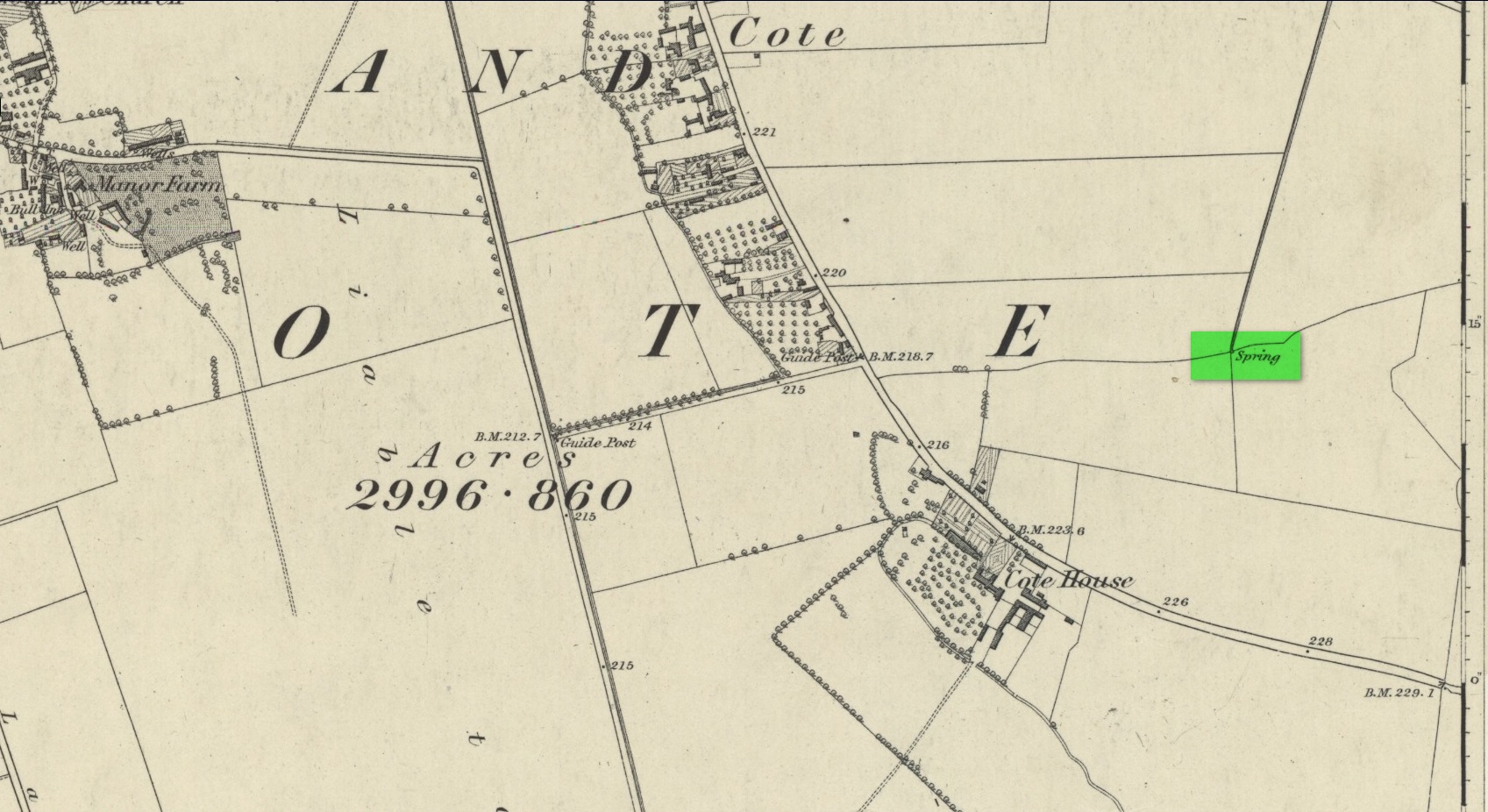
‘Spring’ marks the holy well

First mentioned as the field-name Holywellefield in the Court Roll of 1432, there is a possibility that this seemingly lost site still exists.  It was mentioned briefly in John Giles’ (1848) old history book of the area where he told us that, “a field beyond Cote House on the road to Shifford is still called ‘Holy-well field’, (but) no legend has been recorded.”

If we go 400 yards northeast across the field on the other side of the road from Cote House, a “Spring” that was shown on the early OS-maps would still seem to be actively feeding a dyke that runs roughly north from here.  This is probably the holy well that was described in those Court Roll records—and it still seems to exist.

References:

  1. Gelling, Margaret, The Place-Names of Oxfordshire – volume 2, Cambridge University Press 1954.
  2. Giles, J.A., History of the Parish and Town of Bampton, privately published: Bampton 1848.

Acknowledgements:  Huge thanks for use of the Ordnance Survey map in this site profile, reproduced with the kind permission of the National Library of Scotland

© Paul BennettThe Northern Antiquarian

Emmott Cross, Colne, Lancashire

Cross:  OS Grid Reference – SD 888 401

Also Known as:

  1. Touch Cross

Archaeology & History

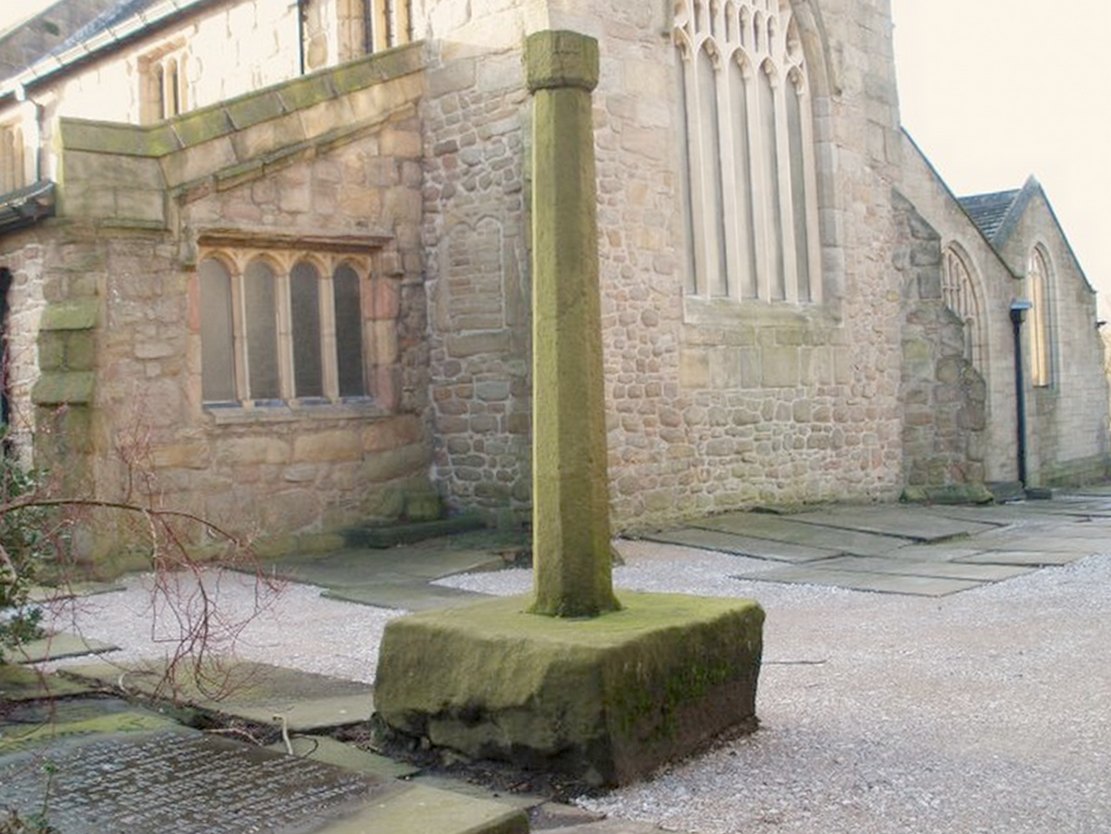
The Emmott Cross

At the north side of St Bartholomew’s church-yard, Colne, stands the medieval Emmott Cross or Touch Cross. It was re-erected here in 1967 by local historian Mr Wilfred Spencer and a team of volunteers having being removed from the grounds of Emmott Hall, Laneshawbridge, when the old hall was being pulled down. The cross had stood for centuries close to the famous Hallown Well, both of which were highly venerated by pilgrims travelling between Whalley Abbey and Yorkshire. It appears that originally the cross had stood at the side of the Stanbury to Haworth road over Herders, close by Emmott.

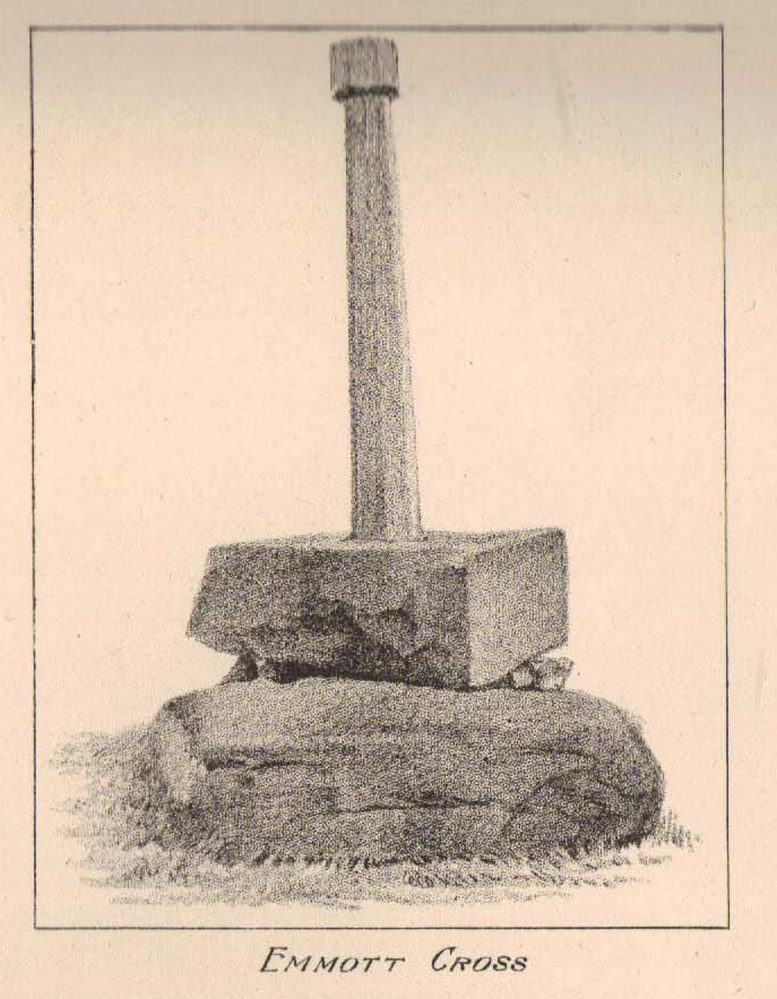
The cross shaft stands 7 feet tall and is referred to as of the English Gothic style, probably 13th century. It stands in an octagonal socketed stone base which is 2 foot high and 4 foot square. Its slender octagonal shaft tapers away towards the top where there is a carved capital or corona – this may once have held a cross head or some other religious object. There used to be some faint lettering on the shaft but this has now worn away. A local historian Dr Whitaker described the lettering as “I.H.S.” along with the Greek omega symbol.

Taylor’s 1906 sketch

It was to all intent and purposes a preaching cross to which pilgrims would congregate and listen to the word of God and many would be baptised in the Hallown Well at the same time. In the penal times of the 16th century the cross was in great use, but by the 17th century it was being referred to as a “papist cross”.  During this period in history it suffered damage and the shaft broken in two places; the cross-head taken away and smashed. For safety reasons the cross-shaft was removed to Colne church-yard but returned to the grounds of Emmott Hall in 1728 when relative calm had returned.

The slender cross shaft and its hefty base are said to weigh about 2 tons and I have no doubt it does. It is now grade 11 listed.

Folklore

The name Touch Cross probably comes about in the sense that pilgrims touched the cross in the hope of a safe pilgrimage, or the name may be something to do with a troop of soldiers who were stationed at the hall in the past. They touched the stone too, but for different reasons – that they would live to fight another day in battle.

References:

  1. Byrne, Clifford H., “A Survey of the Ancient Wayside Crosses in North East Lancashire,” unpublished manuscript, 1974.
  2. Taylor, Henry, The Ancient Crosses and Holy Wells of Lancashire, Sherratt & Hughes: Manchester 1906.
  3. Whitaker, Thomas Dunham, An History of the Original Parish of Whalley and Honor of Clitheroe, Nichols, Son & Bentley: London 1818.

© Ray Spencer, 2011