Holy Well: OS Grid Reference – SD 8039 6538
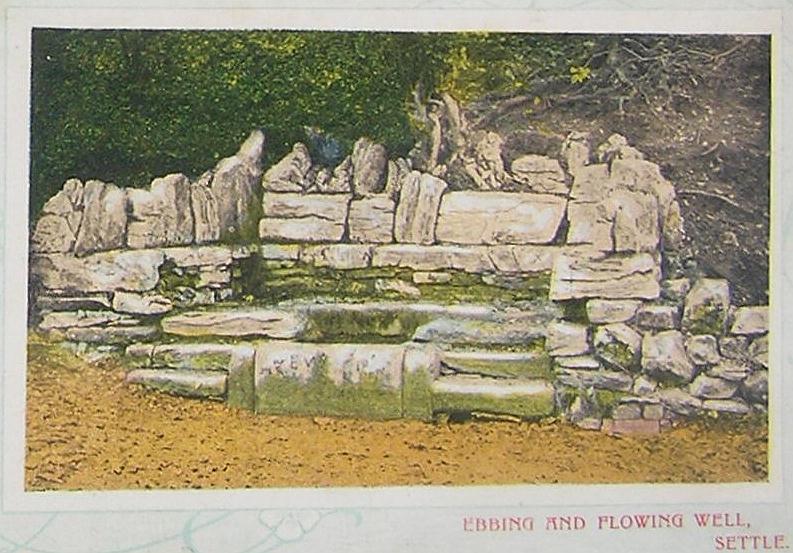
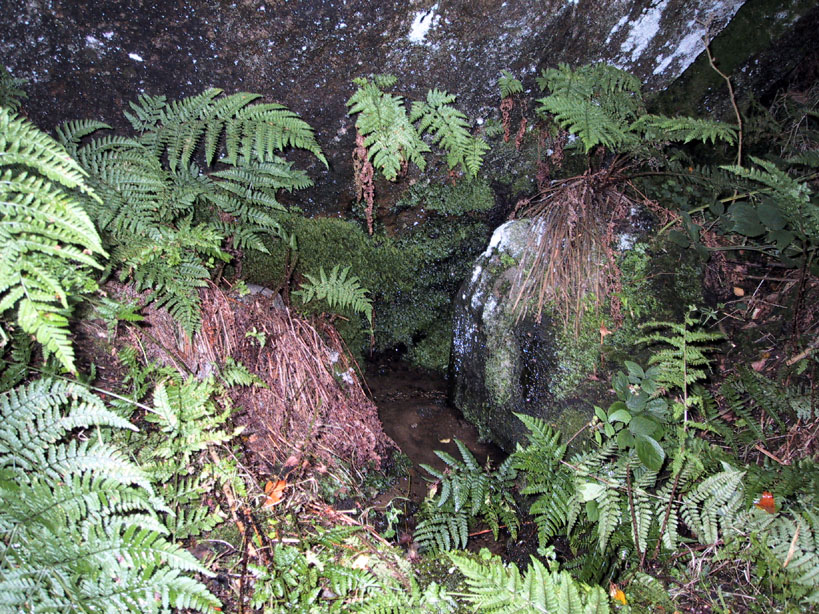
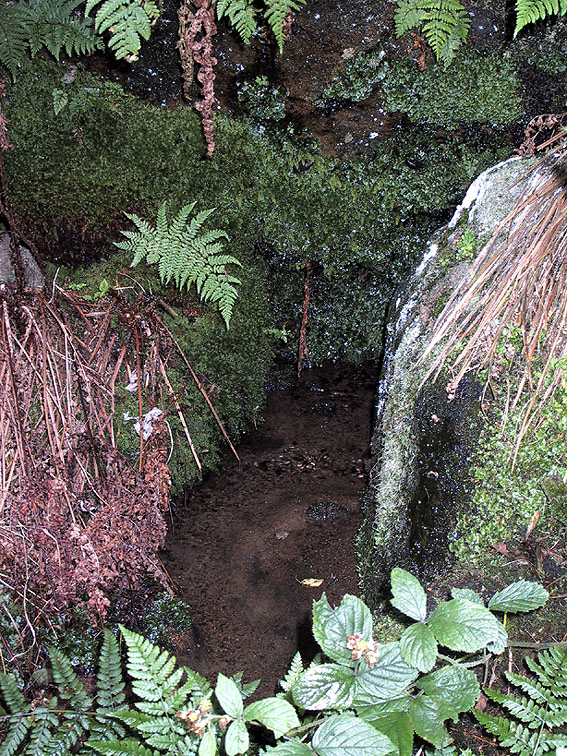
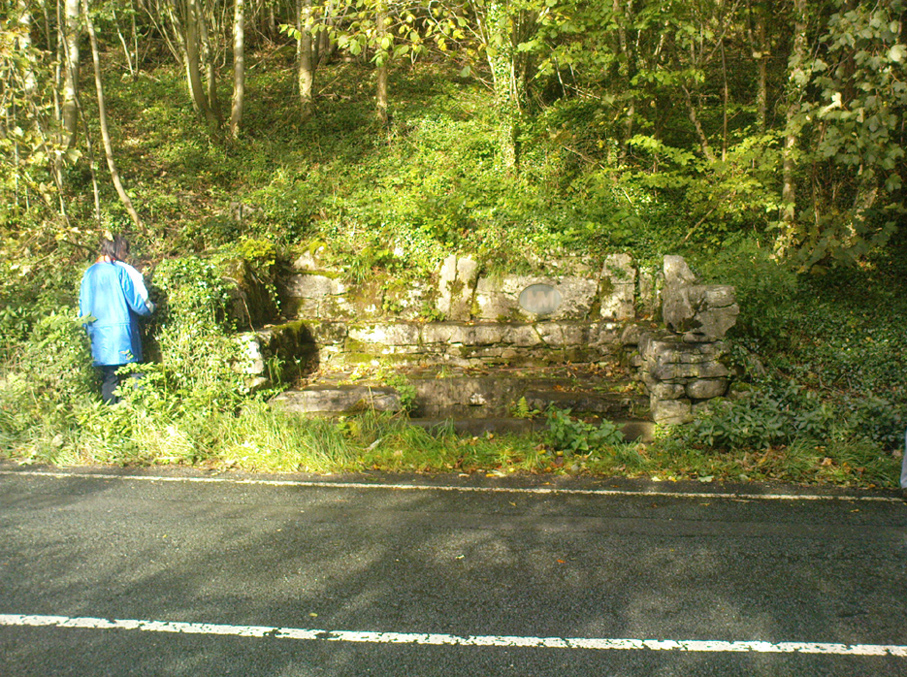
This famous old site can be found right by the roadside—the B6480—as you head out of the northern end of the town, beneath Giggleswick Scar. It’s less than a mile along the old main road, just as you start to climb up the hill, just across from the entrance to Huntworth. It is in reasonable condition and has long been thought of as a holy and magickal well. Edna Whelan and Ian Taylor included it their fine work, Yorkshire Holy Wells. (1989)
Archaeology & History
The site as we see it today is but a shadow its former self. Although the stone trough that we look at seems to be the site, this once great great well originally emerged up from the ground a good hundred yards further up the steep hill slope above us, as the early illustration here clearly shows.
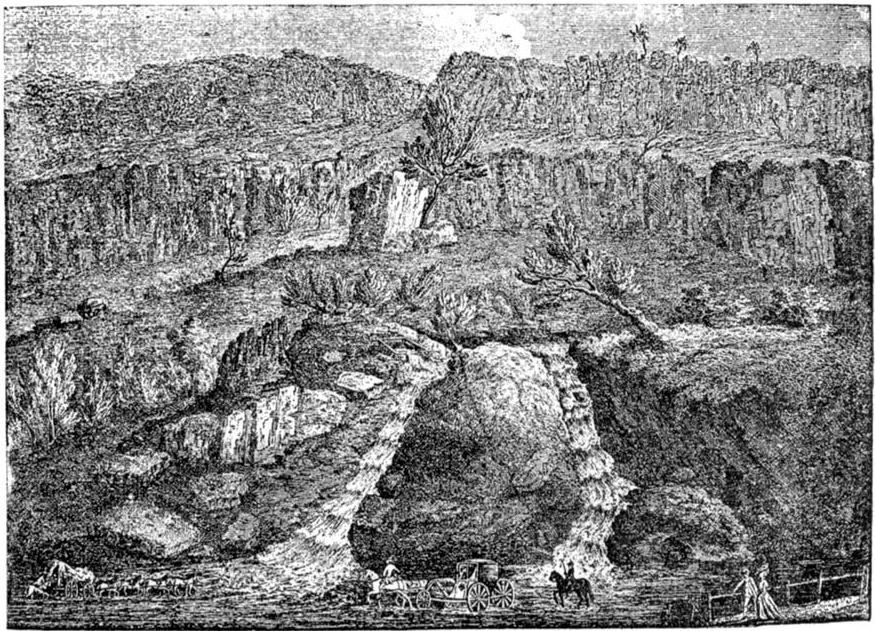
Just above where the Ebbing & Flowing Well first appeared an excessive amount of flints were found in earlier years; and just above that, early human habitation in the caves to the back; along with ancient burials nearby — as well as numerous other neolithic, Bronze- And Iron Age remains all round here. This peculiar water supply was obviously of considerable importance to our pre-christian ancestors…unless you’re an idiot that is!
The site’s name comes from the very action of the waters here, which have sadly long-since been stopped. The well could suddenly overflow very rapidly and the next minute subside, with seemingly little rational explanation. As such, it was seen to be miraculous. It was first described by one John Speed in 1627 (England and Wales Described), where he said,
“At Giggleswicke…there are certain small springs not distant a quaits cast from one another; the middlemost of which doth at every quarter of an houre (?) ebbe and flowe about the height of a quarter of a yard when it is highest, and at the ebbe falleth so lowe that it be not an inch deepe with water.”
Though Harry Speight (1900) reckons such rapid undulations were slight exaggerations on Speed’s part.
Nearby we also find the Bank Well, where old lead goddess figurines were deposited around Romano-British times. Archaeologist Alan King (1970) saw such deposits as important to the spirit of the waters, saying,
“The wells at Giggleswick, especially the Ebbing and Flowing Well, would be considered entrances to the Underworld and suitable sites for making offerings.”
It seems more likely however, that the Ebbing and Flowing Well would have a more pronounced oracular nature; though Underworld aspects would be prevelant, though would be the province of selected priestesses (whose folklore is found nearby, albeit in distorted form).
The waters themselves today flow quite well, but are close to freezing when you immerse your hands therein. They also taste very good indeed and are most refreshing – better than any of the alleged ‘spring water’ people today buy in plastic bottles. It’s gorgeous water here!
Folklore
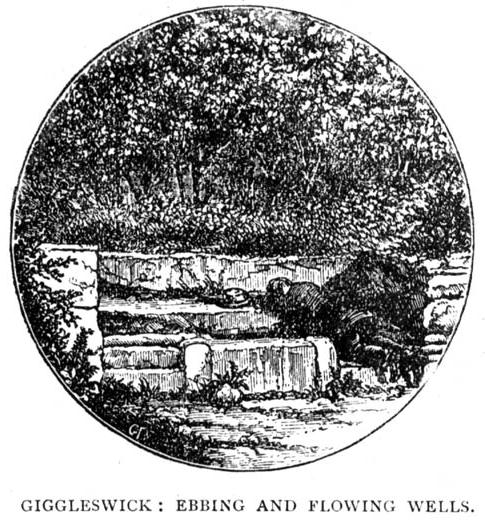
An undoubted oracular site: the ebbing and flowing actions of the waters giving the well the distinct characteristic as a place used for prophecy and divination in very ancient times. I have little doubt that this was a place used by shamans. It was likely to have been a dreaming site aswell. (it would be good to know if there is any old witchcraft lore still left here)
The waters themselves are supposed to be a manifestation of a local female spirit, who was transformed into the waters by a woodland spirit. Also here, a local highwayman called Nevison was being chased by the local cops, when his horse stopped at the waters desparate for a drink. While here, Nevison prayed to the water spirit for help. She duly obliged, giving him a magic bridle, enabling his horse to run and jump over the high moors to escape his pursuers: a place called Hell Ghyll being one of the places he was said to have cleared.
References:
- Bord, Janet & Colin, Sacred Waters, Granada: London 1985.
- Hope, Robert Charles, The Legendary Lore of the Holy Wells of England, Elliott Stock: London 1893.
- King, Alan, Early Pennine Settlement, Dalesman: Clapham 1970.
- Ross, Anne, Pagan Celtic Britain, RKP: London 1967.
- Speight, Harry, The Craven and Northwest Yorkshire Highlands, Elliott Stock: London 1892.
- Whelan, Edna, The Magic and Mystery of Holy Wells, Capall Bann: Chieveley 2001.
- Whelan, Edna & Taylor, Ian, Yorkshire’s Holy Wells and Springs, Northern Lights: Pocklington 1989.
- Whitaker, T.D., The History and Antiquities of the Deanery of Craven, Joseph Dodgson: Leeds 1878.
© Paul Bennett, The Northern Antiquarian