Sacred Well (covered): OS Grid Reference – SE 10425 46701
Archaeology & History
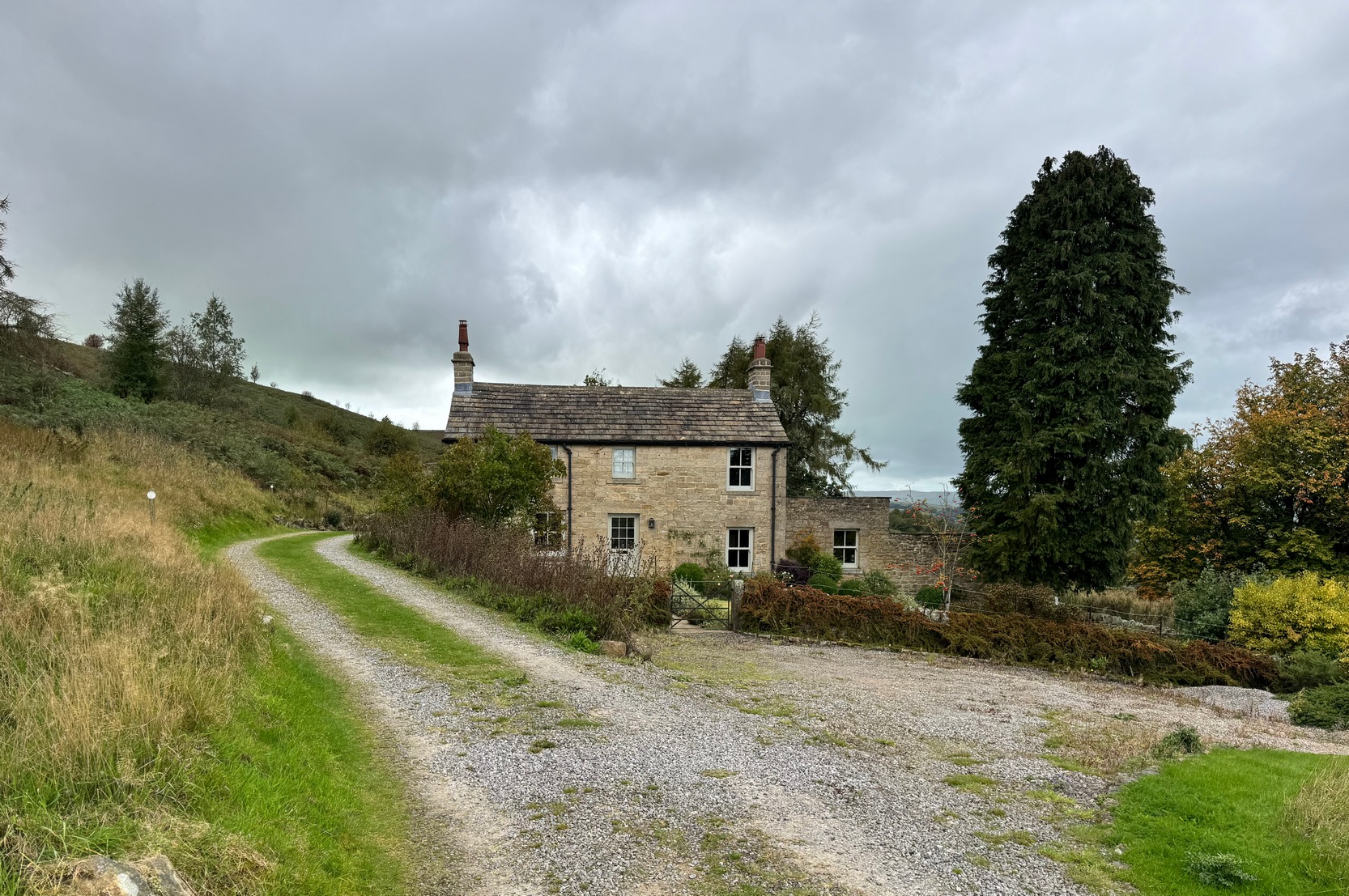
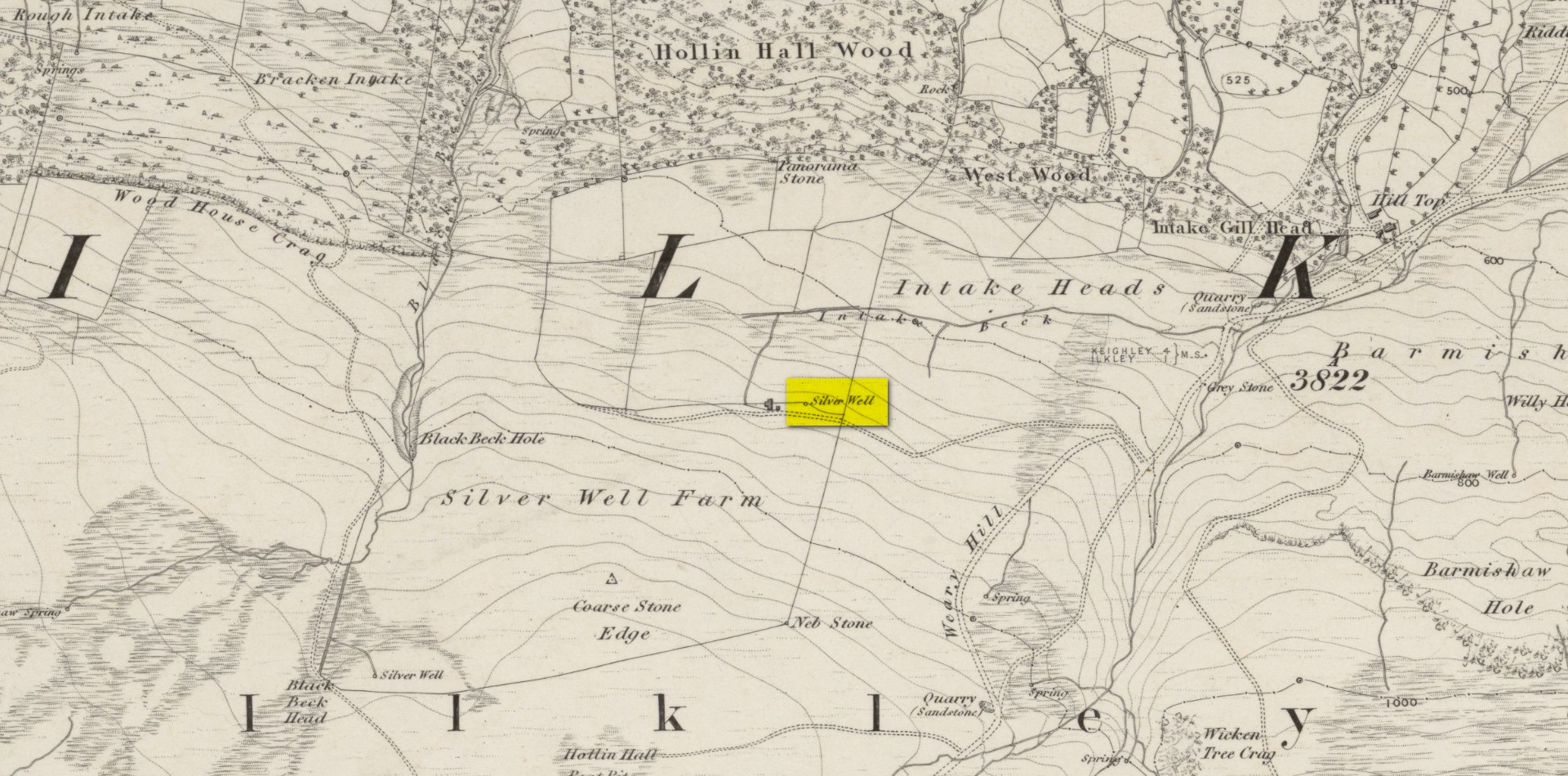
Highlighted on the earliest of the Ordnance Survey maps, this spring of water supplied the old cottage here for many a year. Nowadays it has been covered—and has been like that for upwards of fifty years—although it was said to be in constant flow by those who lived here in earlier times. When the Yorkshire holy wells writer Edna Whelan (1989) came here in the 1980s, the running water could still be heard beneath a pile of large stones that covered its source. Today, stone slabs cover it over—but the water is still running below. It had a reputation of never running dry, even in droughts. I spoke with a local doctor in the late-1980s who told us that he was confident the Silver Well would always keep running and its water were fine to drink. It’s a pity the source of the spring is covered over and, surely, is a case for being exposed and open for folk to use once again…
In Collyer & Turner’s (1885) magnum opus on Ilkley, they thought the Silver Well “was probably a holy well” —and it probably was something along those lines, depending on how precisely we define the word ‘holy’. The notion that it may have been a place where, in earlier times, silver coins and other offerings were given to the spirit of the well in exhange for good health and fortune (as is found at springs and wells all over the world) was given a boost when, in the 1960s, a short distance east of Silver Well, was found a clutter of very old silver coins dating from the periods of Kings Edward I and II (13th and 14th Century). The coins were donated to the British Museum where, I presume, they still live. But they may have either come from this well, or were being deposited here. We’ll probably never know for sure. A number of other Silver Wells in Britain possess so-called holy associations.
References:
- Collyer, Robert & Turner, J.H., Ilkley: Ancient and Modern, William Walker: Otley 1885.
- Whelan, Edna & Taylor, Ian, Yorkshire Holy Wells and Sacred Springs, Northern Lights: Dunnington 1989.
Acknowledgements: Huge thanks for use of the Ordnance Survey map in this site profile, reproduced with the kind permission of the National Library of Scotland.
© Paul Bennett, The Northern Antiquarian