Cup-Marked Stone: OS Grid Reference – SE 10474 46635
Also Known as:
- Carving no.69 (Hedges)
- Carving no.238 (Boughey & Vickerman)
Getting Here
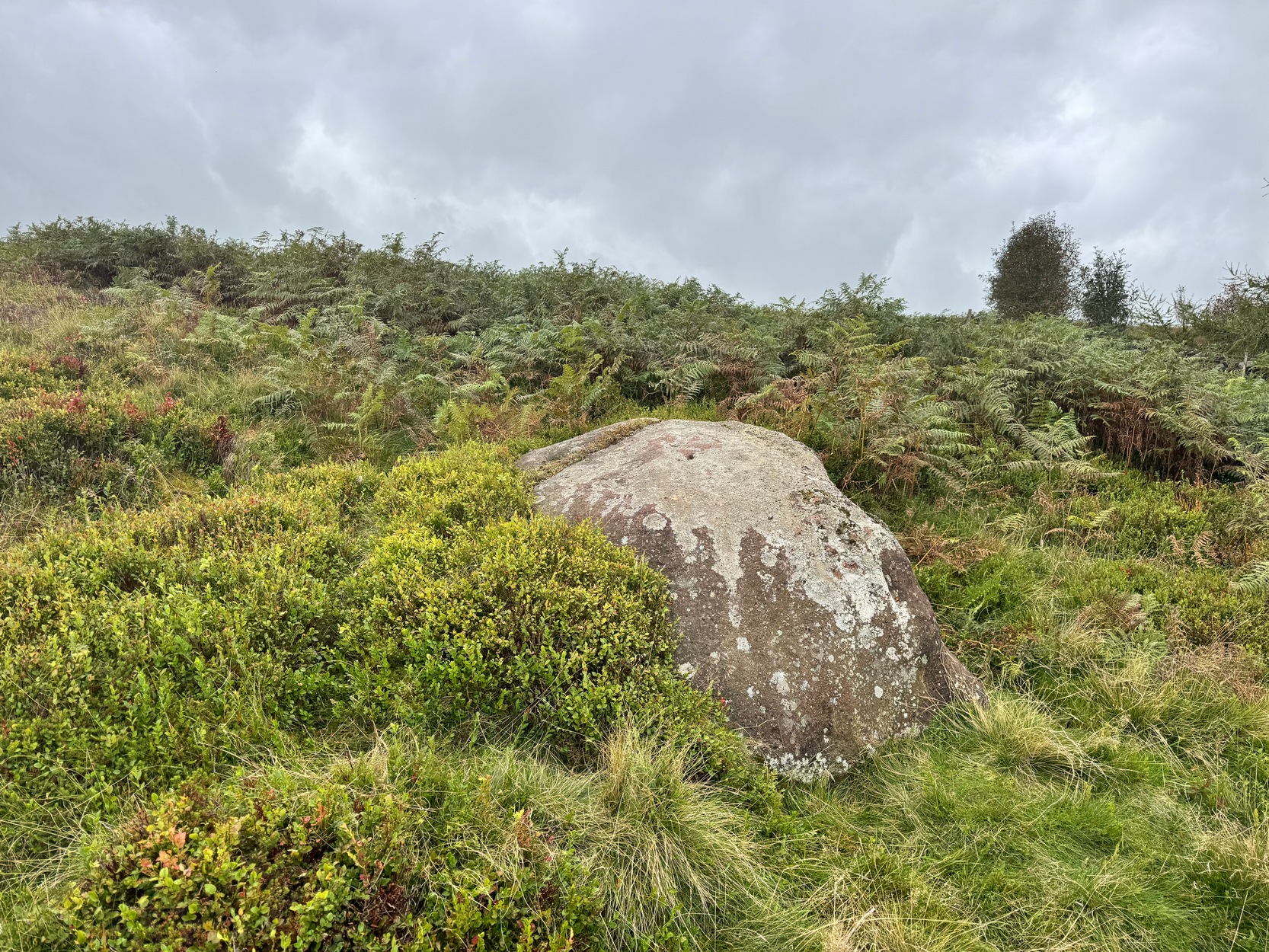
Nice ‘n easy to find this one. Take the Wells Road up out of Ilkley central, up and over the cattle-grid and, one-third of a mile (0.5km) past the grid, keep your eyes peeled fro the small road on your left. Go up here for literally half-a-mile and park at the roadside. From here you’ll see the straight track leading to the Silver Well cottage in the trees. Walk 300 yards along the track (past the larger Weary Hill [3] carving on the slope just above) towards the cottage and, about ten yards before reaching the gate, walk uphill through the heather to the notable large boulder forty yards up the slope. Y’ can’t really miss it.
Archaeology & History
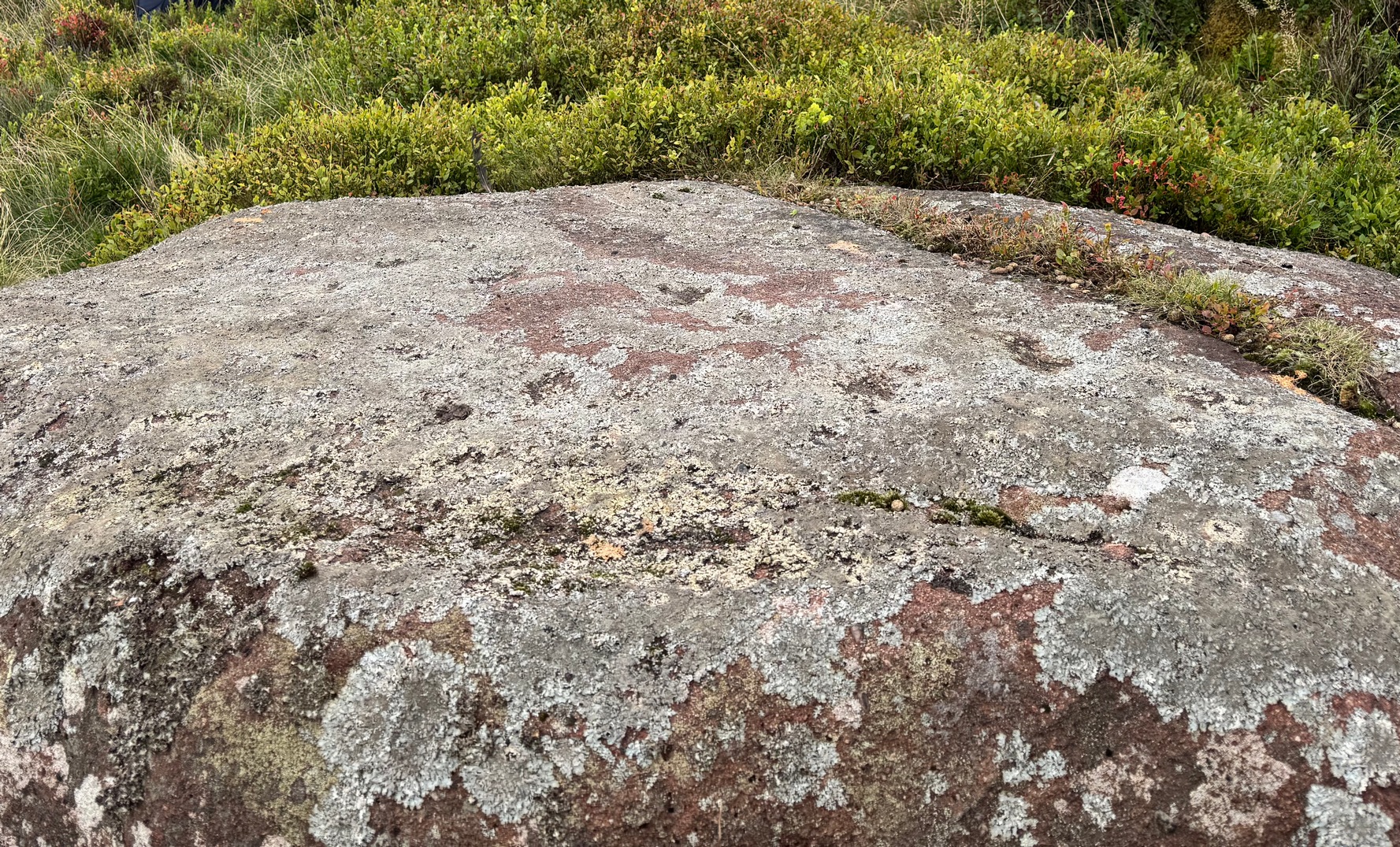
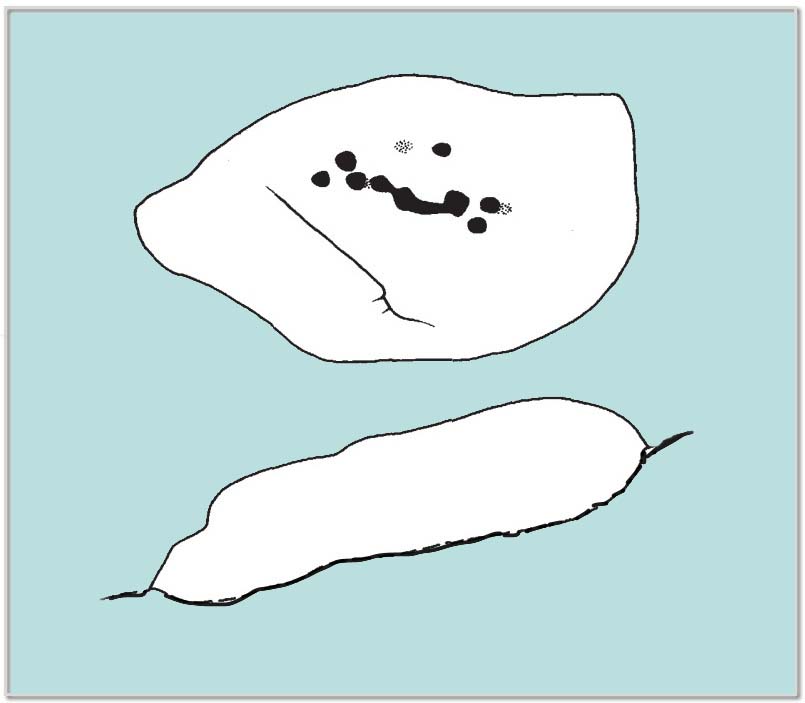
On a recent visit to this cup-marked stone, good old Mother E greeted us with a dark grey sky and so the design we were hoping to catch on this large sloping stone wasn’t quite what we hoped. The wide and half-inch deep cup-marks were visible when we stooped low to look across the surface of the stone, but from above they were difficult to make out. Altogether we counted eight cups—but Boughey & Vickerman (2003) reckoned there were nine of them. Also, well-defined grooves, half-natural and half-man-made, were just above visible, but we couldn’t see them in their entirety. In John Hedges (1986) sketch of the design, the cups and wide deep grooves are clear to see.
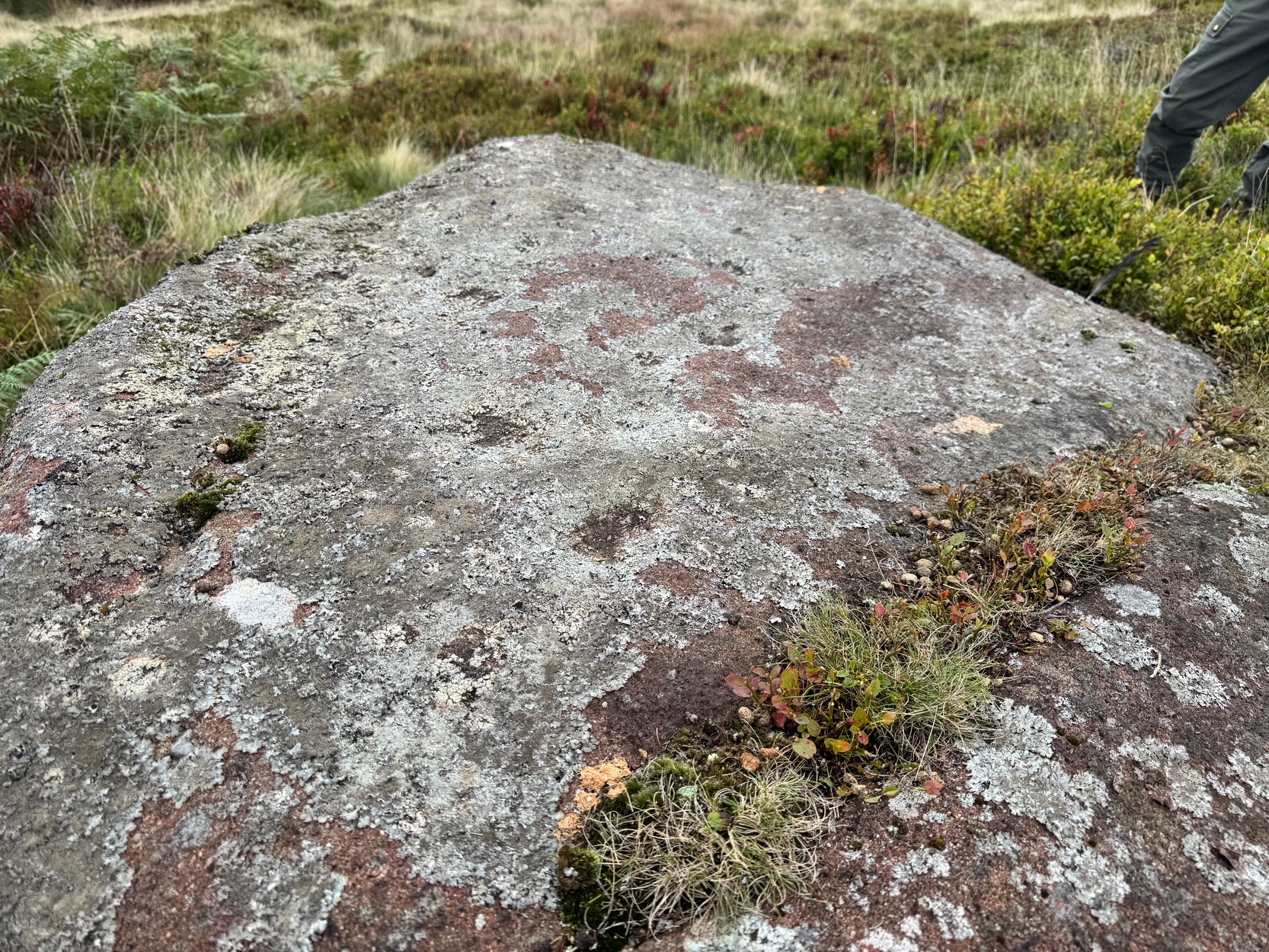
In the event that you have a look at this petroglyph, it would be best to visit it on a clear day when the sun is low—and if you brush the surface with water it would highlight the design pretty clearly. It’s also possible that you’d see new elements on the carving as a result of your work.
One final note: when we came here recently, both Graeme Chappell and Tom Cleland related to me that the rock itself was quite a notable red colour—which was totally lost on me as I’m the colorblind dude in the bunch! But, as they both suggested, this distinct colouration was probably one of the ingredients the stone was chosen to be carved. Makes sense.
References:
- Allen, J. Romilly, “Notice of Sculptured Rocks near Ilkley,” in Journal of the British Archaeological Association, volume 38, 1882.
- Anonymous, Walks Around Cup and Ring Stones, ITIC: Bradford n.d. (1995)
- Boughey, K.J.S. & Vickerman, E.A., Prehistoric Rock Art of the West Riding, WYAS: Leeds 2003.
- Hedges, John (ed.), The Carved Rocks of Rombald’s Moor, WYMCC: Wakefield 1986.
Acknowledgements: Huge thanks for use of the Ordnance Survey map in this site profile, reproduced with the kind permission of the National Library of Scotland.

© Paul Bennett, The Northern Antiquarian
