Craig Hill, Kenmore, Perthshire

Hut Circle:  OS Grid Reference – NN 81327 45039

Getting Here
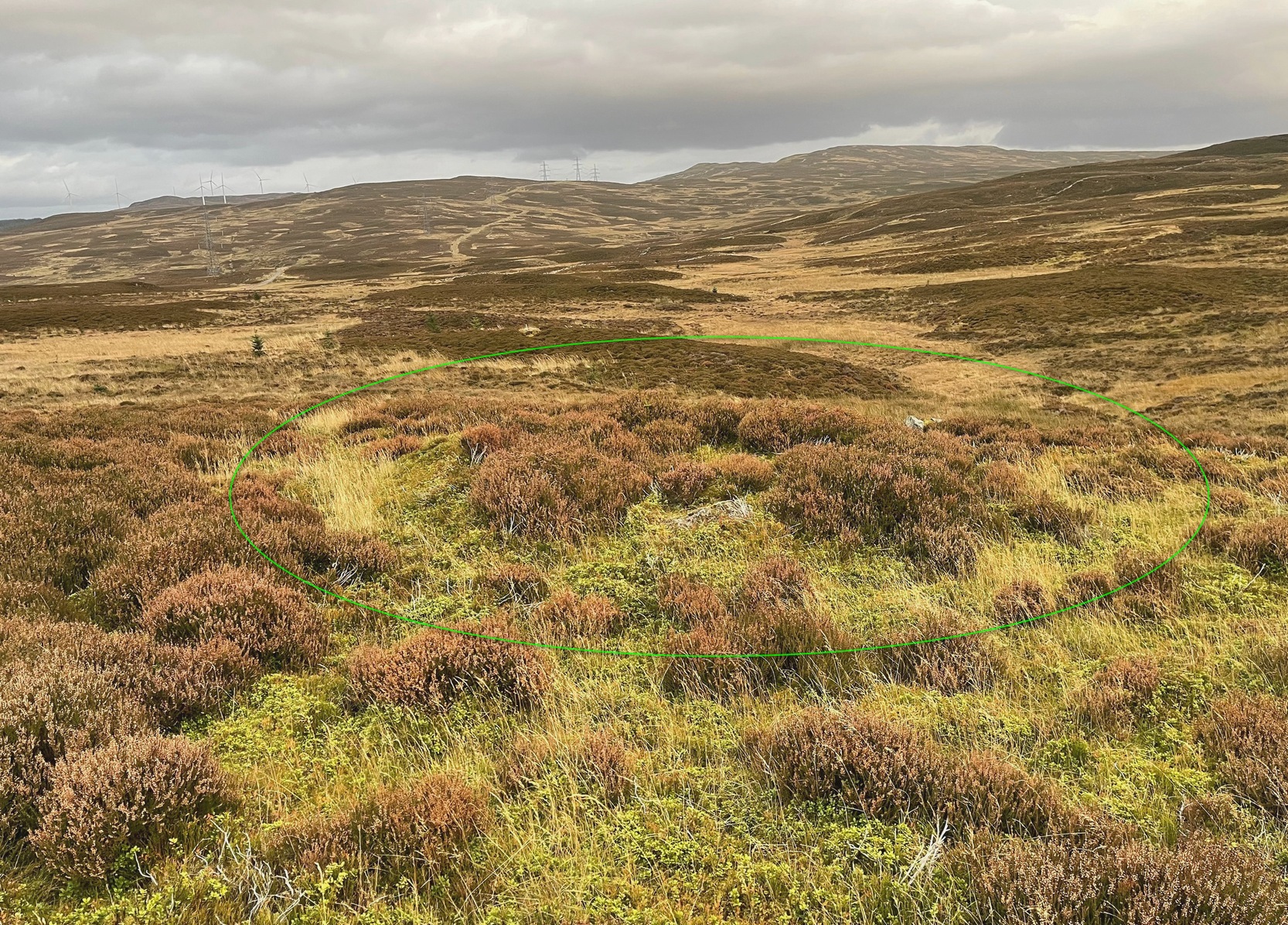
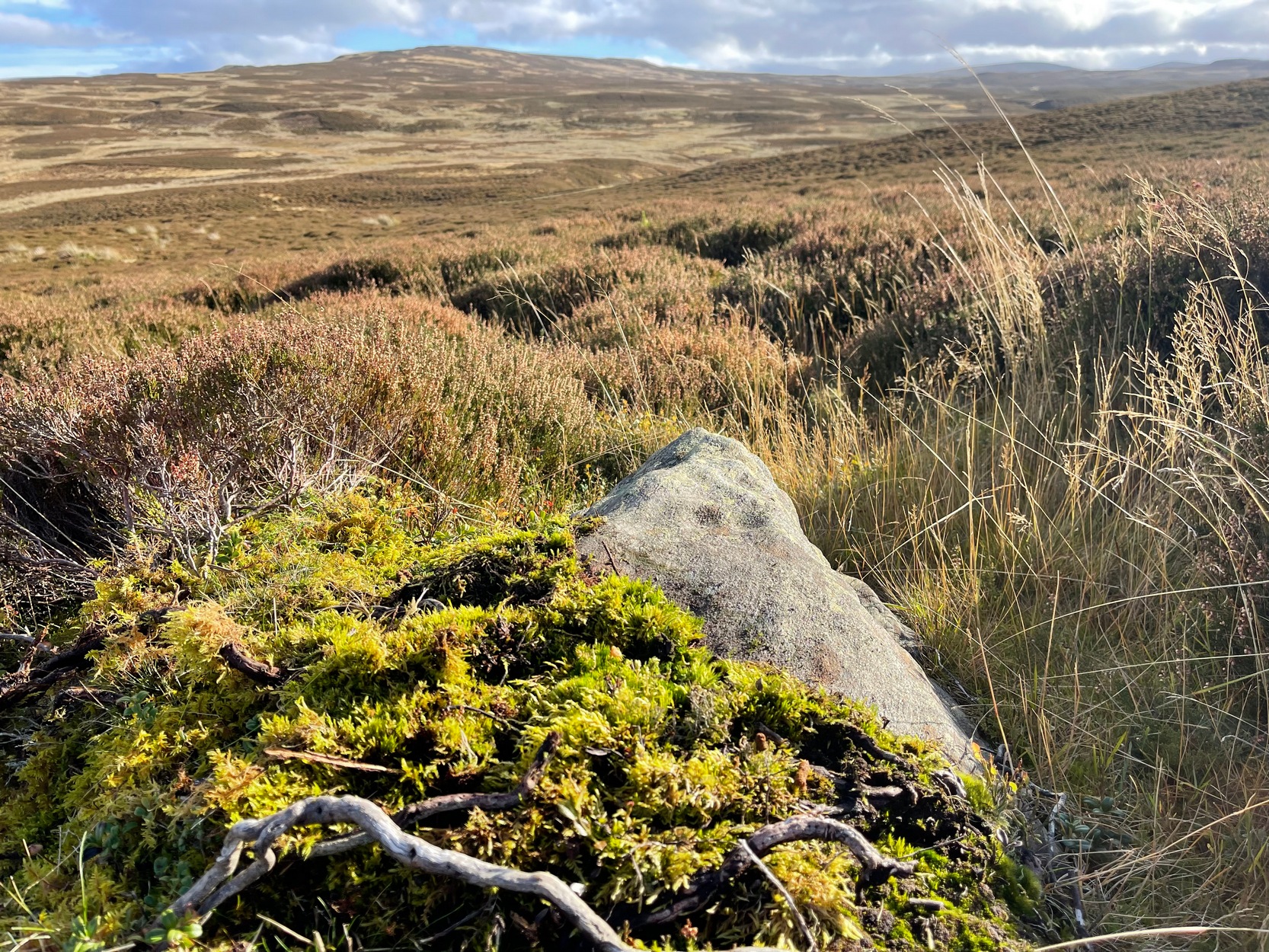
Craig Hill hut circle

From Kenmore village, just as you’re going out of the village towards Aberfeldy (A827 road), turn right as if you’re going on the minor road on the south-side of Loch Tay.  Almost immediately on this road, turn left and take the tiny, steep road uphill towards Amulree.  After 2½ miles uphill, the road begins to level out and a small loch is on your left (north).  Just past it, on the same side, a track runs onto the moors.  Walk along here for nearly a mile where the track splits: keep to your left and the track follows the line of walling.  Now’s the hard bit: after literally ⅔-mile, walk downhill and cross the burn (stream), then less than 50 yards up the slope on the other side, zigzag around…

Archaeology & History
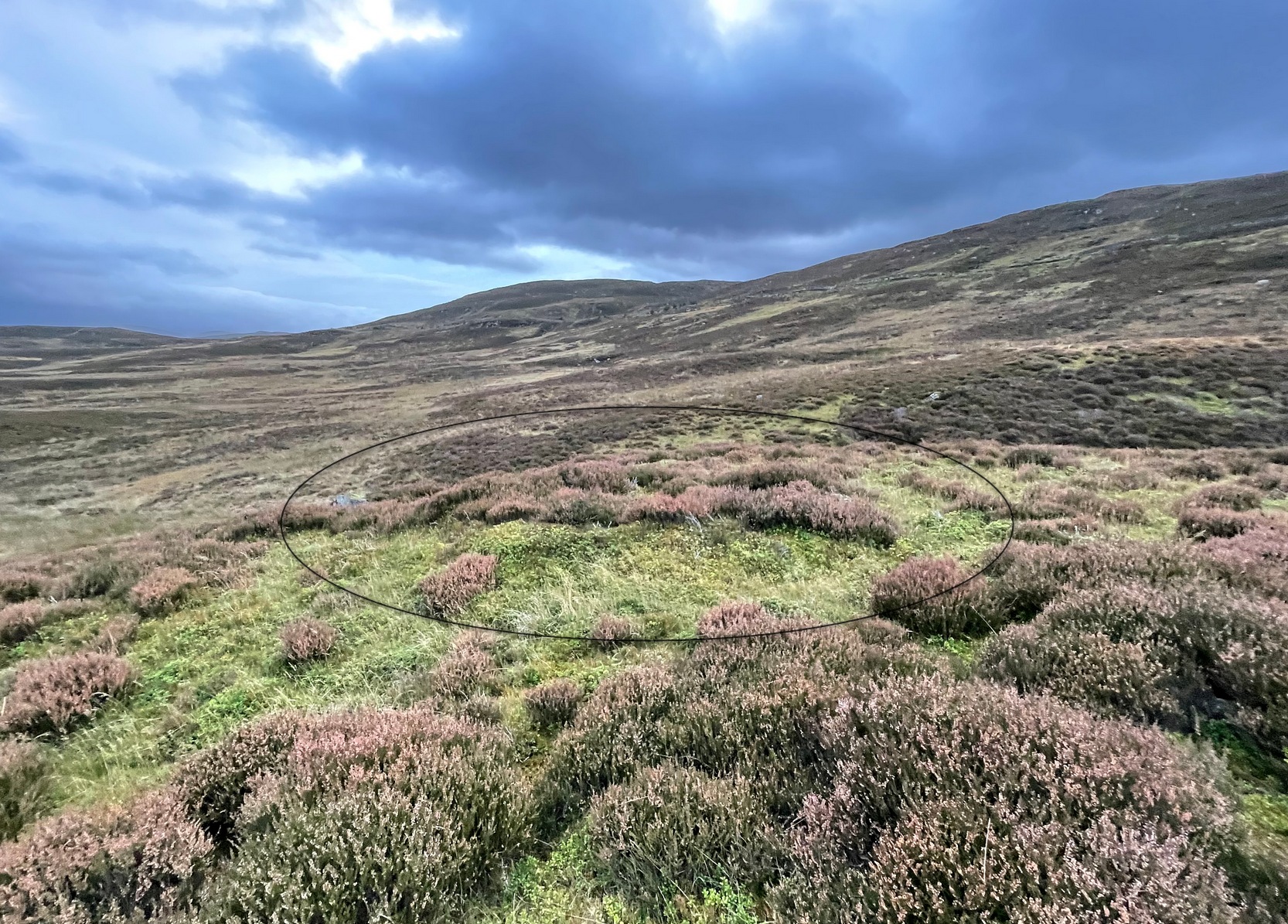
Craig Hill circle looking SW

Overlooking a small (unnamed) burn immediately to the right and a large wide marshy hollow to the front, is this small and seemingly singular hut circle, in a good state of preservation, surrounded by the scattered mass of cup-and-ring stones—some complex, some very plain—all over this moorland slope.  It’s a very long journey to take just to visit a single hut circle, but I’d assume that you’d be wanting to see the petroglyphs surrounding it too—so mebbe have a look at this whilst you’re fondling the rock art!

Internally this is quite a small circle, measuring barely 5 yards (east-west) by 6 yards (north-south), seemingly with its entrance on the north.  Its small size suggests it was constructed for the use of just one person; two at the very most.  The structure is still in very good condition considering its age (possibly Bronze Age), with minimal damage apart from Nature’s wind and weathering.  The circle is made up primarily of a number of large rocks with many filling stones, with the walling being a yard or so wide all round.  In all likelihood, the rest of the building would have been made of timber, with a typical tented roof.  It’s an excellent spot to base yourself to explore all the cup-and-ring stones on these slopes.  Perhaps, just perhaps, this might have been a shaman’s hut, looking over the ancestral images on the rocks hereby…. ♥

© Paul BennettThe Northern Antiquarian

Urlar Burn (4), Aberfeldy, Perthshire

Cup-Marked Stone:  OS Grid Reference – NN 81875 44068

Getting Here

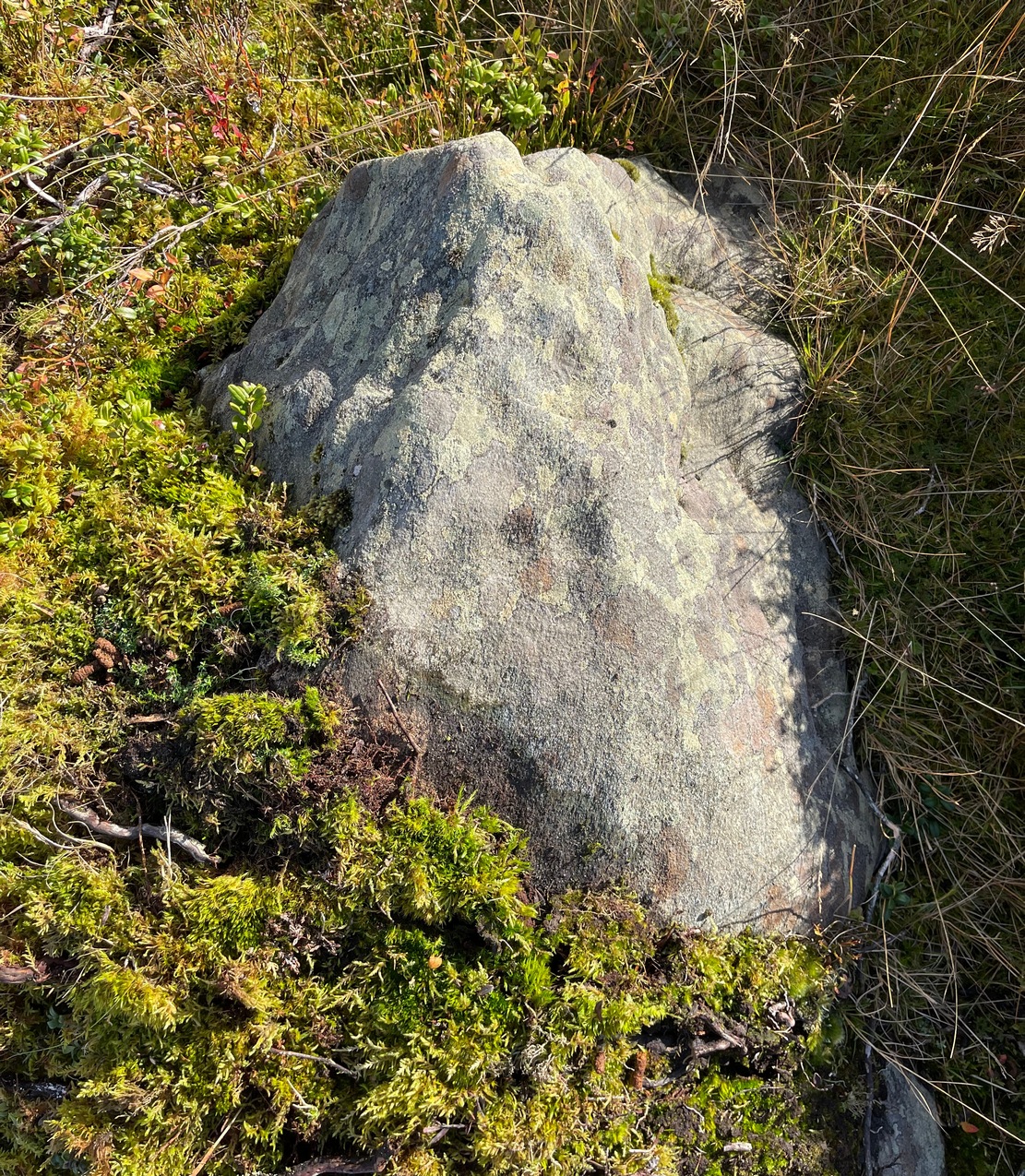
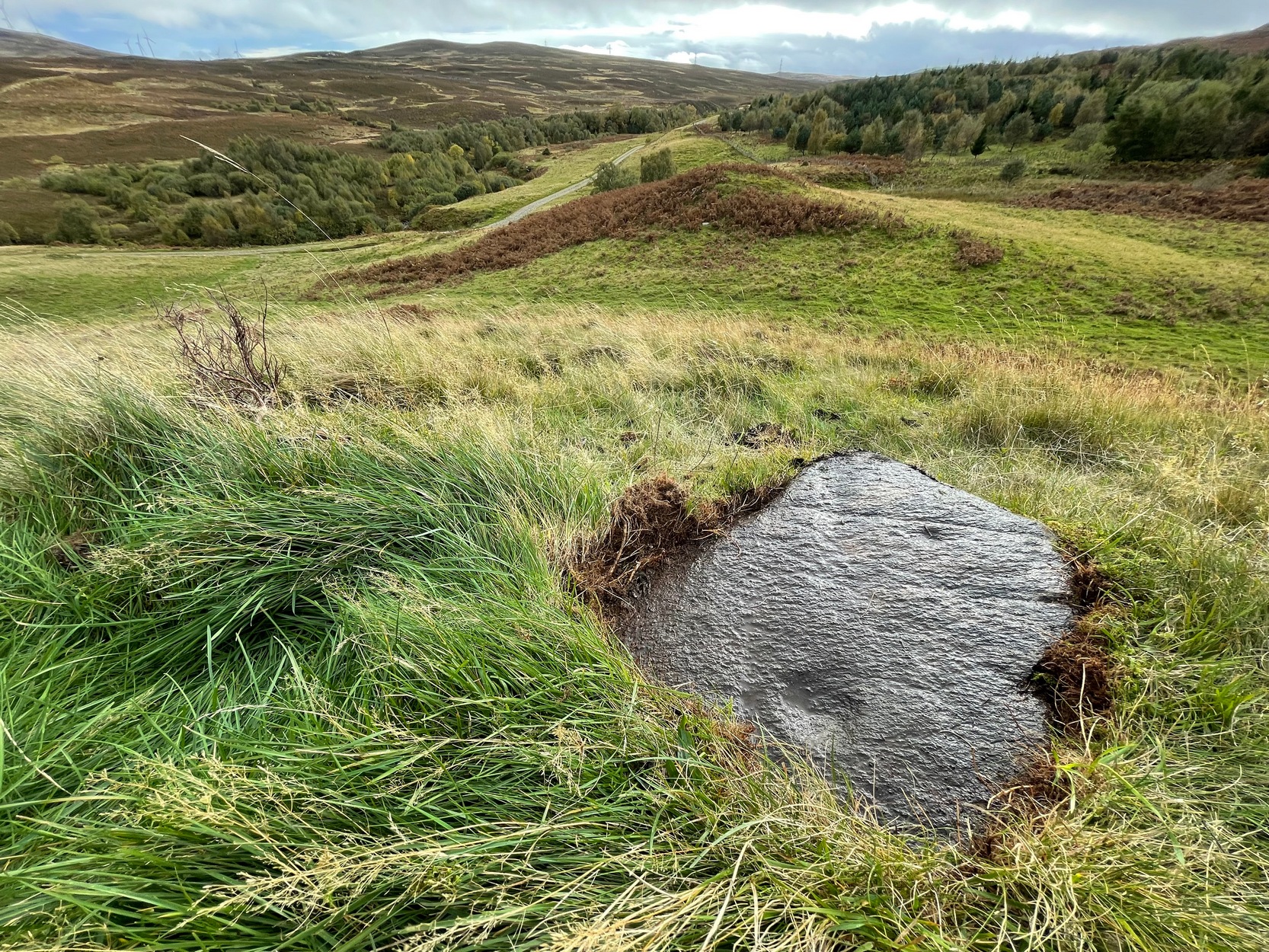
The cup-marks, looking S

Take the long steep zigzag road from Kenmore to Amulree, and just where the road begins to level out, park up near the isolated hut by the roadside at the side of the lochan.  Just past here, a track on your left takes you onto the moors, past the lochan.  Nearly a mile along the track splits: bear to the right, uphill slightly, then it’ll wind downhill and you’ll pass another track on your right. Ignore it, keep walking along and where you find a grassy little passing-place on your right—stop!  Now walk uphill, onto the moor, through the heather for 175 yards and the land has levelled out.  Look around!

Archaeology & History

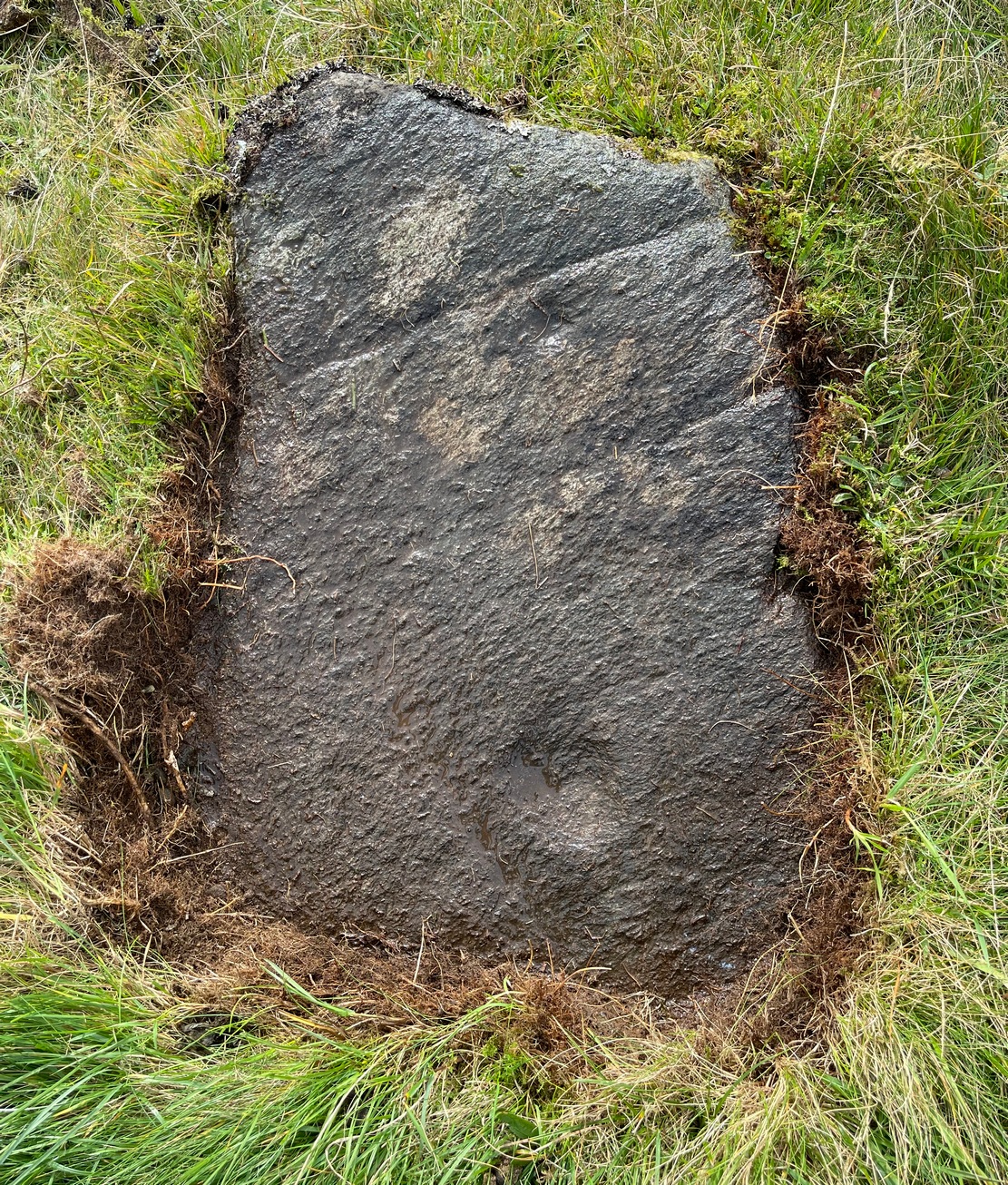
Cupmarks from above

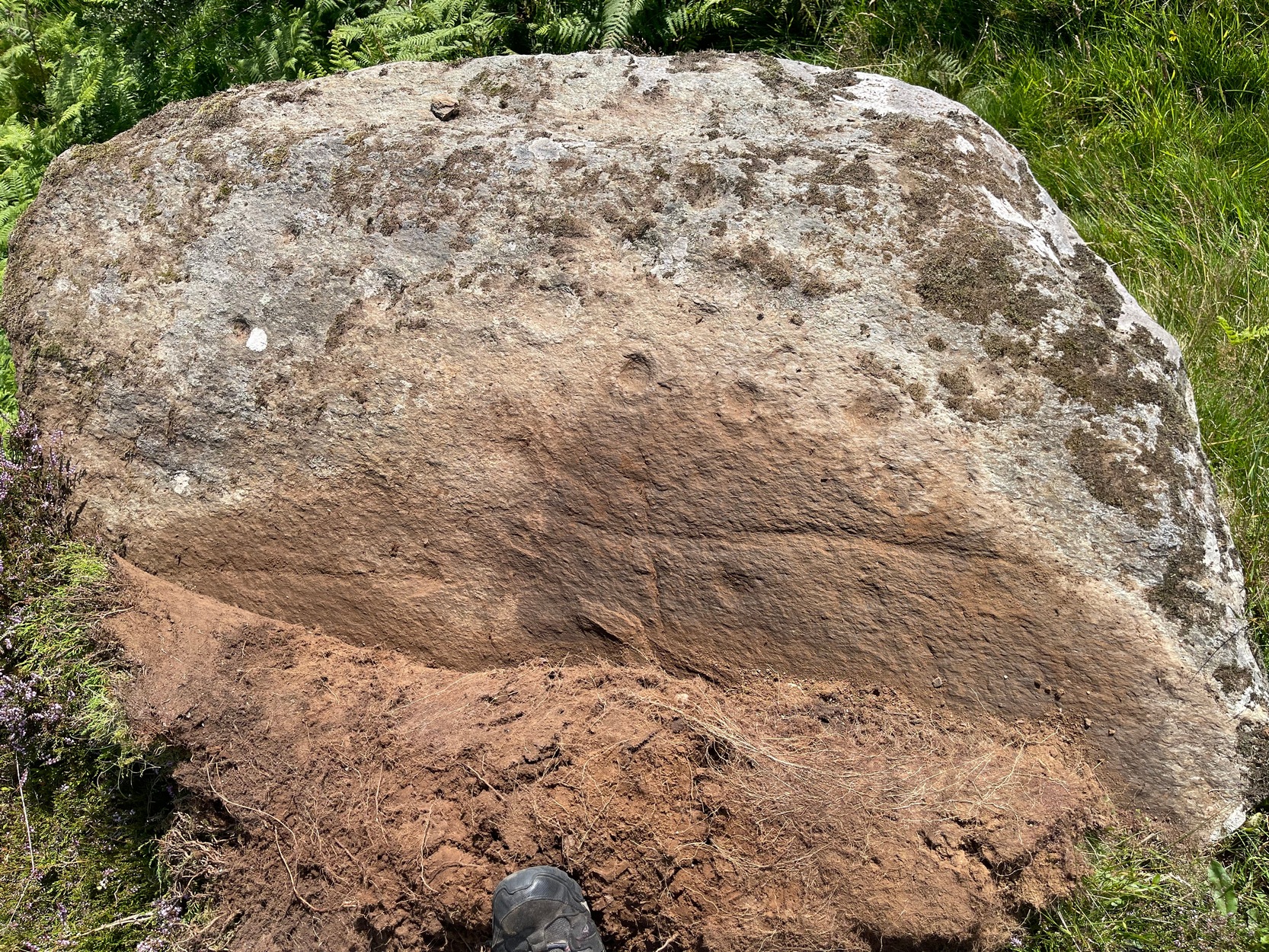
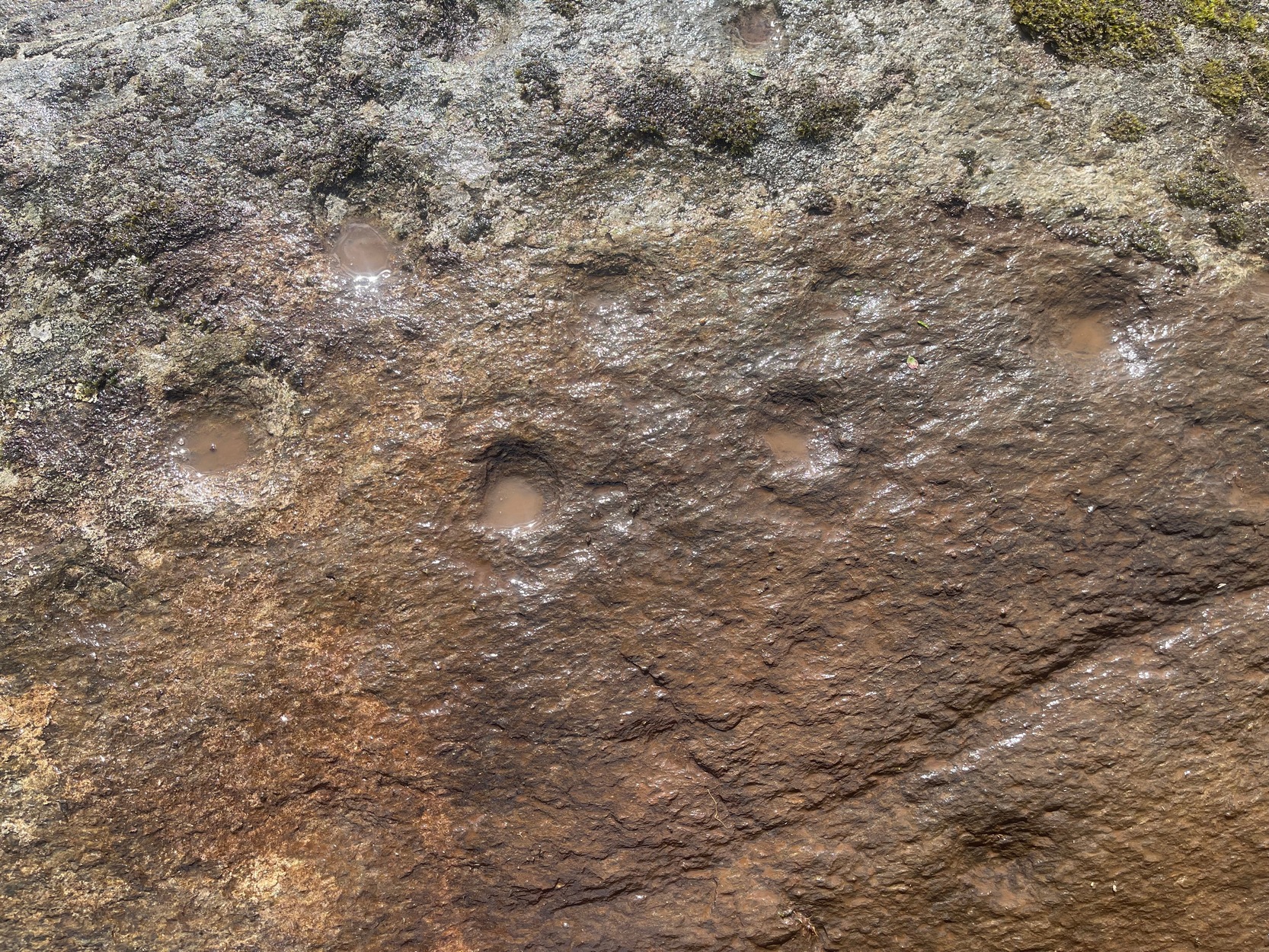
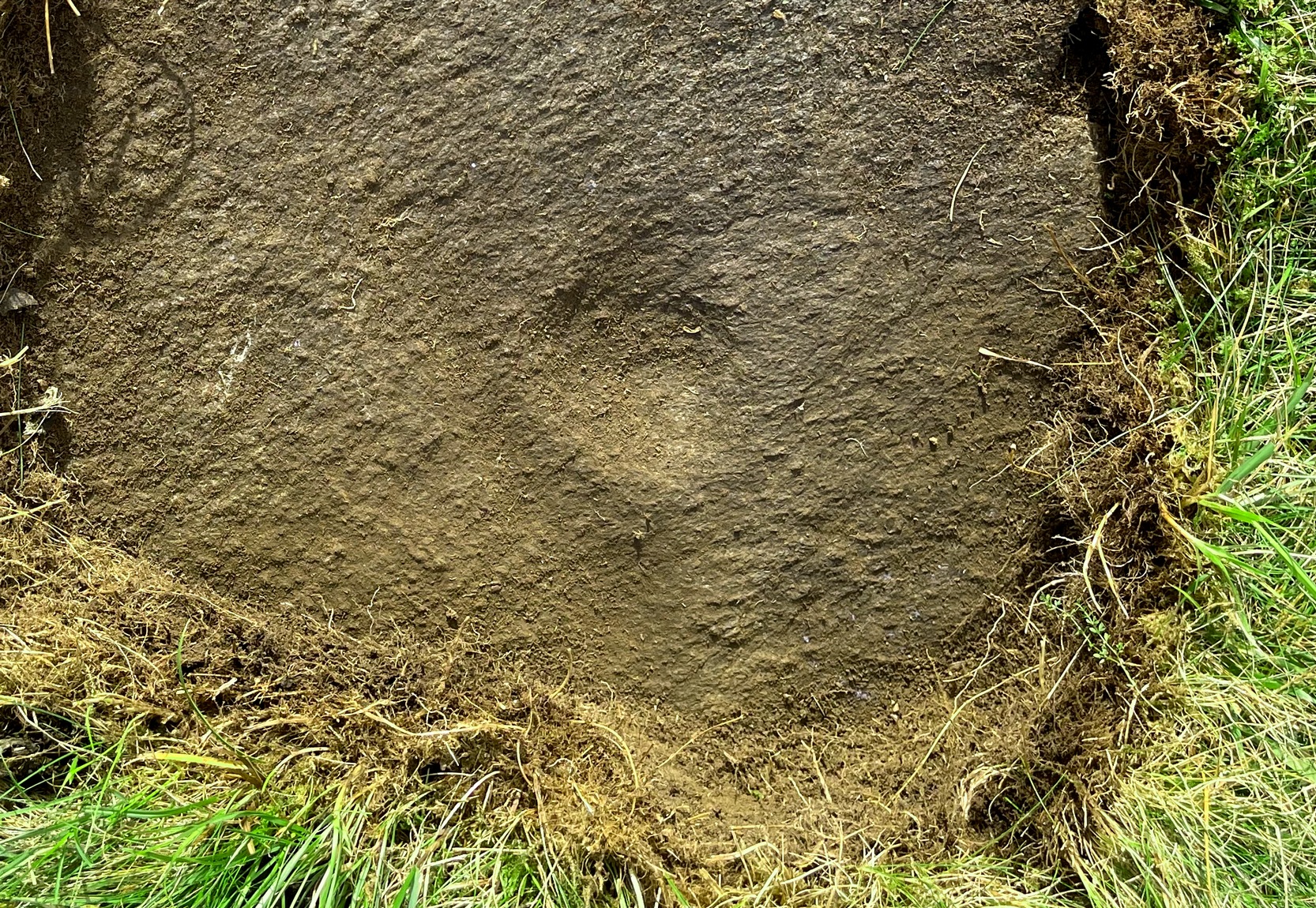
I came across this very basic carving when checking out a couple of others close by and found that it hadn’t been recorded before. It’s nothing special to look at, but is an outlier of the main Craig Hill cluster of carvings a few hundred yards to the west.  The design consists of at least two cup-marks that have been etched near the top of the rock, although when I wet the stone it seemed as if a third one was next to the other two, as if in a line.  The sun was at its peak when I found it, which meant that I couldn’t get any decent photographs to illustrate this—even when I watered the olde thing!  It’s another carving that will only be of interest to the real petroglyph fanatics amongst you.

© Paul BennettThe Northern Antiquarian

Urlar Burn (8), Aberfeldy, Perthshire

Cup-and-Ring Stone:  OS Grid Reference – NN 83297 45845

Getting Here

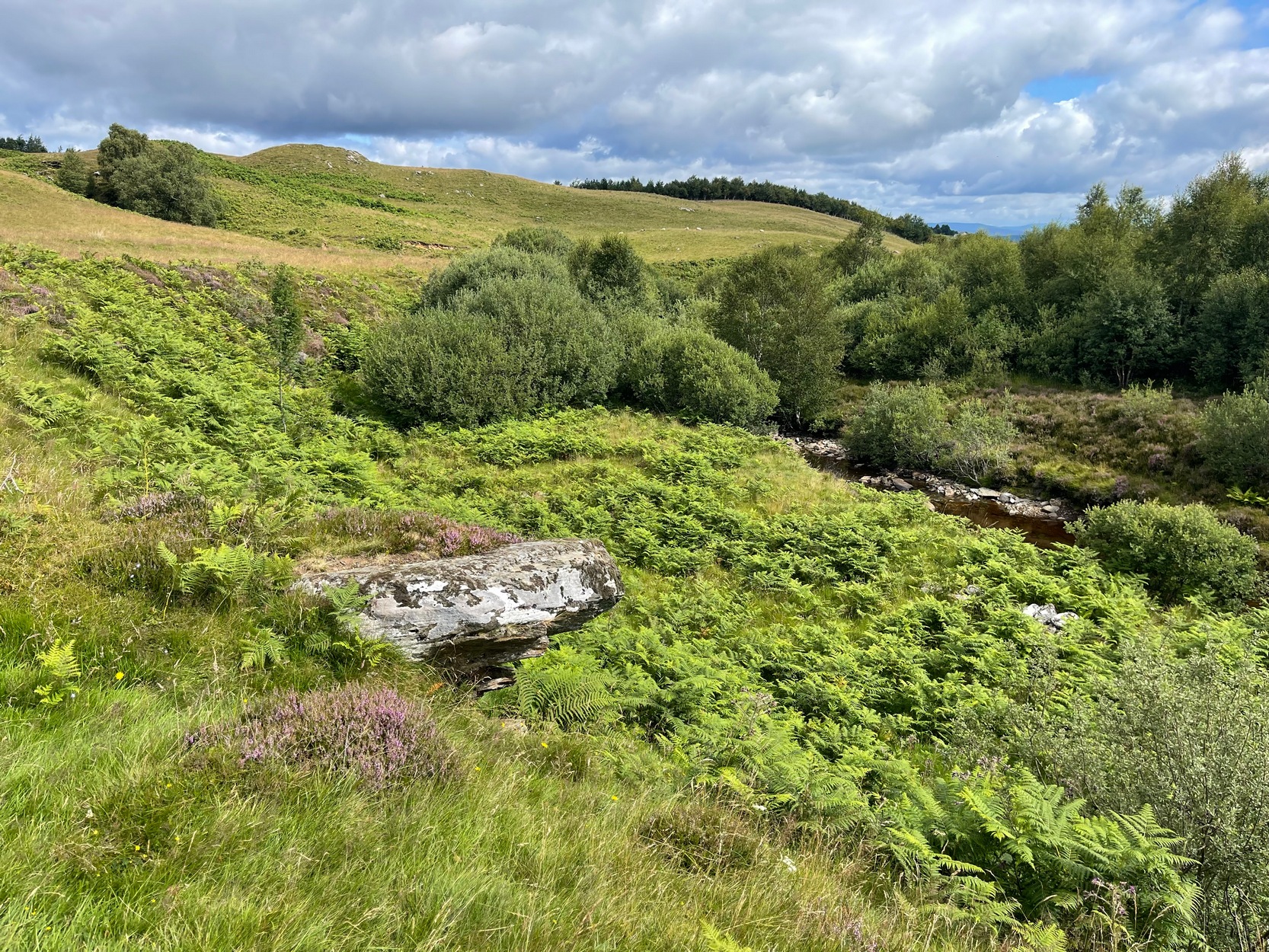
Urlar Burn (4) stone

Take the A826 Crieff Road uphill for 275 yards then turn right up the Urlar Road.  It’s a long uphill walk from here, up the private road, through and past Urlar Farm and along the track; making sure you keep to the west-side of the burn – don’t cross over it!  Beyond the farm, the fields open up ahead of you into the distant hills.  Keep along the track until, after a few hundred yards, on the left by the waters, the first small copse of trees appears. (if you reach the bothy, you’ve gone way to far)  Here, walk towards the waters and you’ll see good-sized boulder sticking out of the ground and overlooking the burn below.  That’s it.

Archaeology & History

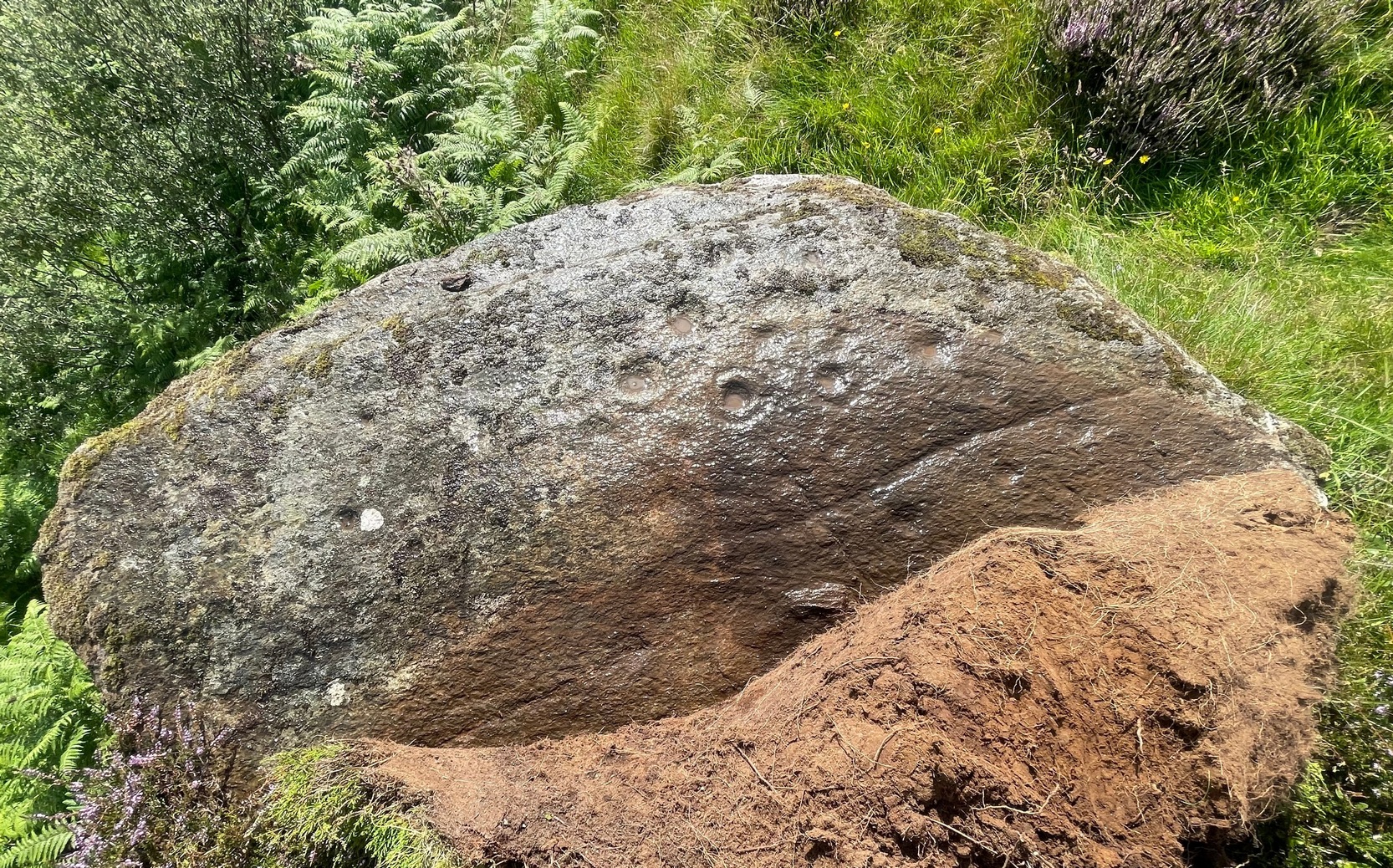
This faded but decent cup-and-ring design, cut into an overhanging rock where you’d sit and dangle your legs, was first described by George Currie (2009) who, in his typically minimalist style told that it “bears 17 cups, 4 of which have single rings.”  There may be more to it, but some of the stone is heavily covered in vegetation and on my visit here, the summer heat overwhelmed my ability to gain a complete picture of the surface.

The Urlar Burn (4) carving
Faded design in bright sun

Most of the design is near the western earthfast end of the stone.  A long natural scratch in the rock, seemingly enhanced by the hand of man, separates at least three shallow cup-marks on one side (north) from the greater mass of the design on the other —which is where all the cup-and-rings can be seen.  One of the rings is incomplete, whilst another has a natural crack running up to its outer edge, which may have been played around with slightly when the carving was first made.

I liked it here – and spent an hour or so under the bright sun before the heat pushed me away, to bathe in the pool below for a while….  Check it out when you’re looking at the other carvings in the neighbourhood

Folklore

Some cup&rings close-up

Although there’s nothing specific about this stone, the burn to the side of the carving was haunted by an old urisk in times gone by: an elemental creature from Scottish fairy lore who inhabited lonely streams and waterfalls.  The urisk of Urlar Burn was known as Brunaidh an Easain (his brother, Peallaidh, of greater renown, lived in the gorge of Moness close to Aberfeldy) and this spot may have been one of his abodes.  Urisks are associated in some places with cup-marked stones, in which offerings of milk were given to placate them — and this is a good site for any urisk to look over his winding waters….

References:

  1. Currie, George, “Perth and Kinross: Dull: Urlar Burn 1-4,” in Discovery & Excavation Scotland (new series), volume 10, 2009.

© Paul BennettThe Northern Antiquarian

Urlar Burn (6), Aberfeldy, Perthshire

Cup-Marked Stone:  OS Grid Reference – NN 82540 45022

Getting Here

Urlar Burn (6) stone

Take the A826 Crieff Road uphill for 275 yards then turn right up the Urlar Road.  It’s a long uphill walk from here, up the private road, through and past Urlar Farm and along the track (keeping to the west-side of the burn), past the impressive Urlar Burn (8) carving, until you eventually reach the bothy, 3¼ miles (5.2km) up from where you first turned off the A826.  Walk 70 yards past the bothy then into the heather on your left where a large couch-shaped boulder stands.  The carved rock is a couple of yards on the floor in front of you.

Archaeology & History

An unimpressive faint cup-marked stone consisting of between two and five shallow cups that are difficult to make out unless lighting conditions are good – and even then they’re troublesome!  It was first noted by George Currie (2009) how described it simply as: “a rock 2.0 x 1. x 0.2m between Urlar Burn and Hill Park track bears five cup marks.”  There are much more impressive carvings in this neck o’ the woods that you’ll want to see ahead of this one!

Folklore

Shallow cups: top-middle; centre-middle

Although there’s nothing specific about this stone, the burn to the side of the carving was haunted by an old urisk in times gone by: an elemental creature from Scottish fairy lore who inhabited lonely streams and waterfalls. The urisk of Urlar Burn was known as Brunaidh an Easain (his brother, Peallaidh, of greater renown, lived in the gorge of Moness close to Aberfeldy) and was likely to have lived further downstream from here.  They are associated in some places with cup-marked stones, where offerings of milk were given to placate them.

References:

  1. Currie, George, “Perth and Kinross: Dull: Urlar Burn (3),” in Discovery & Excavation Scotland (new series), volume 10, 2009.

© Paul BennettThe Northern Antiquarian

Black Burn (3), Aberfeldy, Perthshire

Cup-and-Ring Stone:  OS Grid Reference – NN 83318 46049

Getting Here

Black Burn (3) carving

Follow the same directions as if you’re going to the Black Burn (2) carving (which you’ll obviously be looking at if you’re checking this one out!); and from there, walk two or three steps southwards down the slope – and you’re just about stood on it!

Archaeology & History

This, at first sight, seems little more than two cup-marks: one rather small, and the other somewhat larger than usual.  I walked round it, crouched down and fondled it, poured water on it and heightened the carving… and noticed what seemed to be a carved arc around the western side of the large cup.  But I couldn’t make my mind up whether this was natural or not.  And then as laid down and looked across the stone, it seemed as if a very faint triangle completely enclosed the large cup!  I crawled round it at ground level and the shape appeared and disappeared as the light altered.  So I took a few more photos and wondered whether or not the shape would become obvious in them.  And it did!

An eye in the triangle?
Cup and faint triangle, or a trick of the mind?

It’s unusual – and I’m still not sure whether it’s natural or not.  The carving needs more attention, in better daylight.  Or perhaps the computer-tech kids might have a look at it and see if this really is an eye-in-the-triangle style design we’ve got here.  It would be damn good!  Anyhow, the carving was first mentioned by George Currie (2005), who told of it being two metres south of the Black Burn (2) cup-and-ring and, plainly, that it “has two cups: 60 x 15mm and 25 x 8mm.”  It overlooks the urisk-haunted Urlar Burn, a creature known in some places for having milk and other offerings poured into cup-marks to appease it and gain good fortune.

References:

  1. Currie, George, “Perthshire: Black Burn (Dull Parish) – Cup and Ring Marked Rocks”, in Discovery & Excavation Scotland, volume 6 (new series), 2005.

© Paul BennettThe Northern Antiquarian

Black Burn (2), Aberfeldy, Perthshire

Cup-and-Ring Stone:  OS Grid Reference – NN 83318 46055

Getting Here

Black Burn (2) carving

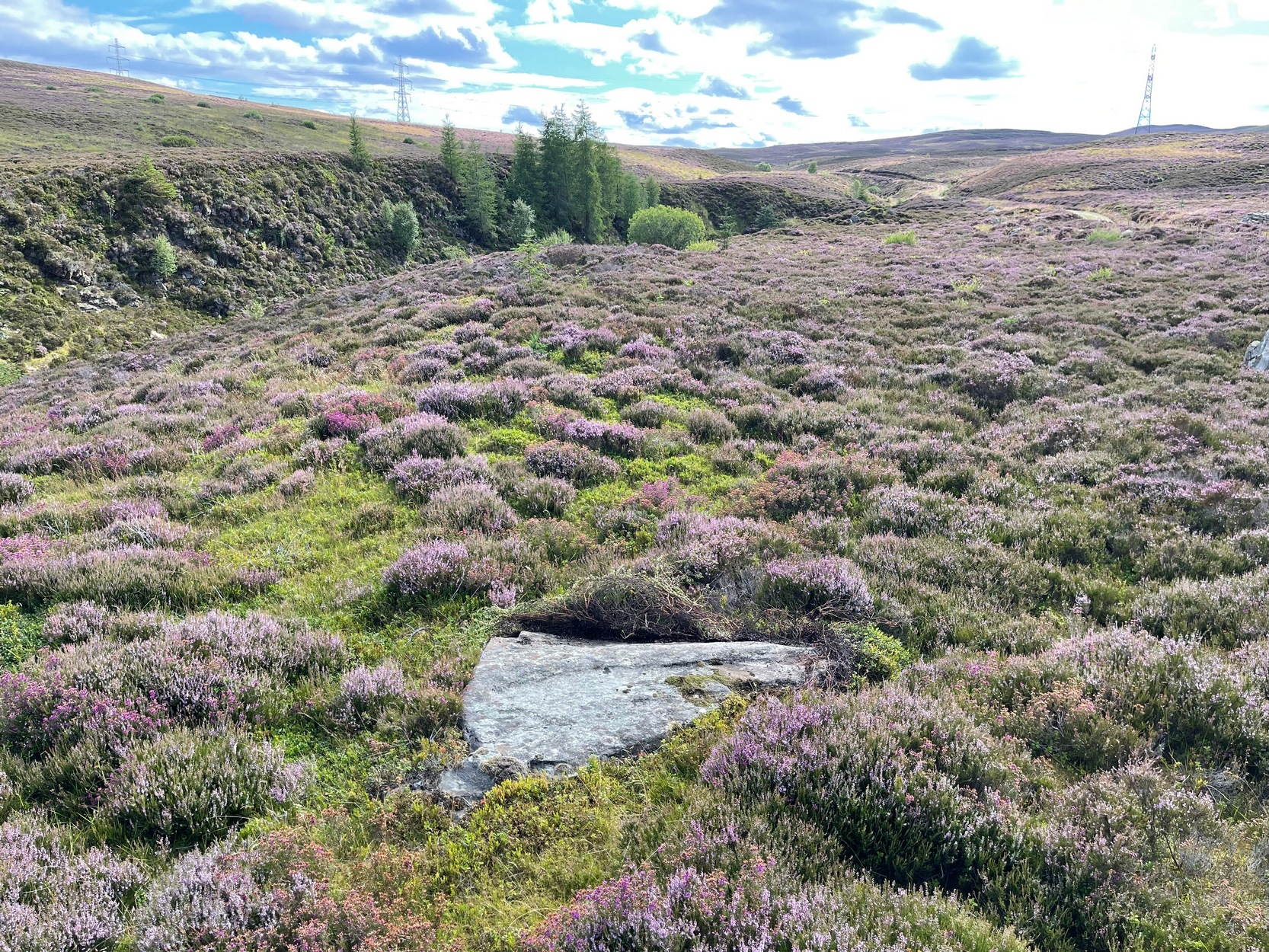
Take the A826 Crieff Road uphill for 275 yards then turn right up the Urlar Road.  It’s a long uphill walk from here, up the private road, through and past Urlar Farm and along the track, making sure to go right where the track splits, keeping to the west-side of the burn. (don’t cross over it!)  From here, the fields open up ahead of you into the distant hills.  Keep along the track until, after a few hundred yards a small copse of trees is on your right.  Walk past the bottom of this and then walk immediately up to the top of the large rounded knoll, or Tom, on your right.  Once at the top, look for the triangular stone on its southwestern edge.

Archaeology & History

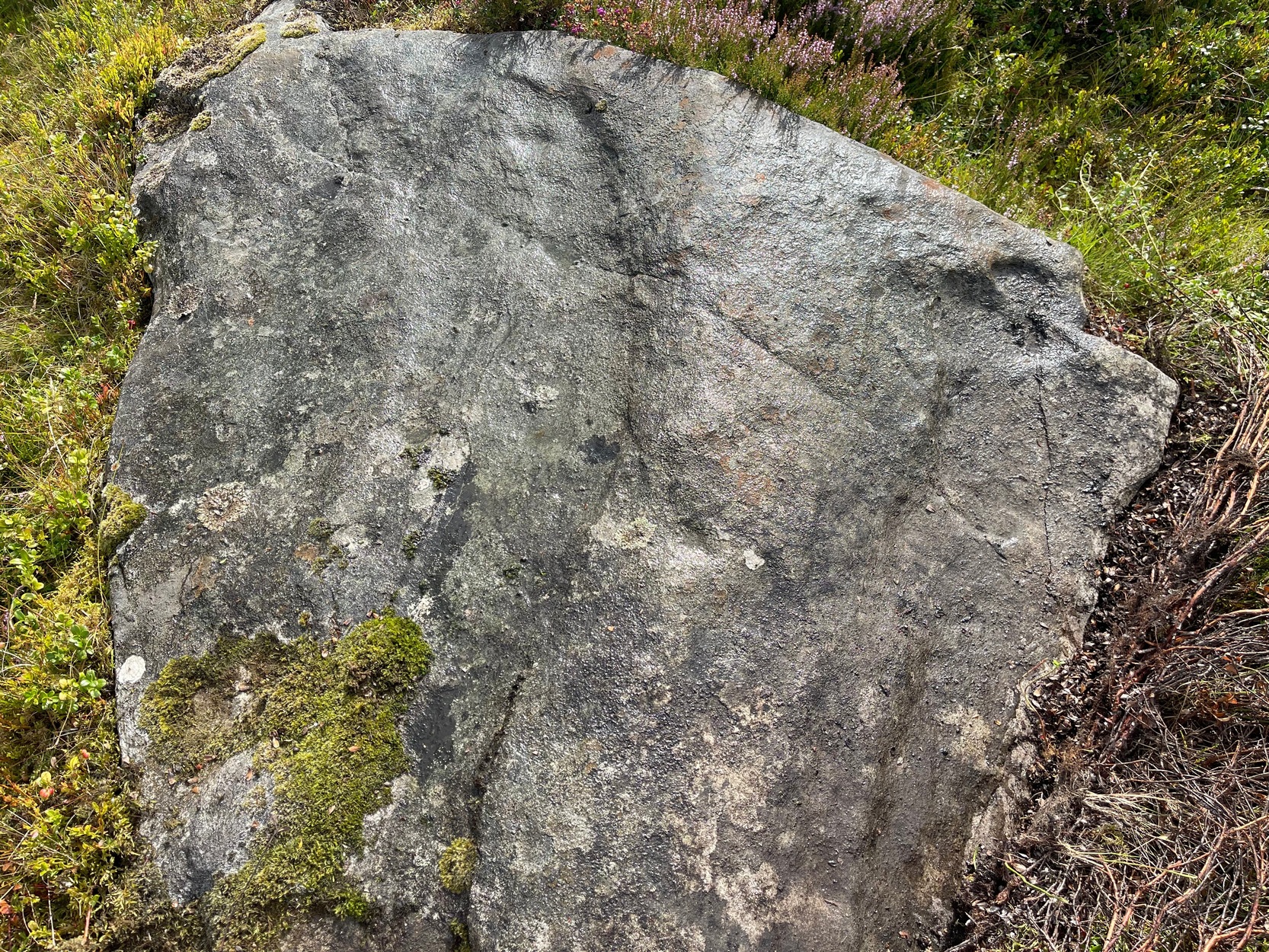
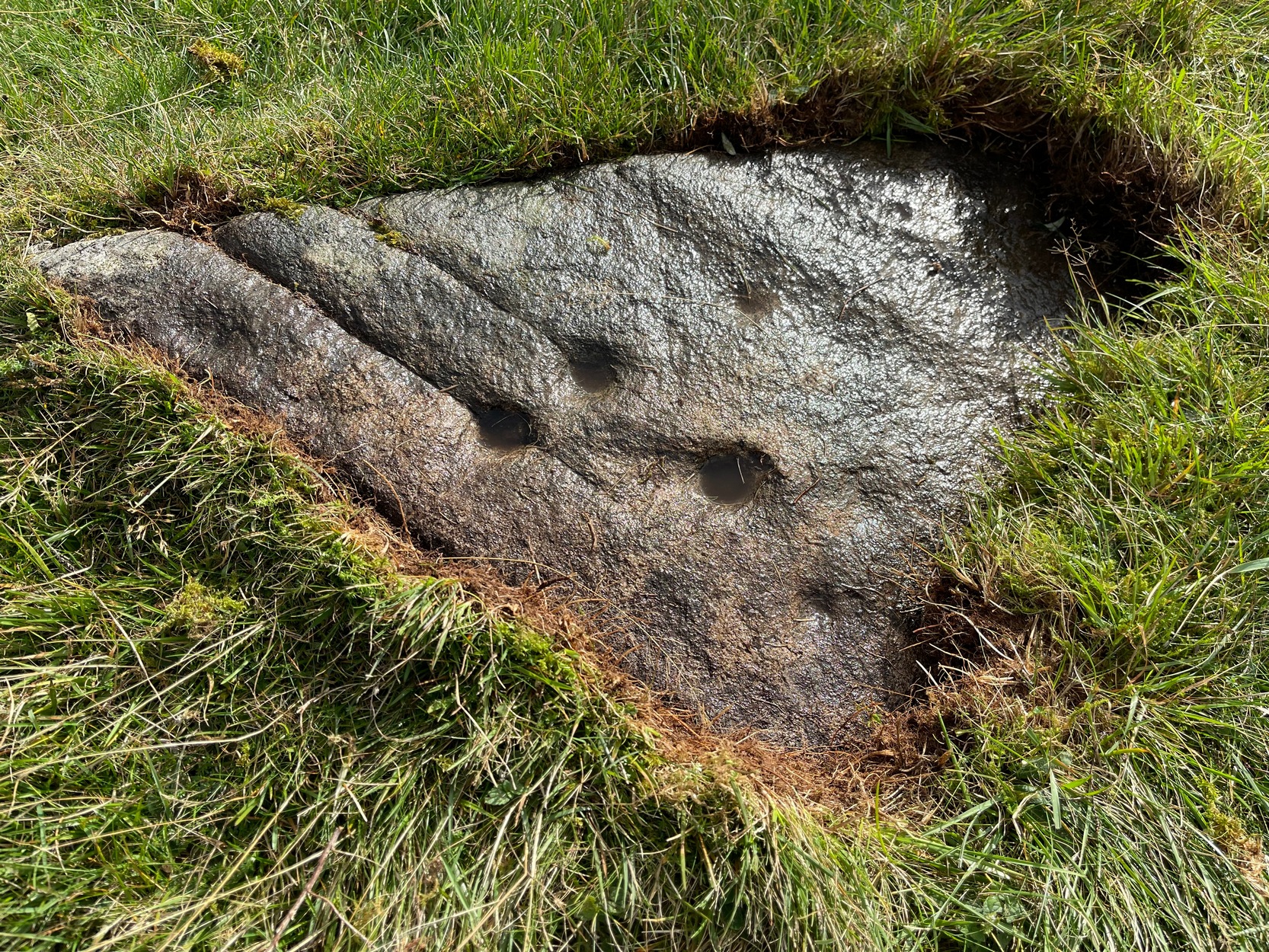
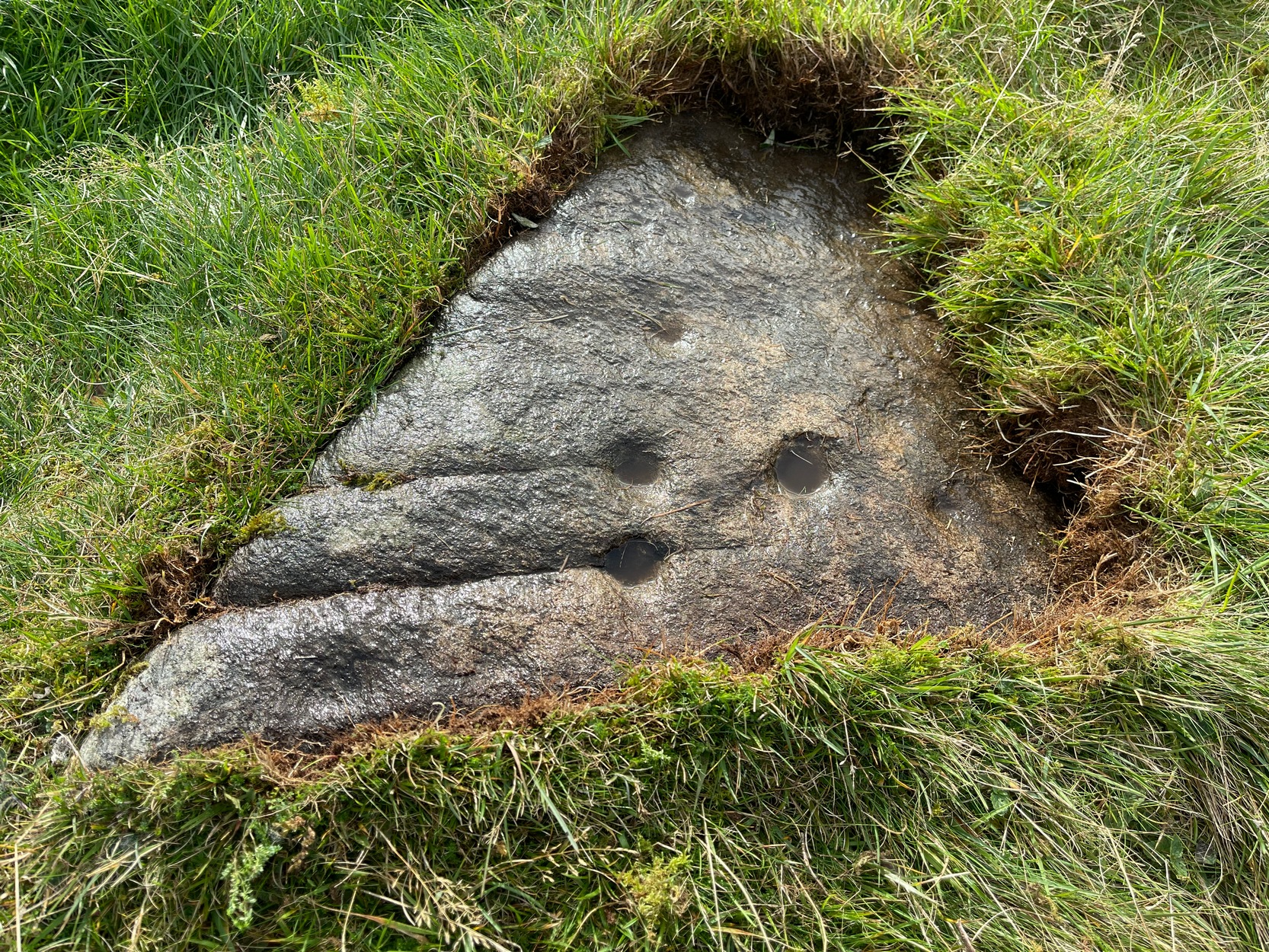
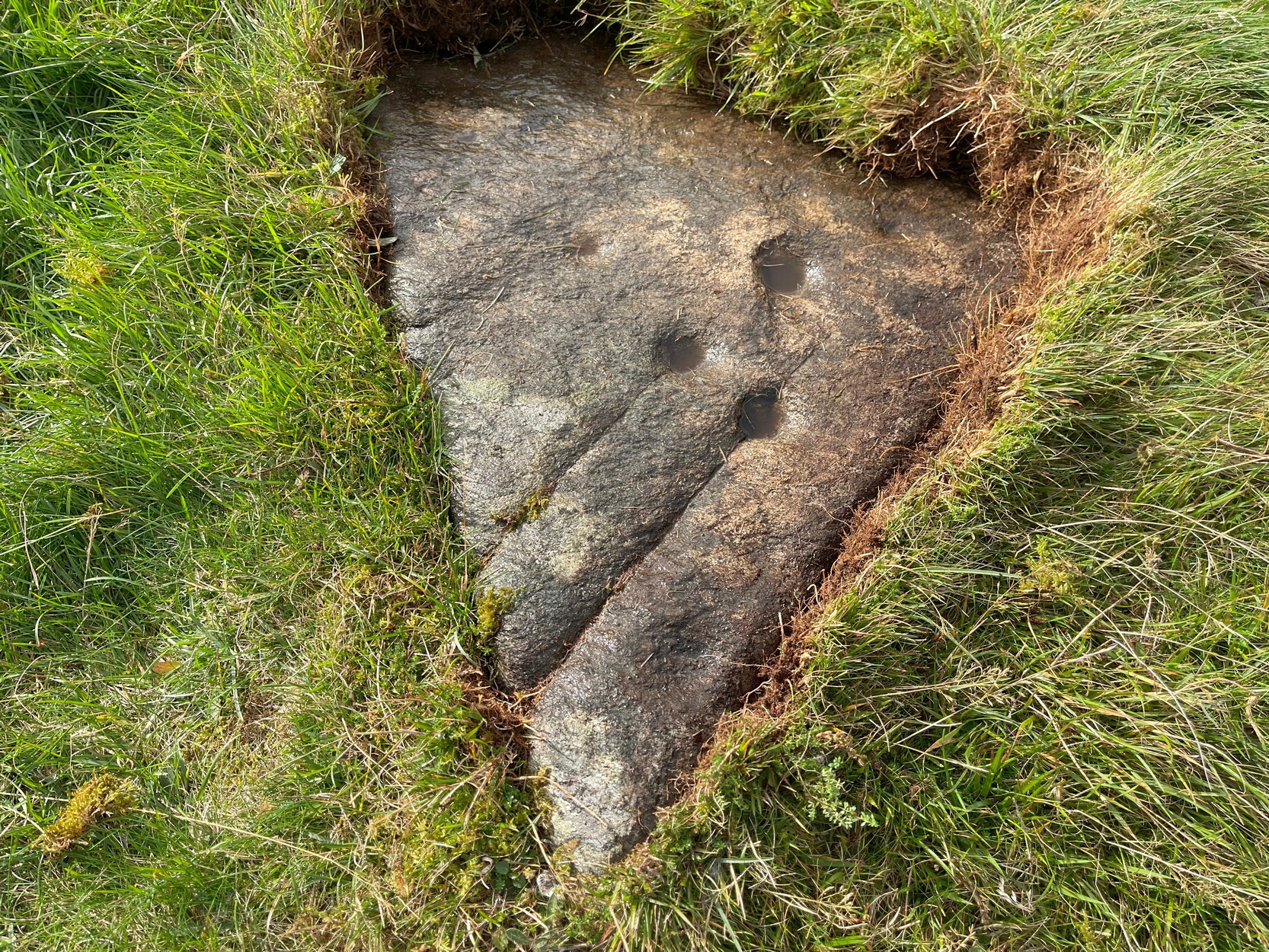
Upon this rounded tom, beloved of faerie folk and overlooking the urisk-haunted Urlar Burn, is this small flat triangular-shaped stone, embedded in the ground, possessing an unusual set of seven, possibly eight cup-markings (not five as Currie [2005] initially described) of varying depths and age, carved into straight geological fissures in the rock which, I hasten to add, were probably intended as part of the original design.  Such elements are not unusual in carvings in other parts of the world, tending to relate to some spirit or ancestral ingredient.  Whether that was important here, we might never know.

Black Burn (2) carving

But in addition to the cups on their geological cracks, a large faint wonky incomplete ring has been carved around the centre-most cup-mark, seemingly stopping where it meets the natural crack.  You can just make it out in the photos. One side of this ring may continue onto the top of the longer crack, but it was difficult to see in the cloudy daylight and another visit is necessary.

The carving was first described by George Currie (2005), who told, in his usual minimalist manner:

“On W side of large knoll, triangular-shaped rock, 0.7 x 0.7m, flush with ground; five cups, largest being 50 x 20mm and smallest, 25 x 8mm.”

Two or three yards away, just slightly down the slope to your south, is another cup-marked stone: the Black Burn (3) carving.

References:

  1. Currie, George, “Perthshire: Black Burn (Dull Parish) – Cup and Ring Marked Rocks”, in Discovery & Excavation Scotland, volume 6 (new series), 2005.

Acknowledgements:  Huge thanks for use of the Ordnance Survey map in this site profile, reproduced with the kind permission of the National Library of Scotland

© Paul BennettThe Northern Antiquarian