Cup-and-Ring Stone: OS Grid Reference – SE 07540 44730
Getting Here
A real pain-in-the-arse to find this one, and even describing how to get there is troublesome—but I’ll try my best! I think the best starting point would be from the track that runs through Rivock plantation. Follow directions to reach the Ripple Stone carving, then walk 35-40 yards east to the ornate multiple-ringed stones of Rivock (067) and company. Now comes the tricky bit. From here walk, zigzag fashion (it’s the only way y’ can do it!) up the slope ever-so-slightly east of due south until you reach the top of the slope, where the land levels out. If you walked in a dead straight line from the triple-ringed Rivock (66) carving, it is almost bang on 100 yards. Anyhow, now you’re on top of the slope, zigzag about and look for the large flat oval-shaped stone. Take your time—you’re gonna need it!
Archaeology & History
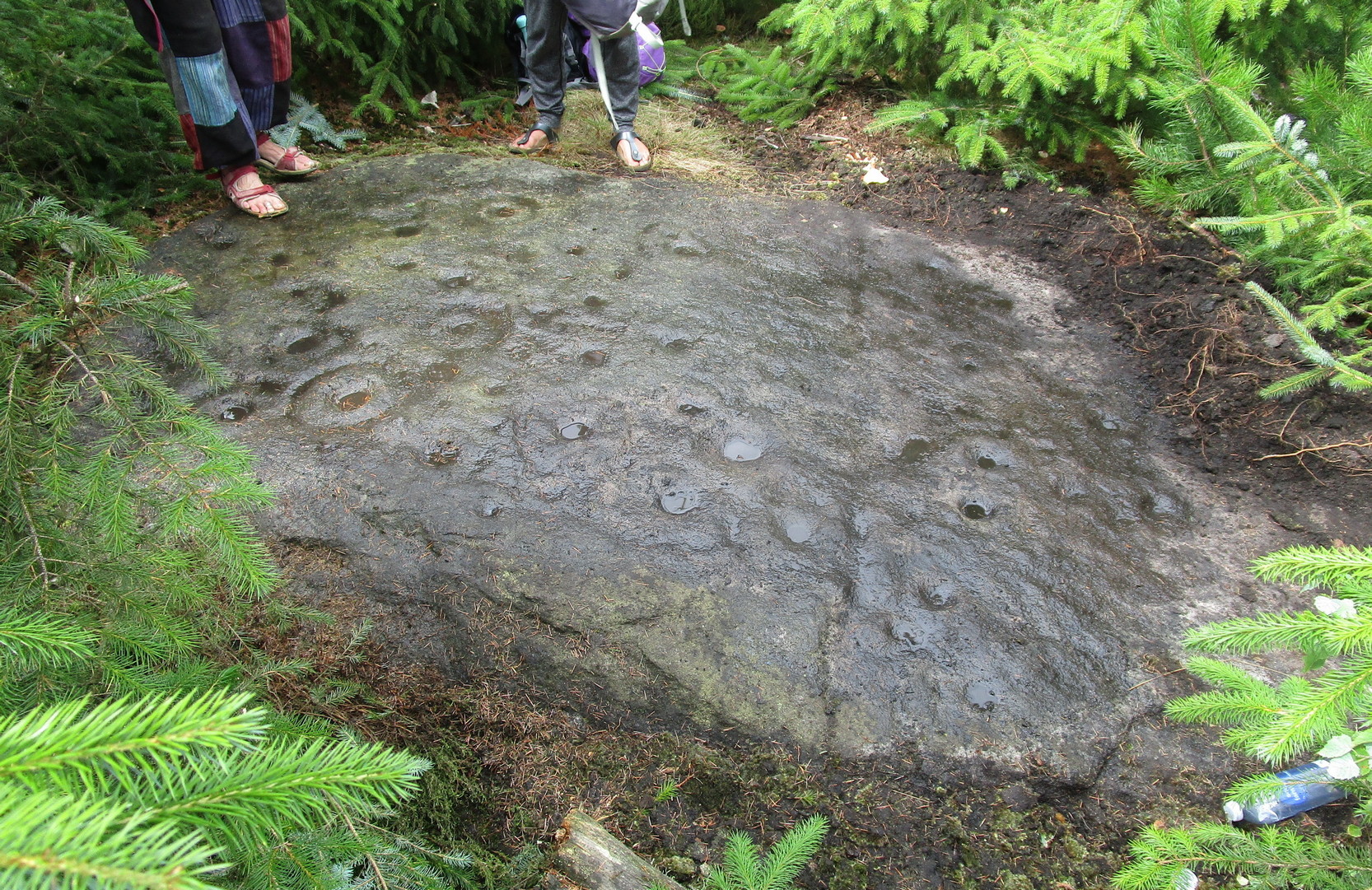
Laid amongst the dense mass of cheap crappy pine trees that plagues some of our upland countryside depriving the land of necessary nutrients for animals, flowers and other trees, this impressive multiple cup-and-ringed marked rock lies sleeping. It was rediscovered in 2017 by local hunter Chris Slinger during one of his many ventures through the undergrowth. I’m informed that one of his compatriots reckons that he already knew about it some forty years prior to Chris claiming it—but as yet we have no way of knowing that for sure, so the name of the carving goes to Mr Slinger. And it’s a beauty—one helluva beauty!
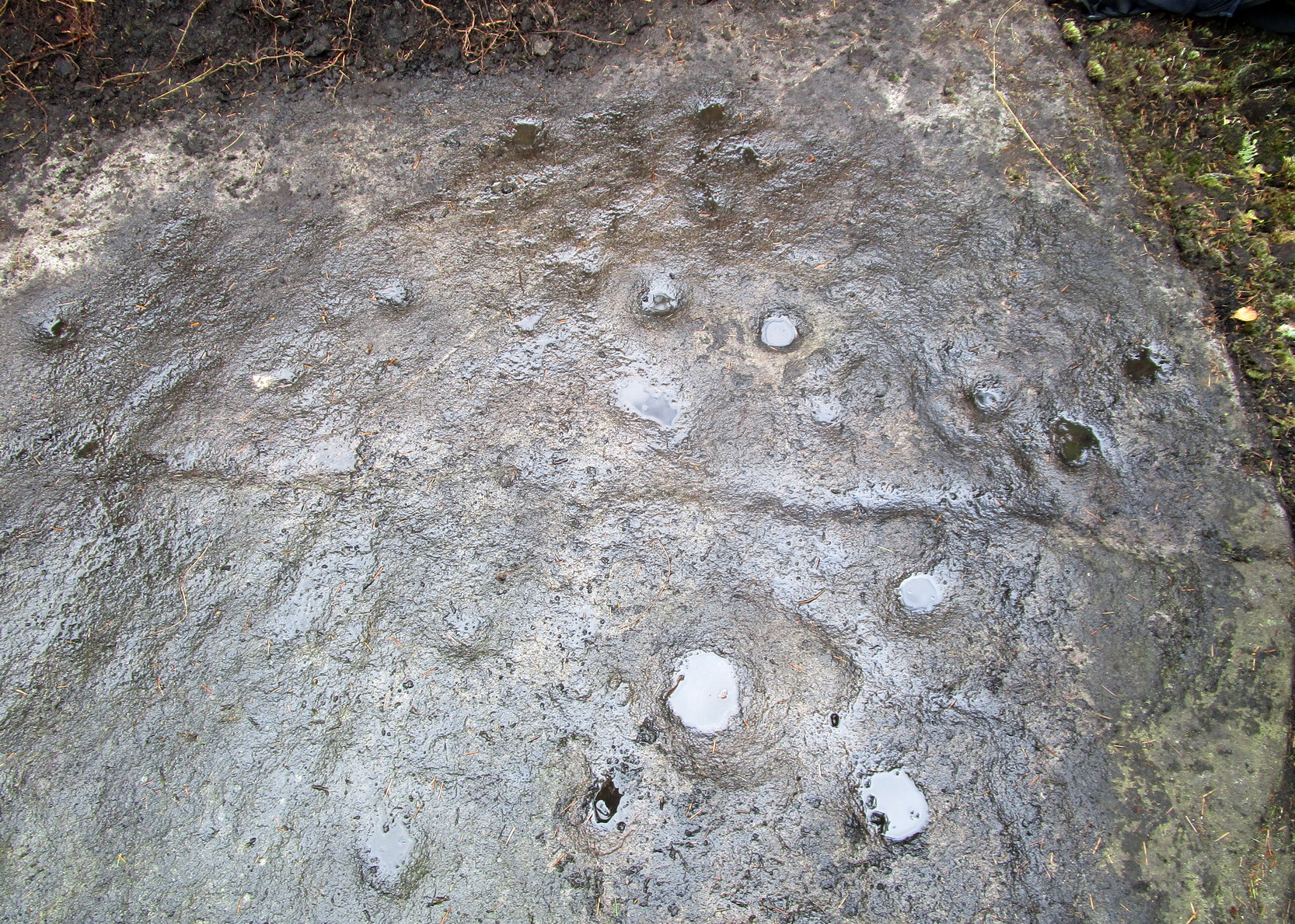
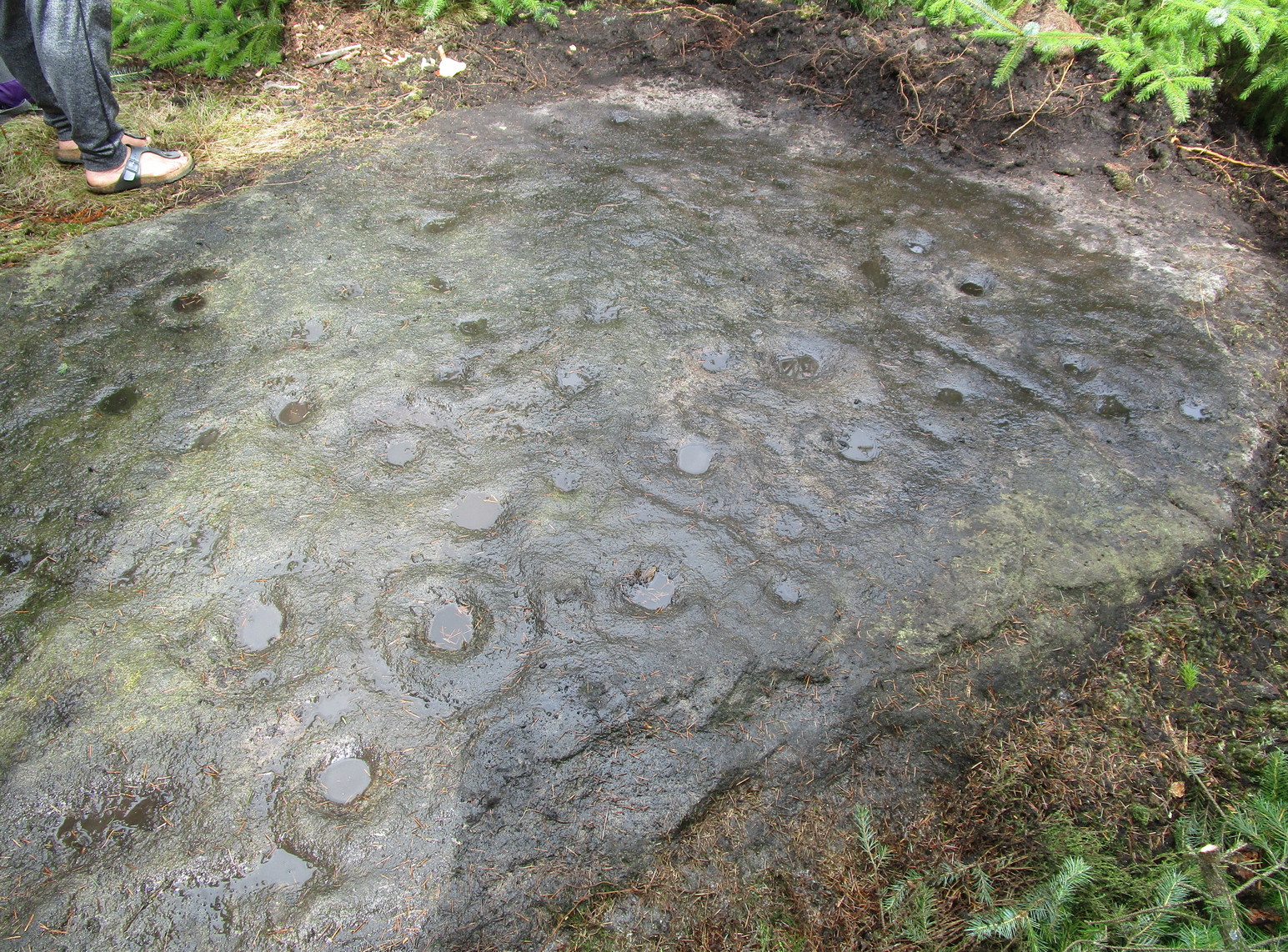
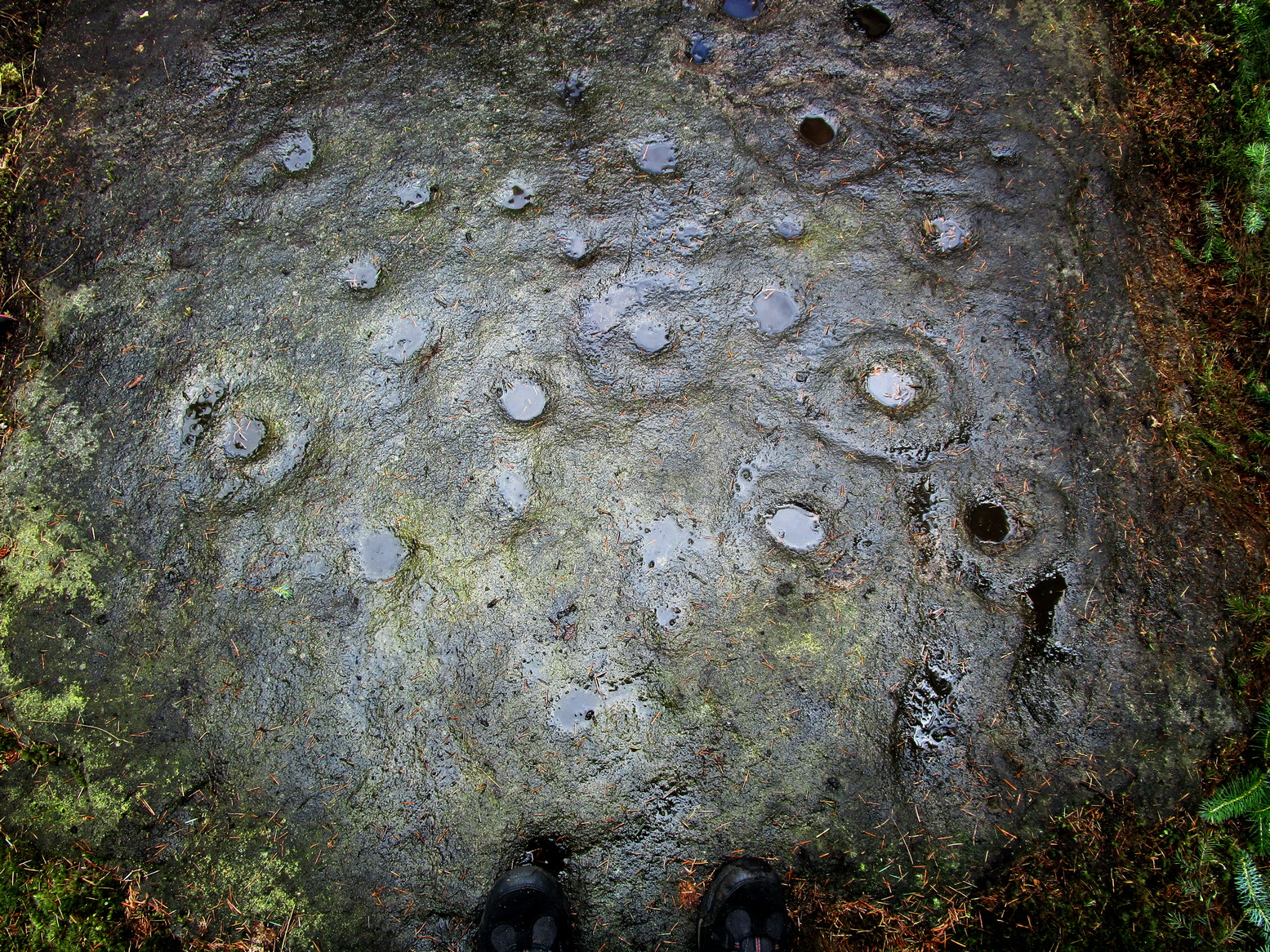
This large, flat, ovoid-shaped stone, roughly 10 feet by 7 feet across, is virtually covered from head to foot in large and not-so-large cup-and-rings at varying levels of erosion. The carving appears to have been partitioned, so to speak, into two sections that are clearly defined by a carved line that runs the breadth of the stone. On the top, larger section above this main line are about 30 cup-marks, with perhaps a dozen of them having rings around them—some complete, some incomplete—scattered about in the usual non-linear manner. One or two of the cup-and-rings may have double-rings, but due to dark conditions in here none of us could be sure. On one visit, a local lady (Liz of Fell Edge if I remember rightly) noticed that the largest cluster of cup-and-rings near one quarter of the stone seemed to be arranged in a similar form to the Swastika Stone, 1.9 miles northeast of here!
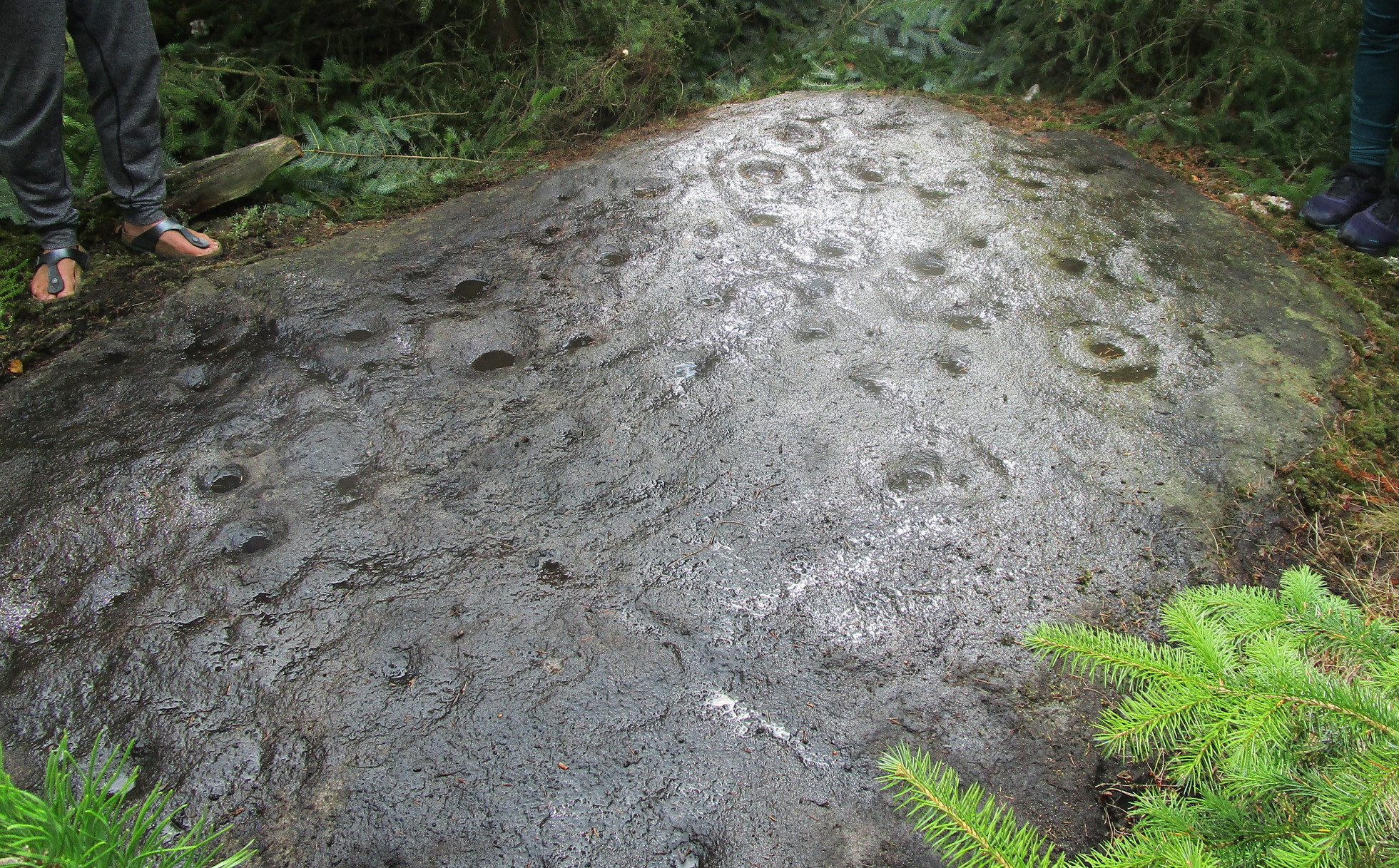
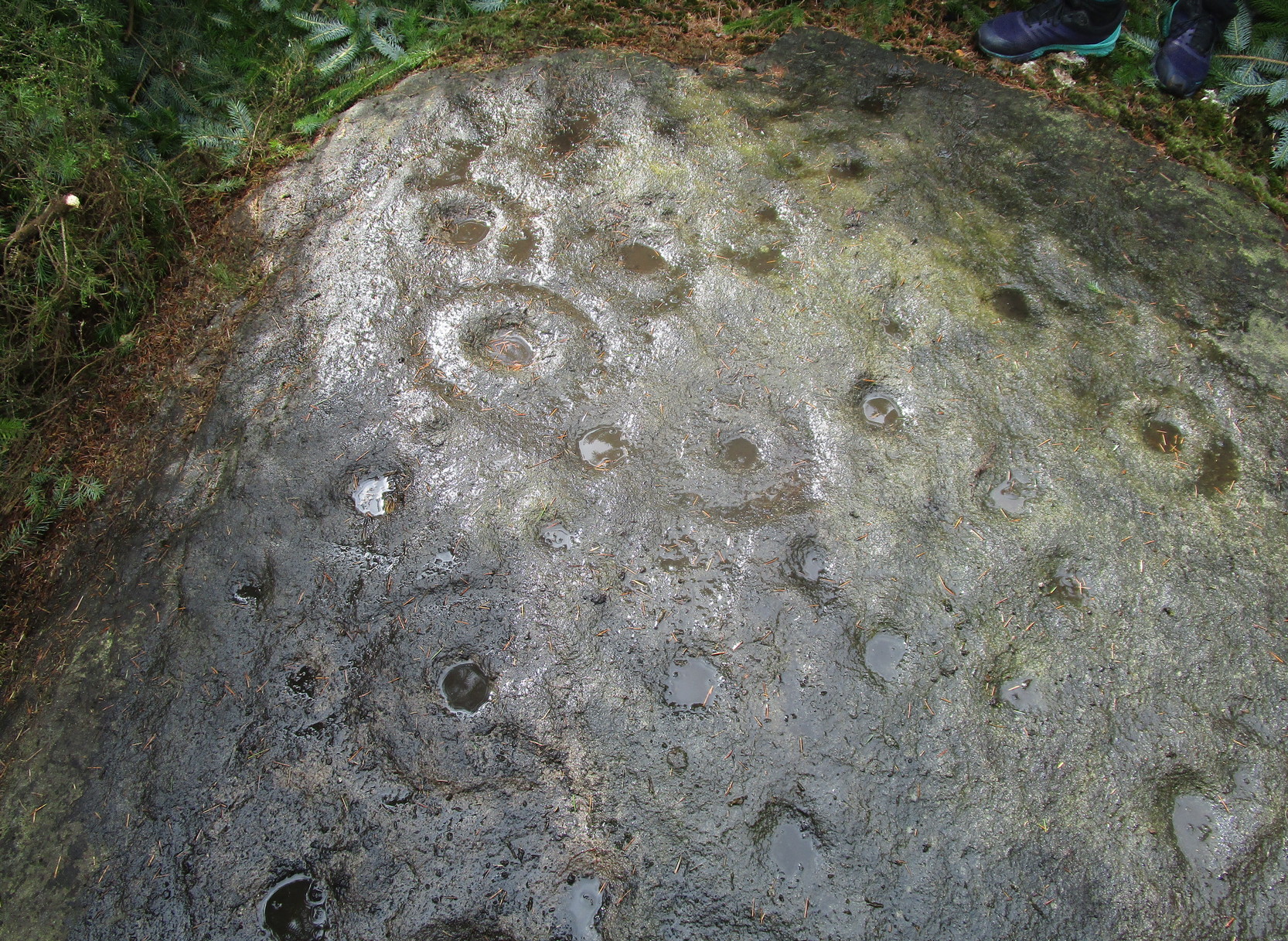
On the lower smaller section of the carving, beneath the main line if you like, there’s not quite as much going on. At least twelve cup-marks are apparent here, at least five of which have rings around them. The main little bunch of these are pushed right up against the long carved line, seemingly communicating with other rings on the top-side of it. In some photos it looks as if, in this section of the stone, carved lines link the cup-and-rings on each side of the main dividing line (if y’ get mi drift). There’s a lot going on here. It’s a pretty complex carving as you can see: one of the best in the Rivock cluster and one that I’d like to spend more time with, if only to get a complete picture of what the carving looks like in full as we’ve not yet got to the outer edges of the stone itself, meaning that there may be more of it beneath the vegetation.
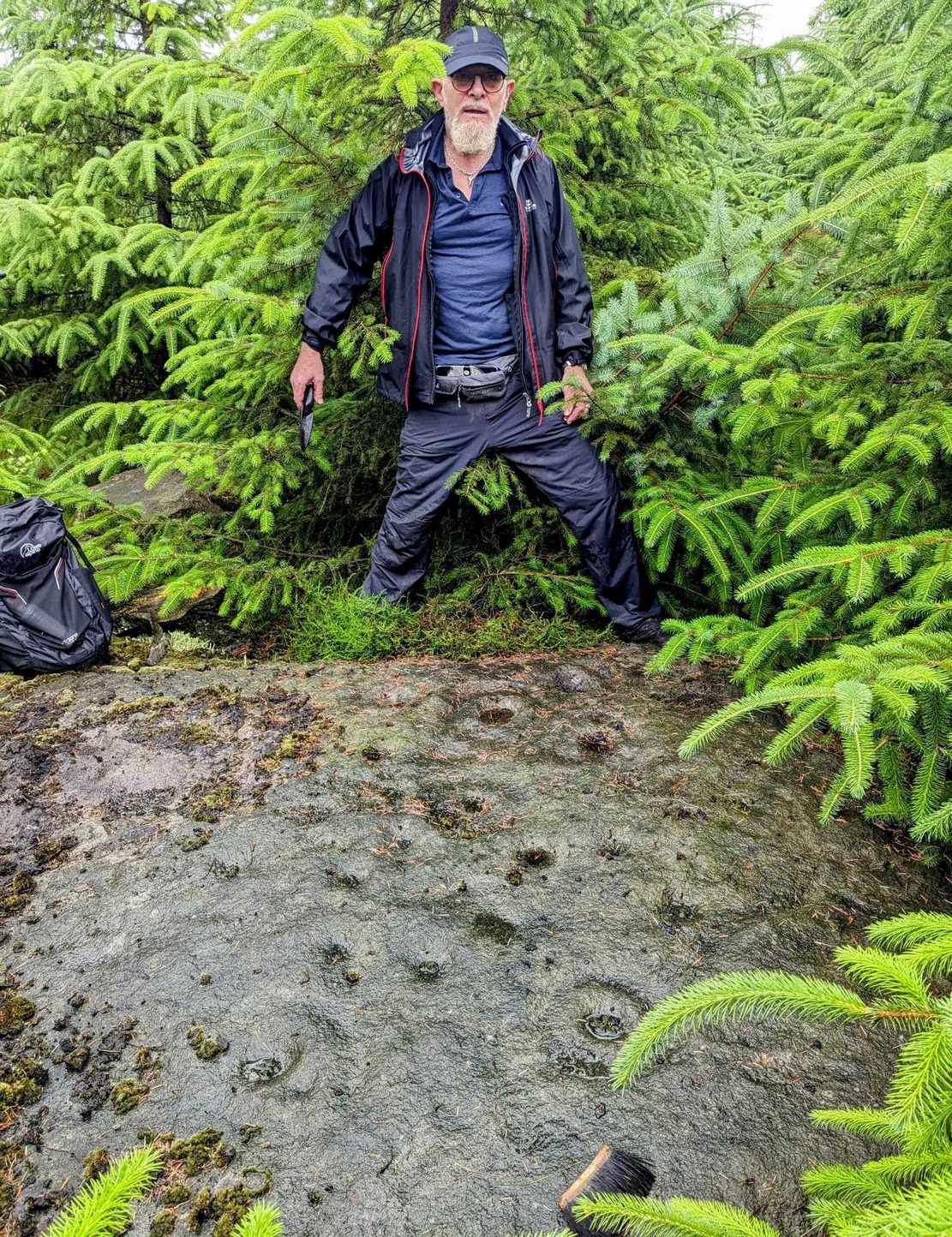
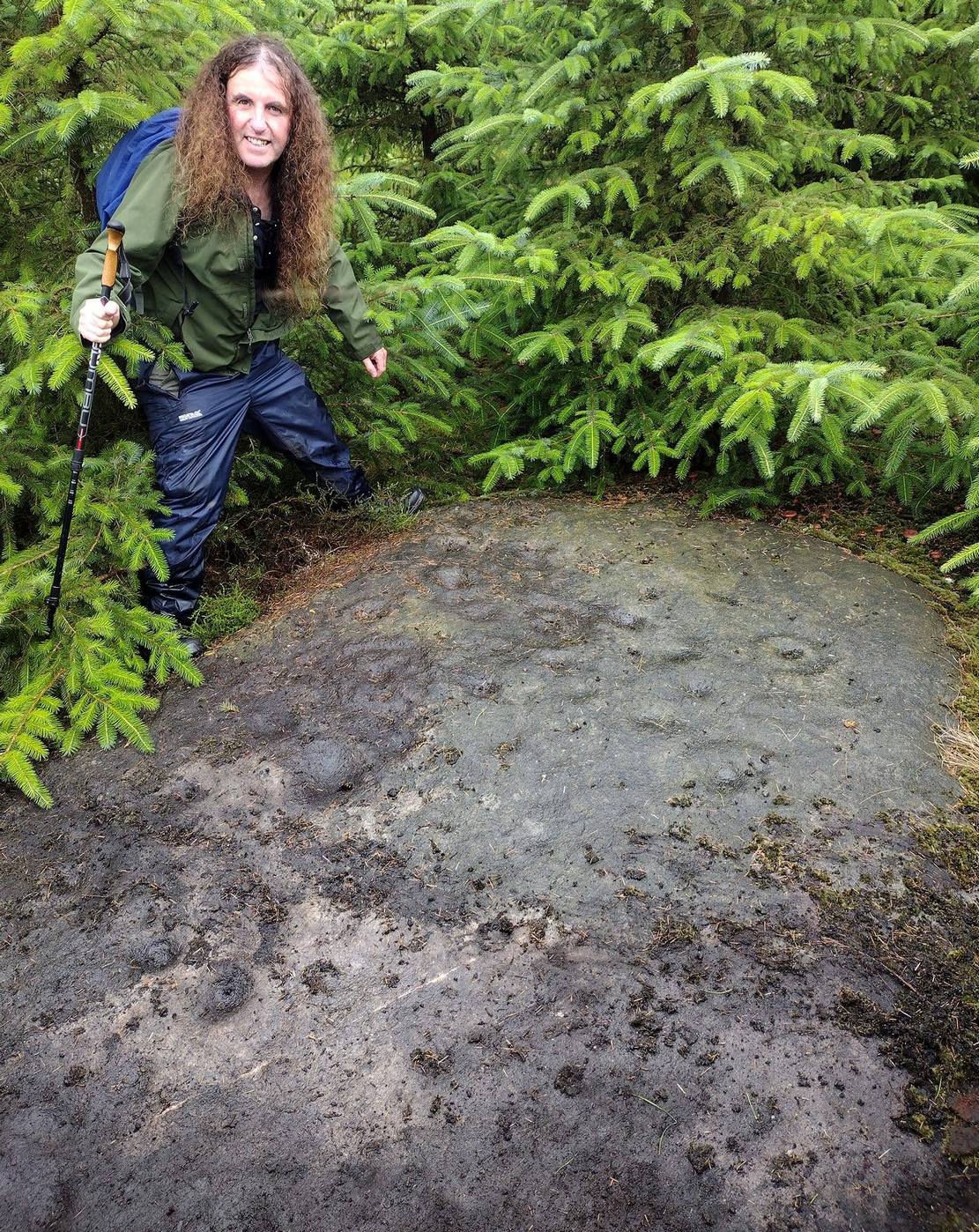
I was hoping to get some much better photos of this site and clear back more of the covering foliage, but as the carving is now all but covered in dense forestry, we may have seen the last of it for a few decades. Even worse, there’s the great possibility that the carving will be destroyed when the forestry lads come to cut down the trees—through no fault of their own—as they’ll have no idea that it’s directly beneath their machinery. It would be good if some local volunteers could perhaps completely clear and protect this stone to avert such a likely disaster a few decades from now. A small metal fence with a little notice-board would do the trick!

Acknowledgements: Firstly, to Chris Slinger for rediscovering the carving; then to the modern stone-fondlers Rod ‘Koot’ Chambers and Sean Dillon for beginning the cleaning process, and for their photographs in this site profile; and then to Sarah Walker, Sarah Jackson and Marianna, for helping to bring the entire stone into view.
© Paul Bennett, The Northern Antiquarian
